


 Скачать презентацию THE EFFECT OF LIFE EVENTS ON EVERYDAY CONSUMPTION
0f42b344c441b5605be5c9656a0eacc8.ppt
- Количество слайдов: 10
 THE EFFECT OF LIFE EVENTS ON EVERYDAY CONSUMPTION PATTERNS Martina Schäfer, Melanie Jaeger Center for Technology and Society Technische Universität Berlin Transpose Conference, November 2009
 RESEARCH PROJECT „ IFE L EVENTS“ • Project: “Life events as windows of opportunity for change towards sustainable consumption patterns“ • Duration: March 2008 – February 2011 • Cooperation between • Characteristics: – Interdisciplinarity (sociological & psychological theory) – Transdisciplinarity (collaboration with external partners: enterprises, NGOs and institutions) – Triangulation (quantitative and qualitative methods)
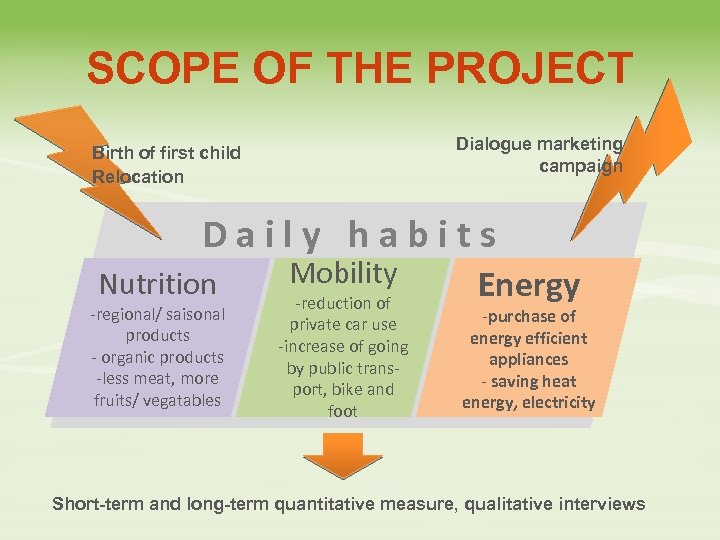 SCOPE OF THE PROJECT Dialogue marketing campaign Birth of first child Relocation Daily habits Nutrition -regional/ saisonal products - organic products -less meat, more fruits/ vegatables Mobility -reduction of private car use -increase of going by public transport, bike and foot Energy -purchase of energy efficient appliances - saving heat energy, electricity Short-term and long-term quantitative measure, qualitative interviews
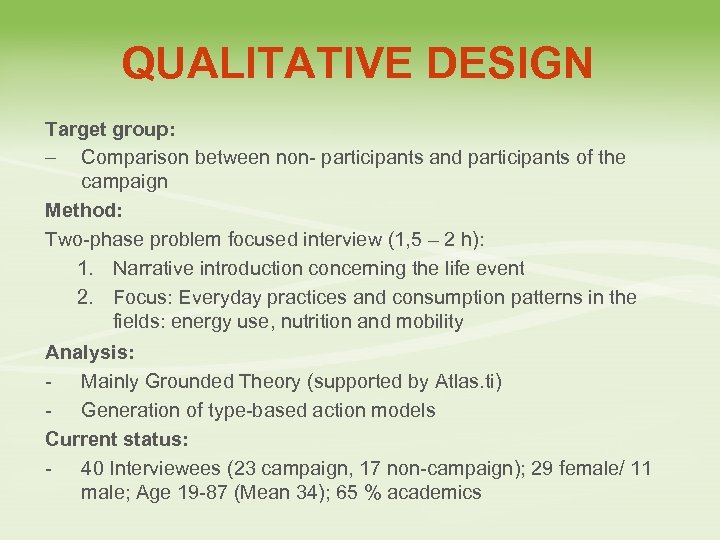 QUALITATIVE DESIGN Target group: - Comparison between non- participants and participants of the campaign Method: Two-phase problem focused interview (1, 5 – 2 h): 1. Narrative introduction concerning the life event 2. Focus: Everyday practices and consumption patterns in the fields: energy use, nutrition and mobility Analysis: - Mainly Grounded Theory (supported by Atlas. ti) - Generation of type-based action models Current status: - 40 Interviewees (23 campaign, 17 non-campaign); 29 female/ 11 male; Age 19 -87 (Mean 34); 65 % academics
 DESCRIPTIVE RESULTS OVERVIEW Comparison between fields of consumption: • In general mobility and nutrition are more ‘emotional issues’ which • • often are connected to general attitudes whereas energy consumption is mostly treated more objectively and energy-saving is an accepted social norm. From a subjective point of view nutrition and mobility are more relevant issues for parents than saving energy : responsibility for the child /new role as parent is experienced more intensely; tendency in nutrition towards more healthy/ organic food, tendency in mobility towards walking and more comfort/ less complication For relocaters the field of mobility is most relevant and – depending on where the house/appartment is situated and the quality of public transport – cars become less important
 DOMAIN-SPECIFIC RESULTS - ENERGY • From an objective point of view, energy consumption is changing significantly after the birth of a child: more household appliances, more heating and washing, more time at home (But: little awareness about this fact!). • Relocaters are mostly not aware of how they can influence energy consumption while preparing their flat (e. g. placement of furniture and appliances) • For older relocaters with a long term perspective, purchasing energy efficient household appliances gets more relevant than for younger ones who are more often relying on donations/ second hand etc.
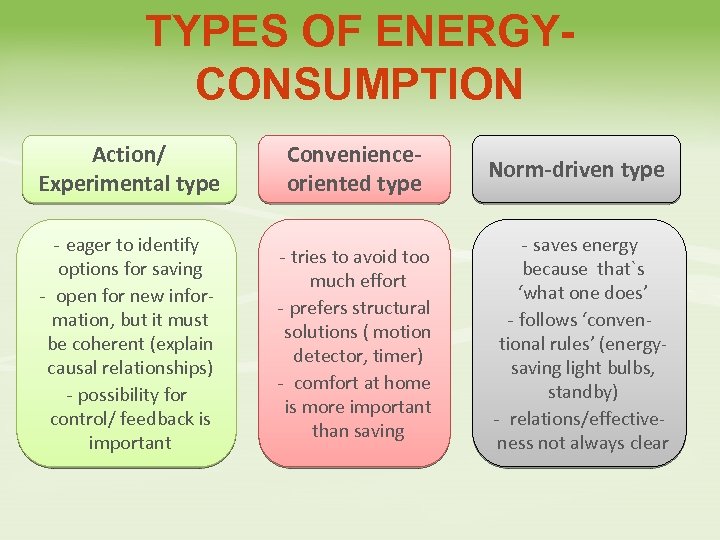 TYPES OF ENERGYCONSUMPTION Action/ Experimental type Convenienceoriented type Norm-driven type - eager to identify options for saving - open for new information, but it must be coherent (explain causal relationships) - possibility for control/ feedback is important - tries to avoid too much effort - prefers structural solutions ( motion detector, timer) - comfort at home is more important than saving - saves energy because that`s ‘what one does’ - follows ‘conventional rules’ (energysaving light bulbs, standby) - relations/effectiveness not always clear
 IMPORTANT/ INFLUENCING ELEMENTS • Beliefs/ myths about ‘baby’s comfort’: necessary room temperature, frequency of bathing, food hygiene • Personal ‘no-go areas’: there are practices that are excepted from saving considerations (non-stop operation of computer, bathroom permanently warm) and can’t be tackled by interventions • Influence of roommates/ partners/ family: energy consumption as a matter of negotiation and mutual influence; especially sensitive when moving together • Differences in connecting energy-saving to broader issues (sustainability, resource management)
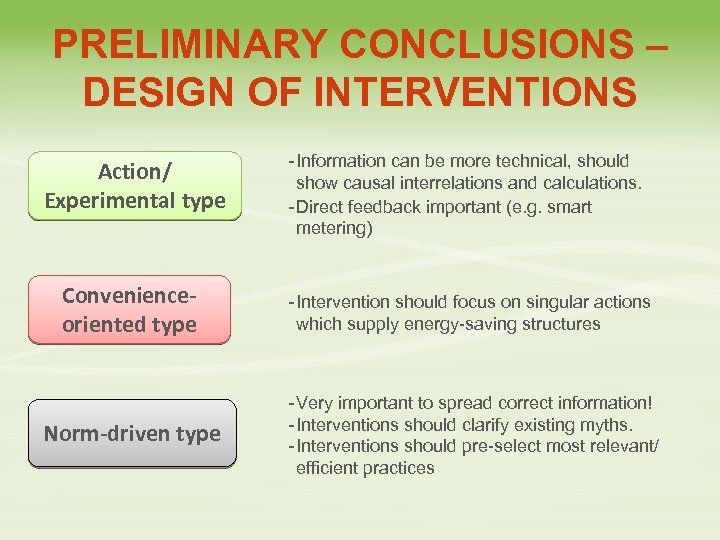 PRELIMINARY CONCLUSIONS – DESIGN OF INTERVENTIONS Action/ Experimental type - Information can be more technical, should show causal interrelations and calculations. - Direct feedback important (e. g. smart metering) Convenienceoriented type - Intervention should focus on singular actions which supply energy-saving structures Norm-driven type - Very important to spread correct information! - Interventions should clarify existing myths. - Interventions should pre-select most relevant/ efficient practices
 THANK YOU FOR LISTENING Prof. Dr. Martina Schäfer Melanie Jaeger-Erbe Center for Technology and Society (ZTG) Technische Universität Berlin schaefer@ztg. tu-berlin. de, jaeger@ztg. tu-berlin. de www. lifeevents. de