


 Скачать презентацию The economy of the UK МАТВЕЕВ МАТВЕЙ ЛИН-Д-2
Economy of Britain Matveev Matvey LIN-2-2.pptx
- Количество слайдов: 28
 The economy of the UK МАТВЕЕВ МАТВЕЙ ЛИН-Д-2 -2
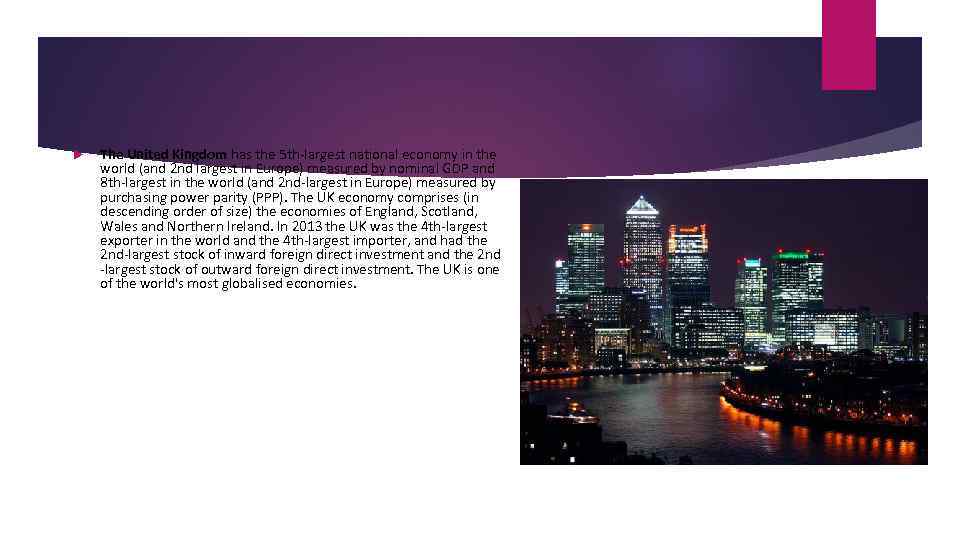 The United Kingdom has the 5 th-largest national economy in the world (and 2 nd largest in Europe) measured by nominal GDP and 8 th-largest in the world (and 2 nd-largest in Europe) measured by purchasing power parity (PPP). The UK economy comprises (in descending order of size) the economies of England, Scotland, Wales and Northern Ireland. In 2013 the UK was the 4 th-largest exporter in the world and the 4 th-largest importer, and had the 2 nd-largest stock of inward foreign direct investment and the 2 nd -largest stock of outward foreign direct investment. The UK is one of the world's most globalised economies.
 The service sector dominates the UK economy, contributing around 78% of GDP; the financial services industry is particularly important and London is one of the world's largest financial centres. The British aerospace industry is the second- or thirdlargest national aerospace industry depending on the method of measurement. The pharmaceutical industry plays an important role in the economy and the UK has the third-highest share of global pharmaceutical R&D. The automotive industry is also a major employer and exporter. The British economy is boosted by North Sea oil and gas production; its reserves were valued at an estimated £ 250 billion in 2007. There are significant regional variations in prosperity, with the South East of England southern Scotland the richest areas per capita. London has the largest city GDP in Europe
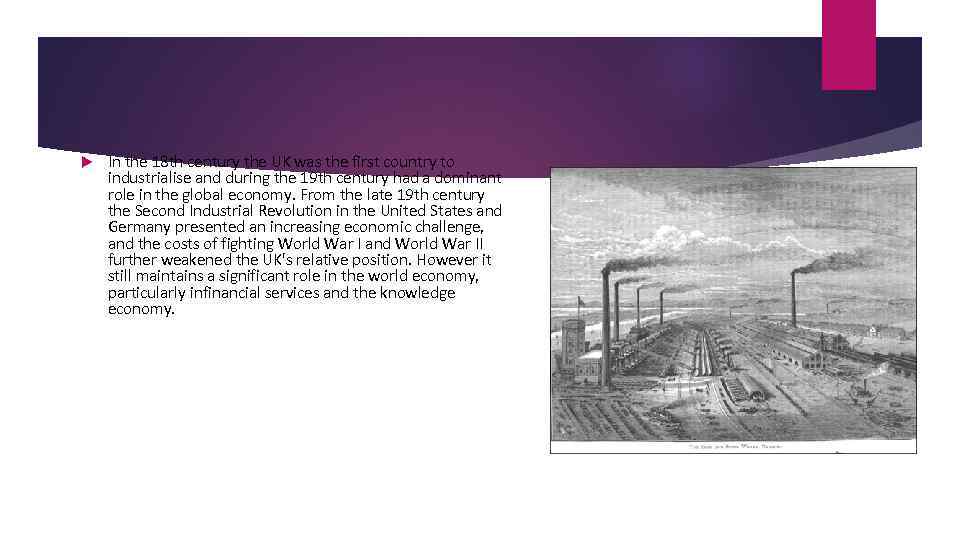 In the 18 th century the UK was the first country to industrialise and during the 19 th century had a dominant role in the global economy. From the late 19 th century the Second Industrial Revolution in the United States and Germany presented an increasing economic challenge, and the costs of fighting World War I and World War II further weakened the UK's relative position. However it still maintains a significant role in the world economy, particularly infinancial services and the knowledge economy.
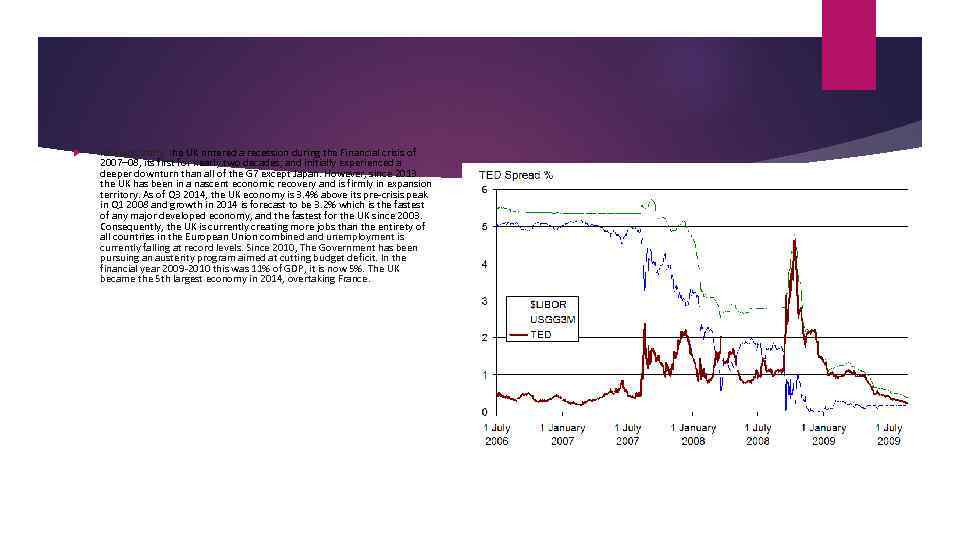 More recently, the UK entered a recession during the Financial crisis of 2007– 08, its first for nearly two decades, and initially experienced a deeper downturn than all of the G 7 except Japan. However, since 2013 the UK has been in a nascent economic recovery and is firmly in expansion territory. As of Q 3 2014, the UK economy is 3. 4% above its pre-crisis peak in Q 1 2008 and growth in 2014 is forecast to be 3. 2% which is the fastest of any major developed economy, and the fastest for the UK since 2003. Consequently, the UK is currently creating more jobs than the entirety of all countries in the European Union combined and unemployment is currently falling at record levels. Since 2010, The Government has been pursuing an austerity program aimed at cutting budget deficit. In the financial year 2009 -2010 this was 11% of GDP, it is now 5%. The UK became the 5 th largest economy in 2014, overtaking France.
 Government involvement in the British economy is primarily exercised by HM Treasury, headed by the Chancellor of the Exchequer, and the Department for Business, Innovation and Skills. Since 1979 management of the UK economy has followed a broadly laissez-faire approach. The Bank of England is the UK's central bank and its. Monetary Policy Committee is responsible for setting interest rates. The currency of the UK is the pound sterling, which is also the world's third-largest reserve currency after the US dollar and the euro, and also the fourth most valued currency in the world, behind the Kuwaiti Dinar, Bahraini Dinar, and Omani Rial, and the most valued currency outside the Middle East. The UK is a member of the Commonwealth of Nations, the European Union, the G 7, the G 8, the G 20, the International Monetary Fund, the Organisation for Economic Co-operation and Development, the World Bank, the. World Trade Organisation and the United Nations.
 History 1945 to 1980 Following the end of the Second World War, the United Kingdom enjoyed a long period without a major recession (from 1945 to 1973) and a rapid growth in prosperity in the 1950 s and 1960 s, with unemployment staying low and not exceeding 500, 000 until the second half of the 1960 s. According to the OECD, the annual rate of growth (percentage change) between 1960 and 1973 averaged 2. 9%, although this figure was far behind the rates of other European countries such as France, West Germany and Italy.
 However, following the 1973 oil crisis and the 1973– 1974 stock market crash, the British economy fell into recession and the government of Edward Heath was ousted by the Labour Party under Harold Wilson, which had previously governed from 1964 to 1970. Wilson formed a minority government on 4 March 1974 after the general election on 28 February ended in a hung parliament. Wilson subsequently secured a three seat majority in a second election in. October that year.
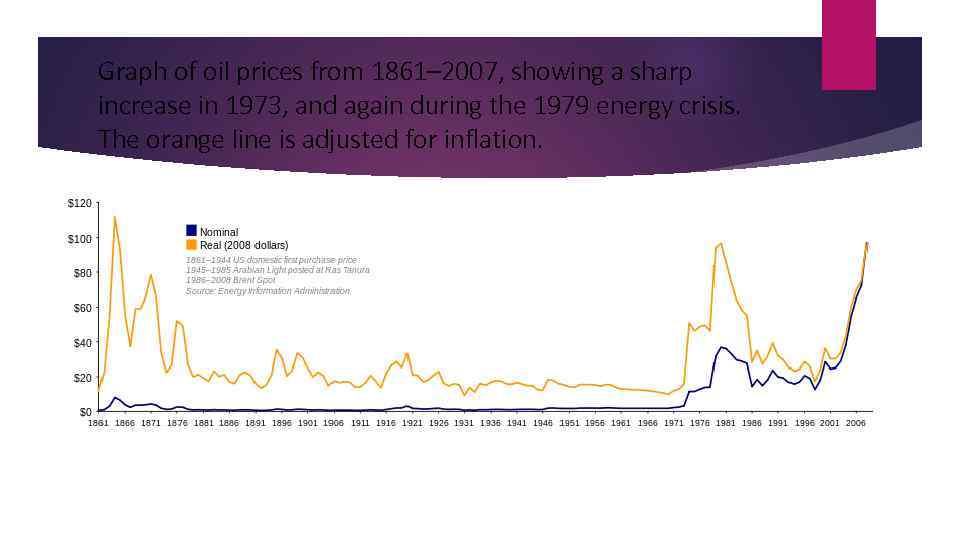 Graph of oil prices from 1861– 2007, showing a sharp increase in 1973, and again during the 1979 energy crisis. The orange line is adjusted for inflation.
 In 1976, the UK was forced to request a loan of £ 2. 3 billion from the International Monetary Fund. The then Chancellor of the Exchequer Denis Healey was required to implement public spending cuts and other economic reforms in order to secure the loan, and for a while the British economy improved. However, following the Winter of Discontent, when the UK was hit by numerous public sector strikes, the government of James Callaghan lost a vote of no confidence in March 1979. This triggered the May 1979 general election which resulted in Margaret Thatcher's Conservative Party forming a new government.
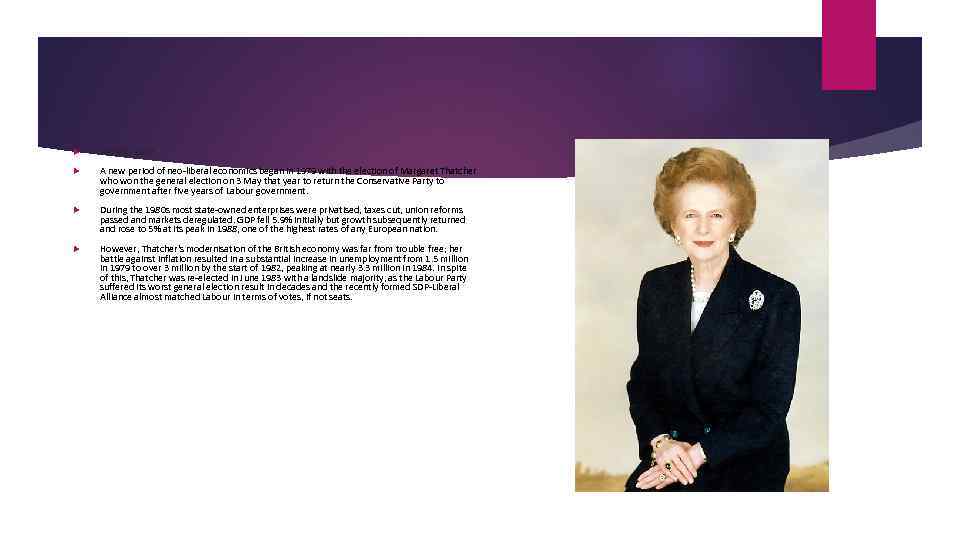 1979 to 1997 A new period of neo-liberal economics began in 1979 with the election of Margaret Thatcher who won the general election on 3 May that year to return the Conservative Party to government after five years of Labour government. During the 1980 s most state-owned enterprises were privatised, taxes cut, union reforms passed and markets deregulated. GDP fell 5. 9% initially but growth subsequently returned and rose to 5% at its peak in 1988, one of the highest rates of any European nation. However, Thatcher's modernisation of the British economy was far from trouble free; her battle against inflation resulted in a substantial increase in unemployment from 1. 5 million in 1979 to over 3 million by the start of 1982, peaking at nearly 3. 3 million in 1984. In spite of this, Thatcher was re-elected in June 1983 with a landslide majority, as the Labour Party suffered its worst general election result in decades and the recently formed SDP-Liberal Alliance almost matched Labour in terms of votes, if not seats.
 The increase in unemployment was substantially due to government economic policy which resulted in the closure of outdated factories and coalpits which were no longer economically viable; this process continued for most of the 1980 s, with newer industries and the service sector enjoying significant growth. Unemployment had fallen below 3 million by the time of Thatcher's third successive election victory in June 1987 and by the end of 1989 it was down to 1. 6 million. However, the British economy slid into another recession in late 1990, concurrently with a global recession, and this caused the economy to shrink by a total of 8% from peak to trough and unemployment to increase from around 1. 6 million in the spring of 1990 to nearly 3 million by the end of 1992. The subsequent economic recovery was extremely strong, and unlike after the early 1980 s recession, the recovery saw a rapid and substantial fall in unemployment, which was down to 1. 7 million by 1997, although the popularity of the Conservative government failed to improve with the economic upturn.
 1997 to 2008 The Labour Party, led by Tony Blair since the death of his predecessor John Smith three years earlier, returned to power in May 1997 after 18 years in opposition. During Blair's 10 years in office there were 40 successive quarters of economic growth, lasting until the second quarter of 2008, helped by Blair's decision to keep taxes relatively low and abandon traditional Labour policies including public ownership of industries and utilities. The previous 15 years had seen one of the highest economic growth rates of major developed economies during that time and certainly the strongest of any European nation. GDP growth had briefly reached 4% per year in the early 1990 s, gently declining thereafter. Peak growth was relatively anaemic compared to prior decades, such as the 6. 5% pa peak in the early 1970 s, although growth was smoother and more consistent. Annual growth rates averaged 2. 68% between 1992 and 2007 according to the IMF, with the finance sector accounting for a greater part than previously.
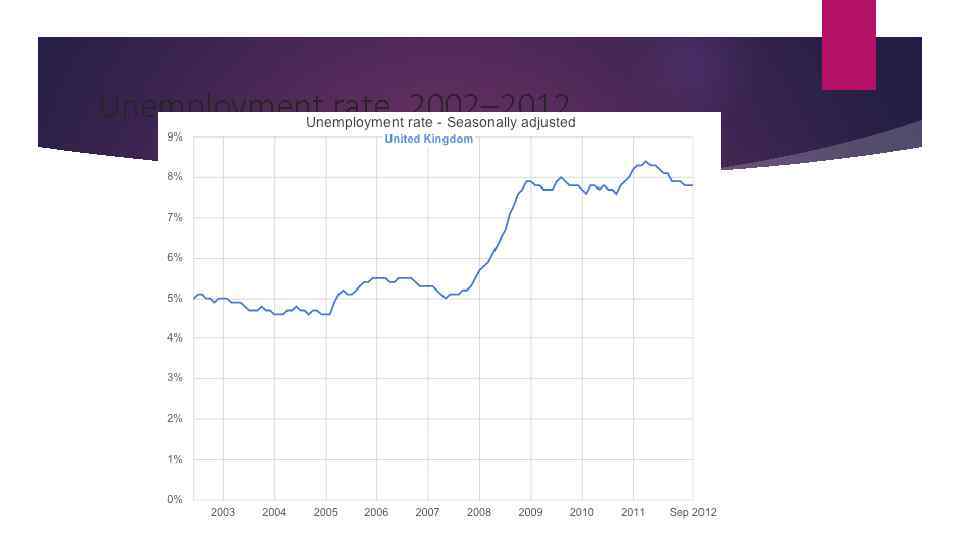 Unemployment rate, 2002– 2012
 2008 to present day The UK entered a recession in Q 2 of 2008 and exited it in Q 4 of 2009, according to figures produced by the Office for National Statistics. The subsequently revised ONS figures show that the UK suffered six consecutive quarters of negative growth, shrinking 7. 2% from peak to trough, making it the longest recession since records began.
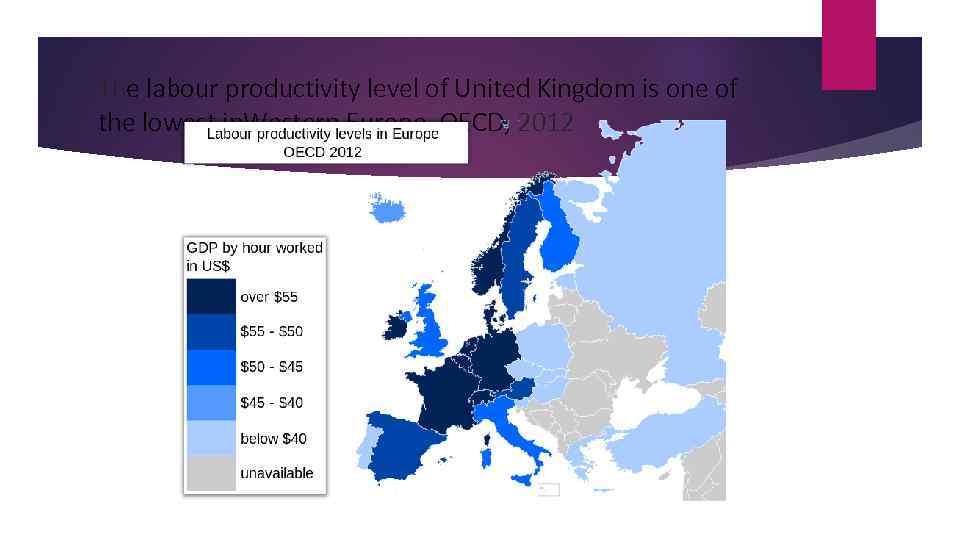 The labour productivity level of United Kingdom is one of the lowest in. Western Europe. OECD, 2012
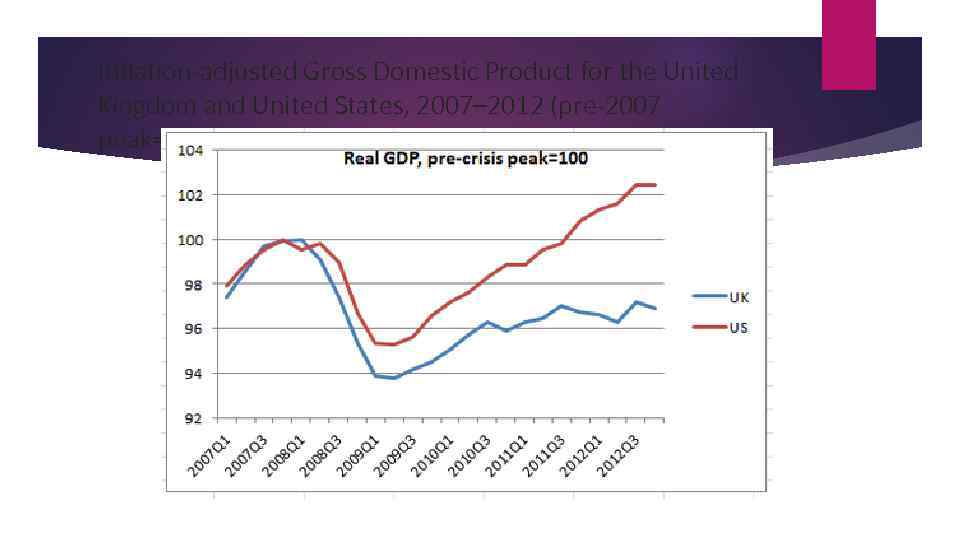 Inflation-adjusted Gross Domestic Product for the United Kingdom and United States, 2007– 2012 (pre-2007 peak=100)
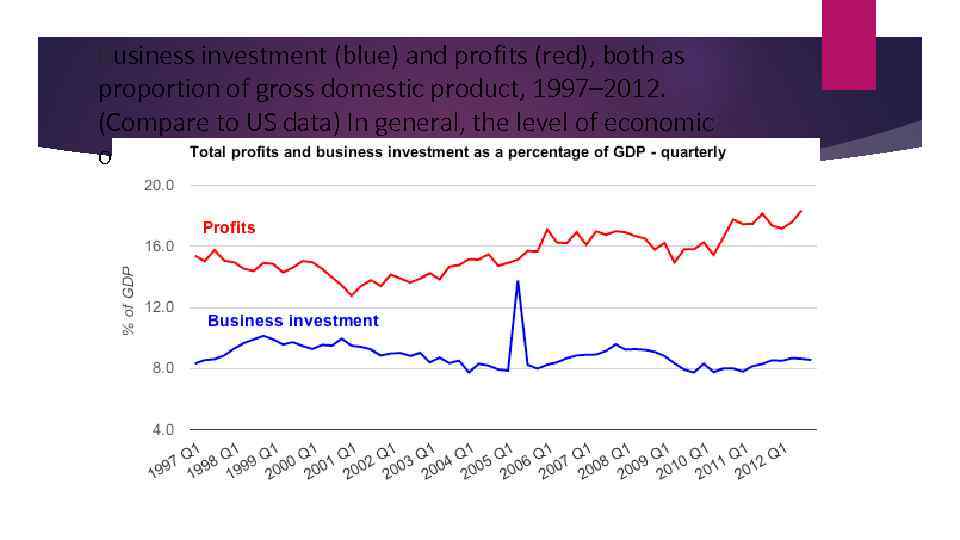 Business investment (blue) and profits (red), both as proportion of gross domestic product, 1997– 2012. (Compare to US data) In general, the level of economic output is set by business expenditure.
 Government spending and economic management Government involvement throughout the economy is primarily exercised by HM Treasury, headed by the Chancellor of the Exchequer. In recent years, the UK economy has been managed in accordance with principles of market liberalisation and low taxation and regulation. Since 1997, the Bank of England's Monetary Policy Committee, headed by the Governor of the Bank of England, has been responsible for setting interest rates at the level necessary to achieve the overall inflation target for the economy that is set by the Chancellor each year. The Scottish Government, subject to the approval of the Scottish Parliament, has the power to vary the basic rate of income tax payable in Scotland by plus or minus 3 pence in the pound, though this power has not yet been exercised. In the 20 -year period from 1986/87 to 2006/07 government spending in the UK averaged around 40% of GDP. As a result of the 2007– 2010 financial crisis and the late-2000 s global recession government spending increased to a historically high level of 48% of GDP in 2009– 10, partly as a result of the cost of a series of bank bailouts.
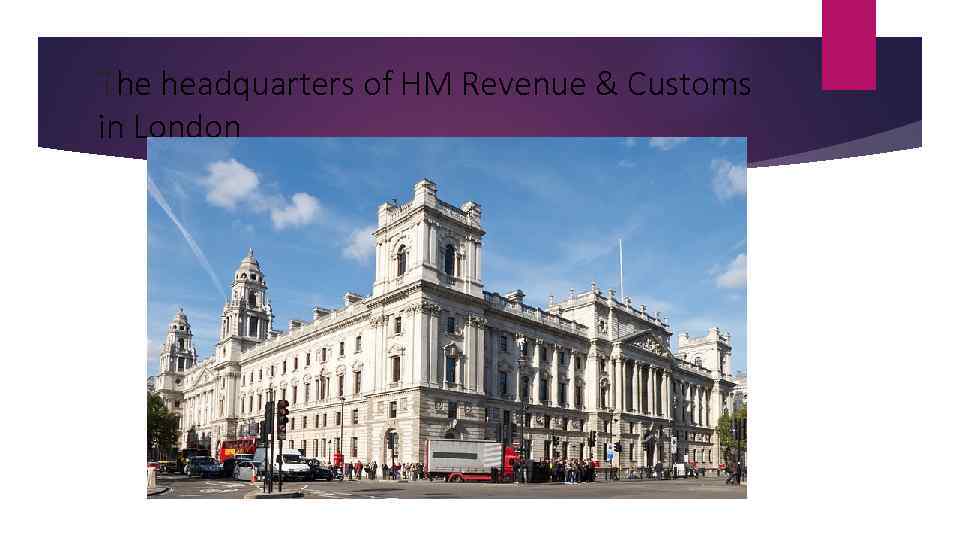 The headquarters of HM Revenue & Customs in London
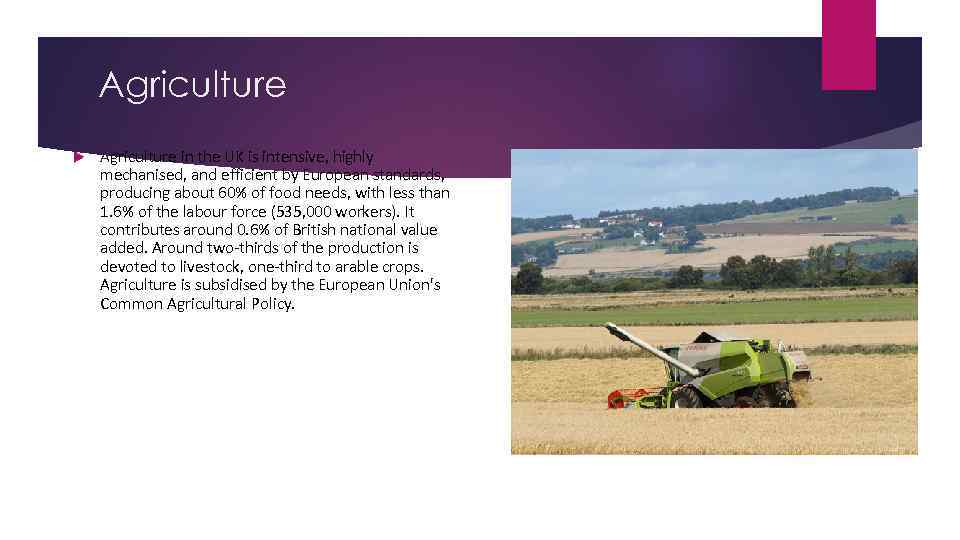 Agriculture in the UK is intensive, highly mechanised, and efficient by European standards, producing about 60% of food needs, with less than 1. 6% of the labour force (535, 000 workers). It contributes around 0. 6% of British national value added. Around two-thirds of the production is devoted to livestock, one-third to arable crops. Agriculture is subsidised by the European Union's Common Agricultural Policy.
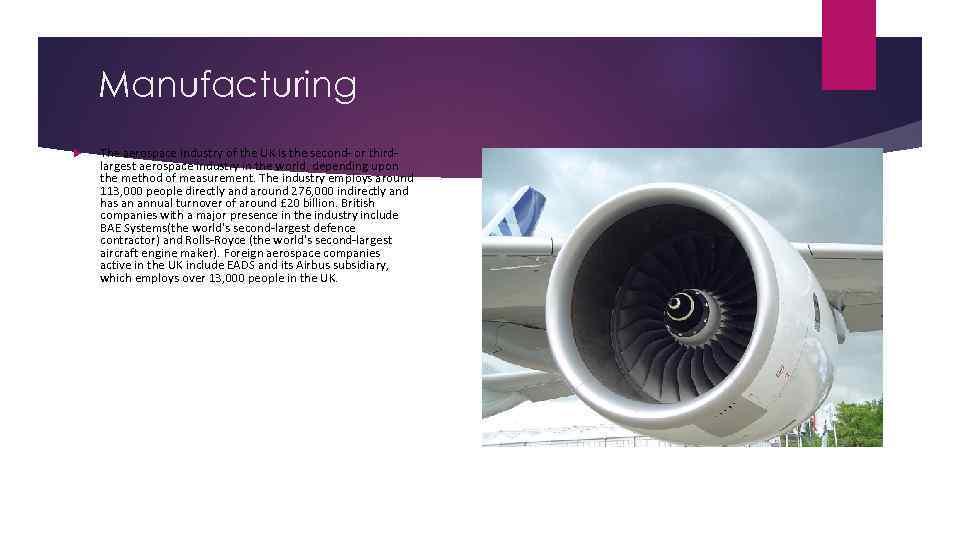 Manufacturing The aerospace industry of the UK is the second- or thirdlargest aerospace industry in the world, depending upon the method of measurement. The industry employs around 113, 000 people directly and around 276, 000 indirectly and has an annual turnover of around £ 20 billion. British companies with a major presence in the industry include BAE Systems(the world's second-largest defence contractor) and Rolls-Royce (the world's second-largest aircraft engine maker). Foreign aerospace companies active in the UK include EADS and its Airbus subsidiary, which employs over 13, 000 people in the UK.
 Mining and quarrying The Blue Book 2013 reports that this sector added gross value of £ 31, 380 million to the UK economy in 2011. In 2007 the UK had a total energy output of 9. 5 quadrillion Btus, of which the composition was oil (38%), natural gas (36%), coal (13%), nuclear (11%) and other renewables (2%). In 2009, the UK produced 1. 5 million barrels per day (bbl/d) of oil and consumed 1. 7 million bbl/d. Production is now in decline and the UK has been a net importer of oil since 2005. As of 2010 the UK has around 3. 1 billion barrels of proven crude oil reserves, the largest of any EU member state. In 2009 the UK was the 13 th largest producer of natural gas in the world and the largest producer in the EU. Production is now in decline and the UK has been a net importer of natural gas since 2004. In 2009 the UK produced 19. 7 million tons of coal and consumed 60. 2 million tons. In 2005 it had proven recoverable coal reserves of 171 million tons. It has been estimated that identified onshore areas have the potential to produce between 7 billion tonnes and 16 billion tonnes of coal through underground coal gasification (UCG). Based on current UK coal consumption, these volumes represent reserves that could last the UK between 200 and 400 years The UK is home to a number of large energy companies, including two of the six oil and gas "supermajors" – BP and Royal Dutch Shell – and BG Group.
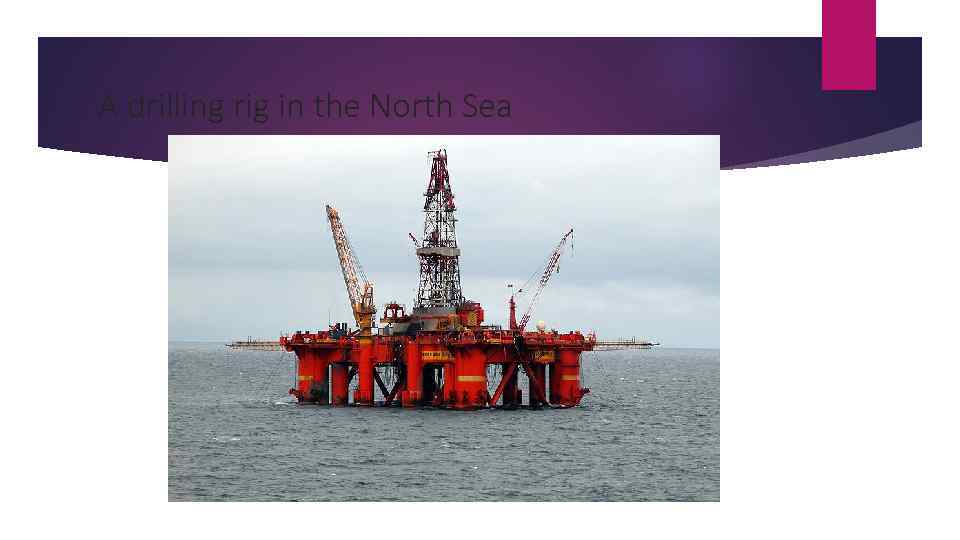 A drilling rig in the North Sea
 Education, health and social work According to The Blue Book 2013 the education sector added gross value of £ 84, 556 million in 2011 whilst Human health and social work activities added £ 104, 026 million in 2011. In the UK the majority of the healthcare sector consists of the state funded and operated National Health Service (NHS), which accounts for over 80% of all healthcare spending in the UK and has a workforce of around 1. 7 million, making it the largest employer in Europe, and putting it amongst the largest employers in the world. The NHS operates independently in each of the four constituent countries of the UK. The NHS in England is by far the largest of the four parts and had a turnover of £ 92. 5 billion in 2008. In 2007/08 higher education institutions in the UK had a total income of £ 23 billion and employed a total of 169, 995 staff. In 2007/08 there were 2, 306, 000 higher education students in the UK (1, 922, 180 in England, 210, 180 in Scotland, 125, 540 in Wales and 48, 200 in Northern Ireland).
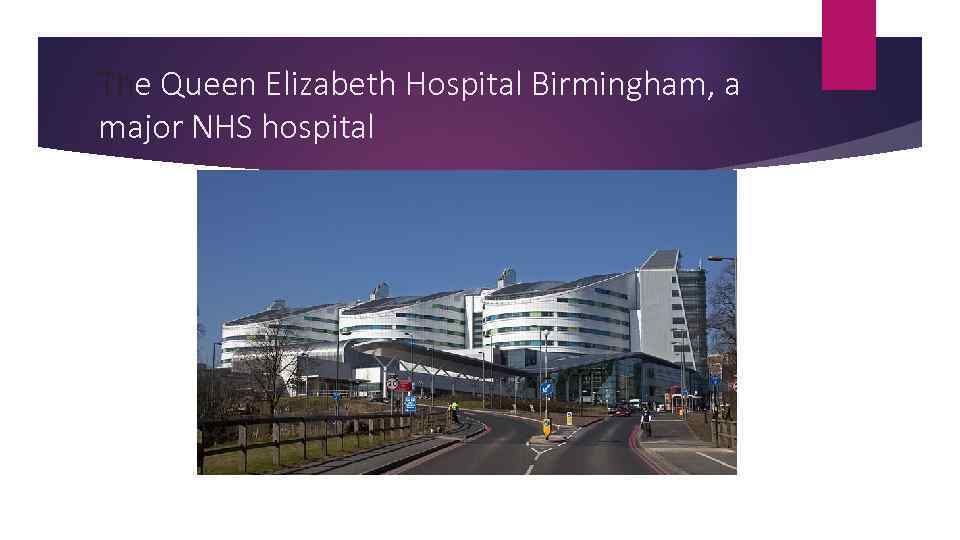 The Queen Elizabeth Hospital Birmingham, a major NHS hospital
 Real estate and renting activities The real estate and renting activities sector includes the letting of dwellings and other related business support activities. The Blue Book 2013 reports that real estate industry added gross value of £ 143, 641 million in 2011. Notable real estate companies in the United Kingdom include British Land The Peel Group.
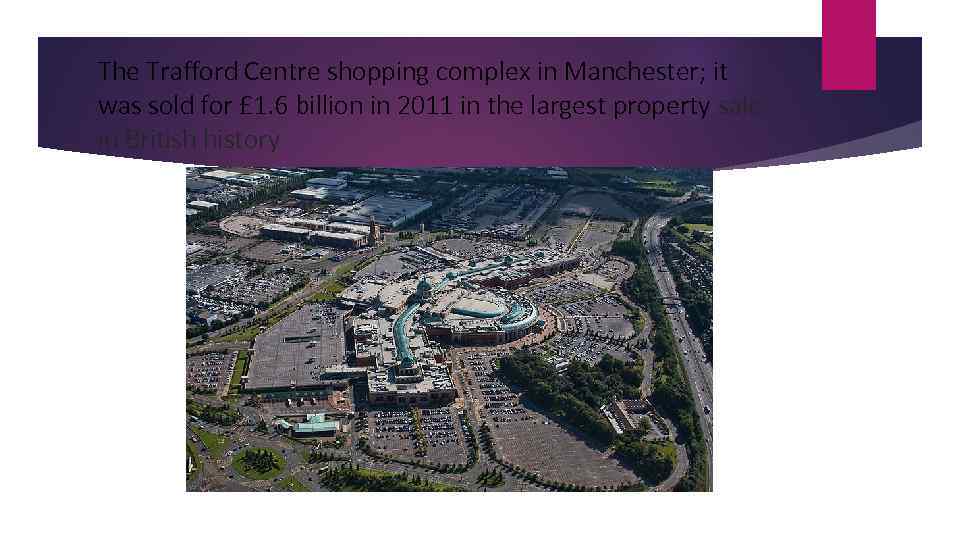 The Trafford Centre shopping complex in Manchester; it was sold for £ 1. 6 billion in 2011 in the largest property sale in British history