Скачать презентацию The Economics of Jerusalem Leila Farsakh University of
510f20d0157f566e2c2a5b02c85d9bfb.ppt
- Количество слайдов: 13
 The Economics of Jerusalem Leila Farsakh University of Massachusetts Boston CIS- MIT New York, June 12 2006
 The Economics of Jerusalem n What are the economic realities of Jerusalem today and how can they impact the future? n Economic growth in Jerusalem has relied on 3 main factors: n n Its religious dimension: a double edged sword Population growth State intervention Can it be any different in the future: markets versus states, globalization versus nations
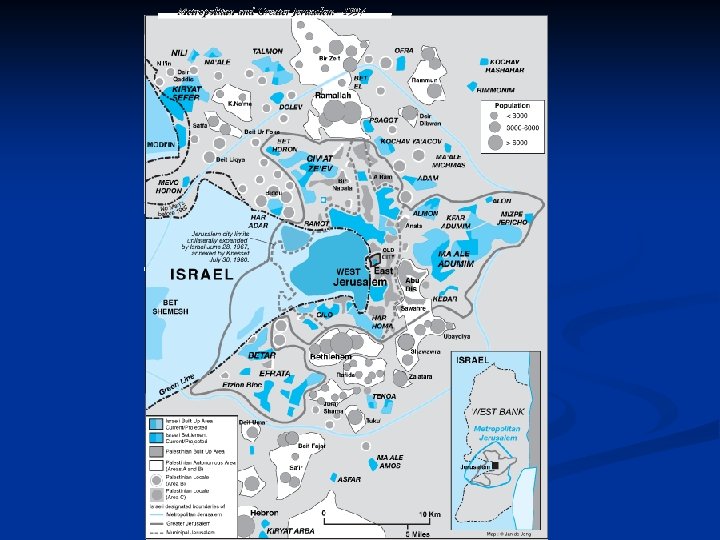
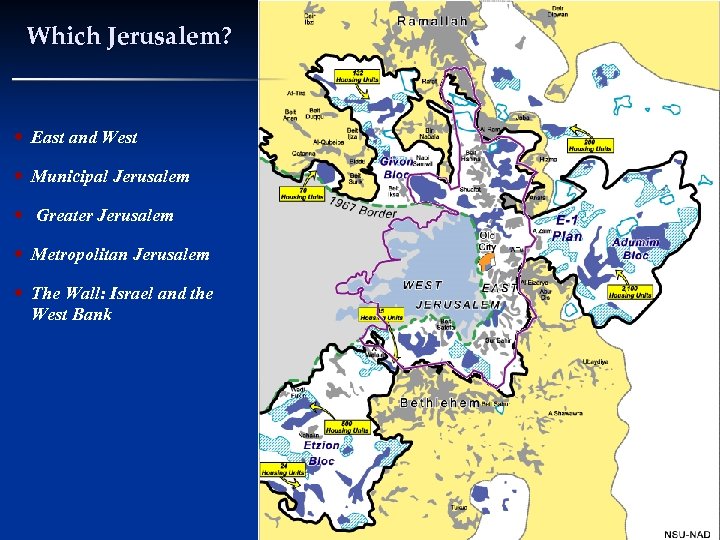 Which Jerusalem? East and West Municipal Jerusalem Greater Jerusalem Metropolitan Jerusalem The Wall: Israel and the West Bank
 Religion and Jerusalem n Its raison d’etre, but is it also its source of growth? n Potentially a means to generate growth via its effect on Tourism: n n n Tourism generates $2. 4 -4. 5 billion, roughly 4% of Israel’s GNP Jerusalem accounts for 31% of all overnight staying tourists 2004, higher than Tel Aviv Yet it accounts for 20% of total income from tourism Income from accounts for 20% of the Jerusalem city’s income Historically an obstacle to economic activity Source: Israeli Central Bureau of Statistics
 The population of Municipal Jerusalem, 2005: Consumers or Producers? n 67% of the population is Jewish n n 30% of which are Haredi, or ultra-orthodox, Jews 31% of the population under the age of 15 22% of households live under the poverty line 33% of the population are Palestinian - 41% of the population under the age of 15 42% of live under the poverty line n Jerusalem is considered one of the poorest cities in Israel, per capita income is 1/3 the Israeli national average n Migration: More people leaving Jerusalem than entering it: n Net loss of 81, 700 residents between 1990 and 2002, 50% of which moved to metropolitan Jerusalem n Source: ICBS, Statistical Abstract of Jerusalem
 The Labor Force in Jerusalem n Less than 32% of the population is economically active compared with 40% in Tel Aviv n Increasing number of foreign workers: n n estimated 20% of the estimated 250, 000 -350, 000 foreign workers live in Israel, mainly in low skilled jobs Different economic structure between Israelis and Palestinians
 The Economically Active Jerusalemites: n Israelis n 49% of all employment in the public sector n n n 26% in tourism industry 10% in high tech, a particularly growing and promising sector 49% work in East Jerusalem 51% in work West Jerusalem 59% of the population living in Metropolitan Jerusalem work in Municipal Jerusalem, Jewish Sector of the city growing between 2 -4% per annum since 1996 Source: ICBS: Statistical Yearbook of Jerusalem
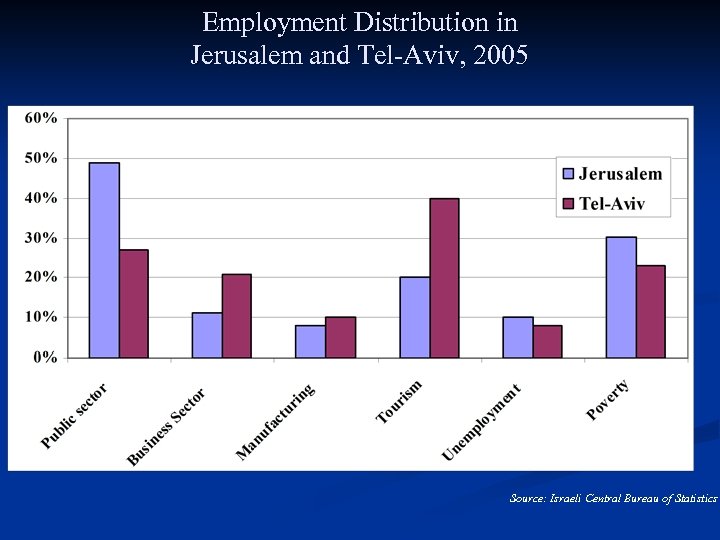 Employment Distribution in Jerusalem and Tel-Aviv, 2005 Source: Israeli Central Bureau of Statistics
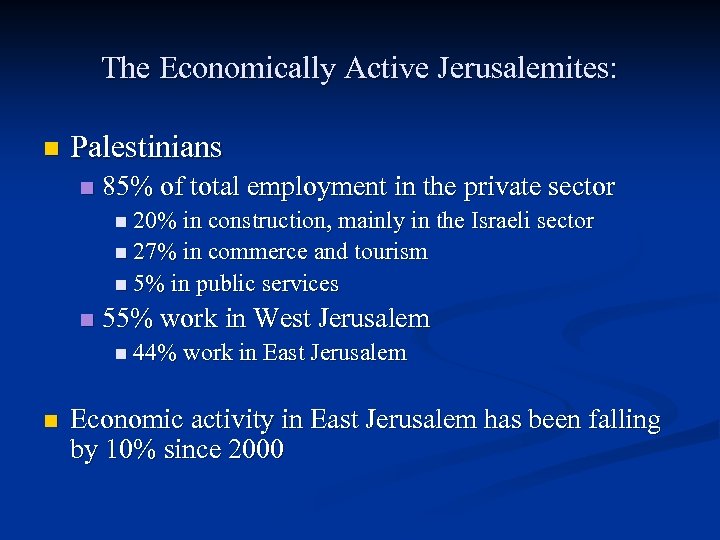 The Economically Active Jerusalemites: n Palestinians n 85% of total employment in the private sector n 20% in construction, mainly in the Israeli sector n 27% in commerce and tourism n 5% in public services n 55% work in West Jerusalem n 44% work in East Jerusalem n Economic activity in East Jerusalem has been falling by 10% since 2000
 Implications for the Future Changing demographics: n n n More people leaving Jerusalem than those living in it Jerusalem more a dormitory than an economic hub? How can the future change this tendency The doubling of the Palestinian population by 2050: how to deal with them:
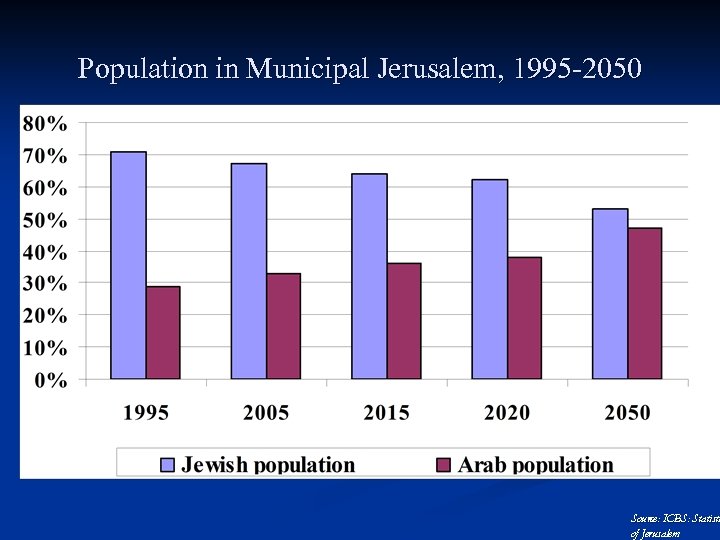 Population in Municipal Jerusalem, 1995 -2050 Source: ICBS: Statisti of Jerusalem
 Sources of Growth for the Future Religion: n Population growth: n State versus market: n Globalization: of industries and people n Investment in technology n Open borders n