


 Скачать презентацию The Economics of Housing Greg Mc Gill FRTPI
6339921dc773d6fec9dc5d72aebd1d85.ppt
- Количество слайдов: 12
 The Economics of Housing Greg Mc. Gill FRTPI FRICS RTPI SW Research Officer
 In 1975 my wife and I bought: • • a 4 bed Victorian terraced house built in 1885 in the centre of York and it cost us £ 6, 850. ------------- • Today, comparable dwellings in York are on the market for around £ 500, 000. RTPI SW - December 2016 2
 The economics of house prices House prices are a combination of two of the three factors of production: 1. Land: • The natural resources of the world. • Fixed in supply and location • Has no cost of production 2. Capital: • Buildings + improvements. RTPI SW - December 2016 3
 Land as a percentage of house value • No studies in UK • Research in US and Australia • figures reported: – 88% in San Francisco (2004) – 23% in Oklahoma (2004) – 63% in Perth, WA (2011) • Studies reveal the land element increases over time • On the basis of the above an average of 60% for 2011 in England is considered reasonable. RTPI SW - December 2016 4
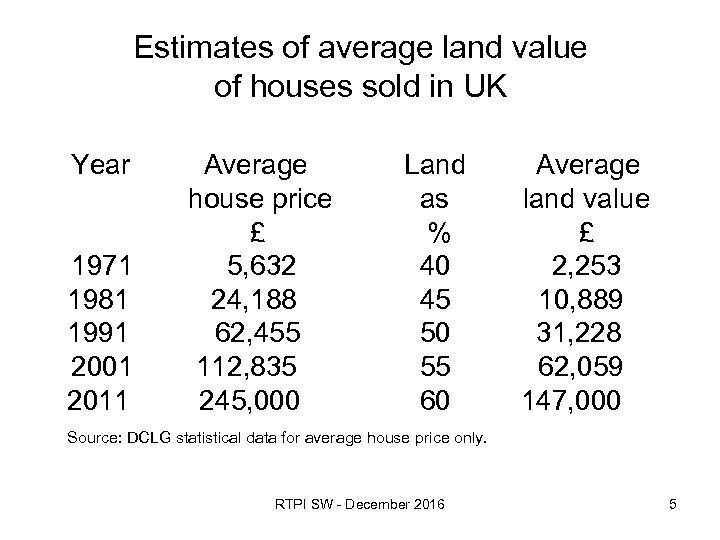 Estimates of average land value of houses sold in UK Year 1971 1981 1991 2001 2011 Average house price £ 5, 632 24, 188 62, 455 112, 835 245, 000 Land as % 40 45 50 55 60 Average land value £ 2, 253 10, 889 31, 228 62, 059 147, 000 Source: DCLG statistical data for average house price only. RTPI SW - December 2016 5
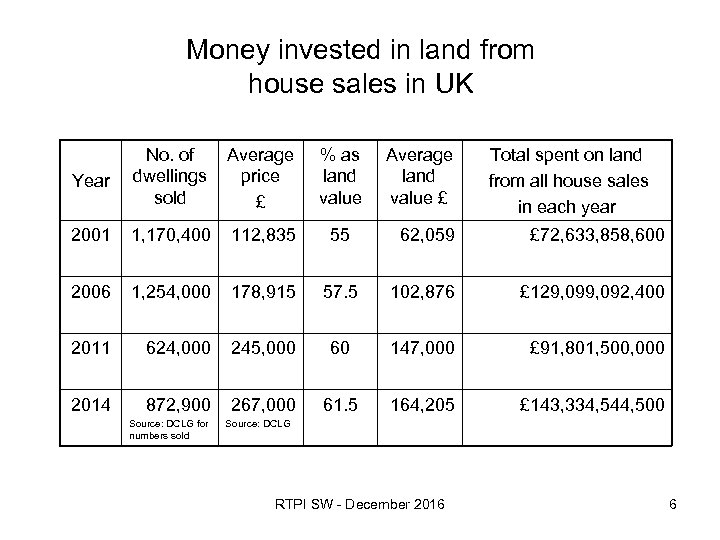 Money invested in land from house sales in UK Year No. of dwellings sold Average price £ % as land value 2001 1, 170, 400 112, 835 55 62, 059 £ 72, 633, 858, 600 2006 1, 254, 000 178, 915 57. 5 102, 876 £ 129, 092, 400 2011 624, 000 245, 000 60 147, 000 £ 91, 801, 500, 000 2014 872, 900 267, 000 61. 5 164, 205 £ 143, 334, 544, 500 Source: DCLG for numbers sold Average land value £ Total spent on land from all house sales in each year Source: DCLG RTPI SW - December 2016 6
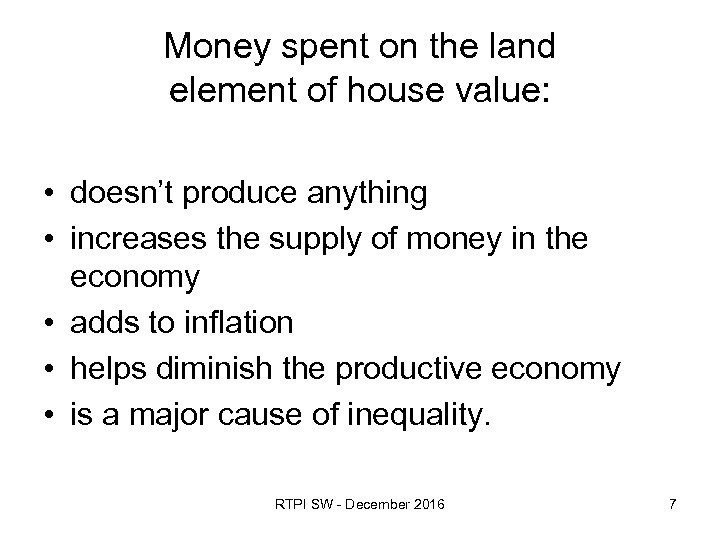 Money spent on the land element of house value: • doesn’t produce anything • increases the supply of money in the economy • adds to inflation • helps diminish the productive economy • is a major cause of inequality. RTPI SW - December 2016 7
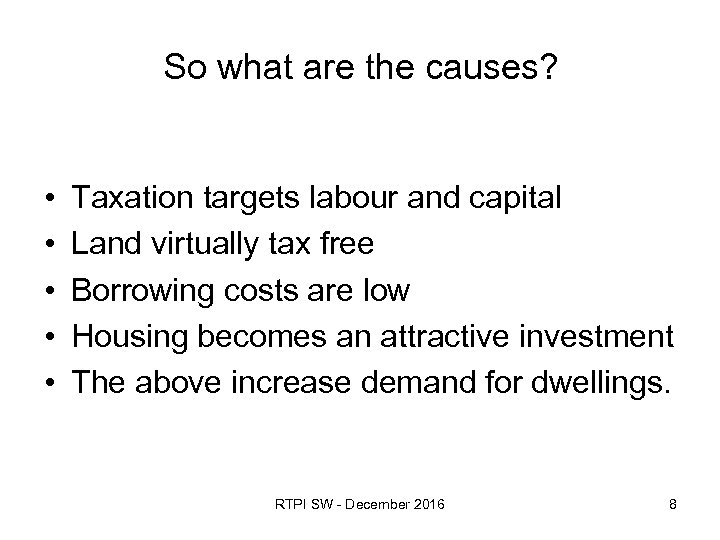 So what are the causes? • • • Taxation targets labour and capital Land virtually tax free Borrowing costs are low Housing becomes an attractive investment The above increase demand for dwellings. RTPI SW - December 2016 8
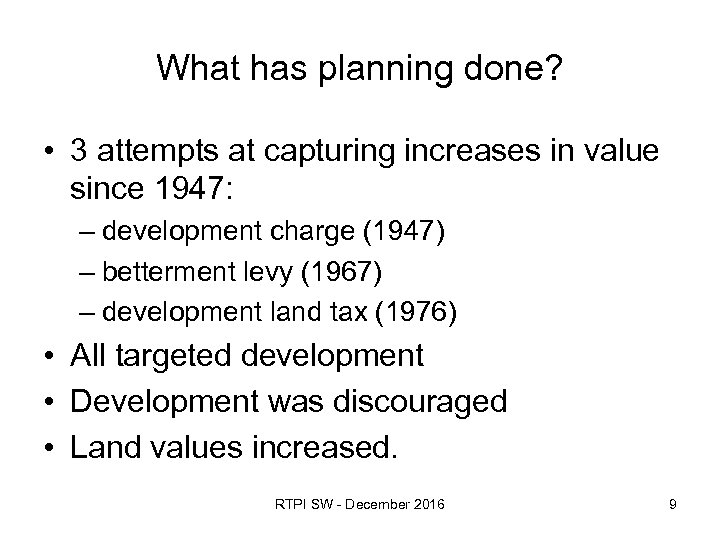 What has planning done? • 3 attempts at capturing increases in value since 1947: – development charge (1947) – betterment levy (1967) – development land tax (1976) • All targeted development • Development was discouraged • Land values increased. RTPI SW - December 2016 9
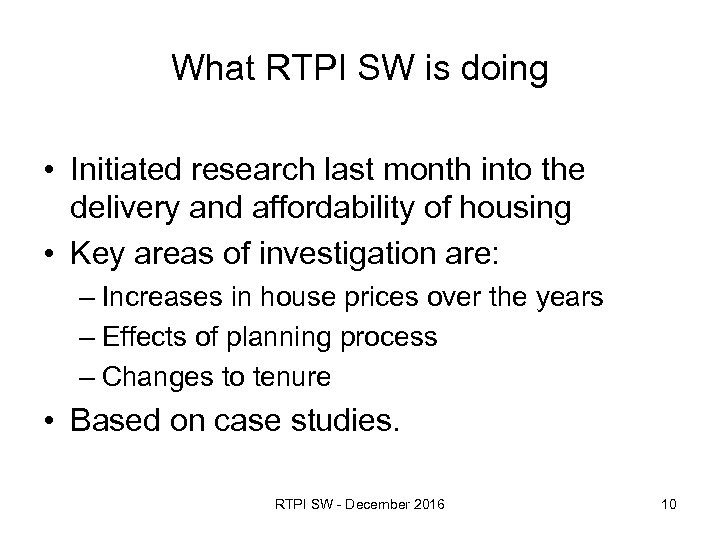 What RTPI SW is doing • Initiated research last month into the delivery and affordability of housing • Key areas of investigation are: – Increases in house prices over the years – Effects of planning process – Changes to tenure • Based on case studies. RTPI SW - December 2016 10
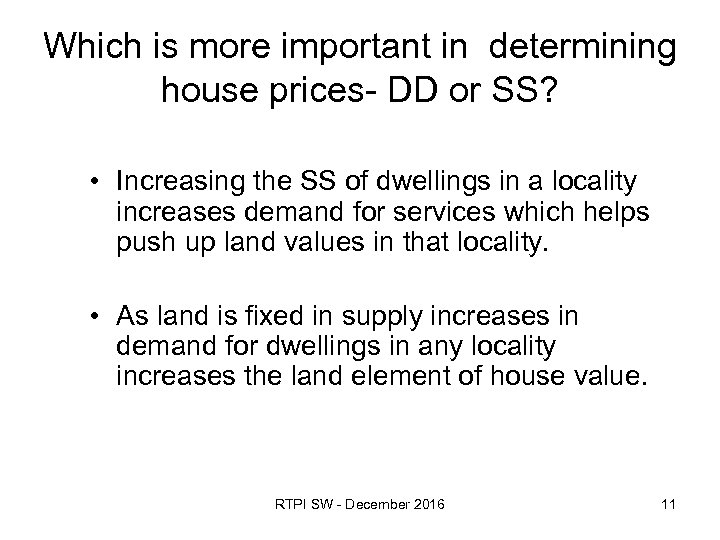 Which is more important in determining house prices- DD or SS? • Increasing the SS of dwellings in a locality increases demand for services which helps push up land values in that locality. • As land is fixed in supply increases in demand for dwellings in any locality increases the land element of house value. RTPI SW - December 2016 11
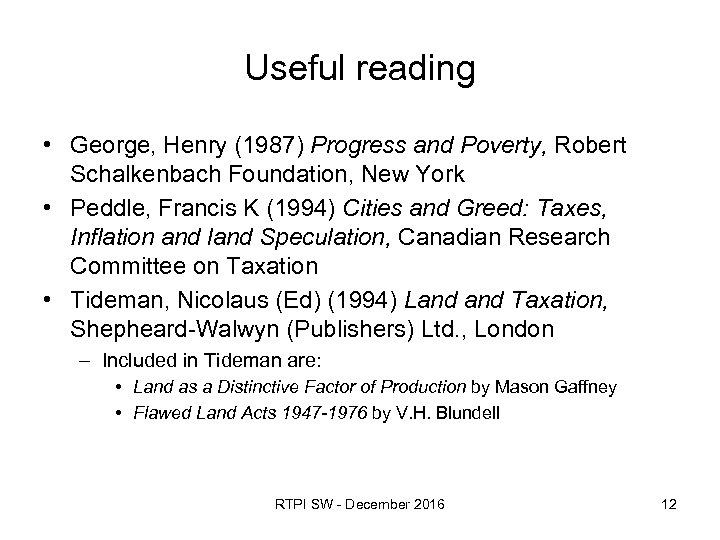 Useful reading • George, Henry (1987) Progress and Poverty, Robert Schalkenbach Foundation, New York • Peddle, Francis K (1994) Cities and Greed: Taxes, Inflation and land Speculation, Canadian Research Committee on Taxation • Tideman, Nicolaus (Ed) (1994) Land Taxation, Shepheard-Walwyn (Publishers) Ltd. , London – Included in Tideman are: • Land as a Distinctive Factor of Production by Mason Gaffney • Flawed Land Acts 1947 -1976 by V. H. Blundell RTPI SW - December 2016 12