


 Скачать презентацию The East African Integrated Disease Surveillance Network EAIDSNet
d11d7f110c550263d7d683681cc7d772.ppt
- Количество слайдов: 19
 The East African Integrated Disease Surveillance Network (EAIDSNet) Collaboration of EAIDSNet and EAPHLNP Dr Willy Were ECSA Health Community 1
 Presentation outline n Genesis and evolution of EAIDSNet and EAPHLN project n Regional Legal Instruments n Major achievements in the joint project/EAIDSNet implementation ECSA Health Community 2
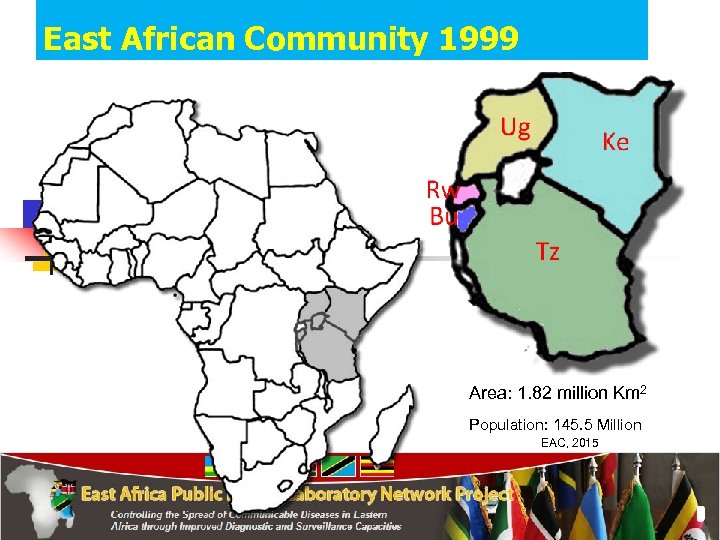 East African Community 1999 Area: 1. 82 million Km 2 Population: 145. 5 Million EAC, 2015
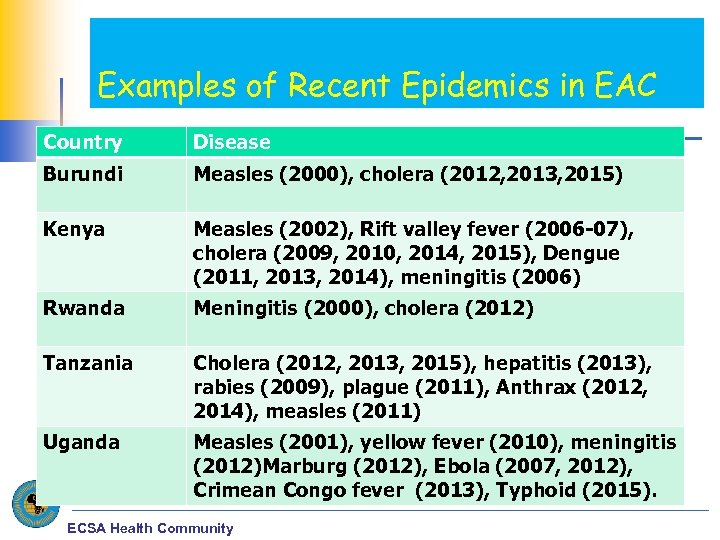 Examples of Recent Epidemics in EAC Country Disease Burundi Measles (2000), cholera (2012, 2013, 2015) Kenya Measles (2002), Rift valley fever (2006 -07), cholera (2009, 2010, 2014, 2015), Dengue (2011, 2013, 2014), meningitis (2006) Rwanda Meningitis (2000), cholera (2012) Tanzania Cholera (2012, 2013, 2015), hepatitis (2013), rabies (2009), plague (2011), Anthrax (2012, 2014), measles (2011) Uganda Measles (2001), yellow fever (2010), meningitis (2012)Marburg (2012), Ebola (2007, 2012), Crimean Congo fever (2013), Typhoid (2015). ECSA Health Community
 Enabling Legal Instruments • EAC Treaty 1999 • Article 108 Plant and animal disease control • Article 118 Human Health • Protocol on Cooperation on Health • Framework on Cross-Border Surveillance in EAC • IHR (2005) Articles 44 (Collaboration and assistance) 5
 Disease Surveillance Strategies • IDSR 1998 • IHR 2005 • EAIDSNet 2000 • Epidemiologist and Infectious diseases Experts • Public Universities • Research Organizations • Mo. H • Voluntary • Rockefeller funding • Coordinating disease control activities • 2004: Moved to EAC for easier and sustainable operation 6
 EAIDSNet: Objectives i. iii. iv. v. Enhance cross-country and cross-institutional collaboration on disease prevention & control, Promote exchange and dissemination of information on Integrated Disease Surveillance Harmonize disease surveillance systems in the region, Strengthen regional capacity for disease surveillance and response Ensure continuous exchange of expertise and best practices for disease surveillance and control. 7
 Progress of EAIDSNet n Stakeholders recognized that labs were the weakest point in disease surveillance n Aimed to establish efficient, high quality labs accessible in esp remote peri-border areas 8
 EAPHLNP n 5 Yr World Bank funded (since 2010), extended for 4 yrs-The East Africa Public Health Laboratories Networking Project n Closely works with EADSNet 9
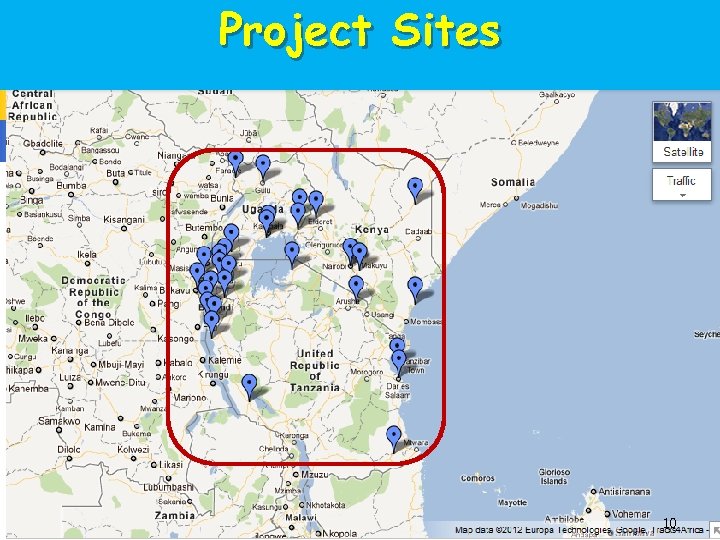 Project Sites ECSA Health Community 10
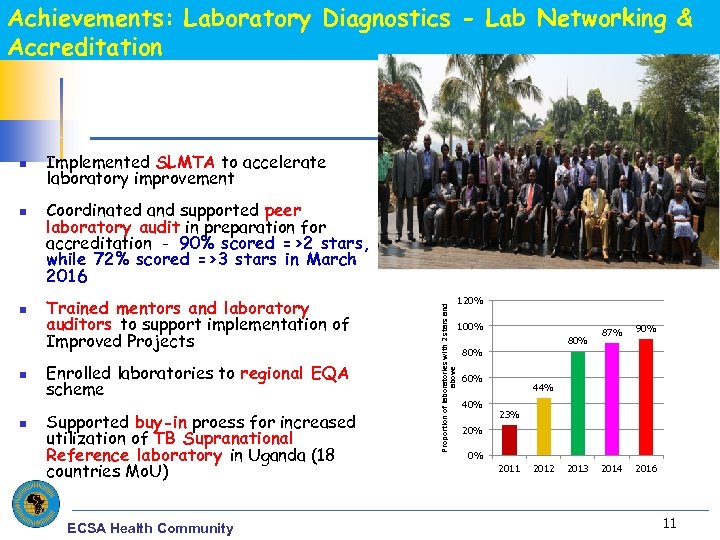 Achievements: Laboratory Diagnostics - Lab Networking & Accreditation n n Implemented SLMTA to accelerate laboratory improvement Coordinated and supported peer laboratory audit in preparation for accreditation - 90% scored =>2 stars, while 72% scored =>3 stars in March 2016 Trained mentors and laboratory auditors to support implementation of Improved Projects Enrolled laboratories to regional EQA scheme Supported buy-in proess for increased utilization of TB Supranational Reference laboratory in Uganda (18 countries Mo. U) ECSA Health Community Proportion of laboratories with 2 stars and above n 120% 100% 80% 60% 40% 87% 90% 2014 2016 44% 23% 20% 0% 2011 2012 2013 11
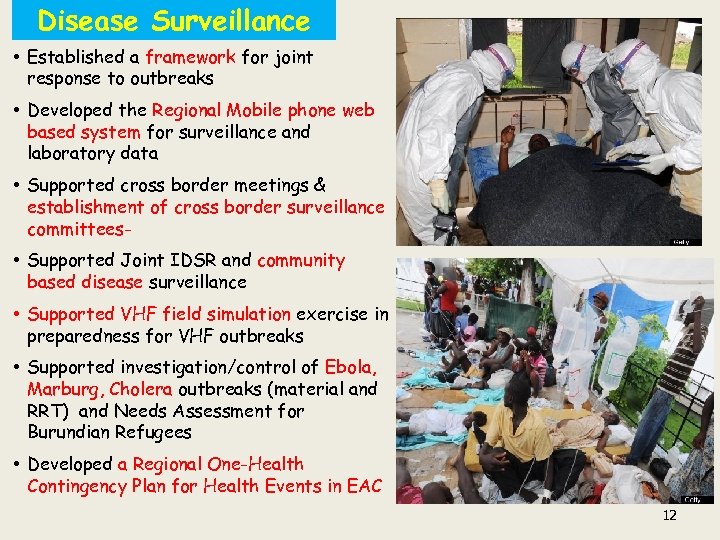 Disease Surveillance • Established a framework for joint response to outbreaks • Developed the Regional Mobile phone web based system for surveillance and laboratory data • Supported cross border meetings & establishment of cross border surveillance committees • Supported Joint IDSR and community based disease surveillance • Supported VHF field simulation exercise in preparedness for VHF outbreaks • Supported investigation/control of Ebola, Marburg, Cholera outbreaks (material and RRT) and Needs Assessment for Burundian Refugees • Developed a Regional One-Health Contingency Plan for Health Events in EAC 12
 Cross-Border Surveillance Committee Activities • Work plans – Joint Disease Control Activities • Routine, Quarterly • Emergency, as needed • Epidemic, as needed – Trainings – Information and data sharing on disease outbreaks-Formal and informal – Simulation exercises 13
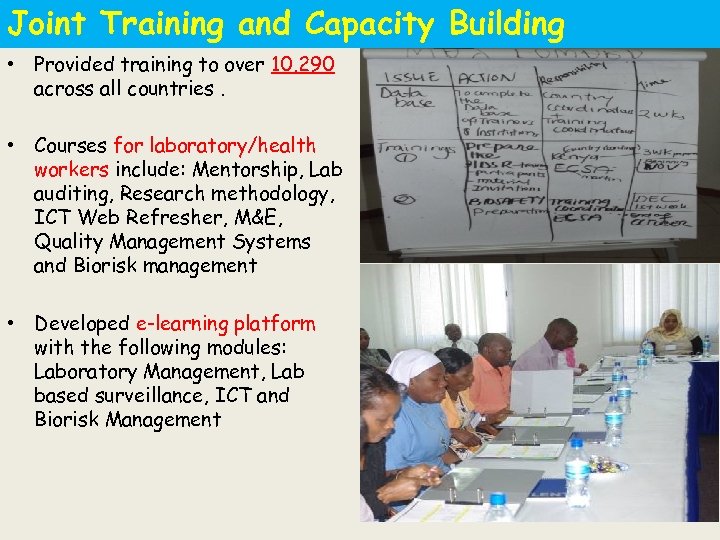 Joint Training and Capacity Building • Provided training to over 10, 290 across all countries. • Courses for laboratory/health workers include: Mentorship, Lab auditing, Research methodology, ICT Web Refresher, M&E, Quality Management Systems and Biorisk management • Developed e-learning platform with the following modules: Laboratory Management, Lab based surveillance, ICT and Biorisk Management 14
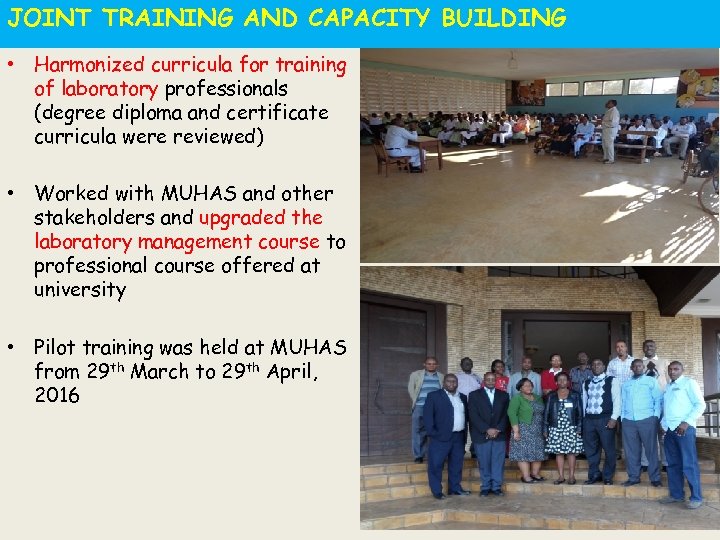 JOINT TRAINING AND CAPACITY BUILDING • Harmonized curricula for training of laboratory professionals (degree diploma and certificate curricula were reviewed) • Worked with MUHAS and other stakeholders and upgraded the laboratory management course to professional course offered at university • Pilot training was held at MUHAS from 29 th March to 29 th April, 2016 15
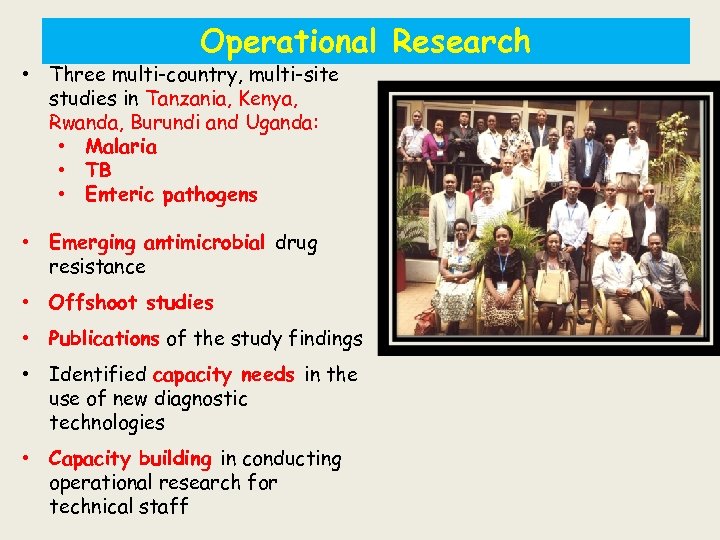 Operational Research • Three multi-country, multi-site studies in Tanzania, Kenya, Rwanda, Burundi and Uganda: • Malaria • TB • Enteric pathogens • Emerging antimicrobial drug resistance • Offshoot studies • Publications of the study findings • Identified capacity needs in the use of new diagnostic technologies • Capacity building in conducting operational research for technical staff
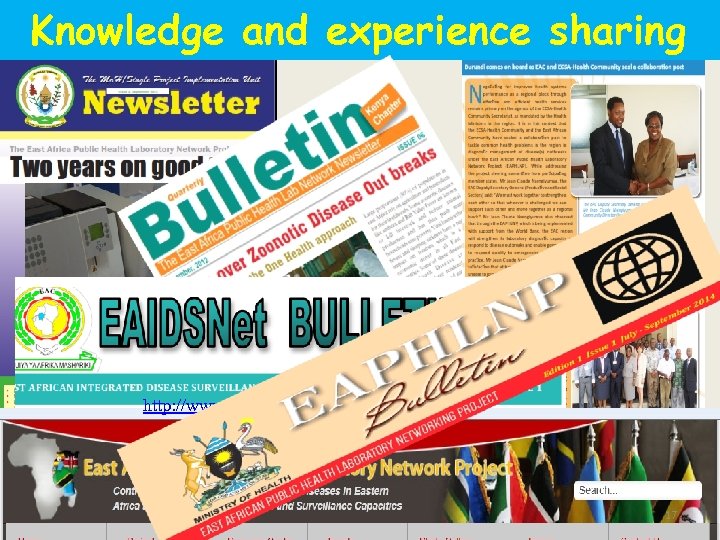 Knowledge and experience sharing http: //www. eaphln-ecsahc. org/ 17
 Conclusion • EAPHLNP is supporting EAIDSNet to achieve the grand objectives set at the beginning • Disease control in EAC is still “work in progress”. A lot more is still needed. • Involvement of all stakeholders at all stages is important to deal with the ever changing target 18
 Thank you 19