


 Скачать презентацию The Digital Dividend Opportunities and challenges for future
70cb258b44d062d59fd57b6fef3c0817.ppt
- Количество слайдов: 39
 The Digital Dividend Opportunities and challenges for future Broadcasting Services Daniel Sauvet-Goichon (TDF, France) Digi. TAG Chairman Sarajevo, 30 March 2006
 What is Digi. TAG ? Ø A non profit association formed in 1996, in the vicinity of the DVB project and the EBU, in Geneva Ø To promote and help Digital Terrestrial Television start in Europe Ø Created by 70 member organisations from 4 constituencies q. Broadcasters (public, commercial, private) q. Manufacturers equipment and consumer products q. Network and transmission operators q. Broadcast regulators and frequency spectrum administrations 2
 Overview of the presentation Ø I - Boarding to the future q High Definition TV q TV to mobiles Ø II - The European “Spectrum Dividend” question Ø III - So what? 3
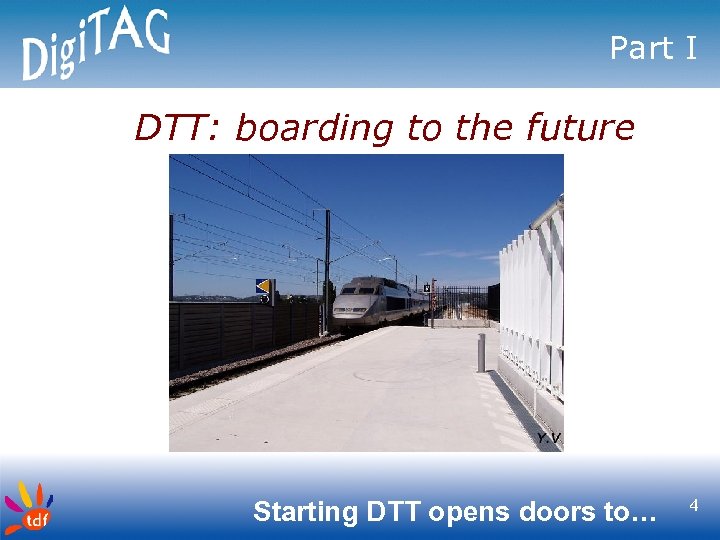 Part I DTT: boarding to the future Starting DTT opens doors to… 4
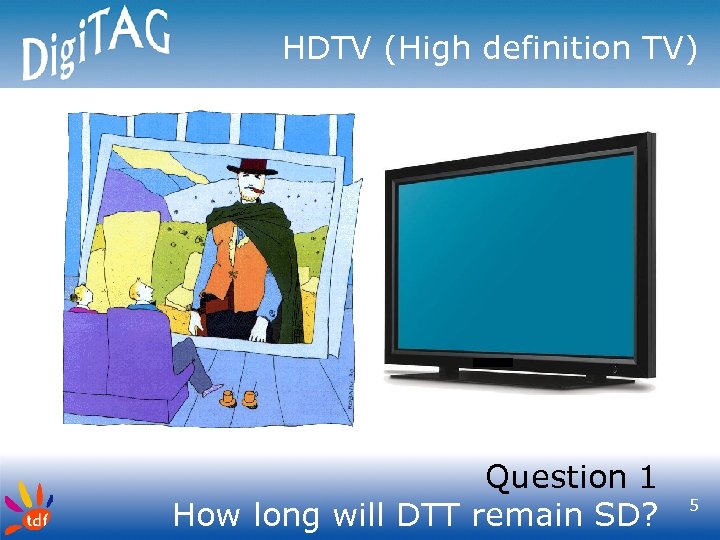 HDTV (High definition TV) Question 1 How long will DTT remain SD? 5
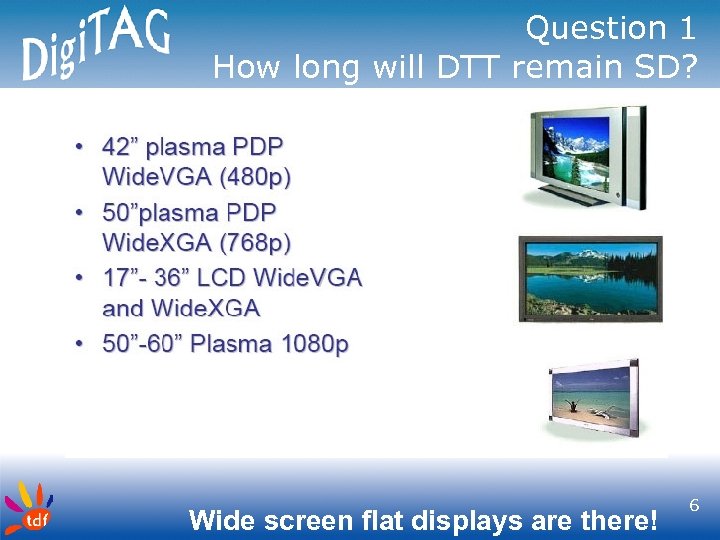 Question 1 How long will DTT remain SD? Wide screen flat displays are there! 6
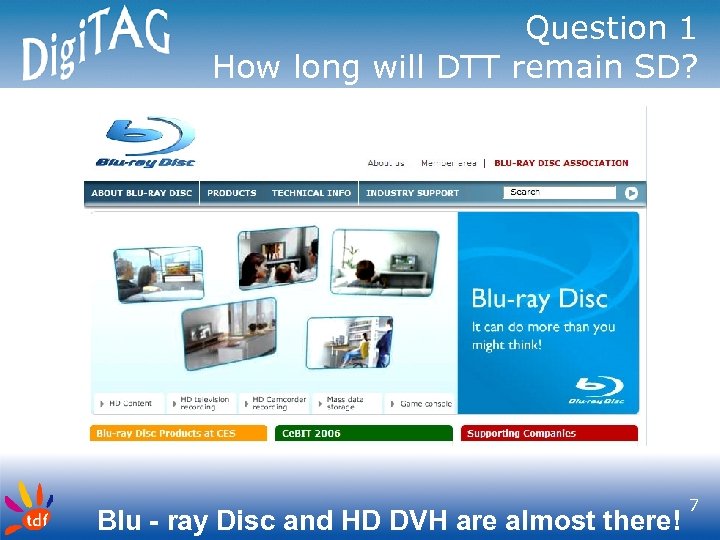 Question 1 How long will DTT remain SD? Blu - ray Disc and HD DVH are almost there! 7
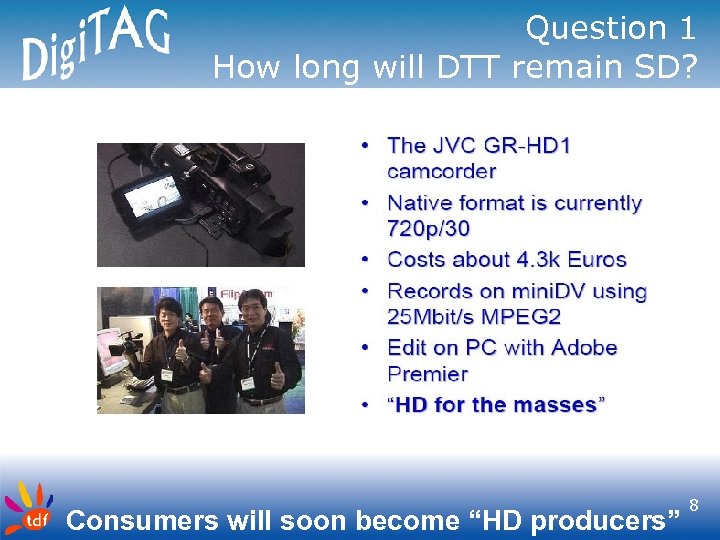 Question 1 How long will DTT remain SD? Consumers will soon become “HD producers” 8
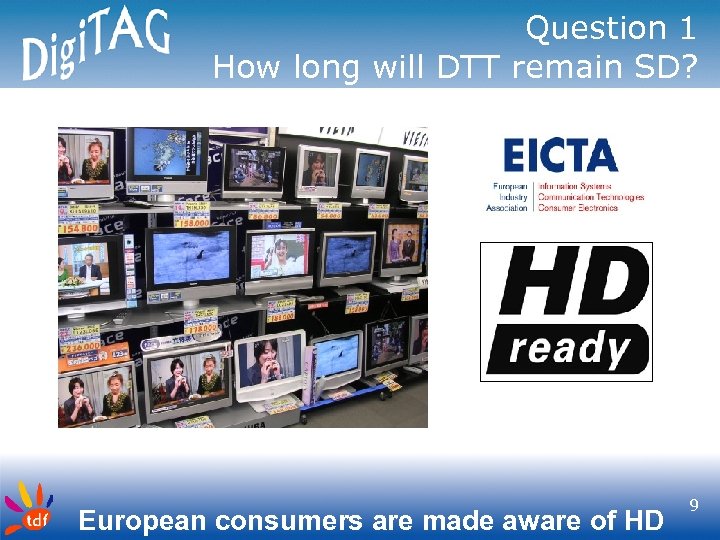 Question 1 How long will DTT remain SD? European consumers are made aware of HD 9
 DTT : boarding to the future Ø Question 1: How long will DTT remain standard quality (SD)? Ø Answer: DTT provides flexibility to start SD and move progressively towards HDTV q First multiplexes may stay SD for some time q New future multiplexes will provide HDTV possibilities Ø This may imply keeping some flexibility in your technical choices… …such as (for example)… 10
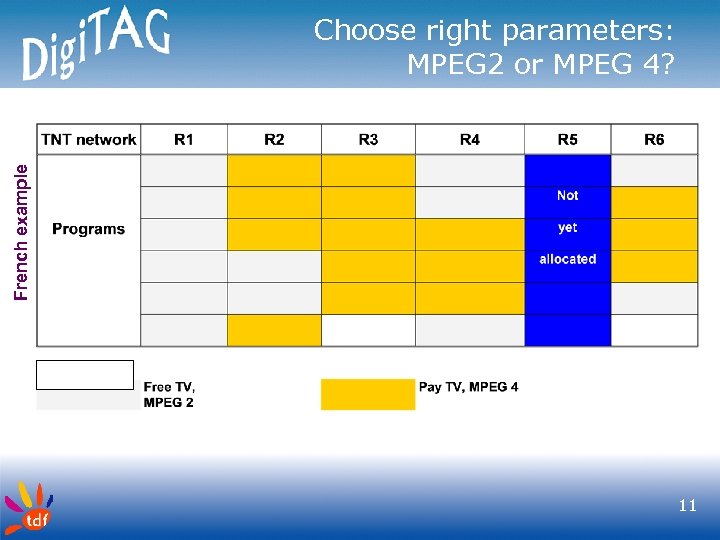 French example Choose right parameters: MPEG 2 or MPEG 4? 11
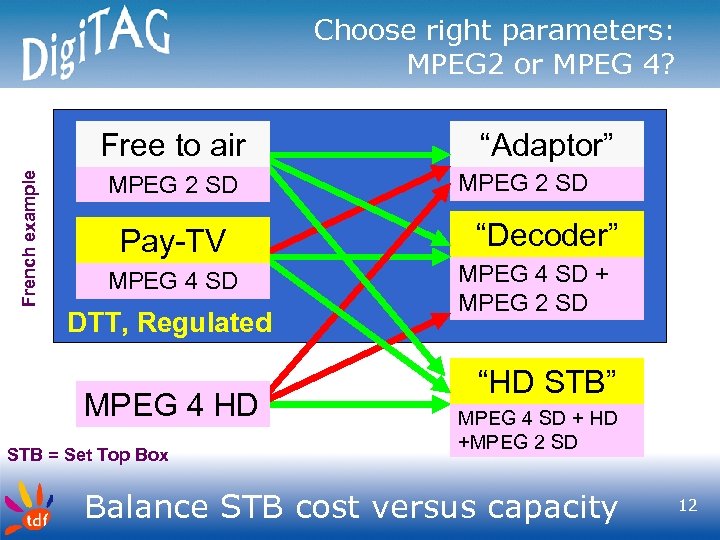 Choose right parameters: MPEG 2 or MPEG 4? French example Free to air MPEG 2 SD Pay-TV MPEG 4 SD DTT, Regulated MPEG 4 HD STB = Set Top Box “Adaptor” MPEG 2 SD “Decoder” MPEG 4 SD + MPEG 2 SD “HD STB” MPEG 4 SD + HD +MPEG 2 SD Balance STB cost versus capacity 12
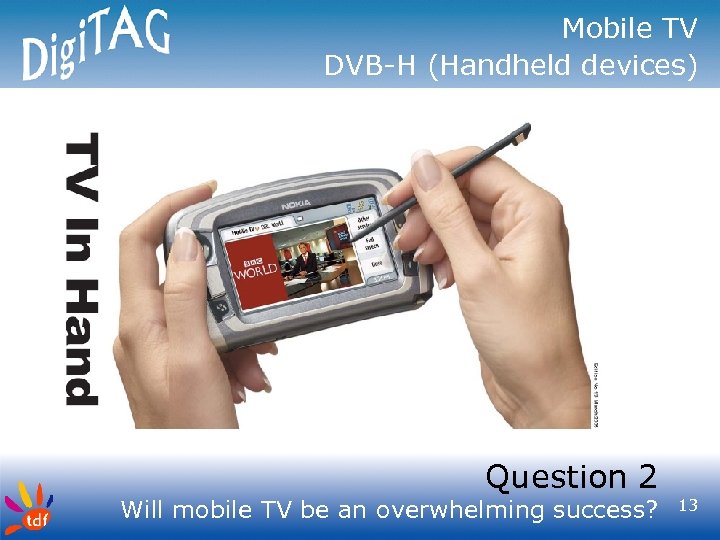 Mobile TV DVB-H (Handheld devices) Question 2 Will mobile TV be an overwhelming success? 13
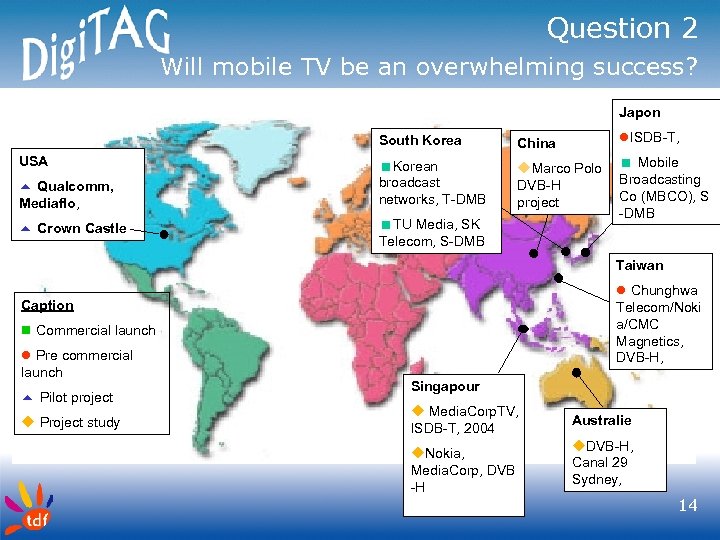 Question 2 Will mobile TV be an overwhelming success? Japon South Korea USA 5 Qualcomm, Mediaflo, 5 Crown Castle China l. ISDB-T,
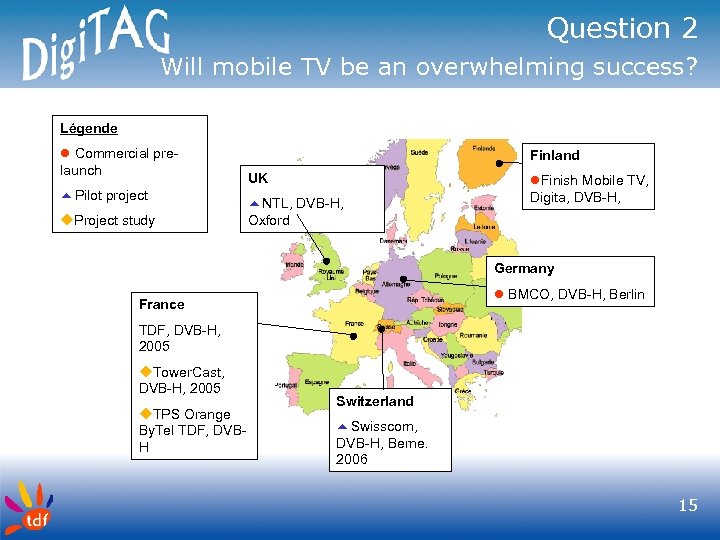 Question 2 Will mobile TV be an overwhelming success? Légende l Commercial prelaunch 5 Pilot project u. Project study Finland UK 5 NTL, DVB-H, Oxford l. Finish Mobile TV, Digita, DVB-H, Germany l BMCO, DVB-H, Berlin France TDF, DVB-H, 2005 u. Tower. Cast, DVB-H, 2005 u. TPS Orange By. Tel TDF, DVBH Switzerland 5 Swisscom, DVB-H, Berne. 2006 15
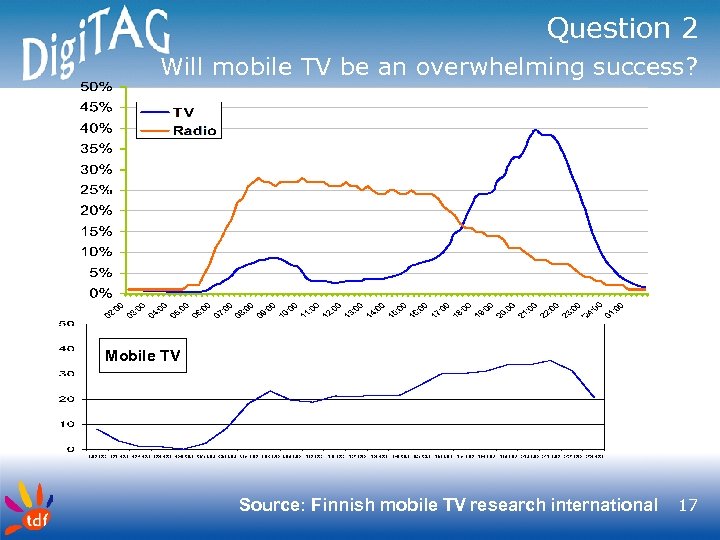
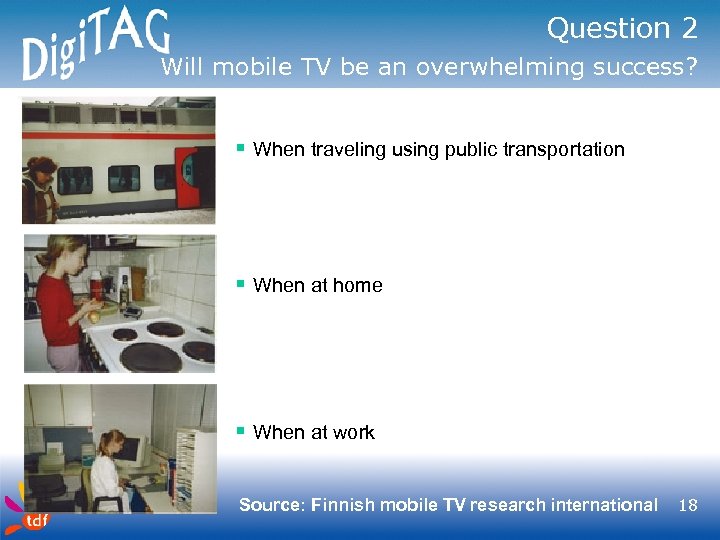
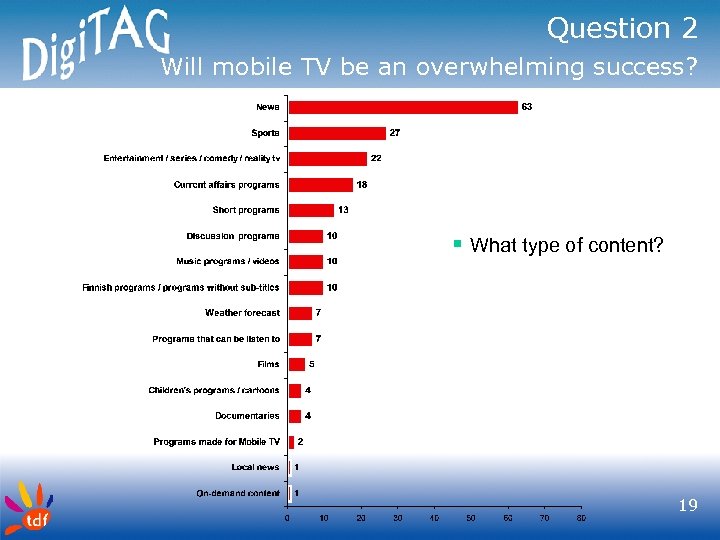
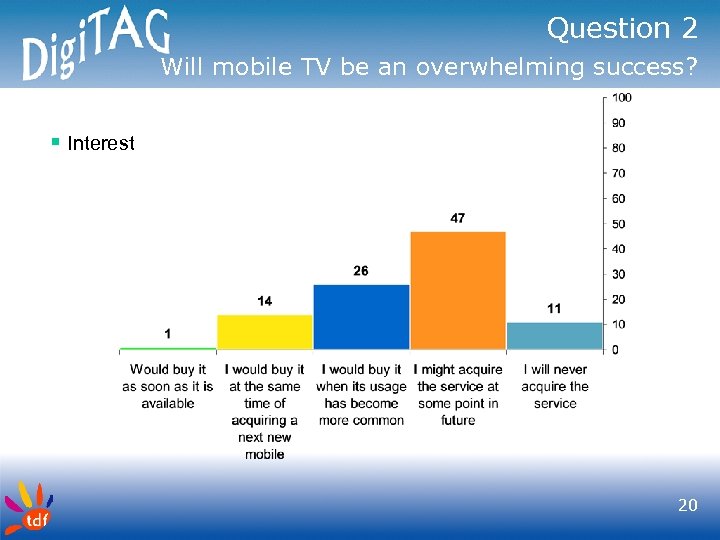
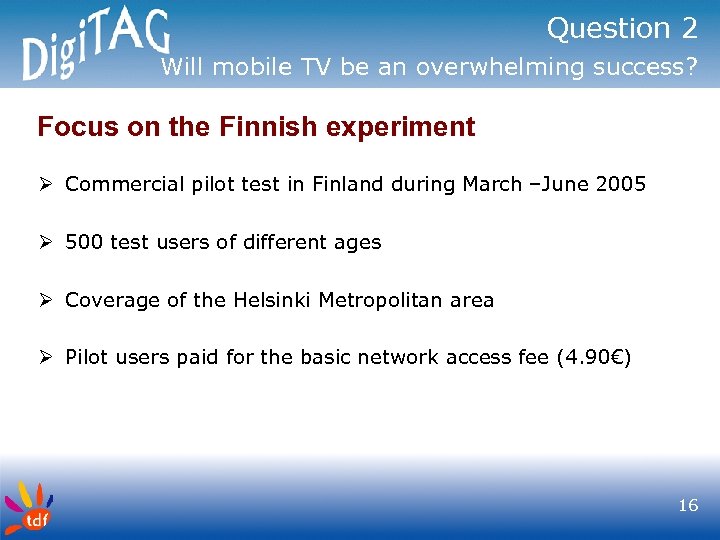 Question 2 Will mobile TV be an overwhelming success? Focus on the Finnish experiment Ø Commercial pilot test in Finland during March –June 2005 Ø 500 test users of different ages Ø Coverage of the Helsinki Metropolitan area Ø Pilot users paid for the basic network access fee (4. 90€) 16
 Question 2 Will mobile TV be an overwhelming success? Mobile TV Source: Finnish mobile TV research international 17
 Question 2 Will mobile TV be an overwhelming success? § When traveling using public transportation § When at home § When at work Source: Finnish mobile TV research international 18
 Question 2 Will mobile TV be an overwhelming success? § What type of content? 19
 Question 2 Will mobile TV be an overwhelming success? § Interest 20
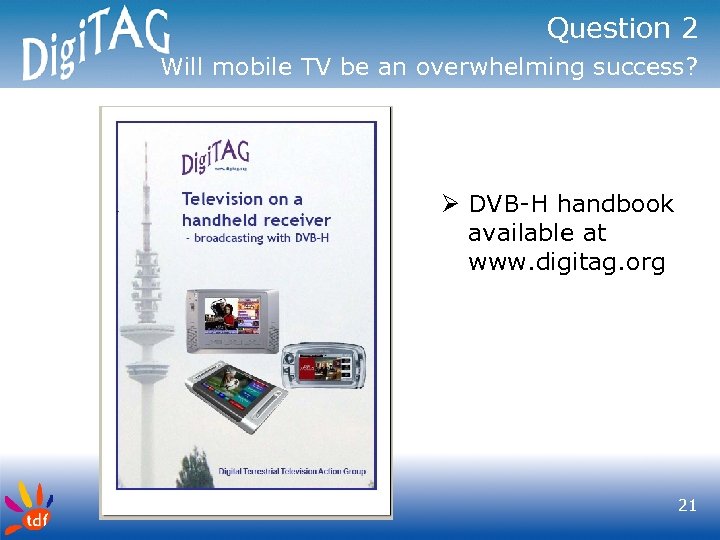 Question 2 Will mobile TV be an overwhelming success? Ø DVB-H handbook available at www. digitag. org 21
 DTT : boarding to the future Ø Question 2: Will mobile TV be an overwhelming success Ø Answer: most probably YES Ø A word of caution: Mobile TV is a broadcasting service (one to many). It is not transmission of video content thru a personal mobile communication (one to one) which would be much more expensive But have we got enough frequencies? 22
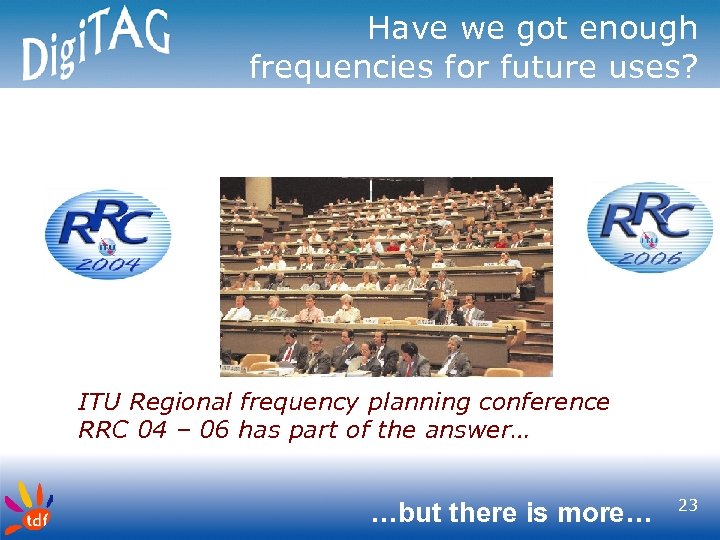 Have we got enough frequencies for future uses? ITU Regional frequency planning conference RRC 04 – 06 has part of the answer… …but there is more… 23
 Part II The European “Spectrum Dividend” question °°° A challenge for future broadcasting services 24
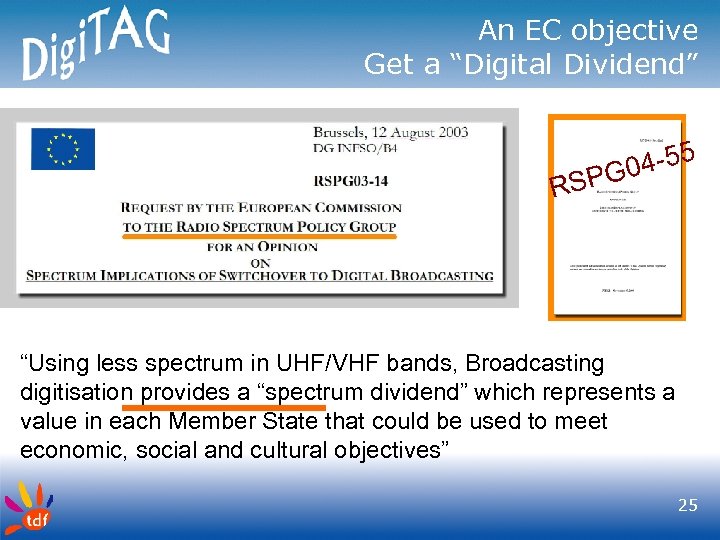 An EC objective Get a “Digital Dividend” 4 -55 PG 0 RS “Using less spectrum in UHF/VHF bands, Broadcasting digitisation provides a “spectrum dividend” which represents a value in each Member State that could be used to meet economic, social and cultural objectives” 25
 RSPG answer (2004): “The spectrum dividend” “… Digitisation leaves an undecided but considerable amount of spectrum in the relevant bands for more services such as broadcasting or other telecommunications services…” Ø How much spectrum? Ø For what purpose? Ø Who will decide? Will UHF bands IV&V remain Broadcasting only? 26
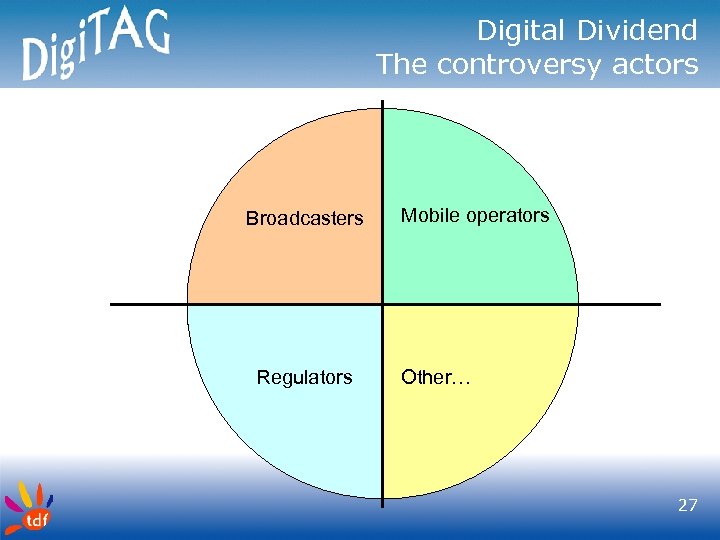 Digital Dividend The controversy actors Broadcasters Regulators Mobile operators Other… 27
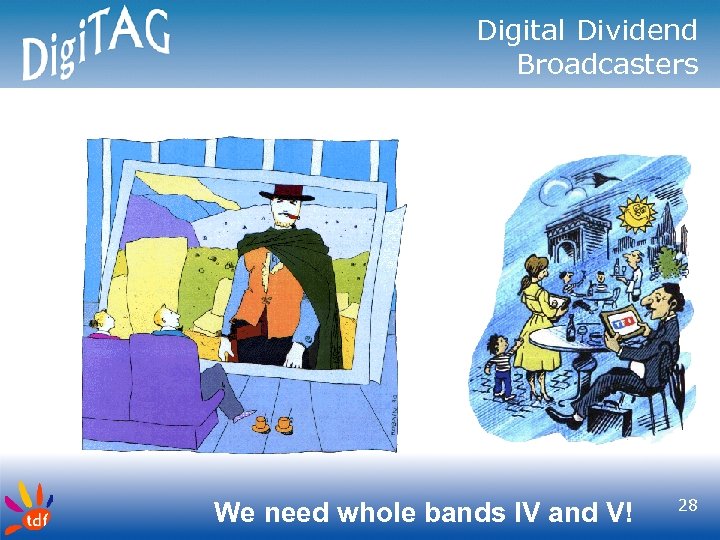 Digital Dividend Broadcasters We need whole bands IV and V! 28
 Digital Dividend Broadcasters Ø Will RRC 06 leave unplanned / unused spectrum? Certainly not! RRC 06 has the mandate to Plan the whole UHF range Ø Will RRC 06 fulfil mobile / handheld needs? Not satisfactorily! None of the planned service types corresponds 29
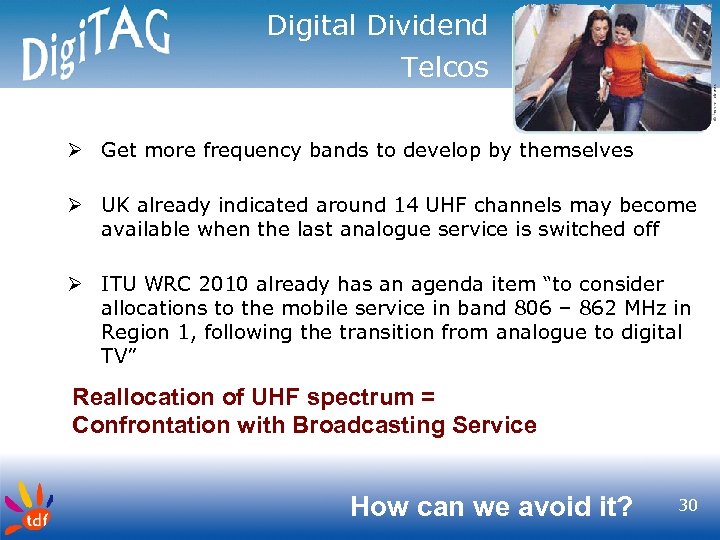 Digital Dividend Telcos Ø Get more frequency bands to develop by themselves Ø UK already indicated around 14 UHF channels may become available when the last analogue service is switched off Ø ITU WRC 2010 already has an agenda item “to consider allocations to the mobile service in band 806 – 862 MHz in Region 1, following the transition from analogue to digital TV” Reallocation of UHF spectrum = Confrontation with Broadcasting Service How can we avoid it? 30
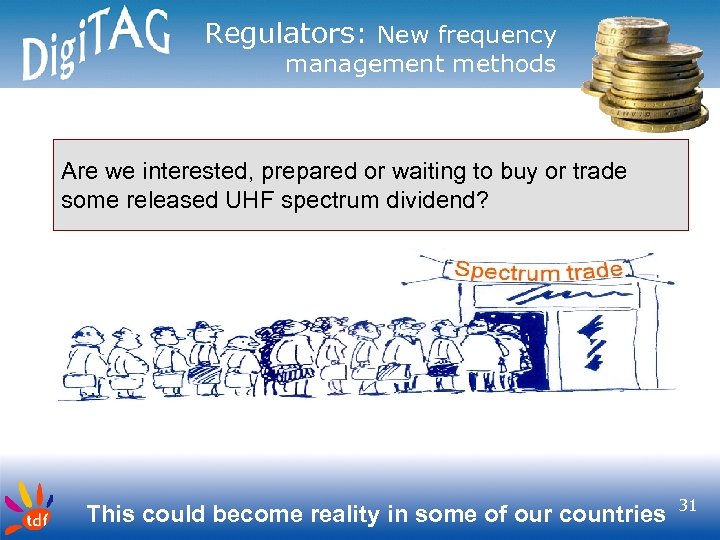 Regulators: New frequency management methods Are we interested, prepared or waiting to buy or trade some released UHF spectrum dividend? This could become reality in some of our countries 31
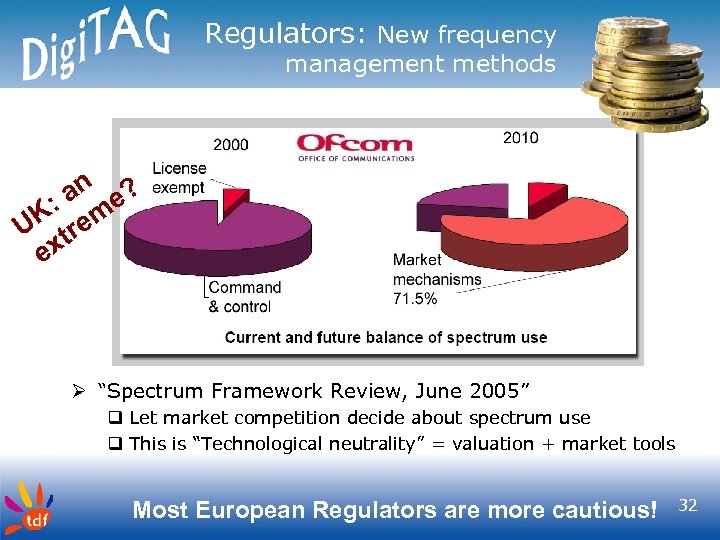 Regulators: New frequency management methods an e? K: em U tr ex Ø “Spectrum Framework Review, June 2005” q Let market competition decide about spectrum use q This is “Technological neutrality” = valuation + market tools Most European Regulators are more cautious! 32
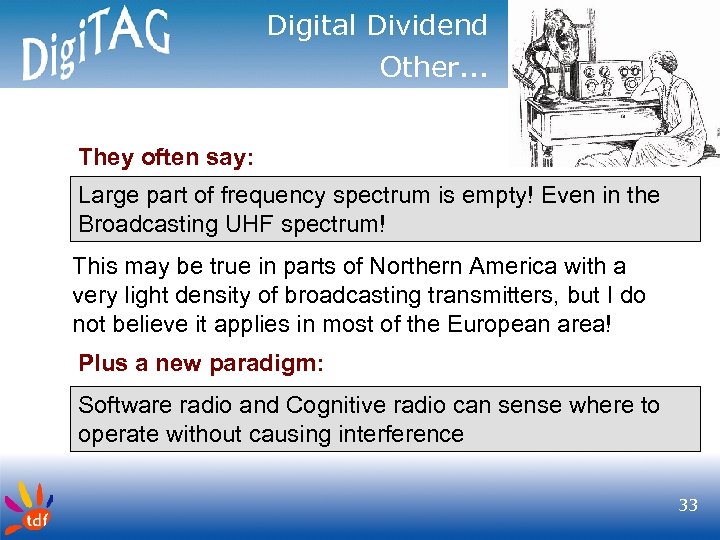 Digital Dividend Other… They often say: Large part of frequency spectrum is empty! Even in the Broadcasting UHF spectrum! This may be true in parts of Northern America with a very light density of broadcasting transmitters, but I do not believe it applies in most of the European area! Plus a new paradigm: Software radio and Cognitive radio can sense where to operate without causing interference 33
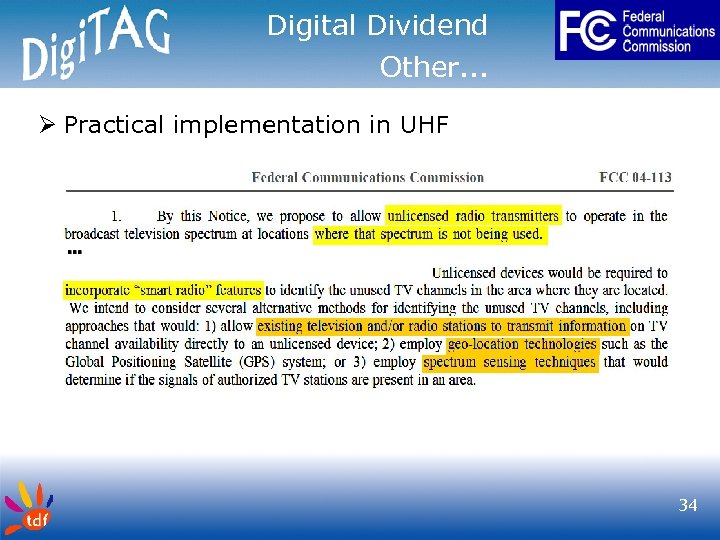 Digital Dividend Other… Ø Practical implementation in UHF 34
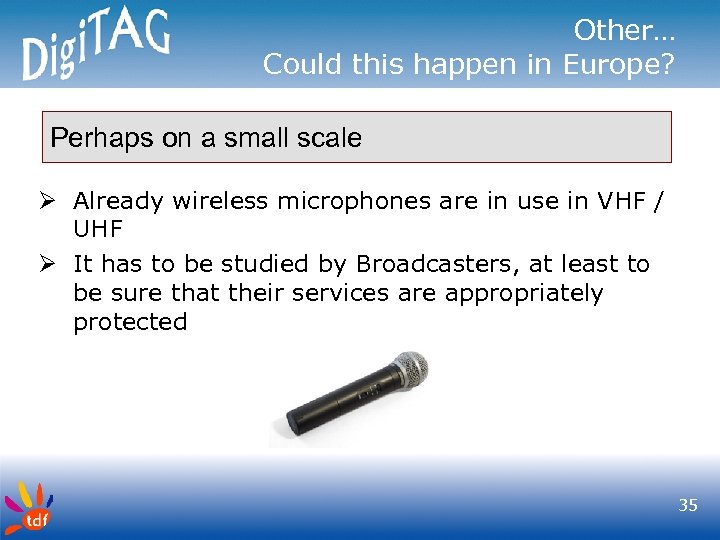 Other… Could this happen in Europe? Perhaps on a small scale Ø Already wireless microphones are in use in VHF / UHF Ø It has to be studied by Broadcasters, at least to be sure that their services are appropriately protected 35
 So what? 36
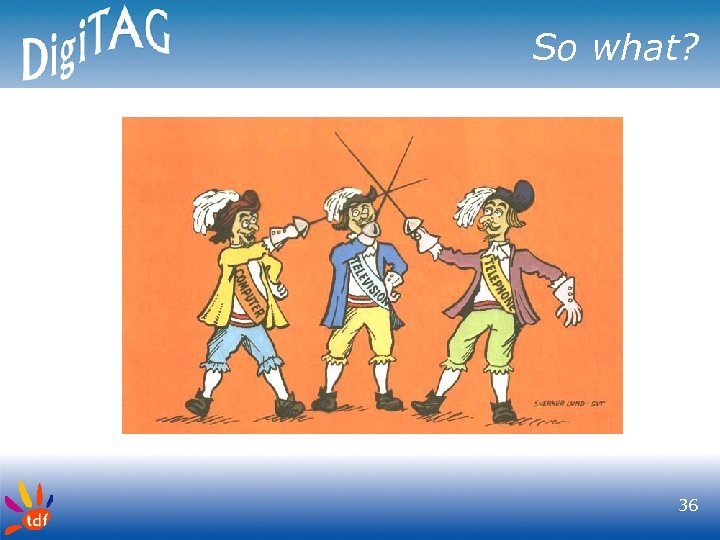
 So what? Facts and certainties Ø The ITU RCC 06 Plan will use the whole VHF UHF spectrum Ø Politicians (EC) will not give up the “Digital Spectrum Dividend” topic and profits Ø Cooperation between Telcos and Broadcasters is the best path towards multimedia to mobile devices. It avoids unnecessary confrontation These imply… 37
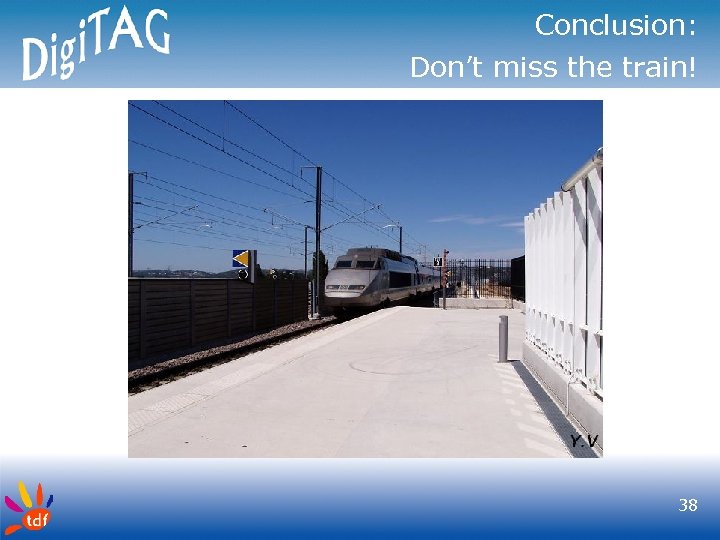 Conclusion: Don’t miss the train! 38
 Contact us q Website: www. digitag. org q Project office: projectoffice@digitag. org q Subscribe to our monthly web letter with news information on the DTT market