


 Скачать презентацию The Design of the Tax System Copyright 2004
design_tax 12.ppt
- Количество слайдов: 45
 The Design of the Tax System Copyright© 2004 South-Western 12
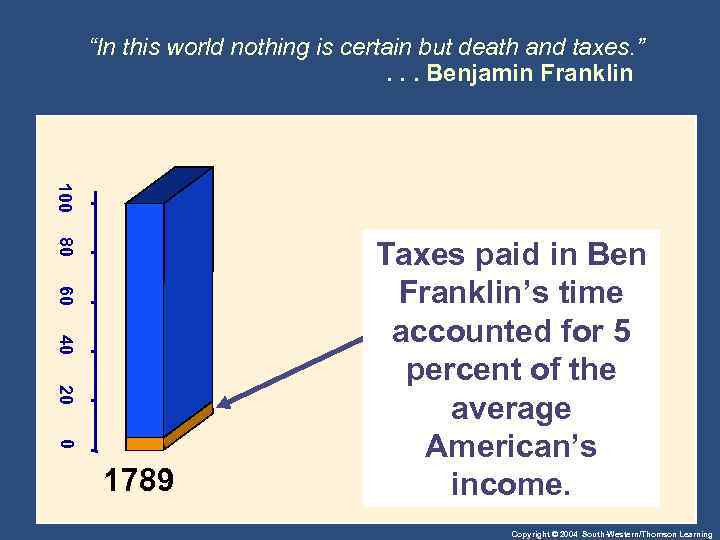 “In this world nothing is certain but death and taxes. ”. . . Benjamin Franklin 100 80 60 40 20 0 1789 Taxes paid in Ben Franklin’s time accounted for 5 percent of the average American’s income. Copyright © 2004 South-Western/Thomson Learning
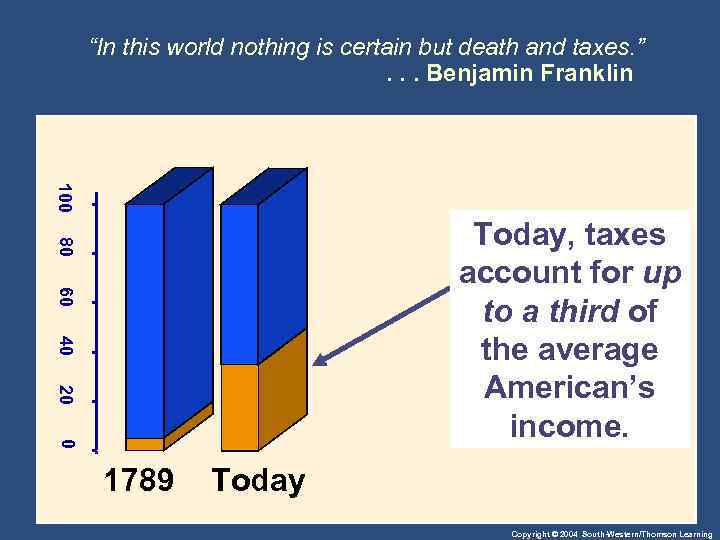 “In this world nothing is certain but death and taxes. ”. . . Benjamin Franklin 100 80 Today, taxes account for up to a third of the average American’s income. 60 40 20 0 1789 Today Copyright © 2004 South-Western/Thomson Learning
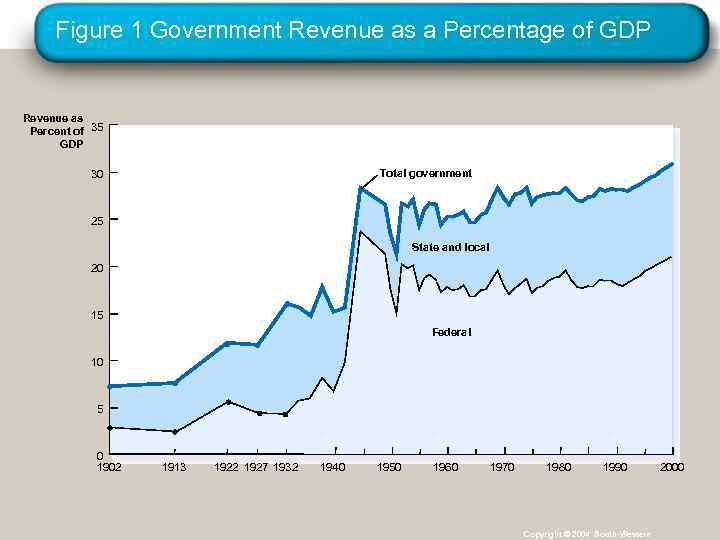 Figure 1 Government Revenue as a Percentage of GDP Revenue as Percent of 35 GDP Total government 30 25 State and local 20 15 Federal 10 5 0 1902 1913 1922 1927 1932 1940 1950 1960 1970 1980 1990 Copyright © 2004 South-Western 2000
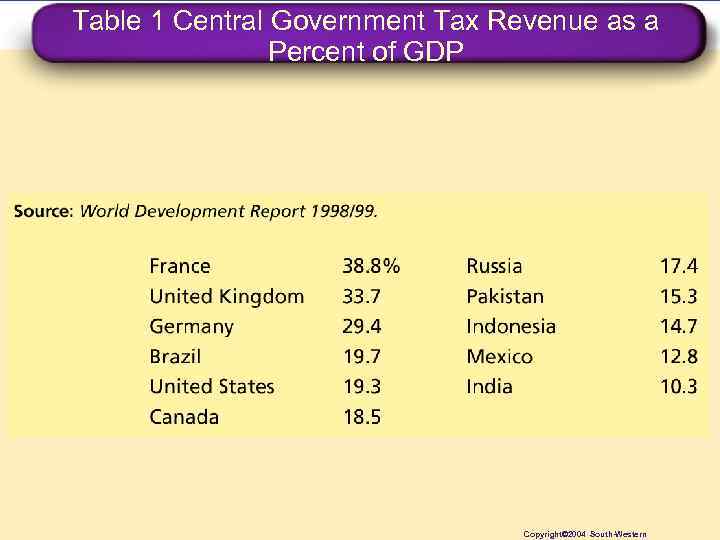 Table 1 Central Government Tax Revenue as a Percent of GDP Copyright© 2004 South-Western
 The Federal Government • The U. S. federal government collects about two -thirds of the taxes in our economy. Copyright © 2004 South-Western/Thomson Learning
 The Federal Government • The largest source of revenue for the federal government is the individual income tax. Copyright © 2004 South-Western/Thomson Learning
 The Federal Government • Individual Income Taxes • The marginal tax rate is the tax rate applied to each additional dollar of income. • Higher-income families pay a larger percentage of their income in taxes. Copyright © 2004 South-Western/Thomson Learning
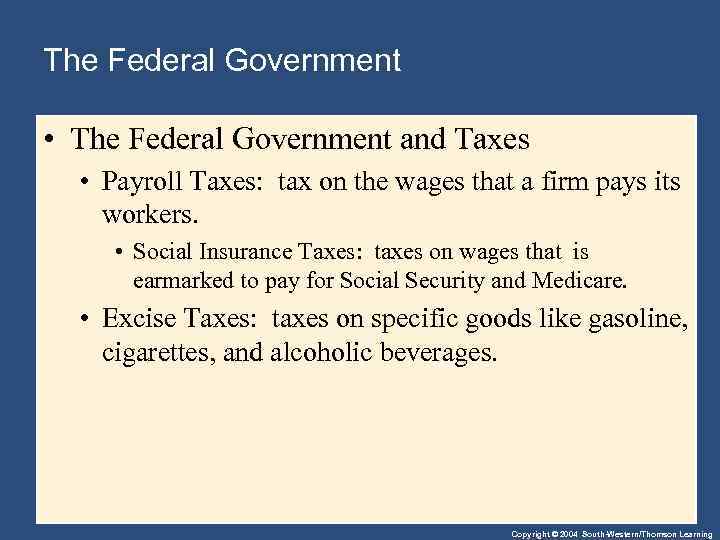 The Federal Government • The Federal Government and Taxes • Payroll Taxes: tax on the wages that a firm pays its workers. • Social Insurance Taxes: taxes on wages that is earmarked to pay for Social Security and Medicare. • Excise Taxes: taxes on specific goods like gasoline, cigarettes, and alcoholic beverages. Copyright © 2004 South-Western/Thomson Learning
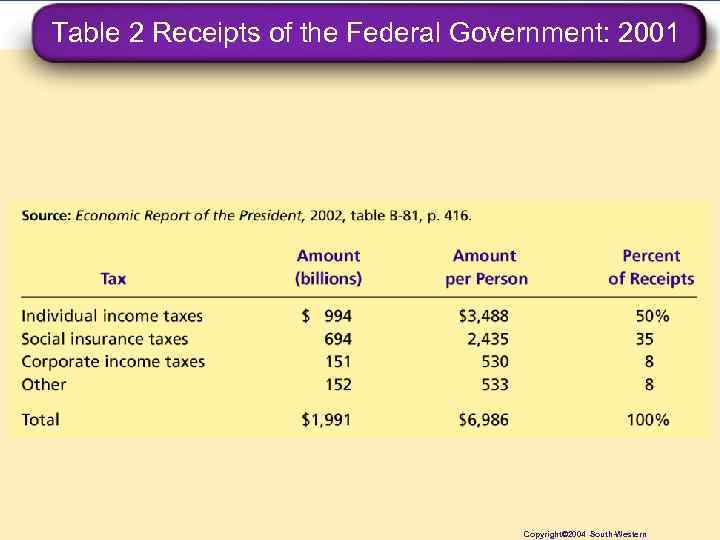 Table 2 Receipts of the Federal Government: 2001 Copyright© 2004 South-Western
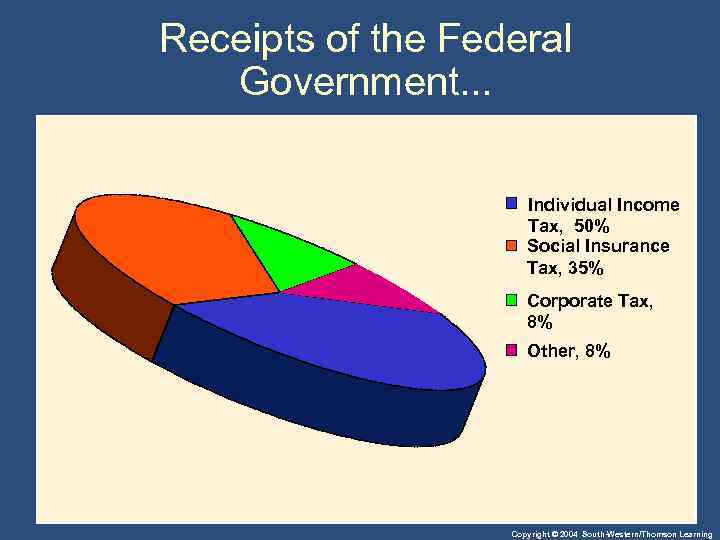 Receipts of the Federal Government. . . Individual Income Tax, 50% Social Insurance Tax, 35% Corporate Tax, 8% Other, 8% Copyright © 2004 South-Western/Thomson Learning
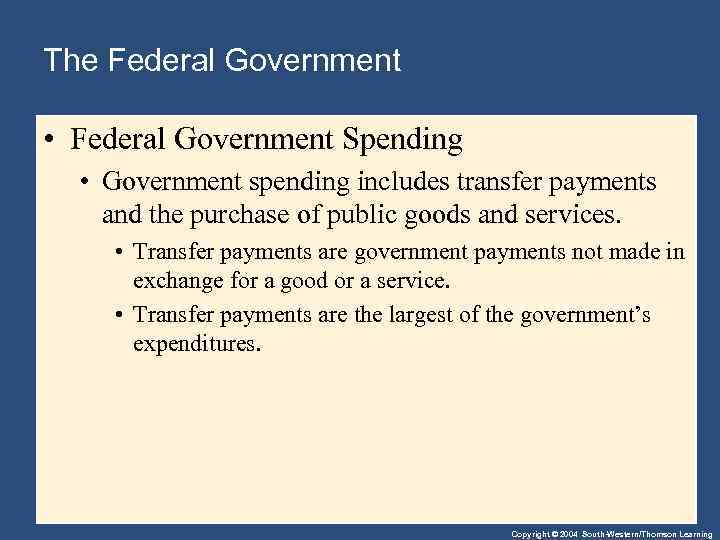 The Federal Government • Federal Government Spending • Government spending includes transfer payments and the purchase of public goods and services. • Transfer payments are government payments not made in exchange for a good or a service. • Transfer payments are the largest of the government’s expenditures. Copyright © 2004 South-Western/Thomson Learning
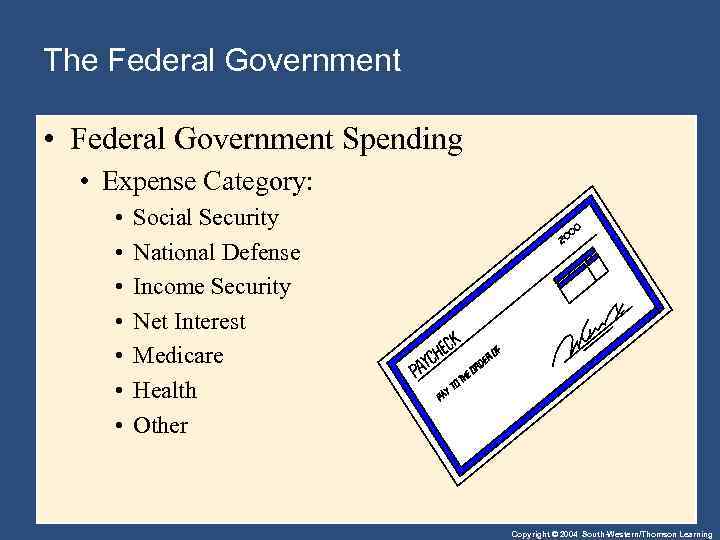 The Federal Government • Federal Government Spending • Expense Category: • • Social Security National Defense Income Security Net Interest Medicare Health Other Copyright © 2004 South-Western/Thomson Learning
 The Federal Government • Budget Surplus • A budget surplus is an excess of government receipts over government spending. • Budget Deficit • A budget deficit is an excess of government spending over government receipts. Copyright © 2004 South-Western/Thomson Learning
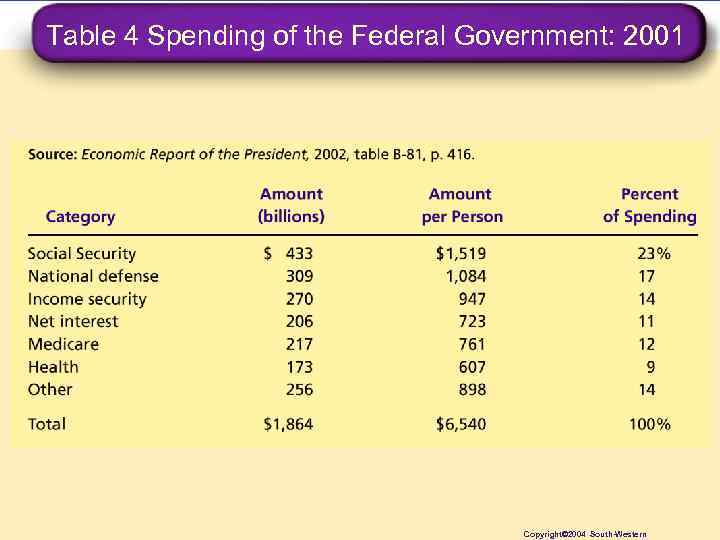 Table 4 Spending of the Federal Government: 2001 Copyright© 2004 South-Western
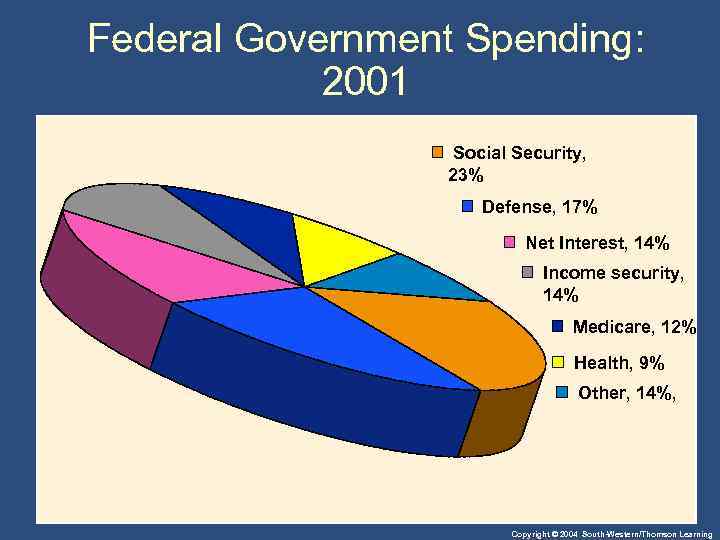 Federal Government Spending: 2001 Social Security, 23% Defense, 17% Net Interest, 14% Income security, 14% Medicare, 12% Health, 9% Other, 14%, Copyright © 2004 South-Western/Thomson Learning
 The Federal Government • Financial Conditions of the Federal Budget • A budget deficit occurs when there is an excess of government spending over government receipts. • Government finances the deficit by borrowing from the public. • A budget surplus occurs when government receipts are greater than government spending. • A budget surplus may be used to reduce the government’s outstanding debts. Copyright © 2004 South-Western/Thomson Learning
 State and Local Governments • State and local governments collect about 40 percent of taxes paid. Copyright © 2004 South-Western/Thomson Learning
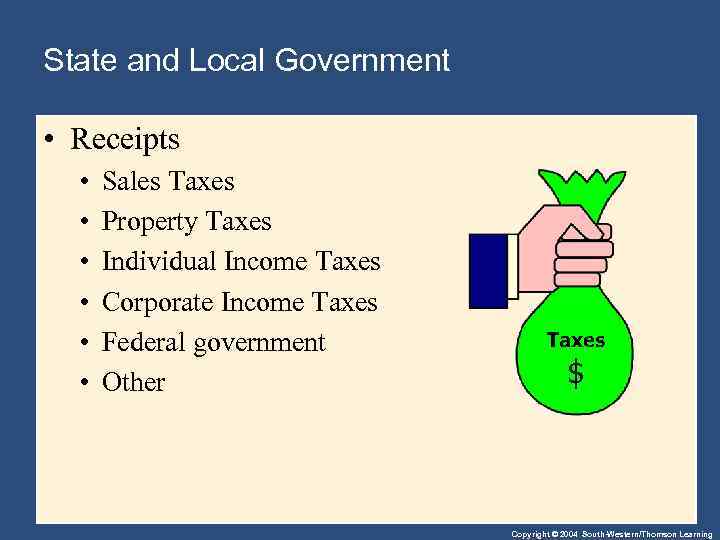 State and Local Government • Receipts • • • Sales Taxes Property Taxes Individual Income Taxes Corporate Income Taxes Federal government Other Taxes $ Copyright © 2004 South-Western/Thomson Learning
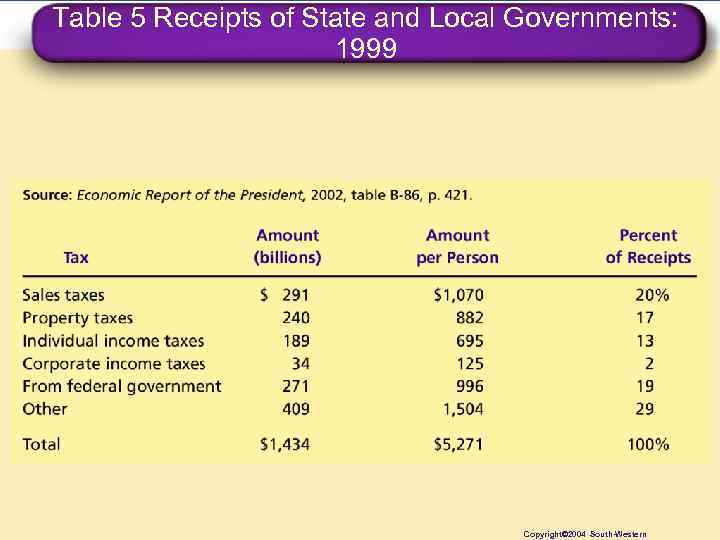 Table 5 Receipts of State and Local Governments: 1999 Copyright© 2004 South-Western
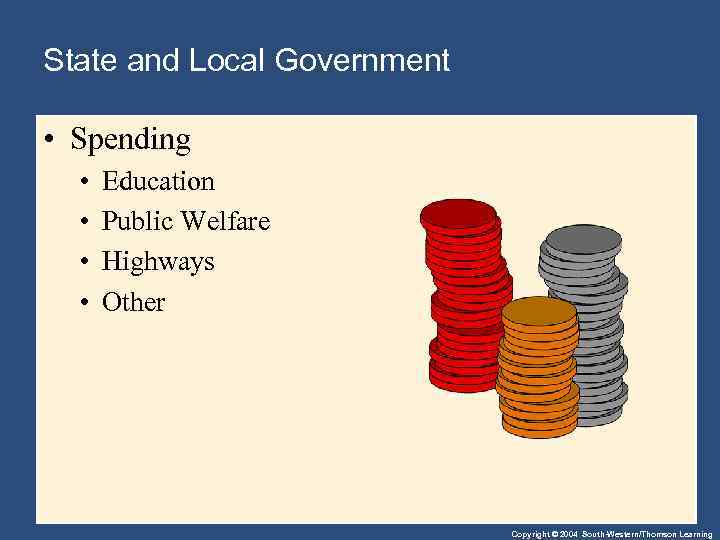 State and Local Government • Spending • • Education Public Welfare Highways Other Copyright © 2004 South-Western/Thomson Learning
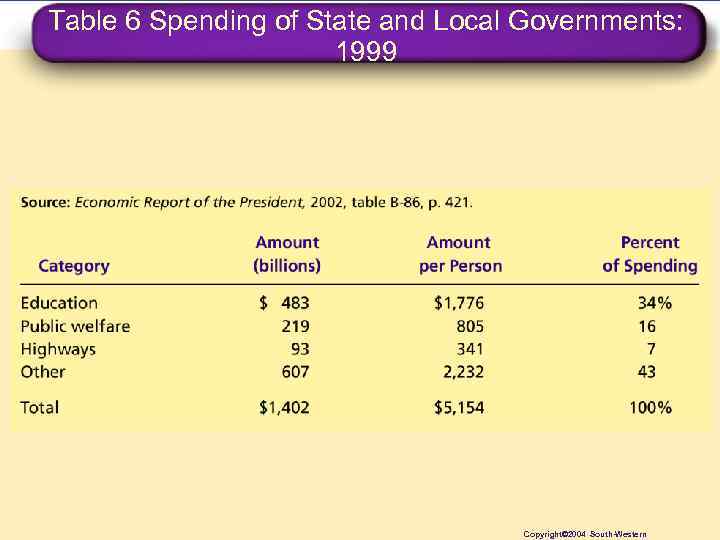 Table 6 Spending of State and Local Governments: 1999 Copyright© 2004 South-Western
 TAXES AND EFFICIENCY • Policymakers have two objectives in designing a tax system. . . • • Efficiency Equity Copyright © 2004 South-Western/Thomson Learning
 TAXES AND EFFICIENCY • One tax system is more efficient than another if it raises the same amount of revenue at a smaller cost to taxpayers. • An efficient tax system is one that imposes small deadweight losses and small administrative burdens. Copyright © 2004 South-Western/Thomson Learning
 TAXES AND EFFICIENCY • The Cost of Taxes to Taxpayers • The tax payment itself • Deadweight losses • Administrative burdens Copyright © 2004 South-Western/Thomson Learning
 Deadweight Losses • Because taxes distort incentives, they entail deadweight losses. • The deadweight loss of a tax is the reduction of the economic well-being of taxpayers in excess of the amount of revenue raised by the government. Copyright © 2004 South-Western/Thomson Learning
 Administrative Burdens • Complying with tax laws creates additional deadweight losses. • Taxpayers lose additional time and money documenting, computing, and avoiding taxes over and above the actual taxes they pay. • The administrative burden of any tax system is part of the inefficiency it creates. Copyright © 2004 South-Western/Thomson Learning
 Marginal Tax Rates versus Average Tax Rates • The average tax rate is total taxes paid divided by total income. • The marginal tax rate is the extra taxes paid on an additional dollar of income. Copyright © 2004 South-Western/Thomson Learning
 Lump-Sum Taxes • A lump-sum tax is a tax that is the same amount for every person, regardless of earnings or any actions that the person might take. Copyright © 2004 South-Western/Thomson Learning
 TAXES AND EQUITY • How should the burden of taxes be divided among the population? • How do we evaluate whether a tax system is fair? Copyright © 2004 South-Western/Thomson Learning
 TAXES AND EQUITY • Principles of Taxation • Benefits principle • Ability-to-pay principle $ Copyright © 2004 South-Western/Thomson Learning
 Benefits Principle • The benefits principle is the idea that people should pay taxes based on the benefits they receive from government services. • An example is a gasoline tax: • Tax revenues from a gasoline tax are used to finance our highway system. • People who drive the most also pay the most toward maintaining roads. Copyright © 2004 South-Western/Thomson Learning
 Ability-to-Pay Principle • The ability-to-pay principle is the idea that taxes should be levied on a person according to how well that person can shoulder the burden. • The ability-to-pay principle leads to two corollary notions of equity. • Vertical equity • Horizontal equity Copyright © 2004 South-Western/Thomson Learning
 Ability-to-Pay Principle • Vertical equity is the idea that taxpayers with a greater ability to pay taxes should pay larger amounts. • For example, people with higher incomes should pay more than people with lower incomes. Copyright © 2004 South-Western/Thomson Learning
 Ability-to-Pay Principle • Vertical Equity and Alternative Tax Systems • A proportional tax is one for which high-income and low-income taxpayers pay the same fraction of income. • A regressive tax is one for which high-income taxpayers pay a smaller fraction of their income than do low-income taxpayers. • A progressive tax is one for which high-income taxpayers pay a larger fraction of their income than do low-income taxpayers. Copyright © 2004 South-Western/Thomson Learning
 Ability-to-Pay Principle • Horizontal Equity • Horizontal equity is the idea that taxpayers with similar abilities to pay taxes should pay the same amounts. • For example, two families with the same number of dependents and the same income living in different parts of the country should pay the same federal taxes. Copyright © 2004 South-Western/Thomson Learning
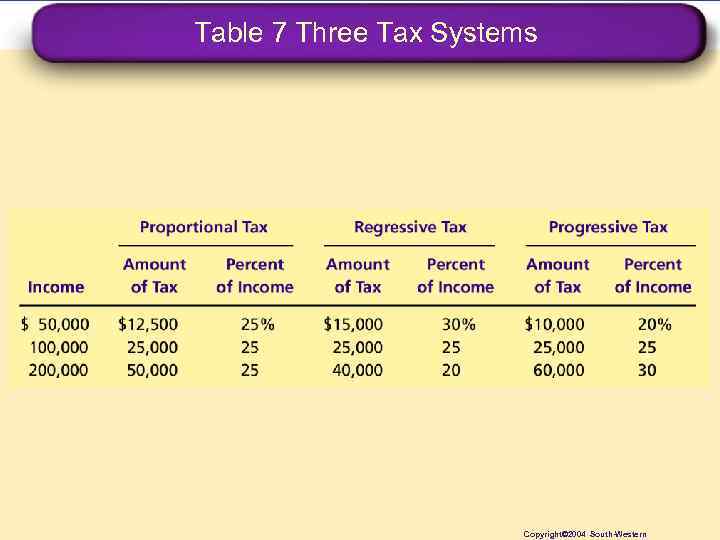 Table 7 Three Tax Systems Copyright© 2004 South-Western
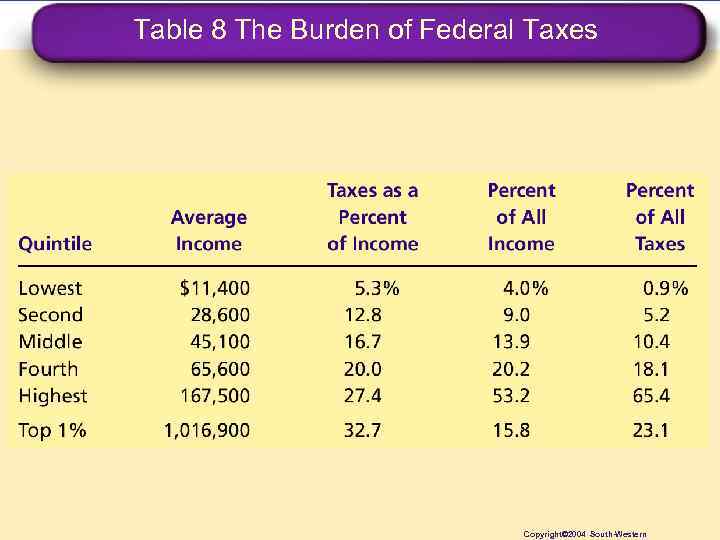 Table 8 The Burden of Federal Taxes Copyright© 2004 South-Western
 CASE STUDY: Horizontal Equity and the Marriage Tax • Marriage affects the tax liability of a couple in that tax law treats a married couple as a single taxpayer. • When a couple gets married, they stop paying taxes as individuals and start paying taxes as a family. • If each has a similar income, their total tax liability rises when they get married. Copyright © 2004 South-Western/Thomson Learning
 Tax Incidence and Tax Equity • The difficulty in formulating tax policy is balancing the often conflicting goals of efficiency and equity. • The study of who bears the burden of taxes is central to evaluating tax equity. • This study is called tax incidence. Copyright © 2004 South-Western/Thomson Learning
 Tax Incidence and Tax Equity • Flypaper Theory of Tax Incidence • According to the flypaper theory, the burden of a tax, like a fly on flypaper, sticks wherever it first lands. Copyright © 2004 South-Western/Thomson Learning
 Summary • The U. S. government raises revenue using various taxes. • Income taxes and payroll taxes raise the most revenue for the federal government. • Sales taxes and property taxes raise the most revenue for the state and local governments. Copyright © 2004 South-Western/Thomson Learning
 Summary • Equity and efficiency are the two most important goals of the tax system. • The efficiency of a tax system refers to the costs it imposes on the taxpayers. • The equity of a tax system concerns whether the tax burden is distributed fairly among the population. Copyright © 2004 South-Western/Thomson Learning
 Summary • According to the benefits principle, it is fair for people to pay taxes based on the benefits they receive from the government. • According to the ability-to-pay principle, it is fair for people to pay taxes on their capability to handle the financial burden. Copyright © 2004 South-Western/Thomson Learning
 Summary • The distribution of tax burdens is not the same as the distribution of tax bills. • Much of the debate over tax policy arises because people give different weights to the two goals of efficiency and equity. Copyright © 2004 South-Western/Thomson Learning