 Скачать презентацию The deployment of public transport innovation in European
ef0dc64c6814411da90270ca368d54f1.ppt
- Количество слайдов: 31



The deployment of public transport innovation in European cities and regions Nicolas Hauw, Polis |
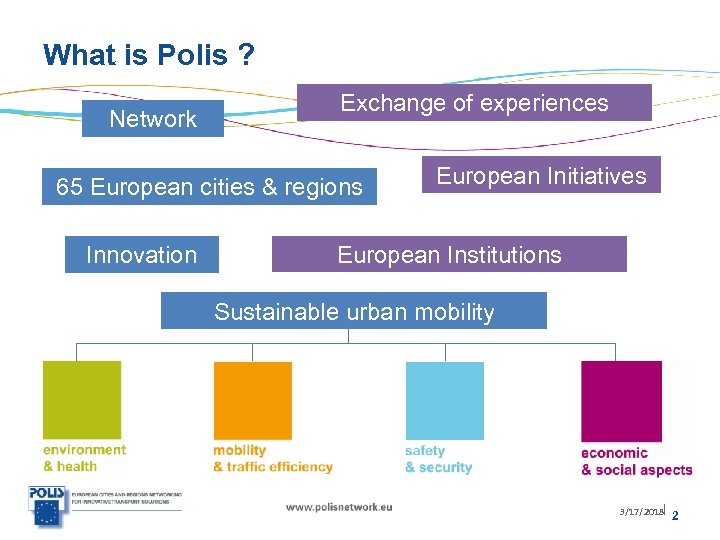
What is Polis ? Network Exchange of experiences 65 European cities & regions Innovation European Initiatives European Institutions Sustainable urban mobility 3/17/2018| 2
Understanding innovation |
Understanding Innovation § § ‘Idea, practice or object that is perceived as new by an individual or other unit of adoption’ (Rogers) and that provides a better solution to existing challenges than traditional measures in urban transport and mobility § Higher potential to effectively respond to current challenges than already well-established measures Pragmatic perspective: mainstream in some countries versus new in other parts of Europe § Comparably new to large parts of Europe 3/17/2018| 4
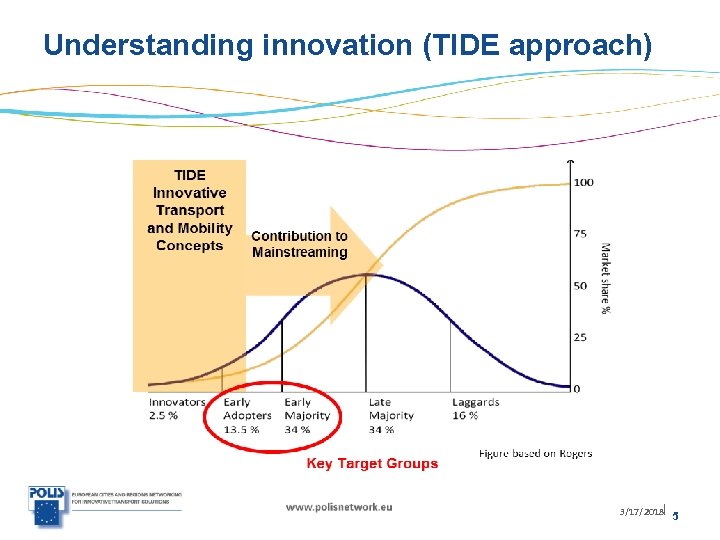
Understanding innovation (TIDE approach) 3/17/2018| 5
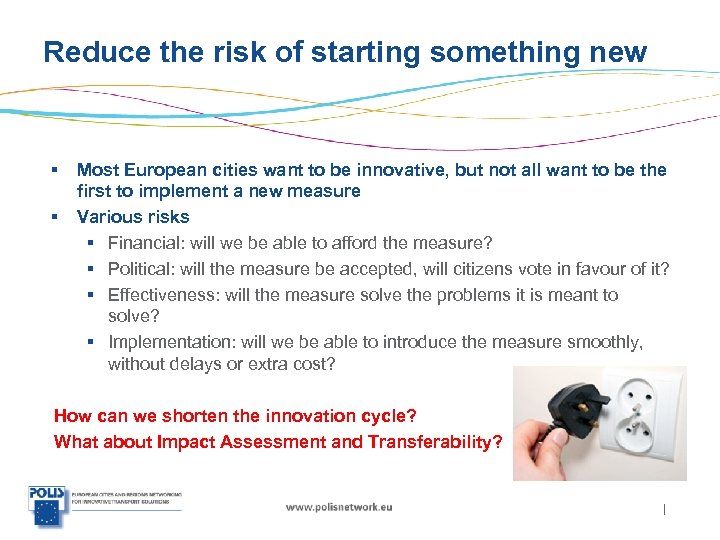
Reduce the risk of starting something new § § Most European cities want to be innovative, but not all want to be the first to implement a new measure Various risks § Financial: will we be able to afford the measure? § Political: will the measure be accepted, will citizens vote in favour of it? § Effectiveness: will the measure solve the problems it is meant to solve? § Implementation: will we be able to introduce the measure smoothly, without delays or extra cost? How can we shorten the innovation cycle? What about Impact Assessment and Transferability? |
What drives innovation in PT? |
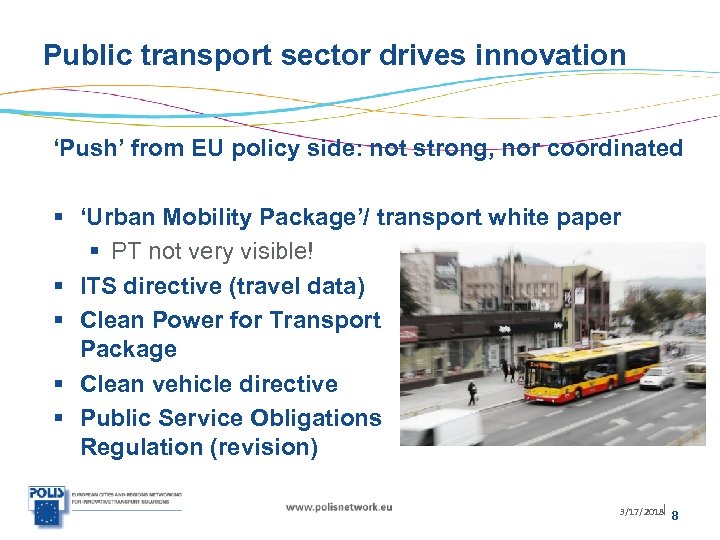
Public transport sector drives innovation ‘Push’ from EU policy side: not strong, nor coordinated § ‘Urban Mobility Package’/ transport white paper § PT not very visible! § ITS directive (travel data) § Clean Power for Transport Package § Clean vehicle directive § Public Service Obligations Regulation (revision) 3/17/2018| 8
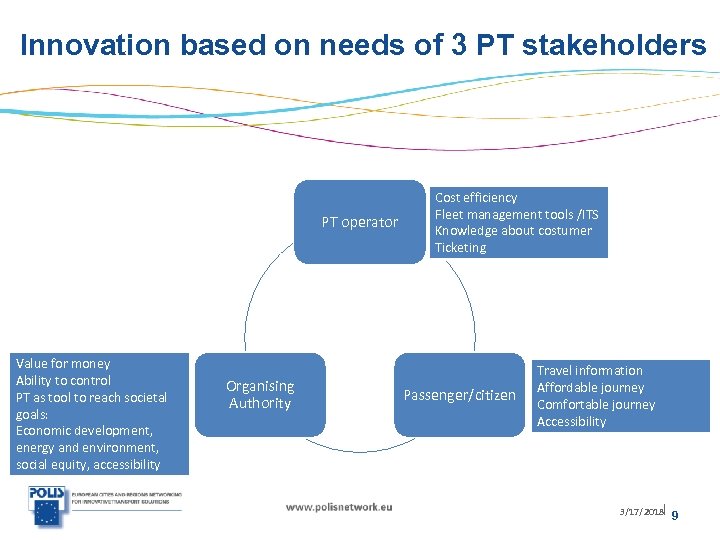
Innovation based on needs of 3 PT stakeholders PT operator Value for money Ability to control PT as tool to reach societal goals: Economic development, energy and environment, social equity, accessibility Organising Authority Cost efficiency Fleet management tools /ITS Knowledge about costumer Ticketing Passenger/citizen Travel information Affordable journey Comfortable journey Accessibility 3/17/2018| 9
Examples of innovation areas for public transport energy information automation coordination |
3/17/2018| 11
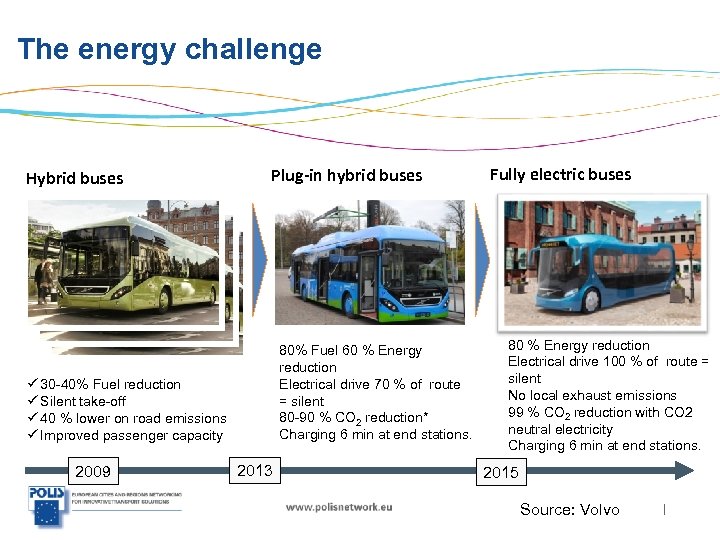
The energy challenge Hybrid buses Plug-in hybrid buses 80% Fuel 60 % Energy reduction Electrical drive 70 % of route = silent 80 -90 % CO 2 reduction* Charging 6 min at end stations. ü 30 -40% Fuel reduction ü Silent take-off ü 40 % lower on road emissions ü Improved passenger capacity 2009 2013 Fully electric buses 80 % Energy reduction Electrical drive 100 % of route = silent No local exhaust emissions 99 % CO 2 reduction with CO 2 neutral electricity Charging 6 min at end stations. 2015 Source: Volvo |
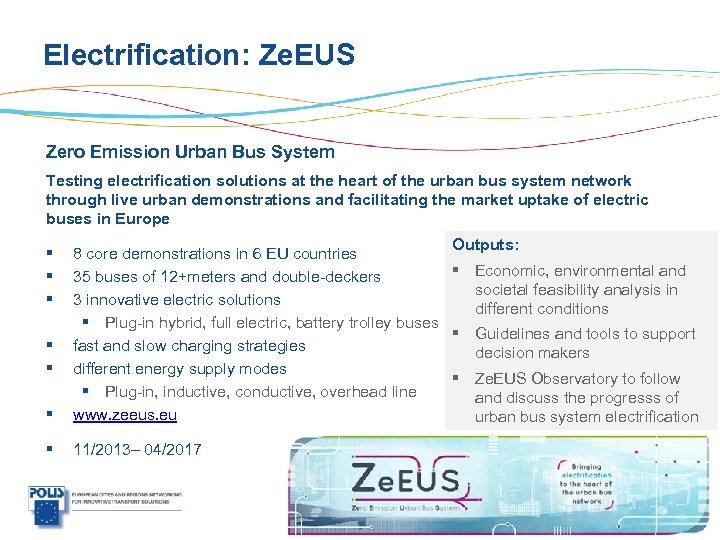
Electrification: Ze. EUS Zero Emission Urban Bus System Testing electrification solutions at the heart of the urban bus system network through live urban demonstrations and facilitating the market uptake of electric buses in Europe § Outputs: 8 core demonstrations in 6 EU countries § Economic, environmental and 35 buses of 12+meters and double-deckers societal feasibility analysis in 3 innovative electric solutions different conditions § Plug-in hybrid, full electric, battery trolley buses § Guidelines and tools to support fast and slow charging strategies decision makers different energy supply modes § Ze. EUS Observatory to follow § Plug-in, inductive, conductive, overhead line and discuss the progresss of www. zeeus. eu urban bus system electrification § 11/2013– 04/2017 § § § 3/17/2018| 13
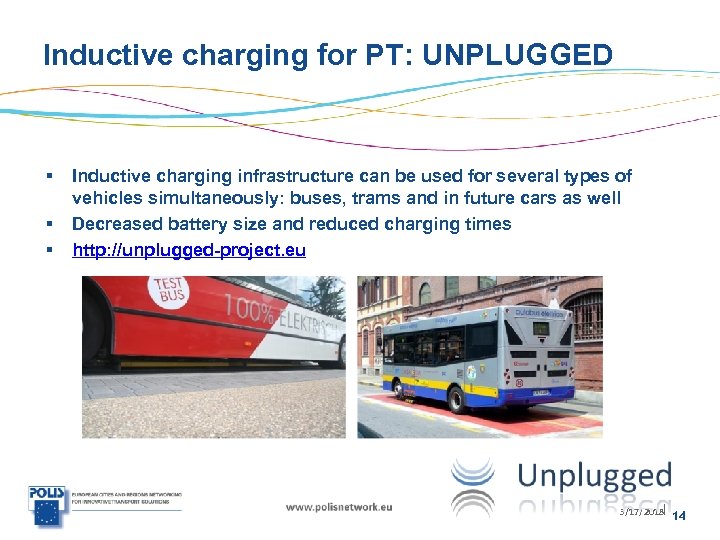
Inductive charging for PT: UNPLUGGED § § § Inductive charging infrastructure can be used for several types of vehicles simultaneously: buses, trams and in future cars as well Decreased battery size and reduced charging times http: //unplugged-project. eu 3/17/2018| 14
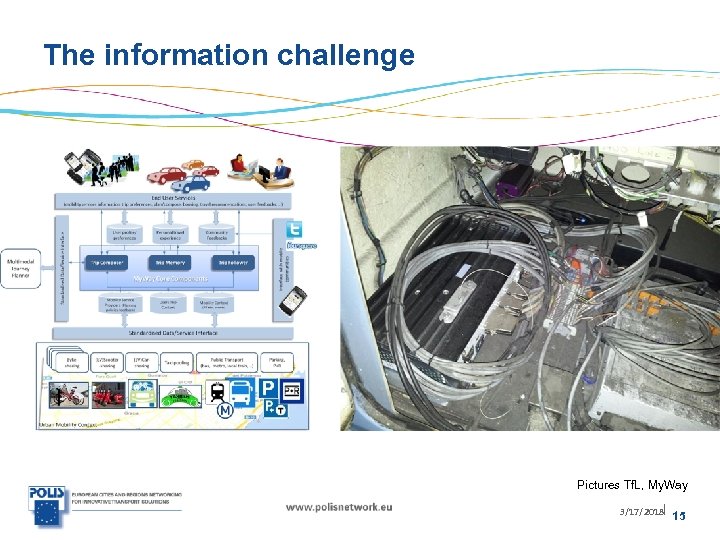
The information challenge Pictures Tf. L, My. Way 3/17/2018| 15
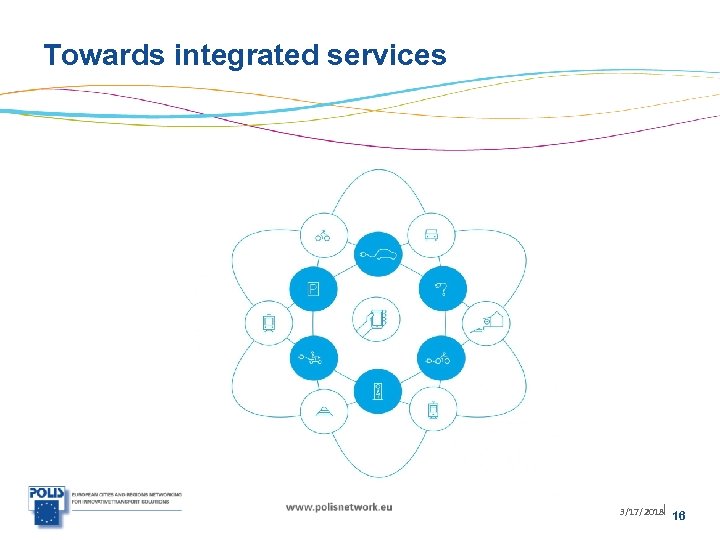
Towards integrated services 3/17/2018| 16
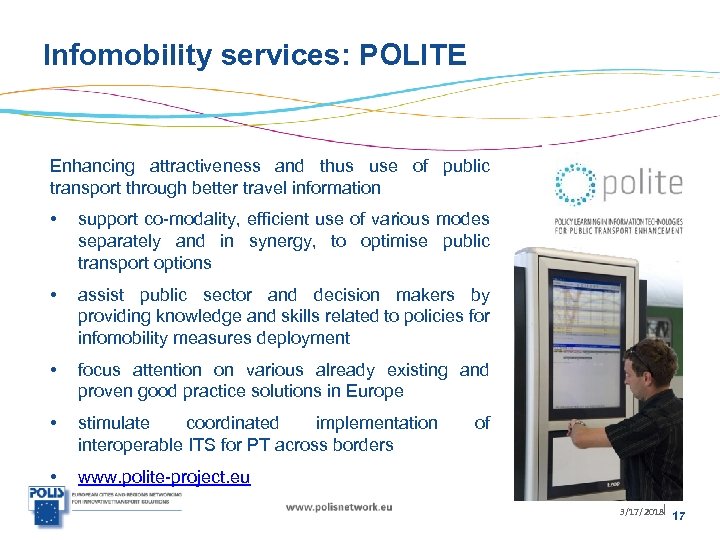
Infomobility services: POLITE Enhancing attractiveness and thus use of public transport through better travel information • support co-modality, efficient use of various modes separately and in synergy, to optimise public transport options • assist public sector and decision makers by providing knowledge and skills related to policies for infomobility measures deployment • focus attention on various already existing and proven good practice solutions in Europe • stimulate coordinated implementation interoperable ITS for PT across borders • www. polite-project. eu of 3/17/2018| 17
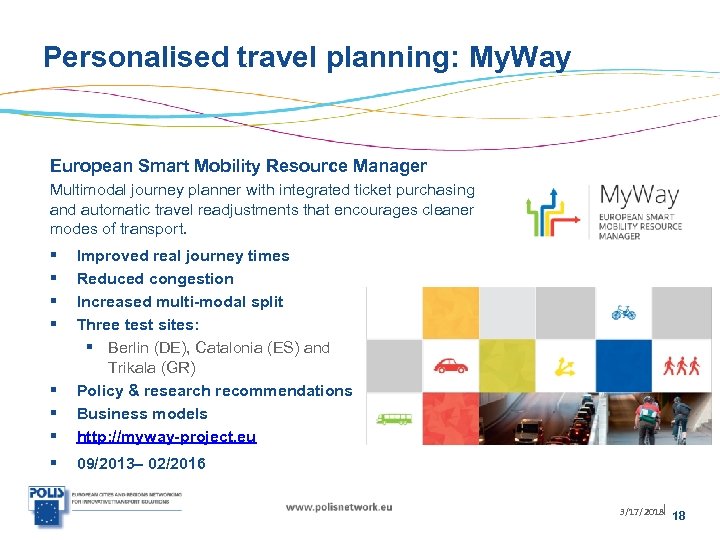
Personalised travel planning: My. Way European Smart Mobility Resource Manager Multimodal journey planner with integrated ticket purchasing and automatic travel readjustments that encourages cleaner modes of transport. § § § § Improved real journey times Reduced congestion Increased multi-modal split Three test sites: § Berlin (DE), Catalonia (ES) and Trikala (GR) Policy & research recommendations Business models http: //myway-project. eu § 09/2013– 02/2016 3/17/2018| 18
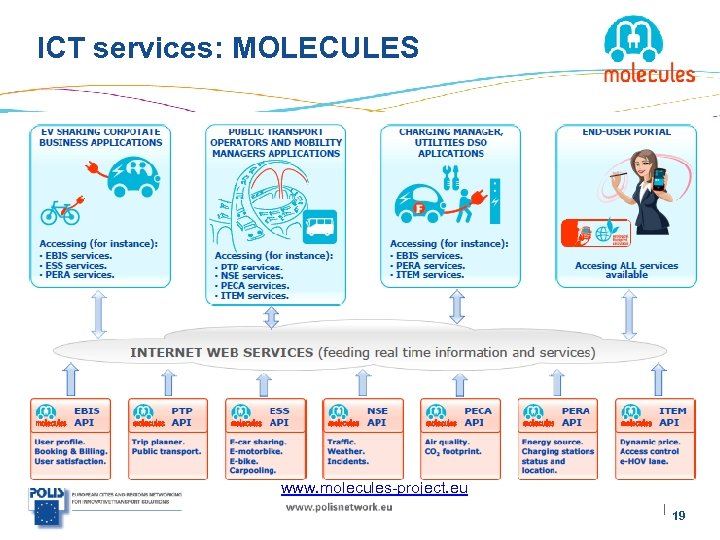
ICT services: MOLECULES www. molecules-project. eu | 19
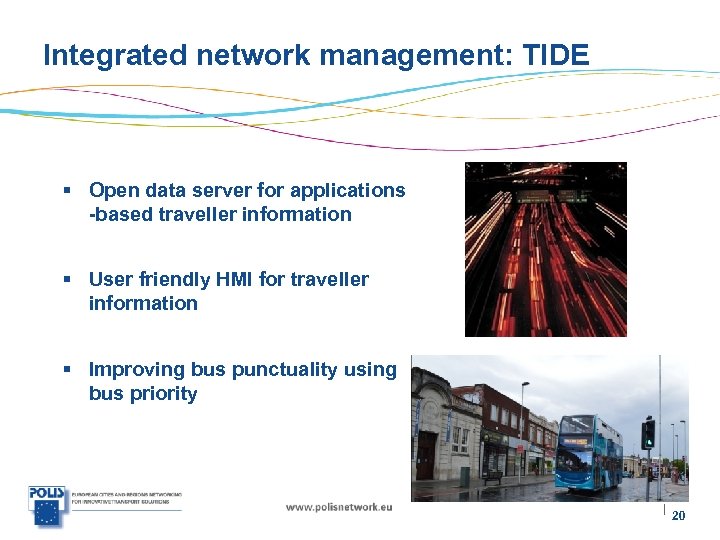
Integrated network management: TIDE § Open data server for applications -based traveller information § User friendly HMI for traveller information § Improving bus punctuality using bus priority | 20
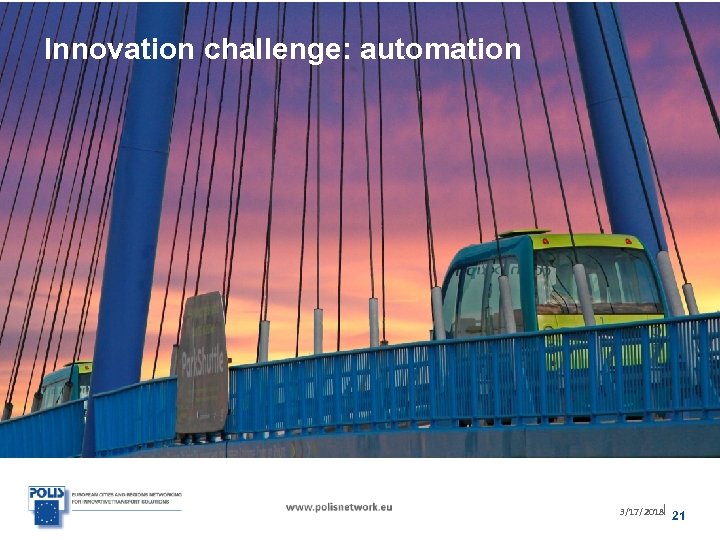
Innovation challenge: automation 3/17/2018| 21
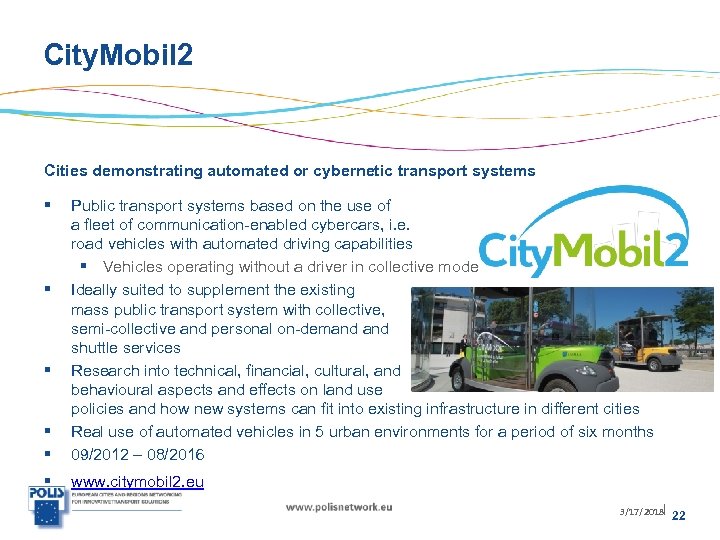
City. Mobil 2 Cities demonstrating automated or cybernetic transport systems § § § Public transport systems based on the use of a fleet of communication-enabled cybercars, i. e. road vehicles with automated driving capabilities § Vehicles operating without a driver in collective mode Ideally suited to supplement the existing mass public transport system with collective, semi-collective and personal on-demand shuttle services Research into technical, financial, cultural, and behavioural aspects and effects on land use policies and how new systems can fit into existing infrastructure in different cities Real use of automated vehicles in 5 urban environments for a period of six months 09/2012 – 08/2016 § www. citymobil 2. eu § § 3/17/2018| 22
The coordination challenge § § § A vision for urban mobility, and for PT Governance Procurement Quality Assurance PT organisation Intermodality 3/17/2018| 23
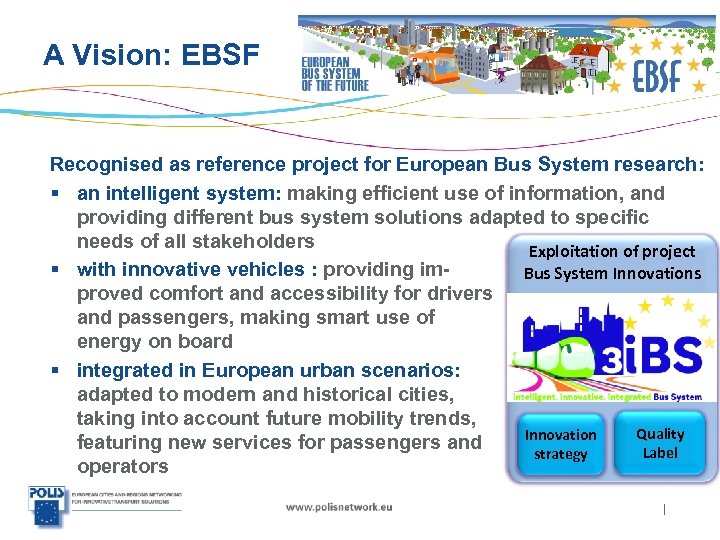
A Vision: EBSF Recognised as reference project for European Bus System research: § an intelligent system: making efficient use of information, and providing different bus system solutions adapted to specific needs of all stakeholders Exploitation of project § with innovative vehicles : providing im. Bus System Innovations proved comfort and accessibility for drivers and passengers, making smart use of energy on board § integrated in European urban scenarios: adapted to modern and historical cities, taking into account future mobility trends, Quality Innovation featuring new services for passengers and Label strategy operators |
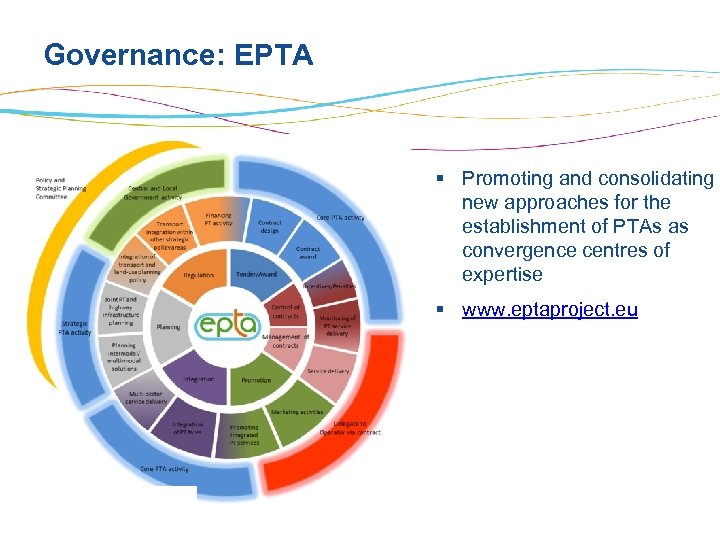
Governance: EPTA § Promoting and consolidating new approaches for the establishment of PTAs as convergence centres of expertise § www. eptaproject. eu 3/17/2018| 25
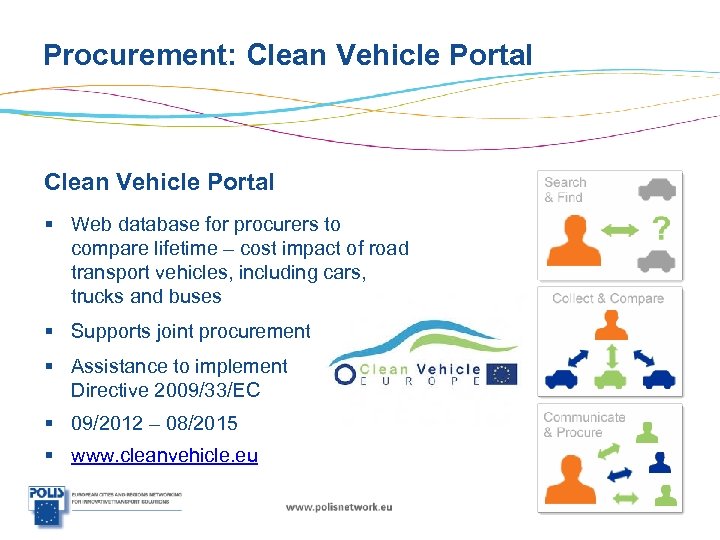
Procurement: Clean Vehicle Portal § Web database for procurers to compare lifetime – cost impact of road transport vehicles, including cars, trucks and buses § Supports joint procurement § Assistance to implement Directive 2009/33/EC § 09/2012 – 08/2015 § www. cleanvehicle. eu 3/17/2018| 26
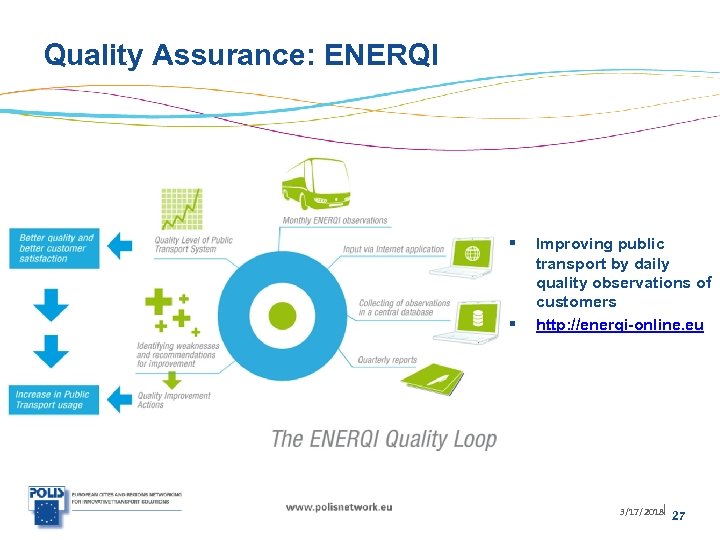
Quality Assurance: ENERQI § § Improving public transport by daily quality observations of customers http: //enerqi-online. eu 3/17/2018| 27
Public transport organisation: TIDE § Creation of Public Transport management bodies for metropolitan areas § Contracting of services focused on improvement of passenger satisfaction and efficiency § Marketing research as optimisation tool in public transport 3/17/2018| 28
Intermodality: NODES § § Interchanges play a key role in the integration of the urban mobility system and in enabling good intermodal solutions § Their efficiency and sustainability is therefore essential to achieve sustainable transport objectives in Europe Building a toolbox to support European cities in the design and operation of new or upgraded interchanges § as a way to provide greater support, services and satisfaction to travellers and users, as well as to interchange operators and those societal and economic actors depending on the efficiency of interchange operations Five key areas: § Land use & Infrastructure, design, intermodality & ICT, management and business models, energy & environment www. nodes-interchanges. eu 3/17/2018| 29
Conclusions § Changing nature of innovation: § Close to market § Integrating policies and technologies § Increased take up of innovation by shortening innovation cycle - Are we ready for innovation? - Is the measure good for us? § Changing role of the PTA/MTA § PTA/MTA will have to address different policies: - not just about mobility - but also economic development, air quality, energy etc. § Competent authorities will have to manage different networks in an integrated way (including information networks) |
More information Polis Nicolas Hauw +32 2 5005684 nhauw@polisnetwork. eu icre@polisnetwork. eu www. polisnetwork. eu |
Скачать презентацию The deployment of public transport innovation in European
ef0dc64c6814411da90270ca368d54f1.ppt