


 Скачать презентацию The Democratic Peace Democracy War Peace International Trade
c6b9f350f7b520c79af2fc34336a2b51.ppt
- Количество слайдов: 75
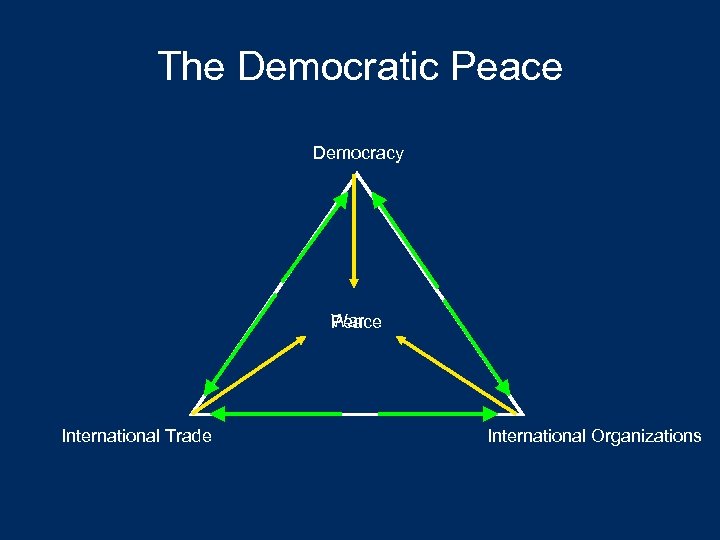 The Democratic Peace Democracy War Peace International Trade International Organizations
 UK v. US • Similar – Cultural – Foreign policy – Legal traditions – Car Culture? ? ? • Opposite ends of the spectrum on – gasoline tax policy – addressing climate change
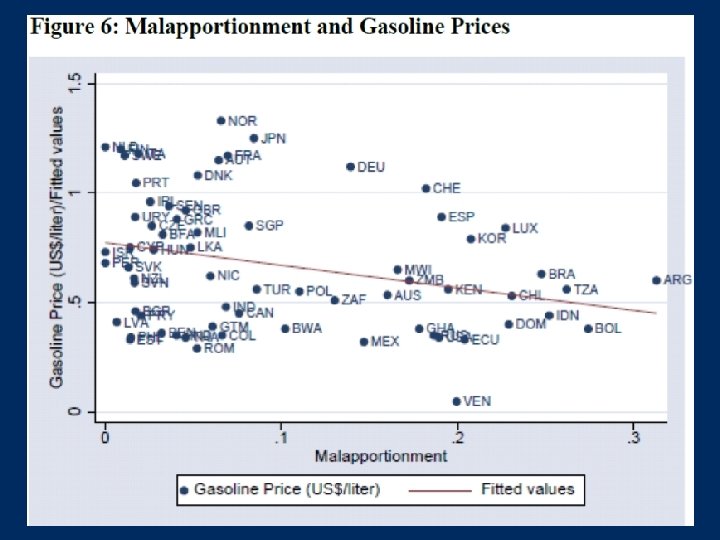
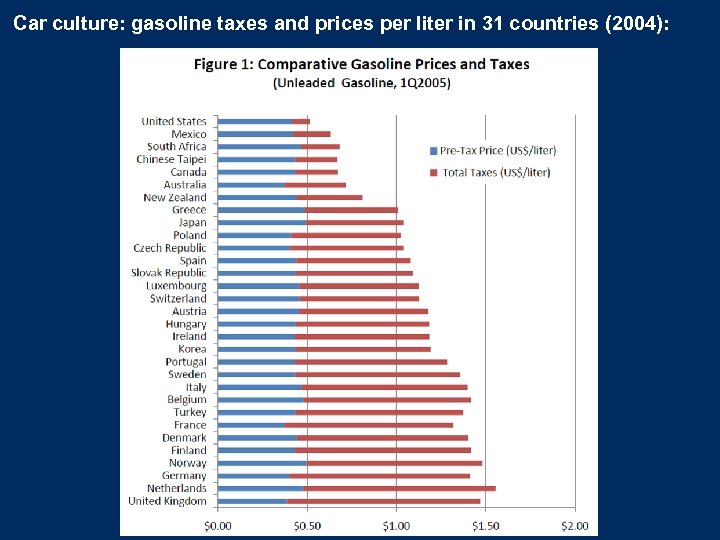 Car culture: gasoline taxes and prices per liter in 31 countries (2004):
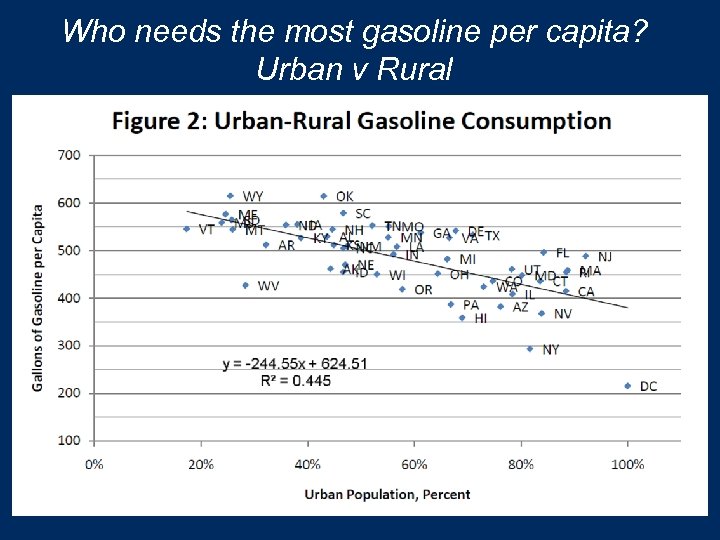 Who needs the most gasoline per capita? Urban v Rural
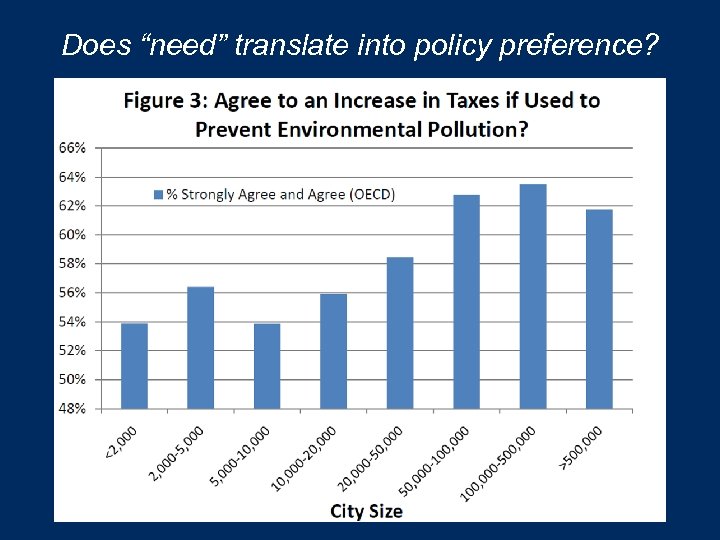 Does “need” translate into policy preference?
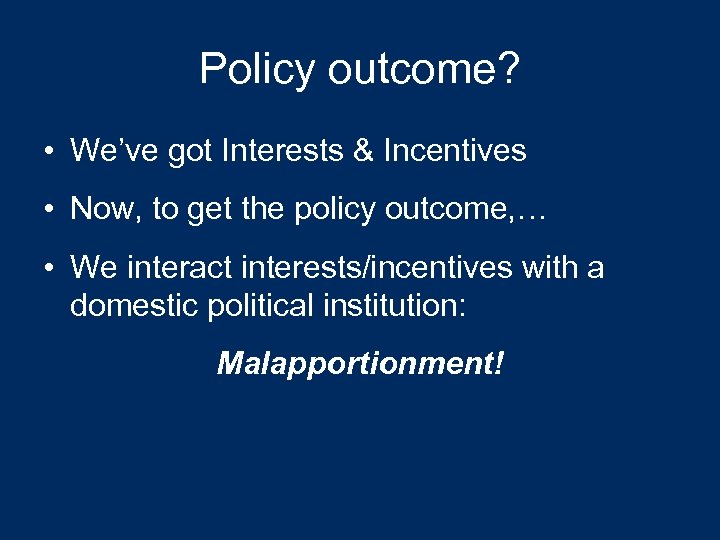 Policy outcome? • We’ve got Interests & Incentives • Now, to get the policy outcome, … • We interact interests/incentives with a domestic political institution: Malapportionment!
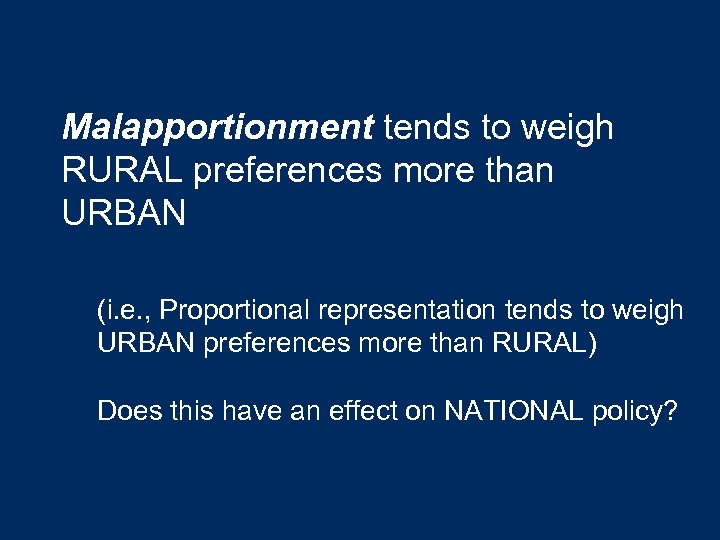 Malapportionment tends to weigh RURAL preferences more than URBAN (i. e. , Proportional representation tends to weigh URBAN preferences more than RURAL) Does this have an effect on NATIONAL policy?
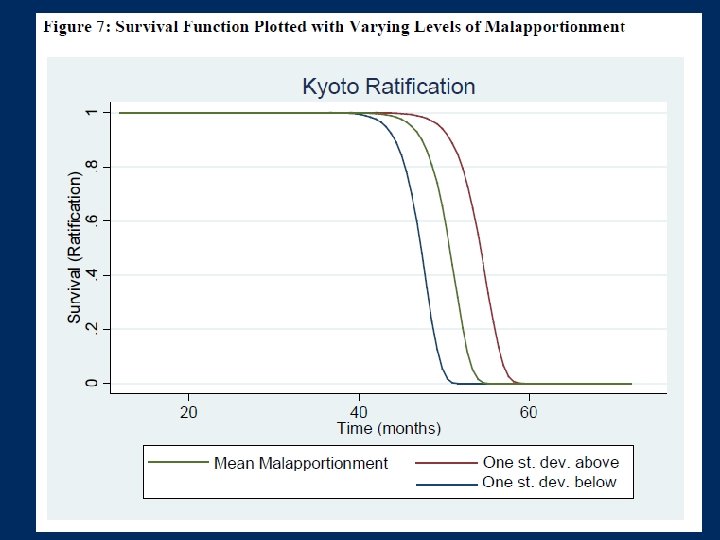
 Test: • Does malapportionment affect: –Gasoline prices –Kyoto ratification
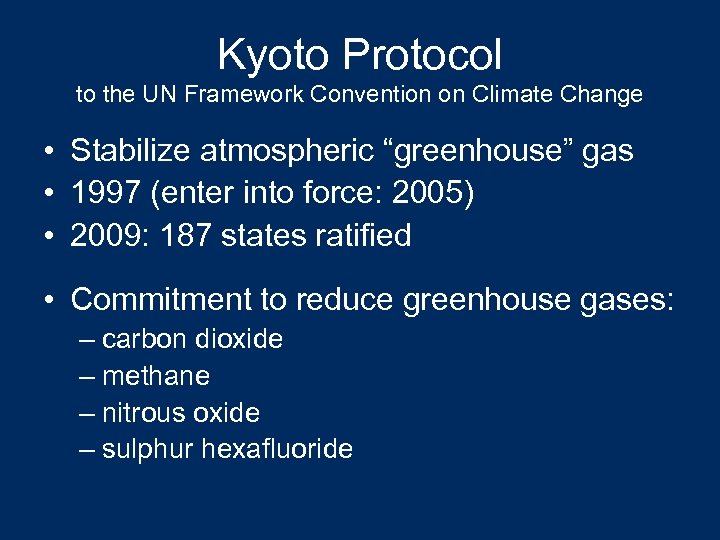 Kyoto Protocol to the UN Framework Convention on Climate Change • Stabilize atmospheric “greenhouse” gas • 1997 (enter into force: 2005) • 2009: 187 states ratified • Commitment to reduce greenhouse gases: – carbon dioxide – methane – nitrous oxide – sulphur hexafluoride
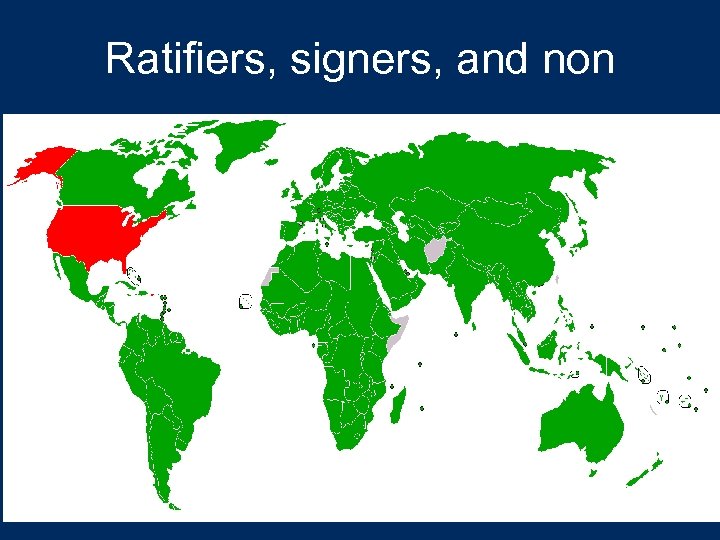 Ratifiers, signers, and non
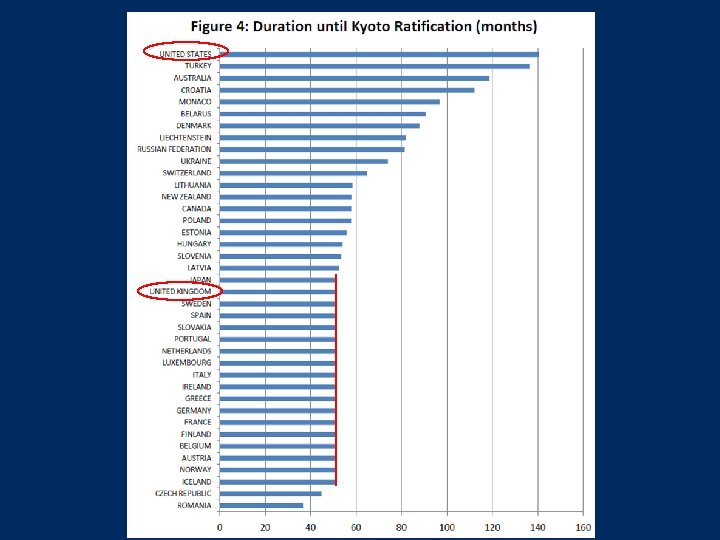
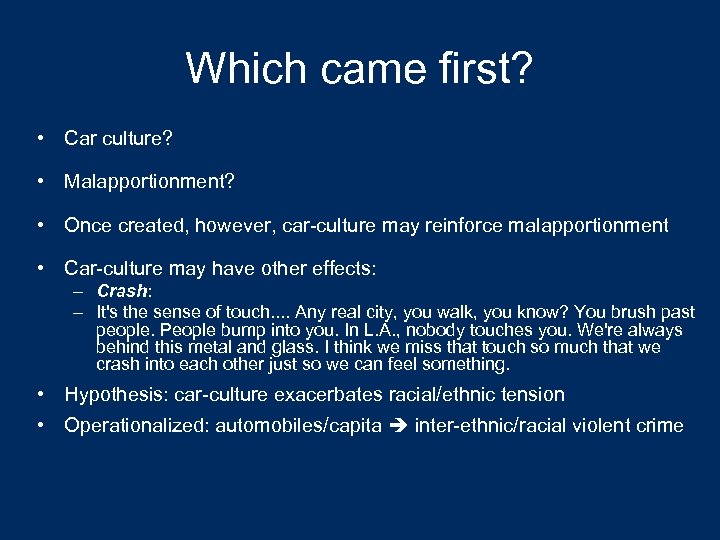 Which came first? • Car culture? • Malapportionment? • Once created, however, car-culture may reinforce malapportionment • Car-culture may have other effects: – Crash: – It's the sense of touch. . Any real city, you walk, you know? You brush past people. People bump into you. In L. A. , nobody touches you. We're always behind this metal and glass. I think we miss that touch so much that we crash into each other just so we can feel something. • Hypothesis: car-culture exacerbates racial/ethnic tension • Operationalized: automobiles/capita inter-ethnic/racial violent crime
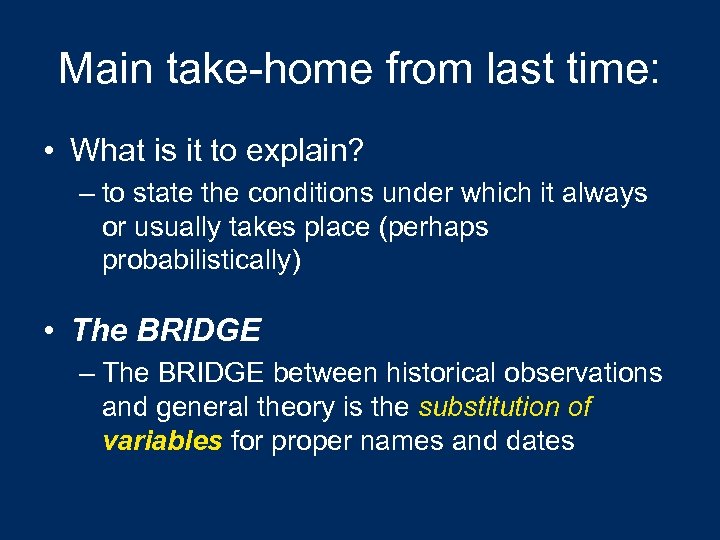 Main take-home from last time: • What is it to explain? – to state the conditions under which it always or usually takes place (perhaps probabilistically) • The BRIDGE – The BRIDGE between historical observations and general theory is the substitution of variables for proper names and dates
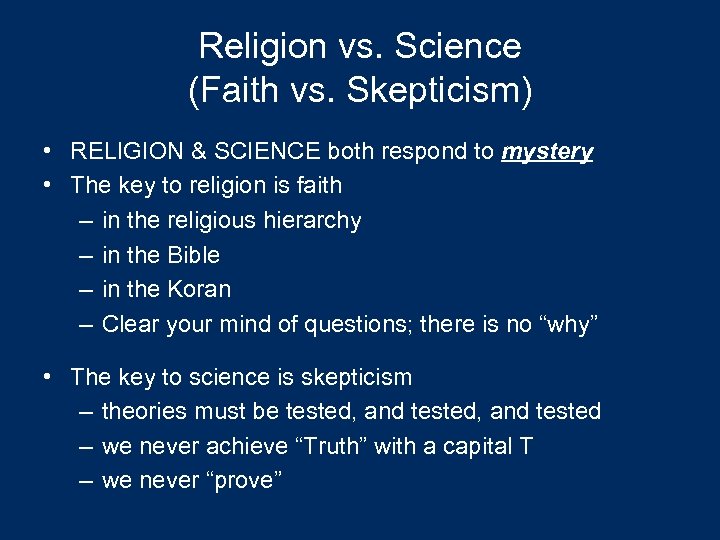 Religion vs. Science (Faith vs. Skepticism) • RELIGION & SCIENCE both respond to mystery • The key to religion is faith – in the religious hierarchy – in the Bible – in the Koran – Clear your mind of questions; there is no “why” • The key to science is skepticism – theories must be tested, and tested – we never achieve “Truth” with a capital T – we never “prove”
 COMPARATIVE INSTITUTIONAL ANALYSIS: The Politics of International Finance James Raymond Vreeland School of Foreign Service Georgetown University 17
 2008 Financial Crisis & The rise of the G 20 Unipolarism is over. We live in a multipolar world. 18
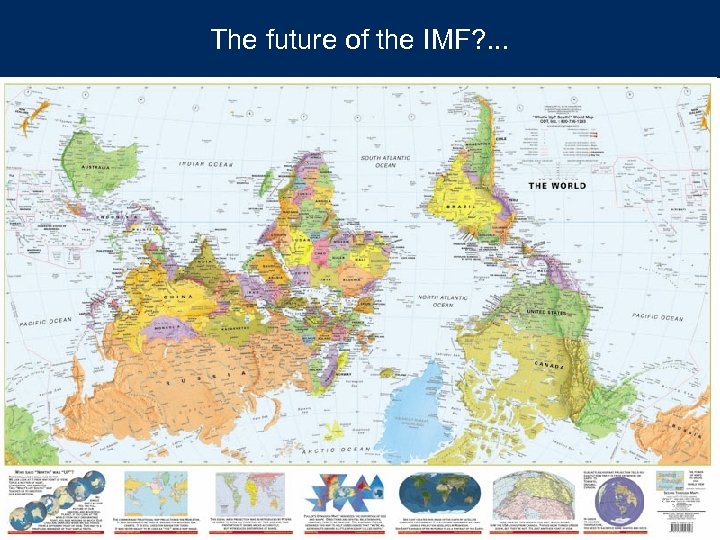 The future of the IMF? . . . 19
 Changes to Global Governance Who has the power at the IMF? 20
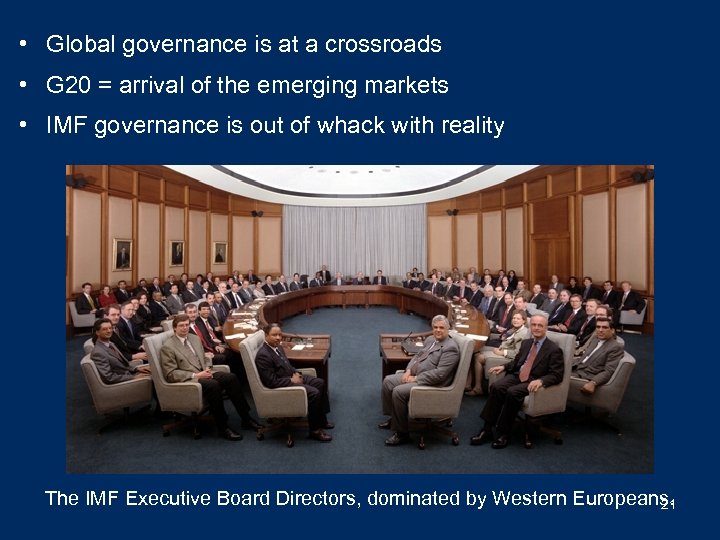 • Global governance is at a crossroads • G 20 = arrival of the emerging markets • IMF governance is out of whack with reality The IMF Executive Board Directors, dominated by Western Europeans. 21
 G 20 • Calls for a reevaluation of the BWI vote shares • Why care about the G 20? – Doesn’t do anything – Arbitrary membership (out of date) • Represents the arrival of the emerging markets! • More representative? • Who is the G 20? 22
 Who is the G 20? G 7 + BRIC + EU + MAKTISAS 11 down, 9 to go? NO! Only 8 to go. Only 19 countries in the G 20. 23
 Wrong guesses • EU – Spain, Poland, Netherlands • Europe – Switzerland, Norway • The bad guy – Iran • Large populations – Pakistan, Bangladesh, Nigeria • Big economies 24 – Thailand, Taiwan, Malaysia, Venzuela, Egypt,
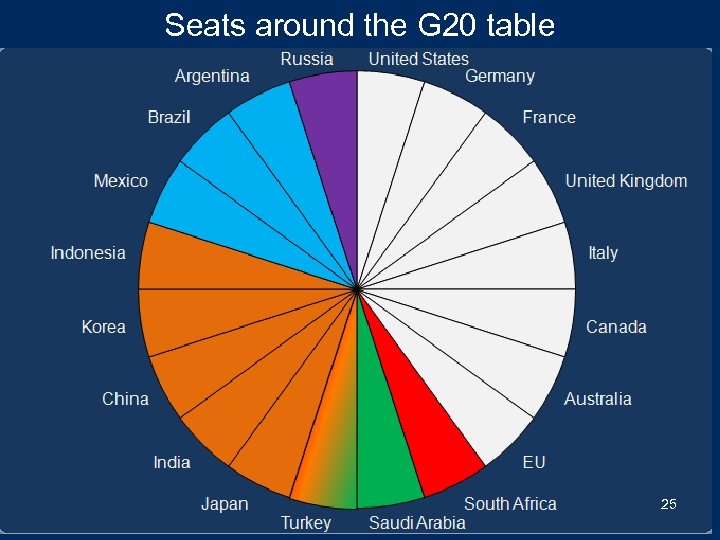 Seats around the G 20 table 25
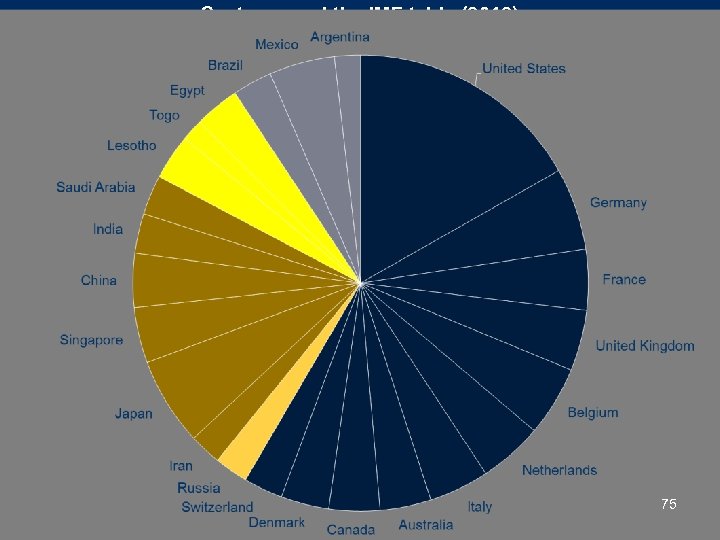
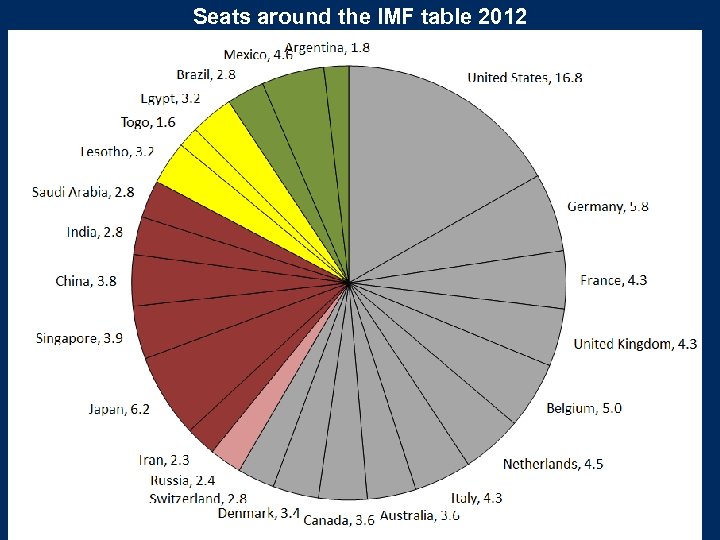 Seats around the IMF table 2012 26
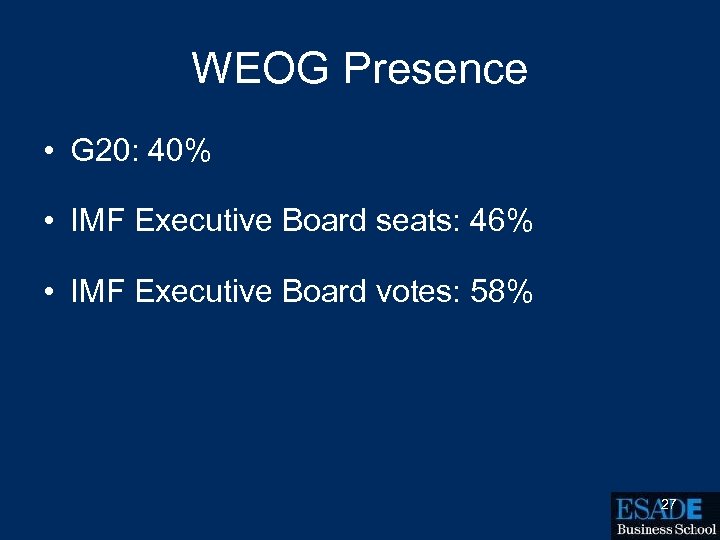 WEOG Presence • G 20: 40% • IMF Executive Board seats: 46% • IMF Executive Board votes: 58% 27
 How do they do it? • Inflated vote shares? 28
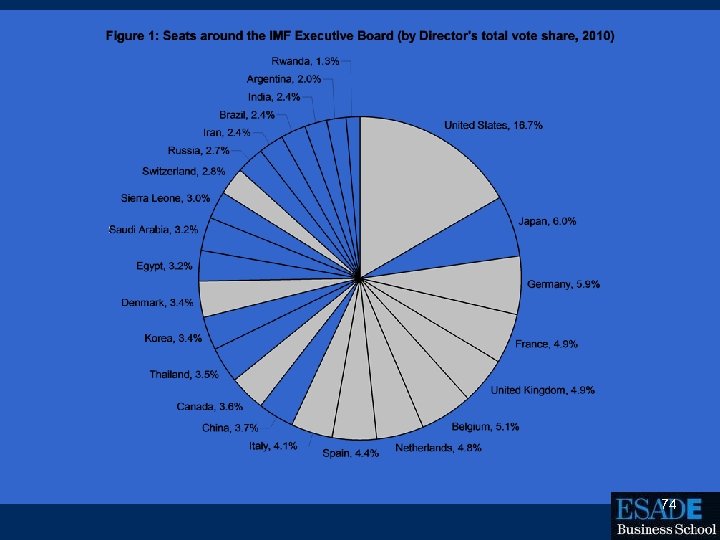
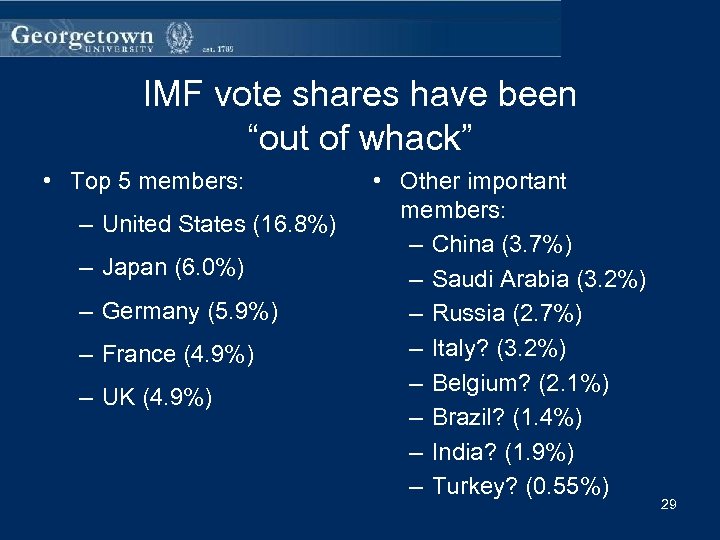 IMF vote shares have been “out of whack” • Top 5 members: – United States (16. 8%) – Japan (6. 0%) – Germany (5. 9%) – France (4. 9%) – UK (4. 9%) • Other important members: – China (3. 7%) – Saudi Arabia (3. 2%) – Russia (2. 7%) – Italy? (3. 2%) – Belgium? (2. 1%) – Brazil? (1. 4%) – India? (1. 9%) – Turkey? (0. 55%) 29
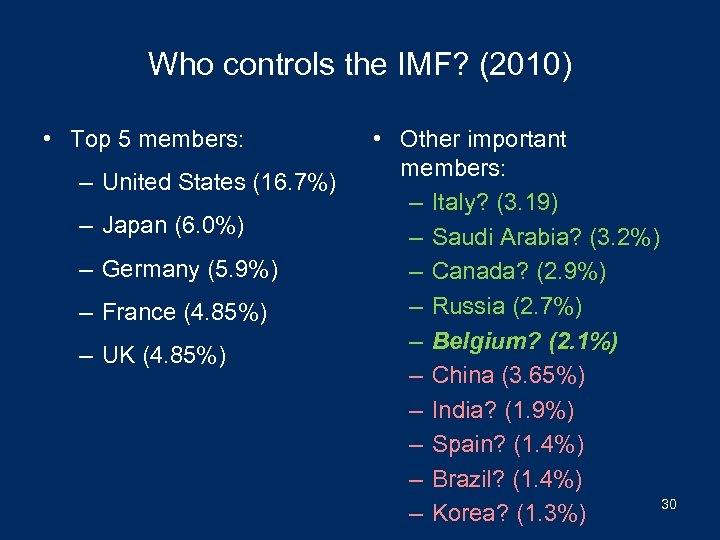 Who controls the IMF? (2010) • Top 5 members: – United States (16. 7%) – Japan (6. 0%) – Germany (5. 9%) – France (4. 85%) – UK (4. 85%) • Other important members: – Italy? (3. 19) – Saudi Arabia? (3. 2%) – Canada? (2. 9%) – Russia (2. 7%) – Belgium? (2. 1%) – China (3. 65%) – India? (1. 9%) – Spain? (1. 4%) – Brazil? (1. 4%) 30 – Korea? (1. 3%)
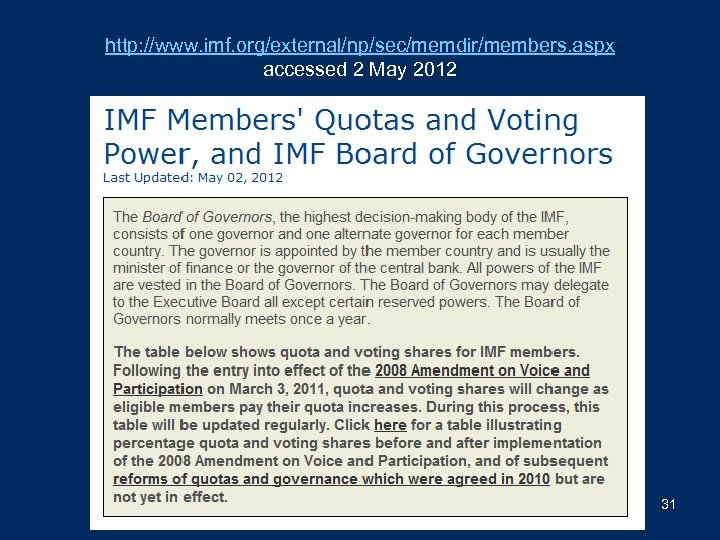 http: //www. imf. org/external/np/sec/memdir/members. aspx accessed 2 May 2012 31
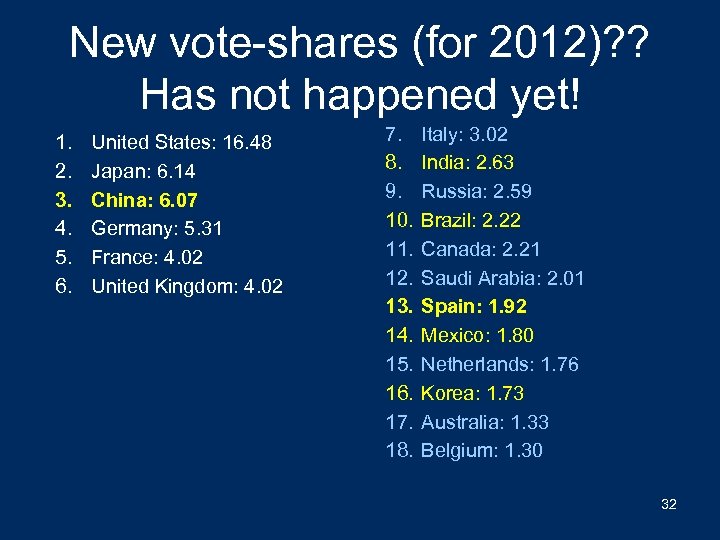 New vote-shares (for 2012)? ? Has not happened yet! 1. 2. 3. 4. 5. 6. United States: 16. 48 Japan: 6. 14 China: 6. 07 Germany: 5. 31 France: 4. 02 United Kingdom: 4. 02 7. 8. 9. 10. 11. 12. 13. 14. 15. 16. 17. 18. Italy: 3. 02 India: 2. 63 Russia: 2. 59 Brazil: 2. 22 Canada: 2. 21 Saudi Arabia: 2. 01 Spain: 1. 92 Mexico: 1. 80 Netherlands: 1. 76 Korea: 1. 73 Australia: 1. 33 Belgium: 1. 30 32
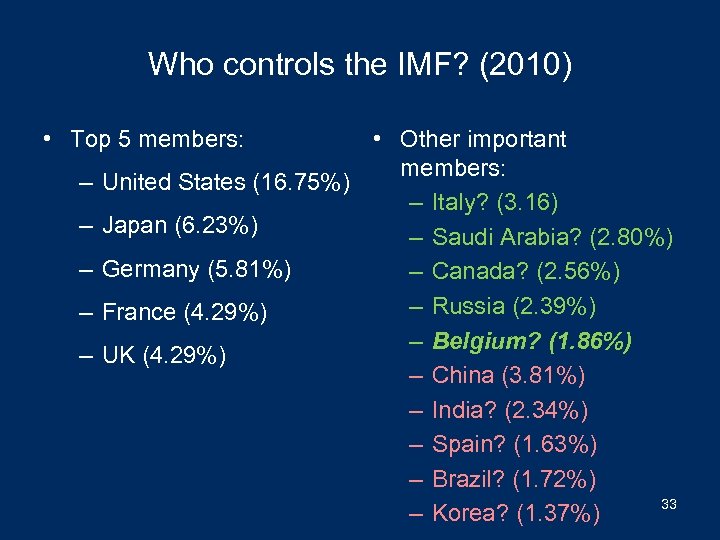 Who controls the IMF? (2010) • Top 5 members: – – – • Other important members: United States (16. 75%) – Italy? (3. 16) Japan (6. 23%) – Saudi Arabia? (2. 80%) Germany (5. 81%) – Canada? (2. 56%) – Russia (2. 39%) France (4. 29%) – Belgium? (1. 86%) UK (4. 29%) – China (3. 81%) – India? (2. 34%) – Spain? (1. 63%) – Brazil? (1. 72%) 33 – Korea? (1. 37%)
 But real distortions also occur in the elections for the Executive Board 34
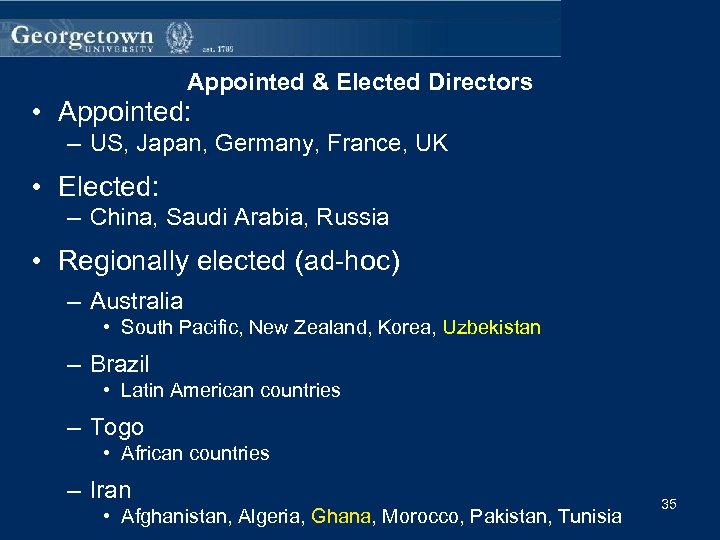 Appointed & Elected Directors • Appointed: – US, Japan, Germany, France, UK • Elected: – China, Saudi Arabia, Russia • Regionally elected (ad-hoc) – Australia • South Pacific, New Zealand, Korea, Uzbekistan – Brazil • Latin American countries – Togo • African countries – Iran • Afghanistan, Algeria, Ghana, Morocco, Pakistan, Tunisia 35
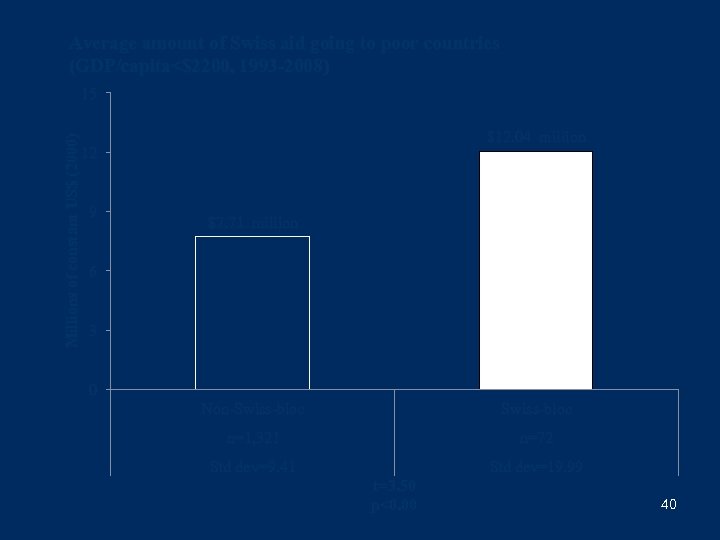
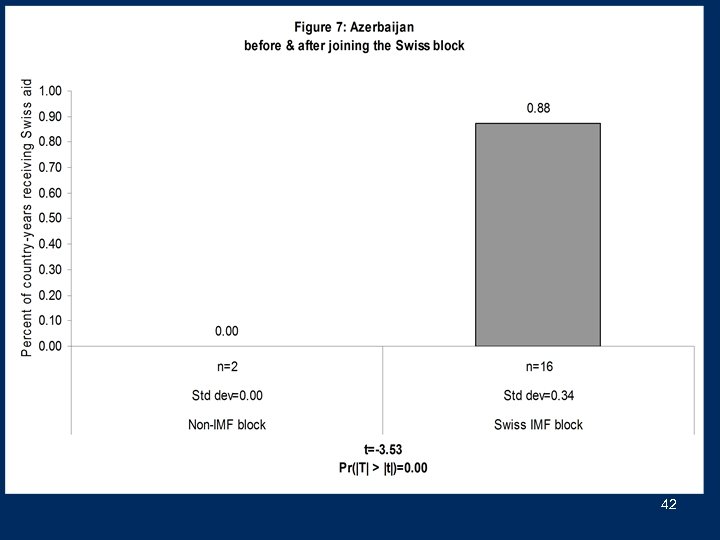
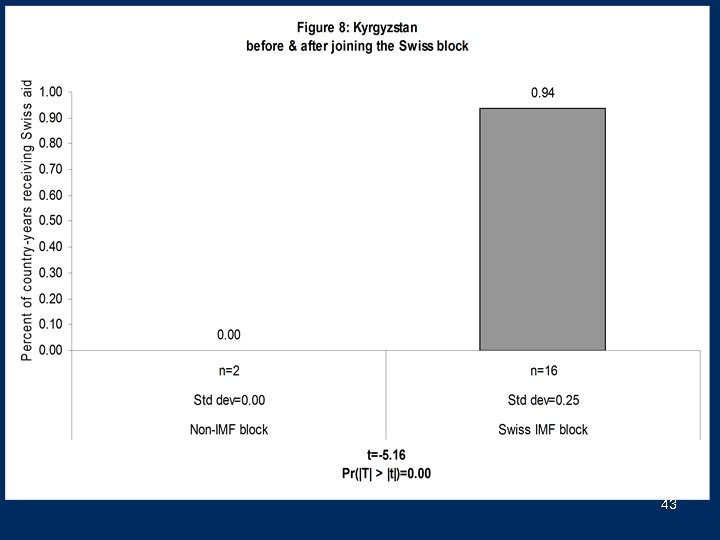
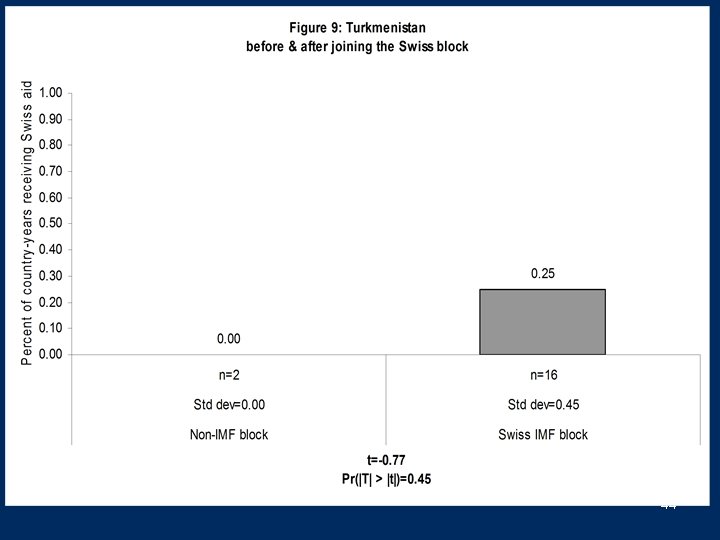
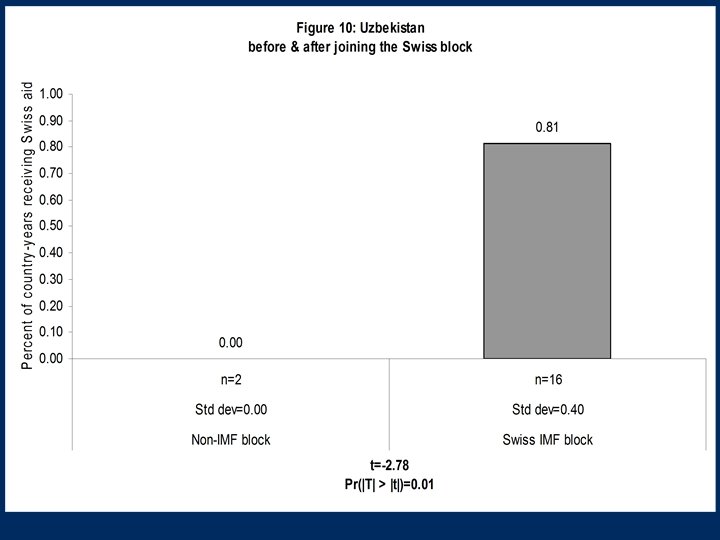
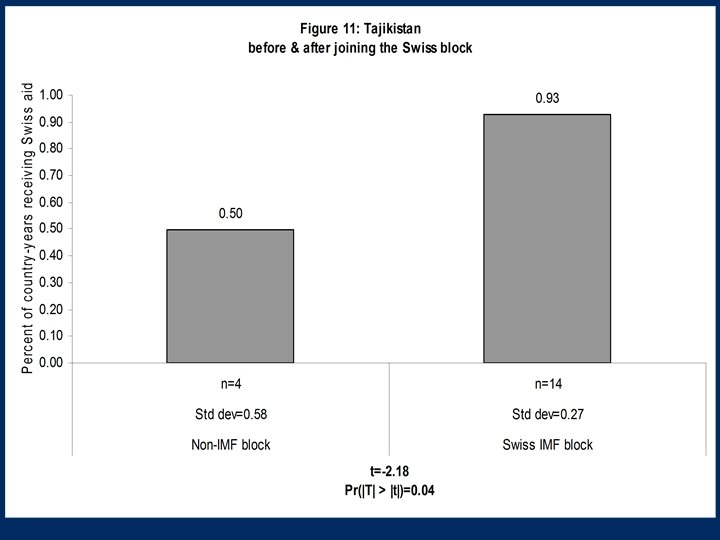
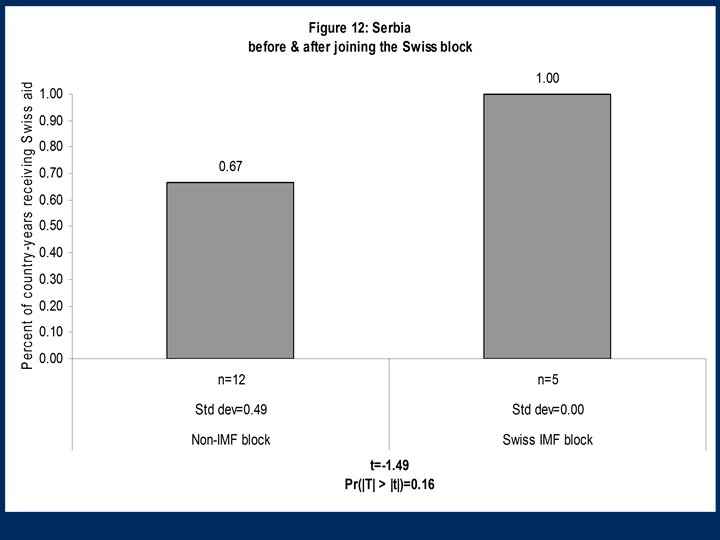
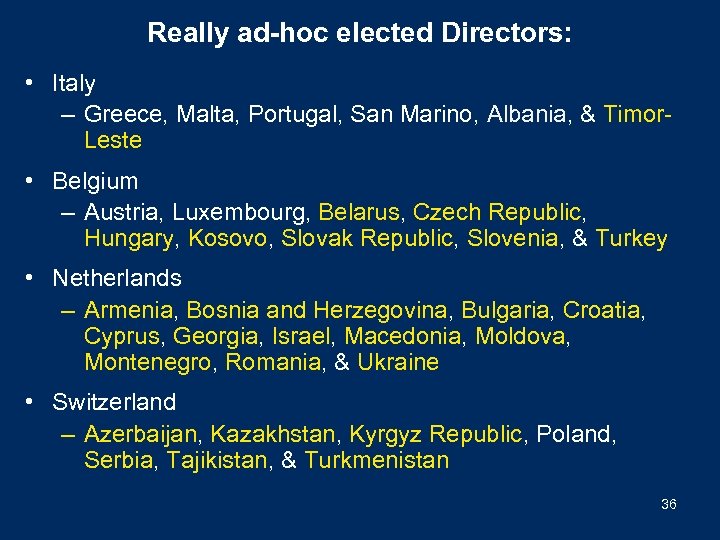 Really ad-hoc elected Directors: • Italy – Greece, Malta, Portugal, San Marino, Albania, & Timor. Leste • Belgium – Austria, Luxembourg, Belarus, Czech Republic, Hungary, Kosovo, Slovak Republic, Slovenia, & Turkey • Netherlands – Armenia, Bosnia and Herzegovina, Bulgaria, Croatia, Cyprus, Georgia, Israel, Macedonia, Moldova, Montenegro, Romania, & Ukraine • Switzerland – Azerbaijan, Kazakhstan, Kyrgyz Republic, Poland, Serbia, Tajikistan, & Turkmenistan 36
 How do they do it? • Foreign aid? 37
 Buying Bretton Woods James Raymond Vreeland Georgetown University jrv 24@georgetown. edu Paper prepared for presentation at the Aid. Data Conference, University College, Oxford, March 22 -25, 2010 38
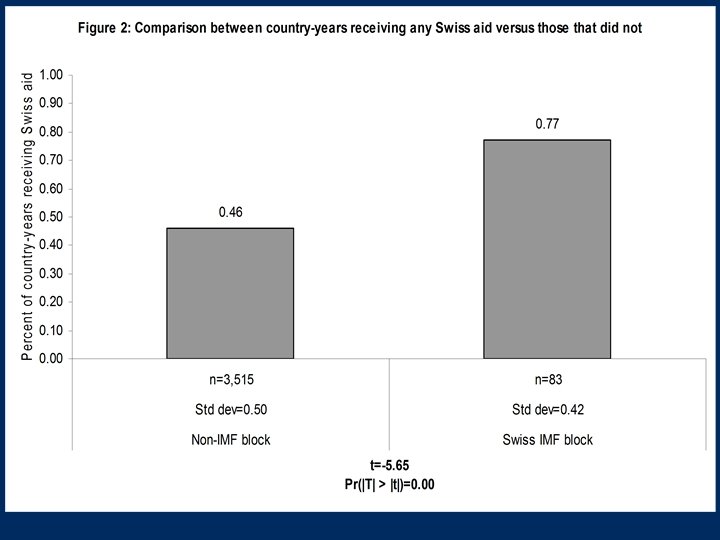
 Switzerland? • New IMF member (1992) – Bloc does not have deep historical ties other than joining around the same time – Data for the entire period are available • Switzerland has added incentives – Out of the EU, out of the G 20 39
 Average amount of Swiss aid going to poor countries (GDP/capita<$2200, 1993 -2008) Millions of constant US$ (2000) 15 $12. 04 million 12 9 $7. 71 million 6 3 0 Non-Swiss-bloc n=1, 321 n=72 Std dev=9. 41 Std dev=19. 99 t=3. 50 p<0. 00 40
 41
41
 42
42
 43
43
 44
44
 45
45
 46
46
 47
47
 The risk: Irrelevance of the IMF in a Multi-Polar world! 48
 Regional Monetary Funds? Lipscy, Phillip Y. 2003. Japan's Asian Monetary Fund Proposal. Stanford Journal of East Asian Affairs 3 (1): 93 -104. http: //www. youtube. com/watch? v=Hyr. Typ. TRDbk 49
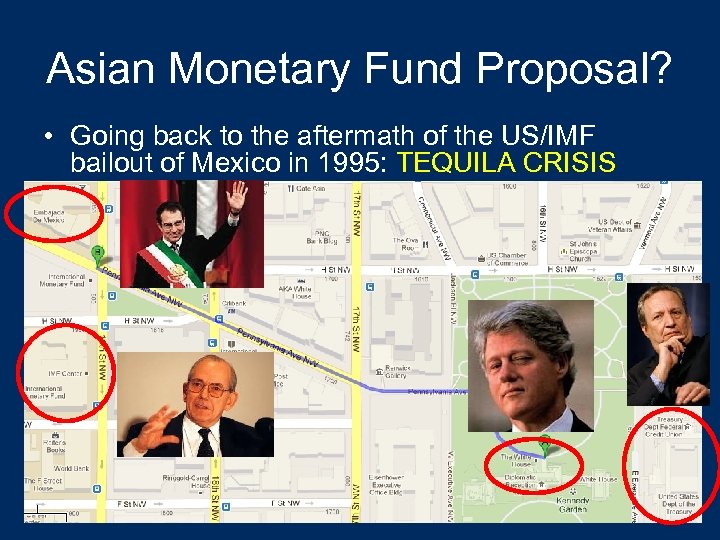 Asian Monetary Fund Proposal? • Going back to the aftermath of the US/IMF bailout of Mexico in 1995: TEQUILA CRISIS • Japanese policy-thinkers/makers begin thinking about an “Asian Monetary Organization” ($20 billion) • Why? – Believed that the US would not act as vigorously in the event of a crisis in Asia • Then: East Asian Financial Crisis • http: //www. xtimeline. com/timeline/Asian. Financial-Crisis 50
 51
51
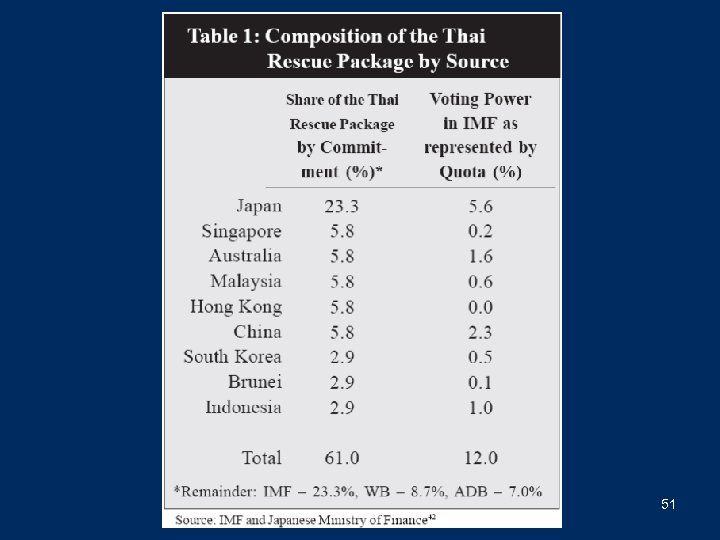
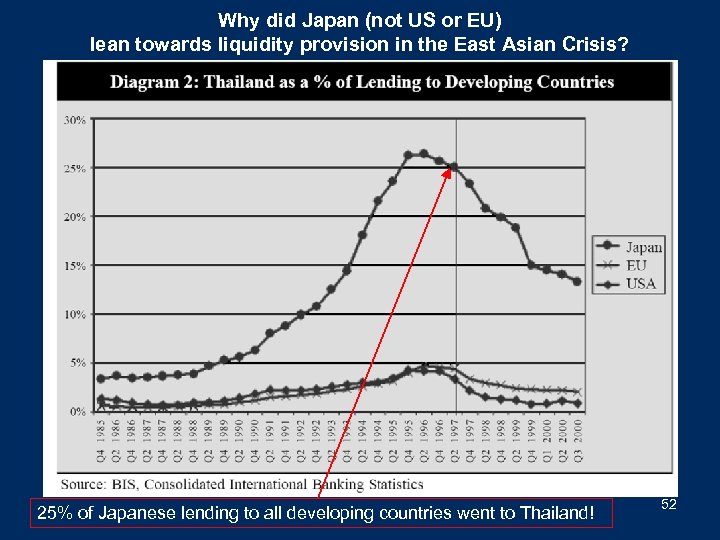 Why did Japan (not US or EU) lean towards liquidity provision in the East Asian Crisis? 25% of Japanese lending to all developing countries went to Thailand! 52
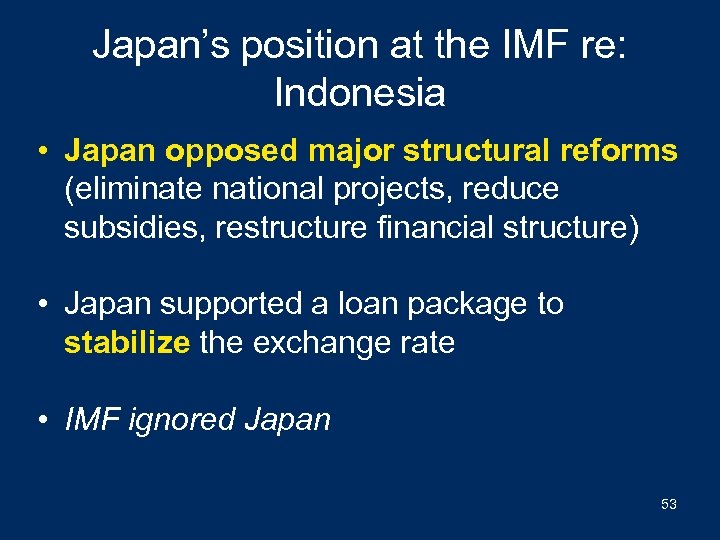 Japan’s position at the IMF re: Indonesia • Japan opposed major structural reforms (eliminate national projects, reduce subsidies, restructure financial structure) • Japan supported a loan package to stabilize the exchange rate • IMF ignored Japan 53
 54
54
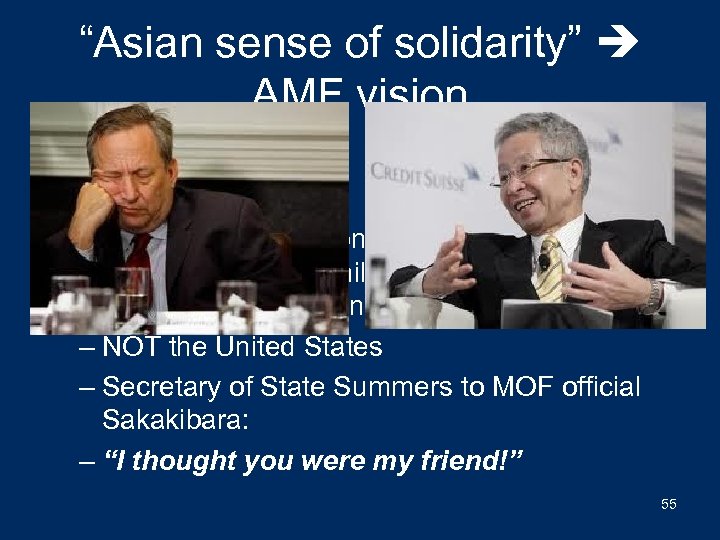 “Asian sense of solidarity” AMF vision • $100 billion • 10 members: – Australia, China, Hong Kong, Indonesia, Japan, Malaysia, Philippines, Singapore, South Korea, Thailand – NOT the United States – Secretary of State Summers to MOF official Sakakibara: – “I thought you were my friend!” 55
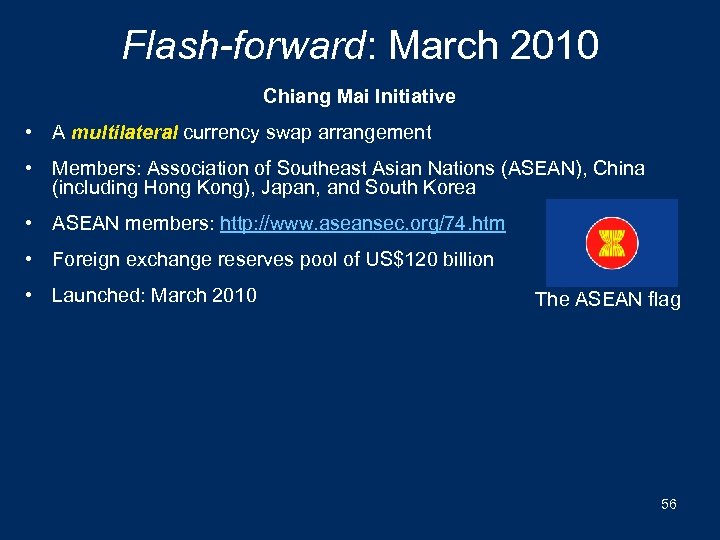 Flash-forward: March 2010 Chiang Mai Initiative • A multilateral currency swap arrangement • Members: Association of Southeast Asian Nations (ASEAN), China (including Hong Kong), Japan, and South Korea • ASEAN members: http: //www. aseansec. org/74. htm • Foreign exchange reserves pool of US$120 billion • Launched: March 2010 The ASEAN flag 56
 Power: • Matters in international institutions • But emerging markets have outside options • Can we keep China at the table? • Or does China go for outside options? 57
 Aside • How do you “see” China? • What does China “look” like? 58
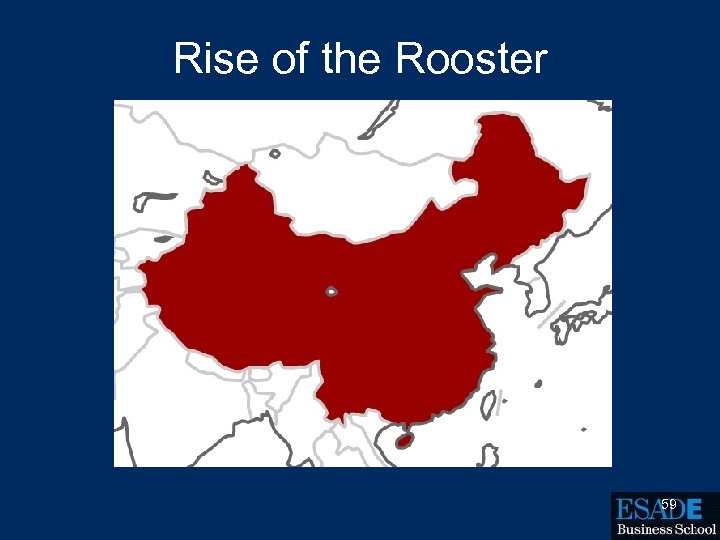 Rise of the Rooster 59
 Will China play this game? • Increasingly using foreign aid & access to Chinese markets for political goals • Recognition of Taiwan • Dalai Lama • Liu Xiaobo • Chiang Mai alternative 60
 One more triangle…
 Is this a “Bretton Woods” Moment?
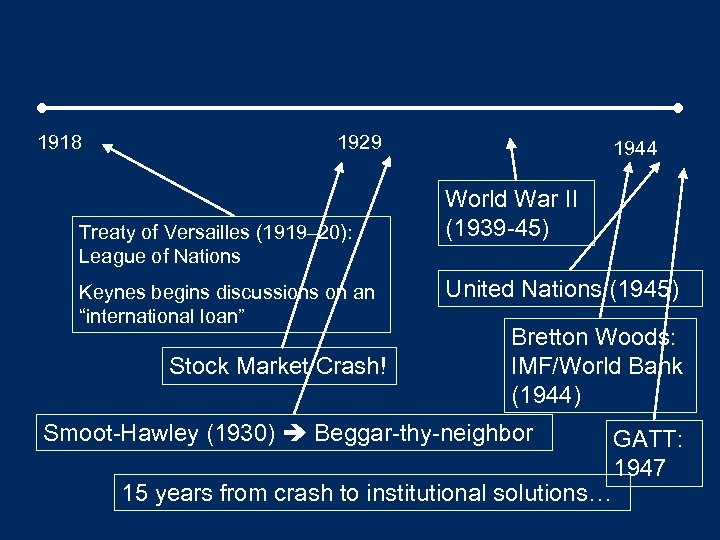 1918 1929 Treaty of Versailles (1919– 20): League of Nations Keynes begins discussions on an “international loan” Stock Market Crash! 1944 World War II (1939 -45) United Nations (1945) Bretton Woods: IMF/World Bank (1944) Smoot-Hawley (1930) Beggar-thy-neighbor 15 years from crash to institutional solutions… GATT: 1947
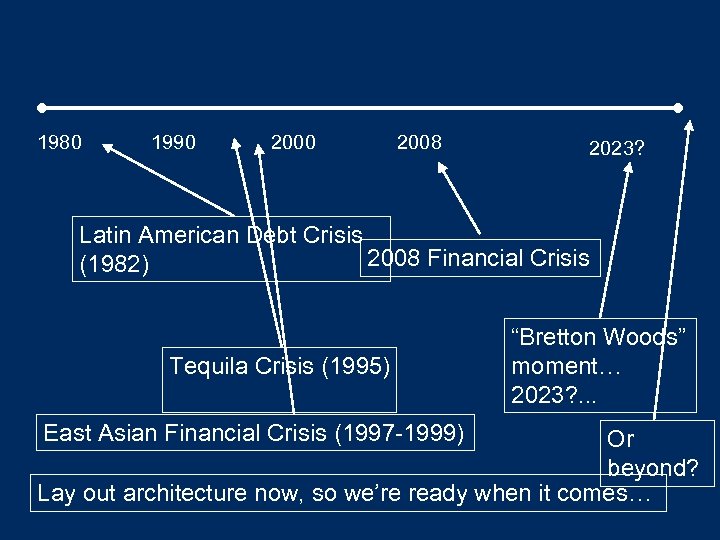 1980 1990 2008 2023? Latin American Debt Crisis 2008 Financial Crisis (1982) Tequila Crisis (1995) East Asian Financial Crisis (1997 -1999) “Bretton Woods” moment… 2023? . . . Or beyond? Lay out architecture now, so we’re ready when it comes…
 Think Big about Global Governance!
 Regionalism before globalism?
 Wrap up 68
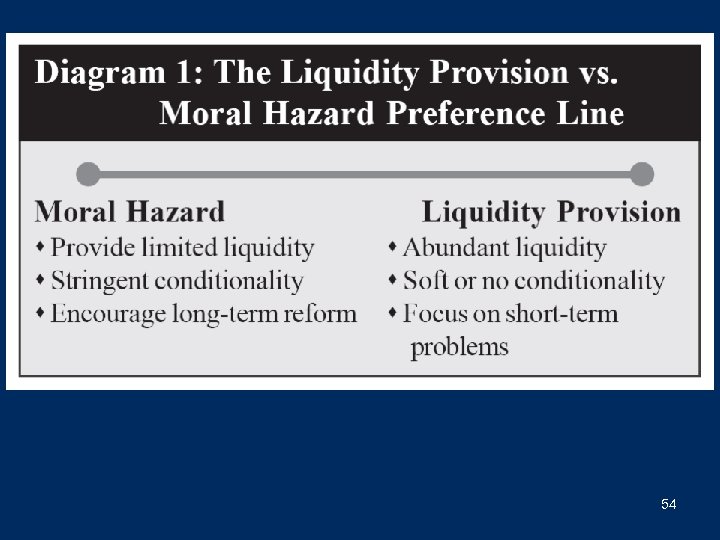
 Why should you care? • Globalization of capital flows • Financial crises plagued the 20 th century • Bailouts will continue • Tension between – Providing liquidity – Preventing MORAL HAZARD • Solution: conditionality – 1944 -1970 s conditionality light – 1980 s & 1990 s conditionality heavy – 2008… conditionality light? • What will it be like when the shoe is on the other foot? 69
 The course take-away: • Institutions matter… • How do international institutions matter? – – Solve collective action problems? Informational role? Facilitate foreign policy goals? Obfuscate the pursuit of political goals? • How do domestic political institutions matter? – Shape the survival strategies of political leaders 70
 Analytical toolkit • TRILEMMA • Time-inconsistent preference problems – “Commitment” problems – Remember Ulysses and the sirens – USING INTERNATIONAL ORGANIZATIONS TO “LOCK-IN” OR INFLUENCE POLICY • Veto players (stability of policy) • Stability of democracy in rich democracies • Objectives of leaders: stay in power! – The optimal strategy to fulfill this goal depends on incentives/constraints shaped by institutional context • “Controlling” for variables (holding conditions constant) 71
 Winners & Losers • Greater economic integration greater power of “Winners” • Economic integration greatest at the Regional Level • So look for regional cooperation • You are winners from globalization! 72
 Thank you WE ARE GLOBAL GEORGETOWN! 73
 74
74
 Seats around the IMF table (2012) 75