


 Скачать презентацию The demand supply of international transport services The
5cd8bcff8be9e9b88098ab2e3b34487f.ppt
- Количество слайдов: 58
 The demand supply of international transport services: The relationships between trade, transport costs and effective access to global markets Jan. Hoffmann@UNCTAD. org Geneva, May 2007 .
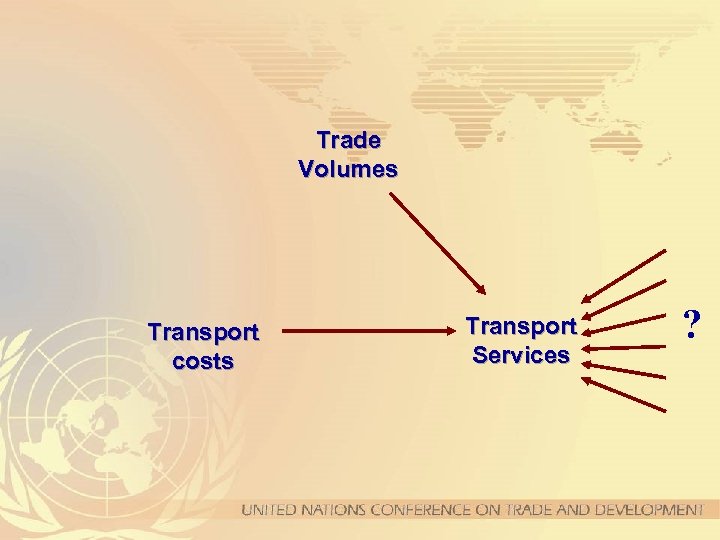
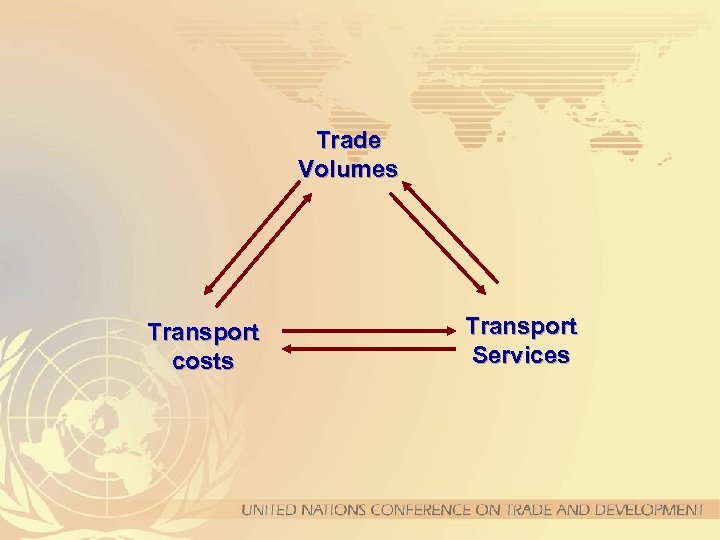 Trade Volumes Transport costs Transport Services
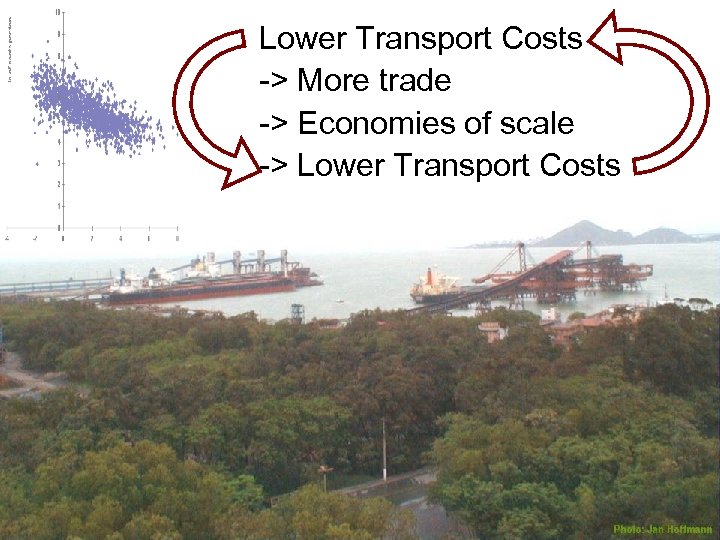 Lower Transport Costs -> More trade -> Economies of scale -> Lower Transport Costs
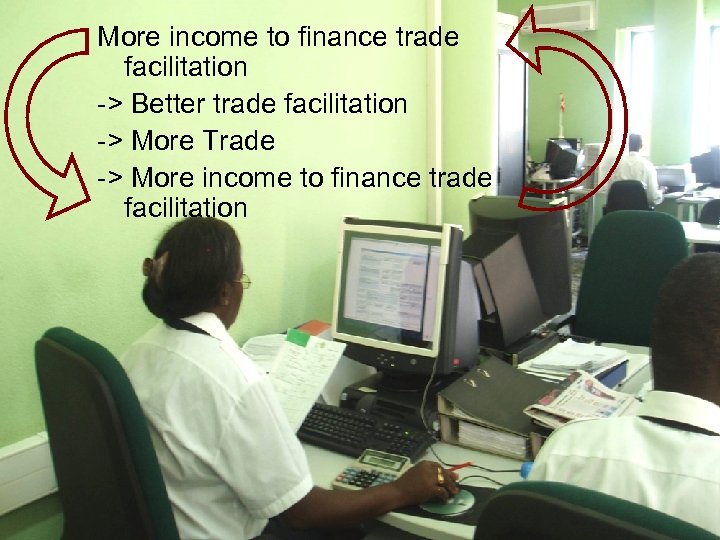 More income to finance trade facilitation -> Better trade facilitation -> More Trade -> More income to finance trade facilitation
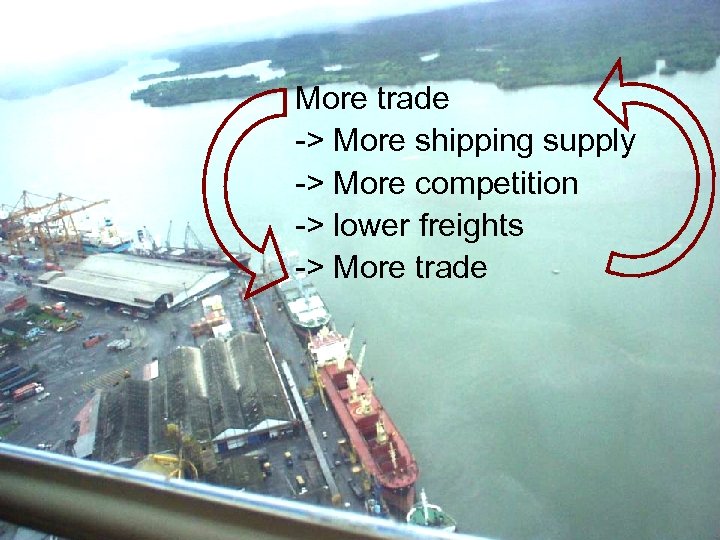 More trade -> More shipping supply -> More competition -> lower freights -> More trade
 The challenge: • Avoid a vicious circle, where high transport costs and low service levels discourage trade, which will further endear transport and reduce connectivity… • Instead: Initiate a virtuous circle
 1) Transport Costs 2) Connectivity 3) Trade
 1) Transport Costs
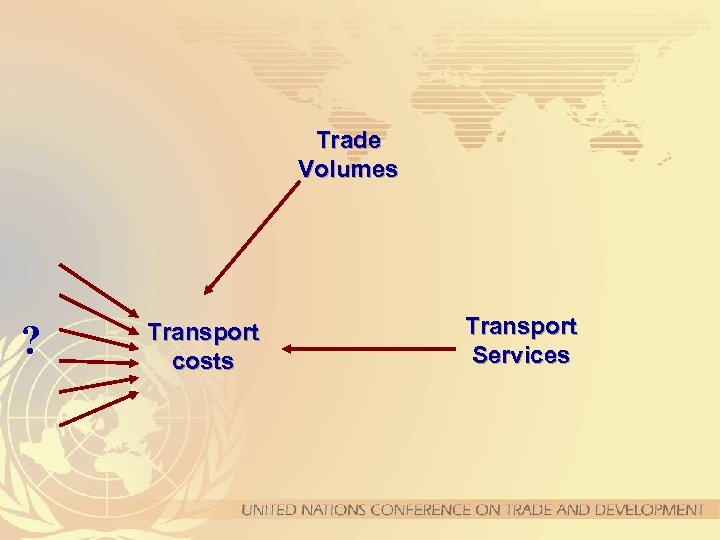 Trade Volumes ? Transport costs Transport Services
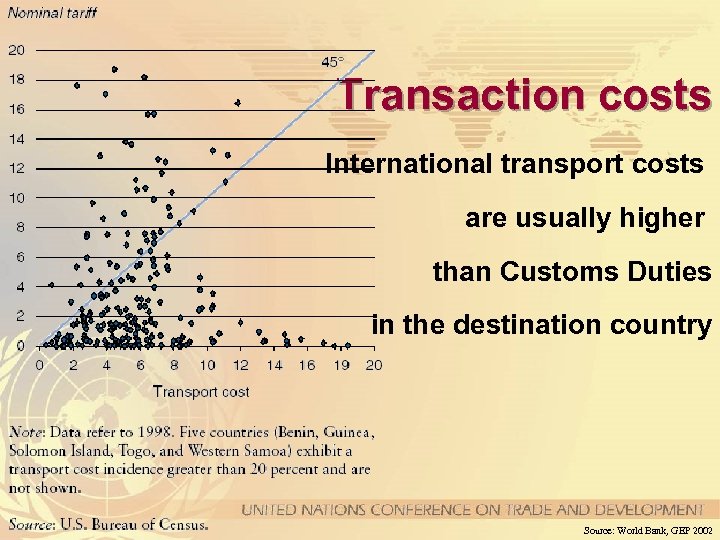 Transaction costs International transport costs are usually higher than Customs Duties in the destination country Source: World Bank, GEP 2002
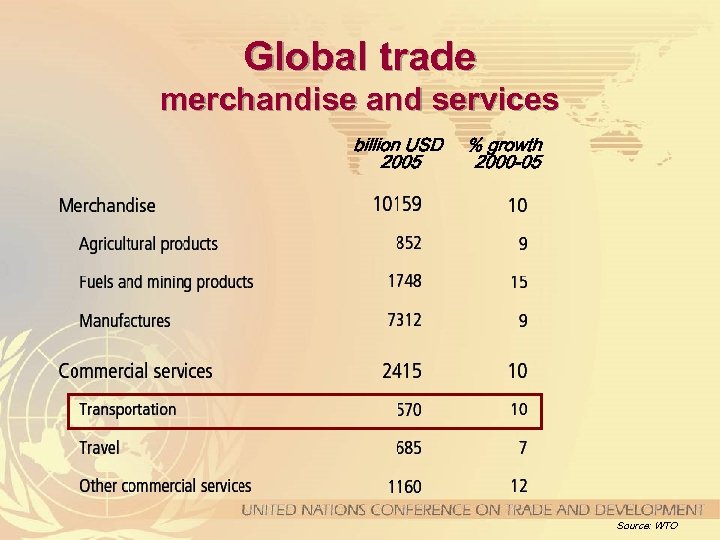 Global trade merchandise and services billion USD 2005 % growth 2000 -05 Source: WTO
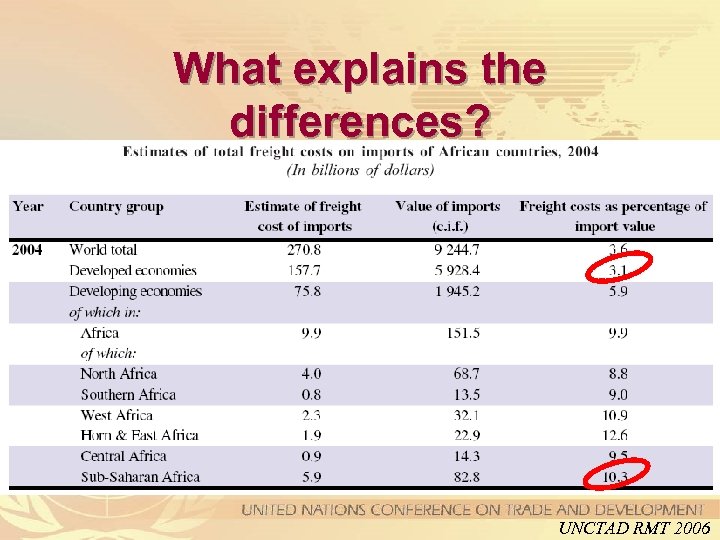 What explains the differences? UNCTAD RMT 2006
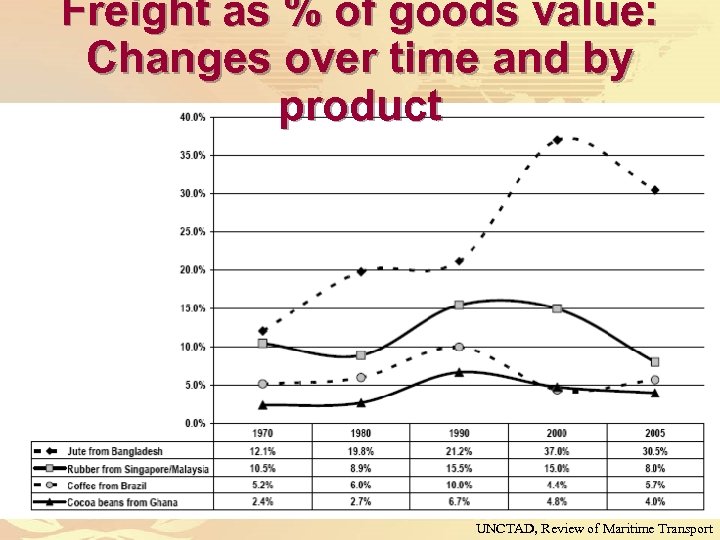 Freight as % of goods value: Changes over time and by product UNCTAD, Review of Maritime Transport
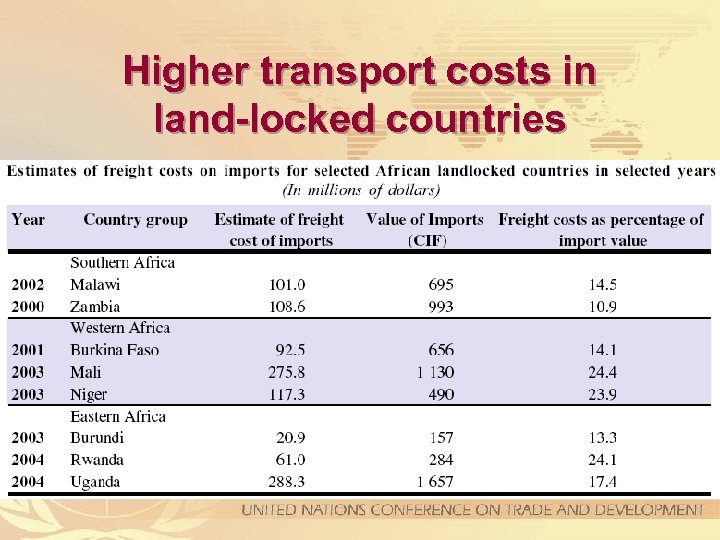 Higher transport costs in land-locked countries
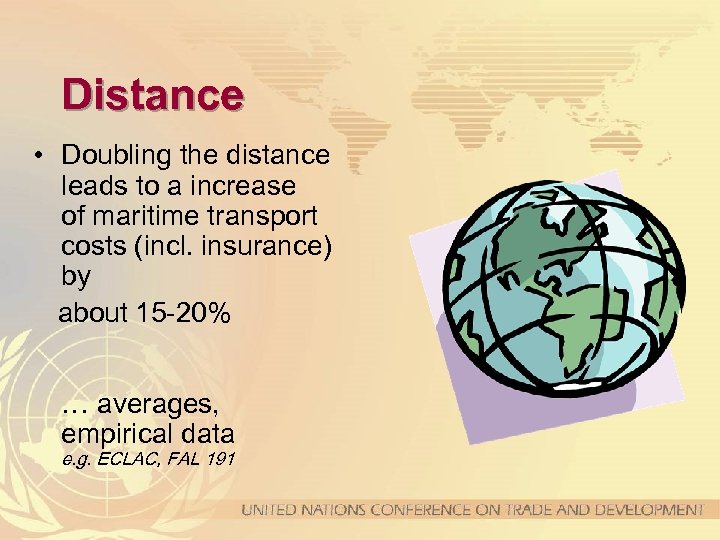 Distance • Doubling the distance leads to a increase of maritime transport costs (incl. insurance) by about 15 -20% … averages, empirical data e. g. ECLAC, FAL 191
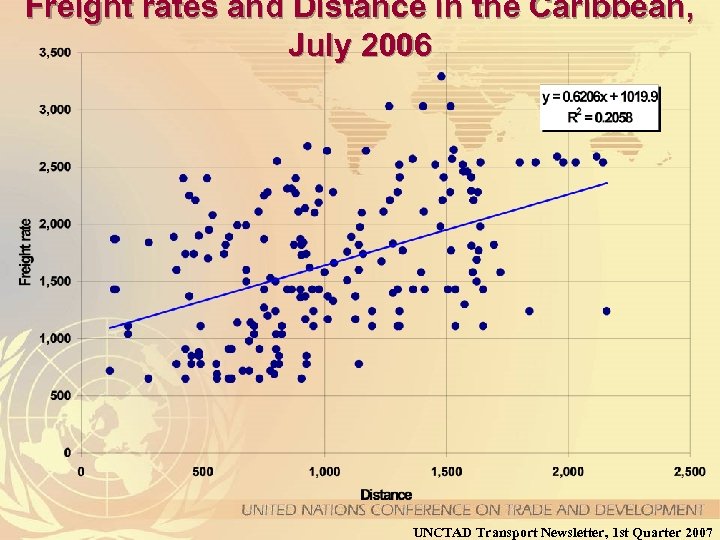 Freight rates and Distance in the Caribbean, July 2006 UNCTAD Transport Newsletter, 1 st Quarter 2007
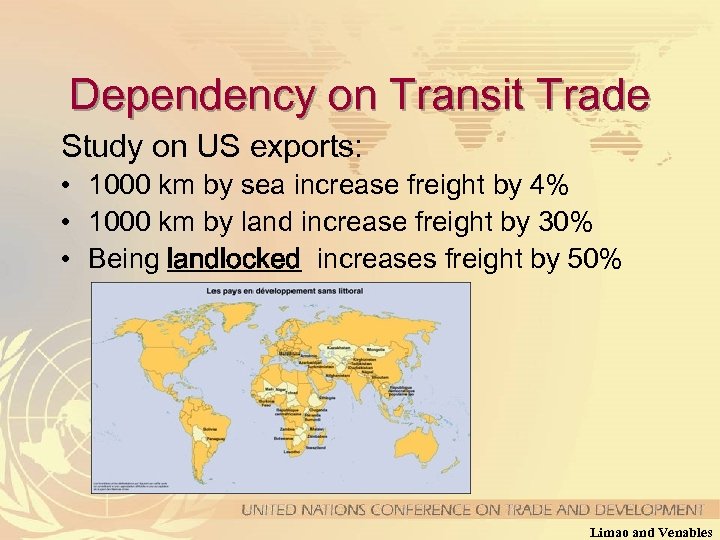 Dependency on Transit Trade Study on US exports: • 1000 km by sea increase freight by 4% • 1000 km by land increase freight by 30% • Being landlocked increases freight by 50% Limao and Venables
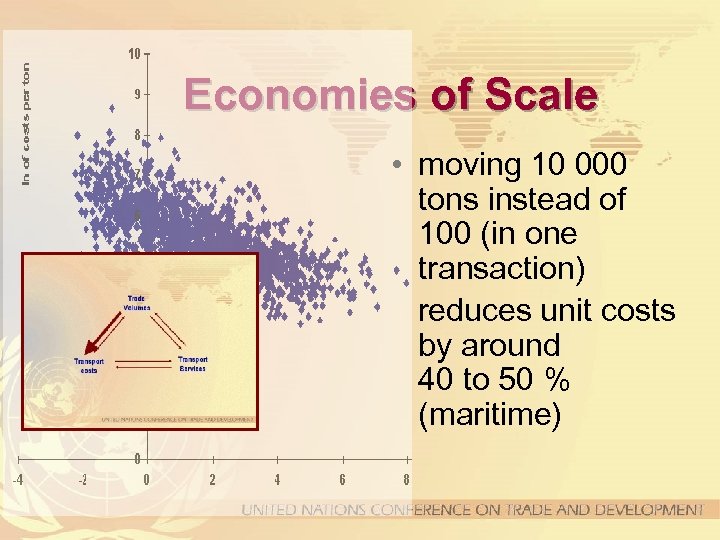 Economies of Scale • moving 10 000 tons instead of 100 (in one transaction) reduces unit costs by around 40 to 50 % (maritime)
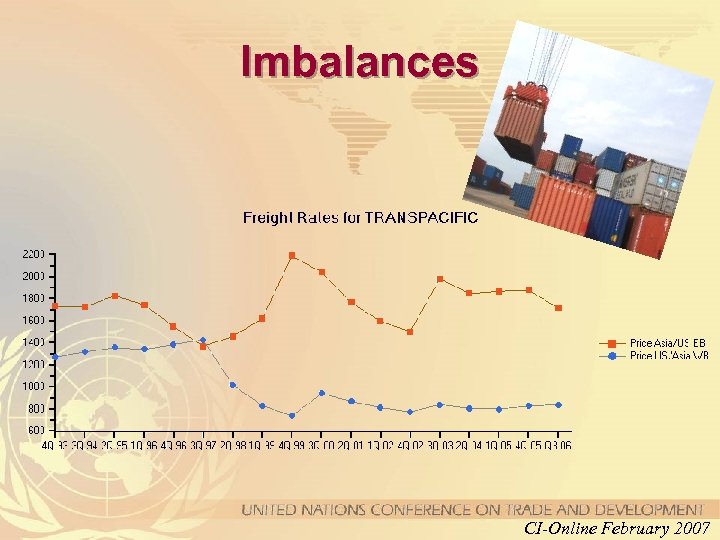 Imbalances CI-Online February 2007
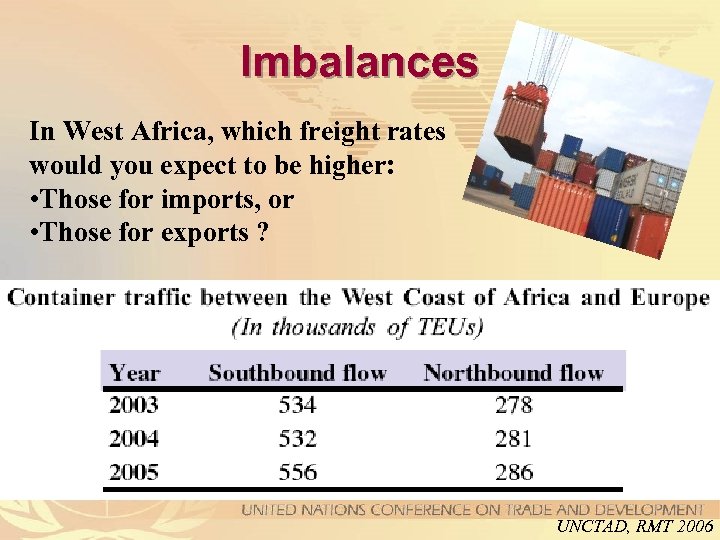 Imbalances In West Africa, which freight rates would you expect to be higher: • Those for imports, or • Those for exports ? UNCTAD, RMT 2006
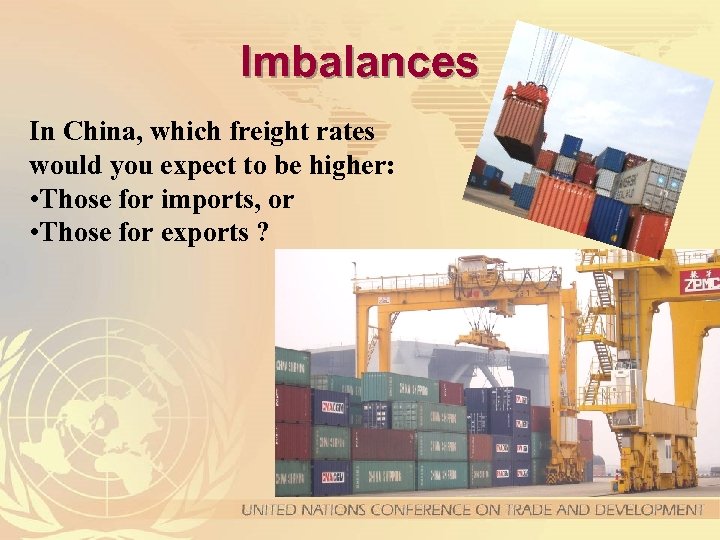 Imbalances In China, which freight rates would you expect to be higher: • Those for imports, or • Those for exports ?
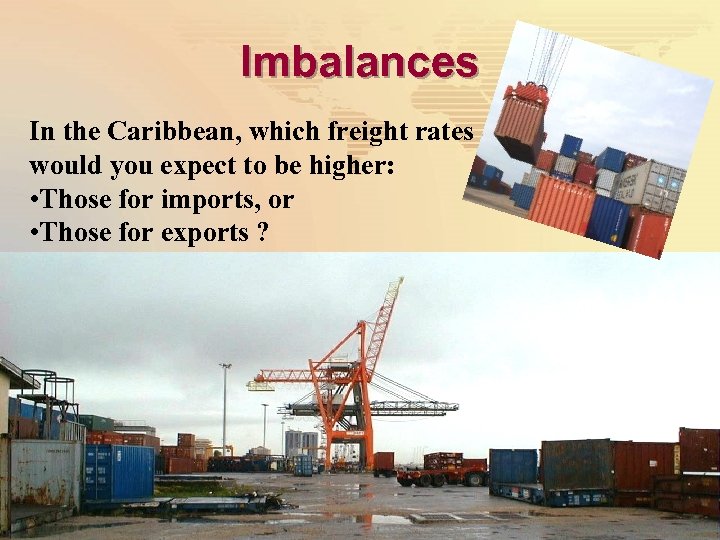 Imbalances In the Caribbean, which freight rates would you expect to be higher: • Those for imports, or • Those for exports ?
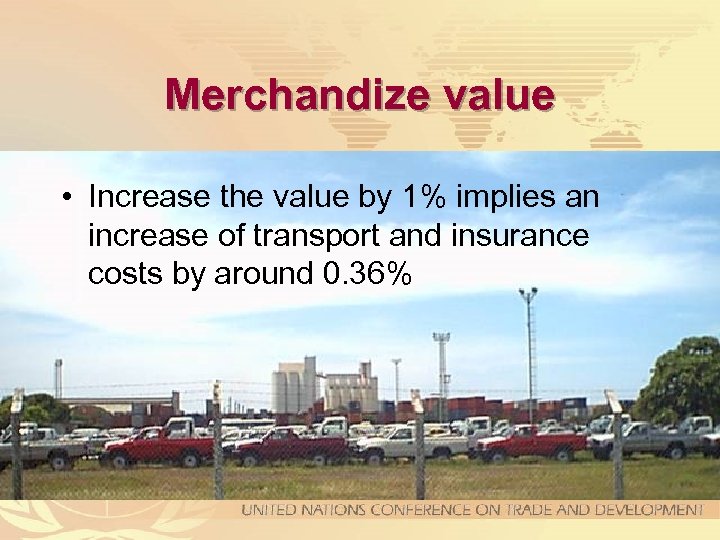 Merchandize value • Increase the value by 1% implies an increase of transport and insurance costs by around 0. 36%
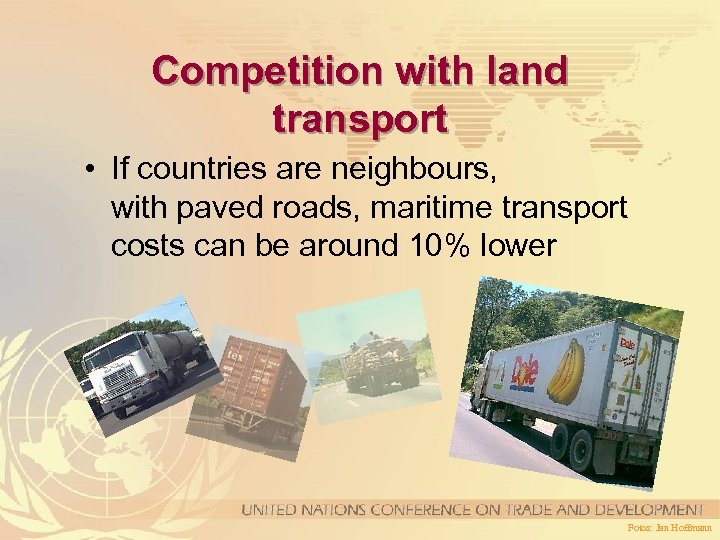 Competition with land transport • If countries are neighbours, with paved roads, maritime transport costs can be around 10% lower Fotos: Jan Hoffmann
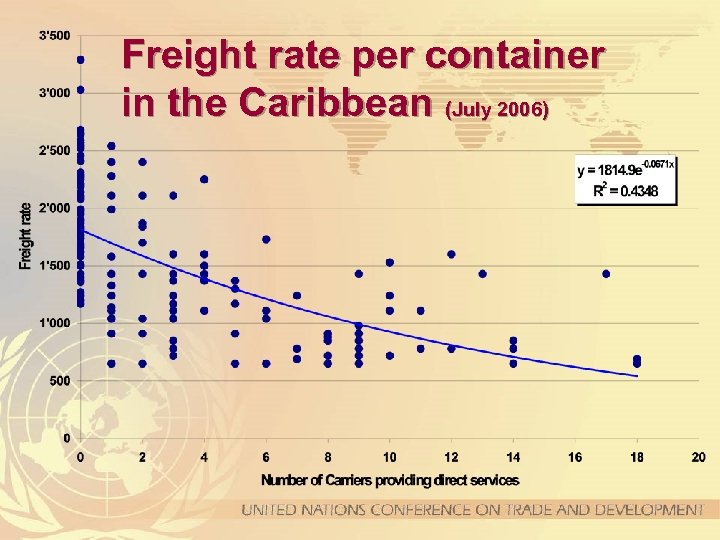 Freight rate per container in the Caribbean (July 2006)
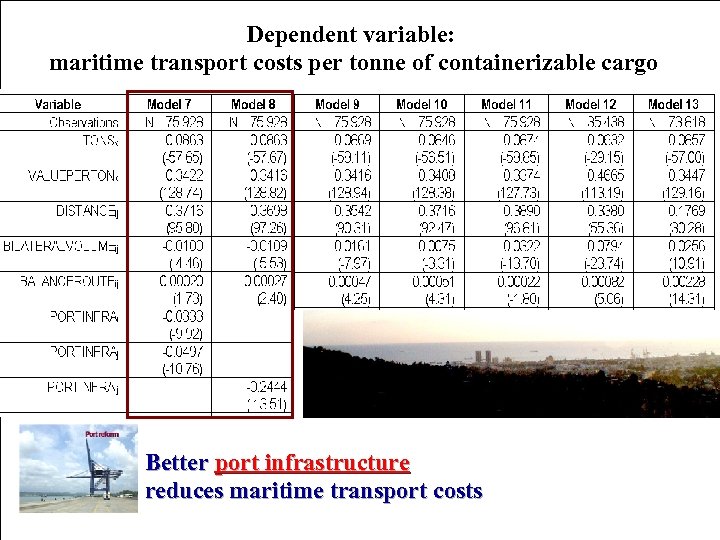 Dependent variable: maritime transport costs per tonne of containerizable cargo Better port infrastructure reduces maritime transport costs
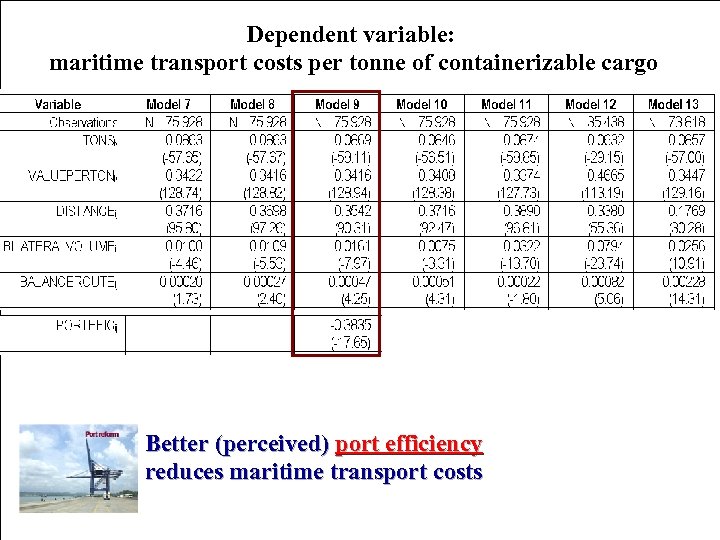 Dependent variable: maritime transport costs per tonne of containerizable cargo Better (perceived) port efficiency reduces maritime transport costs
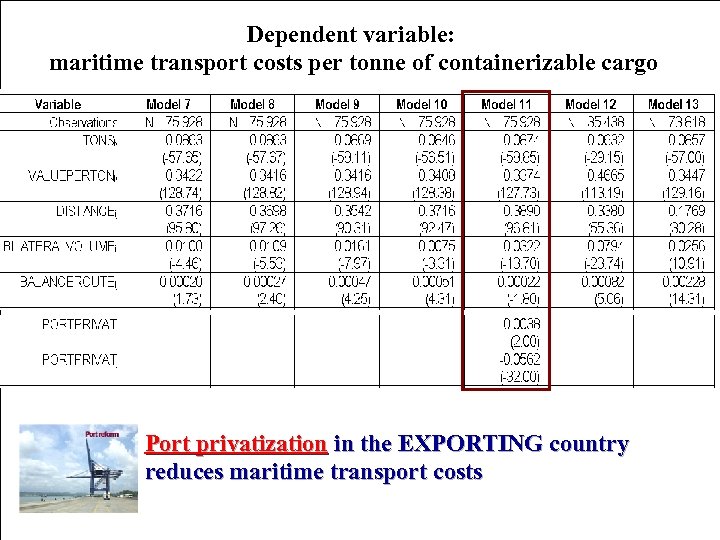 Dependent variable: maritime transport costs per tonne of containerizable cargo Port privatization in the EXPORTING country reduces maritime transport costs
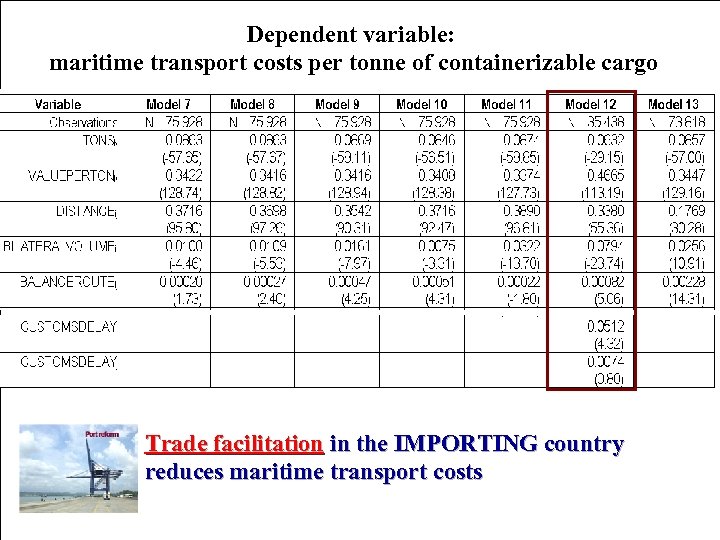 Dependent variable: maritime transport costs per tonne of containerizable cargo Trade facilitation in the IMPORTING country reduces maritime transport costs
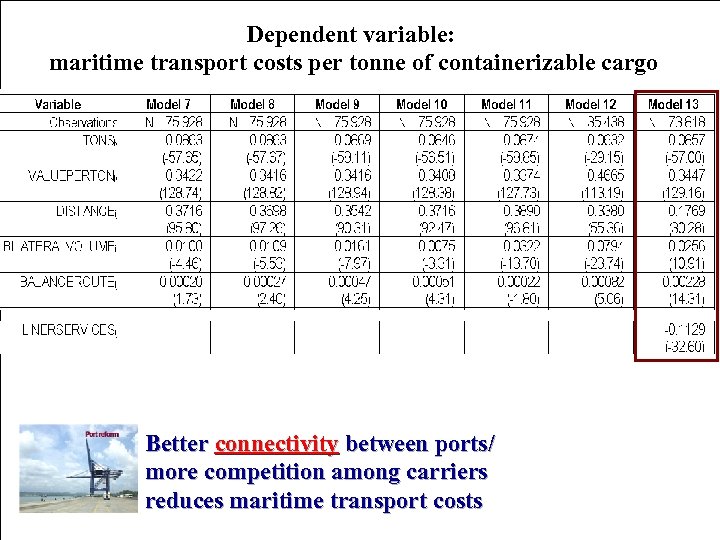 Dependent variable: maritime transport costs per tonne of containerizable cargo Better connectivity between ports/ more competition among carriers reduces maritime transport costs
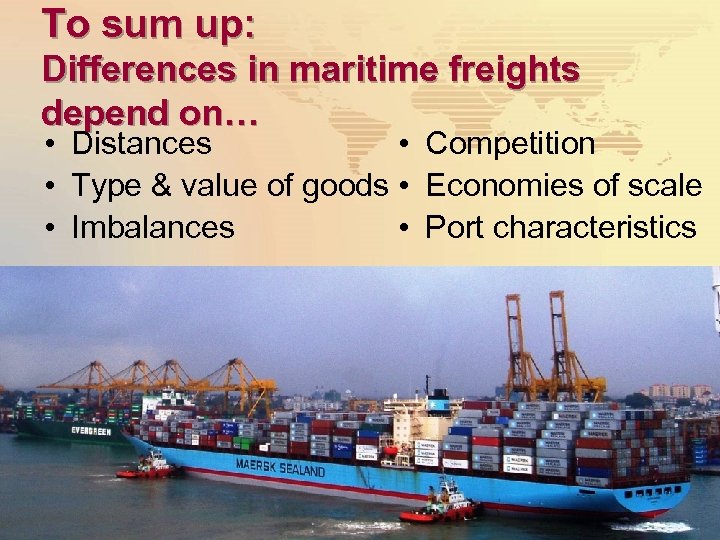 To sum up: Differences in maritime freights depend on… • Distances • Competition • Type & value of goods • Economies of scale • Imbalances • Port characteristics
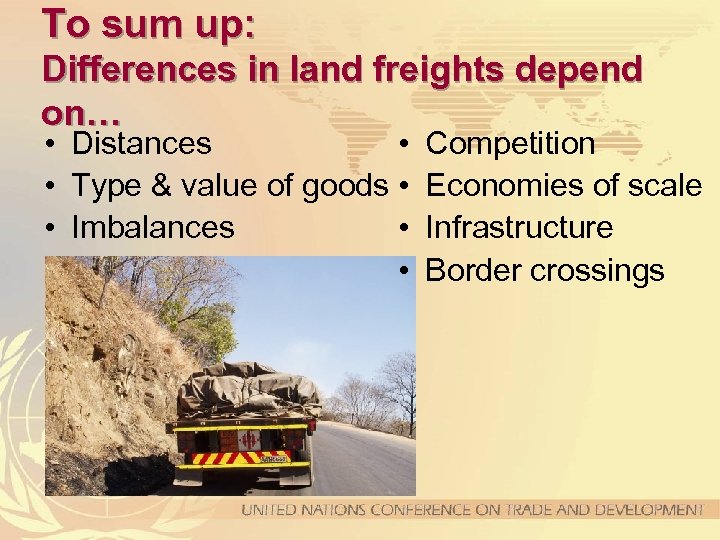 To sum up: Differences in land freights depend on… • Distances • • Type & value of goods • • Imbalances • • Competition Economies of scale Infrastructure Border crossings
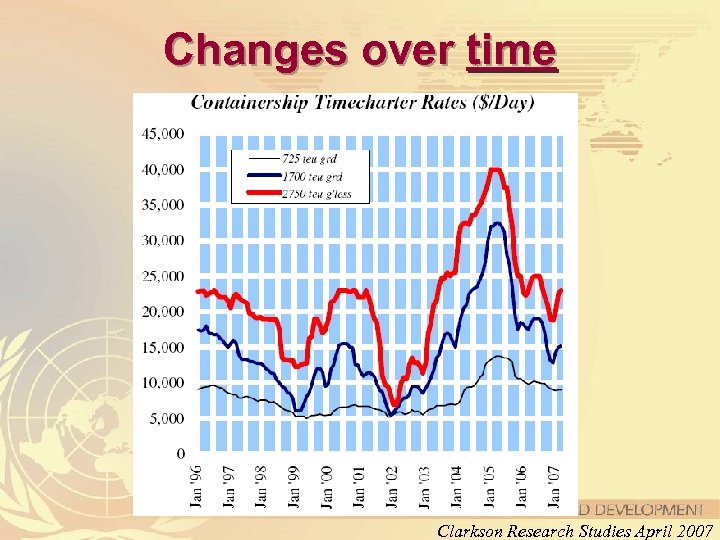 Changes over time Clarkson Research Studies April 2007
 2) Connectivity
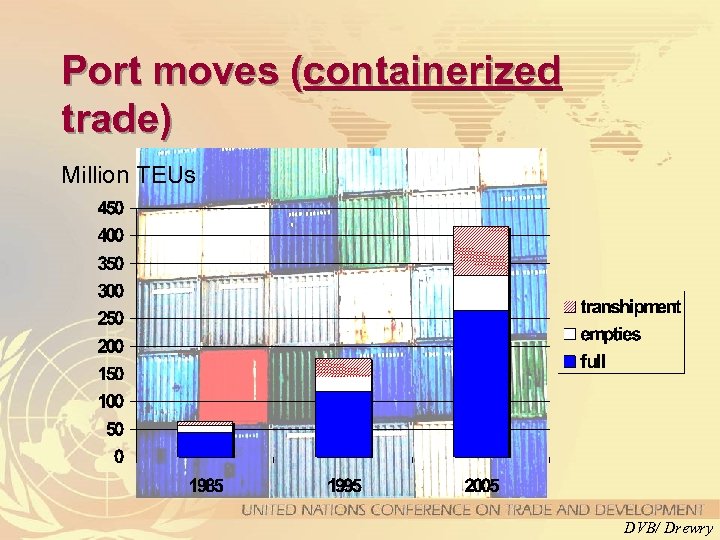 Port moves (containerized trade) Million TEUs DVB/ Drewry
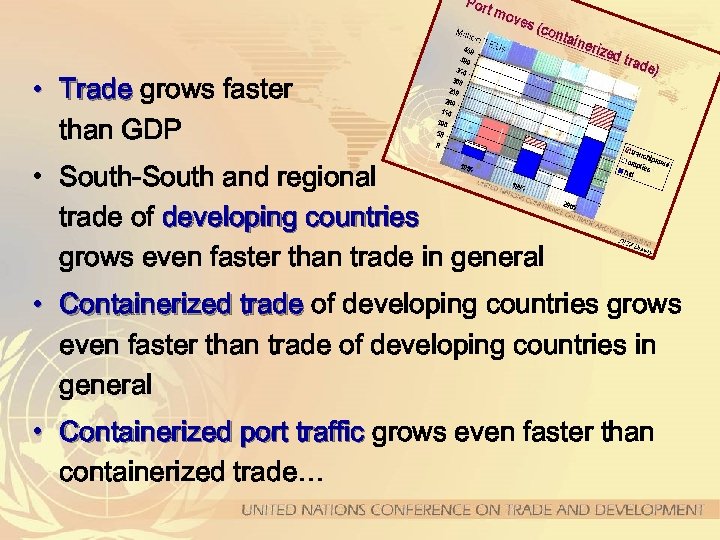 • Trade grows faster than GDP • South-South and regional trade of developing countries grows even faster than trade in general • Containerized trade of developing countries grows even faster than trade of developing countries in general • Containerized port traffic grows even faster than containerized trade…
 Containerization of trade, and access to containerized transport services are important determinants of countries’ trade competitiveness How can we measure this?
 “Maritime connectivity” An indicator for the supply of liner shipping services (containerized trade) • Ships • Capacity to transport containers (TEU) • Shipping companies • Services • Maximum ship sizes
 Benefits of a high connectivity 1. More choice for the user (importers and exporters) 2. Lower transport costs for the user (importers and exporters) 3. Direct income for the port (private operator, port authority) 4. Indirect income if value added services can be sold
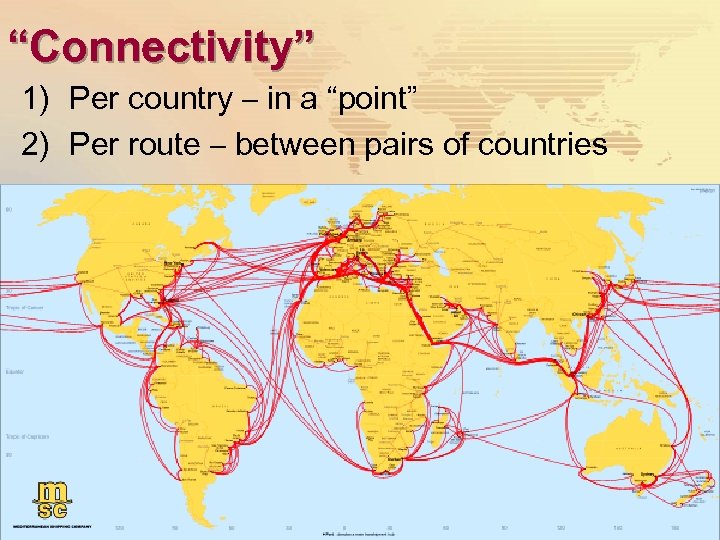 “Connectivity” 1) Per country – in a “point” 2) Per route – between pairs of countries
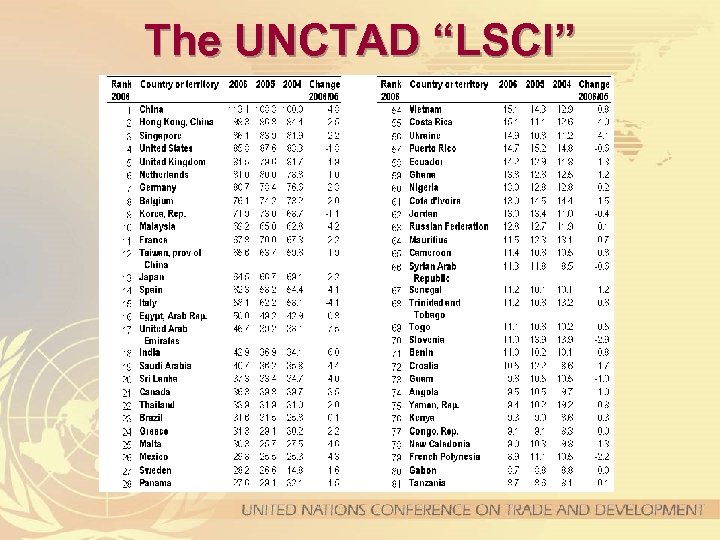 The UNCTAD “LSCI”
 Going up • TEU deployment + 14% • Maximum vessel size + 18% • Average vessel size + 11% (change of country average 2004 -2006)
 Going down • Number of companies - 6. 2% (change of country average 2004 -2006)
 We have reached a peak Until very recently: • In spite of the (global) process of concentration, the number of companies providing (local) services increased due to the expansion of global players into (so far) new markets
 We have reached a peak Today: • As global players are (now) covering all regions of the world, mergers among them (start to) lead to a reduction of competition on individual routes.
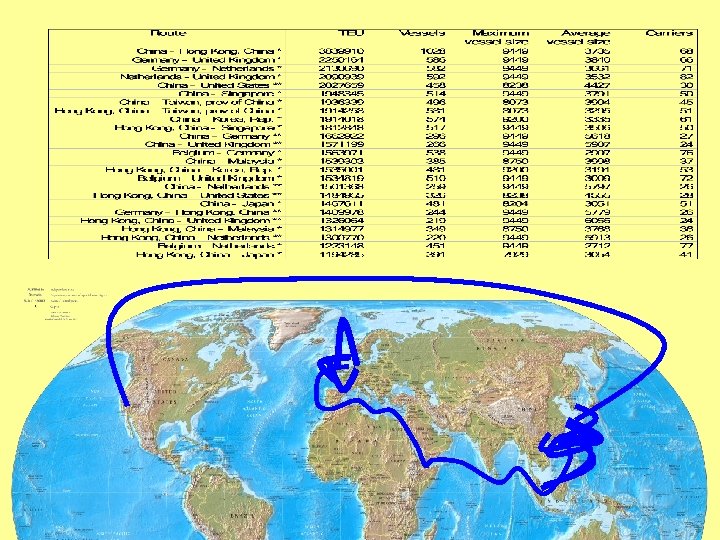
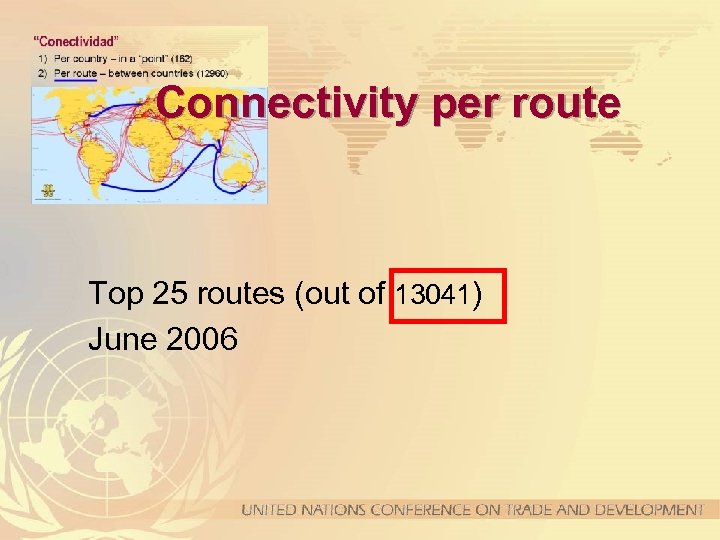 Connectivity per route Top 25 routes (out of 13041) June 2006
 Trade Volumes Transport costs Transport Services ?
 Case study Caribbean • 189 routes • About half served by direct liner shipping services • Examples: – Costa Rica – Colombia: 14 companies, 50 container ships, total capacity 61000 TEU; largest vessel 2500 TEU – Costa Rica – Jamaica: 5 companies/ 16 ships/ 17, 400 TEU/ 2105 TEU maximum size – Costa Rica – Guyana: no direct services UNCTAD Transport Newsletter, Third Quarter, 2006
 Case study Caribbean Determinants of connectivity • • Trade volumes: (+) Distance: (-) GDP per capita in exporting country (+) Port infrastructure (+)
 3) Trade
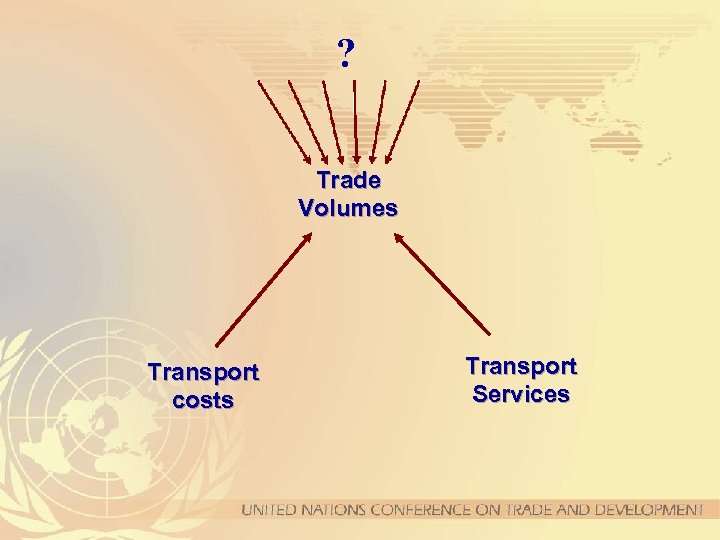 ? Trade Volumes Transport costs Transport Services
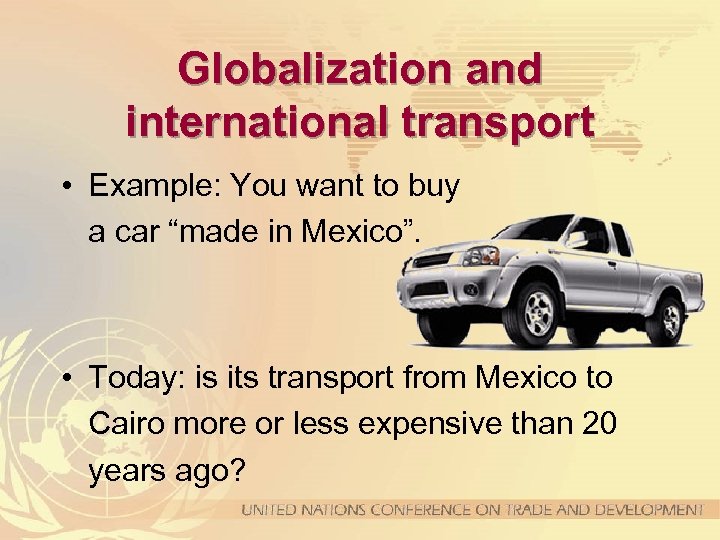 Globalization and international transport • Example: You want to buy a car “made in Mexico”. • Today: is its transport from Mexico to Cairo more or less expensive than 20 years ago?
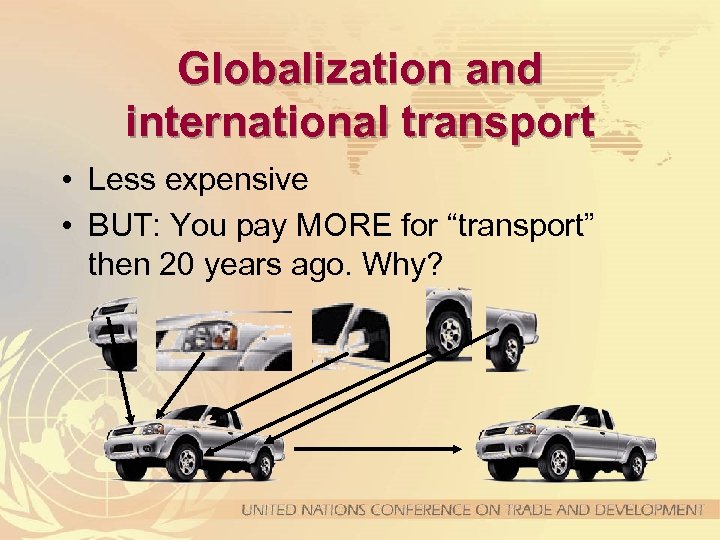 Globalization and international transport • Less expensive • BUT: You pay MORE for “transport” then 20 years ago. Why?
 Case study Caribbean • Most Central American and Caribbean countries trade very little with each other. • Examples: – less than 0. 001 per cent of Guatemala’s exports in manufactured goods are destined for Surinam, – 0. 24 per cent for Jamaica, – 1 per cent for the Dominican Republic, and – around 8 per cent for Costa Rica. • What are the main explanations for such differences?
 Case study Caribbean: Gravity model – what about distance? • Distance / trade: negative correlation (as expected) • But: the parameter for distance is not statistically significant if other variables are incorporated that capture the supply of shipping services and transport costs. • Instead of distance: – number of liner shipping companies that provide direct services between a pair of countries. – Existence of direct liner shipping services. – Increase of the freight rate per TEU (twenty foot equivalent unit) by 1000 USD: Reduction of the share of country A’s exports to country B of almost half a percentage point.
 Shipping Costs, Connectivity, and the Geography of Trade Jan. Hoffmann@UNCTAD. org Geneva, May 2007 .