


 Скачать презентацию The cultural aspect of change David Williams IIM
f6bbeb7a5e85ba5ece06b30c962fcfb1.ppt
- Количество слайдов: 23
 The cultural aspect of change David Williams IIM National Conference 13 August 2007
 In scope l Change management methodologies l Organisational culture l leveraging the culture of an organisation to manage change l Building the capability to change l Case studies
 Out of scope l IT l change management how to change organizational culture
 Change management l Change management is a structured approach to change in individuals, teams, organizations and societies that enables the transition from a current state to a desired future state.
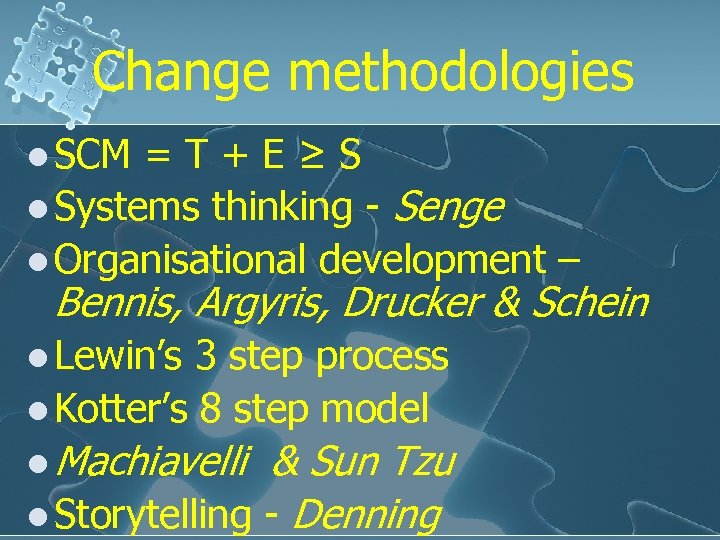 Change methodologies l SCM =T+E≥S l Systems thinking - Senge l Organisational development – Bennis, Argyris, Drucker & Schein l Lewin’s 3 step process l Kotter’s 8 step model l Machiavelli & Sun Tzu l Storytelling - Denning
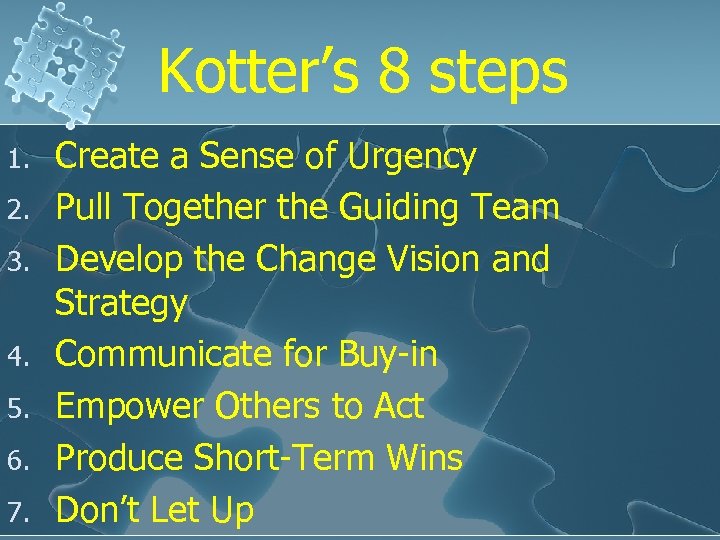 Kotter’s 8 steps 1. 2. 3. 4. 5. 6. 7. Create a Sense of Urgency Pull Together the Guiding Team Develop the Change Vision and Strategy Communicate for Buy-in Empower Others to Act Produce Short-Term Wins Don’t Let Up
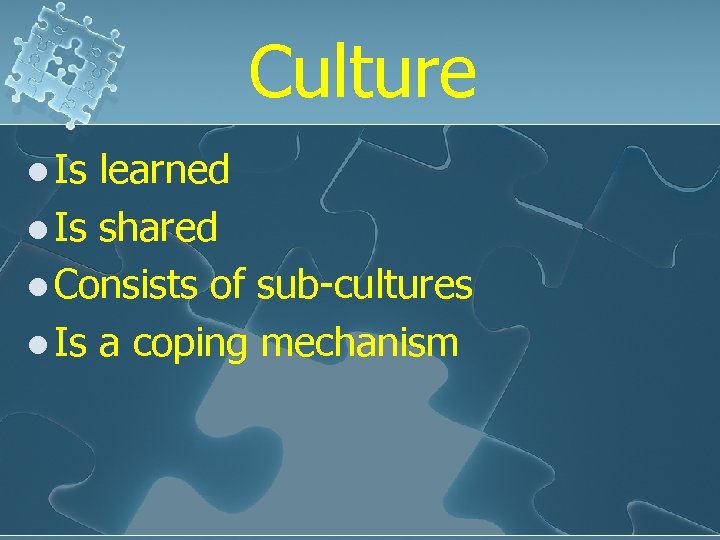 Culture l Is learned l Is shared l Consists of sub-cultures l Is a coping mechanism
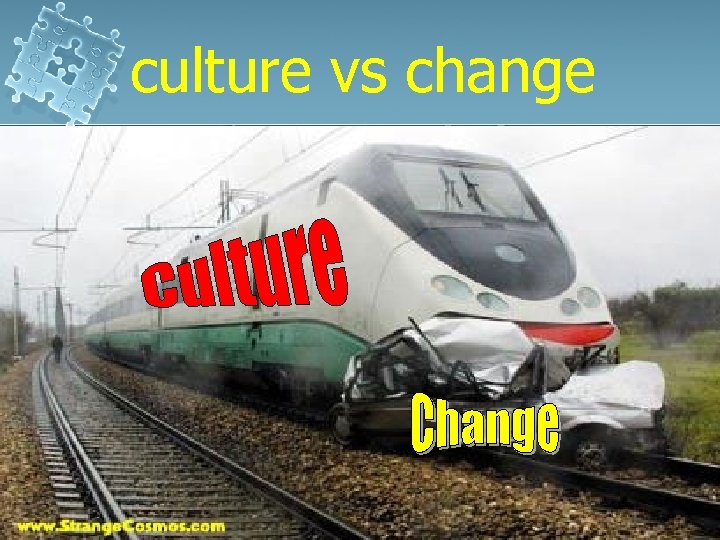 culture vs change
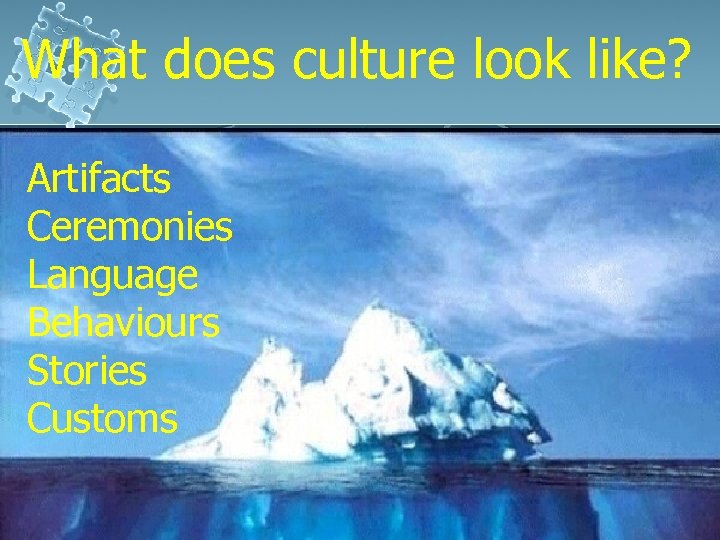 What does culture look like? Artifacts Ceremonies Language Behaviours Stories Customs
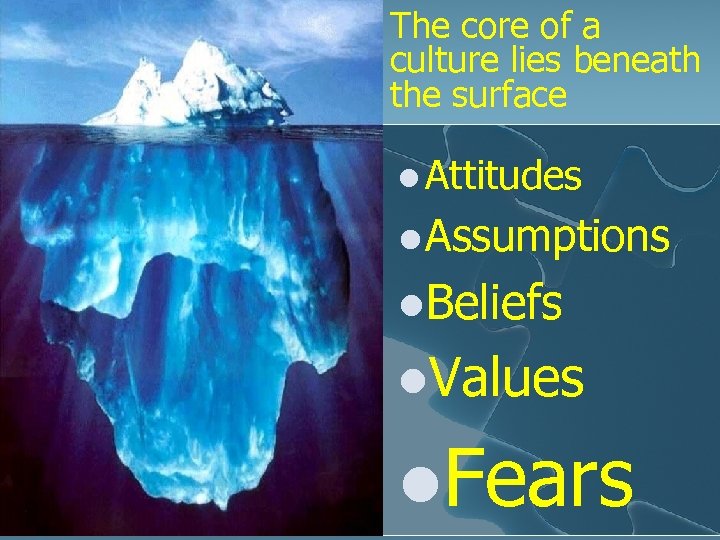 The core of a culture lies beneath the surface l Attitudes l Assumptions l. Beliefs l. Values l. Fears
 Fear l Fear l Fear of of of not being liked the unknown not being valued not belonging losing control
 Using fear l Defence of Britain during WWII l Invasion of Iraq l Children overboard l Tampa incident l Mc. Carthyism l Vietnam war l Palmer report l AIDS, drinking and smoking campaigns
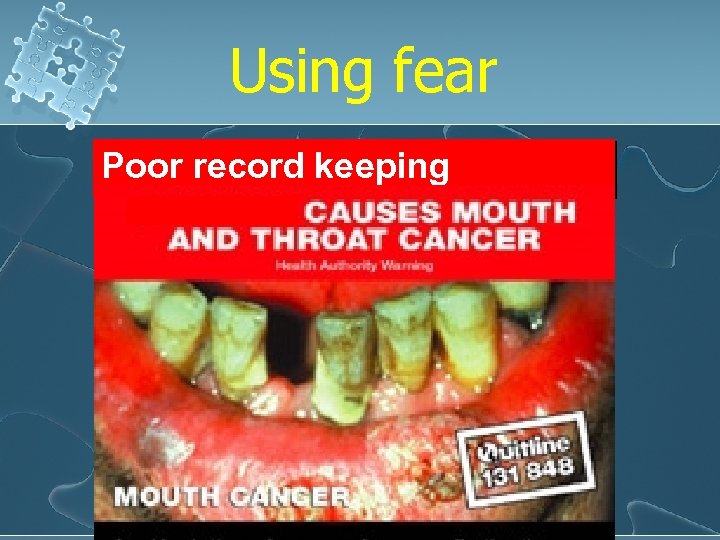 Using fear Poor record keeping
 Belonging l Collectivism l Social Identity l Groupthink / bandwagon effect l Herd behaviour / swarming l Collective intelligence l The "Hundredth Monkey Effect"
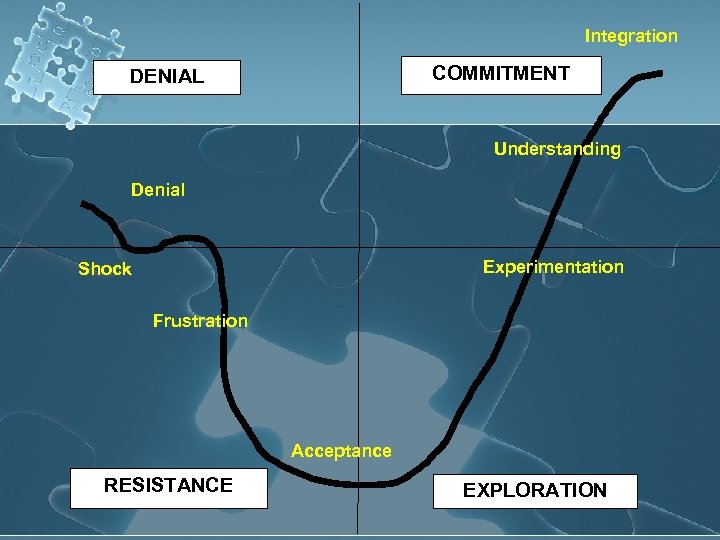 Integration COMMITMENT DENIAL Understanding Denial Experimentation Shock Frustration Acceptance RESISTANCE EXPLORATION
 Stakeholder analysis l Who are the key stakeholders? l What is their level of influence? l What threats/risks does the change pose to them? l what would they need to support the change? l What is the best way to engage them?
 Using effective style l Determining preferred style l Knowledge utilisation approach l Organisational Development approach l Democratic approach l Systems approach l Charismatic leadership
 Storytelling l The role of storytelling l Using narrative to ignite action l Building trust l Instil organisational values l Encouraging collaboration l Transmitting knowledge l Taming the grapevine l Creating and sharing the vision
 Springboard stories l Typical and familiar l Quirky, captures attention l Embodies the change proposed l Real examples l Brief and to the point l Has a happy ending l Sparks new stories in the listeners
 Leveraging culture l Don’t try to change the culture l Become aware of the environment l Consult and include stakeholders l Build coalitions & make belonging attractive l Be authentic l Tell stories that resonate and enlighten l Set super-ordinate goals
 Building capability l State a shared vision l Develop policy, tools and procedures l Build templates and infrastructure l Conduct training and tell stories l Deliver quick wins l Provide recognition and reward
 People will change when They see a need to change (not always rational) l They know what is expected l They are involved actively in the change process l They are supported through the change process - Change can be stressful and painful l Their beliefs, values and identity are not threatened l
 References l l l Charles W. L. Hill, and Gareth R. Jones, (2001) Strategic Management 5 th Edn, Houghton Mifflin, Means. Business, Inc. Hofstede, G. (1980) Culture's Consequences: International Differences in Work Related Values, Beverly Hills, CA, Sage Publications Deal T. E. and Kennedy, A. A. (1982) Corporate Cultures: The Rites and Rituals of Corporate Life, Harmondsworth, Penguin Books. Handy, C. B. (1985) Understanding Organizations, 3 rd Edn, Harmondsworth, Penguin Books Schein, E. H. (1985 -2005) Organizational Culture and Leadership, 3 rd Ed. , Jossey-Bass ISBN 0 -7879 -7597 -4 Black, Richard J. (2003) Organisational Culture: Creating the Influence Needed for Strategic Success, London UK, ISBN 1 -58112 -211 -X Kotter, John. 1992 Corporate Culture and Performance, Free Press; (April 7, 1992) ISBN 002 -918467 -3 Denning, Stephen (2205) The leader’s guide to storytelling, John Wiley and Sons Michaelson, G. A. (2001) Sun Tzu – the art of war for managers, Adams Media Corporation Silverman, L. (2006) Wake me up when the data is over, Jossey-Bass Cohne, D. and Prusak, L. (2001) In good company – how social capital makes organisations work, Harvard Business School Press Kotter, J. & H. Rathgeber, (2007) Our Iceberg is Melting – changing and succedding under any conditions, St Martins Press.