 Скачать презентацию THE CRIME SCENE Forensic Science Begins at the
d324afbd02346f9b496b4cb8c9b2f1fc.ppt
- Количество слайдов: 28



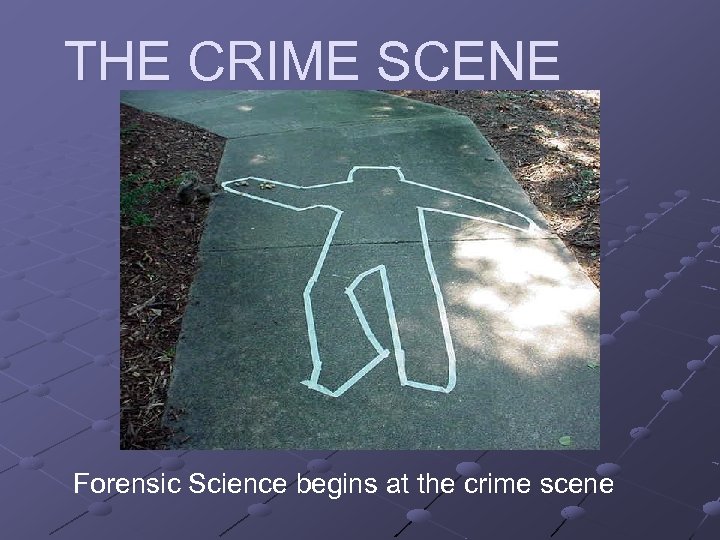
THE CRIME SCENE Forensic Science Begins at the Crime Scene Forensic Science begins at the crime scene
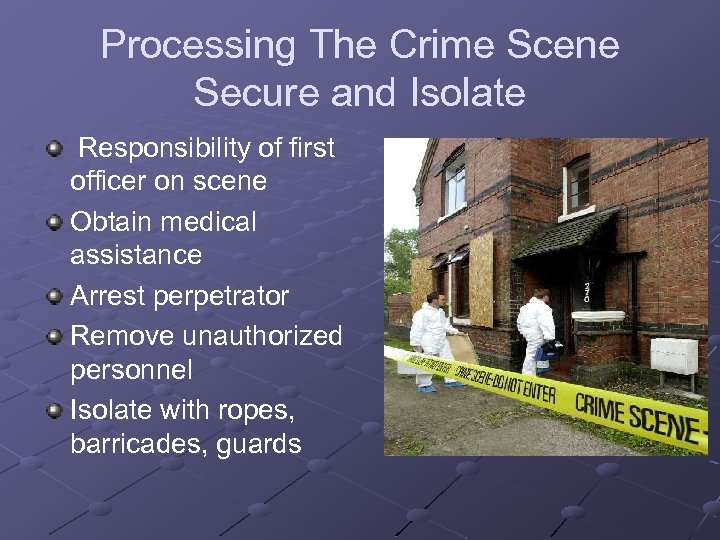
Processing The Crime Scene Secure and Isolate Responsibility of first officer on scene Obtain medical assistance Arrest perpetrator Remove unauthorized personnel Isolate with ropes, barricades, guards
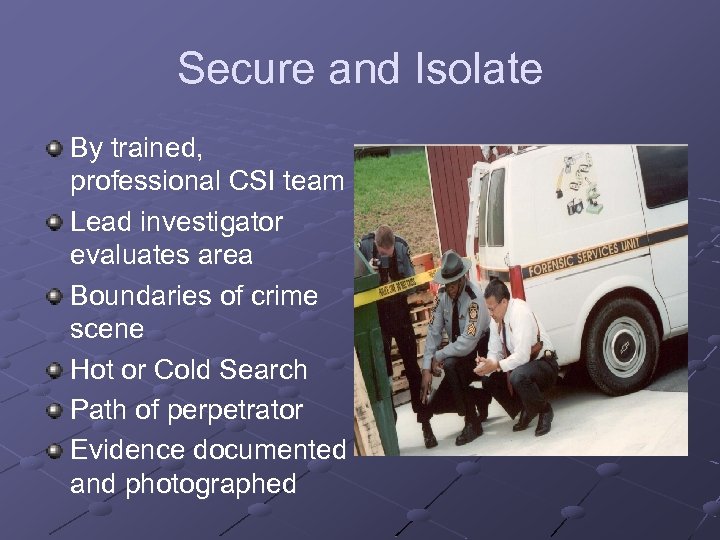
Secure and Isolate By trained, professional CSI team Lead investigator evaluates area Boundaries of crime scene Hot or Cold Search Path of perpetrator Evidence documented and photographed
Record the Scene Essential for investigation Location of evidence Presentation at trial Photography, sketches, notes
Photography Unaltered state Entire scene and surrounding areas Entry and exit Various angles Overviews and close-ups 3 -D panoramic views Digitally enhanced Videotape, narration
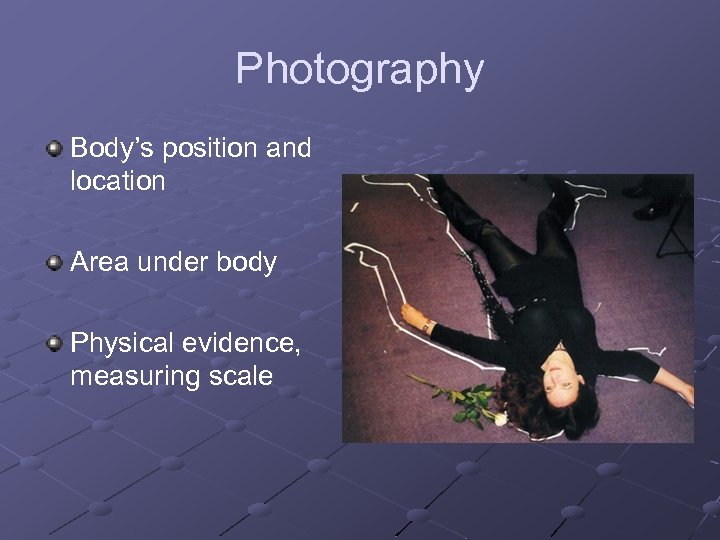
Photography Body’s position and location Area under body Physical evidence, measuring scale
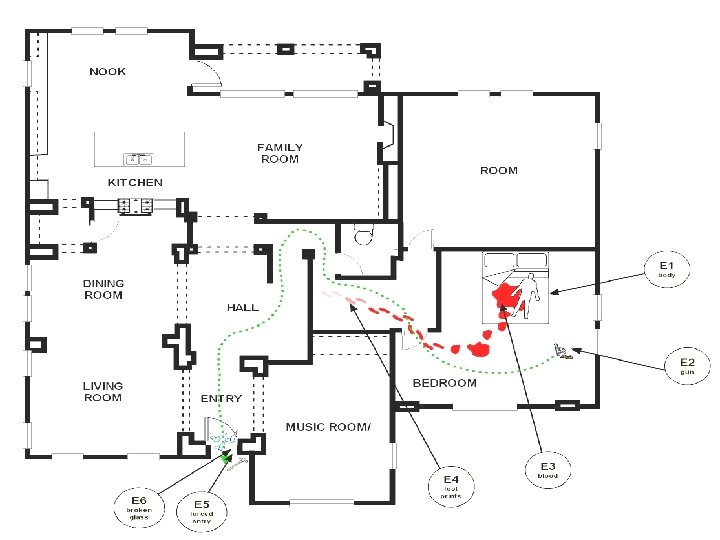
Sketches After photographs Rough sketch Dimensions and object locations Orientation (N, S, E, W) Triangulation (two fixed points) Legend (letters or numbers)
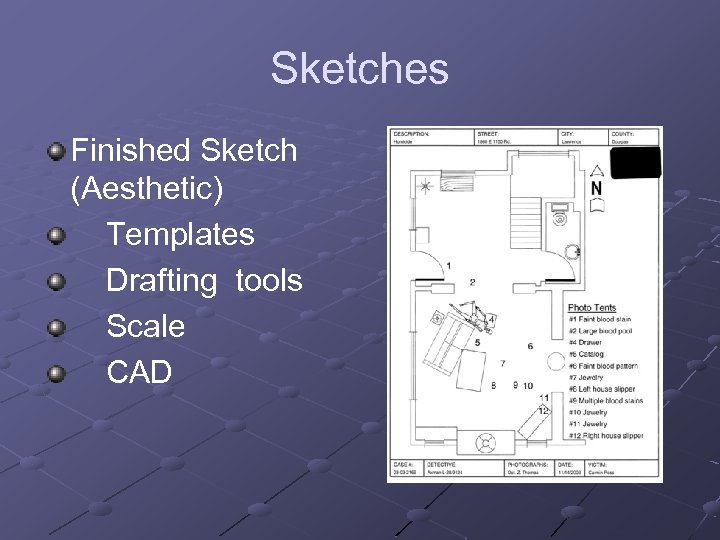
Sketches Finished Sketch (Aesthetic) Templates Drafting tools Scale CAD
Notes Constant during crime scene processing Detailed Physical evidence location time found discovered by packaging and marking disposition Tape recording, videotaping
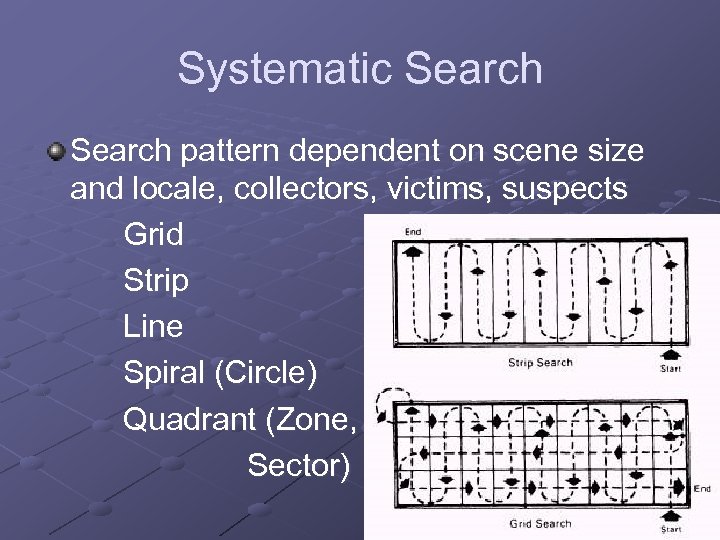
Systematic Search pattern dependent on scene size and locale, collectors, victims, suspects Grid Strip Line Spiral (Circle) Quadrant (Zone, Sector)
Systematic Search Evidence Collection Homicide- weapon, contact evidence (hairs, fibers, blood), fingerprints Burglary- tool marks, fingerprints Vehicle- blood, tissue, hair, fibers, fabric impressions, paint, glass * Crime-scene Search Vehicle
Slide Borrowed from PA State Police Crime Lab
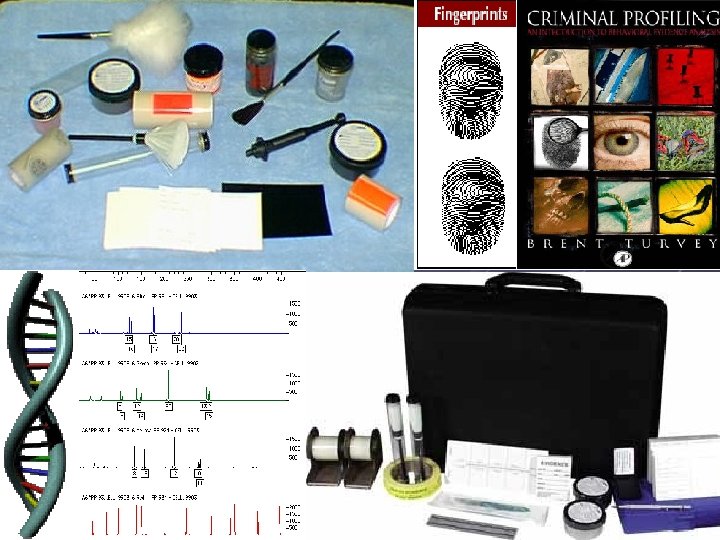
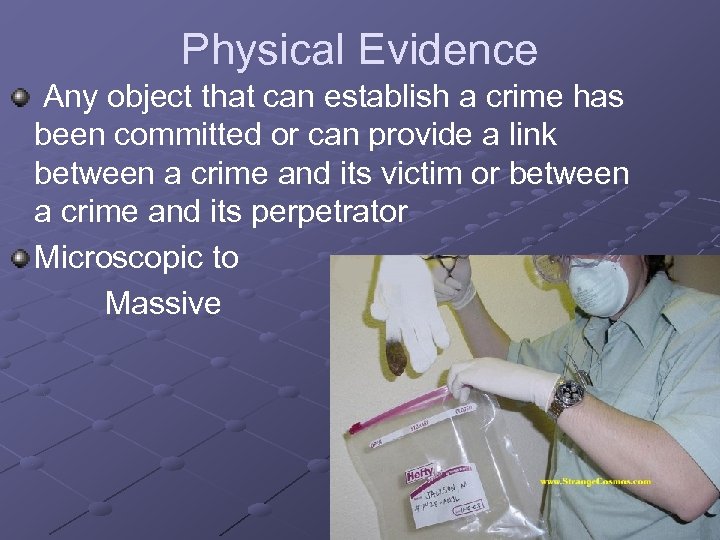
Physical Evidence Any object that can establish a crime has been committed or can provide a link between a crime and its victim or between a crime and its perpetrator Microscopic to Massive
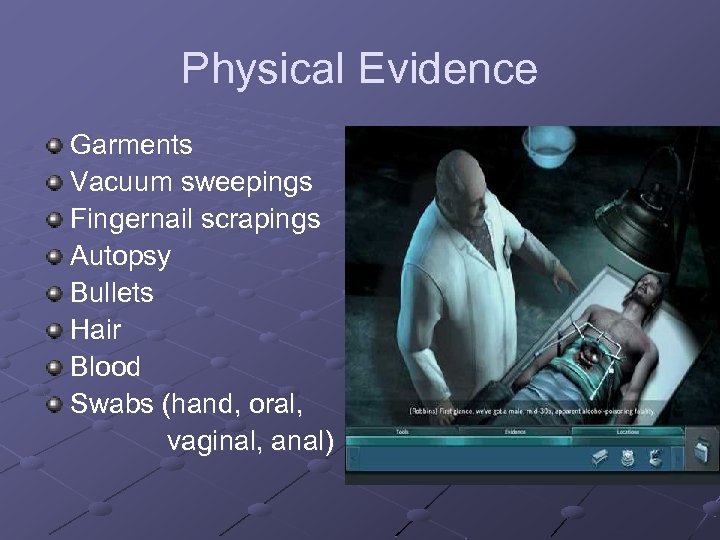
Physical Evidence Garments Vacuum sweepings Fingernail scrapings Autopsy Bullets Hair Blood Swabs (hand, oral, vaginal, anal)
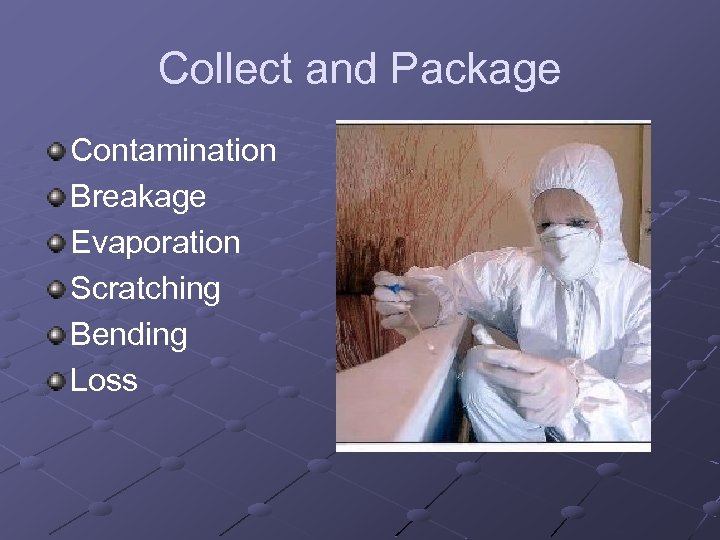
Collect and Package Contamination Breakage Evaporation Scratching Bending Loss
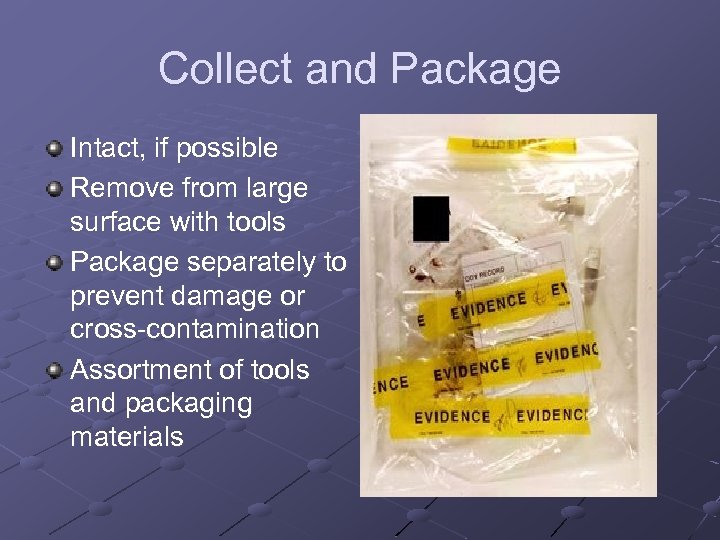
Collect and Package Intact, if possible Remove from large surface with tools Package separately to prevent damage or cross-contamination Assortment of tools and packaging materials
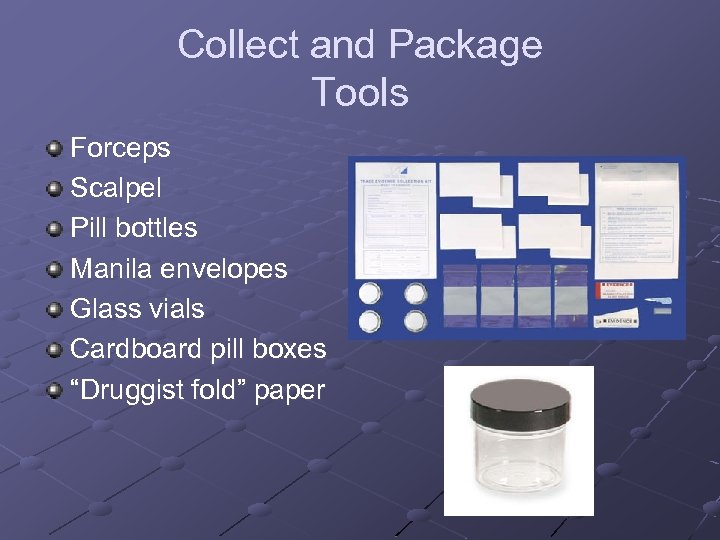
Collect and Package Tools Forceps Scalpel Pill bottles Manila envelopes Glass vials Cardboard pill boxes “Druggist fold” paper
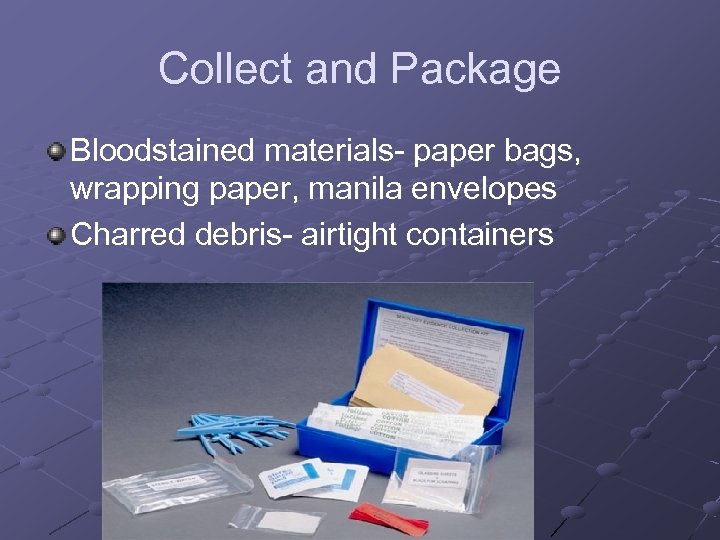
Collect and Package Bloodstained materials- paper bags, wrapping paper, manila envelopes Charred debris- airtight containers
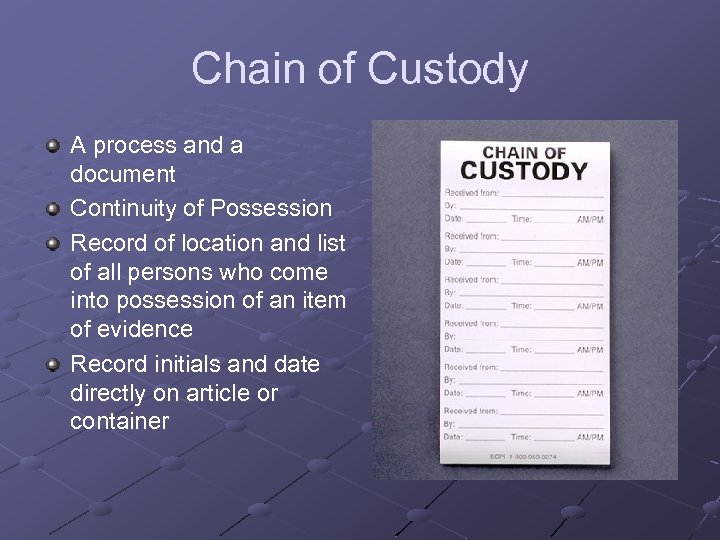
Chain of Custody A process and a document Continuity of Possession Record of location and list of all persons who come into possession of an item of evidence Record initials and date directly on article or container
Standard/Reference Samples Physical evidence whose origin is known and can be compared to crime scene evidence Ex- blood, hair, paint Substrate Controls- uncontaminated surface material close to area where physical evidence is discovered
Delivery of Evidence Personal or mail shipment (restrictions on chemicals, ammunition, explosives) Distance, urgency Evidence submission form (Fig. 2 -8) Case history Lab assigns own ID number system or bar code
Crime Scene Safety AIDS, Hepatitis B Caution and protection OSHA (Occupational Safety and Health Administration) requires inoculation availability vs. Hep B for officers International Association for Identification Safety Committee guidelines for CSI’s protection
Crime Scene Safety AIDS, Hepatitis B Caution and protection OSHA (Occupational Safety and Health Administration) requires inoculation availability vs. Hep B for officers International Association for Identification Safety Committee guidelines for CSI’s protection
Legal Considerations Fourth Amendment privileges: The right of the people to be secure in their persons, houses, papers, and effects, against unreasonable searches and seizure, shall not be violated, and no warrants shall issue, but upon probable cause, supported by oath or affirmation, and particularly describing the place to be searched, and the persons or things to be seized
Legal Considerations Warrantless search criteria 1 - emergency situation 2 - prevent loss or destruction of evidence 3 - incident to lawful arrest 4 - consensual search
Legal Considerations Mincey v. Arizona (1978)- appeal granted due to warrantless 4 day search (officer killed during drug raid) Michigan v. Tyler (1978)- inadmissible evidence recovered w/o warrant (arson) Obtain search warrant before investigating and retrieving physical evidence at crime scene
Скачать презентацию THE CRIME SCENE Forensic Science Begins at the
d324afbd02346f9b496b4cb8c9b2f1fc.ppt