Скачать презентацию The Constitutional Convention May-Sept 1787 J A SACCO
091bbeee3bbef0cdd6fd3359bfeb7bd8.ppt
- Количество слайдов: 26
 The Constitutional Convention (May-Sept. 1787) J. A. SACCO
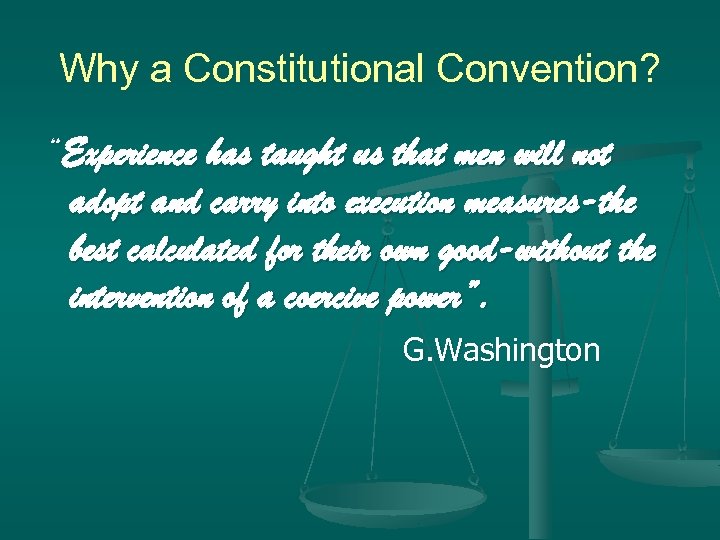 Why a Constitutional Convention? “Experience has taught us that men will not adopt and carry into execution measures-the best calculated for their own good-without the intervention of a coercive power”. G. Washington
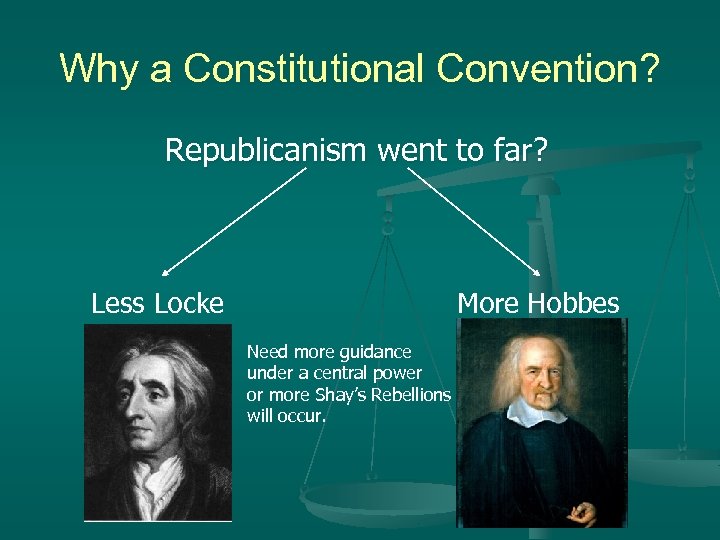 Why a Constitutional Convention? Republicanism went to far? Less Locke More Hobbes Need more guidance under a central power or more Shay’s Rebellions will occur.
 Dissatisfied Groups in the U. S. n n n Merchants- need regulation of commerce Manufacturers- tariffs against foreign goods Land Speculators- protection from Native Americans to open up settlement Bondholders- stable currency for debt repayment Businessmen- curb inflation to promote business
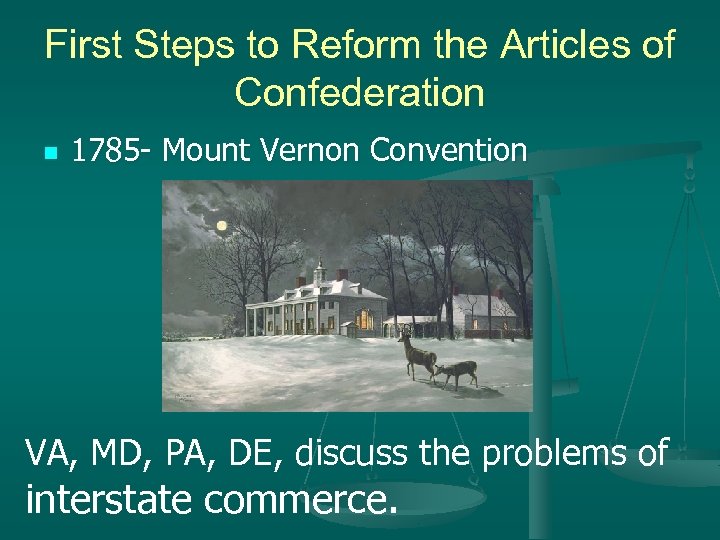 First Steps to Reform the Articles of Confederation n 1785 - Mount Vernon Convention VA, MD, PA, DE, discuss the problems of interstate commerce.
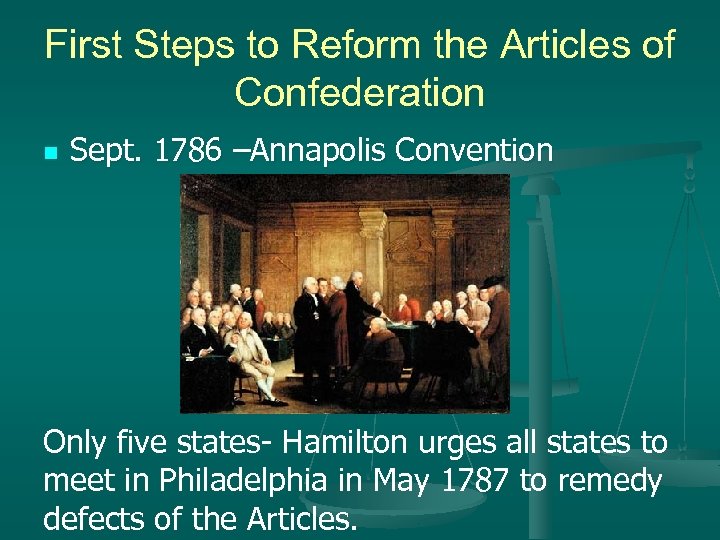 First Steps to Reform the Articles of Confederation n Sept. 1786 –Annapolis Convention Only five states- Hamilton urges all states to meet in Philadelphia in May 1787 to remedy defects of the Articles.
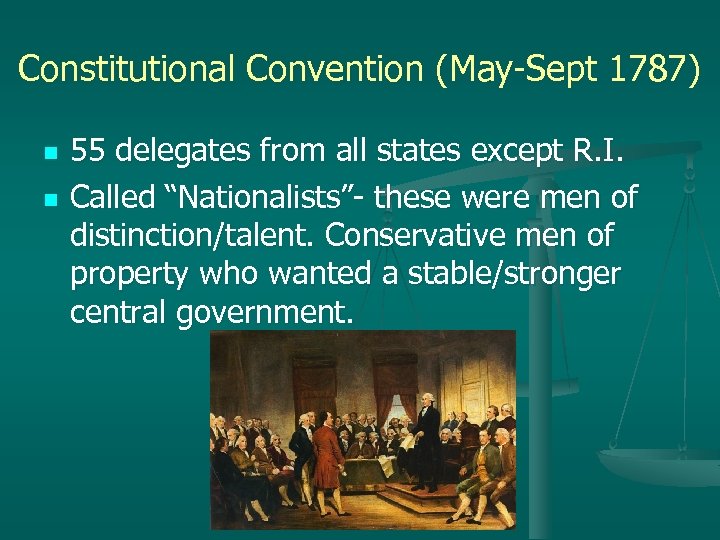 Constitutional Convention (May-Sept 1787) n n 55 delegates from all states except R. I. Called “Nationalists”- these were men of distinction/talent. Conservative men of property who wanted a stable/stronger central government.
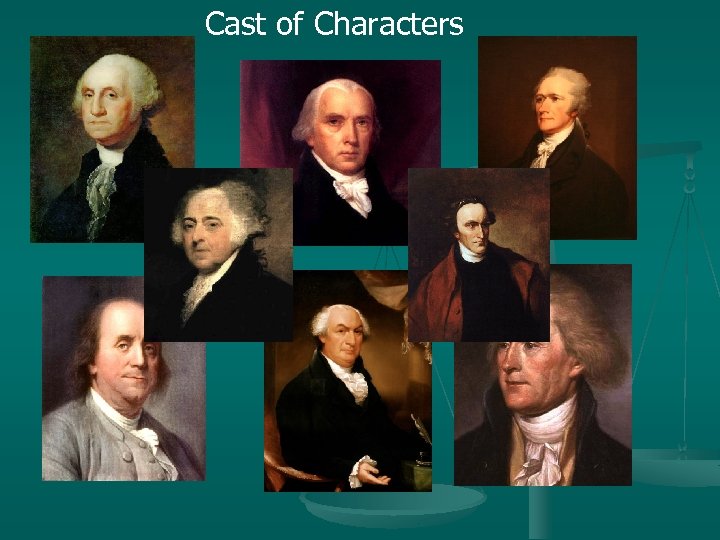 Cast of Characters
 Areas of Agreement n n Scrap Articles of Confederation- draw up new basic law New gov’t should still be republican in form, with a chief executive to be elected by people or representatives (checks/balances) Gov’t based on majority (popular sovereignty), but still protect the rights of the minority Need a strong centralized gov’t that had the power to tax, regulate interstate trade/foreign commerce
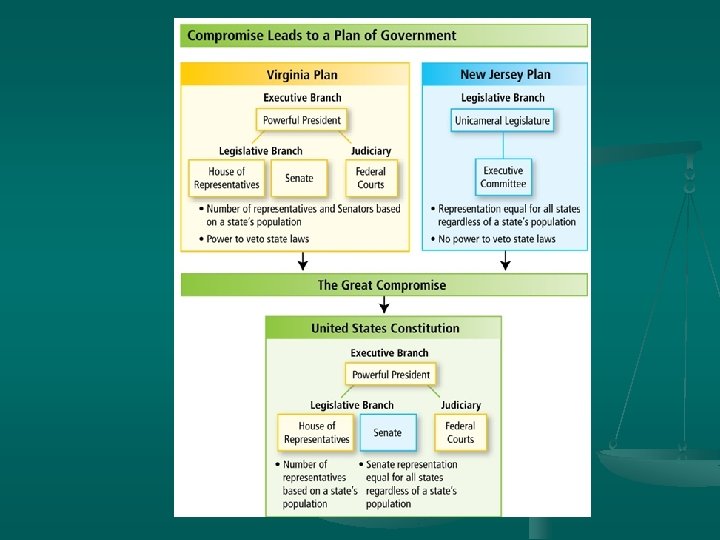
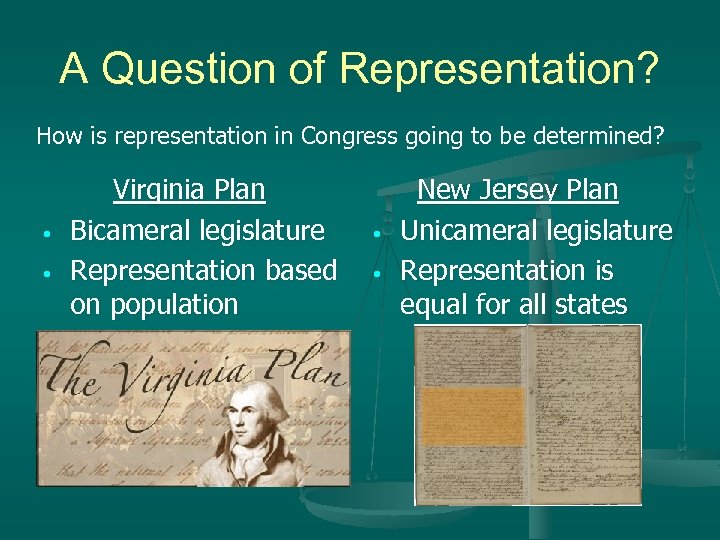 A Question of Representation? How is representation in Congress going to be determined? • • Virginia Plan Bicameral legislature Representation based on population • • New Jersey Plan Unicameral legislature Representation is equal for all states
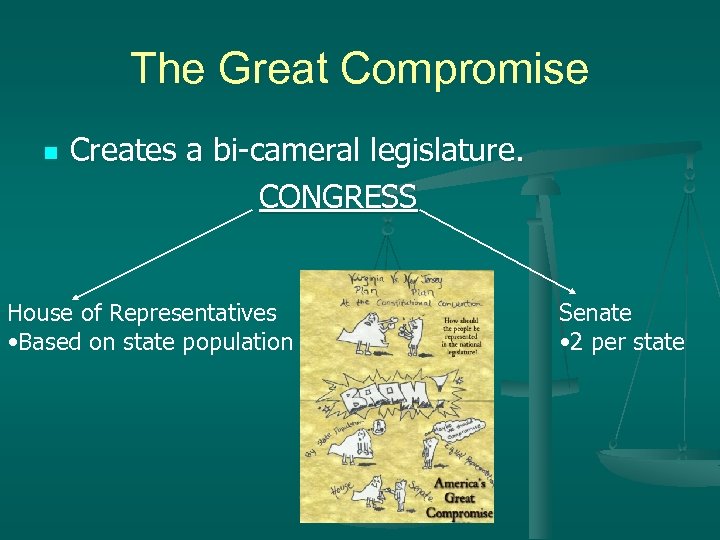 The Great Compromise n Creates a bi-cameral legislature. CONGRESS House of Representatives • Based on state population Senate • 2 per state
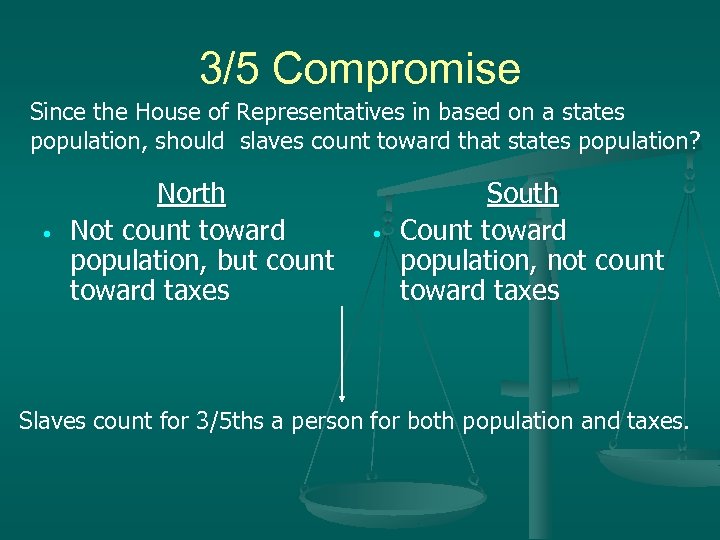 3/5 Compromise Since the House of Representatives in based on a states population, should slaves count toward that states population? • North Not count toward population, but count toward taxes • South Count toward population, not count toward taxes Slaves count for 3/5 ths a person for both population and taxes.
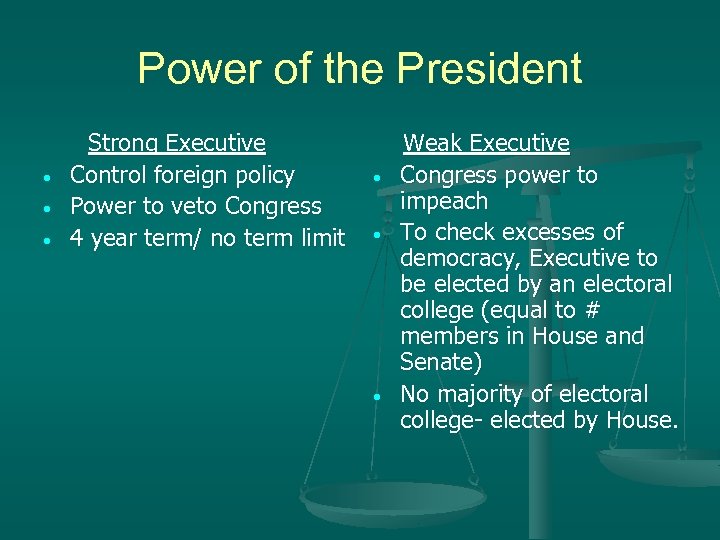 Power of the President • • • Strong Executive Control foreign policy Power to veto Congress 4 year term/ no term limit • • • Weak Executive Congress power to impeach To check excesses of democracy, Executive to be elected by an electoral college (equal to # members in House and Senate) No majority of electoral college- elected by House.
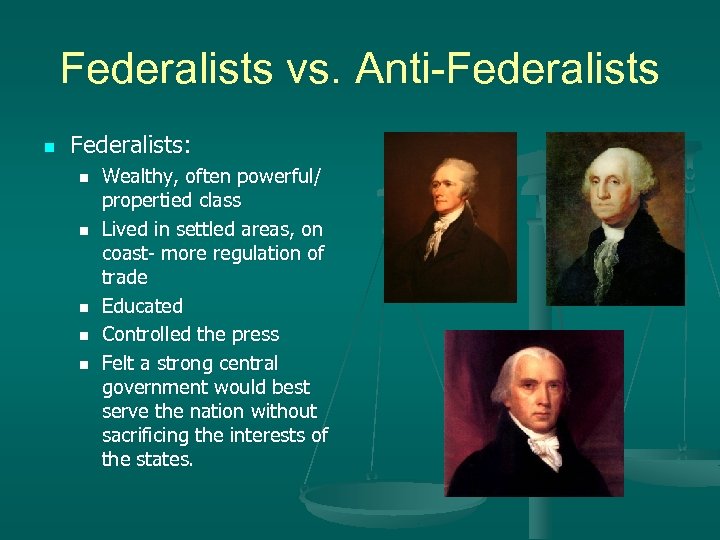 Federalists vs. Anti-Federalists n Federalists: n n n Wealthy, often powerful/ propertied class Lived in settled areas, on coast- more regulation of trade Educated Controlled the press Felt a strong central government would best serve the nation without sacrificing the interests of the states.
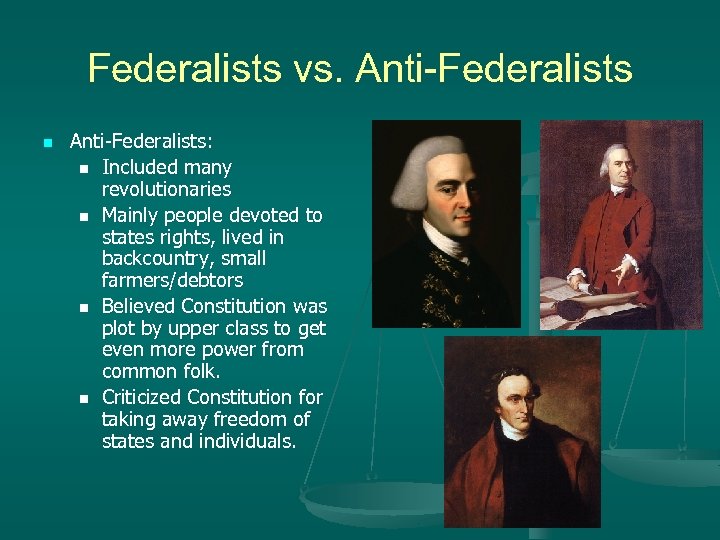 Federalists vs. Anti-Federalists n Anti-Federalists: n Included many revolutionaries n Mainly people devoted to states rights, lived in backcountry, small farmers/debtors n Believed Constitution was plot by upper class to get even more power from common folk. n Criticized Constitution for taking away freedom of states and individuals.
 Battle for Ratification n n Change the law of unanimity– would become law when 9 states ratified. Went over the head of the Articles, and State Legislatures directly to the people.
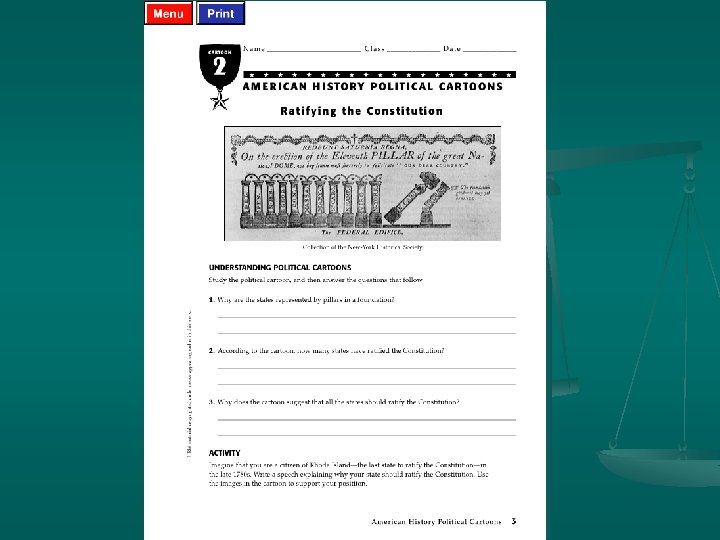
 Ratification “The Roll Call” n DE, PA, NJ, GA, CT quickly ratify Mass. led by Sam Adams only ratify after Bill of Rights promised and amendment added for reserve powers of states By end of June 1788 - MD, SC, NH ratified VA ratify after Bill of Rights promised NY ratify after realized it surrounded by states that already ratified the Constitution By this time first Congress to meet on March 4 th, 1789 NC ratify by Nov. 1789 n Which state is left to ratify? n n n
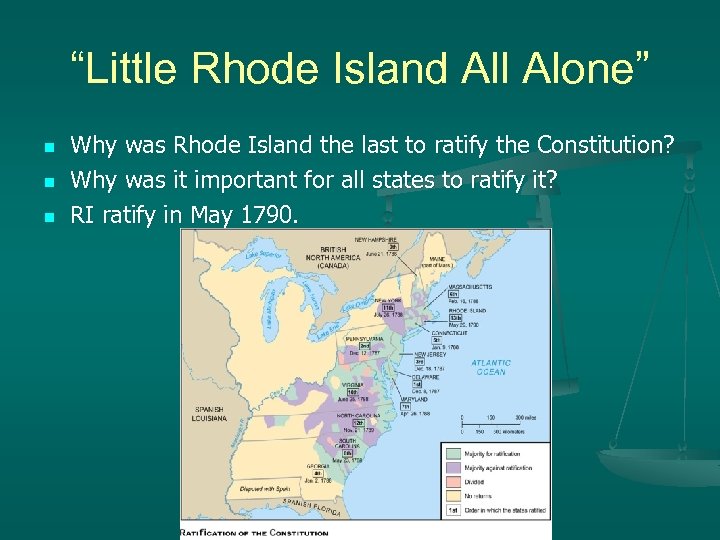 “Little Rhode Island All Alone” n n n Why was Rhode Island the last to ratify the Constitution? Why was it important for all states to ratify it? RI ratify in May 1790.
 Why were the Federalists Successful in Ratification? § § § Feds better organized/more skilled politicians Offered a positive future with new Constitution/Anti-feds. had no alternative. Feds better represented in electing bodies/poor could not vote against ratification Washington and Franklin gave the new government credibility A Bill of Rights would eventually be added to protect the rights of all/avoid the central government from crushing liberties
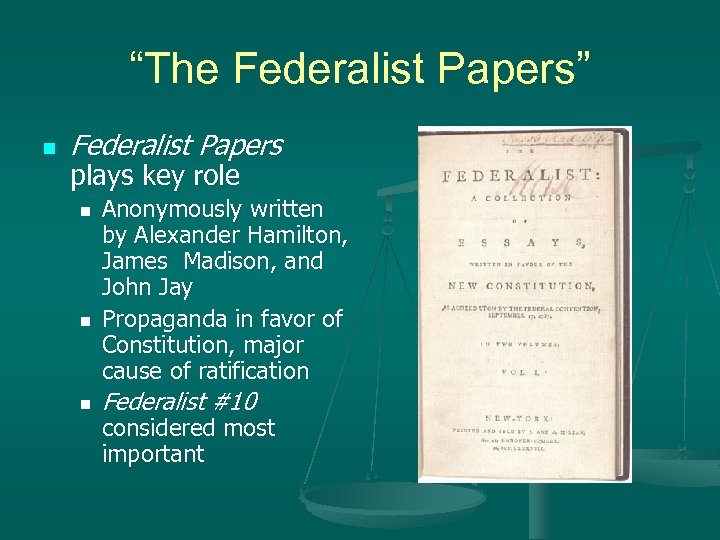 “The Federalist Papers” n Federalist Papers plays key role n n n Anonymously written by Alexander Hamilton, James Madison, and John Jay Propaganda in favor of Constitution, major cause of ratification Federalist #10 considered most important
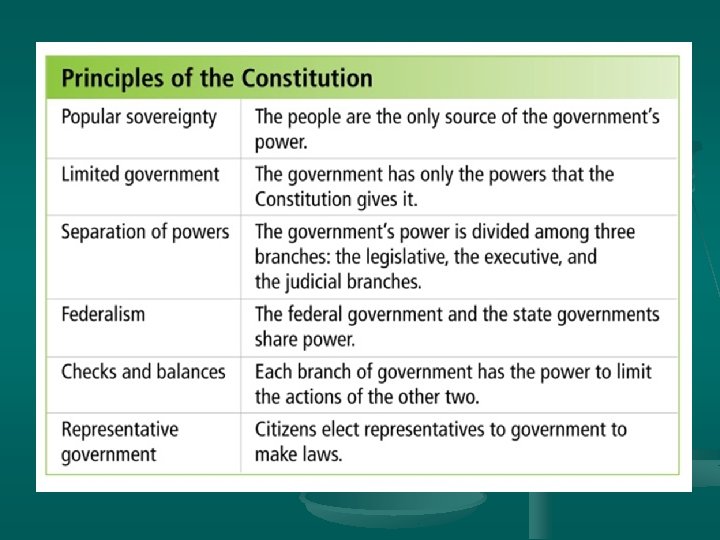
 Republicanism Survived! n n Separation of Powers– three branches of government but all were meant to represent the people. Checks and Balances - created to prevent the abuse of power from any one branch, creates a balance between liberty and order. Limited defined powers in a written constitution Individual rights are ensured in a Bill of Rights
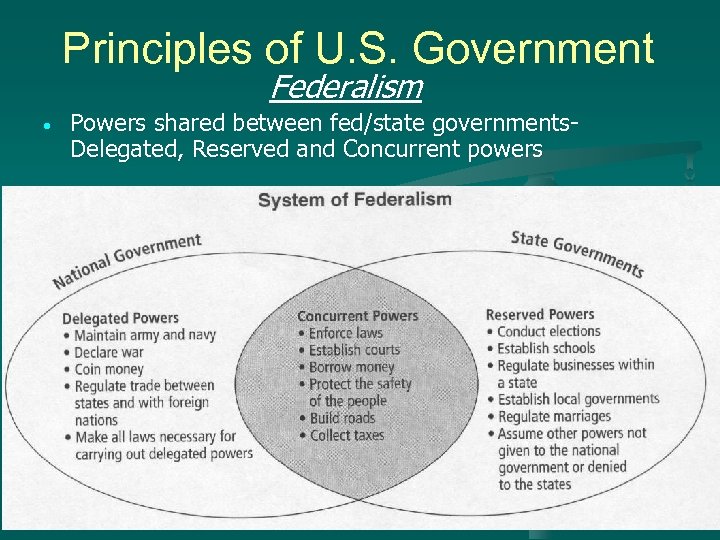 Principles of U. S. Government Federalism • Powers shared between fed/state governments. Delegated, Reserved and Concurrent powers
 Principles of the U. S. Constitution • • Federal law superior to state law Constitution is the supreme law of the land Constitution a living document- can change with the times Under Articles power in the hands of states, under Constitution power in hands of the people (popular sovereignty)