


 Скачать презентацию The Constitution of the USA AKHMEDOVA FAYA CHERNYAEVA
The constitution of the USA.pptx
- Количество слайдов: 44
 The Constitution of the USA AKHMEDOVA FAYA, CHERNYAEVA VICTORIA
 CONTENTS 1. 2. 3. 4. 5. 6. 7. 8. 9. 10. Introduction The Articles of Confederation and Perpetual Union The Creation of the American Constitution The Constitutional Convention “Great Compromise” The Constitution of the USA The main Principles of the US Constitution Articles of the Constitution US Constitutional Amendments Conclusion
 The Articles of Confederation and Perpetual Union
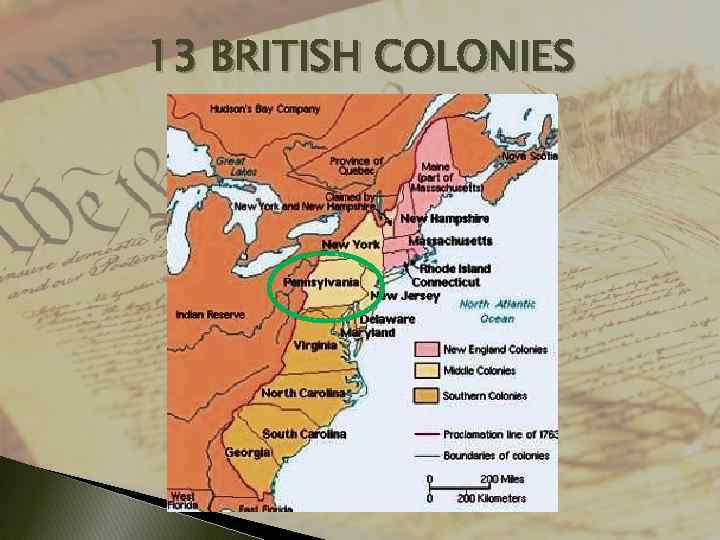 13 BRITISH COLONIES
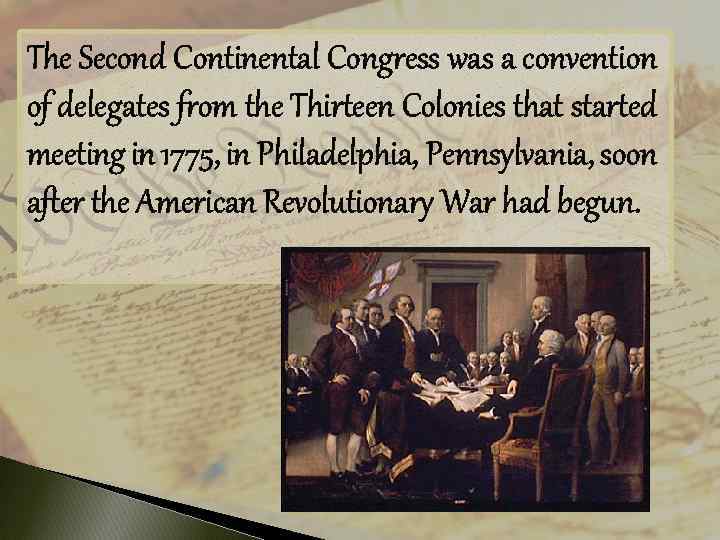 The Second Continental Congress was a convention of delegates from the Thirteen Colonies that started meeting in 1775, in Philadelphia, Pennsylvania, soon after the American Revolutionary War had begun.
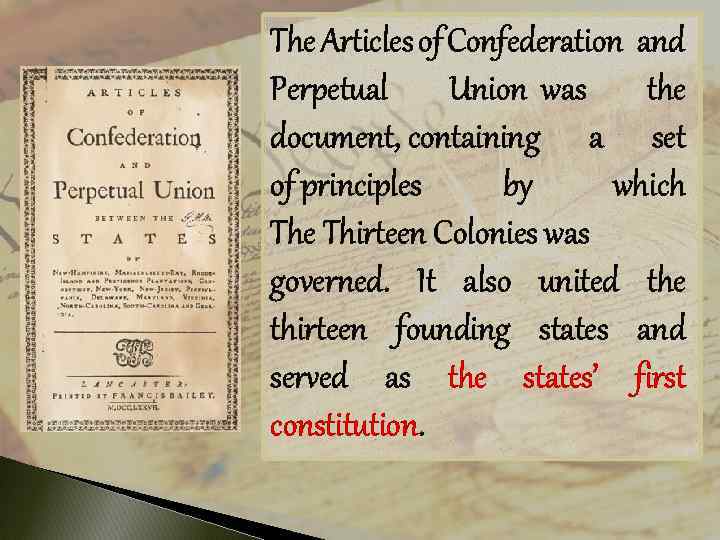 The Articles of Confederation and Perpetual Union was the document, containing a set of principles by which The Thirteen Colonies was governed. It also united the thirteen founding states and served as the states’ first constitution.
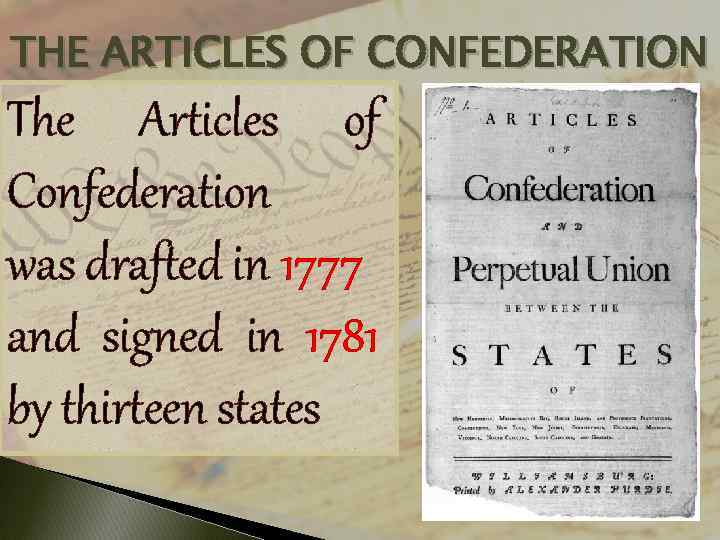 THE ARTICLES OF CONFEDERATION The Articles of Confederation was drafted in 1777 and signed in 1781 by thirteen states
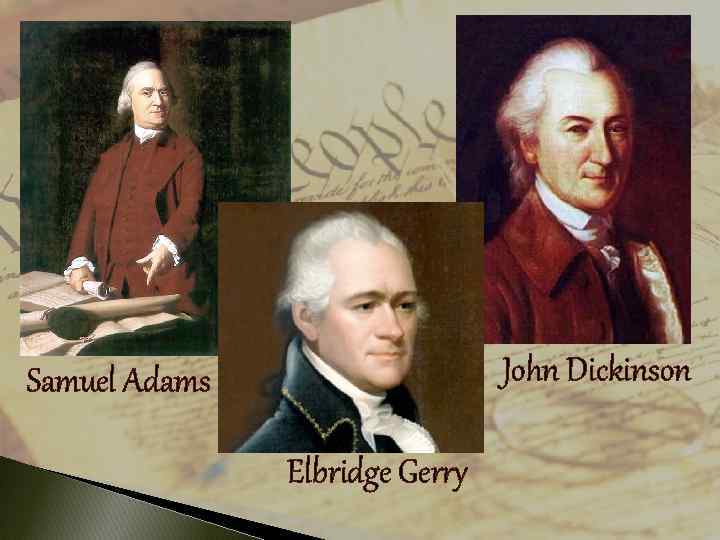 John Dickinson Samuel Adams Elbridge Gerry
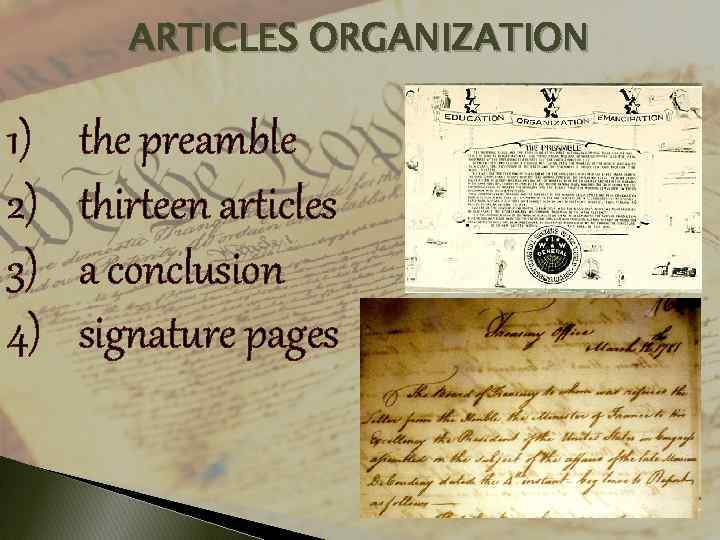 ARTICLES ORGANIZATION 1) 2) 3) 4) the preamble thirteen articles a conclusion signature pages
 THE PURPOSE OF THE ARTICLES 1) To establish a union of the 13 colonies 2) To bring about "perpetual union" of these new states 3) To define principles and agreements for vital foreign and domestic affairs
 1. SOVEREIGNTY 2. FREEDOM 3. INDEPENDENCE
 A Need for Articles Development
 LIST OF THE STRENGTHS OF THE ARTICLES OF CONFEDERATION v. First written agreement and first constitution of USA v. Congress has the power to deal with foreign affairs and authority to declare war, and make peace, and sign treaties v. It encouraged coordination and cooperation between different states v. The Department of The Treasury, the Department of Postal Service and the Department of Foreign Affairs were established
 LIST OF THE WEAKNESSES OF THE ARTICLES OF CONFEDERATION v. Congress had no power to tax v. Congress had no power to regulate foreign and interstate commerce v. No national army or navy v. No national court system v. Each state has own paper money v. There was no executive branch to enforce any acts passed by Congress v. Amendments to the Articles of Confederation required a unanimous vote
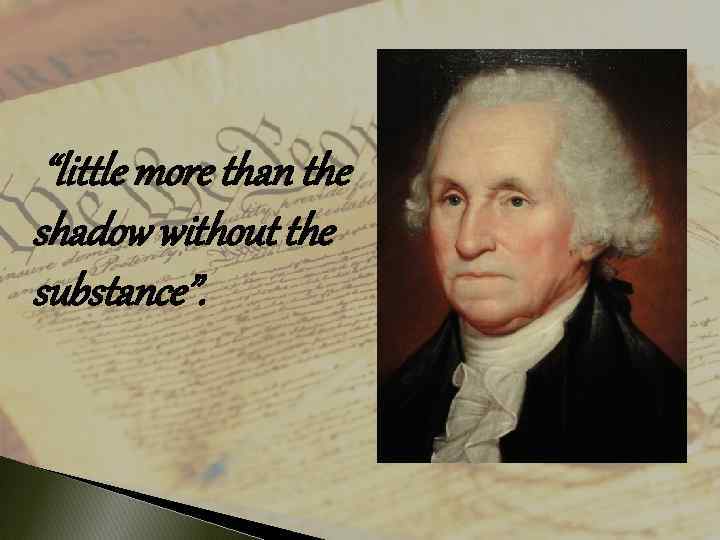 “little more than the shadow without the substance”.
 The Constitutional Convention
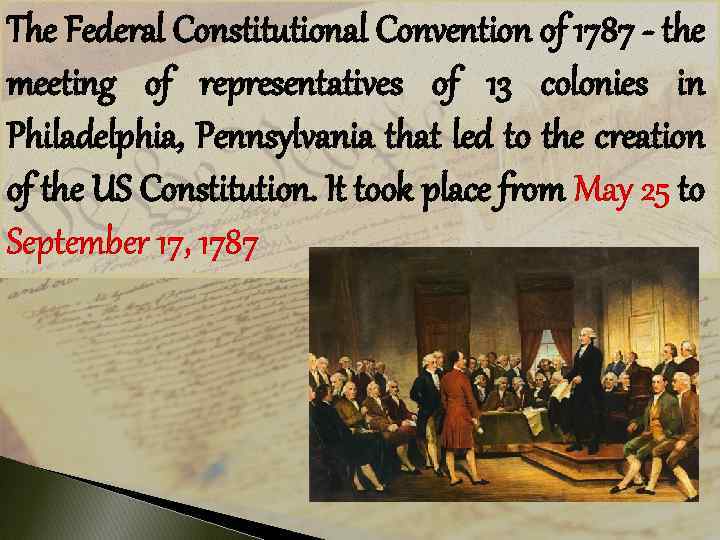 The Federal Constitutional Convention of 1787 - the meeting of representatives of 13 colonies in Philadelphia, Pennsylvania that led to the creation of the US Constitution. It took place from May 25 to September 17, 1787
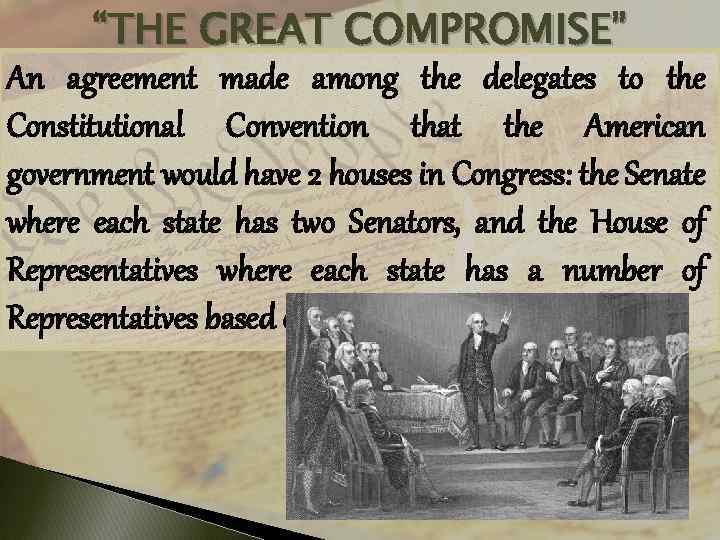 “THE GREAT COMPROMISE” An agreement made among the delegates to the Constitutional Convention that the American government would have 2 houses in Congress: the Senate where each state has two Senators, and the House of Representatives where each state has a number of Representatives based on population.
 The Constitution of the USA
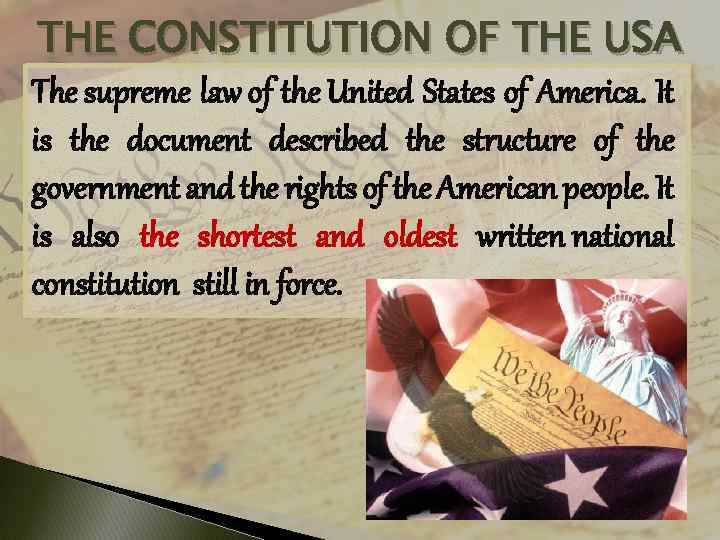 THE CONSTITUTION OF THE USA The supreme law of the United States of America. It is the document described the structure of the government and the rights of the American people. It is also the shortest and oldest written national constitution still in force.
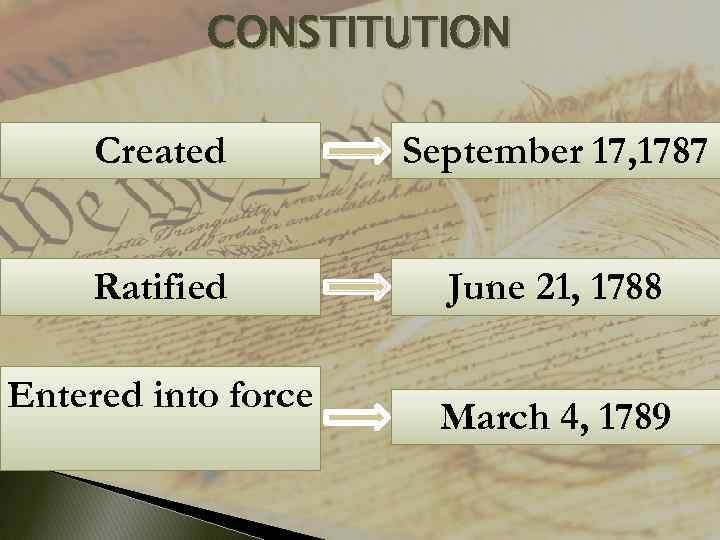 CONSTITUTION Created September 17, 1787 Ratified June 21, 1788 Entered into force March 4, 1789
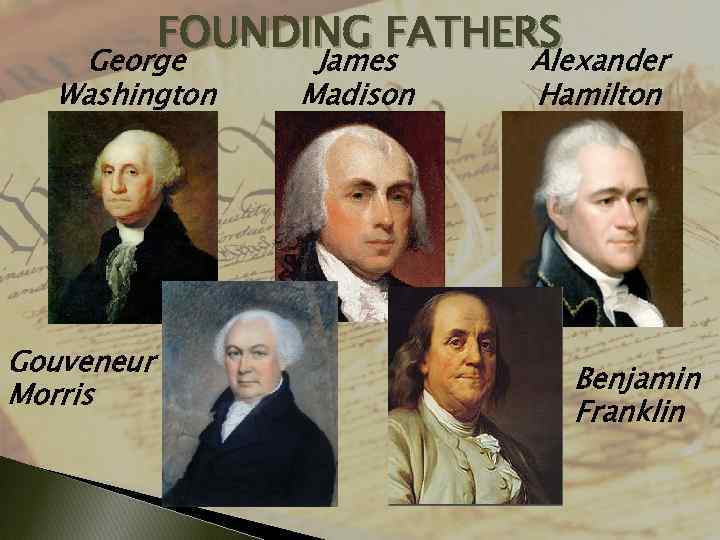 FOUNDING FATHERS George Washington Gouveneur Morris James Madison Alexander Hamilton Benjamin Franklin
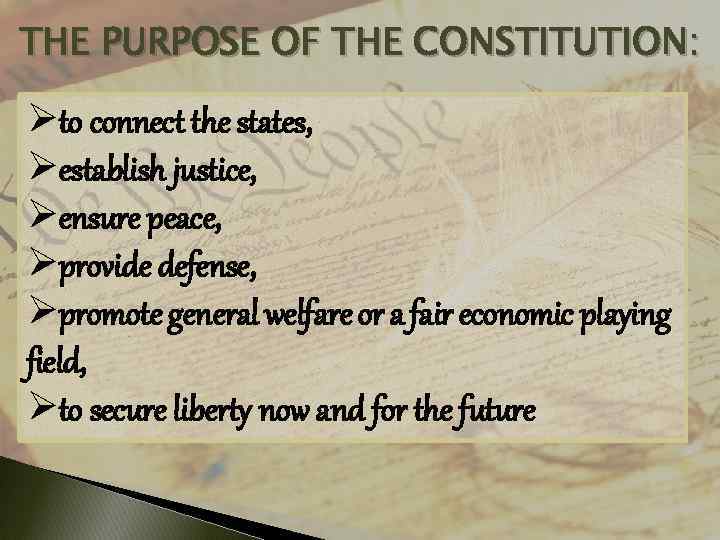 THE PURPOSE OF THE CONSTITUTION: Øto connect the states, Øestablish justice, Øensure peace, Øprovide defense, Øpromote general welfare or a fair economic playing field, Øto secure liberty now and for the future
 Six Basic Principles of the US Constitution
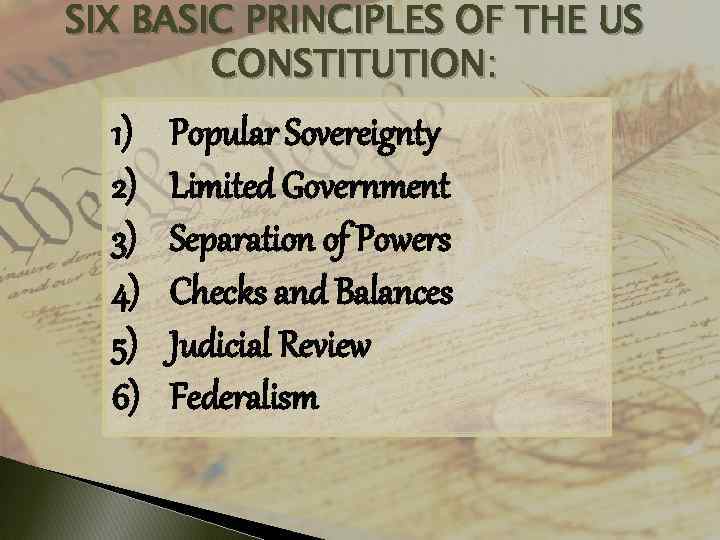 SIX BASIC PRINCIPLES OF THE US CONSTITUTION: 1) 2) 3) 4) 5) 6) Popular Sovereignty Limited Government Separation of Powers Checks and Balances Judicial Review Federalism
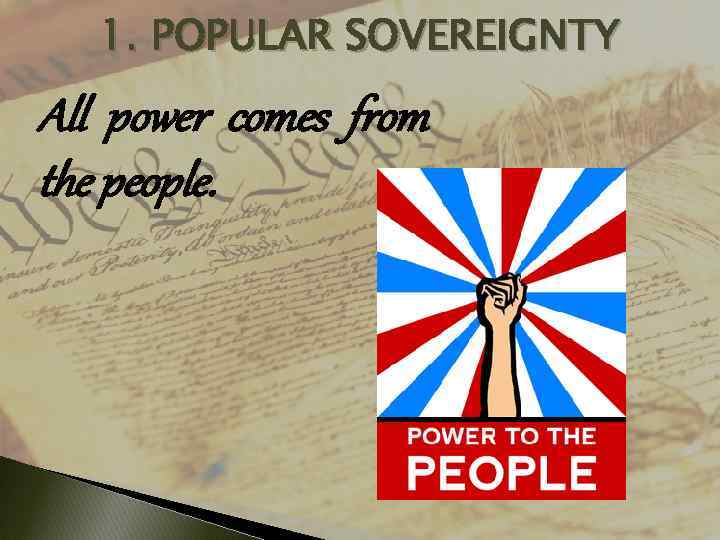 1. POPULAR SOVEREIGNTY All power comes from the people.
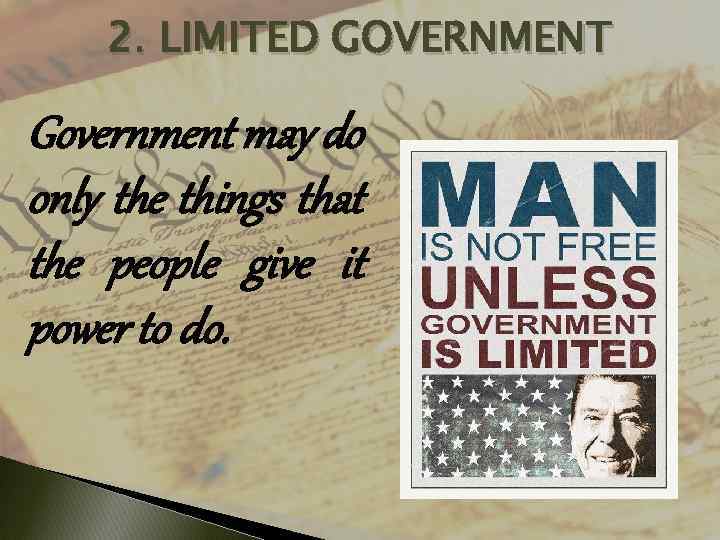 2. LIMITED GOVERNMENT Government may do only the things that the people give it power to do.
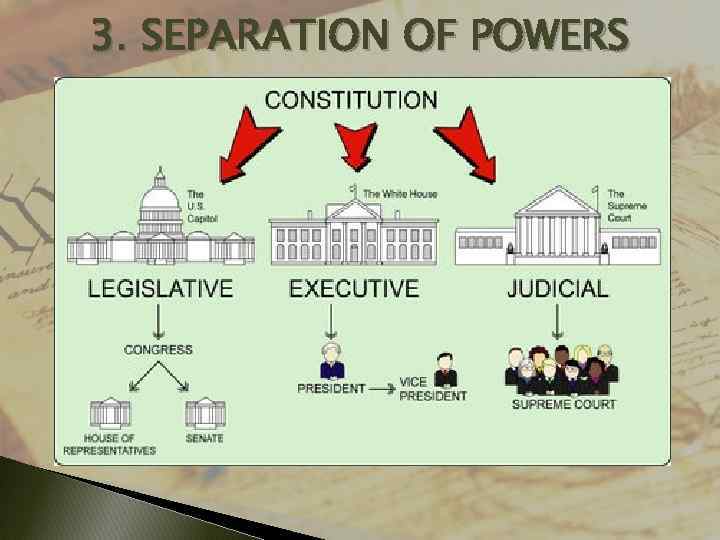 3. SEPARATION OF POWERS
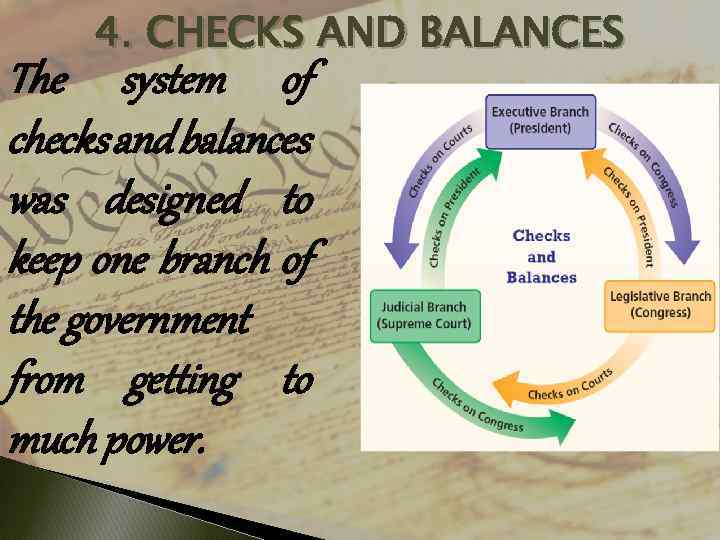 4. CHECKS AND BALANCES The system of checks and balances was designed to keep one branch of the government from getting to much power.
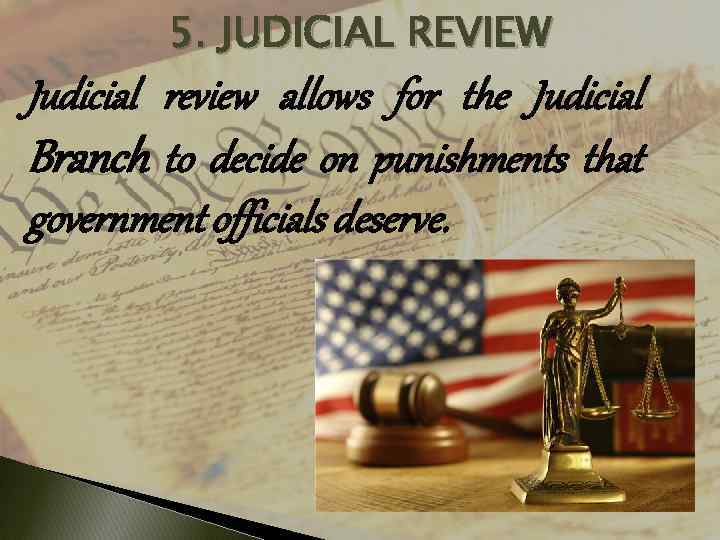 5. JUDICIAL REVIEW Judicial review allows for the Judicial Branch to decide on punishments that government officials deserve.
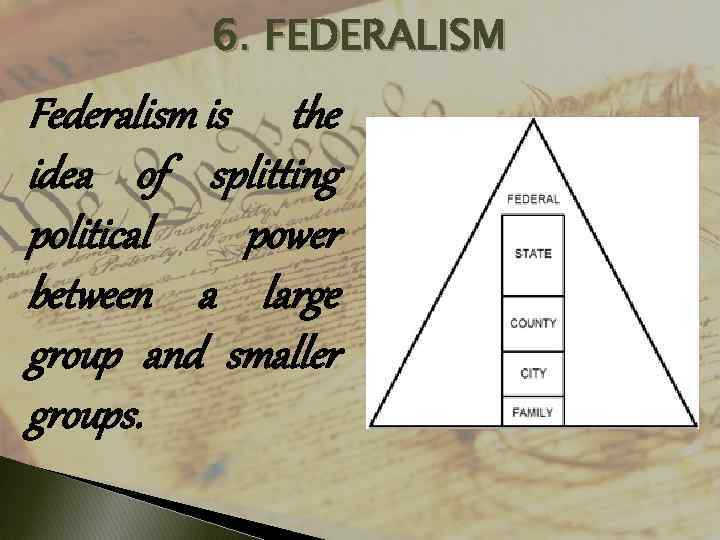 6. FEDERALISM Federalism is the idea of splitting political power between a large group and smaller groups.
 The Structure of The Constitution
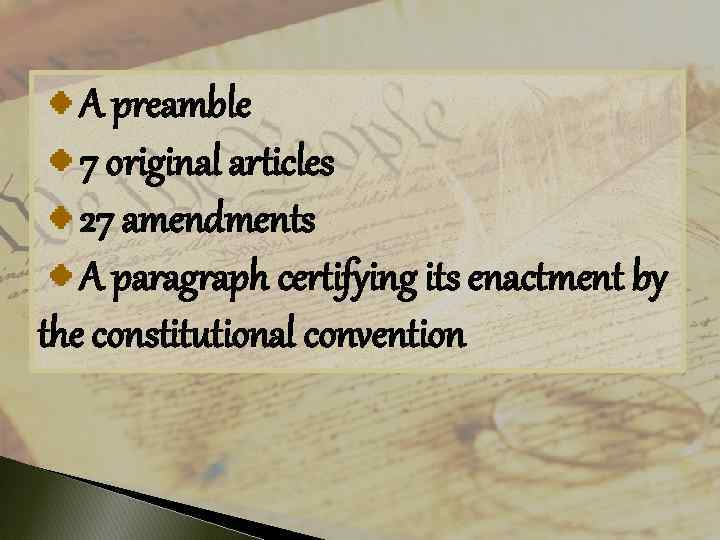 A preamble 7 original articles 27 amendments A paragraph certifying its enactment by the constitutional convention
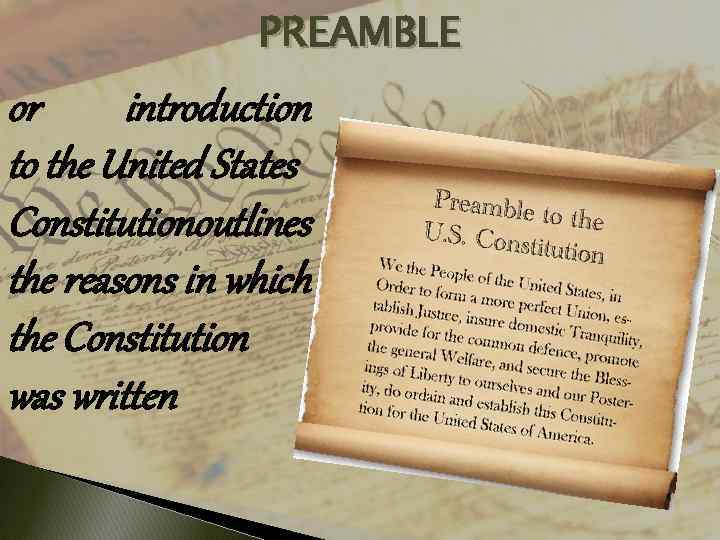 PREAMBLE or introduction to the United States Constitution outlines the reasons in which the Constitution was written
 Articles of the Constitution
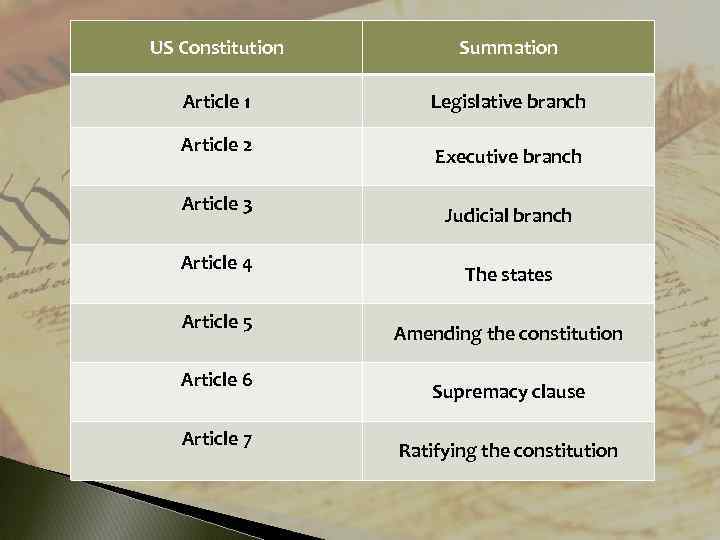 US Constitution Summation Article 1 Legislative branch Article 2 Article 3 Article 4 Article 5 Article 6 Article 7 Executive branch Judicial branch The states Amending the constitution Supremacy clause Ratifying the constitution
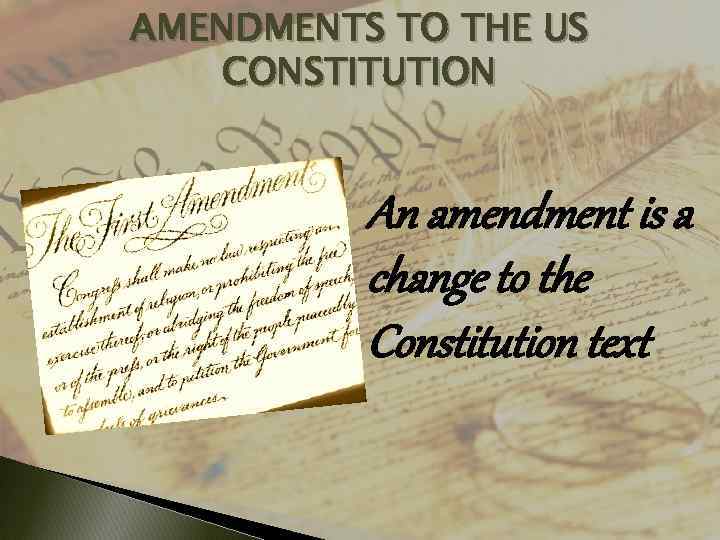 AMENDMENTS TO THE US CONSTITUTION An amendment is a change to the Constitution text
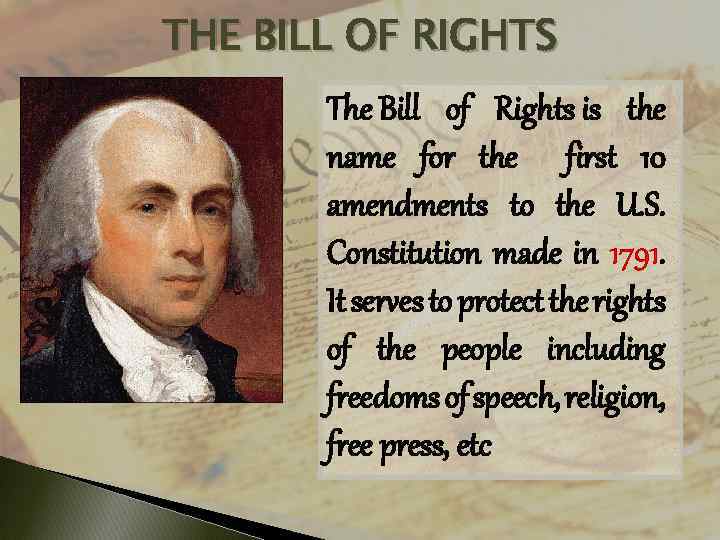 THE BILL OF RIGHTS The Bill of Rights is the name for the first 10 amendments to the U. S. Constitution made in 1791. It serves to protect the rights of the people including freedoms of speech, religion, free press, etc
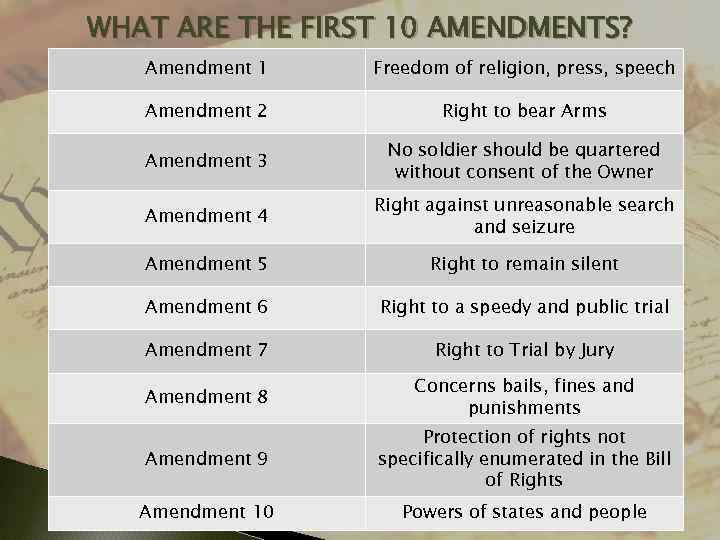 WHAT ARE THE FIRST 10 AMENDMENTS? Amendment 1 Freedom of religion, press, speech Amendment 2 Right to bear Arms Amendment 3 No soldier should be quartered without consent of the Owner Amendment 4 Right against unreasonable search and seizure Amendment 5 Right to remain silent Amendment 6 Right to a speedy and public trial Amendment 7 Right to Trial by Jury Amendment 8 Concerns bails, fines and punishments Amendment 9 Protection of rights not specifically enumerated in the Bill of Rights Amendment 10 Powers of states and people
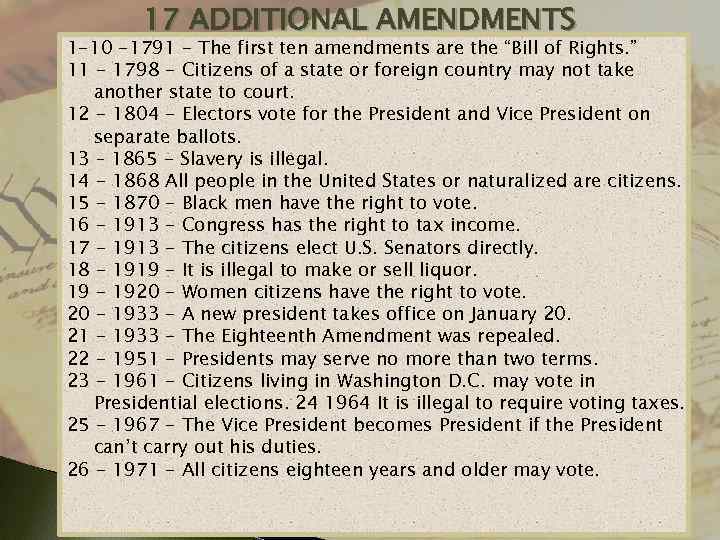 17 ADDITIONAL AMENDMENTS 1 -10 -1791 - The first ten amendments are the “Bill of Rights. ” 11 - 1798 - Citizens of a state or foreign country may not take another state to court. 12 - 1804 - Electors vote for the President and Vice President on separate ballots. 13 – 1865 - Slavery is illegal. 14 - 1868 All people in the United States or naturalized are citizens. 15 - 1870 - Black men have the right to vote. 16 - 1913 - Congress has the right to tax income. 17 - 1913 - The citizens elect U. S. Senators directly. 18 - 1919 - It is illegal to make or sell liquor. 19 - 1920 - Women citizens have the right to vote. 20 - 1933 - A new president takes office on January 20. 21 - 1933 - The Eighteenth Amendment was repealed. 22 - 1951 - Presidents may serve no more than two terms. 23 - 1961 - Citizens living in Washington D. C. may vote in Presidential elections. 24 1964 It is illegal to require voting taxes. 25 - 1967 - The Vice President becomes President if the President can’t carry out his duties. 26 - 1971 - All citizens eighteen years and older may vote.
 THE US CONSTITUTION - A “LIVING DOCUMENT”: It can be amended. Its basic principles can be applied and interpreted differently at different times.
 QUESTIONS 1. How many articles are there in the U. S. 2. What are three branches of government Constitution? named in the Constitution? 3. How many amendments to the Constitution 4. Who wrote the Constitution? are there? 5. What year were the first and the last 6. What document did the Constitution amendments made? 7. Why is the Constitution considered as “a livin replace? 8. What amendment gave women the right of 9. Giving each branch some degree or vote? oversight of the other branches is called… 10. What are 6 Basic Principles the Constitution is
 BIBLIOGRAPHY • Levy, Leonard W. ; Karst, Kenneth L. & West, John G. , eds. (1992). Encyclopedia of the American Constitution. New York: Macmillan. • Mason, Alpheus Thomas & Stephenson, Donald Grier, eds. (2004). American Constitutional Law: Introductory Essays and Selected Cases • Tribe, Laurence H. (1999). American Constitutional Law. • O'Connor, Tom (2010). "Constitutional Structure“. Retrieved November 14, 2011 • http: //www. usconstitution. net/ • http: //constitutioncenter. org/
 THANK YOU FOR YOUR ATTENTION!