


 Скачать презентацию The concept house home in English-speaking countries The
Home VS House.pptx
- Количество слайдов: 11
 The concept "house/home" in English-speaking countries + The problem of housing and immigration Made by Anna Sedunova
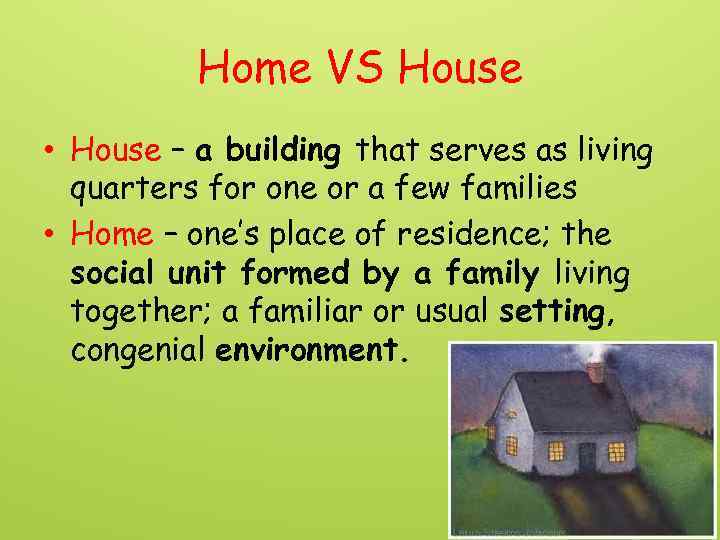 Home VS House • House – a building that serves as living quarters for one or a few families • Home – one’s place of residence; the social unit formed by a family living together; a familiar or usual setting, congenial environment.
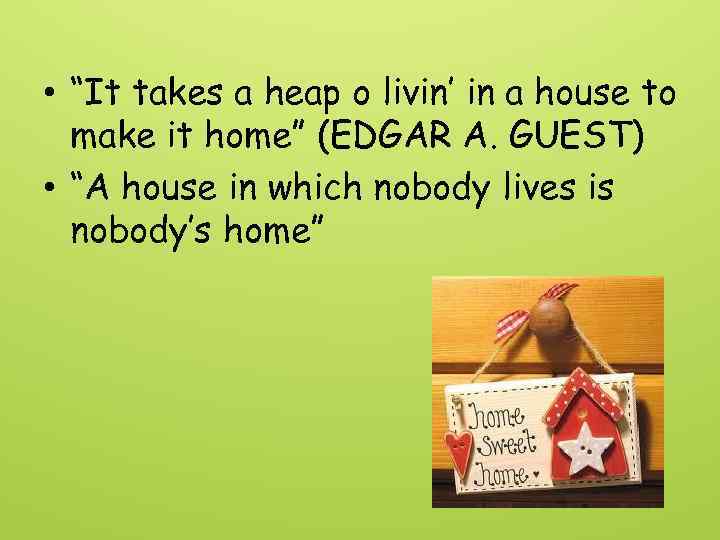 • “It takes a heap o livin’ in a house to make it home” (EDGAR A. GUEST) • “A house in which nobody lives is nobody’s home”
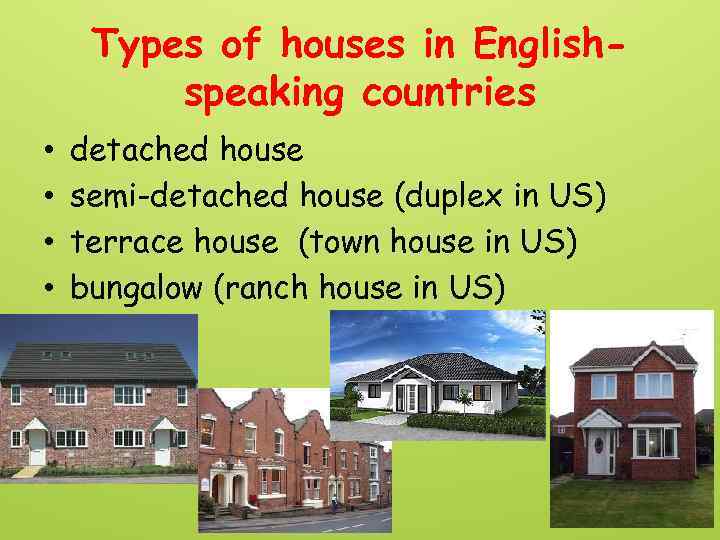 Types of houses in Englishspeaking countries • • detached house semi-detached house (duplex in US) terrace house (town house in US) bungalow (ranch house in US)
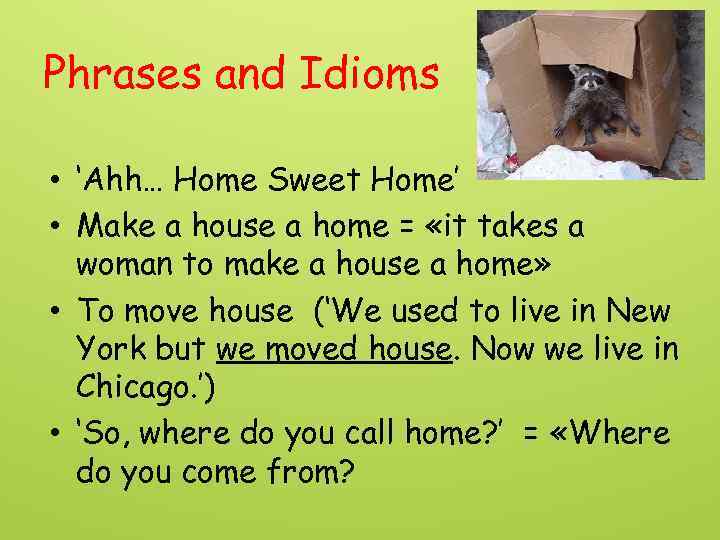 Phrases and Idioms • ‘Ahh… Home Sweet Home’ • Make a house a home = «it takes a woman to make a house a home» • To move house (‘We used to live in New York but we moved house. Now we live in Chicago. ’) • ‘So, where do you call home? ’ = «Where do you come from?
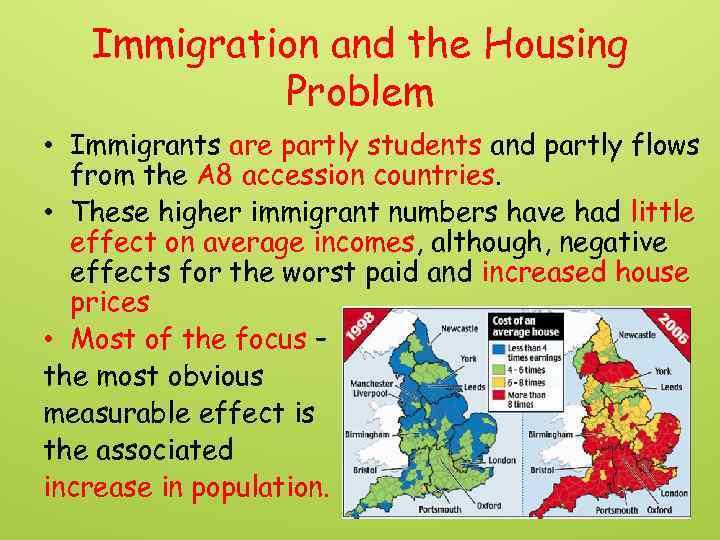 Immigration and the Housing Problem • Immigrants are partly students and partly flows from the A 8 accession countries. • These higher immigrant numbers have had little effect on average incomes, although, negative effects for the worst paid and increased house prices • Most of the focus – the most obvious measurable effect is the associated increase in population.
 The problem is… • The UK builds very few houses • So, need to build around 150, 000 houses per year to cope with the increase in demand that comes from real income growth and another 120, 000 per year to cope with changing patterns of household formation.
 Can the problem in the housing markets be solved? • Some combination of "financial incentives" and "local authority ownership and sale of more land? • Shall be immigration blamed? OR • Is just system incapable of delivering sufficient housing to cover domestic demand?
 THE ISSUES • - New migrants often enter the UK housing market in the least desirable housing – frequently in disadvantaged areas or where demand for housing is lowest. • - With increased migration resulting from the expansion of the European Union (EU), more new migrants have been seeking housing in or around rural areas, where employment in agriculture, tourism and related industries has been available to them. • - They often depend on housing tied to their employment and the private rented sector, where they may experience overcrowding, poor conditions and insecurity. • - Increased migration to the UK also coincides with a shortage of – and high demand for – affordable housing. • - Poor housing, competition for housing and high levels of population 'churn' have a detrimental impact on relationships at local level between different groups, particularly in areas not used to such change. • - Highly politicised and negative debates about migration can result in whole groups of people, such as asylum seekers and migrants from EU accession states, experiencing discrimination. .
 RECOMMENDATIONS • Recognize the need to include migrant housing within mainstream housing policy, planning and provision. • Recognize that migrants are over represented in the pooreststandard private rented sector housing; and ensure this group is protected alongside other vulnerable groups. • Consider both the direct and indirect impact on migrants of changes to Housing Benefit levels and increasing use of the private rented sector to fulfill statutory housing duties Recognize that civic and political leadership at national and local levels is essential to promote integration and cohesion. • More testing of practical and innovative ways for social housing providers to contribute towards alleviating housing problems, including amongst destitute migrants. • Better information, advice and guidance to facilitate migrants' access to housing options and enable them to make informed choices • Innovative funding and housing models that provide low-cost and affordable housing to meet the needs of seasonal-working single migrants (and others in temporary employment).
 Thank you for your attention!