


 Скачать презентацию THE COMMONWEALTH FUND Rising Health Care Costs Implications
9312e86ef32a52a788c61b5aab1756d7.ppt
- Количество слайдов: 26
 THE COMMONWEALTH FUND Rising Health Care Costs: Implications for the Health and Financial Security of U. S. Families Sara R. Collins, Ph. D. Assistant Vice President The Commonwealth Fund Invited Testimony U. S. Senate Finance Committee Hearing on “High Health Care Costs: A State Perspective? ” October 21, 2008
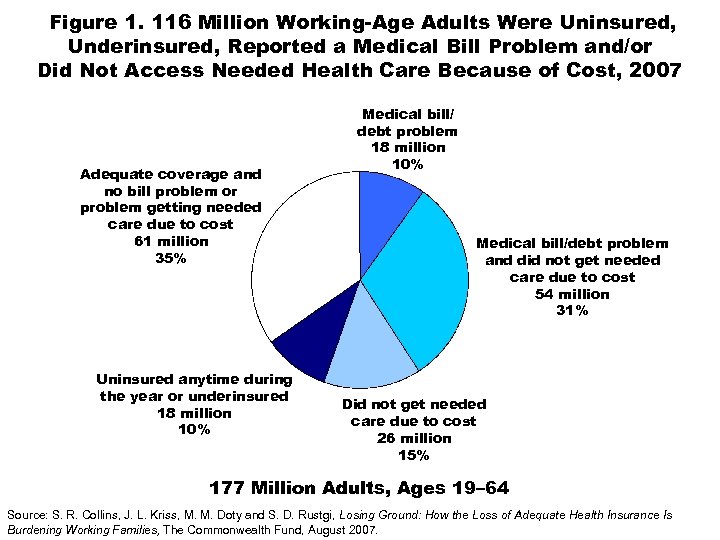 Figure 1. 116 Million Working-Age Adults Were Uninsured, Underinsured, Reported a Medical Bill Problem and/or Did Not Access Needed Health Care Because of Cost, 2007 Adequate coverage and no bill problem or problem getting needed care due to cost 61 million 35% Uninsured anytime during the year or underinsured 18 million 10% Medical bill/ debt problem 18 million 10% Medical bill/debt problem and did not get needed care due to cost 54 million 31% Did not get needed care due to cost 26 million 15% 177 Million Adults, Ages 19– 64 Source: S. R. Collins, J. L. Kriss, M. M. Doty and S. D. Rustgi, Losing Ground: How the Loss of Adequate Health Insurance Is Burdening Working Families, The Commonwealth Fund, August 2007.
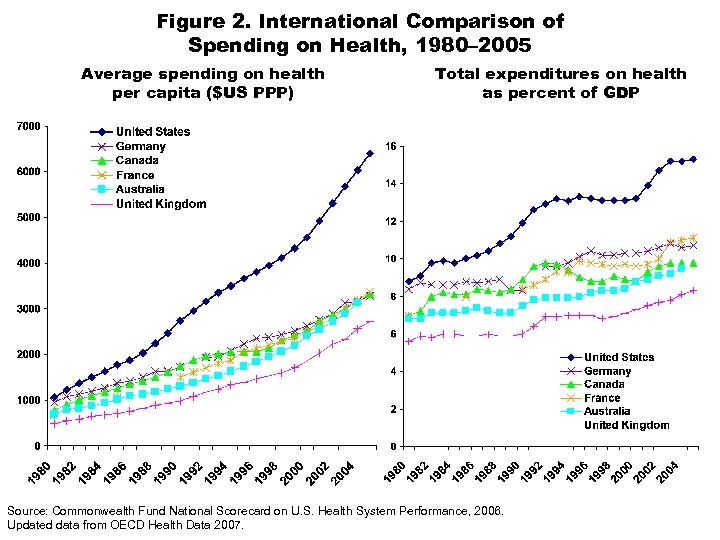 Figure 2. International Comparison of Spending on Health, 1980– 2005 Average spending on health per capita ($US PPP) Total expenditures on health as percent of GDP Source: Commonwealth Fund National Scorecard on U. S. Health System Performance, 2006. Updated data from OECD Health Data 2007.
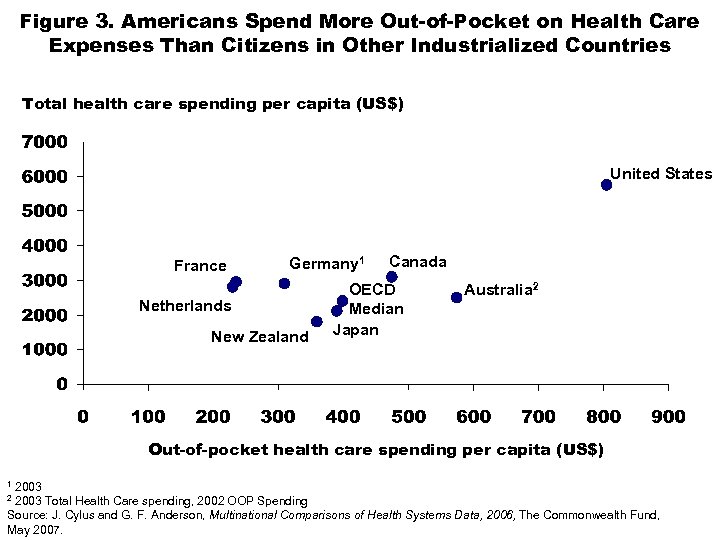 Figure 3. Americans Spend More Out-of-Pocket on Health Care Expenses Than Citizens in Other Industrialized Countries Total health care spending per capita (US$) United States France Germany 1 Netherlands New Zealand Canada OECD Median Japan Australia 2 Out-of-pocket health care spending per capita (US$) 2003 Total Health Care spending, 2002 OOP Spending Source: J. Cylus and G. F. Anderson, Multinational Comparisons of Health Systems Data, 2006, The Commonwealth Fund, May 2007. 1 2
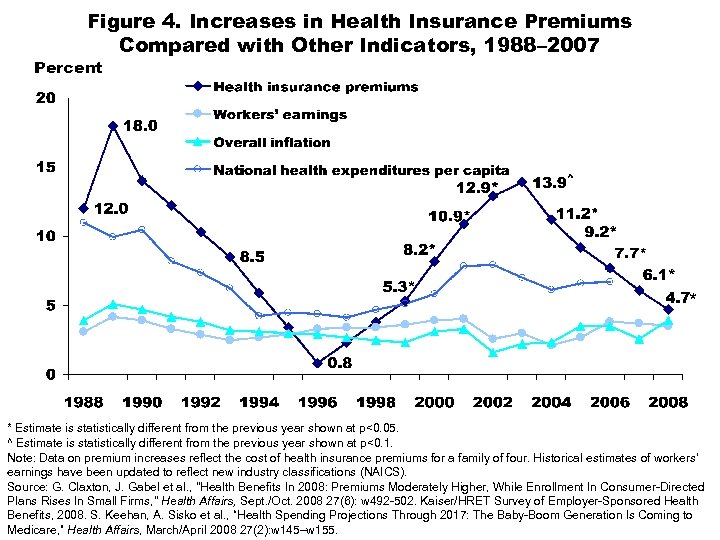 Figure 4. Increases in Health Insurance Premiums Compared with Other Indicators, 1988– 2007 Percent * * Estimate is statistically different from the previous year shown at p<0. 05. ^ Estimate is statistically different from the previous year shown at p<0. 1. Note: Data on premium increases reflect the cost of health insurance premiums for a family of four. Historical estimates of workers’ earnings have been updated to reflect new industry classifications (NAICS). Source: G. Claxton, J. Gabel et al. , "Health Benefits In 2008: Premiums Moderately Higher, While Enrollment In Consumer-Directed Plans Rises In Small Firms, " Health Affairs, Sept. /Oct. 2008 27(6): w 492 -502. Kaiser/HRET Survey of Employer-Sponsored Health Benefits, 2008. S. Keehan, A. Sisko et al. , “Health Spending Projections Through 2017: The Baby-Boom Generation Is Coming to Medicare, ” Health Affairs, March/April 2008 27(2): w 145–w 155.
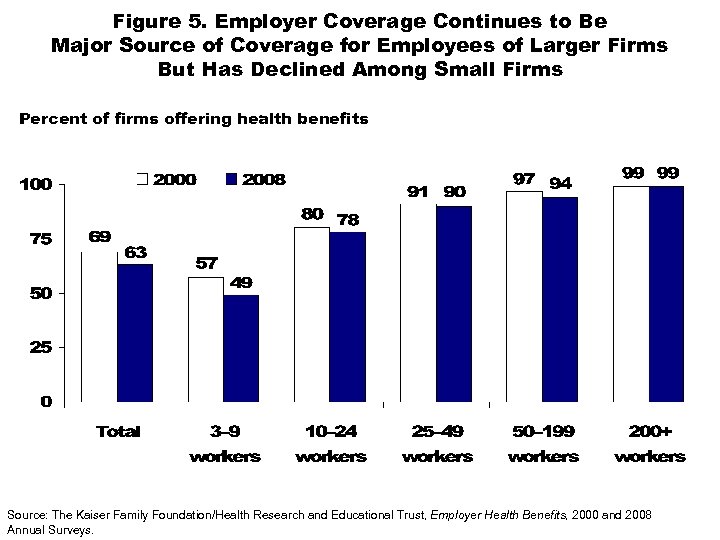 Figure 5. Employer Coverage Continues to Be Major Source of Coverage for Employees of Larger Firms But Has Declined Among Small Firms Percent of firms offering health benefits Source: The Kaiser Family Foundation/Health Research and Educational Trust, Employer Health Benefits, 2000 and 2008 Annual Surveys.
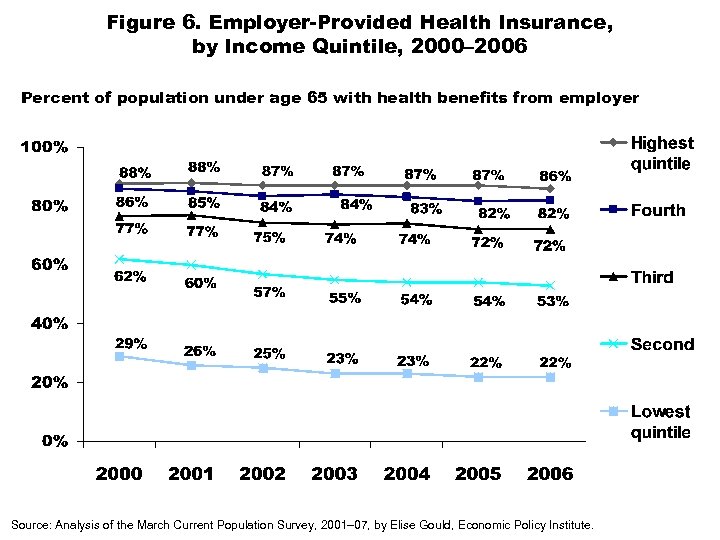 Figure 6. Employer-Provided Health Insurance, by Income Quintile, 2000– 2006 Percent of population under age 65 with health benefits from employer Source: Analysis of the March Current Population Survey, 2001– 07, by Elise Gould, Economic Policy Institute.
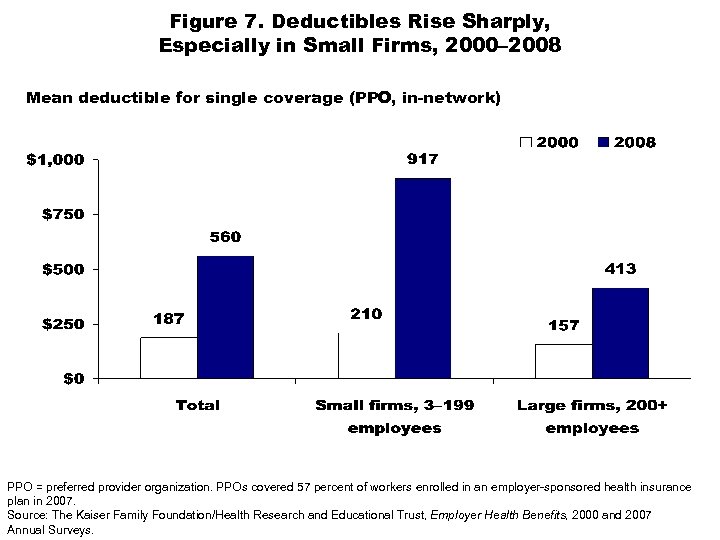 Figure 7. Deductibles Rise Sharply, Especially in Small Firms, 2000– 2008 Mean deductible for single coverage (PPO, in-network) PPO = preferred provider organization. PPOs covered 57 percent of workers enrolled in an employer-sponsored health insurance plan in 2007. Source: The Kaiser Family Foundation/Health Research and Educational Trust, Employer Health Benefits, 2000 and 2007 Annual Surveys.
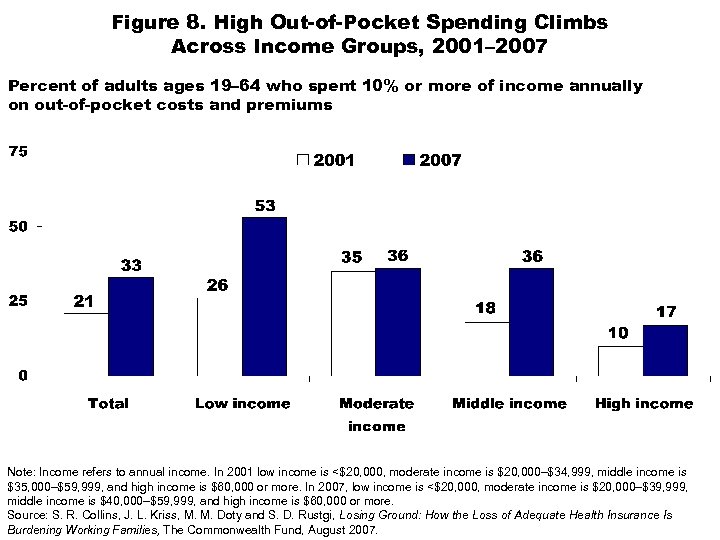 Figure 8. High Out-of-Pocket Spending Climbs Across Income Groups, 2001– 2007 Percent of adults ages 19– 64 who spent 10% or more of income annually on out-of-pocket costs and premiums Note: Income refers to annual income. In 2001 low income is <$20, 000, moderate income is $20, 000–$34, 999, middle income is $35, 000–$59, 999, and high income is $60, 000 or more. In 2007, low income is <$20, 000, moderate income is $20, 000–$39, 999, middle income is $40, 000–$59, 999, and high income is $60, 000 or more. Source: S. R. Collins, J. L. Kriss, M. M. Doty and S. D. Rustgi, Losing Ground: How the Loss of Adequate Health Insurance Is Burdening Working Families, The Commonwealth Fund, August 2007.
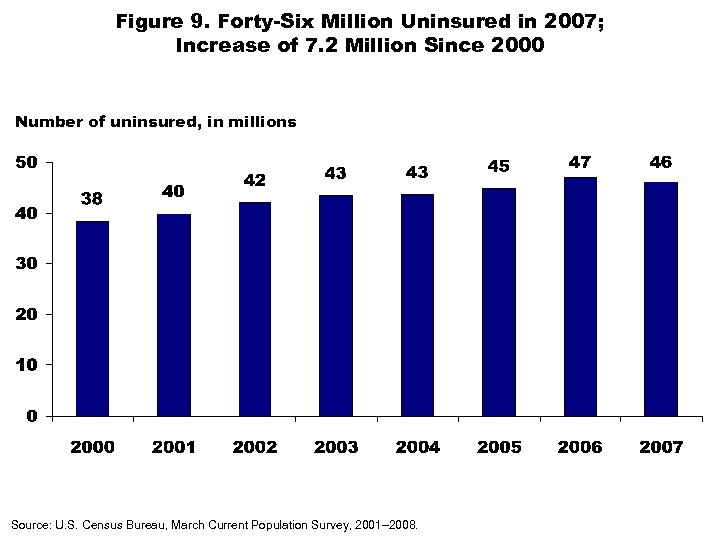 Figure 9. Forty-Six Million Uninsured in 2007; Increase of 7. 2 Million Since 2000 Number of uninsured, in millions Source: U. S. Census Bureau, March Current Population Survey, 2001– 2008.
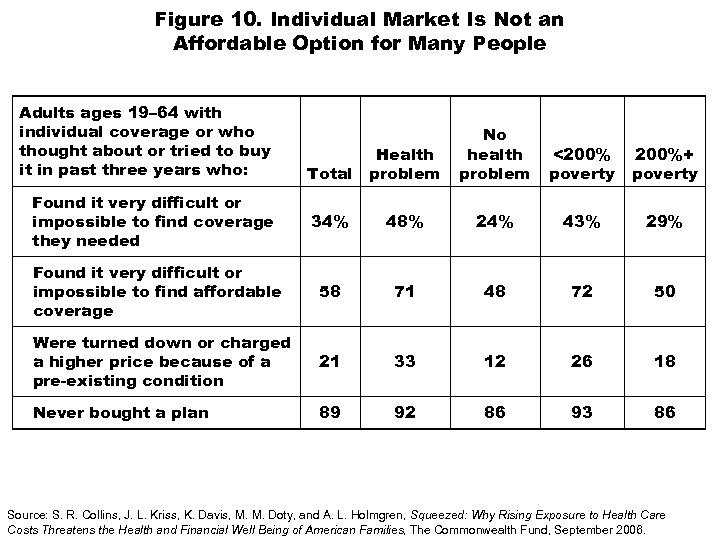 Figure 10. Individual Market Is Not an Affordable Option for Many People Adults ages 19– 64 with individual coverage or who thought about or tried to buy it in past three years who: Total Health problem No health problem <200% poverty 200%+ poverty Found it very difficult or impossible to find coverage they needed 34% 48% 24% 43% 29% Found it very difficult or impossible to find affordable coverage 58 71 48 72 50 Were turned down or charged a higher price because of a pre-existing condition 21 33 12 26 18 Never bought a plan 89 92 86 93 86 Source: S. R. Collins, J. L. Kriss, K. Davis, M. M. Doty, and A. L. Holmgren, Squeezed: Why Rising Exposure to Health Care Costs Threatens the Health and Financial Well Being of American Families, The Commonwealth Fund, September 2006.
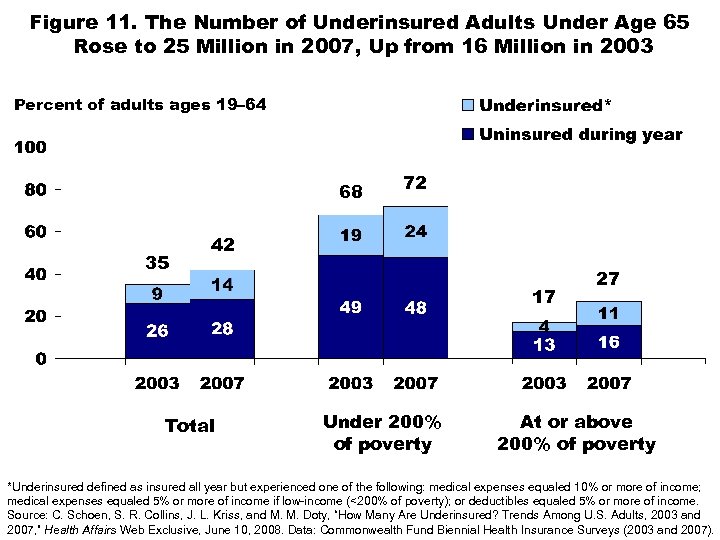 Figure 11. The Number of Underinsured Adults Under Age 65 Rose to 25 Million in 2007, Up from 16 Million in 2003 Percent of adults ages 19– 64 68 35 72 42 17 Total Under 200% of poverty 27 At or above 200% of poverty *Underinsured defined as insured all year but experienced one of the following: medical expenses equaled 10% or more of income; medical expenses equaled 5% or more of income if low-income (<200% of poverty); or deductibles equaled 5% or more of income. Source: C. Schoen, S. R. Collins, J. L. Kriss, and M. M. Doty, “How Many Are Underinsured? Trends Among U. S. Adults, 2003 and 2007, ” Health Affairs Web Exclusive, June 10, 2008. Data: Commonwealth Fund Biennial Health Insurance Surveys (2003 and 2007).
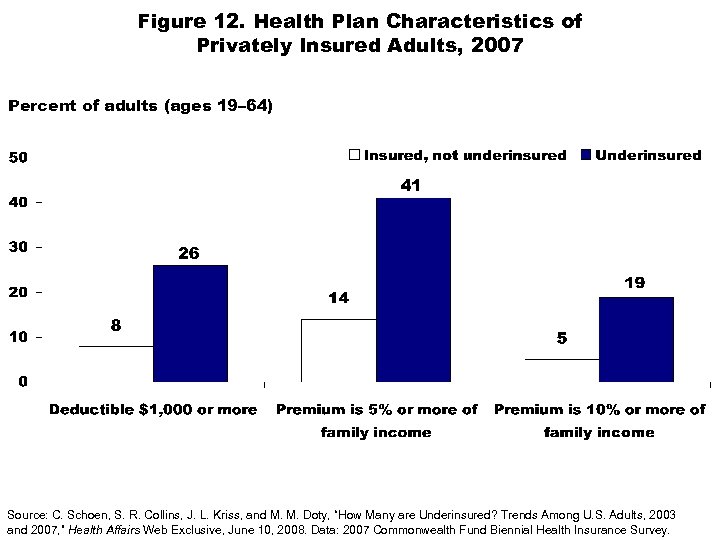 Figure 12. Health Plan Characteristics of Privately Insured Adults, 2007 Percent of adults (ages 19– 64) Source: C. Schoen, S. R. Collins, J. L. Kriss, and M. M. Doty, “How Many are Underinsured? Trends Among U. S. Adults, 2003 and 2007, ” Health Affairs Web Exclusive, June 10, 2008. Data: 2007 Commonwealth Fund Biennial Health Insurance Survey.
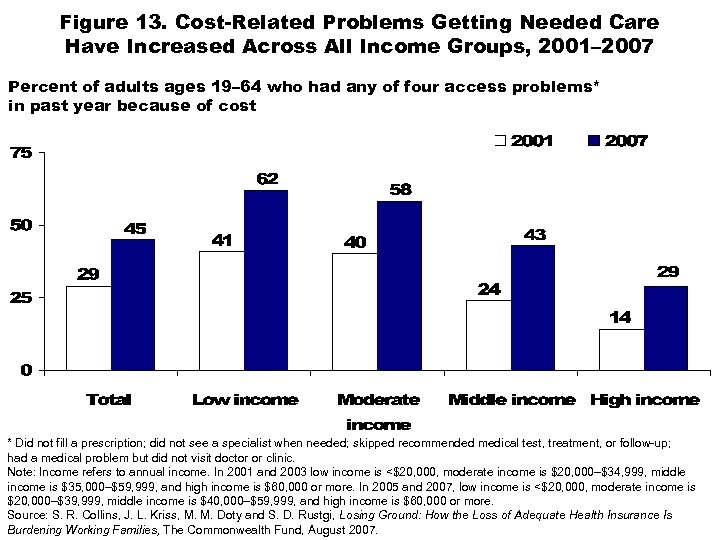 Figure 13. Cost-Related Problems Getting Needed Care Have Increased Across All Income Groups, 2001– 2007 Percent of adults ages 19– 64 who had any of four access problems* in past year because of cost * Did not fill a prescription; did not see a specialist when needed; skipped recommended medical test, treatment, or follow-up; had a medical problem but did not visit doctor or clinic. Note: Income refers to annual income. In 2001 and 2003 low income is <$20, 000, moderate income is $20, 000–$34, 999, middle income is $35, 000–$59, 999, and high income is $60, 000 or more. In 2005 and 2007, low income is <$20, 000, moderate income is $20, 000–$39, 999, middle income is $40, 000–$59, 999, and high income is $60, 000 or more. Source: S. R. Collins, J. L. Kriss, M. M. Doty and S. D. Rustgi, Losing Ground: How the Loss of Adequate Health Insurance Is Burdening Working Families, The Commonwealth Fund, August 2007.
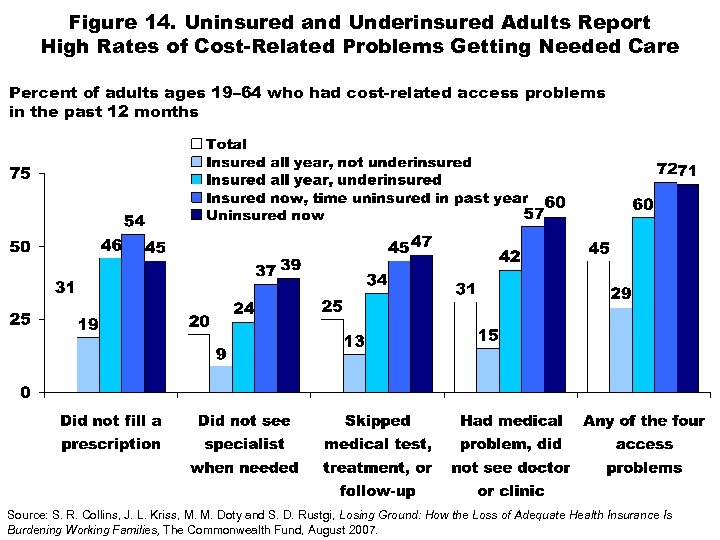 Figure 14. Uninsured and Underinsured Adults Report High Rates of Cost-Related Problems Getting Needed Care Percent of adults ages 19– 64 who had cost-related access problems in the past 12 months Source: S. R. Collins, J. L. Kriss, M. M. Doty and S. D. Rustgi, Losing Ground: How the Loss of Adequate Health Insurance Is Burdening Working Families, The Commonwealth Fund, August 2007.
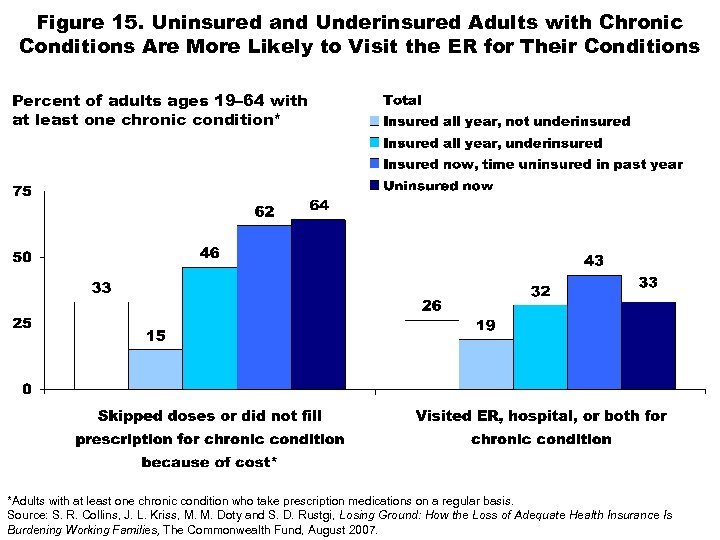 Figure 15. Uninsured and Underinsured Adults with Chronic Conditions Are More Likely to Visit the ER for Their Conditions Percent of adults ages 19– 64 with at least one chronic condition* *Adults with at least one chronic condition who take prescription medications on a regular basis. Source: S. R. Collins, J. L. Kriss, M. M. Doty and S. D. Rustgi, Losing Ground: How the Loss of Adequate Health Insurance Is Burdening Working Families, The Commonwealth Fund, August 2007.
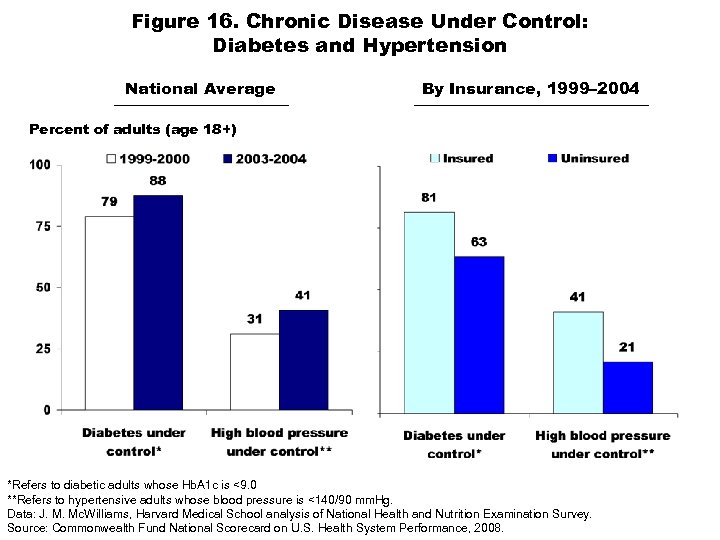 Figure 16. Chronic Disease Under Control: Diabetes and Hypertension National Average By Insurance, 1999– 2004 Percent of adults (age 18+) *Refers to diabetic adults whose Hb. A 1 c is <9. 0 **Refers to hypertensive adults whose blood pressure is <140/90 mm. Hg. Data: J. M. Mc. Williams, Harvard Medical School analysis of National Health and Nutrition Examination Survey. Source: Commonwealth Fund National Scorecard on U. S. Health System Performance, 2008.
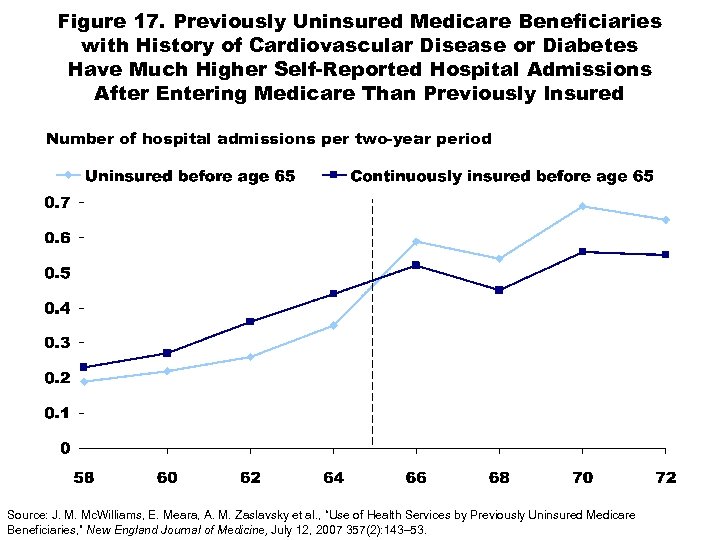 Figure 17. Previously Uninsured Medicare Beneficiaries with History of Cardiovascular Disease or Diabetes Have Much Higher Self-Reported Hospital Admissions After Entering Medicare Than Previously Insured Number of hospital admissions per two-year period Source: J. M. Mc. Williams, E. Meara, A. M. Zaslavsky et al. , “Use of Health Services by Previously Uninsured Medicare Beneficiaries, ” New England Journal of Medicine, July 12, 2007 357(2): 143– 53.
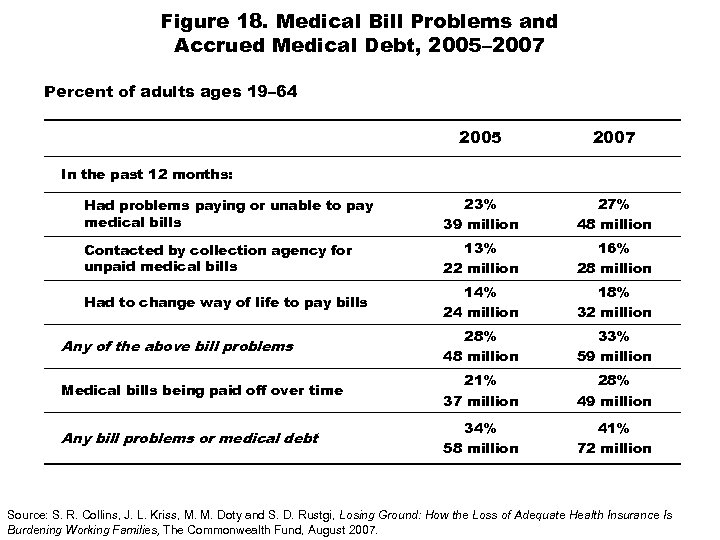 Figure 18. Medical Bill Problems and Accrued Medical Debt, 2005– 2007 Percent of adults ages 19– 64 2005 2007 Had problems paying or unable to pay medical bills 23% 39 million 27% 48 million Contacted by collection agency for unpaid medical bills 13% 22 million 16% 28 million Had to change way of life to pay bills 14% 24 million 18% 32 million Any of the above bill problems 28% 48 million 33% 59 million Medical bills being paid off over time 21% 37 million 28% 49 million Any bill problems or medical debt 34% 58 million 41% 72 million In the past 12 months: Source: S. R. Collins, J. L. Kriss, M. M. Doty and S. D. Rustgi, Losing Ground: How the Loss of Adequate Health Insurance Is Burdening Working Families, The Commonwealth Fund, August 2007.
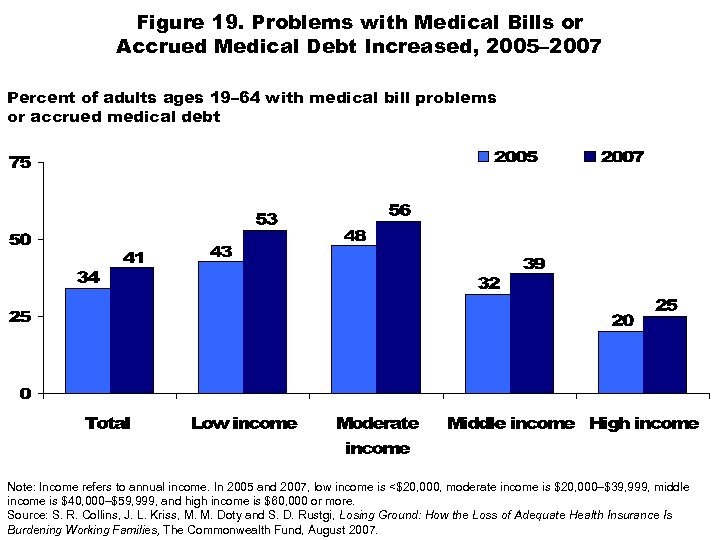 Figure 19. Problems with Medical Bills or Accrued Medical Debt Increased, 2005– 2007 Percent of adults ages 19– 64 with medical bill problems or accrued medical debt Note: Income refers to annual income. In 2005 and 2007, low income is <$20, 000, moderate income is $20, 000–$39, 999, middle income is $40, 000–$59, 999, and high income is $60, 000 or more. Source: S. R. Collins, J. L. Kriss, M. M. Doty and S. D. Rustgi, Losing Ground: How the Loss of Adequate Health Insurance Is Burdening Working Families, The Commonwealth Fund, August 2007.
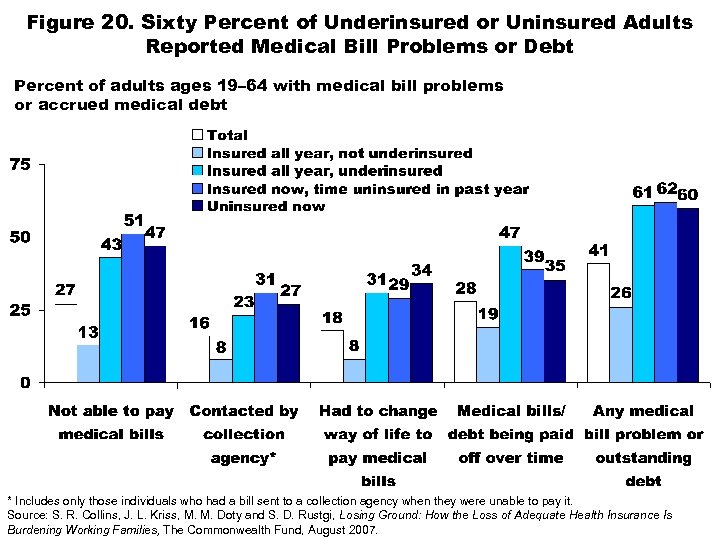 Figure 20. Sixty Percent of Underinsured or Uninsured Adults Reported Medical Bill Problems or Debt Percent of adults ages 19– 64 with medical bill problems or accrued medical debt * Includes only those individuals who had a bill sent to a collection agency when they were unable to pay it. Source: S. R. Collins, J. L. Kriss, M. M. Doty and S. D. Rustgi, Losing Ground: How the Loss of Adequate Health Insurance Is Burdening Working Families, The Commonwealth Fund, August 2007.
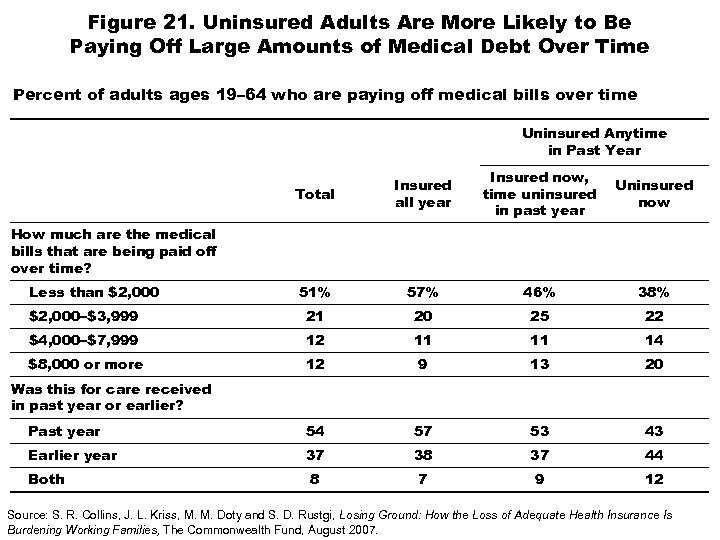 Figure 21. Uninsured Adults Are More Likely to Be Paying Off Large Amounts of Medical Debt Over Time Percent of adults ages 19– 64 who are paying off medical bills over time Uninsured Anytime in Past Year Total Insured all year Insured now, time uninsured in past year Uninsured now 51% 57% 46% 38% $2, 000–$3, 999 21 20 25 22 $4, 000–$7, 999 12 11 11 14 $8, 000 or more 12 9 13 20 Past year 54 57 53 43 Earlier year 37 38 37 44 8 7 9 12 How much are the medical bills that are being paid off over time? Less than $2, 000 Was this for care received in past year or earlier? Both Source: S. R. Collins, J. L. Kriss, M. M. Doty and S. D. Rustgi, Losing Ground: How the Loss of Adequate Health Insurance Is Burdening Working Families, The Commonwealth Fund, August 2007.
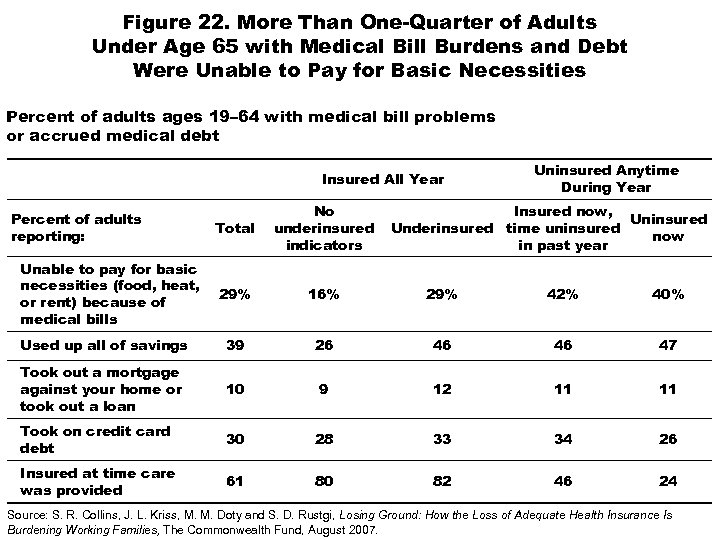 Figure 22. More Than One-Quarter of Adults Under Age 65 with Medical Bill Burdens and Debt Were Unable to Pay for Basic Necessities Percent of adults ages 19– 64 with medical bill problems or accrued medical debt Insured All Year Uninsured Anytime During Year Total No underinsured indicators 29% 16% 29% 42% 40% Used up all of savings 39 26 46 46 47 Took out a mortgage against your home or took out a loan 10 9 12 11 11 Took on credit card debt 30 28 33 34 26 Insured at time care was provided 61 80 82 46 24 Percent of adults reporting: Unable to pay for basic necessities (food, heat, or rent) because of medical bills Insured now, Uninsured Underinsured time uninsured now in past year Source: S. R. Collins, J. L. Kriss, M. M. Doty and S. D. Rustgi, Losing Ground: How the Loss of Adequate Health Insurance Is Burdening Working Families, The Commonwealth Fund, August 2007.
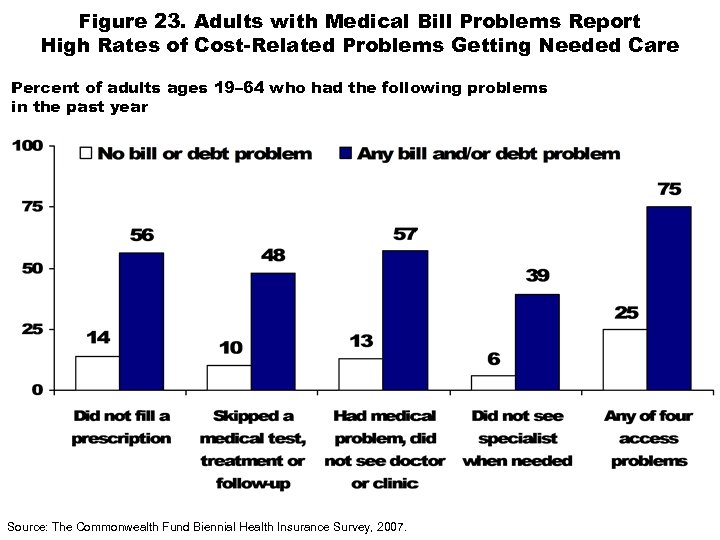 Figure 23. Adults with Medical Bill Problems Report High Rates of Cost-Related Problems Getting Needed Care Percent of adults ages 19– 64 who had the following problems in the past year Source: The Commonwealth Fund Biennial Health Insurance Survey, 2007.
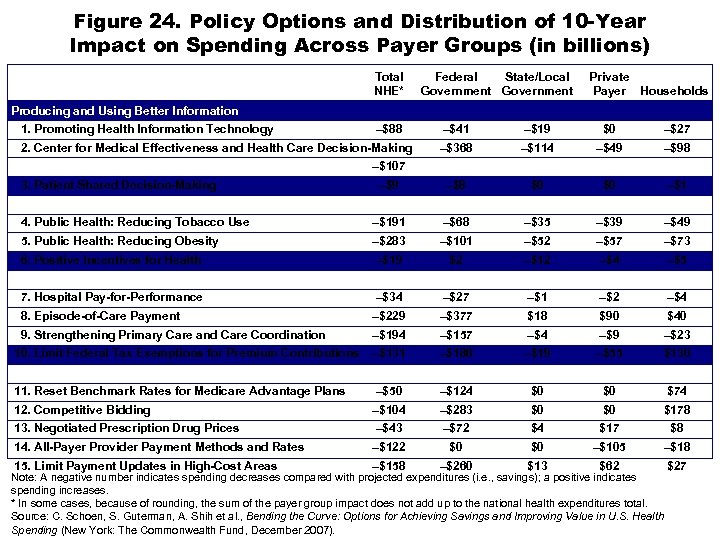 Figure 24. Policy Options and Distribution of 10 -Year Impact on Spending Across Payer Groups (in billions) Total NHE* Federal State/Local Government Private Payer Households Producing and Using Better Information 1. Promoting Health Information Technology –$88 –$41 –$19 $0 –$27 –$368 –$114 –$49 –$98 –$9 –$8 $0 $0 –$1 4. Public Health: Reducing Tobacco Use –$191 –$68 –$35 –$39 –$49 5. Public Health: Reducing Obesity –$283 –$101 –$52 –$57 –$73 6. Positive Incentives for Health –$19 $2 –$12 –$4 –$5 7. Hospital Pay-for-Performance –$34 –$27 –$1 –$2 –$4 8. Episode-of-Care Payment –$229 –$377 $18 $90 $40 9. Strengthening Primary Care and Care Coordination –$194 –$157 –$4 –$9 –$23 –$131 –$186 –$19 –$55 $130 11. Reset Benchmark Rates for Medicare Advantage Plans –$50 –$124 $0 $0 $74 12. Competitive Bidding –$104 –$283 $0 $0 $178 13. Negotiated Prescription Drug Prices –$43 –$72 $4 $17 $8 14. All-Payer Provider Payment Methods and Rates –$122 $0 $0 –$105 –$18 15. Limit Payment Updates in High-Cost Areas –$158 –$260 $13 $62 $27 2. Center for Medical Effectiveness and Health Care Decision-Making –$107 3. Patient Shared Decision-Making Promoting Health and Disease Prevention Aligning Incentives with Quality and Efficiency 10. Limit Federal Tax Exemptions for Premium Contributions Correcting Price Signals in the Health Market Note: A negative number indicates spending decreases compared with projected expenditures (i. e. , savings); a positive indicates spending increases. * In some cases, because of rounding, the sum of the payer group impact does not add up to the national health expenditures total. Source: C. Schoen, S. Guterman, A. Shih et al. , Bending the Curve: Options for Achieving Savings and Improving Value in U. S. Health Spending (New York: The Commonwealth Fund, December 2007).
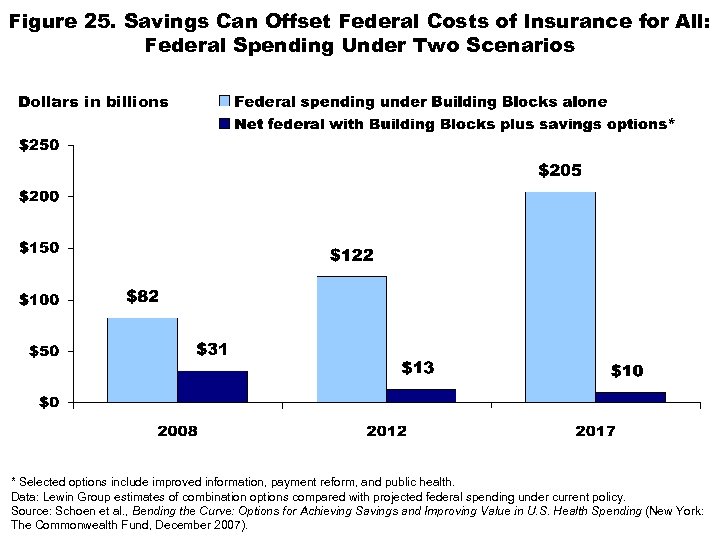 Figure 25. Savings Can Offset Federal Costs of Insurance for All: Federal Spending Under Two Scenarios Dollars in billions * Selected options include improved information, payment reform, and public health. Data: Lewin Group estimates of combination options compared with projected federal spending under current policy. Source: Schoen et al. , Bending the Curve: Options for Achieving Savings and Improving Value in U. S. Health Spending (New York: The Commonwealth Fund, December 2007).