


 Скачать презентацию The Cold War US V SU A significant
96eb31303d3bc144cf327b2c672cd78e.ppt
- Количество слайдов: 66
 The Cold War US V. SU! A significant outcome of World War II… a consuming topic through 1991!
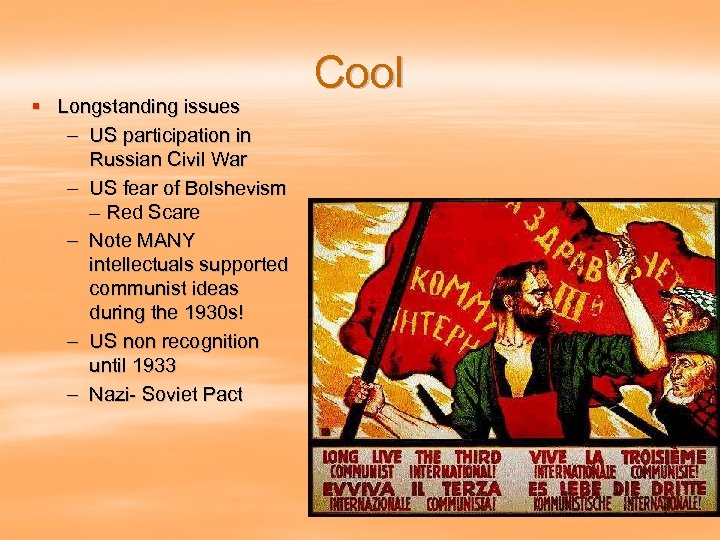 § Longstanding issues – US participation in Russian Civil War – US fear of Bolshevism – Red Scare – Note MANY intellectuals supported communist ideas during the 1930 s! – US non recognition until 1933 – Nazi- Soviet Pact Cool
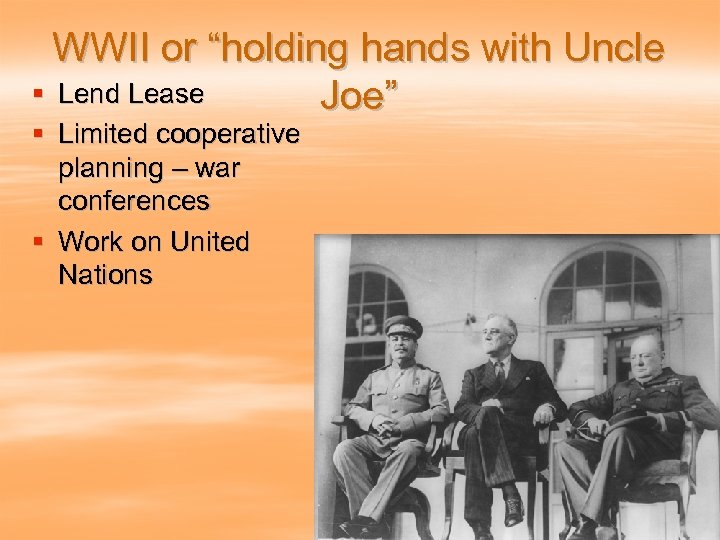 WWII or “holding hands with Uncle § Lend Lease Joe” § Limited cooperative planning – war conferences § Work on United Nations
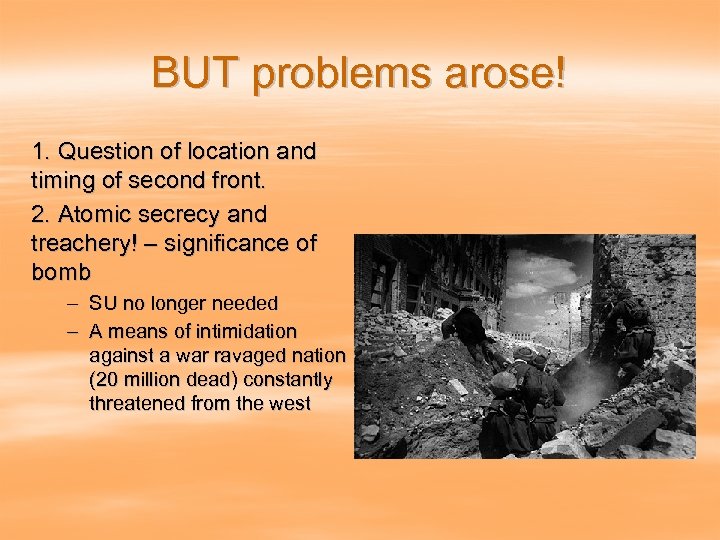 BUT problems arose! 1. Question of location and timing of second front. 2. Atomic secrecy and treachery! – significance of bomb – SU no longer needed – A means of intimidation against a war ravaged nation (20 million dead) constantly threatened from the west
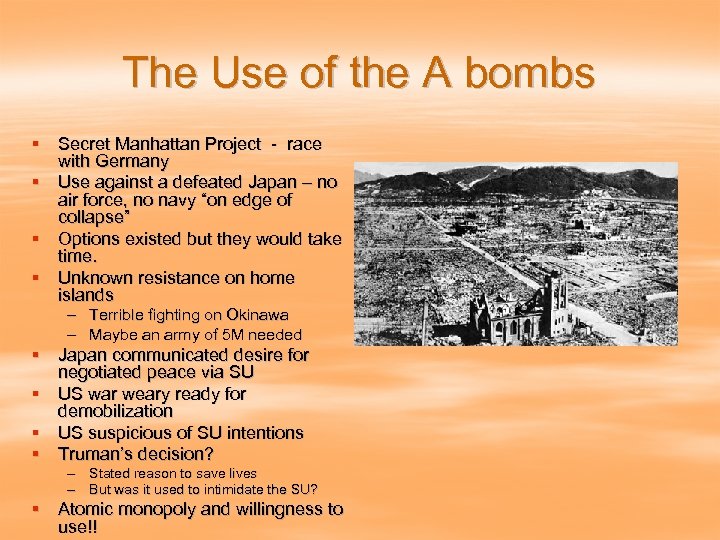 The Use of the A bombs § Secret Manhattan Project - race with Germany § Use against a defeated Japan – no air force, no navy “on edge of collapse” § Options existed but they would take time. § Unknown resistance on home islands – Terrible fighting on Okinawa – Maybe an army of 5 M needed § Japan communicated desire for negotiated peace via SU § US war weary ready for demobilization § US suspicious of SU intentions § Truman’s decision? – Stated reason to save lives – But was it used to intimidate the SU? § Atomic monopoly and willingness to use!!
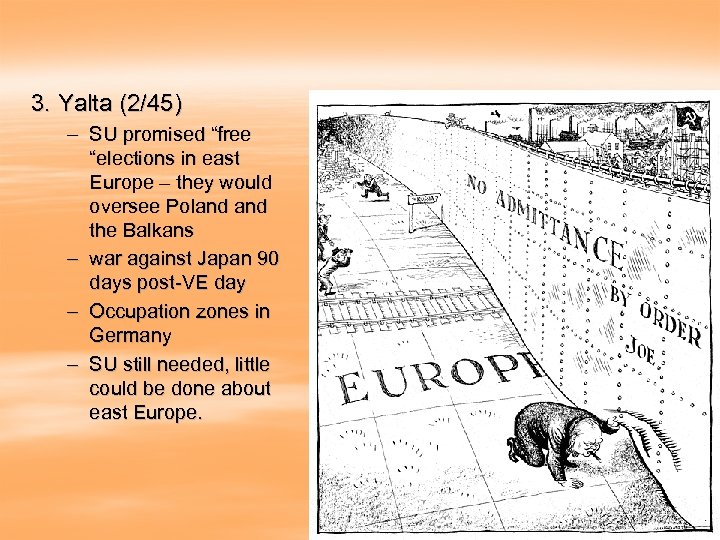 3. Yalta (2/45) – SU promised “free “elections in east Europe – they would oversee Poland the Balkans – war against Japan 90 days post-VE day – Occupation zones in Germany – SU still needed, little could be done about east Europe.
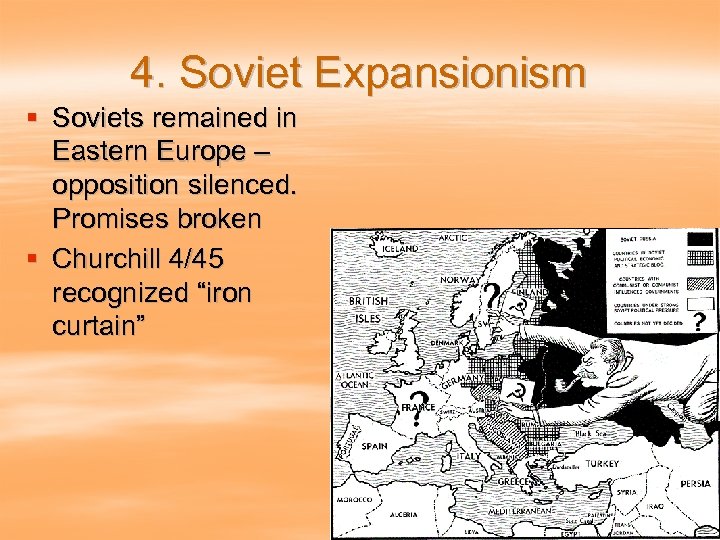 4. Soviet Expansionism § Soviets remained in Eastern Europe – opposition silenced. Promises broken § Churchill 4/45 recognized “iron curtain”
 Why no peace?
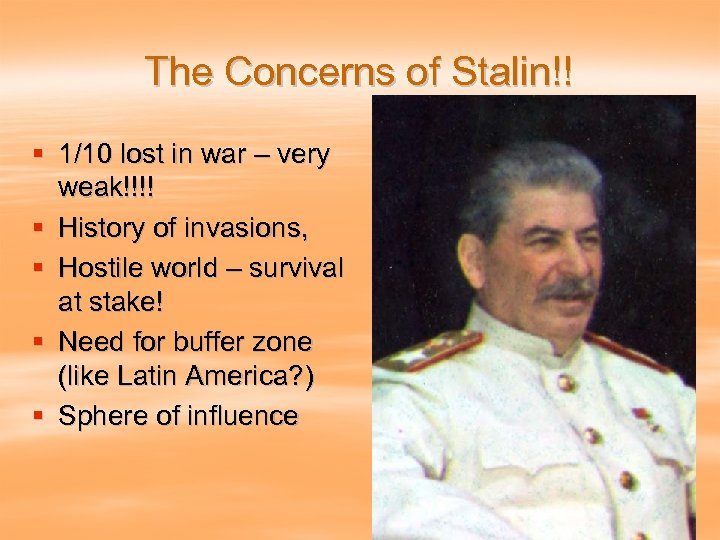 The Concerns of Stalin!! § 1/10 lost in war – very weak!!!! § History of invasions, § Hostile world – survival at stake! § Need for buffer zone (like Latin America? ) § Sphere of influence
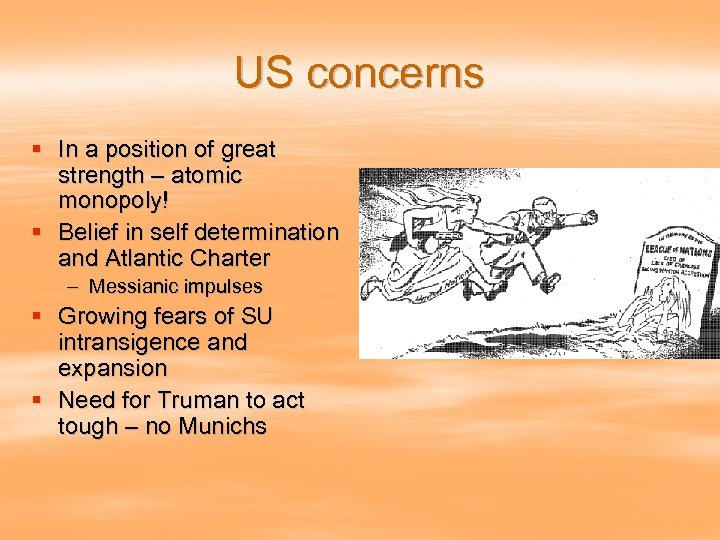 US concerns § In a position of great strength – atomic monopoly! § Belief in self determination and Atlantic Charter – Messianic impulses § Growing fears of SU intransigence and expansion § Need for Truman to act tough – no Munichs
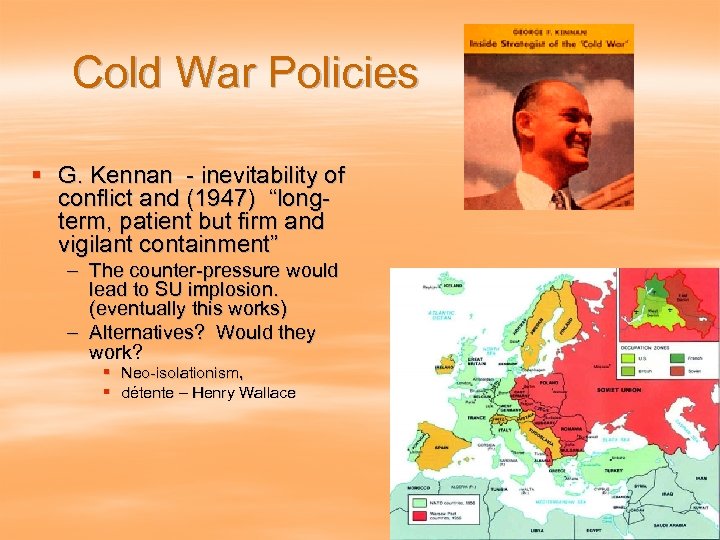 Cold War Policies § G. Kennan - inevitability of conflict and (1947) “longterm, patient but firm and vigilant containment” – The counter-pressure would lead to SU implosion. (eventually this works) – Alternatives? Would they work? § Neo-isolationism, § détente – Henry Wallace
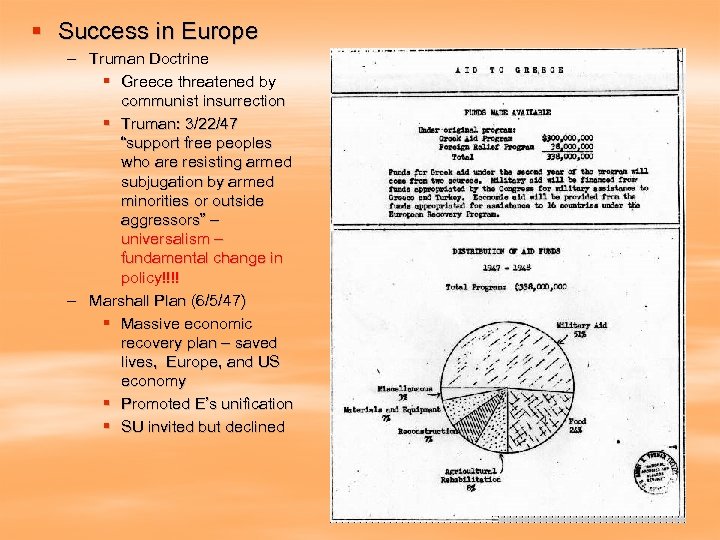 § Success in Europe – Truman Doctrine § Greece threatened by communist insurrection § Truman: 3/22/47 “support free peoples who are resisting armed subjugation by armed minorities or outside aggressors” – universalism – fundamental change in policy!!!! – Marshall Plan (6/5/47) § Massive economic recovery plan – saved lives, Europe, and US economy § Promoted E’s unification § SU invited but declined
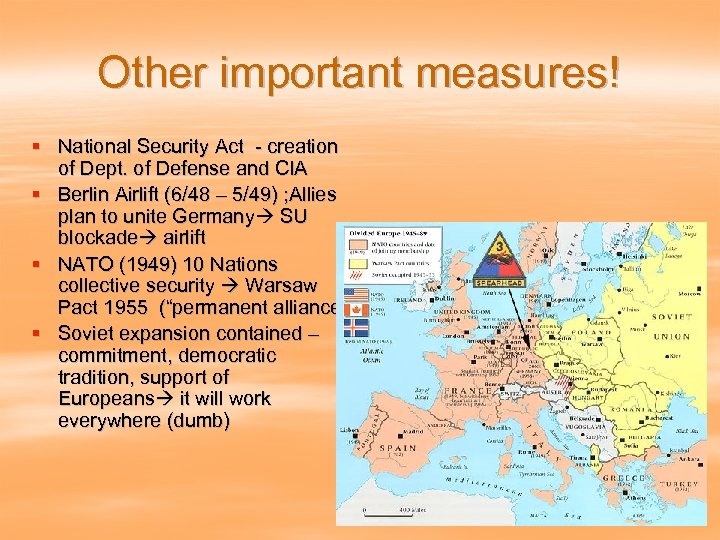 Other important measures! § National Security Act - creation of Dept. of Defense and CIA § Berlin Airlift (6/48 – 5/49) ; Allies plan to unite Germany SU blockade airlift § NATO (1949) 10 Nations collective security Warsaw Pact 1955 (“permanent alliance § Soviet expansion contained – commitment, democratic tradition, support of Europeans it will work everywhere (dumb)
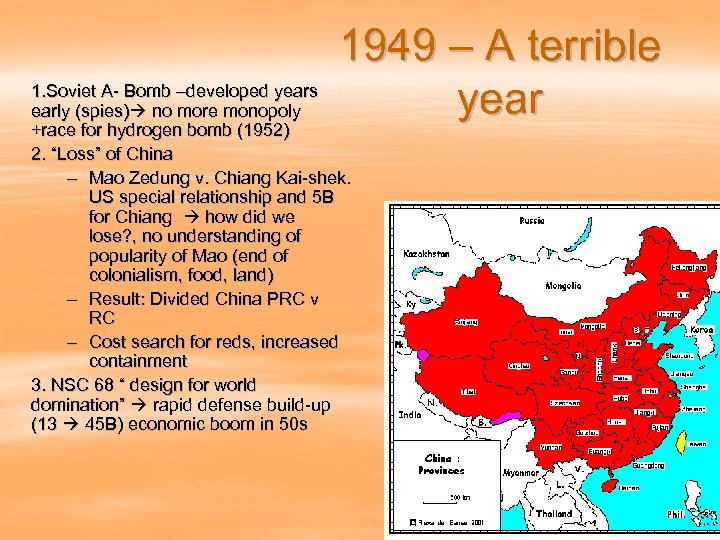 1949 – A terrible year 1. Soviet A- Bomb –developed years early (spies) no more monopoly +race for hydrogen bomb (1952) 2. “Loss” of China – Mao Zedung v. Chiang Kai-shek. US special relationship and 5 B for Chiang how did we lose? , no understanding of popularity of Mao (end of colonialism, food, land) – Result: Divided China PRC v RC – Cost search for reds, increased containment 3. NSC 68 “ design for world domination” rapid defense build-up (13 45 B) economic boom in 50 s
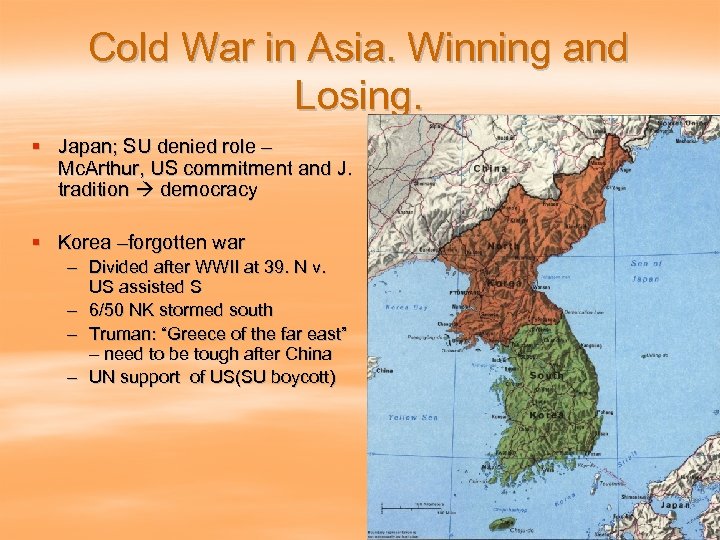 Cold War in Asia. Winning and Losing. § Japan; SU denied role – Mc. Arthur, US commitment and J. tradition democracy § Korea –forgotten war – Divided after WWII at 39. N v. US assisted S – 6/50 NK stormed south – Truman: “Greece of the far east” – need to be tough after China – UN support of US(SU boycott)
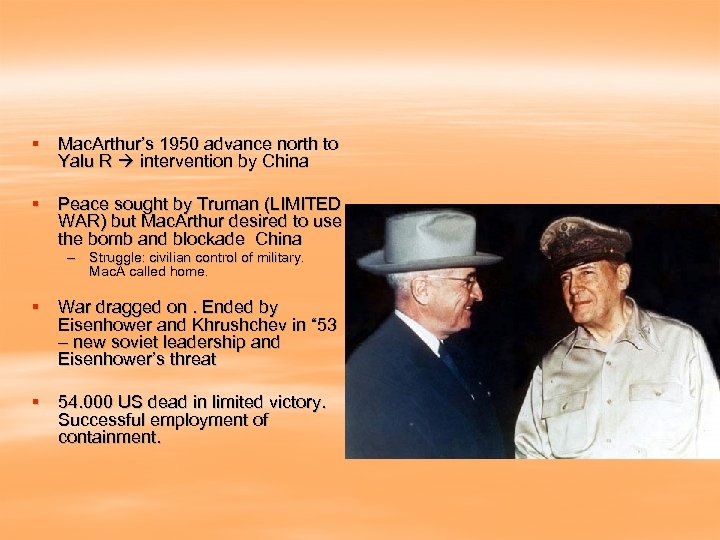 § Mac. Arthur’s 1950 advance north to Yalu R intervention by China § Peace sought by Truman (LIMITED WAR) but Mac. Arthur desired to use the bomb and blockade China – Struggle: civilian control of military. Mac. A called home. § War dragged on. Ended by Eisenhower and Khrushchev in “ 53 – new soviet leadership and Eisenhower’s threat § 54. 000 US dead in limited victory. Successful employment of containment.
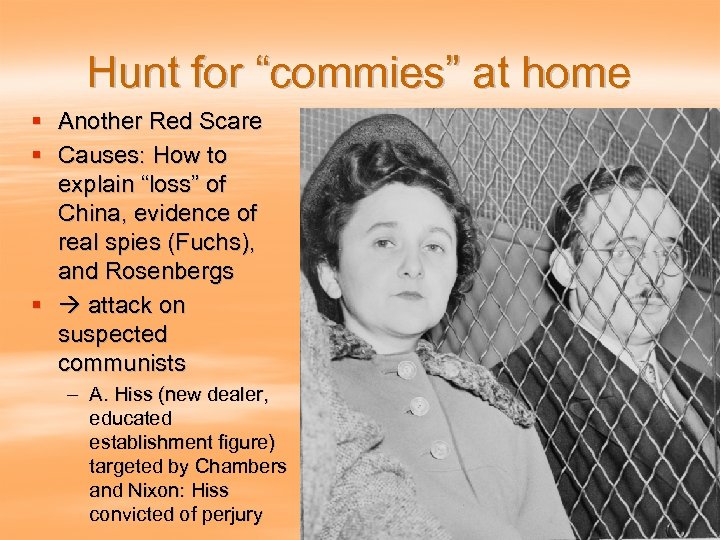 Hunt for “commies” at home § Another Red Scare § Causes: How to explain “loss” of China, evidence of real spies (Fuchs), and Rosenbergs § attack on suspected communists – A. Hiss (new dealer, educated establishment figure) targeted by Chambers and Nixon: Hiss convicted of perjury
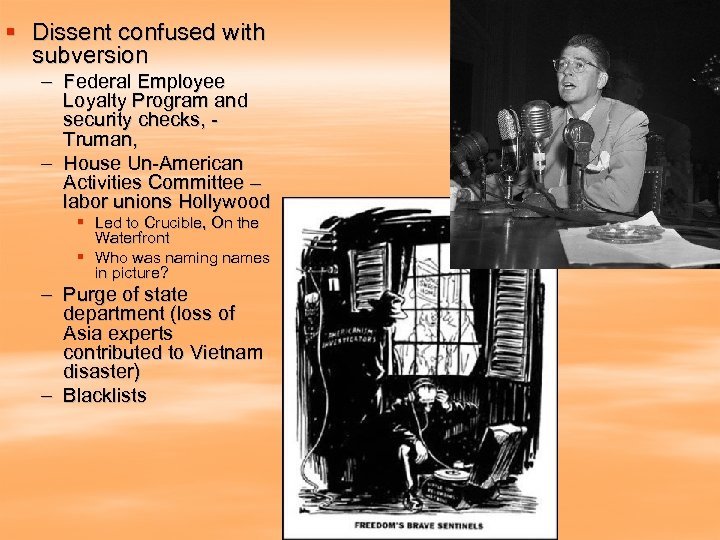 § Dissent confused with subversion – Federal Employee Loyalty Program and security checks, Truman, – House Un-American Activities Committee – labor unions Hollywood § Led to Crucible, On the Waterfront § Who was naming names in picture? – Purge of state department (loss of Asia experts contributed to Vietnam disaster) – Blacklists
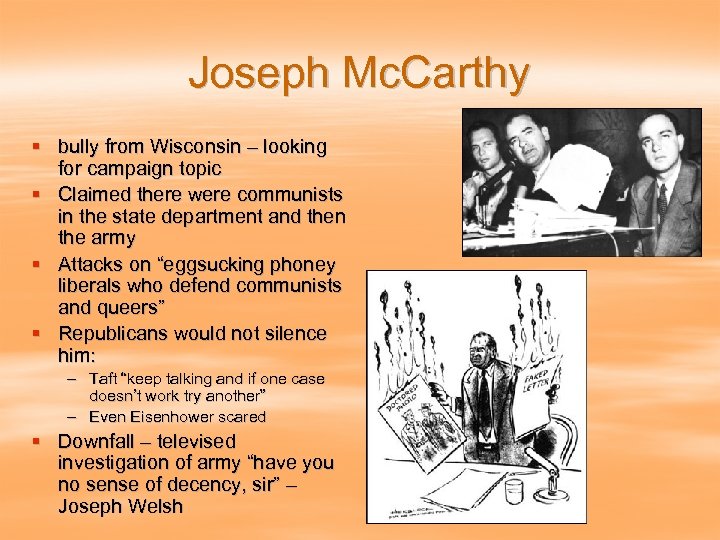 Joseph Mc. Carthy § bully from Wisconsin – looking for campaign topic § Claimed there were communists in the state department and then the army § Attacks on “eggsucking phoney liberals who defend communists and queers” § Republicans would not silence him: – Taft “keep talking and if one case doesn’t work try another” – Even Eisenhower scared § Downfall – televised investigation of army “have you no sense of decency, sir” – Joseph Welsh
 Quiz will be the last fifteen minutes of class (12: 30, 1: 00) HW: STUDY!!! Read chapter 38 § Warmup: All female public school students even as late as the end of the 1960 s were required to take a course in “home economics. ” Read the excerpt from a textbook in home economics. Consider: – What was the role of women promoted? – How would this be troublesome for many women? And hopefully many men.
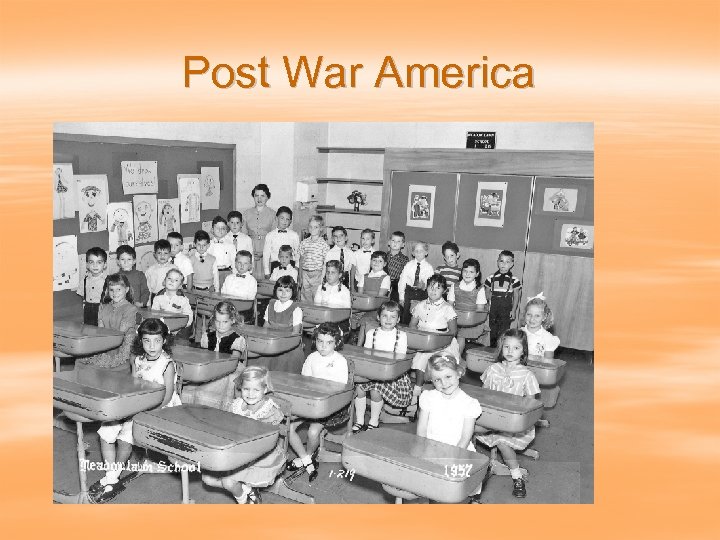 Post War America
 Social And Political Issues of the “American Century” § § § Economic Growth Consumerism! Conformity! Suburban Domesticity “Outsiders”
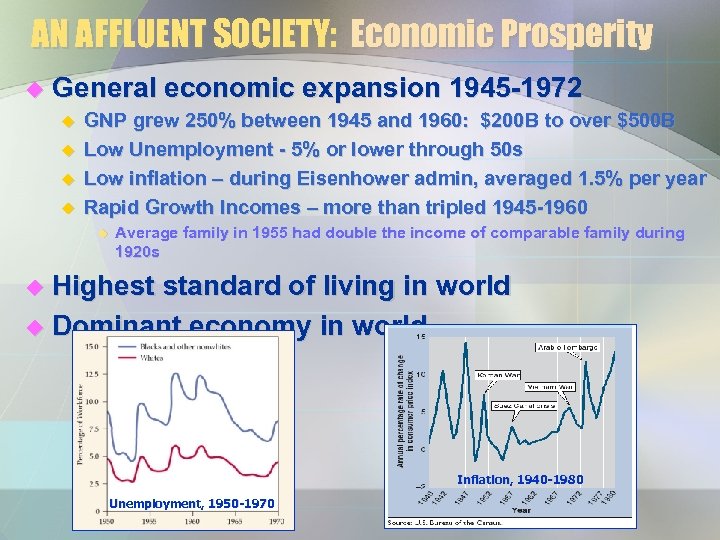 AN AFFLUENT SOCIETY: Economic Prosperity u General economic expansion 1945 -1972 u u GNP grew 250% between 1945 and 1960: $200 B to over $500 B Low Unemployment - 5% or lower through 50 s Low inflation – during Eisenhower admin, averaged 1. 5% per year Rapid Growth Incomes – more than tripled 1945 -1960 u Average family in 1955 had double the income of comparable family during 1920 s Highest standard of living in world u Dominant economy in world u Inflation, 1940 -1980 Unemployment, 1950 -1970
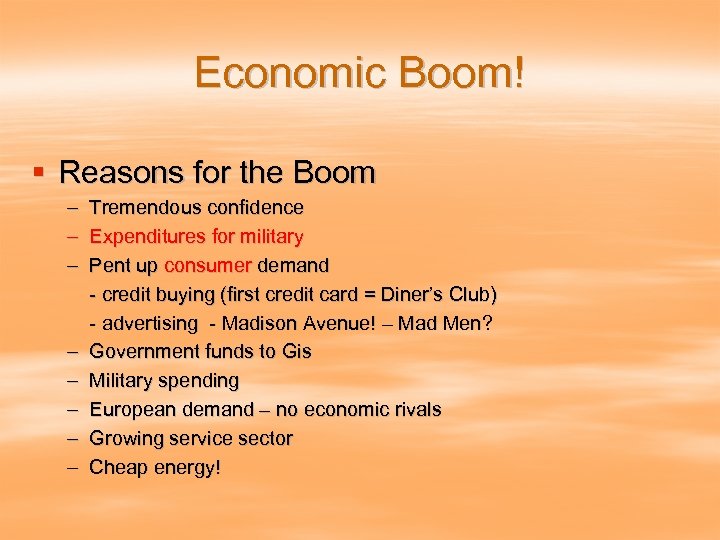 Economic Boom! § Reasons for the Boom – – – – Tremendous confidence Expenditures for military Pent up consumer demand - credit buying (first credit card = Diner’s Club) - advertising - Madison Avenue! – Mad Men? Government funds to Gis Military spending European demand – no economic rivals Growing service sector Cheap energy!
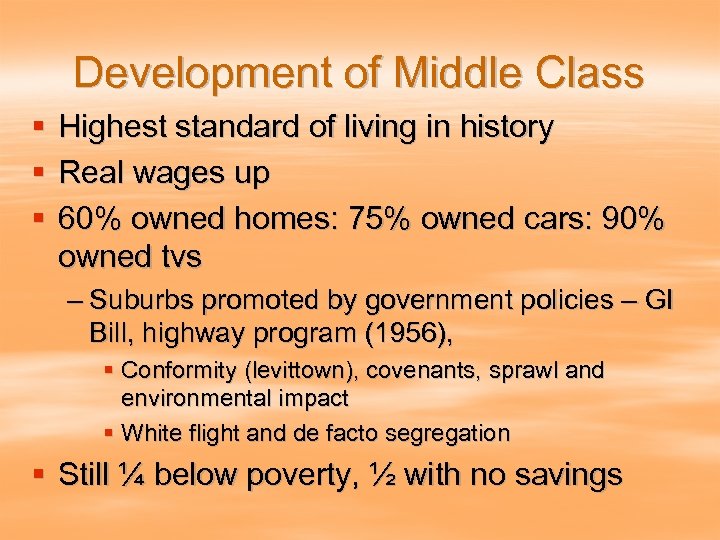 Development of Middle Class § § § Highest standard of living in history Real wages up 60% owned homes: 75% owned cars: 90% owned tvs – Suburbs promoted by government policies – GI Bill, highway program (1956), § Conformity (levittown), covenants, sprawl and environmental impact § White flight and de facto segregation § Still ¼ below poverty, ½ with no savings
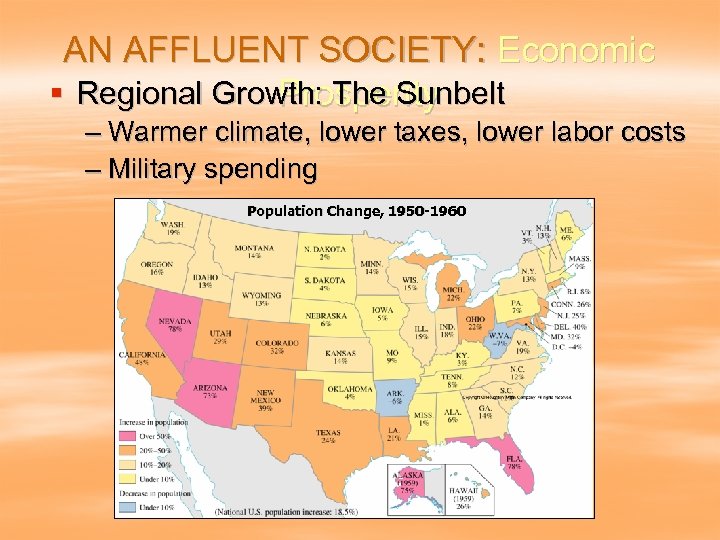 AN AFFLUENT SOCIETY: Economic § Regional Growth: The Sunbelt Prosperity – Warmer climate, lower taxes, lower labor costs – Military spending Population Change, 1950 -1960
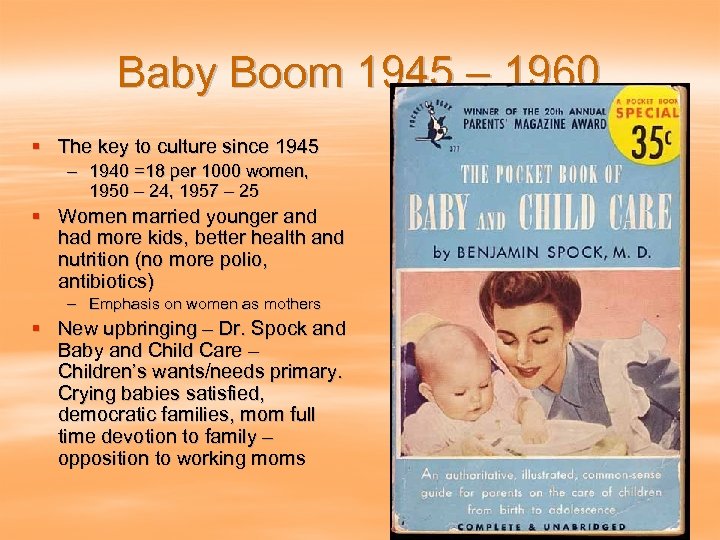 Baby Boom 1945 – 1960 § The key to culture since 1945 – 1940 =18 per 1000 women, 1950 – 24, 1957 – 25 § Women married younger and had more kids, better health and nutrition (no more polio, antibiotics) – Emphasis on women as mothers § New upbringing – Dr. Spock and Baby and Child Care – Children’s wants/needs primary. Crying babies satisfied, democratic families, mom full time devotion to family – opposition to working moms
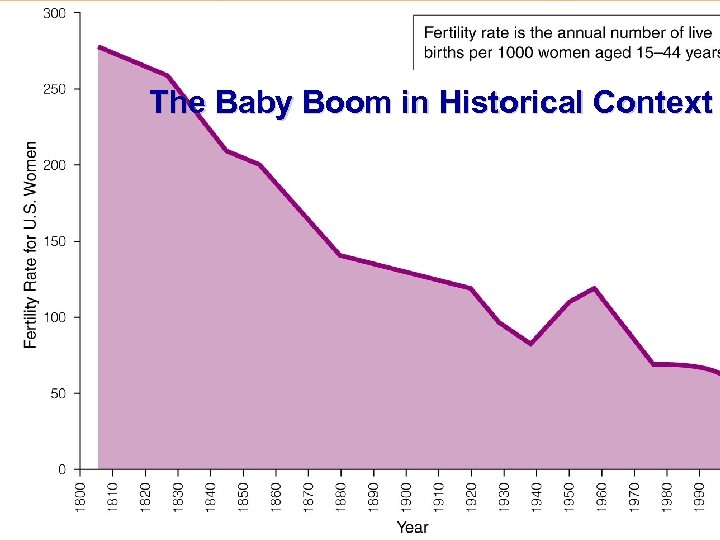 The Baby Boom in Historical Context
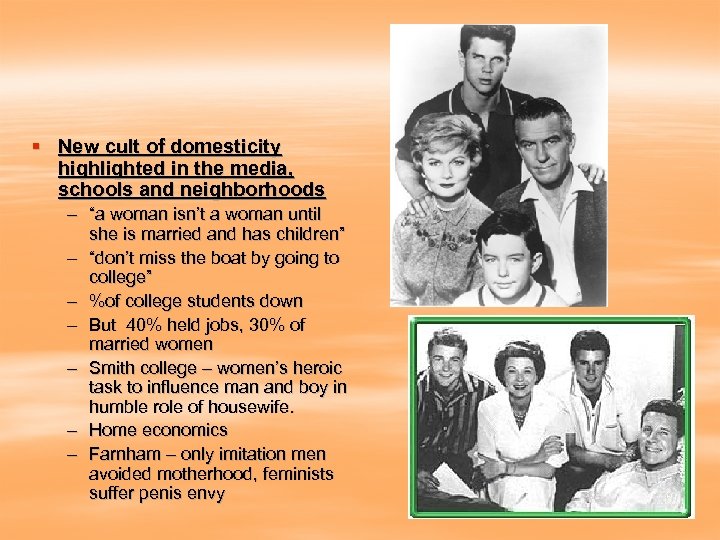 § New cult of domesticity highlighted in the media, schools and neighborhoods – “a woman isn’t a woman until she is married and has children” – “don’t miss the boat by going to college” – %of college students down – But 40% held jobs, 30% of married women – Smith college – women’s heroic task to influence man and boy in humble role of housewife. – Home economics – Farnham – only imitation men avoided motherhood, feminists suffer penis envy
 Renewed Cult of Domesticity § The ideal woman was a middle-class housewife. She was thirty-two years old, lived in the suburbs, and had gotten married at age 16. Over the course of a marriage to just one man she already given birth to four children by the time she reached that young 32. In addition to being a terrific mom and an exceptional wife she was also a miraculous manager. She did volunteer work and hosted at least twenty-four dinner parties a year. Somehow she also found the time to make many of her own clothes. But wait, the ideal housewife of 1956 did much, much more. She was an active member of the PTA and den mother for her little Boy Scout and Brownie. She helped raise money for charities and, bless her, was even planning on learning French. – Life Magazine 1956
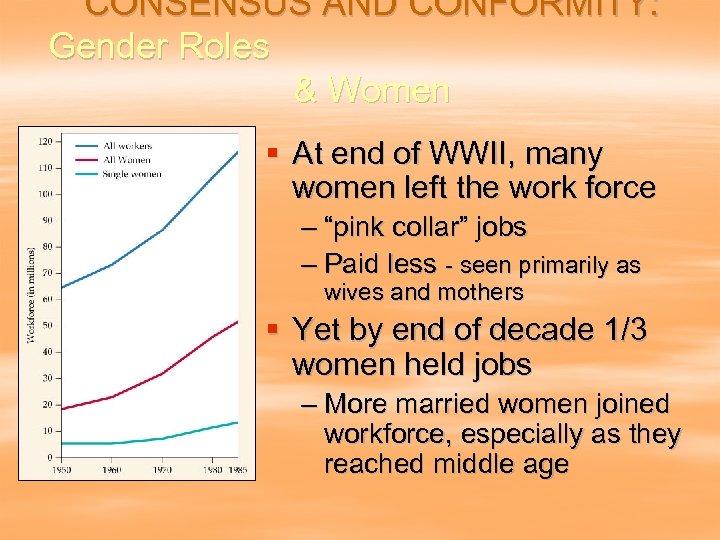 CONSENSUS AND CONFORMITY: Gender Roles & Women § At end of WWII, many women left the work force – “pink collar” jobs – Paid less - seen primarily as wives and mothers § Yet by end of decade 1/3 women held jobs – More married women joined workforce, especially as they reached middle age
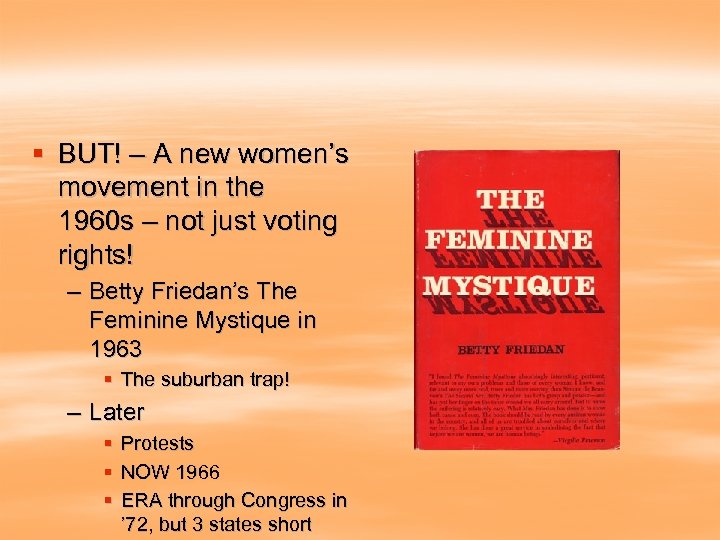 § BUT! – A new women’s movement in the 1960 s – not just voting rights! – Betty Friedan’s The Feminine Mystique in 1963 § The suburban trap! – Later § § § Protests NOW 1966 ERA through Congress in ’ 72, but 3 states short
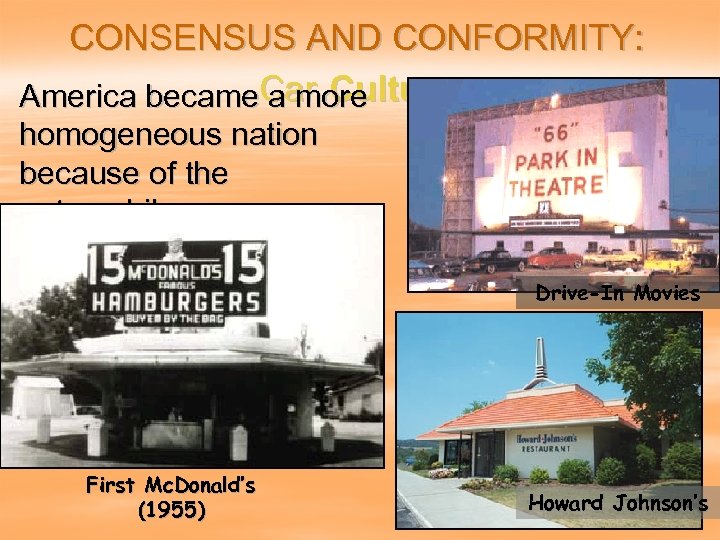 CONSENSUS AND CONFORMITY: America became. Car Culture a more homogeneous nation because of the automobile. Drive-In Movies First Mc. Donald’s (1955) Howard Johnson’s
 Television 1946 1960 7, 000 TV sets in the U. S. 50, 000 TV sets in the US Promotion of conformity Impact on politics! Mc. Carthy, Checkers Speech, Kennedy-Nixon Debates, Civil Rights! Newton Minnow, Chairman of the Federal Communications Commission, 1961 Television “a vast wastleland”
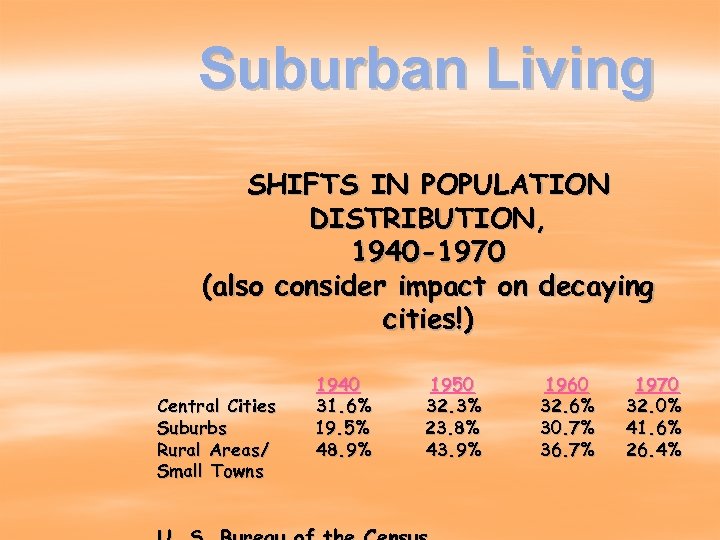 Suburban Living SHIFTS IN POPULATION DISTRIBUTION, 1940 -1970 (also consider impact on decaying cities!) Central Cities Suburbs Rural Areas/ Small Towns 1940 31. 6% 19. 5% 48. 9% 1950 32. 3% 23. 8% 43. 9% 1960 32. 6% 30. 7% 36. 7% 1970 32. 0% 41. 6% 26. 4%
 AN AFFLUENT SOCIETY: Growth of Suburbs REASONS FOR THE GROWTH OF SUBURBS § Growth of families (“baby boom”) § Home-ownership became more affordable – Low-interest mortgage loans § gov’t-backed & interest tax-deductable – Mass-produced subdivisions § Expressways – facilitated commuting § Decline in inner city housing stock § Also: congestion, pollution § Race – “white flight”
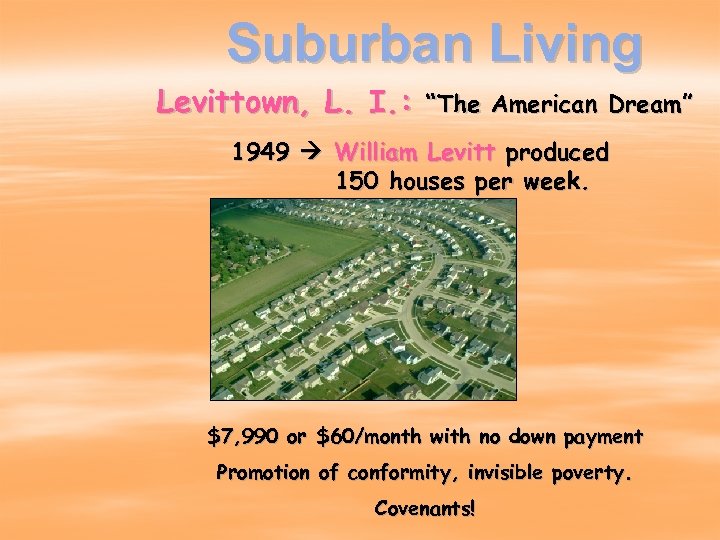 Suburban Living Levittown, L. I. : “The American Dream” 1949 William Levitt produced 150 houses per week. $7, 990 or $60/month with no down payment Promotion of conformity, invisible poverty. Covenants!
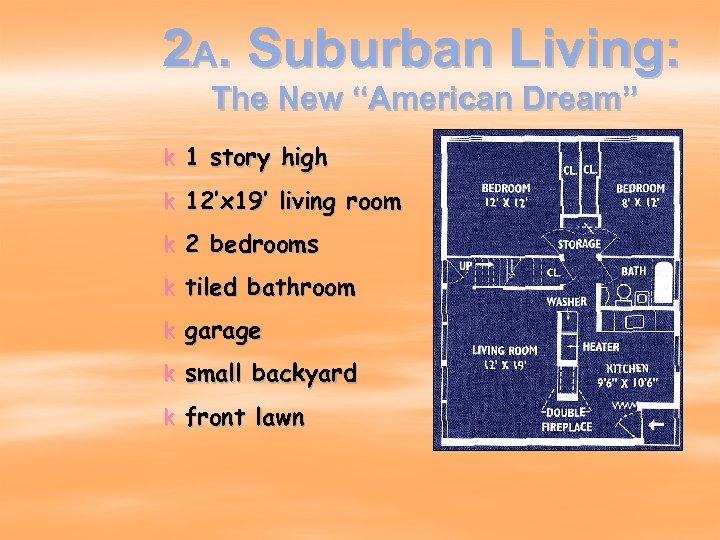 2 A. Suburban Living: The New “American Dream” k 1 story high k 12’x 19’ living room k 2 bedrooms k tiled bathroom k garage k small backyard k front lawn
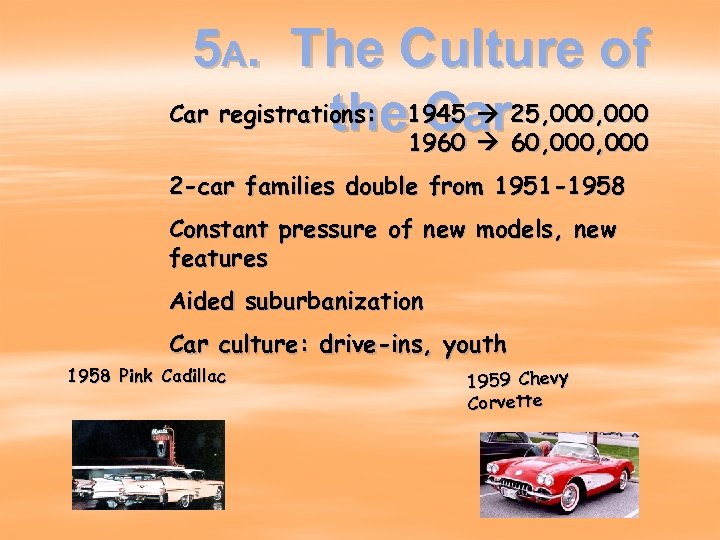 5 A. The Culture of Car registrations: 1945 25, 000 the 1960 60, 000 Car 2 -car families double from 1951 -1958 Constant pressure of new models, new features Aided suburbanization Car culture: drive-ins, youth 1958 Pink Cadillac 1959 Chevy Corvette
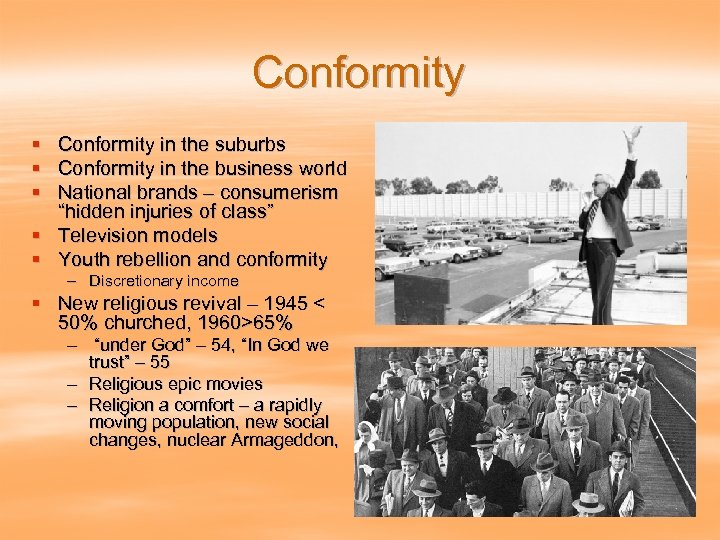 Conformity § Conformity in the suburbs § Conformity in the business world § National brands – consumerism “hidden injuries of class” § Television models § Youth rebellion and conformity – Discretionary income § New religious revival – 1945 < 50% churched, 1960>65% – “under God” – 54, “In God we trust” – 55 – Religious epic movies – Religion a comfort – a rapidly moving population, new social changes, nuclear Armageddon,
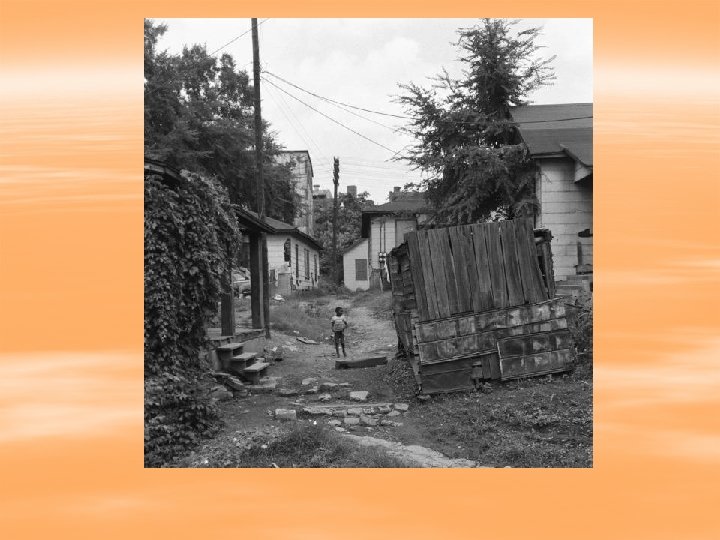
 Other Americas… increasingly hidden! “The entire invisible land of the other Americans became a ghetto, a modern poor farm for the rejects of society and the economy. ” Michael Harrington
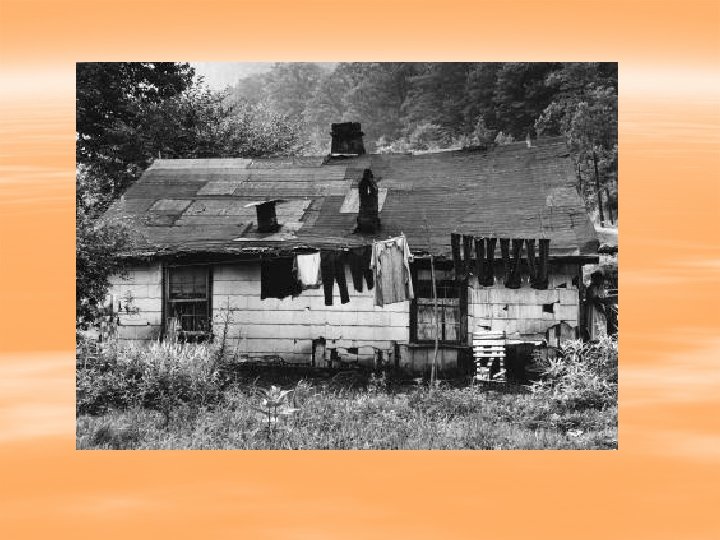
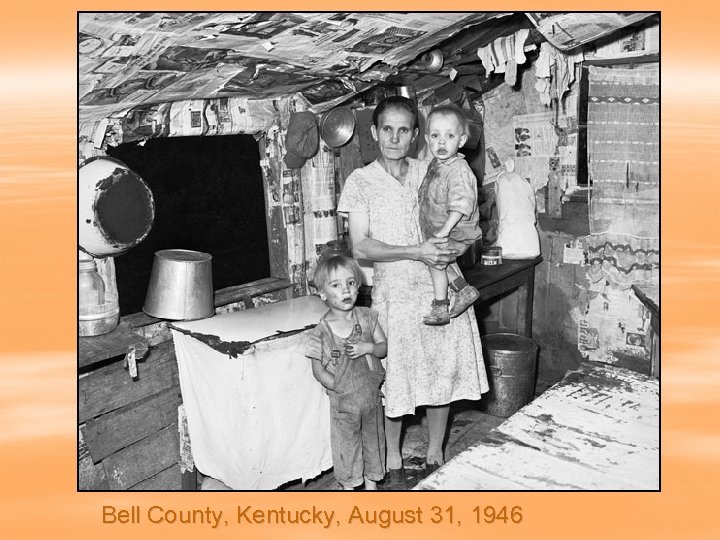 Bell County, Kentucky, August 31, 1946
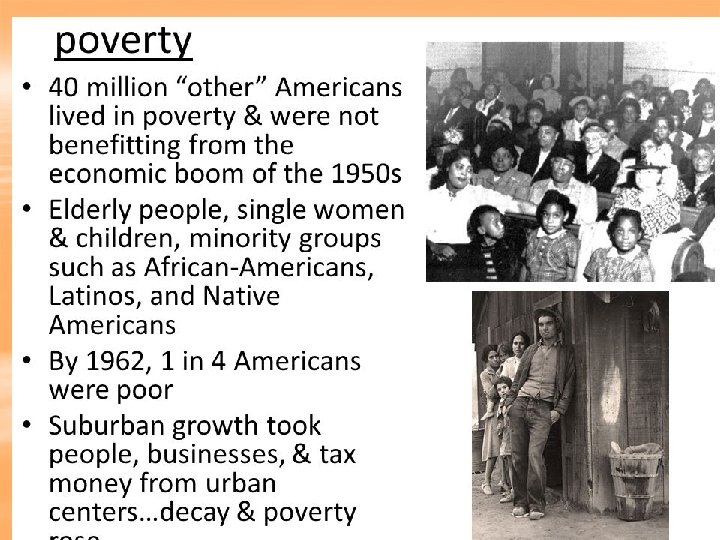
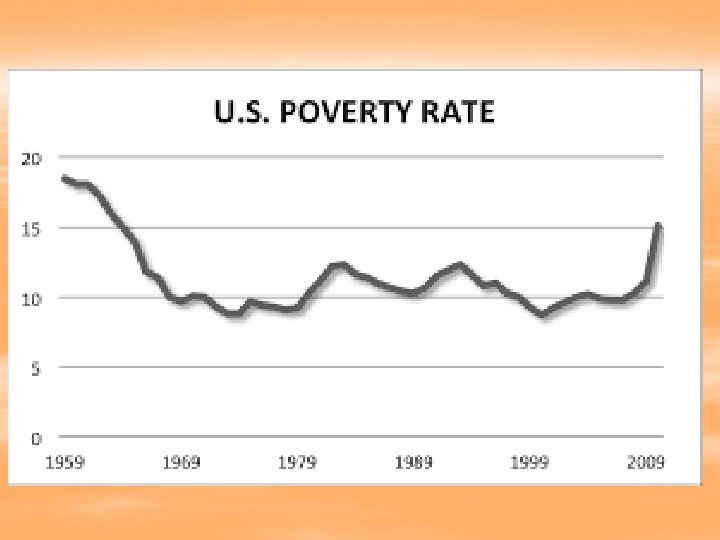
 Cracks in the Picture Window § Poverty § – ¼ below poverty line – Concentration of poverty § African Americans § Critics – like Thoreau? § John Keats: suburbia = “homogenous postwar hell” § David Riesman The Lonely Crowd: Americans no longer inner directed but other directed. Corporate culture stressed winning friends and fitting in, rather than independence § JK Gailbraith _ private opulence and public squalor § For literally nothing down—other than a simple two percent and a promise to pay, and pay until the end of your life—you too, like a man I'm going to call John Drone, can find a box of your own in one of the fresh-air slums we're building around the edges of America's cities. whole square miles of identical boxes are spreading like gangrene … In any one of these new neighborhoods, be it in Hartford or Philadelphia, you can be certain all other houses will be precisely like yours, inhabited by people who age, income, number of children, problems, habits, conversation, dress, possessions and perhaps even blood type are also precisely like yours.
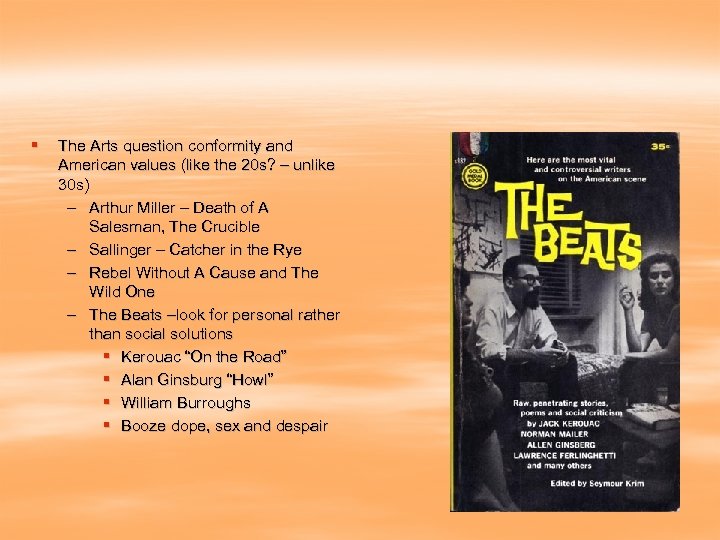 § The Arts question conformity and American values (like the 20 s? – unlike 30 s) – Arthur Miller – Death of A Salesman, The Crucible – Sallinger – Catcher in the Rye – Rebel Without A Cause and The Wild One – The Beats –look for personal rather than social solutions § Kerouac “On the Road” § Alan Ginsburg “Howl” § William Burroughs § Booze dope, sex and despair
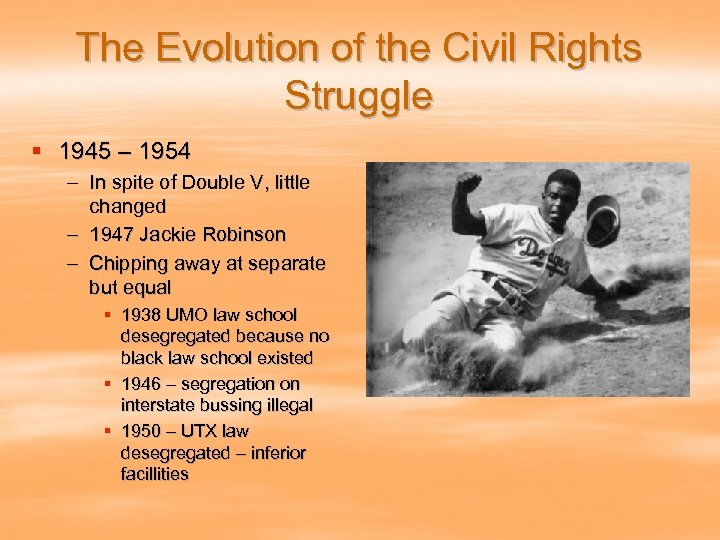 The Evolution of the Civil Rights Struggle § 1945 – 1954 – In spite of Double V, little changed – 1947 Jackie Robinson – Chipping away at separate but equal § 1938 UMO law school desegregated because no black law school existed § 1946 – segregation on interstate bussing illegal § 1950 – UTX law desegregated – inferior facillities
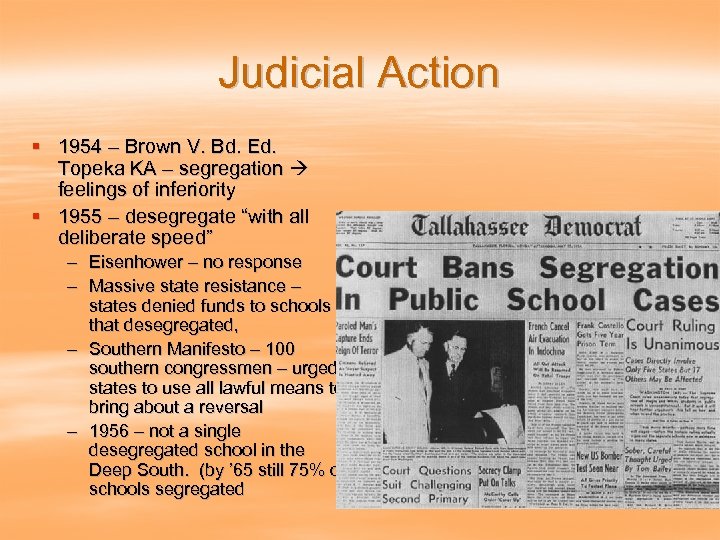 Judicial Action § 1954 – Brown V. Bd. Ed. Topeka KA – segregation feelings of inferiority § 1955 – desegregate “with all deliberate speed” – Eisenhower – no response – Massive state resistance – states denied funds to schools that desegregated, – Southern Manifesto – 100 southern congressmen – urged states to use all lawful means to bring about a reversal – 1956 – not a single desegregated school in the Deep South. (by ’ 65 still 75% of schools segregated
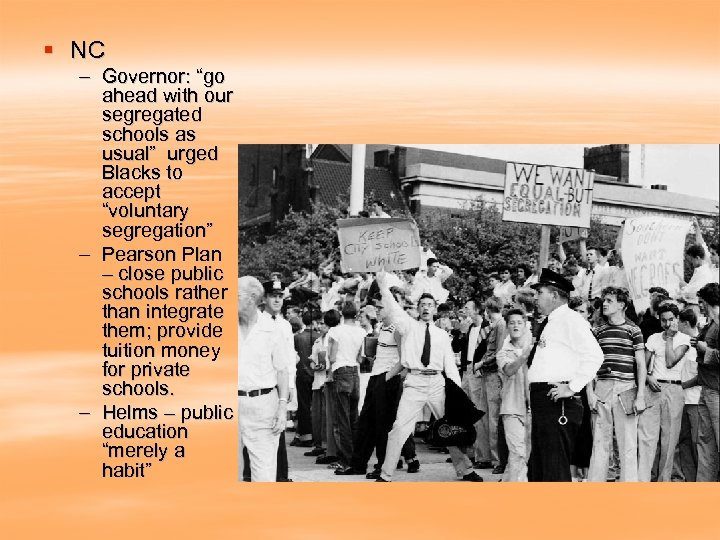 § NC – Governor: “go ahead with our segregated schools as usual” urged Blacks to accept “voluntary segregation” – Pearson Plan – close public schools rather than integrate them; provide tuition money for private schools. – Helms – public education “merely a habit”
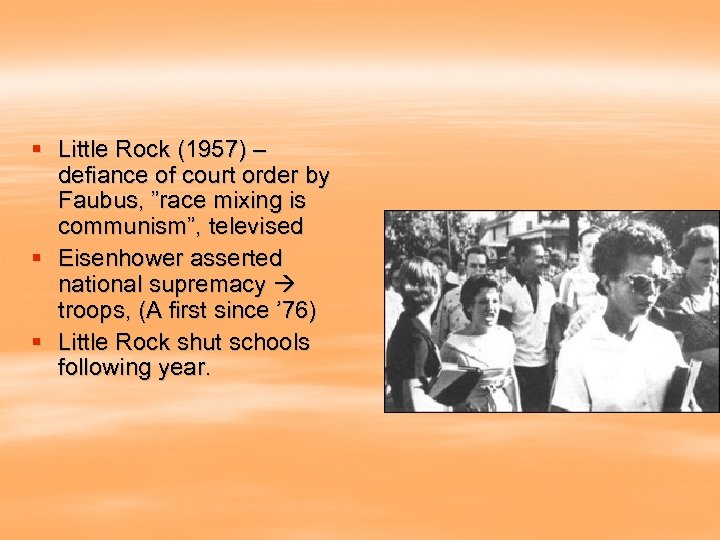 § Little Rock (1957) – defiance of court order by Faubus, ”race mixing is communism”, televised § Eisenhower asserted national supremacy troops, (A first since ’ 76) § Little Rock shut schools following year.
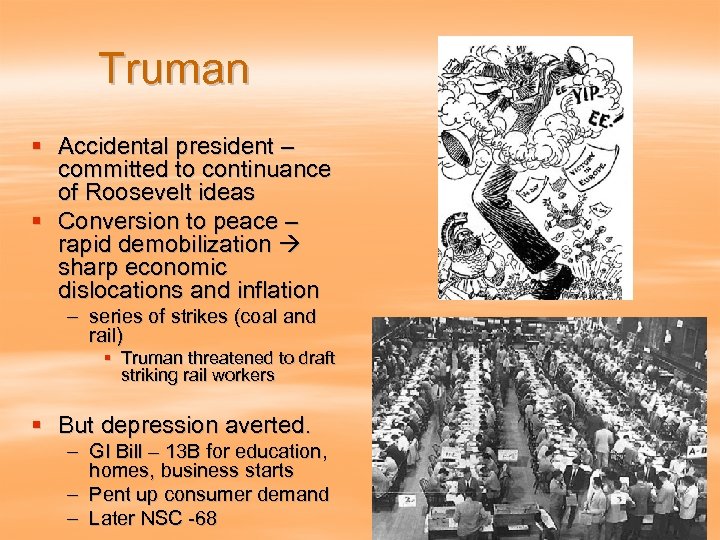 Truman § Accidental president – committed to continuance of Roosevelt ideas § Conversion to peace – rapid demobilization sharp economic dislocations and inflation – series of strikes (coal and rail) § Truman threatened to draft striking rail workers § But depression averted. – GI Bill – 13 B for education, homes, business starts – Pent up consumer demand – Later NSC -68
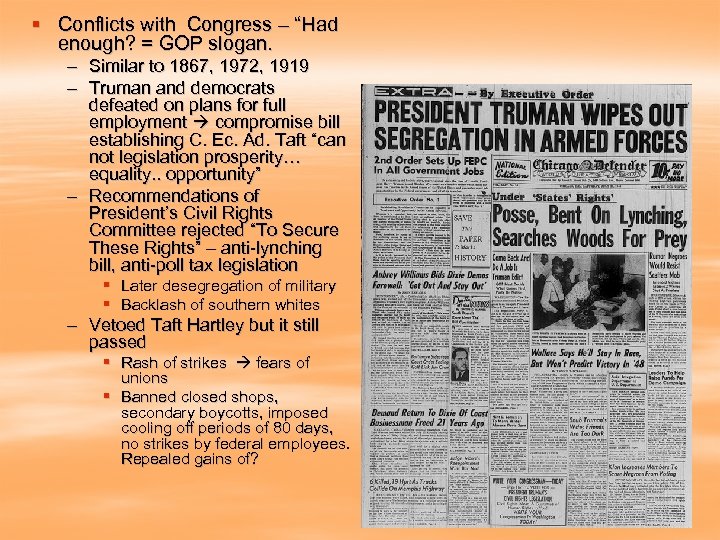 § Conflicts with Congress – “Had enough? = GOP slogan. – Similar to 1867, 1972, 1919 – Truman and democrats defeated on plans for full employment compromise bill establishing C. Ec. Ad. Taft “can not legislation prosperity… equality. . opportunity” – Recommendations of President’s Civil Rights Committee rejected “To Secure These Rights” – anti-lynching bill, anti-poll tax legislation § Later desegregation of military § Backlash of southern whites – Vetoed Taft Hartley but it still passed § Rash of strikes fears of unions § Banned closed shops, secondary boycotts, imposed cooling off periods of 80 days, no strikes by federal employees. Repealed gains of?
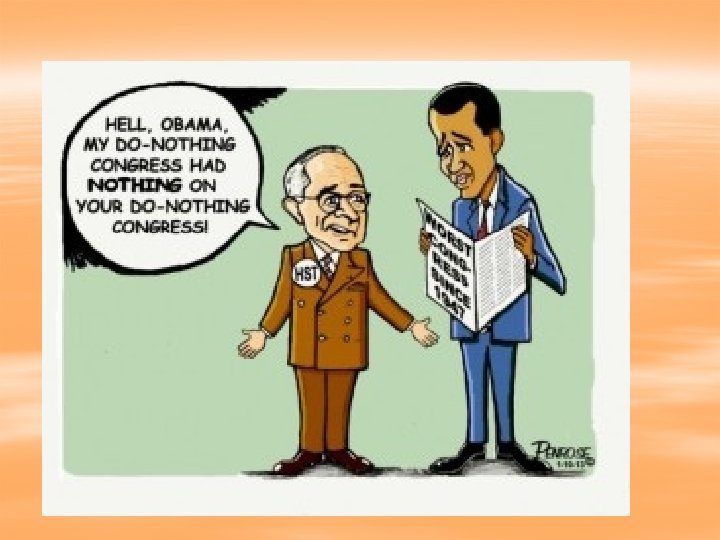
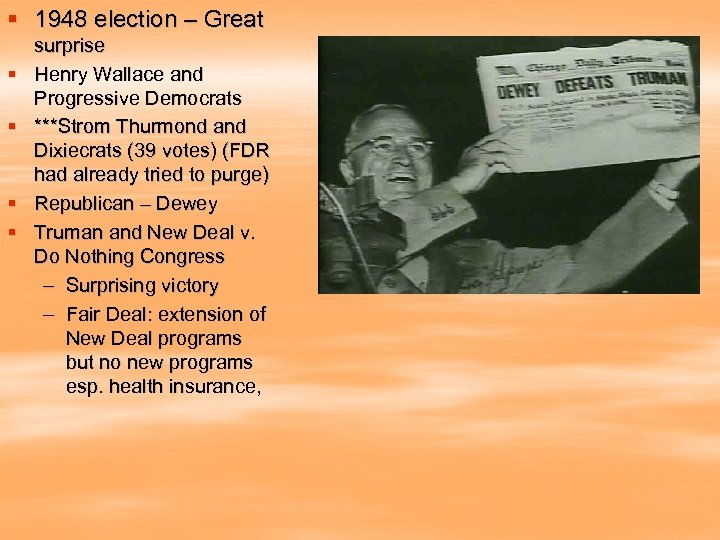 § 1948 election – Great § § surprise Henry Wallace and Progressive Democrats ***Strom Thurmond and Dixiecrats (39 votes) (FDR had already tried to purge) Republican – Dewey Truman and New Deal v. Do Nothing Congress – Surprising victory – Fair Deal: extension of New Deal programs but no new programs esp. health insurance,
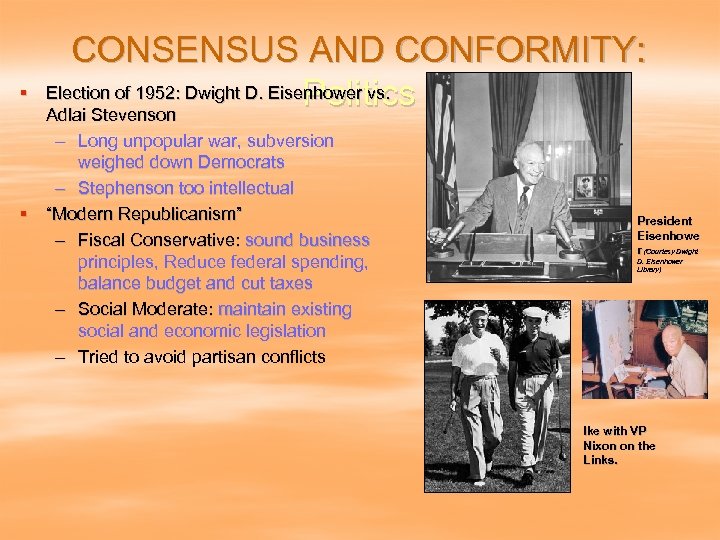 § CONSENSUS AND CONFORMITY: Election of 1952: Dwight D. Eisenhower vs. Politics Adlai Stevenson – Long unpopular war, subversion weighed down Democrats – Stephenson too intellectual § “Modern Republicanism” – Fiscal Conservative: sound business principles, Reduce federal spending, balance budget and cut taxes – Social Moderate: maintain existing social and economic legislation – Tried to avoid partisan conflicts President Eisenhowe r (Courtesy Dwight D. Eisenhower Library) Ike with VP Nixon on the Links.
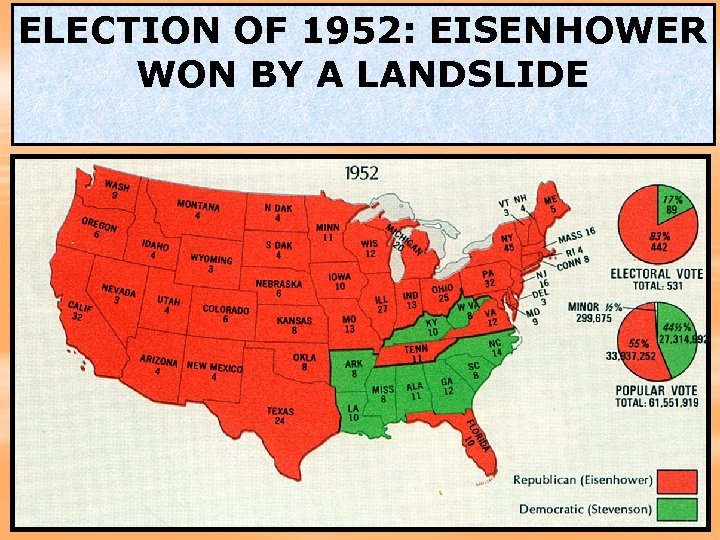 ELECTION OF 1952: EISENHOWER WON BY A LANDSLIDE 58
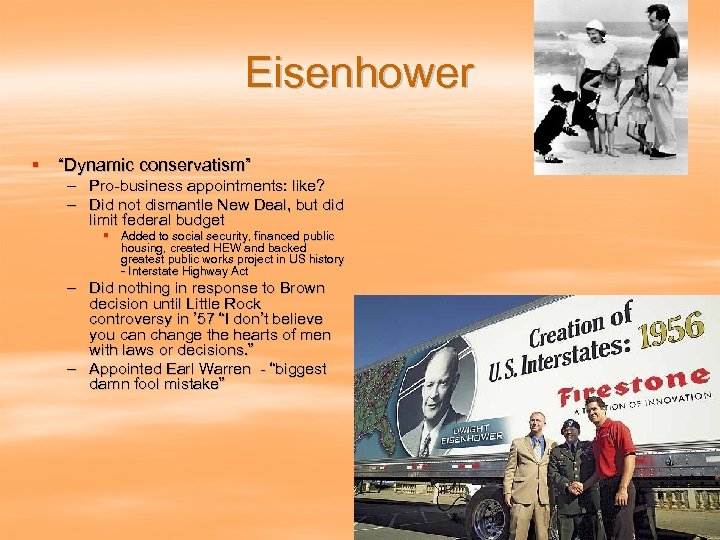 Eisenhower § “Dynamic conservatism” – Pro-business appointments: like? – Did not dismantle New Deal, but did limit federal budget § Added to social security, financed public housing, created HEW and backed greatest public works project in US history - Interstate Highway Act – Did nothing in response to Brown decision until Little Rock controversy in ’ 57 “I don’t believe you can change the hearts of men with laws or decisions. ” – Appointed Earl Warren - “biggest damn fool mistake”
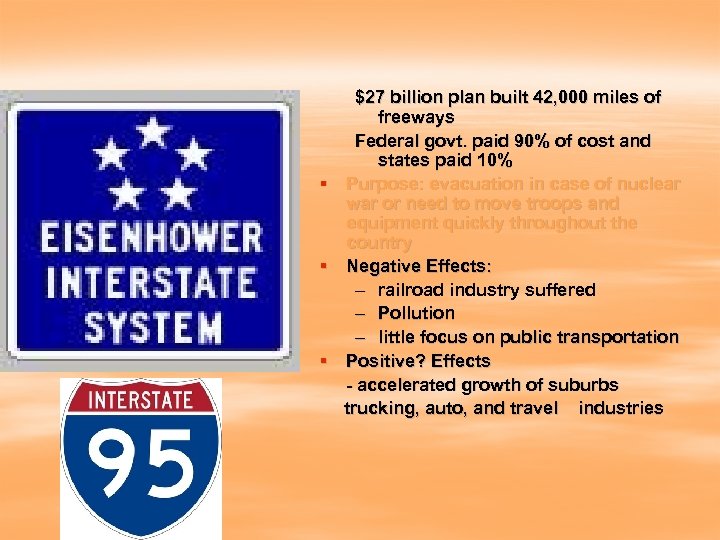 § § § $27 billion plan built 42, 000 miles of freeways Federal govt. paid 90% of cost and states paid 10% Purpose: evacuation in case of nuclear war or need to move troops and equipment quickly throughout the country Negative Effects: – railroad industry suffered – Pollution – little focus on public transportation Positive? Effects - accelerated growth of suburbs trucking, auto, and travel industries
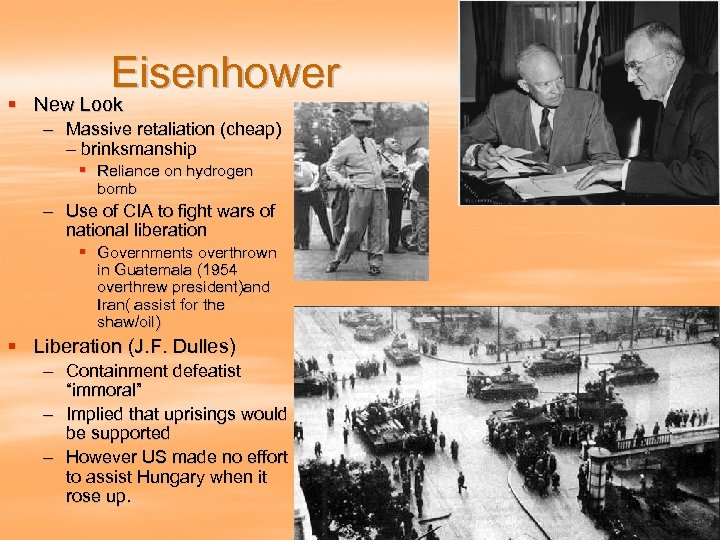 Eisenhower § New Look – Massive retaliation (cheap) – brinksmanship § Reliance on hydrogen bomb – Use of CIA to fight wars of national liberation § Governments overthrown in Guatemala (1954 overthrew president)and Iran( assist for the shaw/oil) § Liberation (J. F. Dulles) – Containment defeatist “immoral” – Implied that uprisings would be supported – However US made no effort to assist Hungary when it rose up.
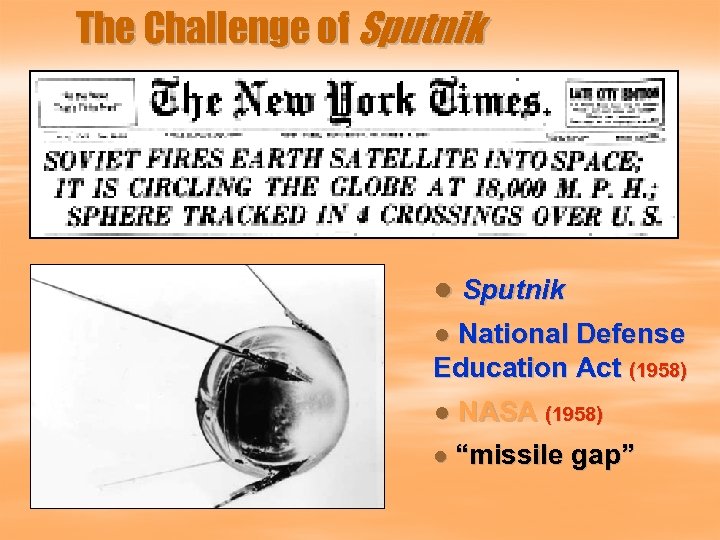 The Challenge of Sputnik ● National Defense Education Act (1958) ● NASA (1958) ● “missile gap”
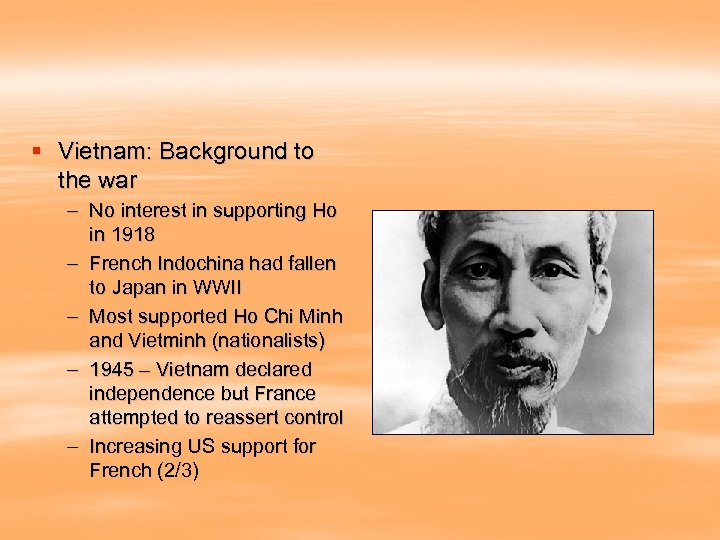 § Vietnam: Background to the war – No interest in supporting Ho in 1918 – French Indochina had fallen to Japan in WWII – Most supported Ho Chi Minh and Vietminh (nationalists) – 1945 – Vietnam declared independence but France attempted to reassert control – Increasing US support for French (2/3)
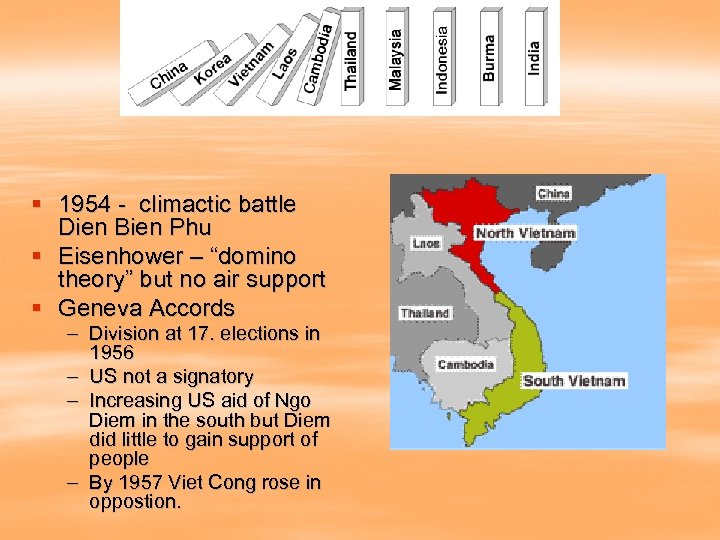 § 1954 - climactic battle Dien Bien Phu § Eisenhower – “domino theory” but no air support § Geneva Accords – Division at 17. elections in 1956 – US not a signatory – Increasing US aid of Ngo Diem in the south but Diem did little to gain support of people – By 1957 Viet Cong rose in oppostion.
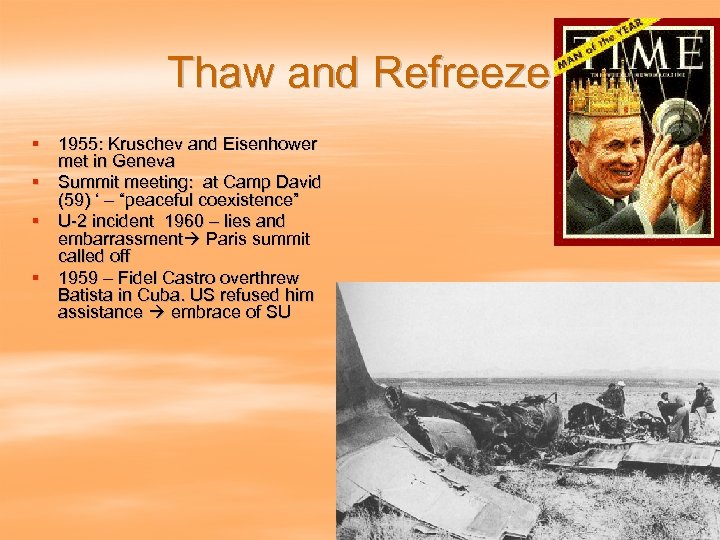 Thaw and Refreeze § 1955: Kruschev and Eisenhower met in Geneva § Summit meeting: at Camp David (59) ‘ – “peaceful coexistence” § U-2 incident 1960 – lies and embarrassment Paris summit called off § 1959 – Fidel Castro overthrew Batista in Cuba. US refused him assistance embrace of SU
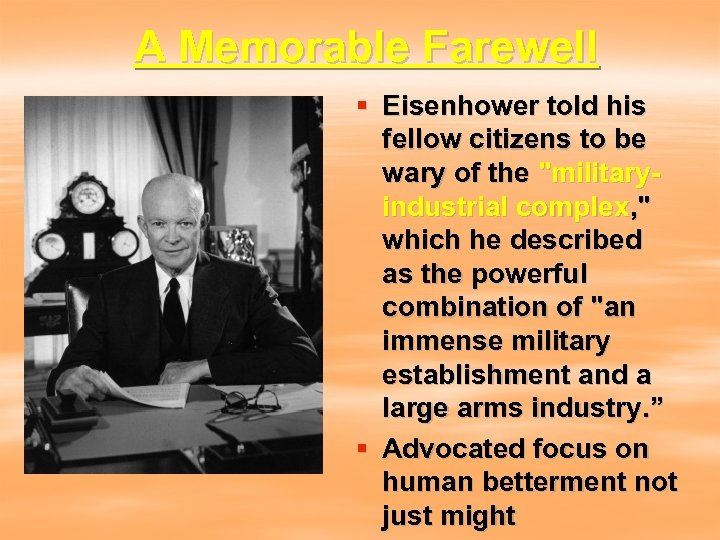 A Memorable Farewell § Eisenhower told his fellow citizens to be wary of the "militaryindustrial complex, " which he described as the powerful combination of "an immense military establishment and a large arms industry. ” § Advocated focus on human betterment not just might