 Скачать презентацию THE CLIMAX OF THE GREAT WAR November 1917
be89abe7203f735a745ee4e5a6cc2768.ppt
- Количество слайдов: 36



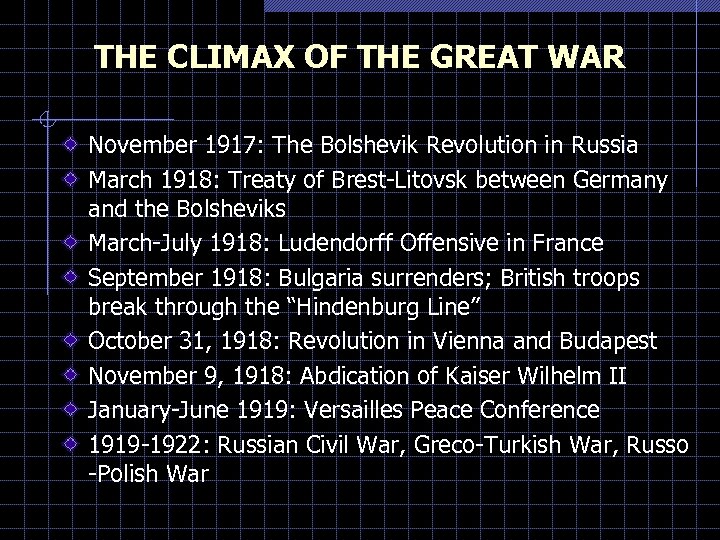
THE CLIMAX OF THE GREAT WAR November 1917: The Bolshevik Revolution in Russia March 1918: Treaty of Brest-Litovsk between Germany and the Bolsheviks March-July 1918: Ludendorff Offensive in France September 1918: Bulgaria surrenders; British troops break through the “Hindenburg Line” October 31, 1918: Revolution in Vienna and Budapest November 9, 1918: Abdication of Kaiser Wilhelm II January-June 1919: Versailles Peace Conference 1919 -1922: Russian Civil War, Greco-Turkish War, Russo -Polish War
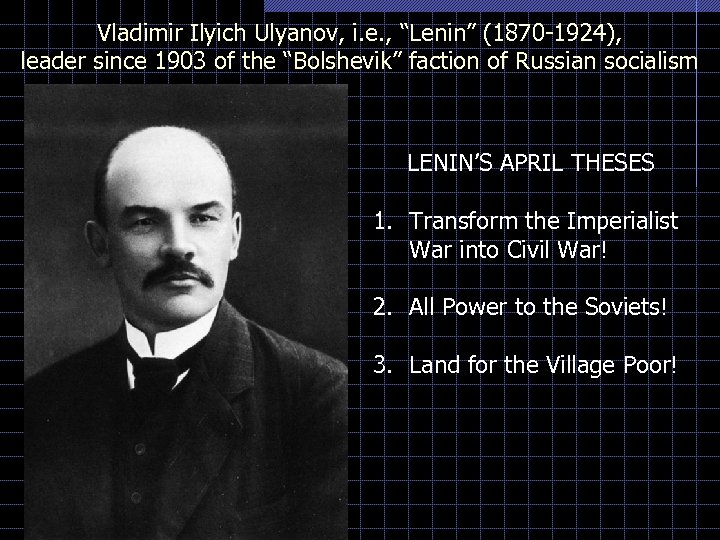
Vladimir Ilyich Ulyanov, i. e. , “Lenin” (1870 -1924), leader since 1903 of the “Bolshevik” faction of Russian socialism LENIN’S APRIL THESES 1. Transform the Imperialist War into Civil War! 2. All Power to the Soviets! 3. Land for the Village Poor!
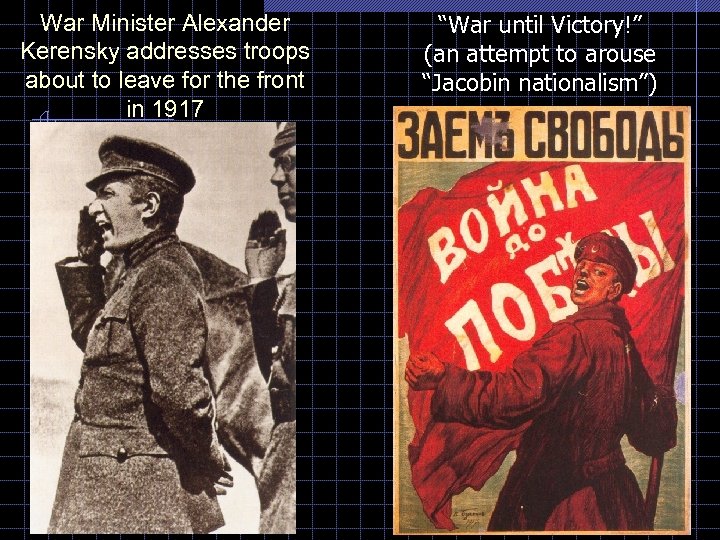
War Minister Alexander Kerensky addresses troops about to leave for the front in 1917 “War until Victory!” (an attempt to arouse “Jacobin nationalism”)
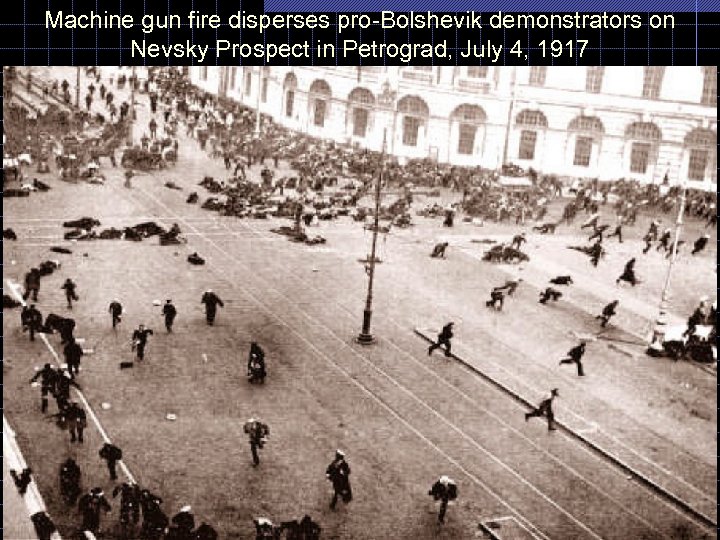
Machine gun fire disperses pro-Bolshevik demonstrators on Nevsky Prospect in Petrograd, July 4, 1917
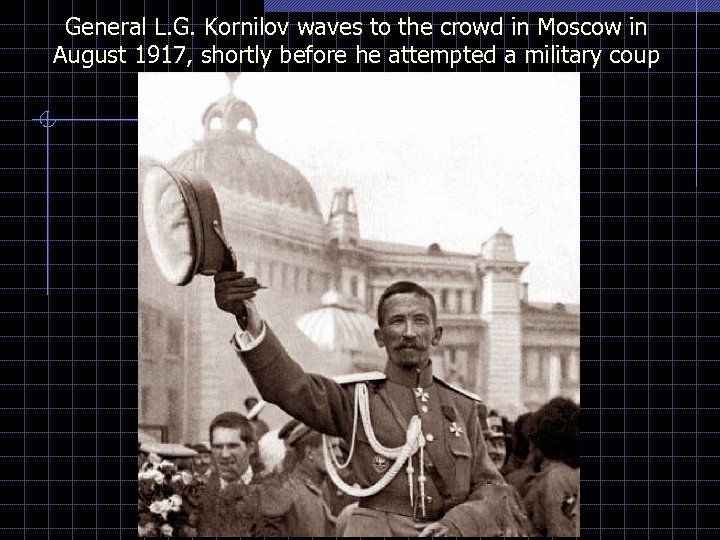
General L. G. Kornilov waves to the crowd in Moscow in August 1917, shortly before he attempted a military coup
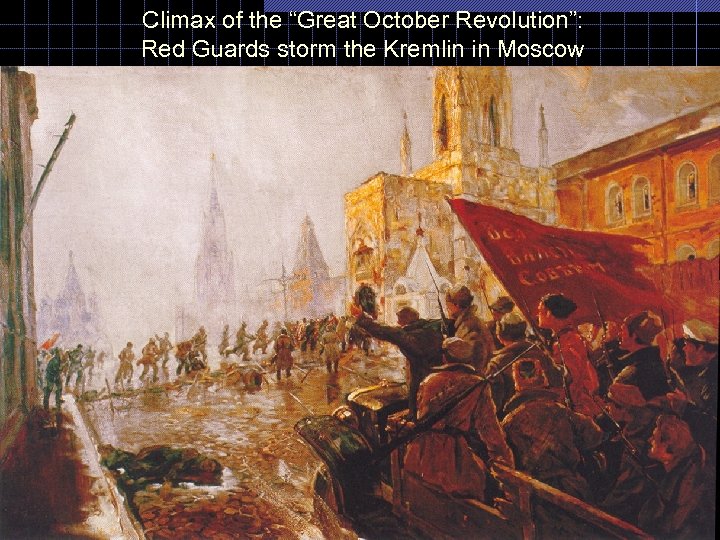
Climax of the “Great October Revolution”: Red Guards storm the Kremlin in Moscow
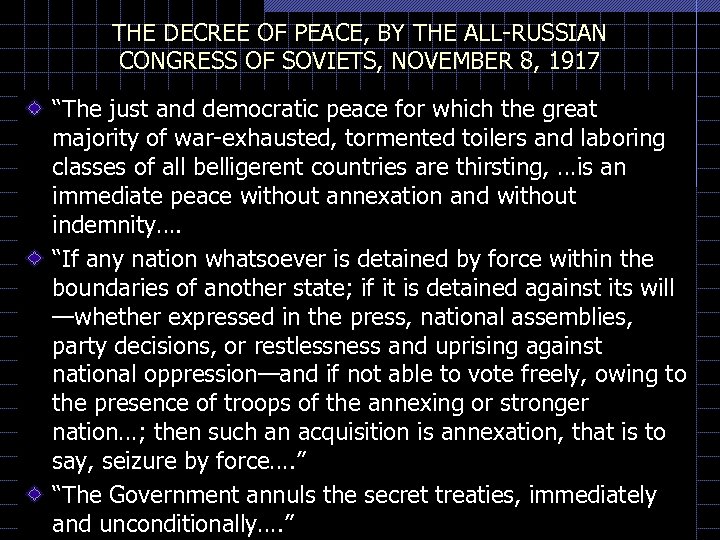
THE DECREE OF PEACE, BY THE ALL-RUSSIAN CONGRESS OF SOVIETS, NOVEMBER 8, 1917 “The just and democratic peace for which the great majority of war-exhausted, tormented toilers and laboring classes of all belligerent countries are thirsting, …is an immediate peace without annexation and without indemnity…. “If any nation whatsoever is detained by force within the boundaries of another state; if it is detained against its will —whether expressed in the press, national assemblies, party decisions, or restlessness and uprising against national oppression—and if not able to vote freely, owing to the presence of troops of the annexing or stronger nation…; then such an acquisition is annexation, that is to say, seizure by force…. ” “The Government annuls the secret treaties, immediately and unconditionally…. ”
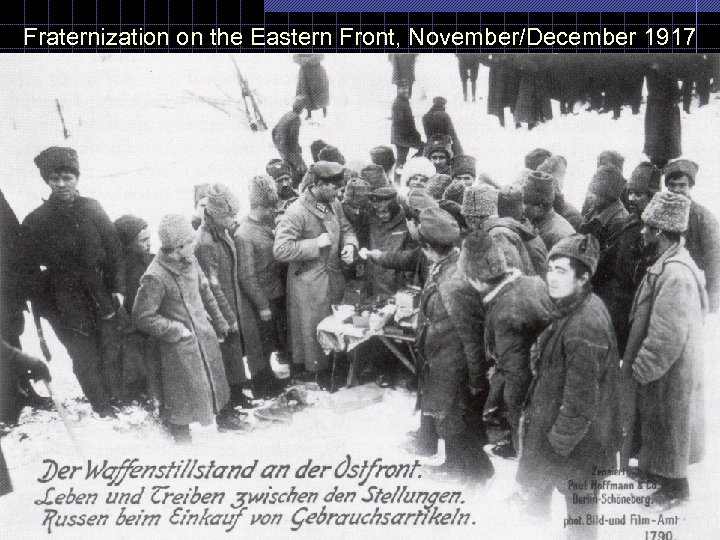
Fraternization on the Eastern Front, November/December 1917
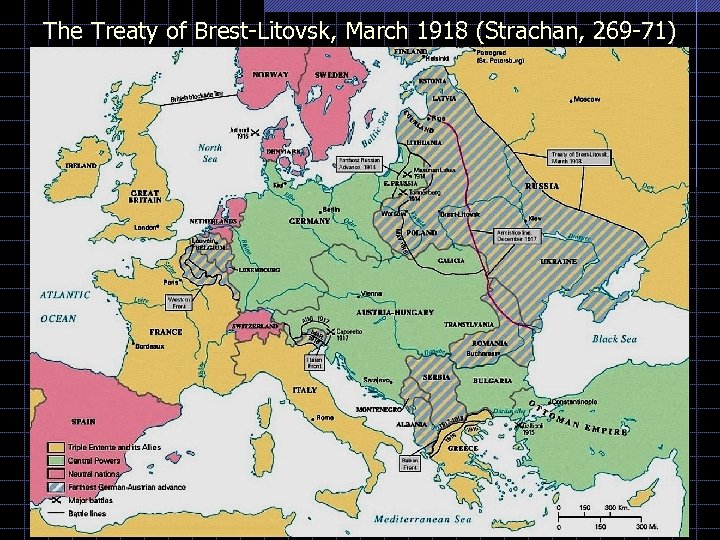
The Treaty of Brest-Litovsk, March 1918 (Strachan, 269 -71)
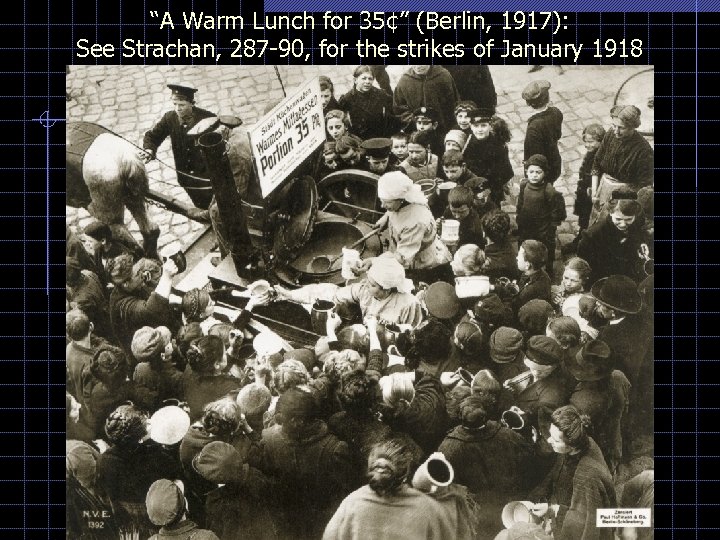
“A Warm Lunch for 35¢” (Berlin, 1917): See Strachan, 287 -90, for the strikes of January 1918
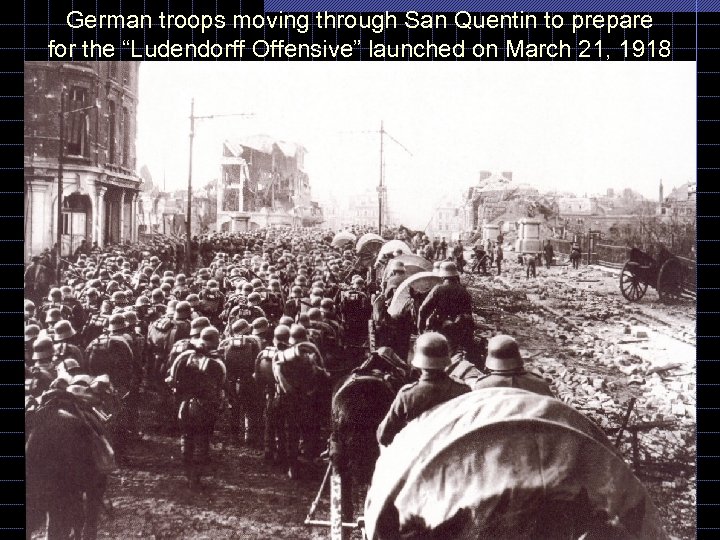
German troops moving through San Quentin to prepare for the “Ludendorff Offensive” launched on March 21, 1918
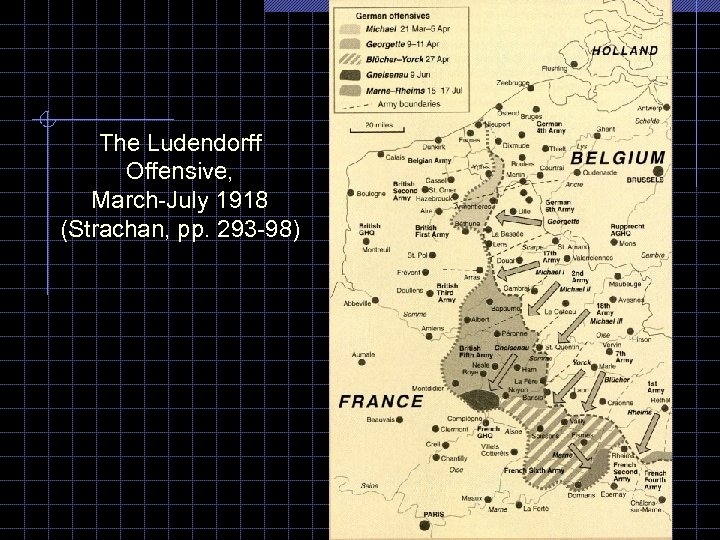
The Ludendorff Offensive, March-July 1918 (Strachan, pp. 293 -98)
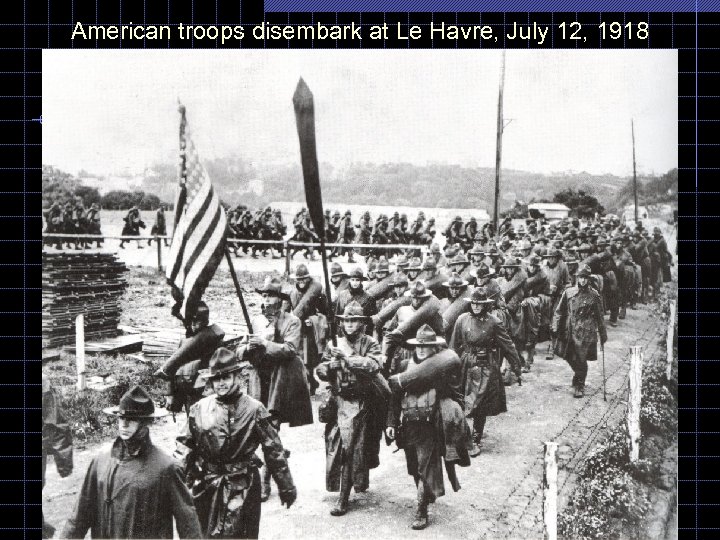
American troops disembark at Le Havre, July 12, 1918
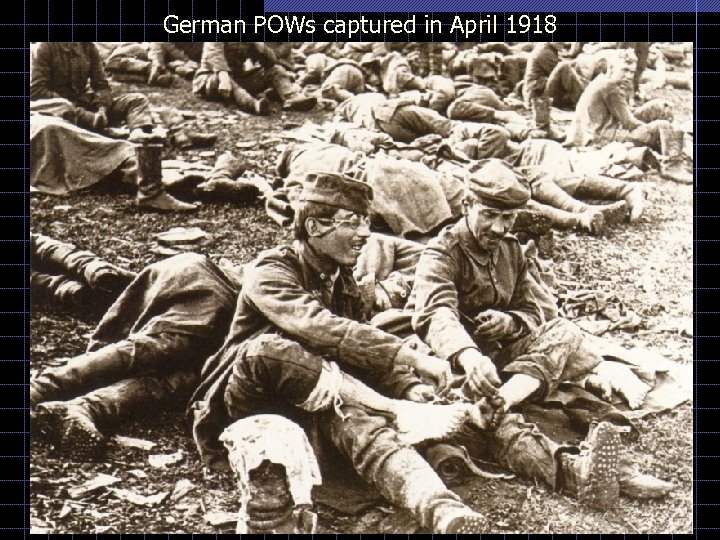
German POWs captured in April 1918
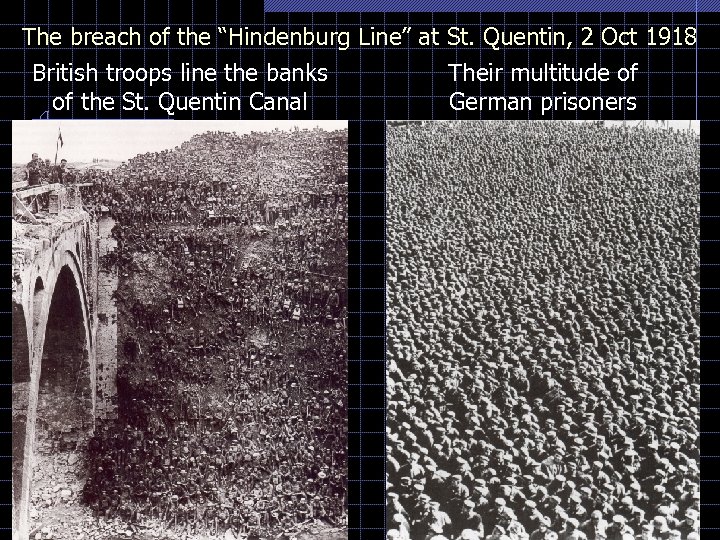
The breach of the “Hindenburg Line” at St. Quentin, 2 Oct 1918 British troops line the banks Their multitude of of the St. Quentin Canal German prisoners
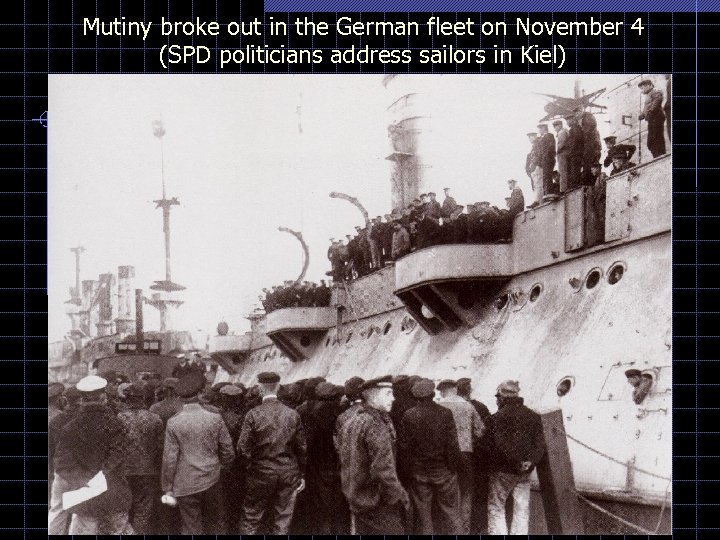
Mutiny broke out in the German fleet on November 4 (SPD politicians address sailors in Kiel)
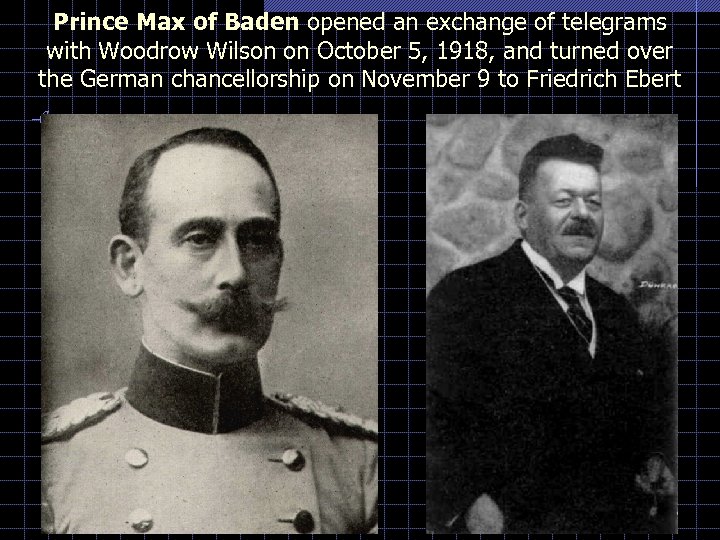
Prince Max of Baden opened an exchange of telegrams with Woodrow Wilson on October 5, 1918, and turned over the German chancellorship on November 9 to Friedrich Ebert
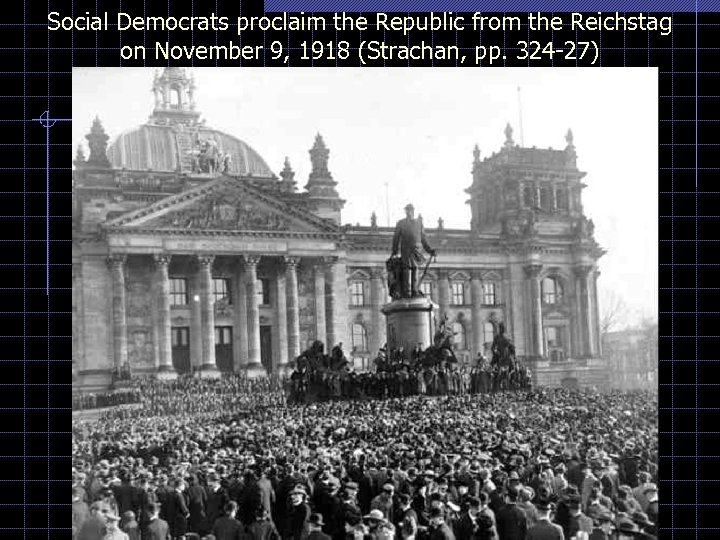
Social Democrats proclaim the Republic from the Reichstag on November 9, 1918 (Strachan, pp. 324 -27)
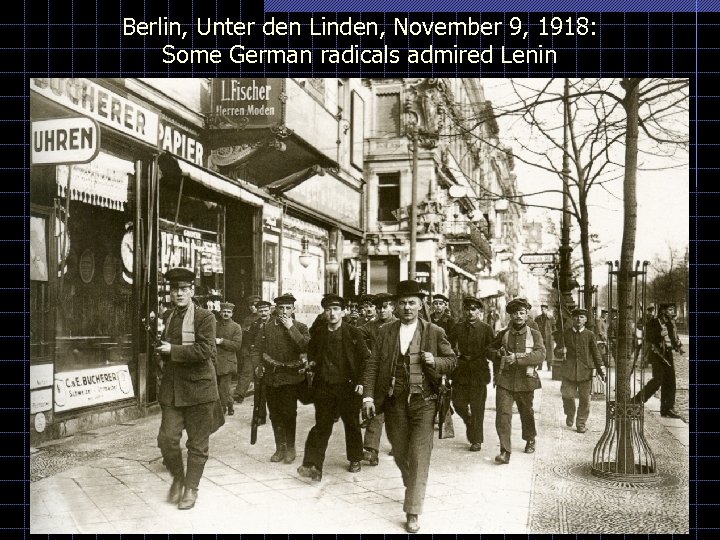
Berlin, Unter den Linden, November 9, 1918: Some German radicals admired Lenin
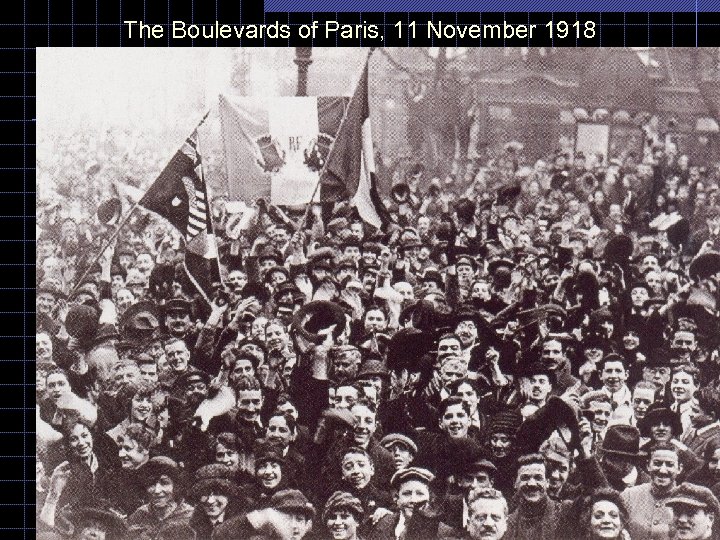
The Boulevards of Paris, 11 November 1918
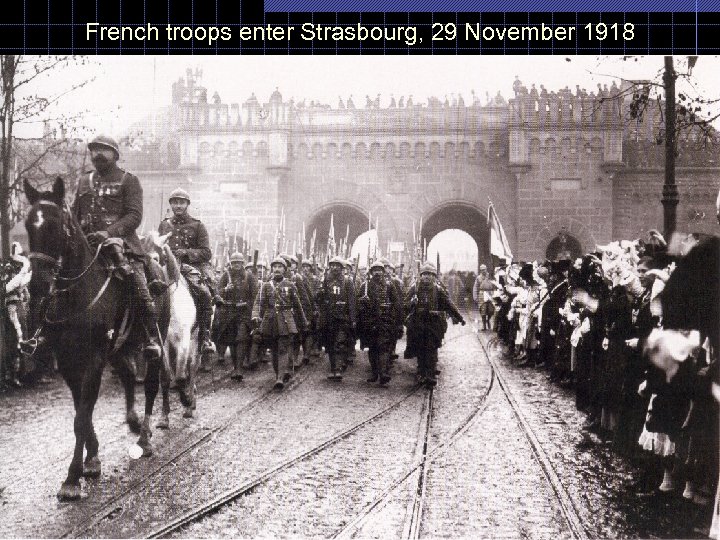
French troops enter Strasbourg, 29 November 1918
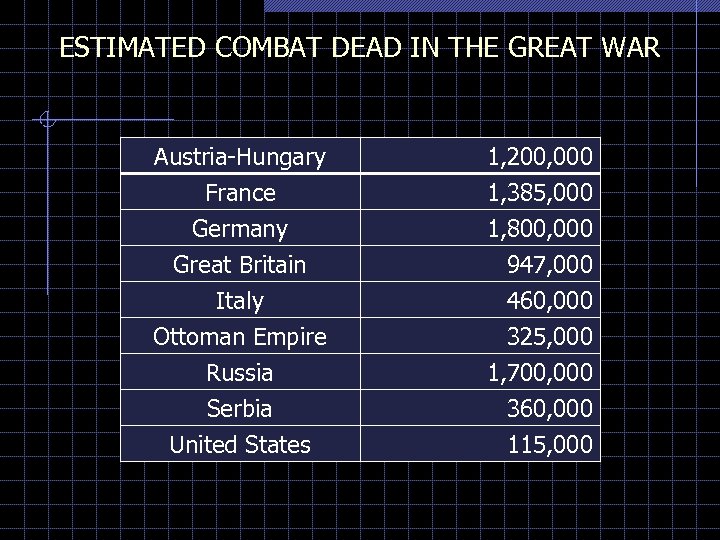
ESTIMATED COMBAT DEAD IN THE GREAT WAR Austria-Hungary France Germany Great Britain Italy Ottoman Empire Russia Serbia United States 1, 200, 000 1, 385, 000 1, 800, 000 947, 000 460, 000 325, 000 1, 700, 000 360, 000 115, 000
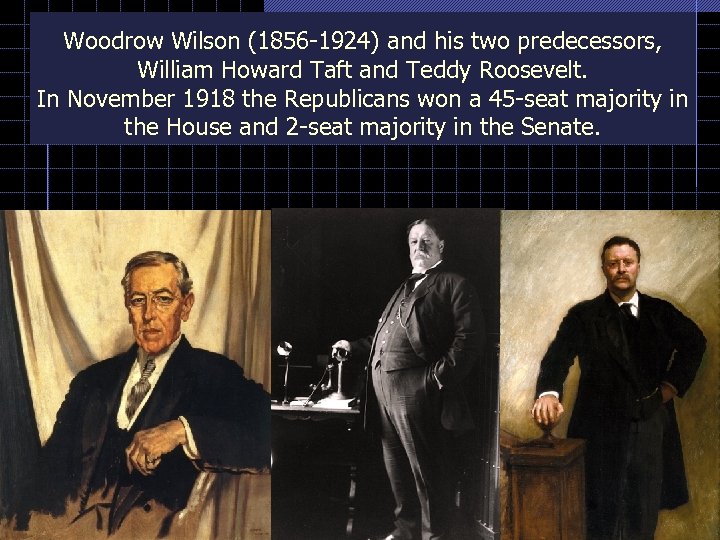
Woodrow Wilson (1856 -1924) and his two predecessors, William Howard Taft and Teddy Roosevelt. In November 1918 the Republicans won a 45 -seat majority in the House and 2 -seat majority in the Senate.
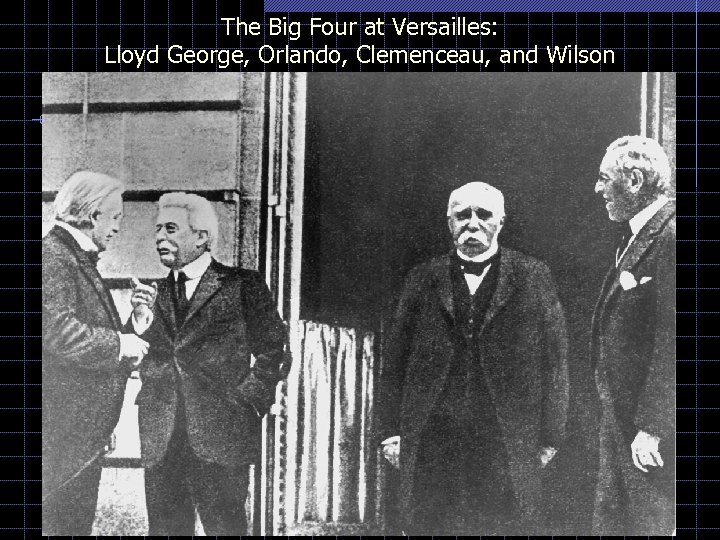
The Big Four at Versailles: Lloyd George, Orlando, Clemenceau, and Wilson
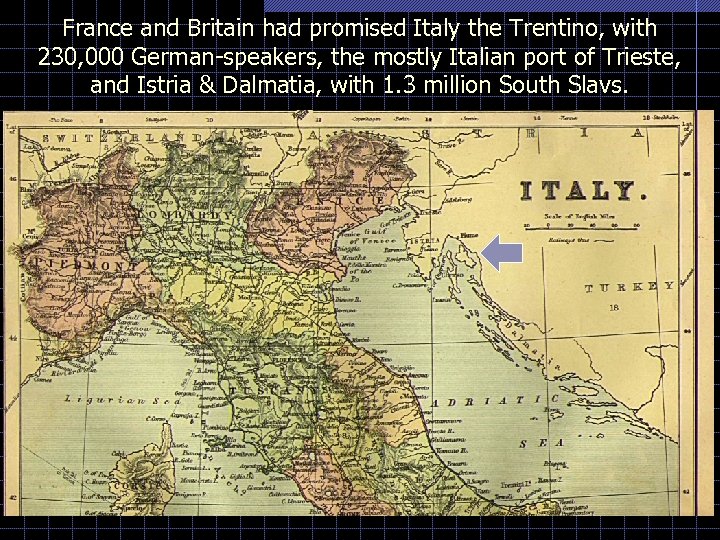
France and Britain had promised Italy the Trentino, with 230, 000 German-speakers, the mostly Italian port of Trieste, and Istria & Dalmatia, with 1. 3 million South Slavs.
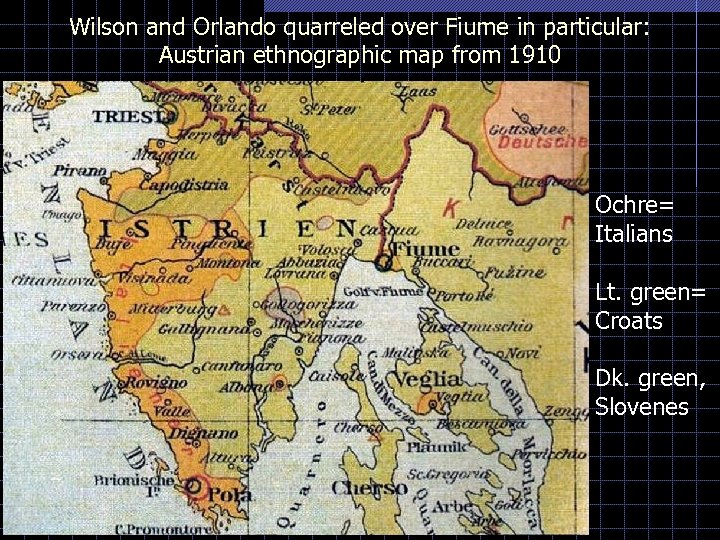
Wilson and Orlando quarreled over Fiume in particular: Austrian ethnographic map from 1910 Ochre= Italians Lt. green= Croats Dk. green, Slovenes
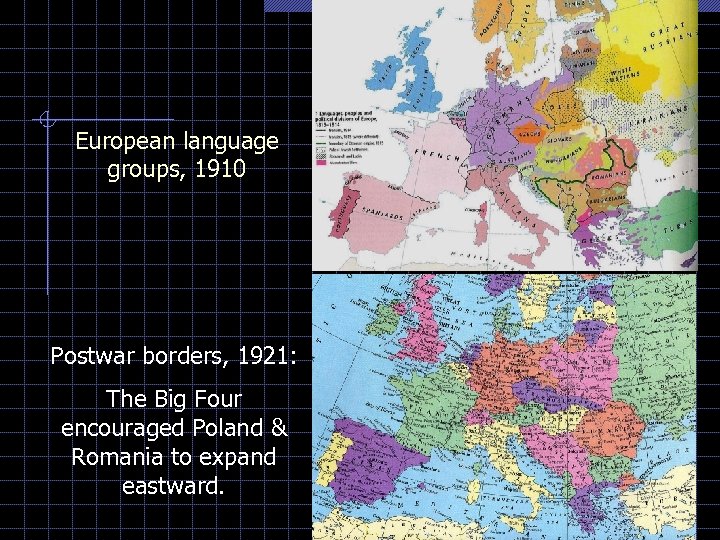
European language groups, 1910 Postwar borders, 1921: The Big Four encouraged Poland & Romania to expand eastward.
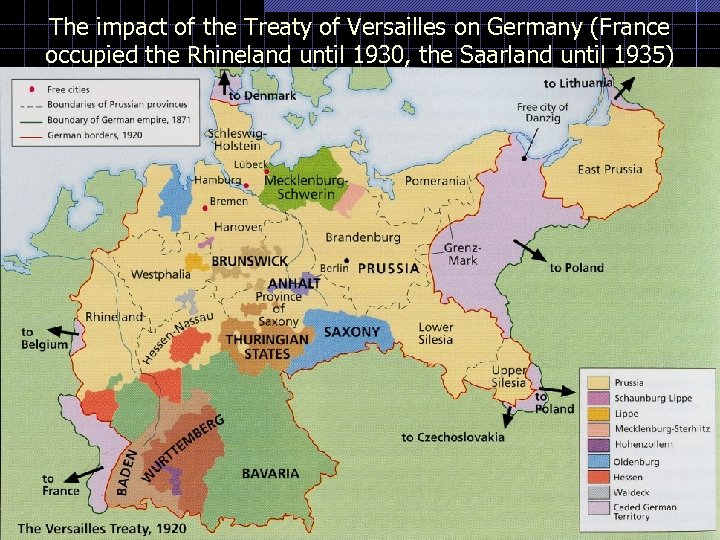
The impact of the Treaty of Versailles on Germany (France occupied the Rhineland until 1930, the Saarland until 1935)
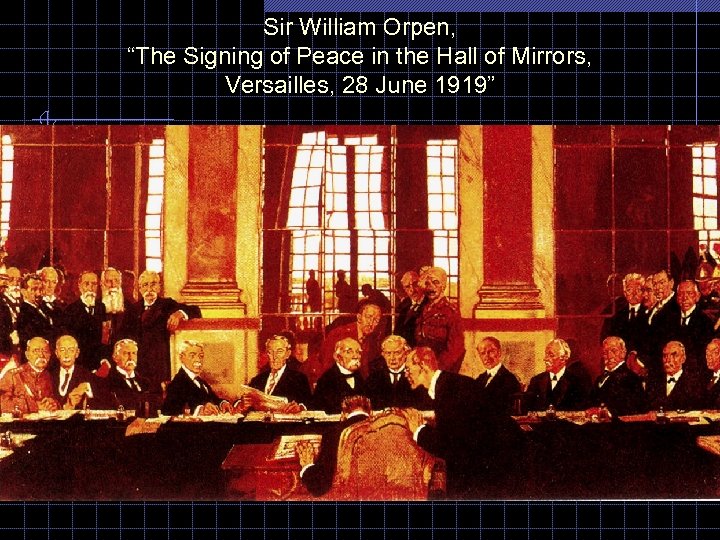
Sir William Orpen, “The Signing of Peace in the Hall of Mirrors, Versailles, 28 June 1919”
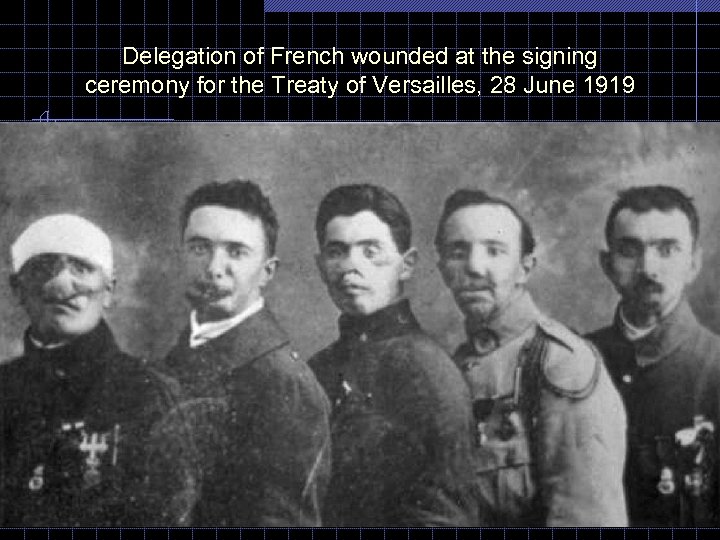
Delegation of French wounded at the signing ceremony for the Treaty of Versailles, 28 June 1919
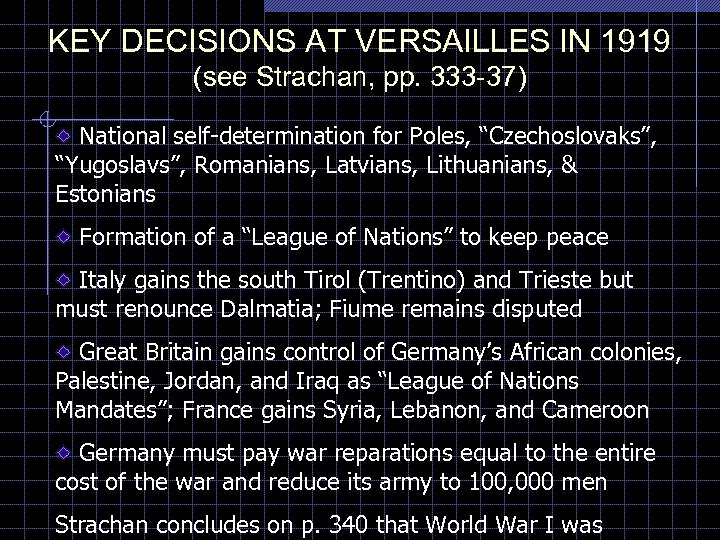
KEY DECISIONS AT VERSAILLES IN 1919 (see Strachan, pp. 333 -37) National self-determination for Poles, “Czechoslovaks”, “Yugoslavs”, Romanians, Latvians, Lithuanians, & Estonians Formation of a “League of Nations” to keep peace Italy gains the south Tirol (Trentino) and Trieste but must renounce Dalmatia; Fiume remains disputed Great Britain gains control of Germany’s African colonies, Palestine, Jordan, and Iraq as “League of Nations Mandates”; France gains Syria, Lebanon, and Cameroon Germany must pay war reparations equal to the entire cost of the war and reduce its army to 100, 000 men Strachan concludes on p. 340 that World War I was
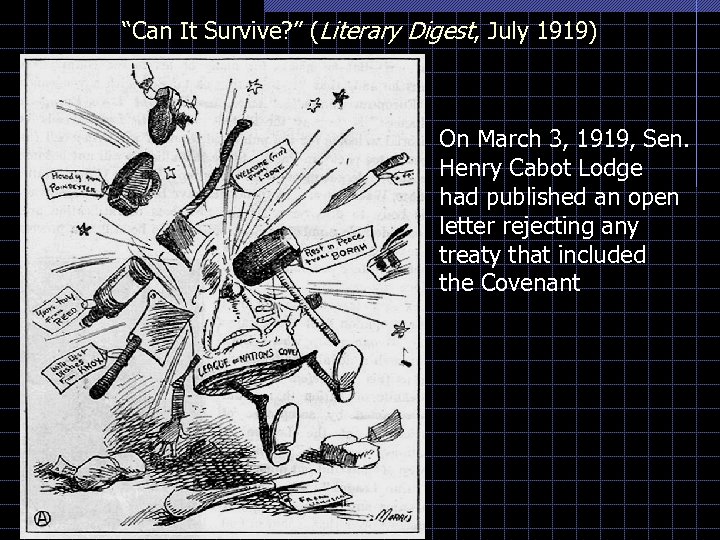
“Can It Survive? ” (Literary Digest, July 1919) On March 3, 1919, Sen. Henry Cabot Lodge had published an open letter rejecting any treaty that included the Covenant
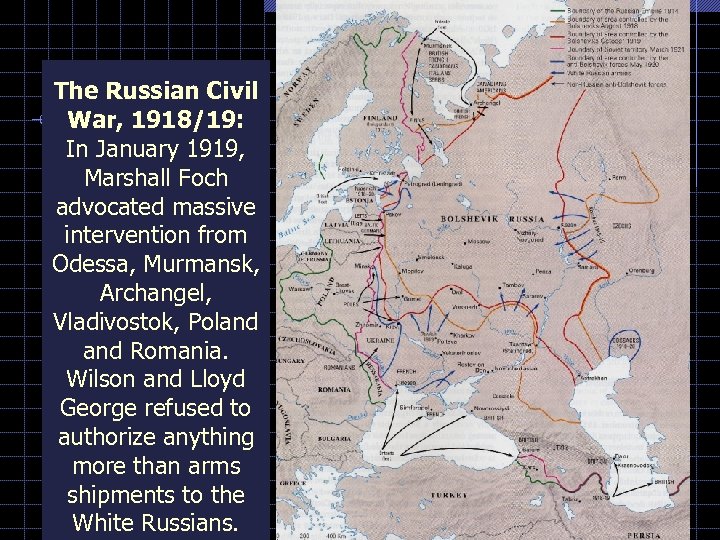
The Russian Civil War, 1918/19: In January 1919, Marshall Foch advocated massive intervention from Odessa, Murmansk, Archangel, Vladivostok, Poland Romania. Wilson and Lloyd George refused to authorize anything more than arms shipments to the White Russians.
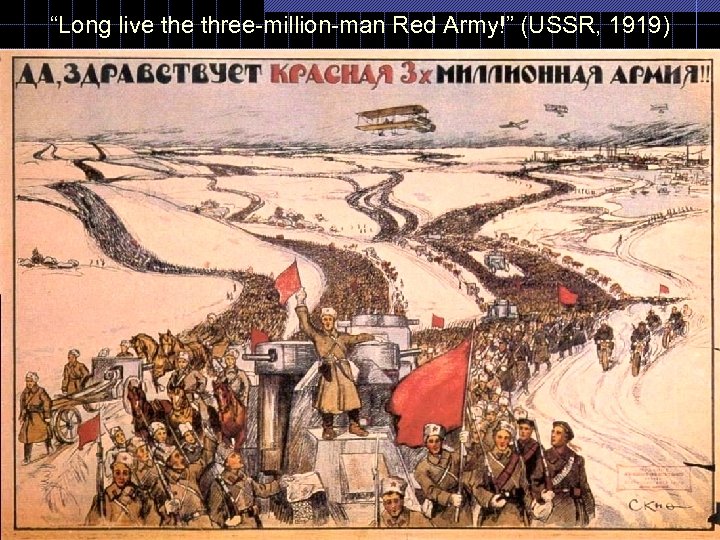
“Long live three-million-man Red Army!” (USSR, 1919)
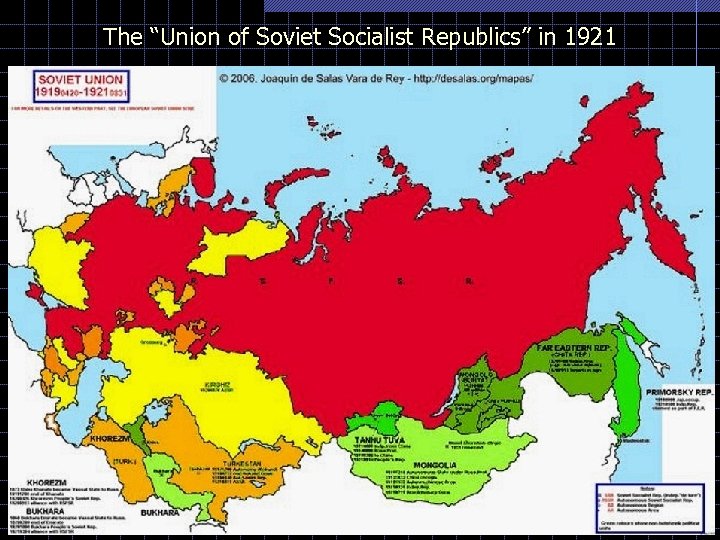
The “Union of Soviet Socialist Republics” in 1921
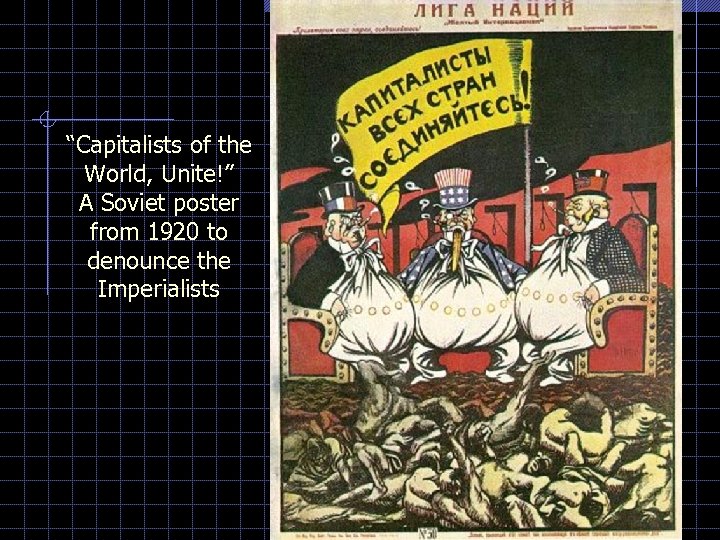
“Capitalists of the World, Unite!” A Soviet poster from 1920 to denounce the Imperialists
Скачать презентацию THE CLIMAX OF THE GREAT WAR November 1917
be89abe7203f735a745ee4e5a6cc2768.ppt