


 Скачать презентацию The Children of Israel -Key Concepts- I
b95f18cdab155a9ac51faae28e77b21b.ppt
- Количество слайдов: 10
 The Children of Israel -Key Concepts-
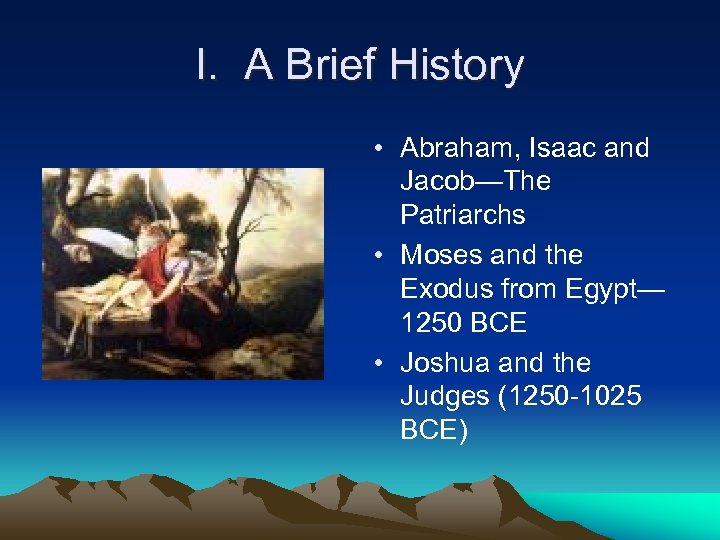 I. A Brief History • Abraham, Isaac and Jacob—The Patriarchs • Moses and the Exodus from Egypt— 1250 BCE • Joshua and the Judges (1250 -1025 BCE)
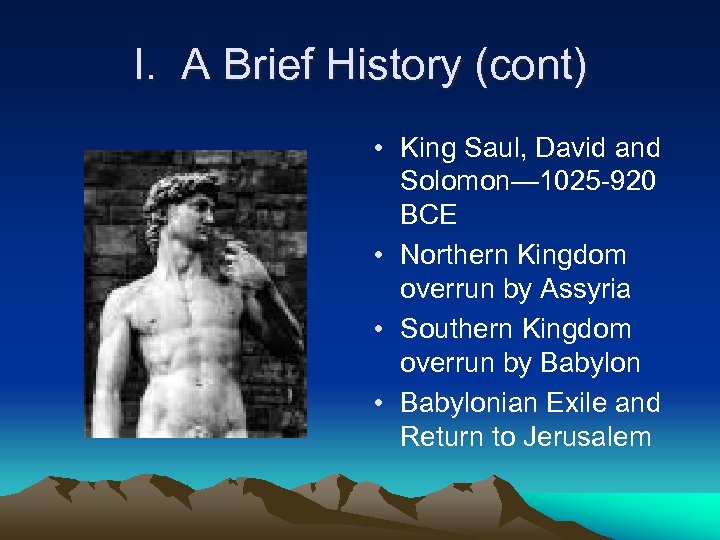 I. A Brief History (cont) • King Saul, David and Solomon— 1025 -920 BCE • Northern Kingdom overrun by Assyria • Southern Kingdom overrun by Babylon • Babylonian Exile and Return to Jerusalem
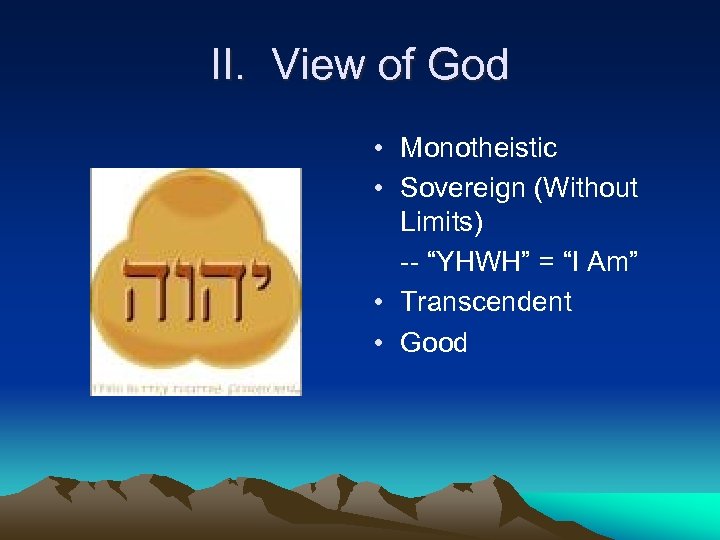 II. View of God • Monotheistic • Sovereign (Without Limits) -- “YHWH” = “I Am” • Transcendent • Good
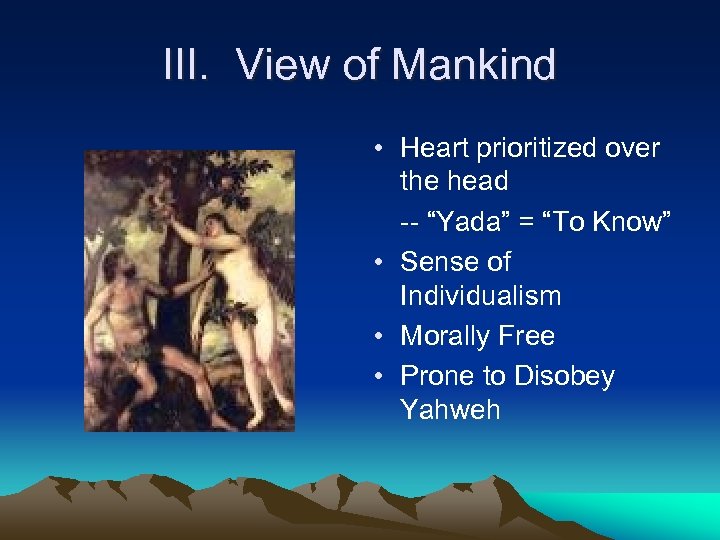 III. View of Mankind • Heart prioritized over the head -- “Yada” = “To Know” • Sense of Individualism • Morally Free • Prone to Disobey Yahweh
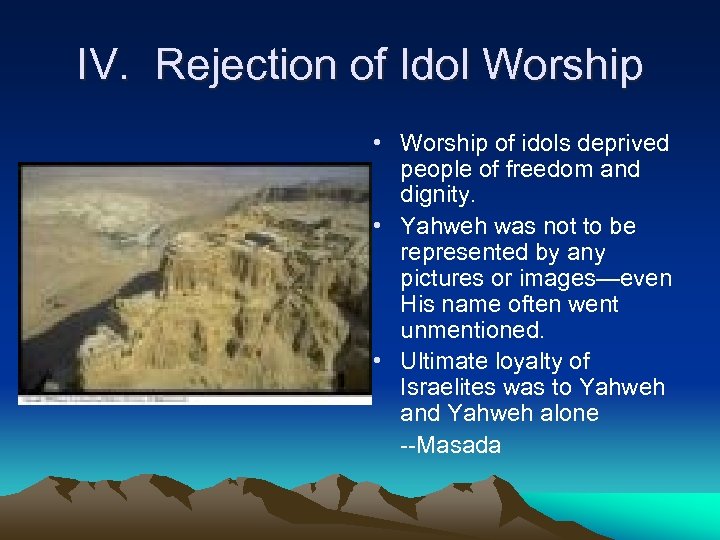 IV. Rejection of Idol Worship • Worship of idols deprived people of freedom and dignity. • Yahweh was not to be represented by any pictures or images—even His name often went unmentioned. • Ultimate loyalty of Israelites was to Yahweh and Yahweh alone --Masada
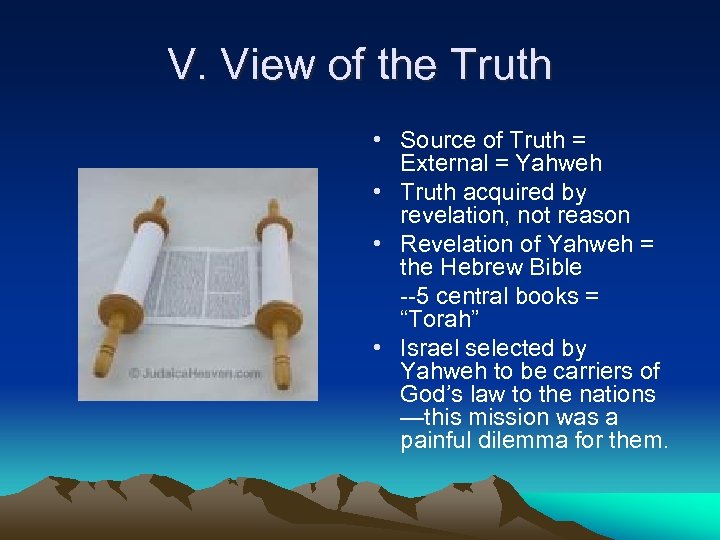 V. View of the Truth • Source of Truth = External = Yahweh • Truth acquired by revelation, not reason • Revelation of Yahweh = the Hebrew Bible --5 central books = “Torah” • Israel selected by Yahweh to be carriers of God’s law to the nations —this mission was a painful dilemma for them.
 VI. View of the Law • Greater Ethical awareness than other Near Eastern law codes • The Torah regulated all aspects of daily life • Position of women in Hebrew law • Hebrew law did not permit vicarious punishments • Slaves were protected from mistreatment
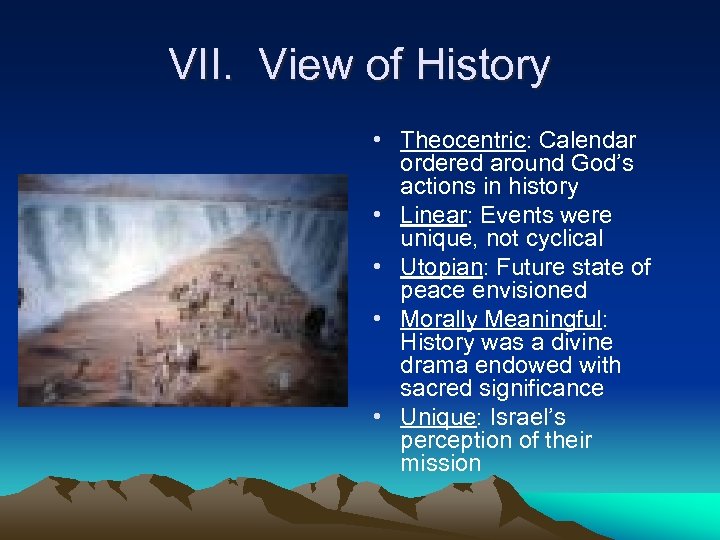 VII. View of History • Theocentric: Calendar ordered around God’s actions in history • Linear: Events were unique, not cyclical • Utopian: Future state of peace envisioned • Morally Meaningful: History was a divine drama endowed with sacred significance • Unique: Israel’s perception of their mission
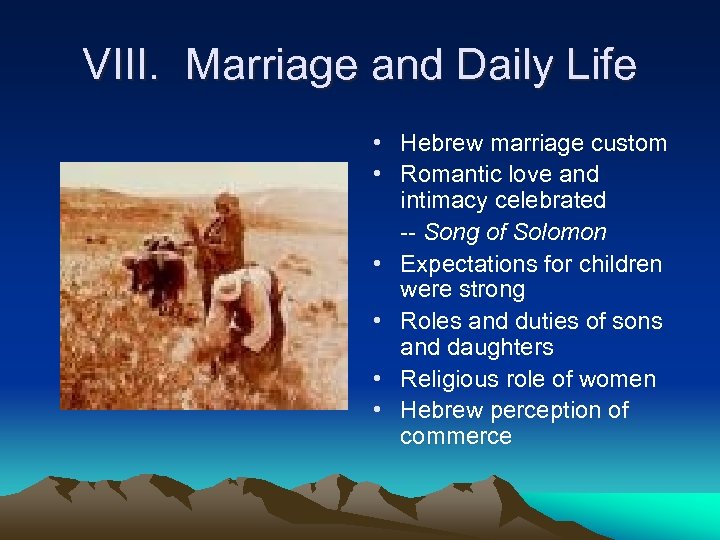 VIII. Marriage and Daily Life • Hebrew marriage custom • Romantic love and intimacy celebrated -- Song of Solomon • Expectations for children were strong • Roles and duties of sons and daughters • Religious role of women • Hebrew perception of commerce