


 Скачать презентацию The Challenges that Face Fire Safety over the
315d37683459b372c0510a77de60f989.ppt
- Количество слайдов: 70
 The Challenges that Face Fire Safety over the Next 10 -25 Years 21 st September 2017 John J O’Sullivan MBE FIFPO MIFSM
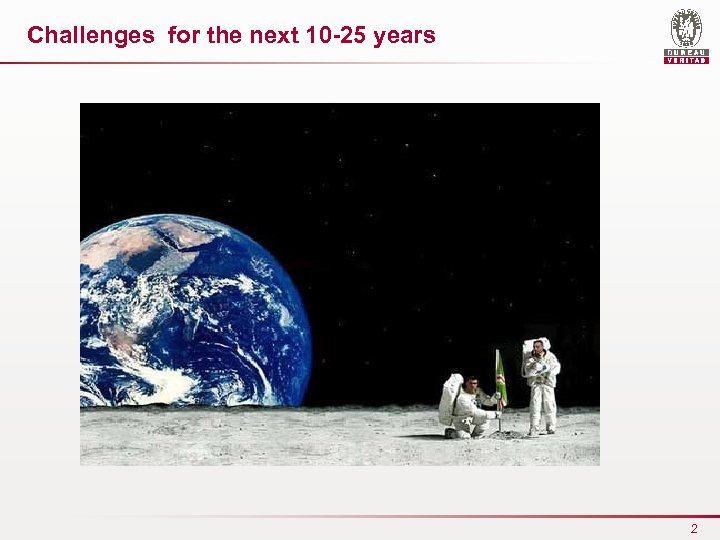 Challenges for the next 10 -25 years 2
 Irish Craic and Humour 3
 My view of the next 10 -25 years From my involvement and experience with life safety, property protection and its environmental impact there are many issues that any person involved with safety need to be aware of from the way we manage risk today and what we need to take into account over the next 10 -25 years. Some of these factors will be a short to medium term but we now need to learn from our experiences of today in relation to the way we manage risk but we also need to be alert to worldwide problems from which BREXIT will not save us. 4
 History NASA Achievements ► We need to look back at the past to look forward to the future ► 20 th November 1969 NASA took the first man to the moon ► Freezer foods - developed to feed astronauts ► Golf balls - 3 D computer simulations to find most aerodynamic surface ► De-Icer – Invented to stop ice building up on aircraft windows ► Kidney machines – designed to purify water ► Blood analysis – instrument to analyses in 30 sec v 20 mins ► Smoke detectors – invented to pick up false alarms in the Sky Lab ► Fire fighters suit – 1967 developed fire resistant textiles for space suites 5
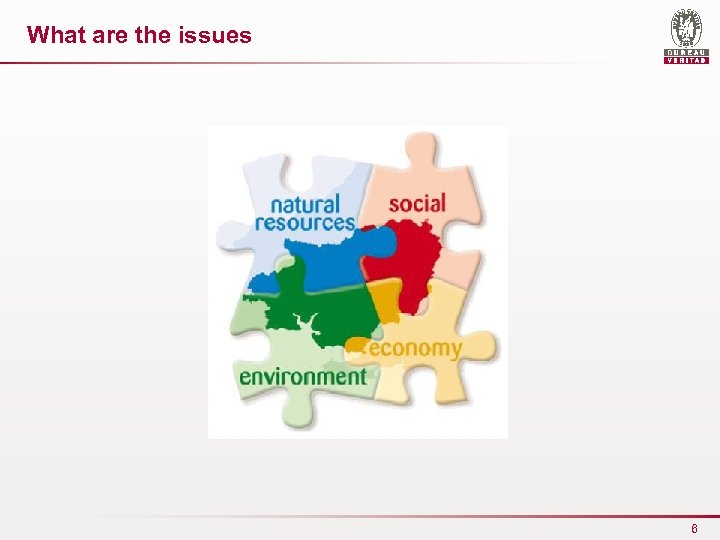 What are the issues 6
 Environmental ► Droughts in all continents of the world ► Africa has suffered water shortage for many years ► Europe shortage of water – Greece, Spain, Portugal ► USA 38 states face water shortage ► Australia shortage of drinking water ► India water shortage ► Middle East will have water shortage ► Flooding in the UK ► More natural disasters 7
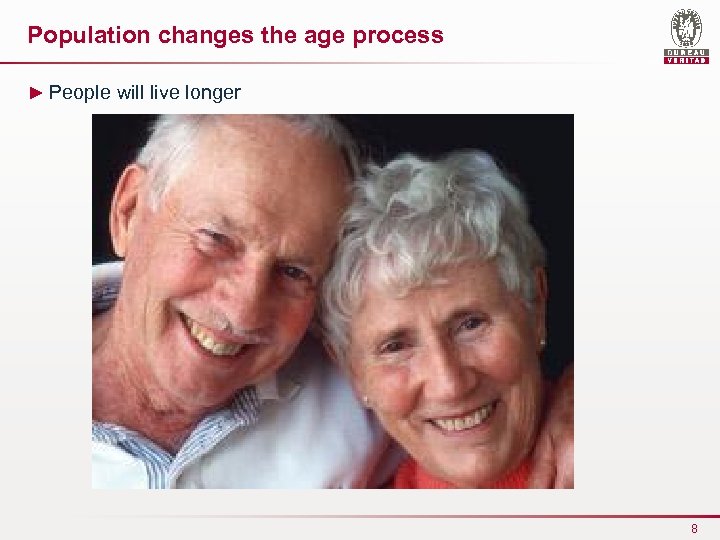 Population changes the age process ► People will live longer 8
 Generational issues ► Population Changes ► Aging population ► Population shifting in many parts of the world ► Immigration –Language & Cultural ► Attitudinal differences ► By 2050 the population will be 9. 5 billion before it declines ► Biggest birth growth in Asia, Africa and Latin America ► UK will have similar issues for the next 10 -25 years ► We cannot ignore it we will need to deal with it. 9
 > Urban interface will continue to grow – will impact on design of buildings the evacuation process and fire fighting tactics. > Higher density population –impact fire safety infrastructure and emergency response. > Globally the percentage of the population living areas more exposed to natural disasters (costal areas/woodland) will grow. > As the population ages the type of disabilities will increase – impact on building design for egress/rescue techniques/EMS and communication. ØWorkforce demographic will dictate fire safety in the community must complete for a declining qualified workforce. ØWill also have an aging workforce ØThis will impact on life safety 10
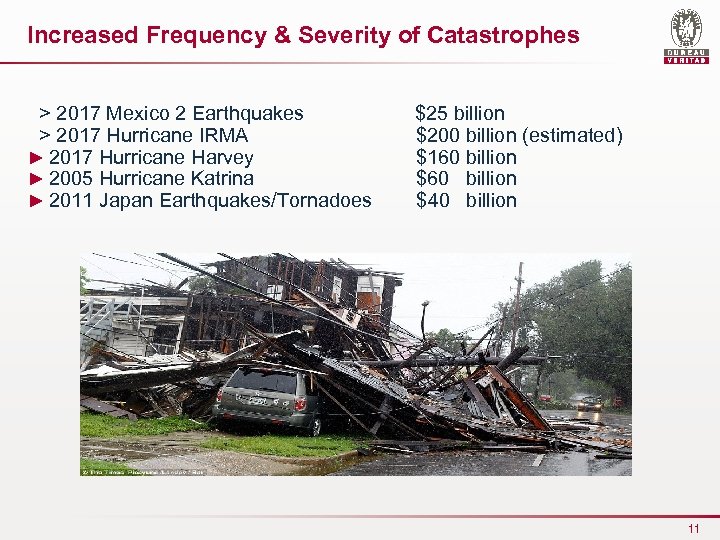 Increased Frequency & Severity of Catastrophes > 2017 Mexico 2 Earthquakes > 2017 Hurricane IRMA ► 2017 Hurricane Harvey ► 2005 Hurricane Katrina ► 2011 Japan Earthquakes/Tornadoes $25 billion $200 billion (estimated) $160 billion $40 billion 11
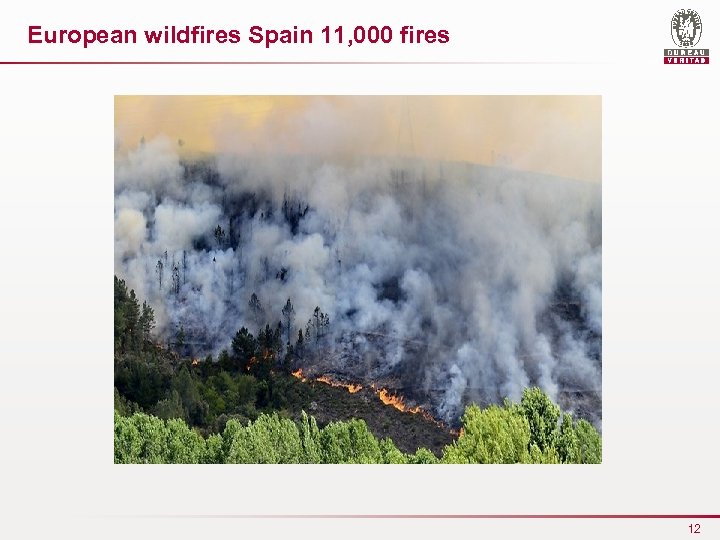 European wildfires Spain 11, 000 fires 12
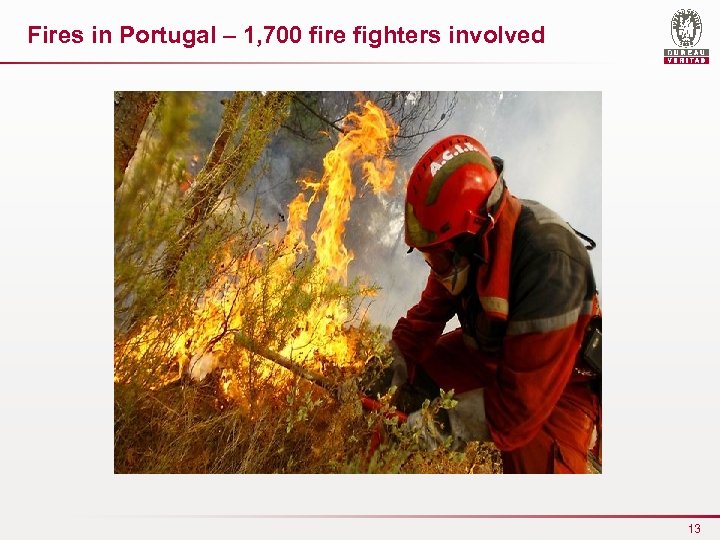 Fires in Portugal – 1, 700 fire fighters involved 13
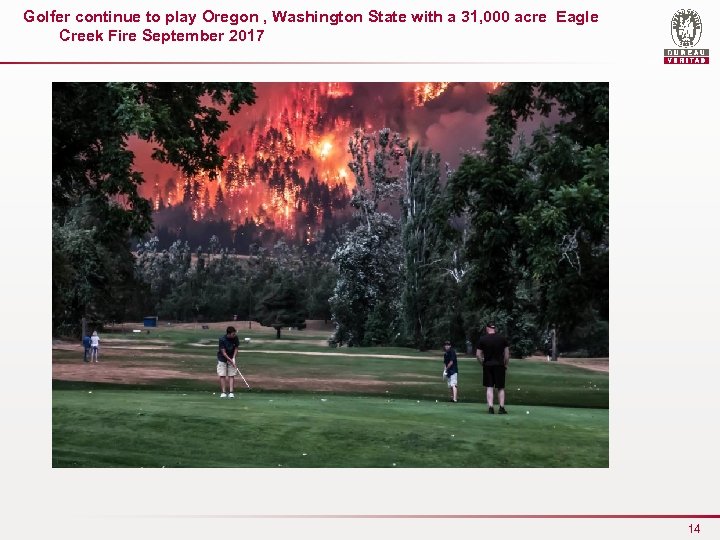 Golfer continue to play Oregon , Washington State with a 31, 000 acre Eagle Creek Fire September 2017 14
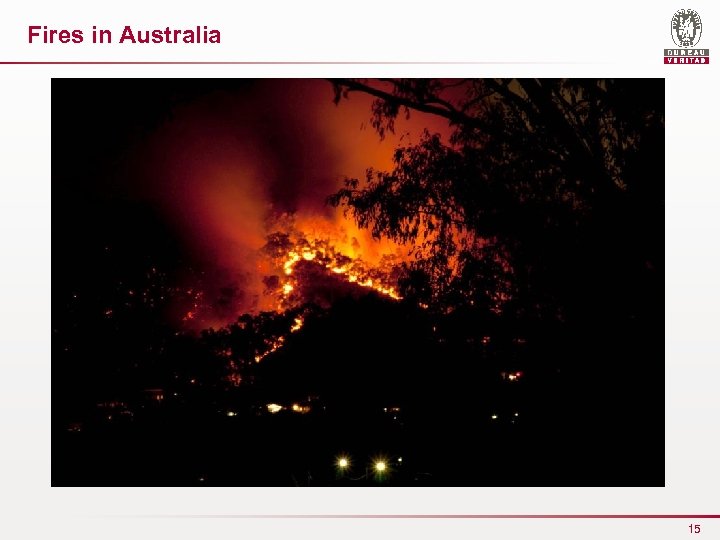 Fires in Australia 15
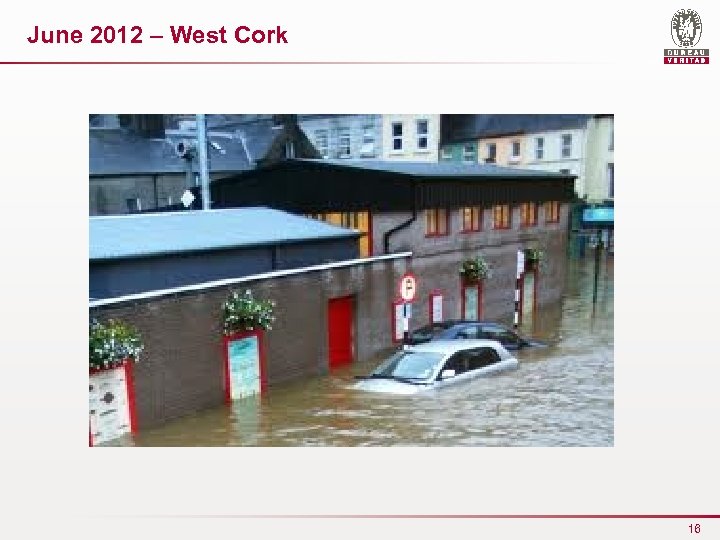 June 2012 – West Cork 16
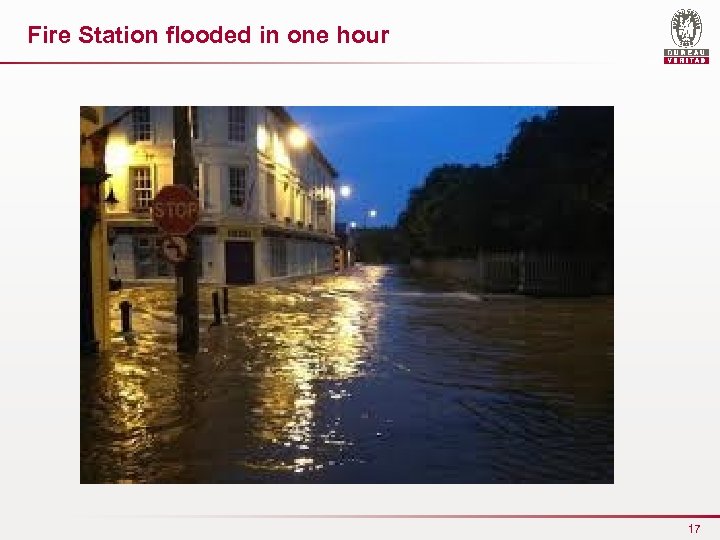 Fire Station flooded in one hour 17
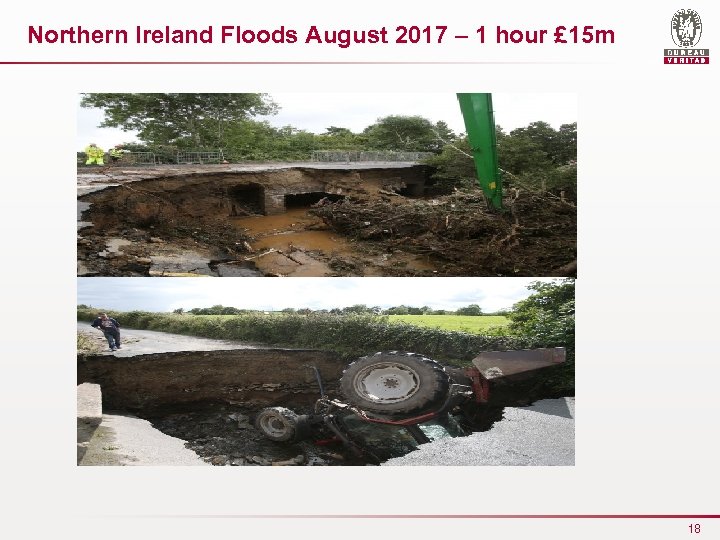 Northern Ireland Floods August 2017 – 1 hour £ 15 m 18
 Cultural and Social Attitudes ► Emergency preparedness for other forms of incidents including terrorism and major disasters is now a major issue for emergency planning. ► There is a need to integrate design for other types of emergencies into fire safety and vice a versa. This has impact on emergency planning, fire service resources, mass notification and protection of lifeline resources. ► As we become a more safety oriented culture, our regulatory structure will present conflicting environmental, workplace and fire safety objectives. ► Increased cultural diversity (especially in the EU) will lead to new challenges for community based programmes such as fire safety education, enforcement of fire safety regulations, and support for volunteer fire service. (may now change with BRIXIT) 19
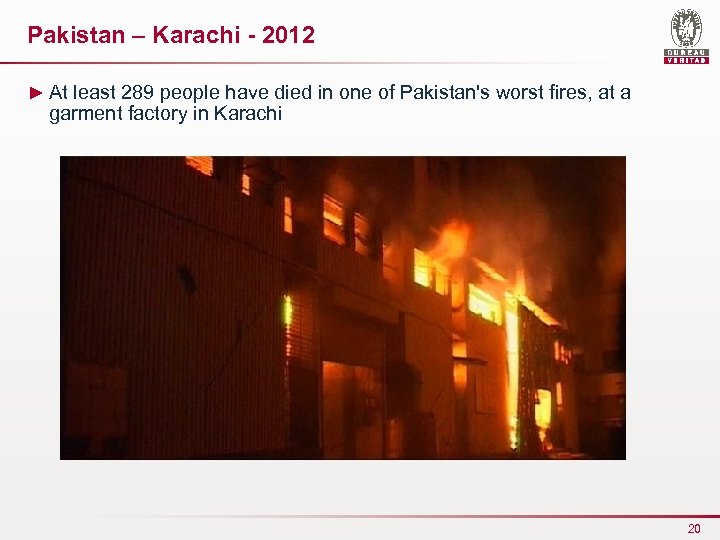 Pakistan – Karachi - 2012 ► At least 289 people have died in one of Pakistan's worst fires, at a garment factory in Karachi 20
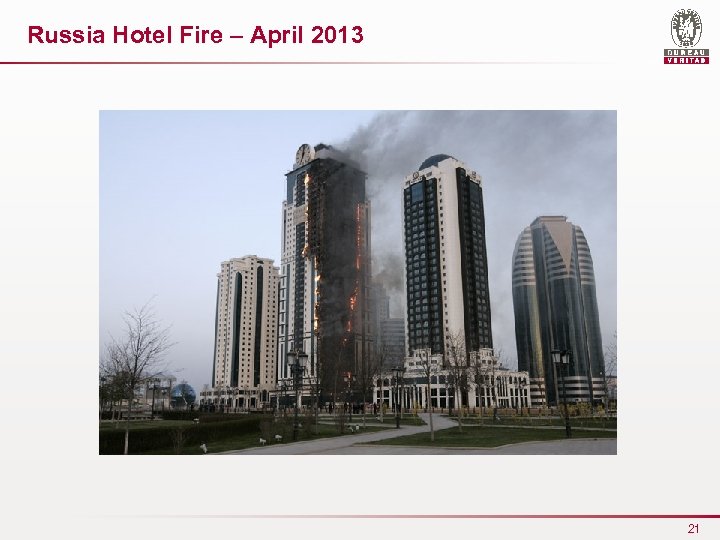 Russia Hotel Fire – April 2013 21
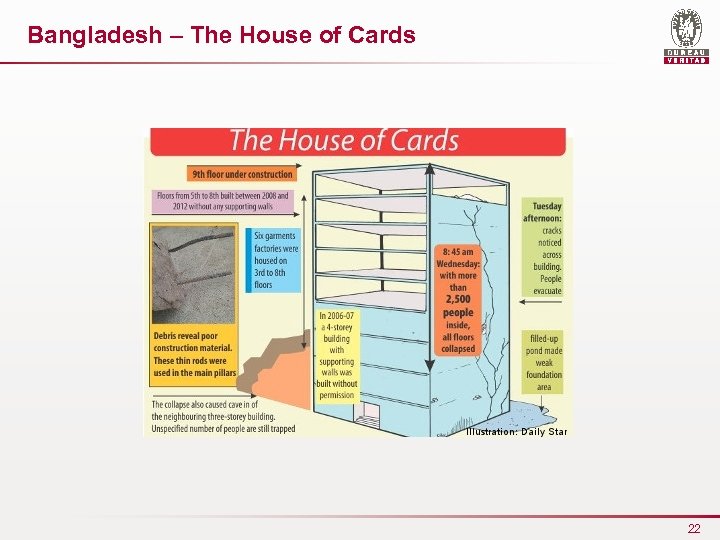 Bangladesh – The House of Cards 22
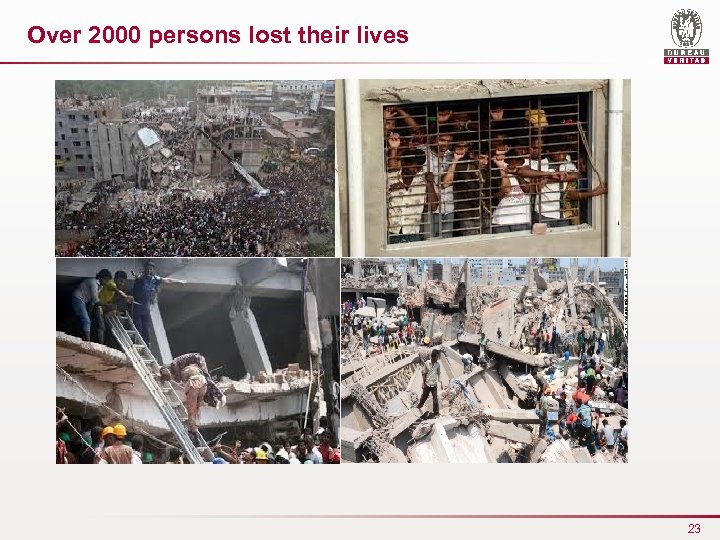 Over 2000 persons lost their lives 23
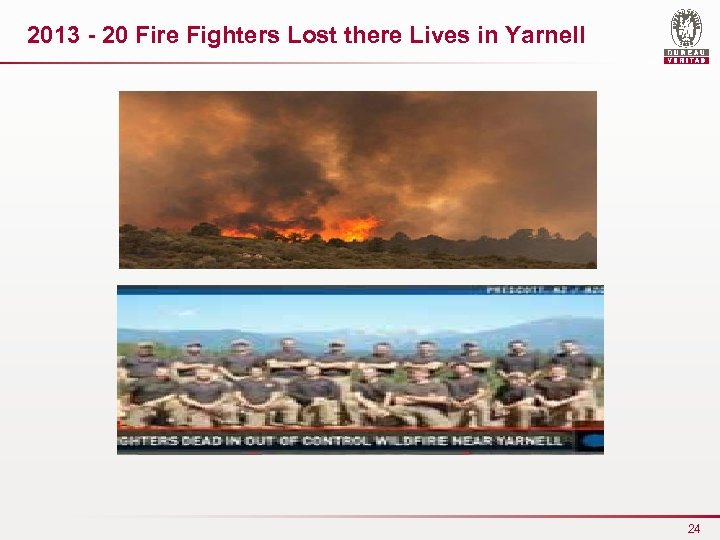 2013 - 20 Fire Fighters Lost there Lives in Yarnell 24
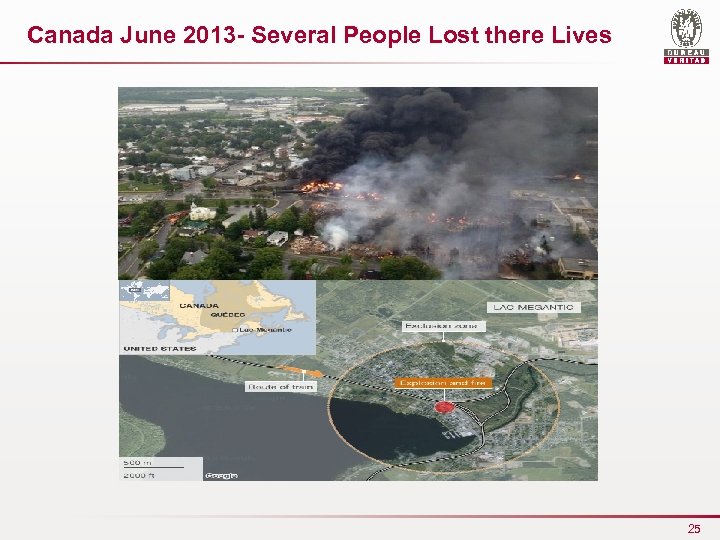 Canada June 2013 - Several People Lost there Lives 25
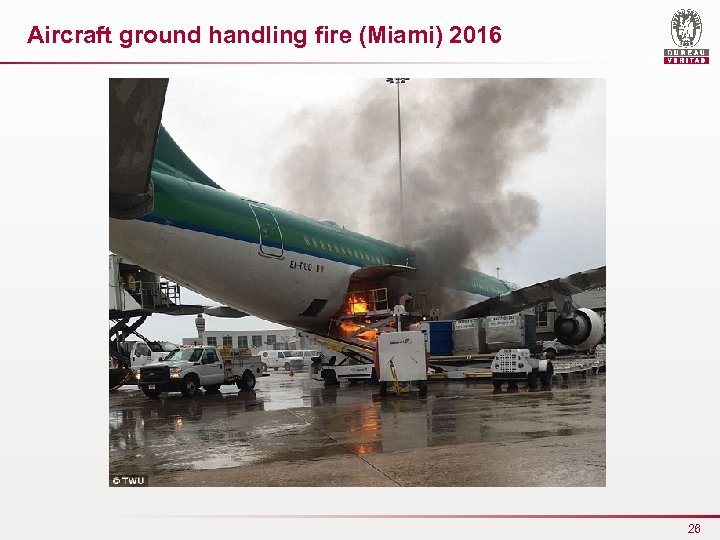 Aircraft ground handling fire (Miami) 2016 26
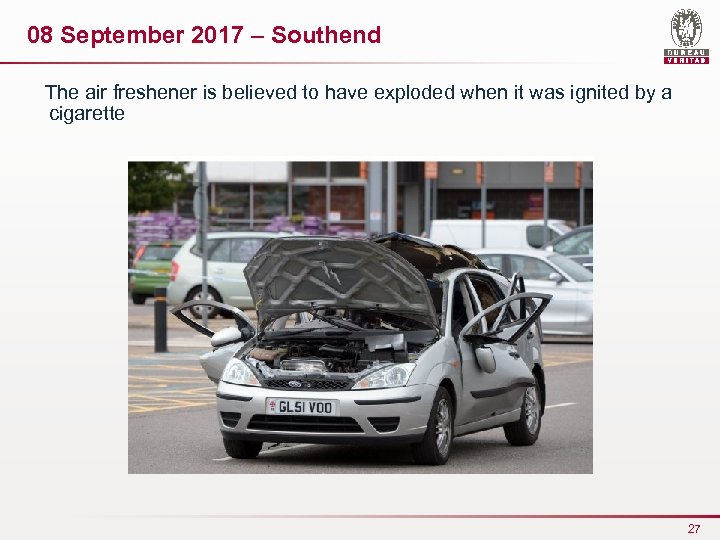 08 September 2017 – Southend The air freshener is believed to have exploded when it was ignited by a cigarette 27
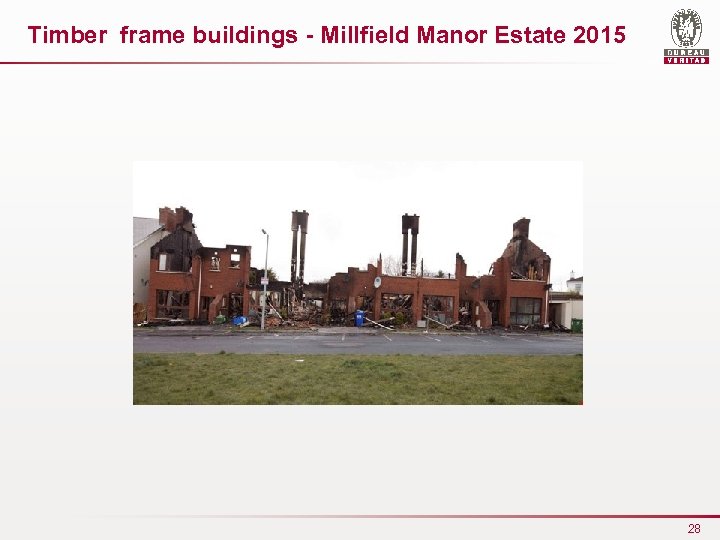 Timber frame buildings - Millfield Manor Estate 2015 28
 Millfield Manor Estate Report – August 2017 ► Six houses burned to ground in 25 minutes ► According to the building design this spread of fire should have taken 3 hours ► Report has not been received well in the ROI with some professional calling it a white wash. ► Requested a case history to be provided as part of the report (ignored) ► Framework for Enhancing Fire Safety in Dwellings where concerns arise ► Report produced by Eamon O’Boyle and Associates 29
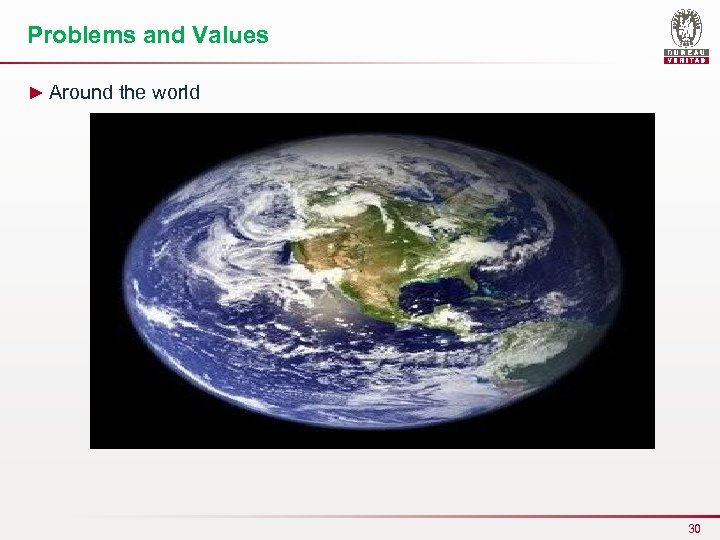 Problems and Values ► Around the world 30
 Going Green in Fire Protection ► Global Warming Issues ► Ozone Depletion ► Atmospheric Life 31
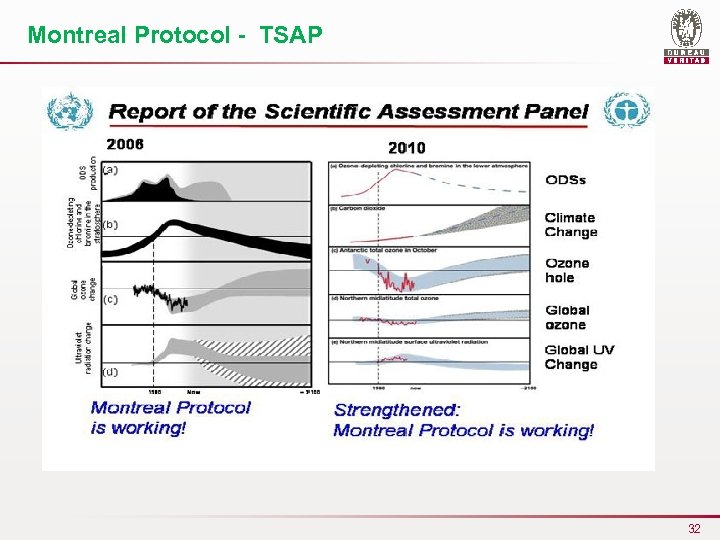 Montreal Protocol - TSAP 32
 Montreal Protocol its success ► Hailed as the most successful treaty in UN history - for achieving universal ratification and meeting its targets ahead of schedule, the Montreal Protocol on Substances that Deplete the Ozone Layer has celebrate its 25 th anniversary. ► The Protocol, which was ratified by 197 countries, has enabled reductions of over 98 percent of all global production and consumption of controlled ozone-depleting substances. ► The Protocol also oversaw the global phase-out of chlorofluorocarbon (CFCs) by 2010. ► New challenges Global Warming. 33
 Defining the Green Movement - Objectives ► Fire Protection Systems ► How Green Buildings Affect Us ► Possible Issues with Green Buildings ► Green Products ► Ways Fire Safety Can Help 34
 Fire Detection and Suppression systems ► Fire detection systems ► Sprinkler systems ► Water Mist Systems ► Gas suppression systems ► Clean Agents 35
 Detection Systems ► Early detection ► Point detection ► HSSD systems ► CCTV technology ► Oxygen reduction systems ► Better detection reduces toxic gas releases ► Reduces global warming gases ► Use of recycled materials 36
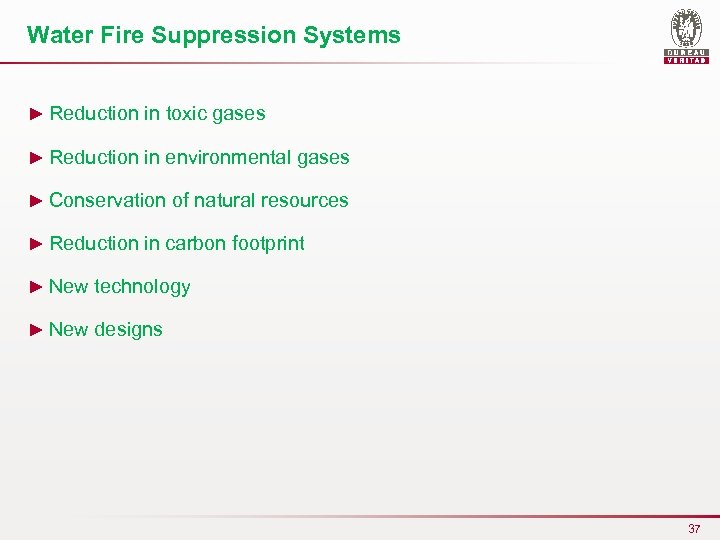 Water Fire Suppression Systems ► Reduction in toxic gases ► Reduction in environmental gases ► Conservation of natural resources ► Reduction in carbon footprint ► New technology ► New designs 37
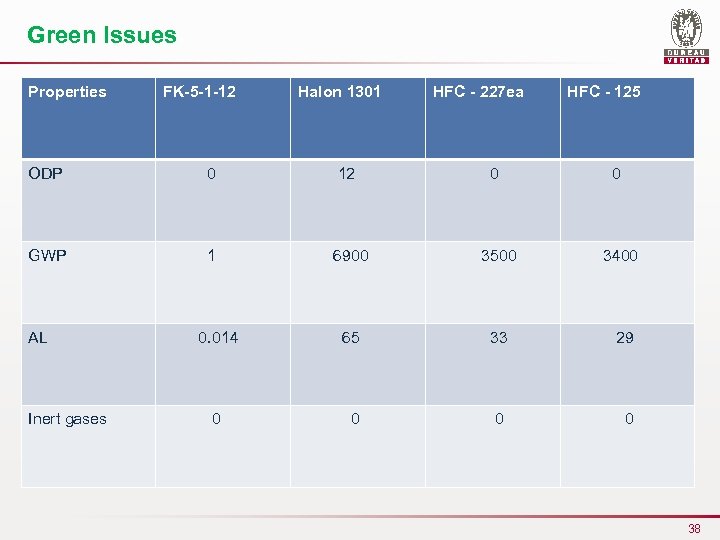 Green Issues Properties FK-5 -1 -12 Halon 1301 HFC - 227 ea HFC - 125 ODP 0 12 0 0 GWP 1 6900 3500 3400 0. 014 65 33 29 0 0 AL Inert gases 38
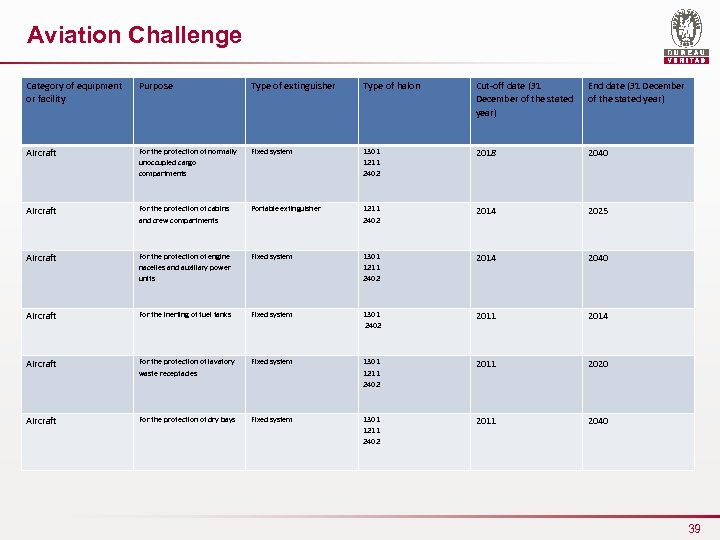 Aviation Challenge Category of equipment or facility Purpose Type of extinguisher Type of halon Cut-off date (31 December of the stated year) End date (31 December of the stated year) Aircraft For the protection of normally unoccupied cargo compartments Fixed system 1301 1211 2402 2018 2040 Aircraft For the protection of cabins and crew compartments Portable extinguisher 1211 2402 2014 2025 Aircraft For the protection of engine nacelles and auxiliary power units Fixed system 1301 1211 2402 2014 2040 Aircraft For the inerting of fuel tanks Fixed system 1301 2402 2011 2014 Aircraft For the protection of lavatory waste receptacles Fixed system 1301 1211 2402 2011 2020 Aircraft For the protection of dry bays Fixed system 1301 1211 2402 2011 2040 39
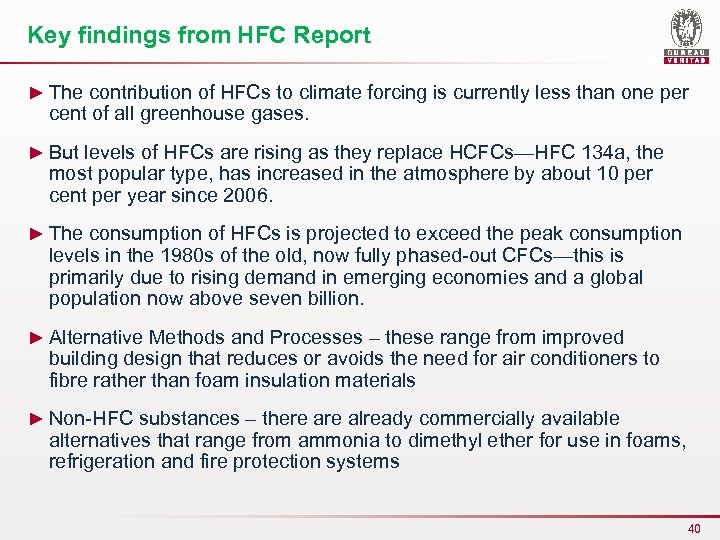 Key findings from HFC Report ► The contribution of HFCs to climate forcing is currently less than one per cent of all greenhouse gases. ► But levels of HFCs are rising as they replace HCFCs—HFC 134 a, the most popular type, has increased in the atmosphere by about 10 per cent per year since 2006. ► The consumption of HFCs is projected to exceed the peak consumption levels in the 1980 s of the old, now fully phased-out CFCs—this is primarily due to rising demand in emerging economies and a global population now above seven billion. ► Alternative Methods and Processes – these range from improved building design that reduces or avoids the need for air conditioners to fibre rather than foam insulation materials ► Non-HFC substances – there already commercially available alternatives that range from ammonia to dimethyl ether for use in foams, refrigeration and fire protection systems 40
 Ways we can Help ► Collect and reuse water ► Main drain tests annually ► Pump tests 3 monthly ► Water-flow switch tests 6 monthly ► Beneficial or harmful ► Plastic tank storage ► Plastic pipe corrosion ► Solar energy ► Electric pumps 41
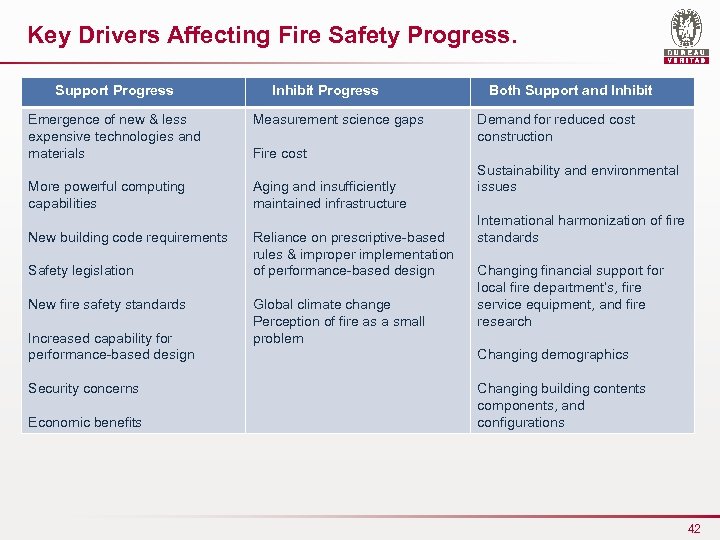 Key Drivers Affecting Fire Safety Progress. Support Progress Emergence of new & less expensive technologies and materials More powerful computing capabilities New building code requirements Safety legislation New fire safety standards Increased capability for performance-based design Security concerns Economic benefits Inhibit Progress Measurement science gaps Both Support and Inhibit Demand for reduced cost construction Fire cost Aging and insufficiently maintained infrastructure Reliance on prescriptive-based rules & improper implementation of performance-based design Global climate change Perception of fire as a small problem Sustainability and environmental issues International harmonization of fire standards Changing financial support for local fire department’s, fire service equipment, and fire research Changing demographics Changing building contents components, and configurations 42
 Natural Lighting and Ventilation ► Sky lights ► Light wells ► Triple glazing ► Double curtain walls ► Stairwells ► Natural light ► Natural air movement ► Smoke control systems ► Sub floor ventilation 43
 Possible issues ► Natural ventilation - effect means of escape ► Blown in cellulose insulation – increase flammability range ► Lightweight building materials - wind effect ► Green roof – venting issues ► Green roof aerial attack ► Street widths – increase risk of fire spread ► Fire retardants – increase in release of toxic by-product ► Photovoltaic solar panels – always energised/shock hazard ► Duty of care – safety of fire fighters entering bulding 44
 Some benefits of going Green ► Fire safe materials ► Lower combustibilty ► Lower heat release rate ► Less toxic smoke released ► Reduce green house gases ► Reduce the impact of the environmental bodies introducing legislation ► Maintain safety standards 45
 Changes in Fire safety ► More combustible buildings (less flame retardant) ► Different methods of insulation (compressed straw) ► More toxic gas releases (man made materials) ► Availability of water for fire fighting (not in all locations) ► Housing density (too close and too tall) ► Contamination/pollution of ground air (chemical & gas release) ► Egress for the aged (lack of mobility) ► Aviation fire fighting (PFOS in foams) ► Responsible ownership (can and will industry provide it? ) ► Fire Risk Assessment Consultancy (Approved Inspectors/Fire Engineers/Fire Service) 46
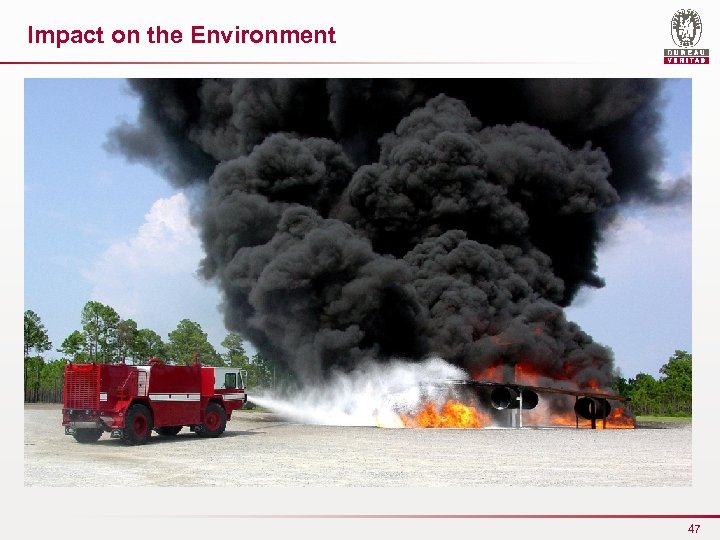 Impact on the Environment 47
 48
48
 49
49
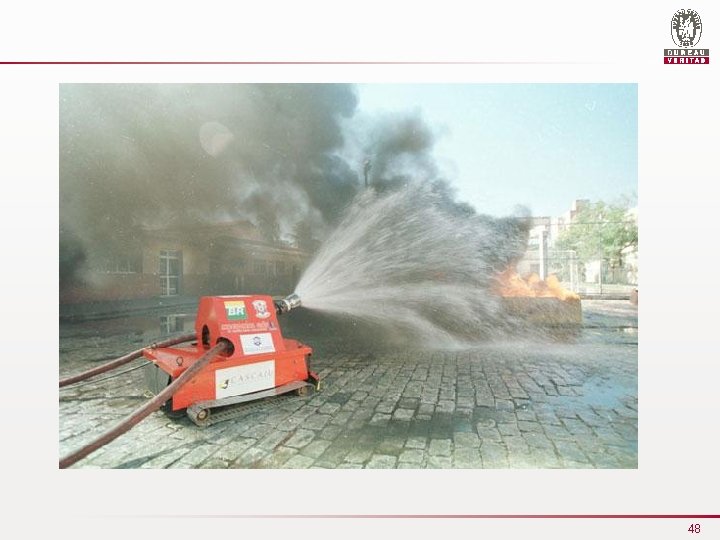
 Japan Robot of the year 2007 50
 Radio Control Fire Fighting and Rescue Robot Tools 51
 Improve response less fire damage 52
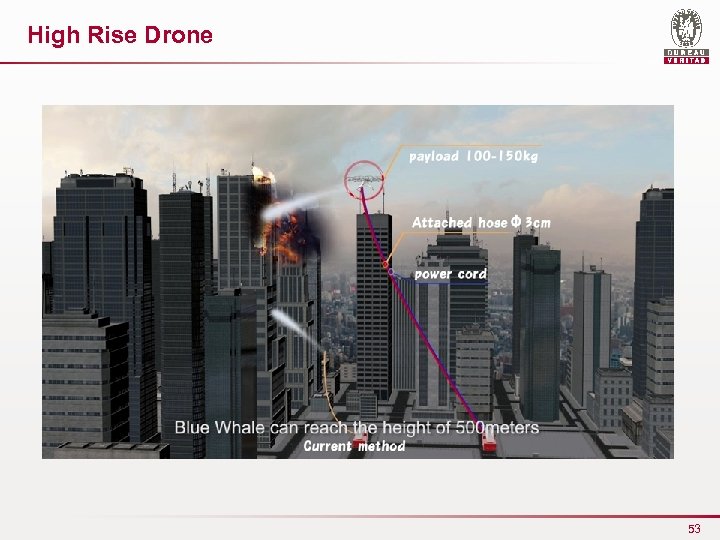 High Rise Drone 53
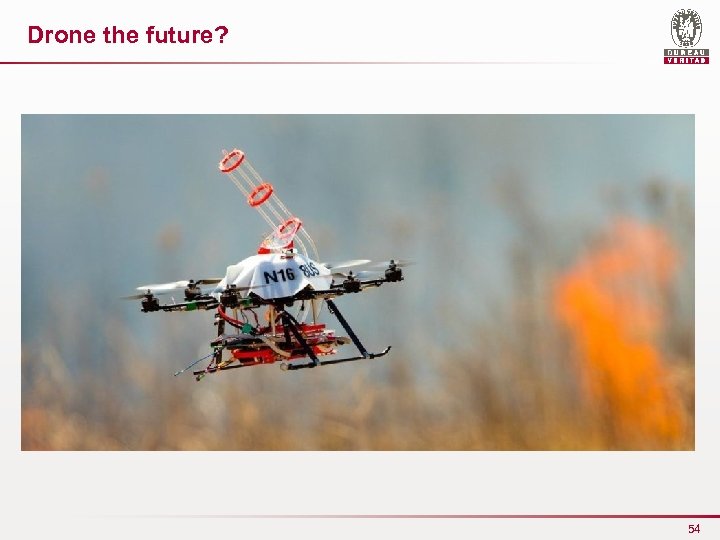 Drone the future? 54
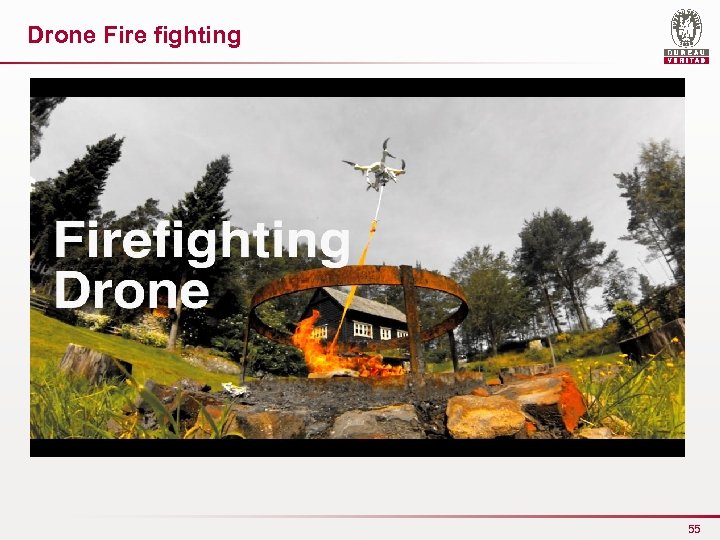 Drone Fire fighting 55
 Changes in new Materials Technology ► The changing furnishings in today’s buildings and building contents are creating and potentially for more challenging fire scenarios. This has an impact on fire fighter tactics, protective clothing and equipment, tenability conditions, and challenges some basic assumptions in the design of buildings for fire safety. ► Changes in storage configurations (contents/packing/volume of storage) in retail occupancies as well as storage warehouses are increasing the volume and hazard of stored commodities and creating high challenge scenarios. ► Technological advancements in build-in fire protection measures are becoming commonplace, with new extinguishing media and methods, alternative approaches to emergency awareness and ‘smart’ materials presenting the opportunity for improved fire characteristics. 56
 Cultural and Social Attitudes ► Emergency preparedness for other forms of incidents including terrorism and major disasters is now a major issue for emergency planning. ► There is a need to integrate design for other types of emergencies into fire safety and vice a versa. This has impact on emergency planning, fire service resources, mass notification and protection of lifeline resources. ► As we become a more safety oriented culture, our regulatory structure will present conflicting environmental, workplace and fire safety objectives. ► Increased cultural diversity (especially in the EU) will lead to new challenges for community based programmes such as fire safety education, enforcement of fire safety regulations, and support for volunteer fire service. 57
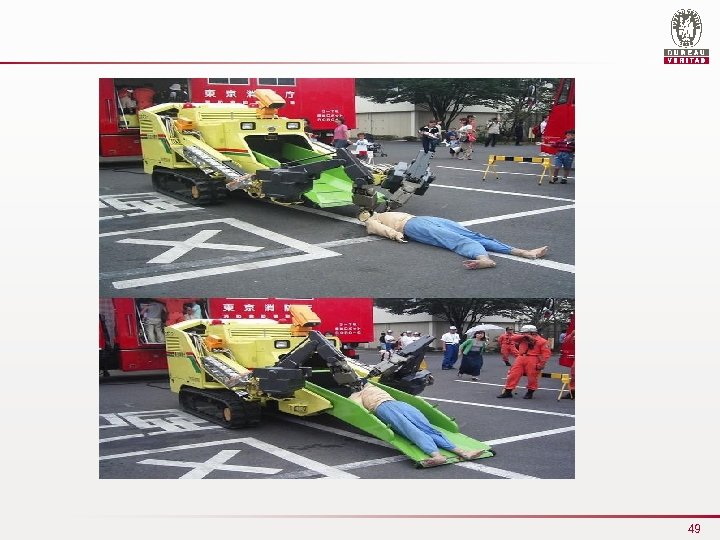
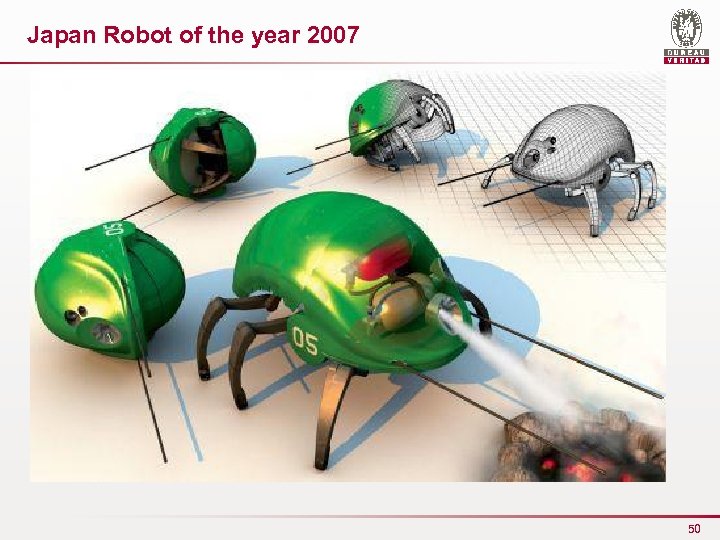
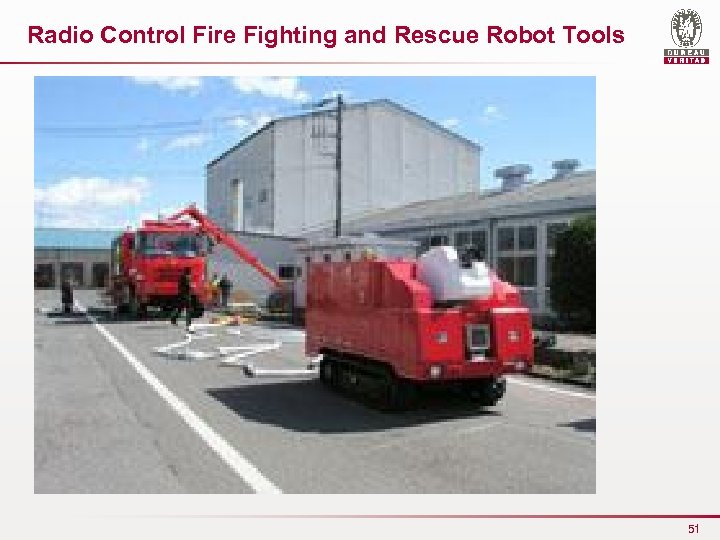
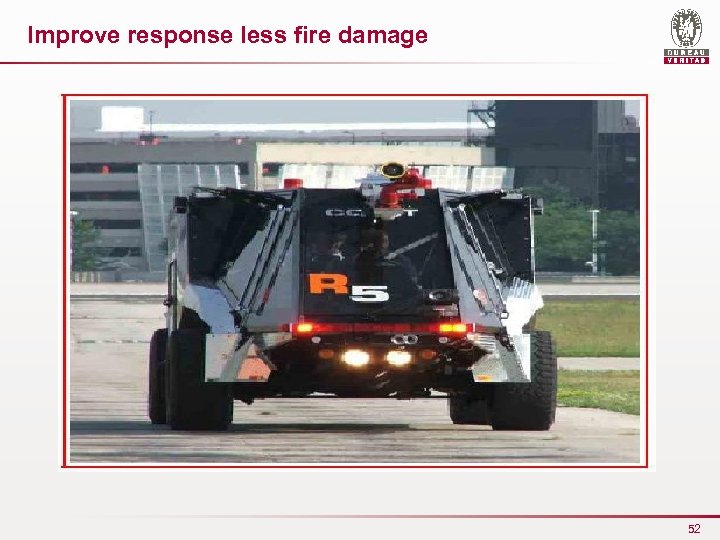
 New Technology ► Rapid develops in fire fighting and fire safety equipment (such as robotics, sensors, communication technologies and light weight equipment) provide promise for increased fire fighter safety but require assessment of performance criteria and training and evaluation. ► Application of alternative energy sources in technology – L. E. D. lighting distributed electrical generating technologies, will require a reassessment of fire safety of our electrical infrastructure. ► Next generation detectors (early, reliable, nuisance resistant, malfunctions, video). ► Software tools to predict the effect of combustion products on building occupants. ► Litniumin batteries and electric cars 58
 Environmental Sustainability ► Environmental restrictions on chemicals are already the selection of fire suppressants, hazard control of building contents and furnishings, and fire fighting tactics. ► “Sustainable development is development that meets the needs of the present without compromising the ability of future generations to meet their own needs. ” 59
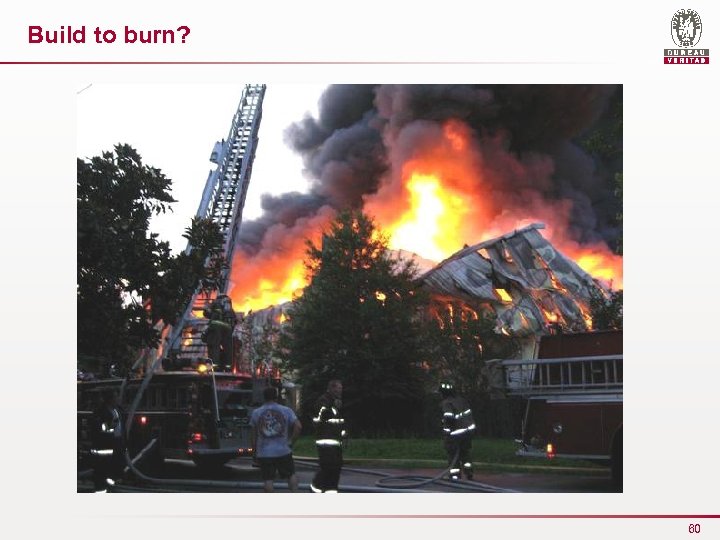 Build to burn? 60
 Materials technology. ► The furnishings in today’s building contents are creating a potentially far more challenging scenarios. ► This has a significant impact on fire fighter tactics, protective clothing, and tenability conditions. ► This challenges some basic assumptions in the design of building for fire safety. ► Changes in storage configurations (contents/packing/volume of storage) in retail occupancies as well as storage in warehouses are increasing high challenge scenarios. ► Technological advancements in building-in-fire protection measures are becoming commonplace, with new extinguishing media methods of suppression. ► Alternative approaches to emergency awareness – computer modelling and ‘smart’ materials for improved fire characteristics. 61
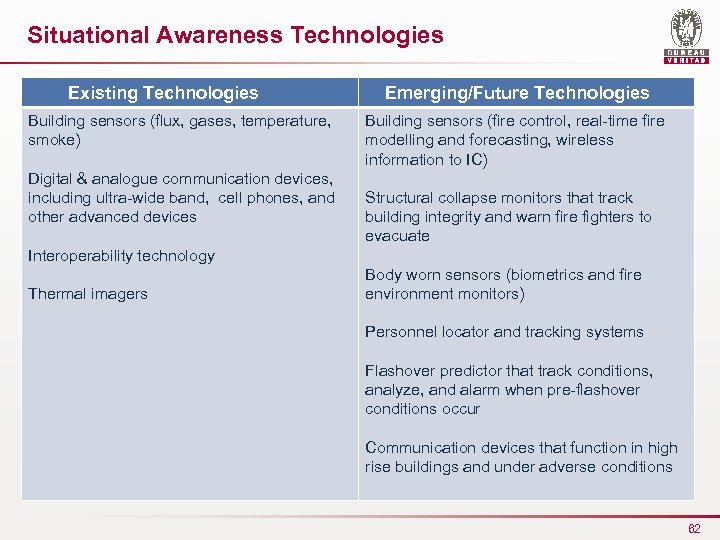 Situational Awareness Technologies Existing Technologies Building sensors (flux, gases, temperature, smoke) Digital & analogue communication devices, including ultra-wide band, cell phones, and other advanced devices Emerging/Future Technologies Building sensors (fire control, real-time fire modelling and forecasting, wireless information to IC) Structural collapse monitors that track building integrity and warn fire fighters to evacuate Interoperability technology Thermal imagers Body worn sensors (biometrics and fire environment monitors) Personnel locator and tracking systems Flashover predictor that track conditions, analyze, and alarm when pre-flashover conditions occur Communication devices that function in high rise buildings and under adverse conditions 62
 Fire Risk Assessment the Process ► Design process (Architect) ► Approval process (Approved Inspector/Fire & Rescue Service) ► Principal contractor (Value Engineering) ► Fit out contractor (CDM Assessment) ► Completion certification (Approved Inspector) ► Exclusion (This certificate is evidence – but not conclusive evidence - that the requirements issued in the certificate have been complied with) ► Fire Risk Assessment (Consultant) ► Competency Standards ► Are our expectations too high? 63
 UK Fire Services ► Cuts in central grant funding as a result of austerity measures ► Further cuts caused by the localisation of council tax benefits ► Reduced council tax bases and ability to raise income locally ► The impact of the economic downturn ► Increased risk to commercial premises due to Arson ► Potential increases in pension costs 64
 England Fire and Rescue Service ► £ 207 m of savings ► Loss of fire fighters 4, 050 ► Close up to 60 fire stations ► 150 appliances off the run ► London £ 65 m of saving in a couple of years ► LHR and Biggin Hill two stations on the hit list ► Sir Ken Knight (review £ 200 m) ► Working with other emergency services 65
 CFO’s report ► 90% believe further cuts in front line posts are inevitable ► 97% of FRSs have introduced cut backs in office staff & implemented redundancy programmes ► 90% don’t believe sufficient savings cannot be achieved through this process ► Better procurement or sharing teams can achieve the savings required ► 50% of FRS expect to reduce the number of fire engines and 25% are planning to close fire stations 66
 What could this look like in the future ► Reduction in fire cover (longer response times) ► More day manning ► More on call fire fighters (retained) ► Mutual/Privatisation of some Fire Services ► Reintroduction of Works Fire Teams ► Fire Services will become more commercial (provide services to industry) ► Rural areas may have Volunteer Fire Fighters ► Industry will need to be more responsible for their own arrangements 67
 Management Role ► Much of what is done in industry today is done by code, but we have value engineering. But we have bean counters look to cut corners. Those knowledgeable in fire safety are making unwise decisions to meet finance the project business plan, and these decisions are being made in unrealistic time frames. ► In today’s industrial environment there is pressure to provide deliverables. Industry is continually under immense pressure to reduce costs, and this introducing new hazards. ► In the past, full life cycle costs were used to calculate cost effectiveness, but this is not today’s business world, which focus more on flat construction costs. Today, there is a strong push to reduce manpower and at the same time increase productivity. ► Industry generally has excellent fire loss data, but they need a way to enter this into a fire risk model for use by non-fire safety mangers. ► The UK Fire & Rescue Services now face the same challenges as industry. 68
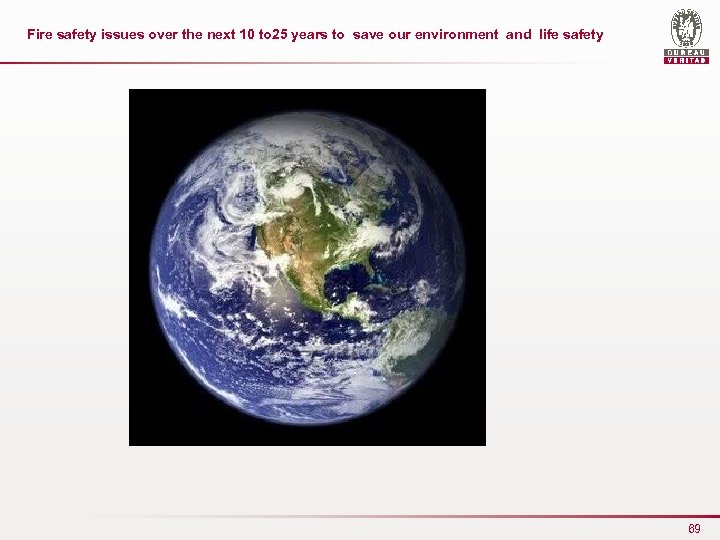 Fire safety issues over the next 10 to 25 years to save our environment and life safety 69
 70
70