 Скачать презентацию THE CHALLENGE OF CHANGE Managing for Sustainability of
1f85c028dca92e94255df8bb4740d606.ppt
- Количество слайдов: 33



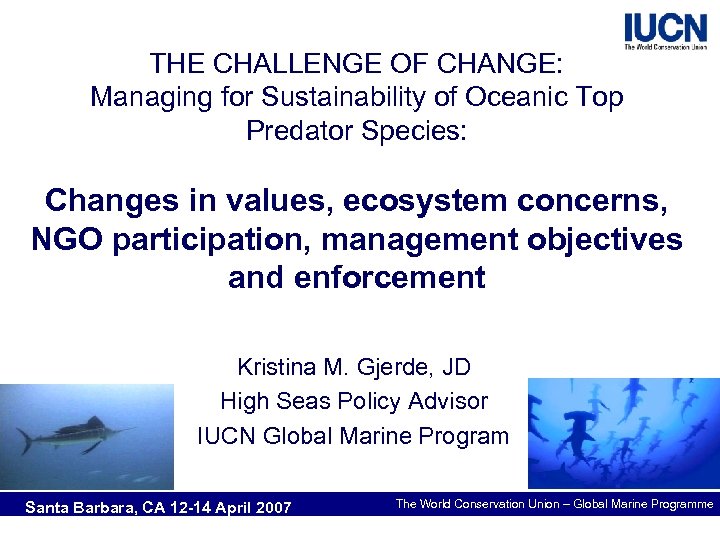
THE CHALLENGE OF CHANGE: Managing for Sustainability of Oceanic Top Predator Species: Changes in values, ecosystem concerns, NGO participation, management objectives and enforcement Kristina M. Gjerde, JD High Seas Policy Advisor IUCN Global Marine Program Santa Barbara, CA 12 -14 April 2007 The World Conservation Union – Global Marine Programme
The challenge of change 1. 2. 3. 4. 5. Changes in values Ecosystem concerns NGO participation Management objectives Enforcement The World Conservation Union – Global Marine Programme

The World Conservation Union – Global Marine Programme NASA
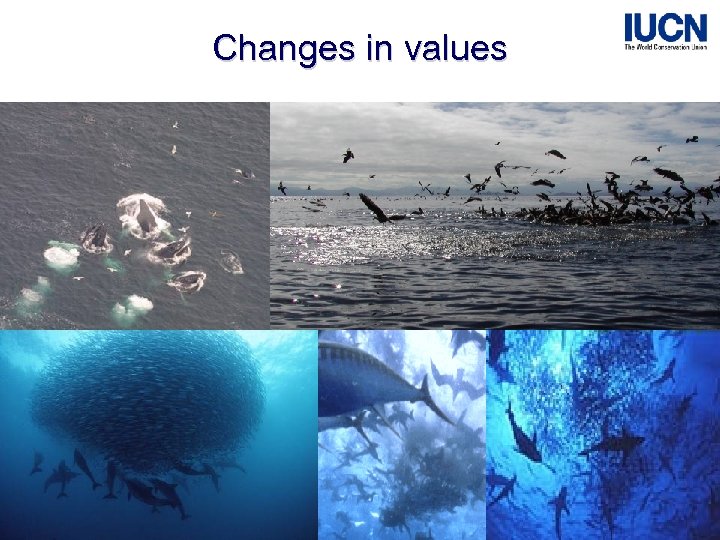
Changes in values The World Conservation Union – Global Marine Programme
The World Conservation Union – Global Marine Programme
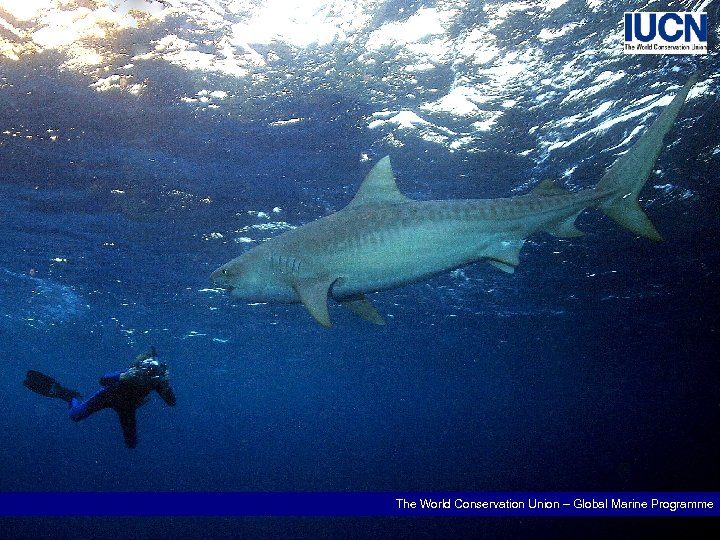
The World Conservation Union – Global Marine Programme
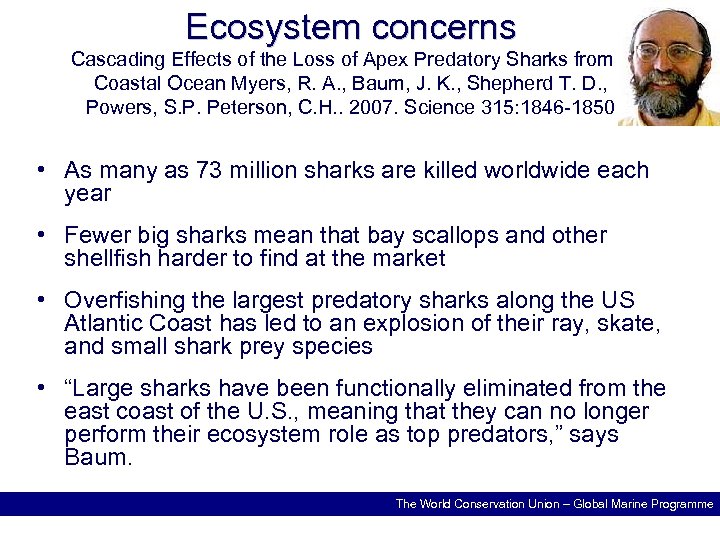
Ecosystem concerns Cascading Effects of the Loss of Apex Predatory Sharks from a Coastal Ocean Myers, R. A. , Baum, J. K. , Shepherd T. D. , Powers, S. P. Peterson, C. H. . 2007. Science 315: 1846 -1850 • As many as 73 million sharks are killed worldwide each year • Fewer big sharks mean that bay scallops and other shellfish harder to find at the market • Overfishing the largest predatory sharks along the US Atlantic Coast has led to an explosion of their ray, skate, and small shark prey species • “Large sharks have been functionally eliminated from the east coast of the U. S. , meaning that they can no longer perform their ecosystem role as top predators, ” says Baum. The World Conservation Union – Global Marine Programme
NGO Participation UN Fish Stocks Agreement negotiation • Apply an ecosystem and a precautionary approach • Ensure long-term sustainability • Minimize waste, discards, catch of nontarget species and impacts on endangered species • Protect biodiversity • Cooperate or don’t fish The World Conservation Union – Global Marine Programme
Management objectives: challenge of climate change • Shift from maintaining the status quo to managing dynamic systems • Reflect ongoing changes in species and habitats • Incorporate dynamic conservation designations • Maintain functioning ecosystems The World Conservation Union – Global Marine Programme
Where to begin? The World Conservation Union – Global Marine Programme
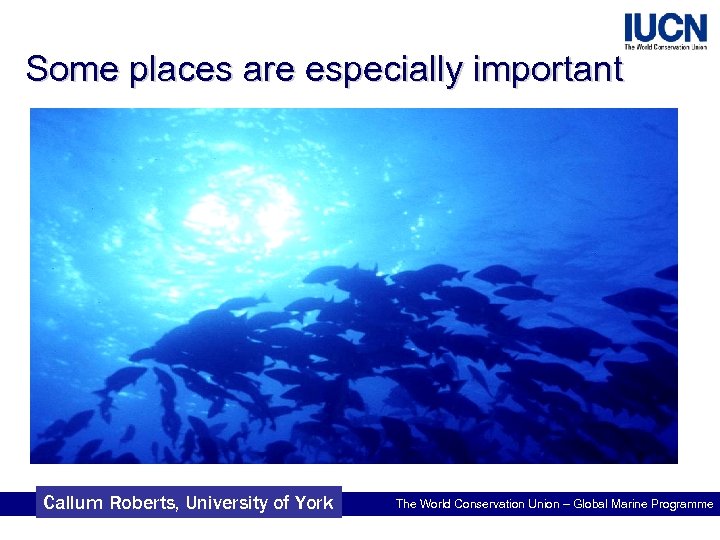
Some places are especially important Callum Roberts, University of York The World Conservation Union – Global Marine Programme
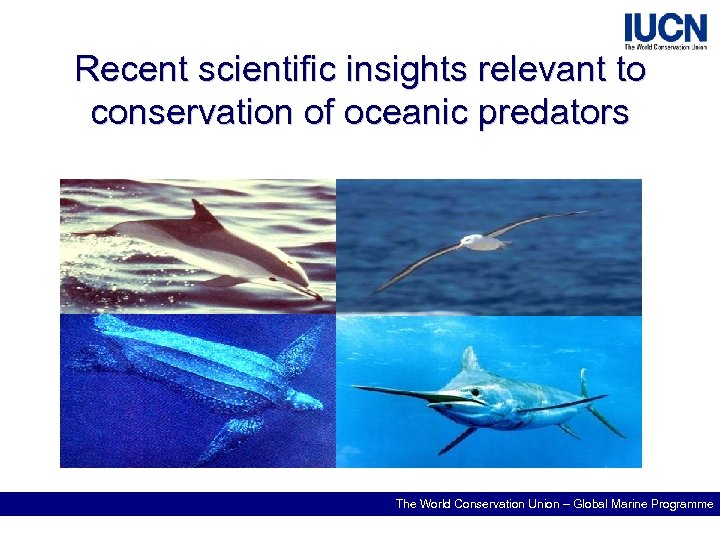
Recent scientific insights relevant to conservation of oceanic predators The World Conservation Union – Global Marine Programme
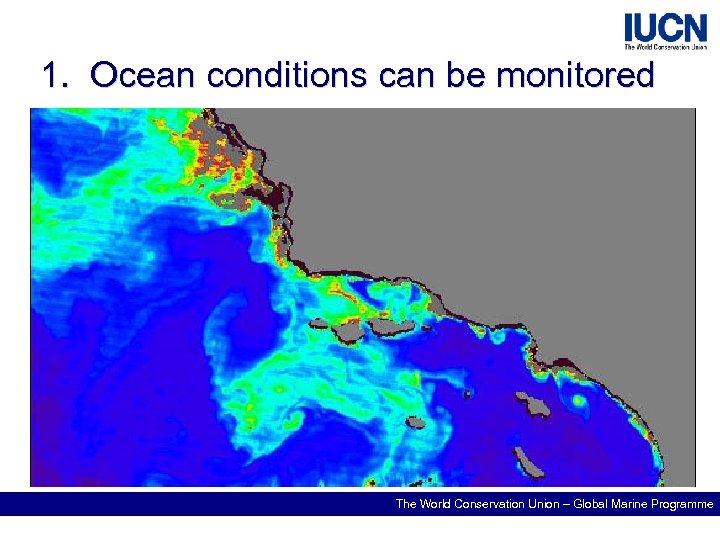
1. Ocean conditions can be monitored The World Conservation Union – Global Marine Programme
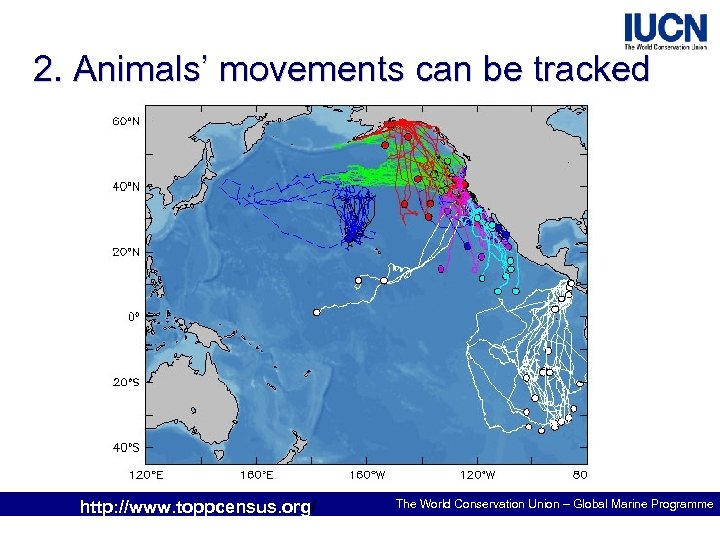
2. Animals’ movements can be tracked http: //www. toppcensus. org/ The World Conservation Union – Global Marine Programme
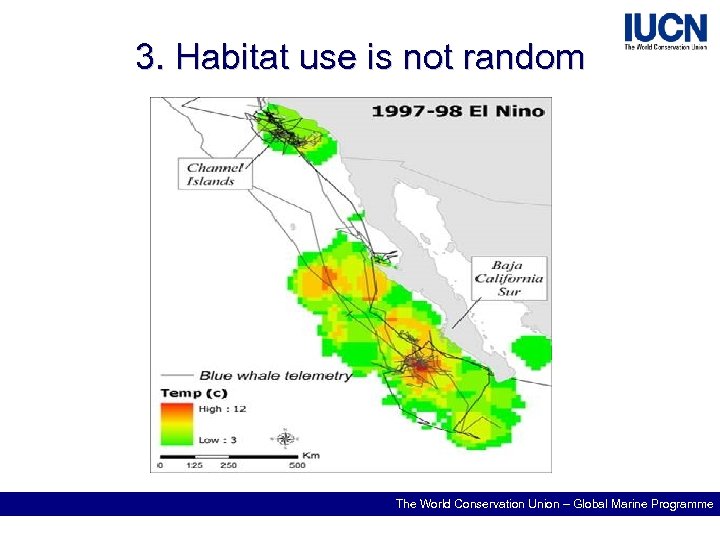
3. Habitat use is not random The World Conservation Union – Global Marine Programme
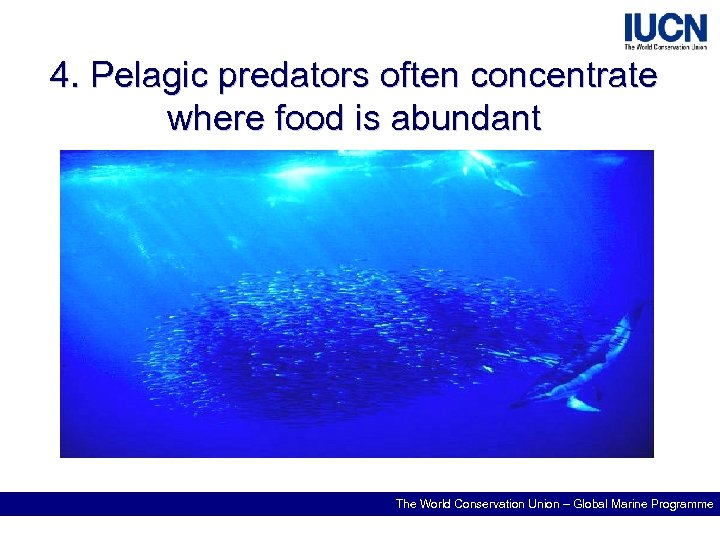
4. Pelagic predators often concentrate where food is abundant The World Conservation Union – Global Marine Programme
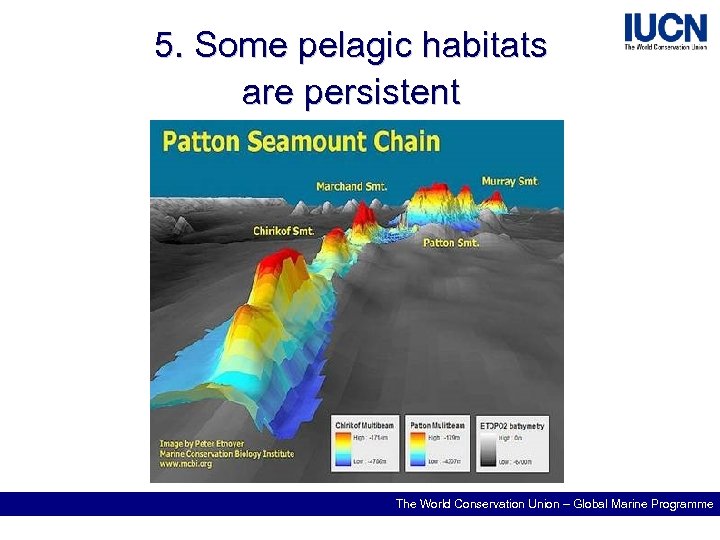
5. Some pelagic habitats are persistent The World Conservation Union – Global Marine Programme
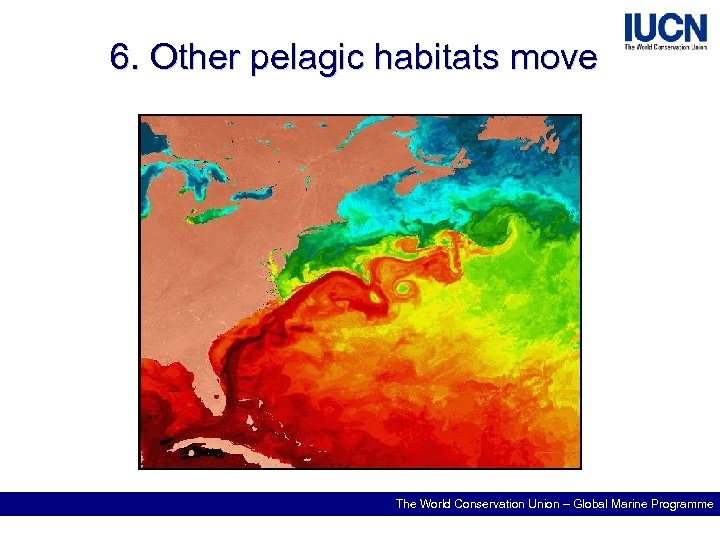
6. Other pelagic habitats move The World Conservation Union – Global Marine Programme
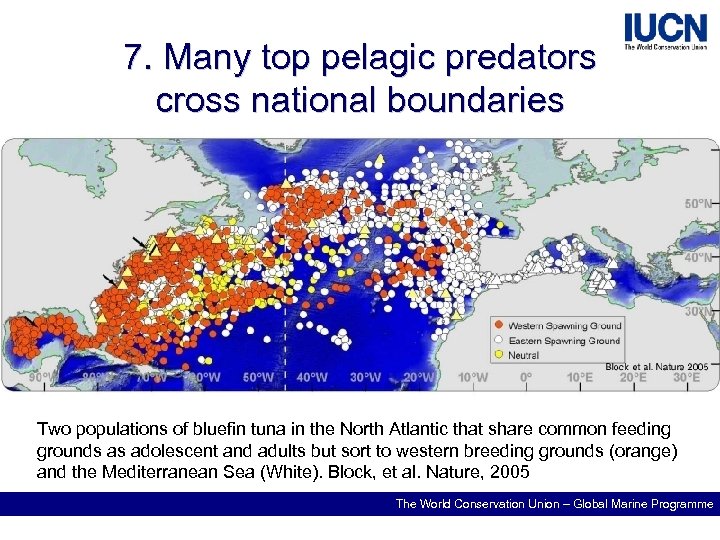
7. Many top pelagic predators cross national boundaries Two populations of bluefin tuna in the North Atlantic that share common feeding grounds as adolescent and adults but sort to western breeding grounds (orange) and the Mediterranean Sea (White). Block, et al. Nature, 2005 The World Conservation Union – Global Marine Programme
Pelagic MPAs need to: Scientific • • Protect key places where species feed, mate, spawn, calve, rear young, etc. Protect key migratory routes Protect future habitats thru networks Monitor animal movements and/or habitats in real-time The World Conservation Union – Global Marine Programme
Pelagic MPAs need: Practical • An effective legal basis • Compliance mechanisms • Political buy-in from key players The World Conservation Union – Global Marine Programme
How to monitor and enforce pelagic MPAs • • On board observers Fish and other species tracking Electronic log books Catch documentation schemes Vessel monitoring systems Satellite surveillance Vessel registration requirements The World Conservation Union – Global Marine Programme
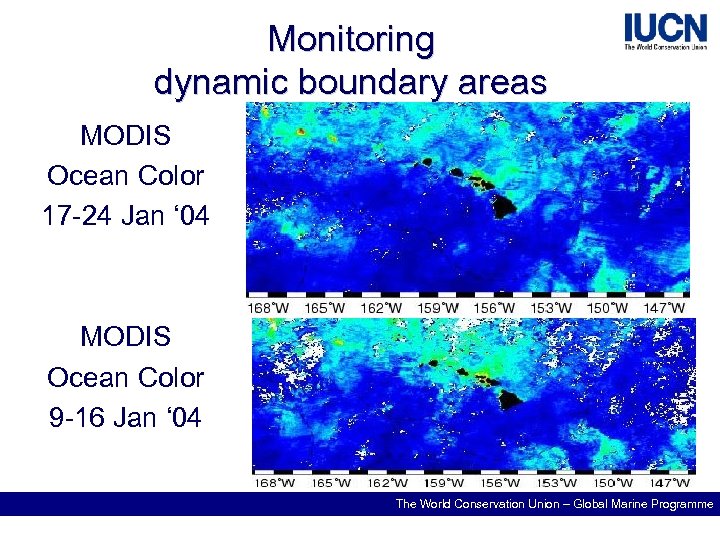
Monitoring dynamic boundary areas MODIS Ocean Color 17 -24 Jan ‘ 04 MODIS Ocean Color 9 -16 Jan ‘ 04 The World Conservation Union – Global Marine Programme
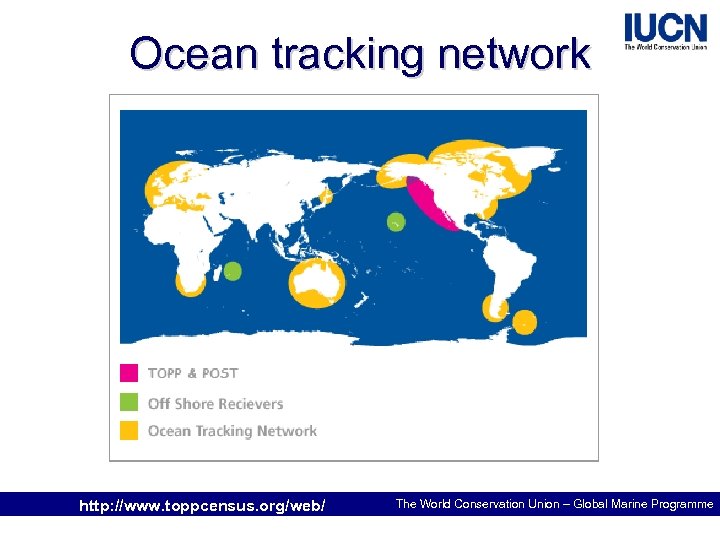
Ocean tracking network http: //www. toppcensus. org/web/ The World Conservation Union – Global Marine Programme
Enforcing dynamic boundary areas • • Managers set boundaries and broadcast them frequently Fishing operations seek and get the broadcast messages Vessel monitoring systems, event data recorders and/or radar satellites broadcast data on vessels’ positions to enforcement officials Rebuttable presumption of violation for vessels observed within boundaries The World Conservation Union – Global Marine Programme
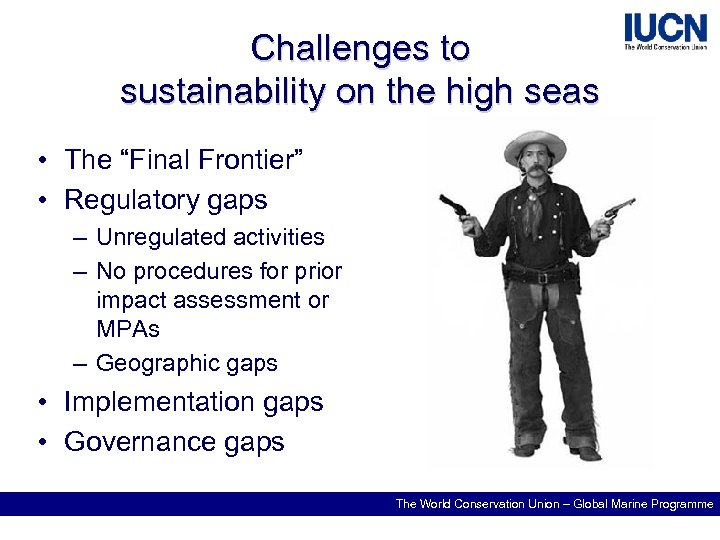
Challenges to sustainability on the high seas • The “Final Frontier” • Regulatory gaps – Unregulated activities – No procedures for prior impact assessment or MPAs – Geographic gaps • Implementation gaps • Governance gaps The World Conservation Union – Global Marine Programme
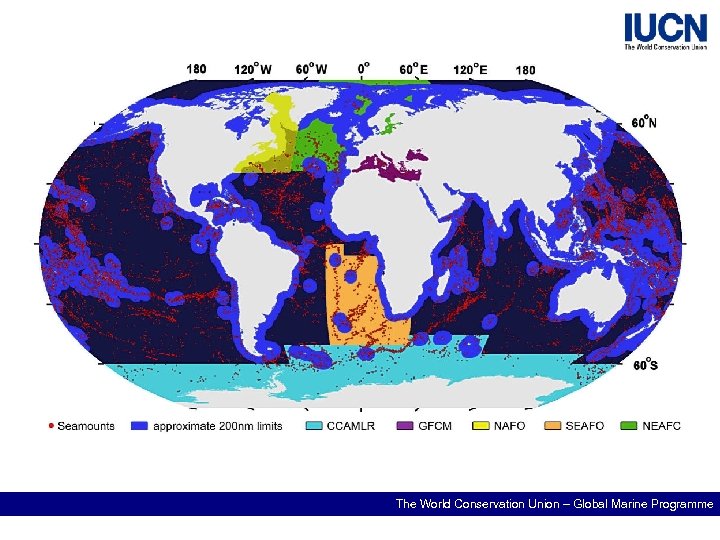
The World Conservation Union – Global Marine Programme
Opportunities to improve management of oceanic top predators • Existing Regional Fisheries Bodies • UN Fish Stocks Agreement • Convention on International Trade in Endangered Species • Convention on Migratory Species • Convention on Biological Diversity • United Nations General Assembly The World Conservation Union – Global Marine Programme
Concluding remarks • MPAs are a vital tool, not a panacea • Need improved high seas governance and fisheries management – Reduce overcapacity, legal overfishing, illegal fishing – Increase responsibility, selectivity, precaution • We can now identify where not to fish • Perhaps we should identify where to fish? The World Conservation Union – Global Marine Programme
For More Information: Norse, E. , L. Crowder, K. Gjerde, D. Hyrenbach, C. Roberts, C. Safina, and M. Soulé (2005). “Place-based Ecosystem Management in the Open Ocean”, from Marine Conservation Biology: The Science of Maintaining the Sea’s Biodiversity. Island Press http: //ioc 3. unesco. org/marinesp/files/Place. Based%20 Management. pdf Gubbay, Susan (2006). Marine Nature Conservation in the Pelagic Environment: A Case for Pelagic Marine Protected Areas? WWF http: //www. ngo. grida. no/wwfneap/Projects/Reports/WWF_Pelagic_MPAs. pdf Hyrenbach, D. , K. Forney, and P. Dayton (2000). “Marine protected areas and ocean basin management”. Aquatic Conservation: Marine and Freshwater Ecosystems 10: 437 -458. http: //swfsc. nmfs. noaa. gov/prd/PROGRAMS/CMMP/reports/mpa_pdf. pdf Kimball, Lee (2005). The International Legal Regime of the High Seas and the Seabed Beyond the Limits of National Jurisdiction and Options for Cooperation for the Establishment of Marine Protected Areas in Marine Areas Beyond the Limits of National Jurisdiction. Secretariat of the Convention on Biological Diversity. http: //www. iucn. org/themes/marine/pdf/cbd-ts-19. pdf Davis, J. Using Marine Reserves to Protect Highly Migratory Species: Scientists Discuss Potential Strategies, Including Mobile MPAs MPA News, Vol. 8, No. 8 March 2007 The World Conservation Union – Global Marine Programme
More information available from: kgjerde@it. com. pl www. iucn. org/marine The World Conservation Union – Global Marine Programme
Thank You! The World Conservation Union – Global Marine Programme
Acknowledgements: Elliott Norse, MCBI and Darius de Sola Pool, my son The World Conservation Union – Global Marine Programme
Скачать презентацию THE CHALLENGE OF CHANGE Managing for Sustainability of
1f85c028dca92e94255df8bb4740d606.ppt