 Скачать презентацию The Cell AP Biology Why are cells
69b2d2d952ea6ba621a61e66adc6556e.ppt
- Количество слайдов: 33



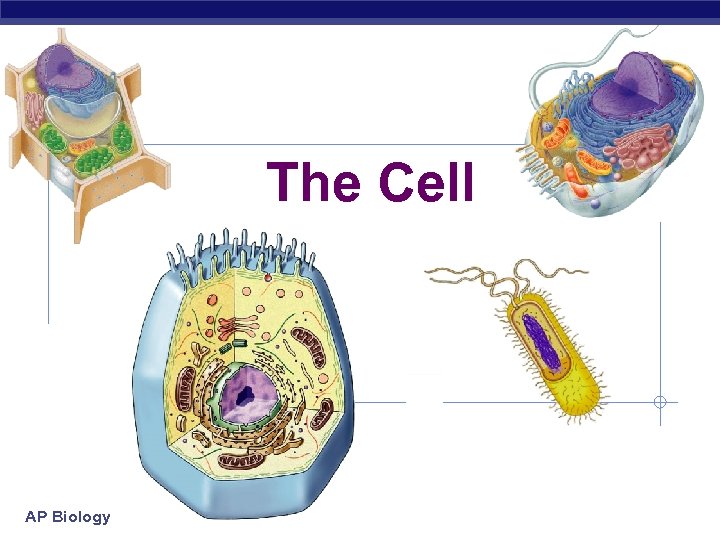
The Cell AP Biology
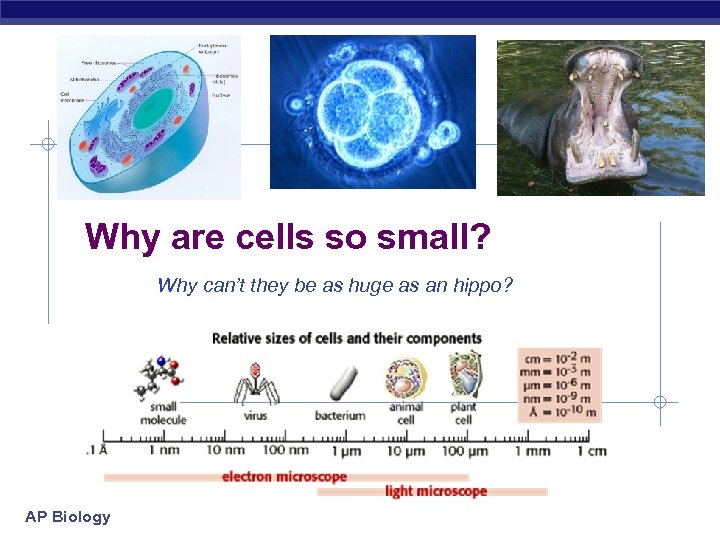
Why are cells so small? Why can’t they be as huge as an hippo? AP Biology
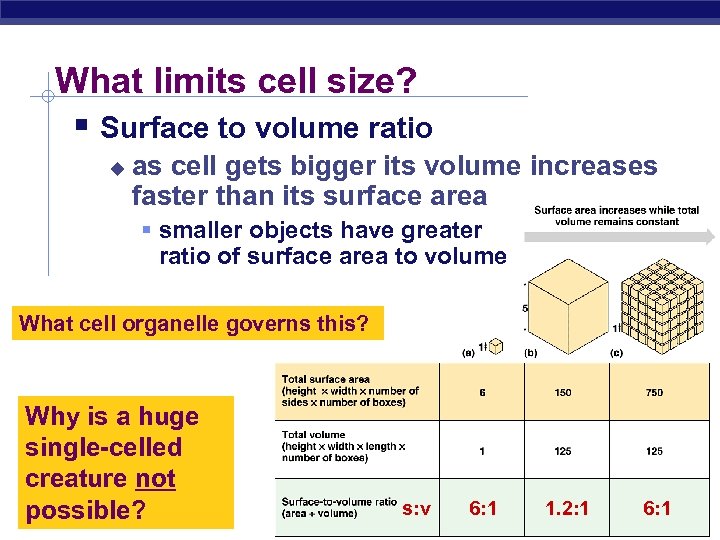
What limits cell size? § Surface to volume ratio u as cell gets bigger its volume increases faster than its surface area § smaller objects have greater ratio of surface area to volume What cell organelle governs this? Why is a huge single-celled creature not possible? AP Biology s: v 6: 1 2005 -2006 6: 1 1. 2: 1
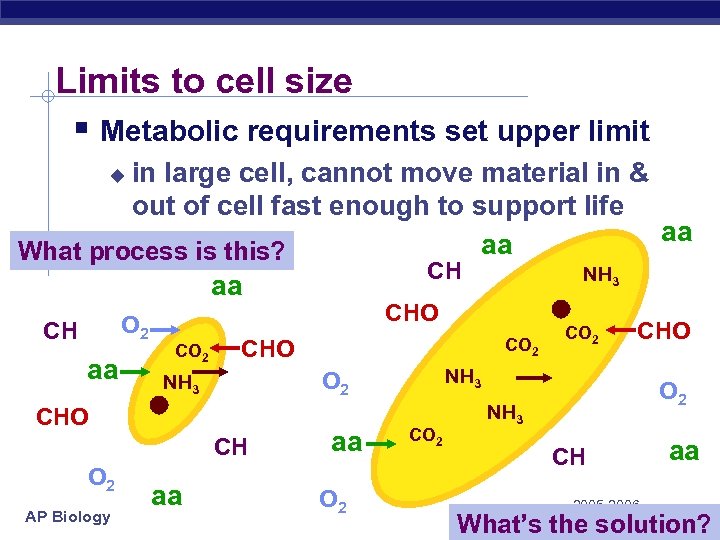
Limits to cell size § Metabolic requirements set upper limit in large cell, cannot move material in & out of cell fast enough to support life aa aa What process is this? CH NH 3 aa u O 2 CH aa CHO CO 2 CHO CH AP Biology aa aa O 2 CHO NH 3 O 2 NH 3 CHO O 2 CO 2 NH 3 CH 2005 -2006 aa What’s the solution?
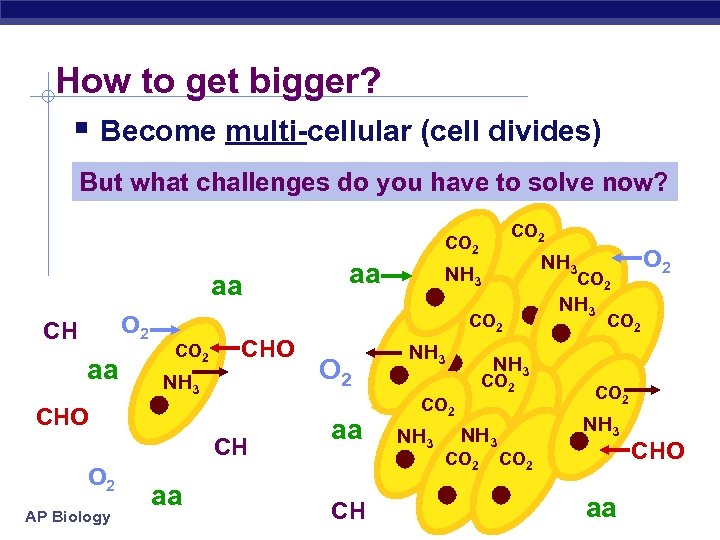
How to get bigger? § Become multi-cellular (cell divides) But what challenges do you have to solve now? CO 2 aa O 2 CH aa CO 2 CHO NH 3 CH AP Biology NH 3 CO 2 CHO O 2 aa aa O 2 aa CH NH 3 CO 2 NH 3 O 2 NH 3 CO 2 aa CHO 2005 -2006
Cell characteristics § All cells: surrounded by a plasma membrane u have cytosol u § semi-fluid substance within the membrane § cytoplasm = cytosol + organelles contain chromosomes which have genes in the form of DNA u have ribosomes u § tiny “organelles” that make proteins using instructions contained in genes AP Biology
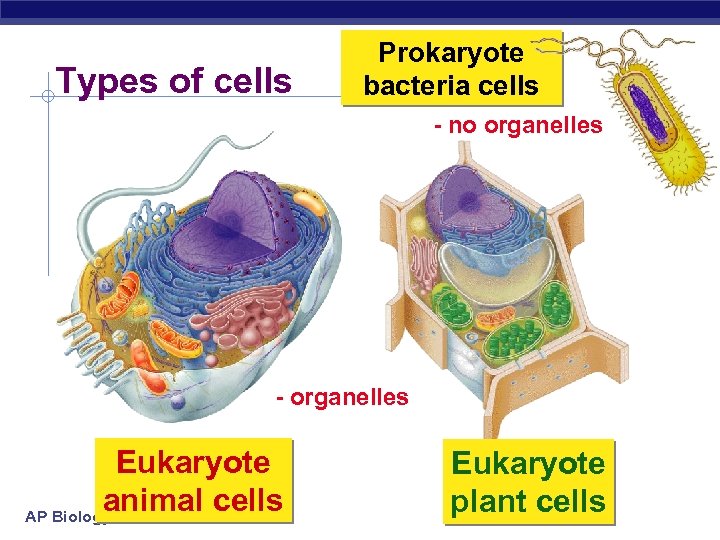
Types of cells Prokaryote bacteria cells - no organelles - organelles Eukaryote animal cells AP Biology Eukaryote plant cells
Types of cells § Prokaryotic vs. eukaryotic cells Prokaryotic cell § DNA in nucleoid region, without a membrane separating it from rest of cell § Cell wall present in all (type differs) AP Biology Eukaryotic cell § chromosomes in nucleus, membraneenclosed organelle § Cell walls present in fungi and plants only § More complex § Membrane bound organelles present
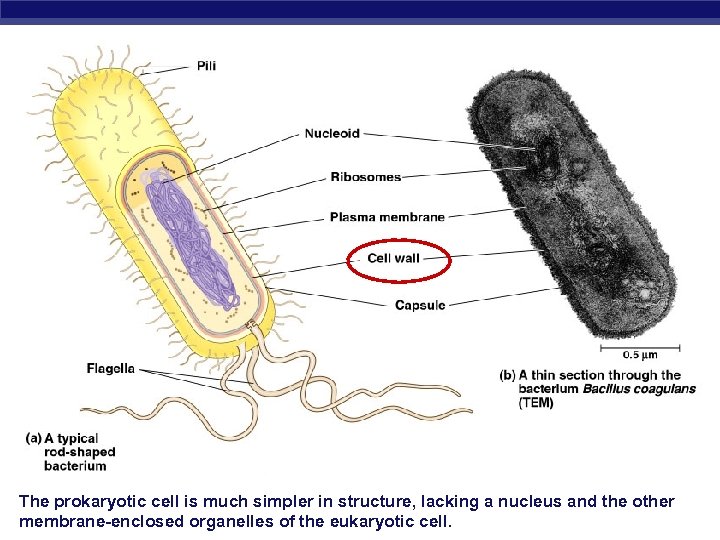
The prokaryotic cell is much simpler in structure, lacking a nucleus and the other 2005 -2006 AP Biology membrane-enclosed organelles of the eukaryotic cell.
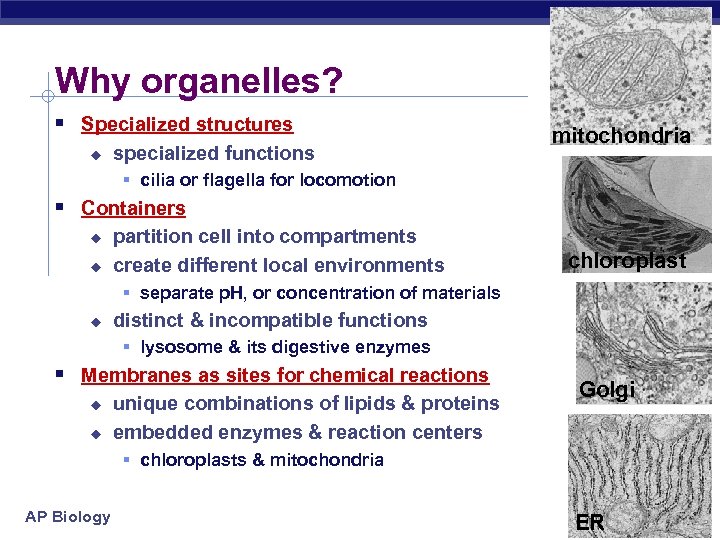
Why organelles? § Specialized structures u specialized functions mitochondria § cilia or flagella for locomotion § Containers u u partition cell into compartments create different local environments chloroplast § separate p. H, or concentration of materials u distinct & incompatible functions § lysosome & its digestive enzymes § Membranes as sites for chemical reactions u u unique combinations of lipids & proteins embedded enzymes & reaction centers Golgi § chloroplasts & mitochondria AP Biology ER
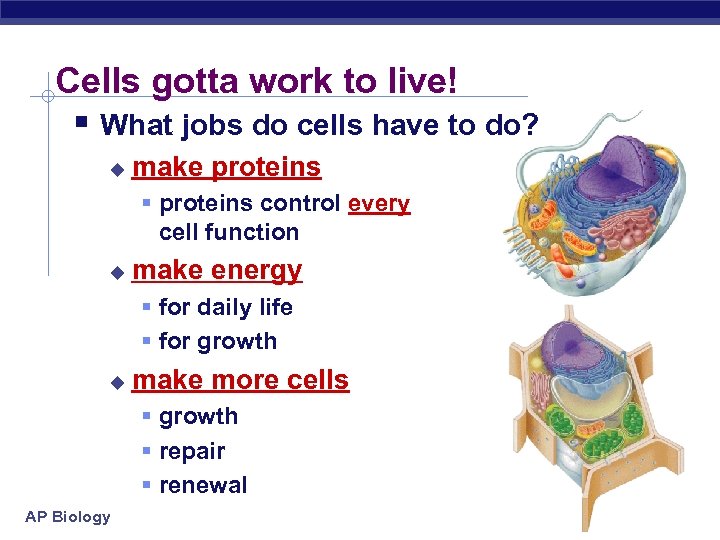
Cells gotta work to live! § What jobs do cells have to do? u make proteins § proteins control every cell function u make energy § for daily life § for growth u make more cells § growth § repair § renewal AP Biology
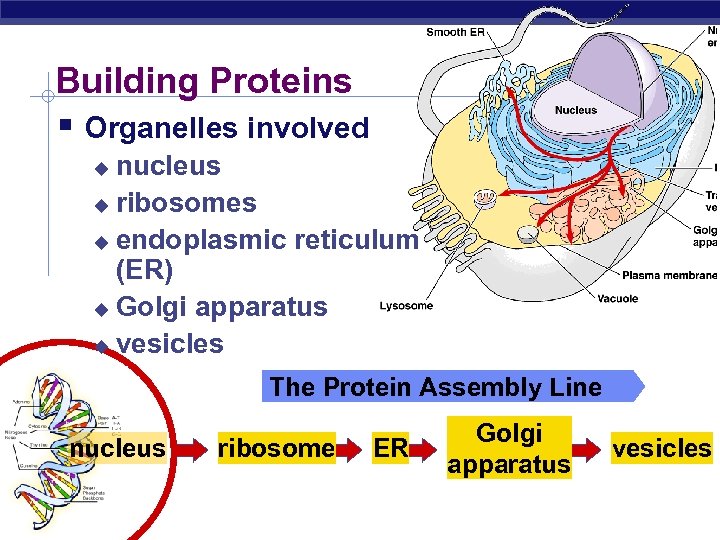
Building Proteins § Organelles involved nucleus u ribosomes u endoplasmic reticulum (ER) u Golgi apparatus u vesicles u The Protein Assembly Line nucleus AP Biology ribosome ER Golgi apparatus vesicles
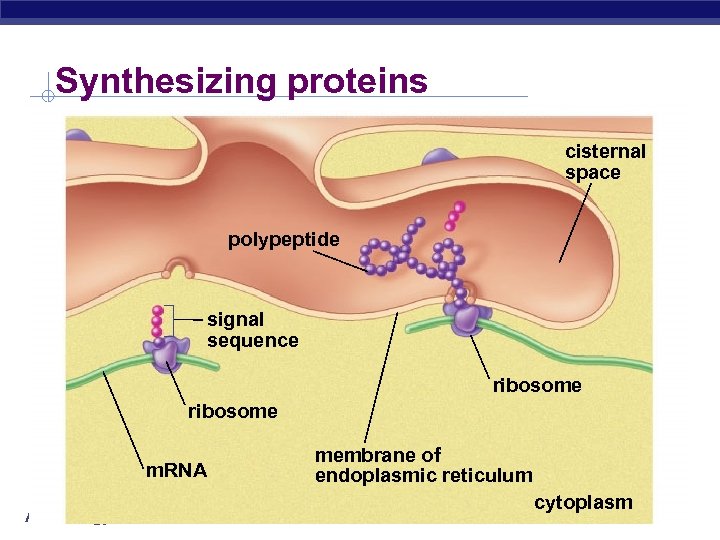
Synthesizing proteins cisternal space polypeptide signal sequence ribosome m. RNA AP Biology membrane of endoplasmic reticulum cytoplasm
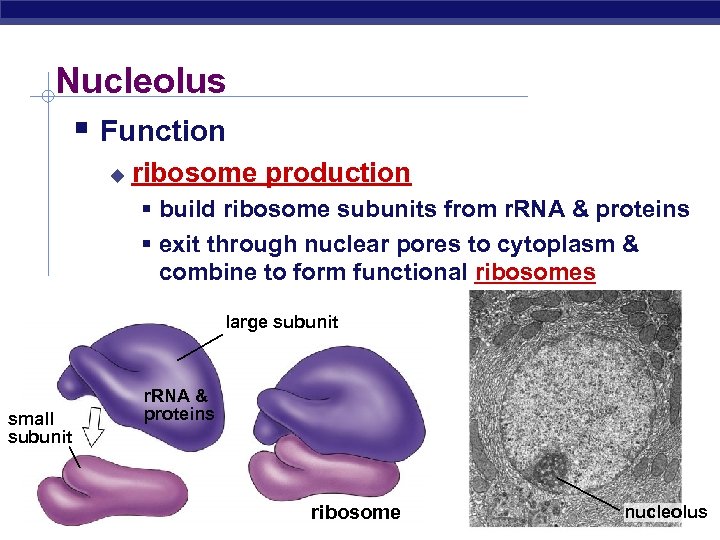
Nucleolus § Function u ribosome production § build ribosome subunits from r. RNA & proteins § exit through nuclear pores to cytoplasm & combine to form functional ribosomes large subunit small subunit AP Biology r. RNA & proteins ribosome nucleolus

Types of Ribosomes § Free ribosomes u u suspended in cytosol synthesize proteins that function in cytosol § Bound ribosomes u u AP Biology attached to endoplasmic reticulum synthesize proteins for export or for membranes membrane proteins
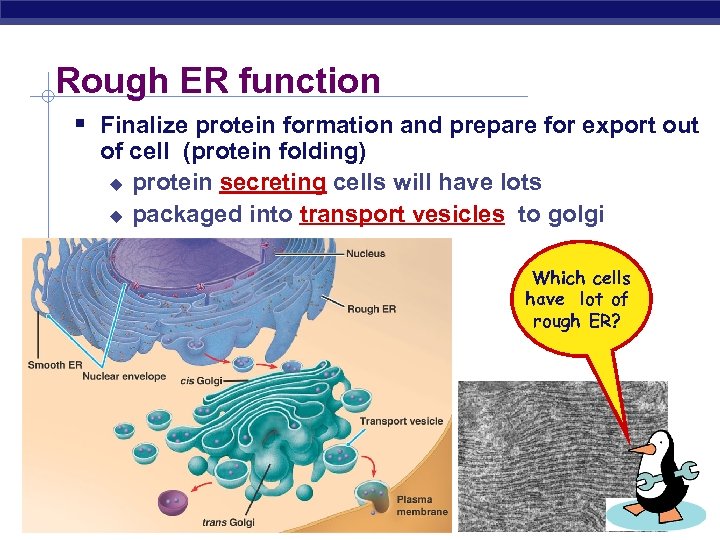
Rough ER function § Finalize protein formation and prepare for export out of cell (protein folding) u protein secreting cells will have lots u packaged into transport vesicles to golgi Which cells have lot of rough ER? AP Biology
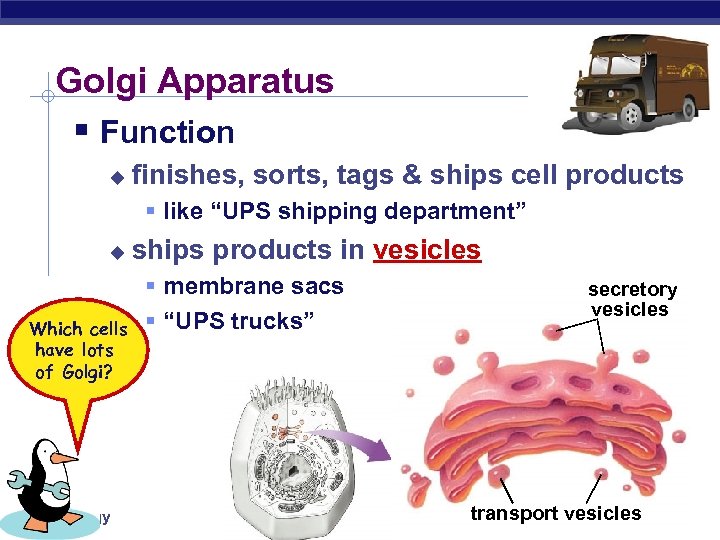
Golgi Apparatus § Function u finishes, sorts, tags & ships cell products § like “UPS shipping department” u Which cells have lots of Golgi? AP Biology ships products in vesicles § membrane sacs § “UPS trucks” secretory vesicles transport vesicles
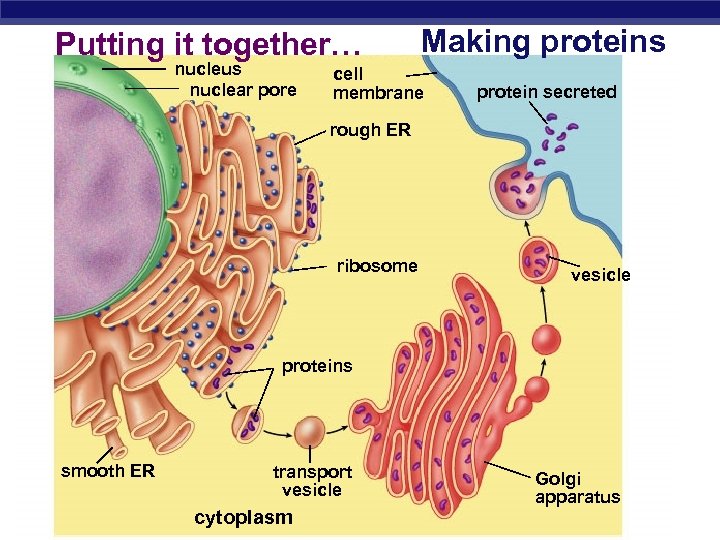
Putting it together… nucleus nuclear pore Making proteins cell membrane protein secreted rough ER ribosome vesicle proteins smooth ER AP Biology transport vesicle cytoplasm Golgi apparatus
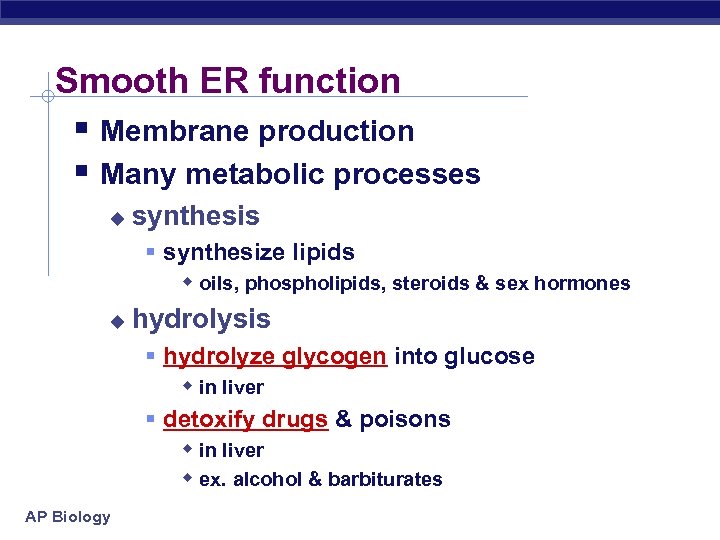
Smooth ER function § Membrane production § Many metabolic processes u synthesis § synthesize lipids w oils, phospholipids, steroids & sex hormones u hydrolysis § hydrolyze glycogen into glucose w in liver § detoxify drugs & poisons w in liver w ex. alcohol & barbiturates AP Biology
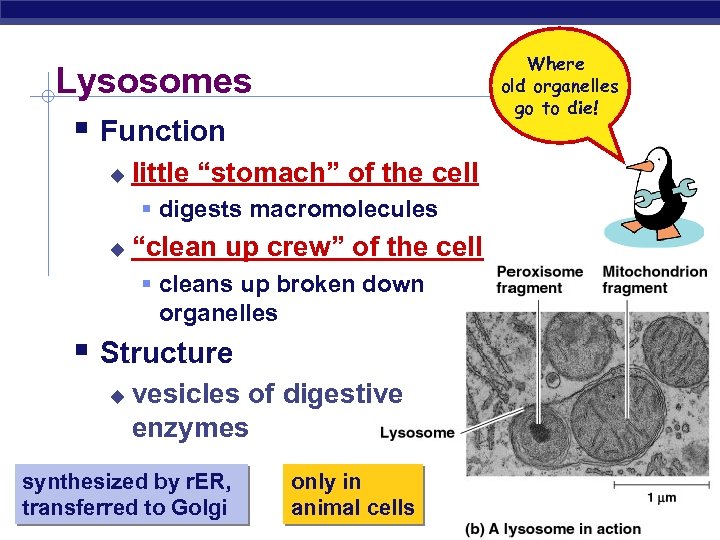
Where old organelles go to die! Lysosomes § Function u little “stomach” of the cell § digests macromolecules u “clean up crew” of the cell § cleans up broken down organelles § Structure u vesicles of digestive enzymes synthesized by r. ER, transferred to Golgi AP Biology only in animal cells
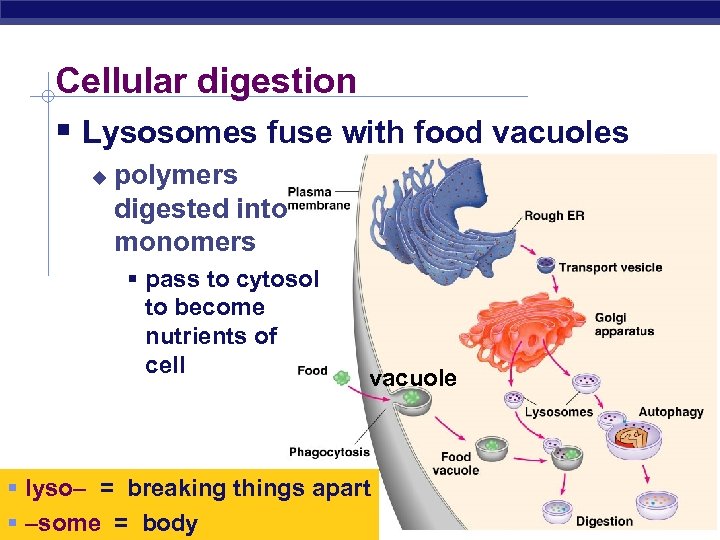
Cellular digestion § Lysosomes fuse with food vacuoles u polymers digested into monomers § pass to cytosol to become nutrients of cell vacuole § lyso– = breaking things apart AP Biology § –some = body
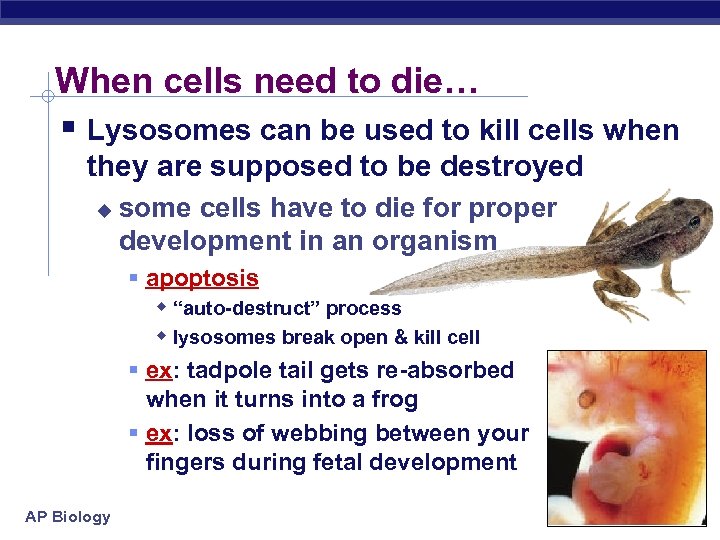
When cells need to die… § Lysosomes can be used to kill cells when they are supposed to be destroyed u some cells have to die for proper development in an organism § apoptosis w “auto-destruct” process w lysosomes break open & kill cell § ex: tadpole tail gets re-absorbed when it turns into a frog § ex: loss of webbing between your fingers during fetal development AP Biology
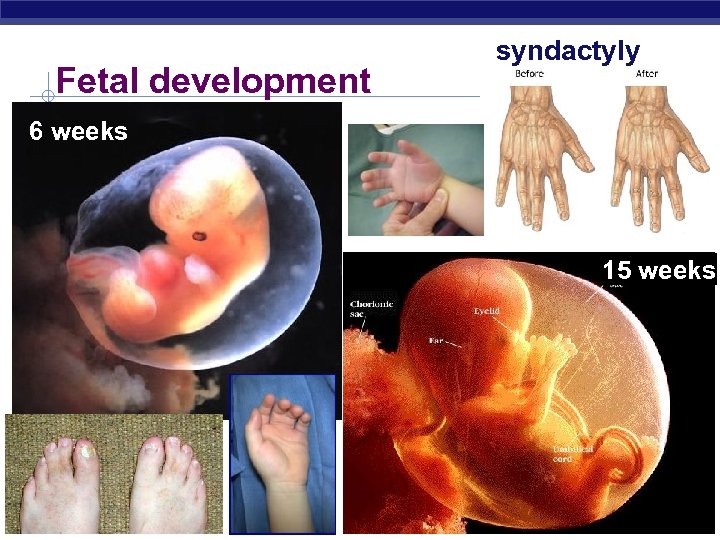
Fetal development syndactyly 6 weeks 15 weeks AP Biology
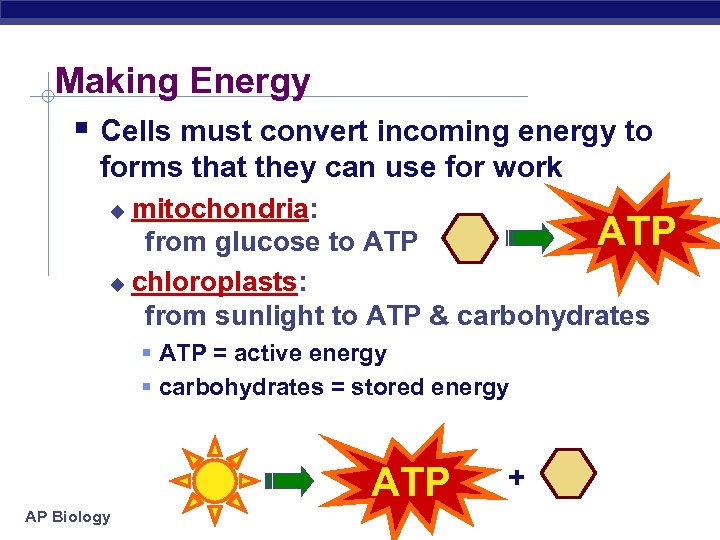
Making Energy § Cells must convert incoming energy to forms that they can use for work mitochondria: ATP from glucose to ATP u chloroplasts: from sunlight to ATP & carbohydrates u § ATP = active energy § carbohydrates = stored energy ATP AP Biology +
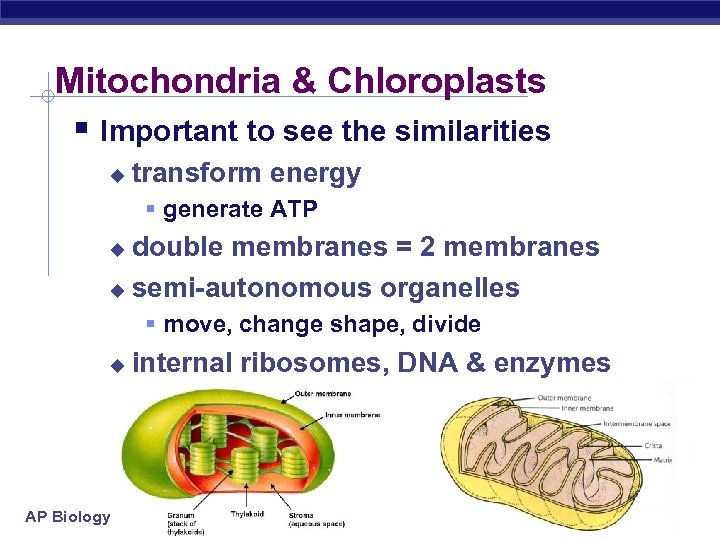
Mitochondria & Chloroplasts § Important to see the similarities u transform energy § generate ATP double membranes = 2 membranes u semi-autonomous organelles u § move, change shape, divide u AP Biology internal ribosomes, DNA & enzymes
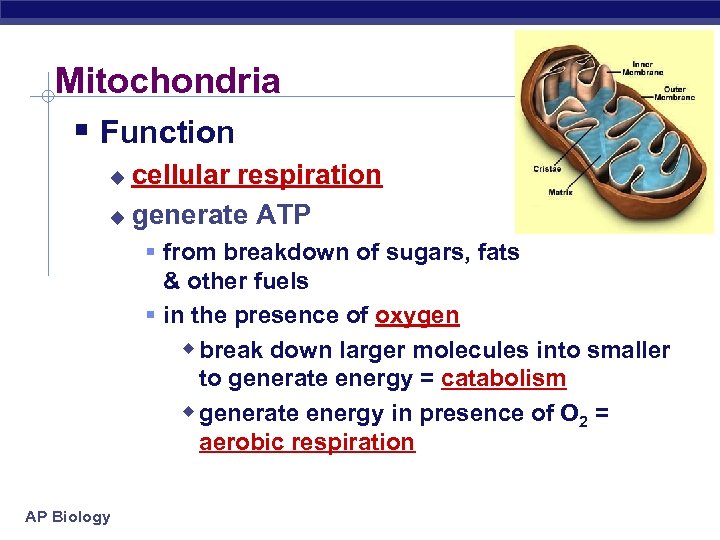
Mitochondria § Function cellular respiration u generate ATP u § from breakdown of sugars, fats & other fuels § in the presence of oxygen w break down larger molecules into smaller to generate energy = catabolism w generate energy in presence of O 2 = aerobic respiration AP Biology
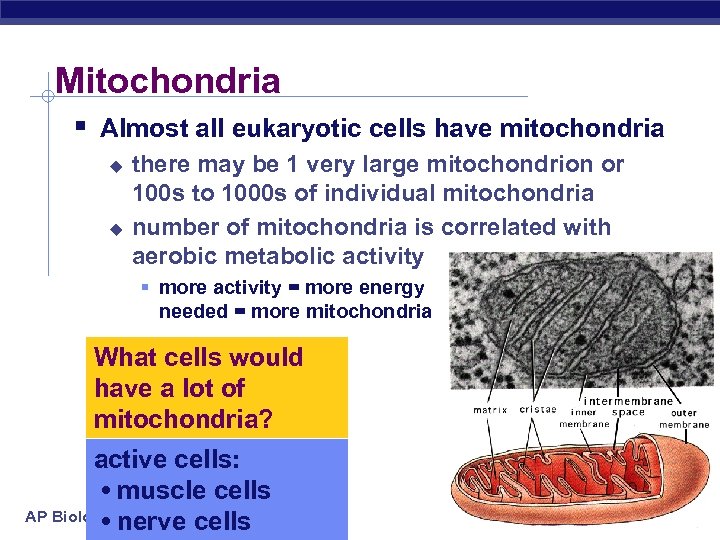
Mitochondria § Almost all eukaryotic cells have mitochondria u u there may be 1 very large mitochondrion or 100 s to 1000 s of individual mitochondria number of mitochondria is correlated with aerobic metabolic activity § more activity = more energy needed = more mitochondria What cells would have a lot of mitochondria? active cells: • muscle cells AP Biology • nerve cells
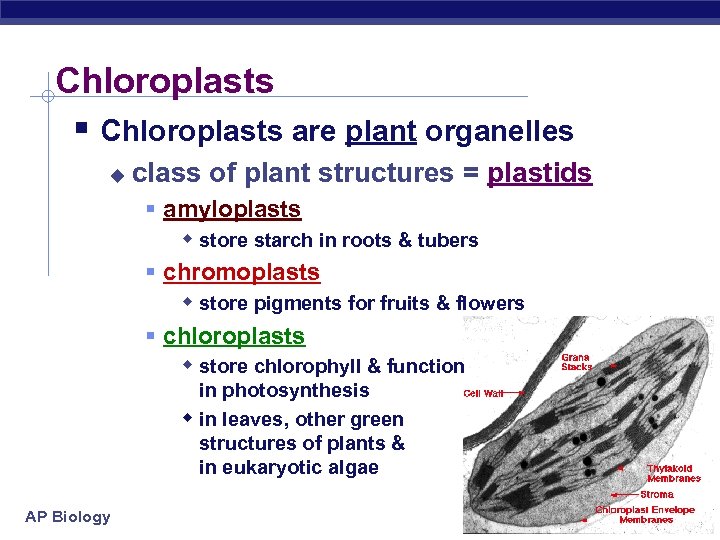
Chloroplasts § Chloroplasts are plant organelles u class of plant structures = plastids § amyloplasts w store starch in roots & tubers § chromoplasts w store pigments for fruits & flowers § chloroplasts w store chlorophyll & function in photosynthesis w in leaves, other green structures of plants & in eukaryotic algae AP Biology
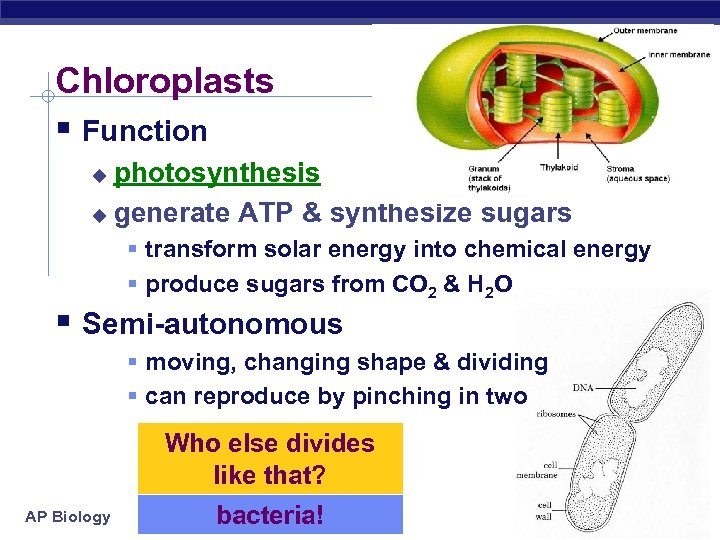
Chloroplasts § Function photosynthesis u generate ATP & synthesize sugars u § transform solar energy into chemical energy § produce sugars from CO 2 & H 2 O § Semi-autonomous § moving, changing shape & dividing § can reproduce by pinching in two Who else divides like that? AP Biology bacteria!
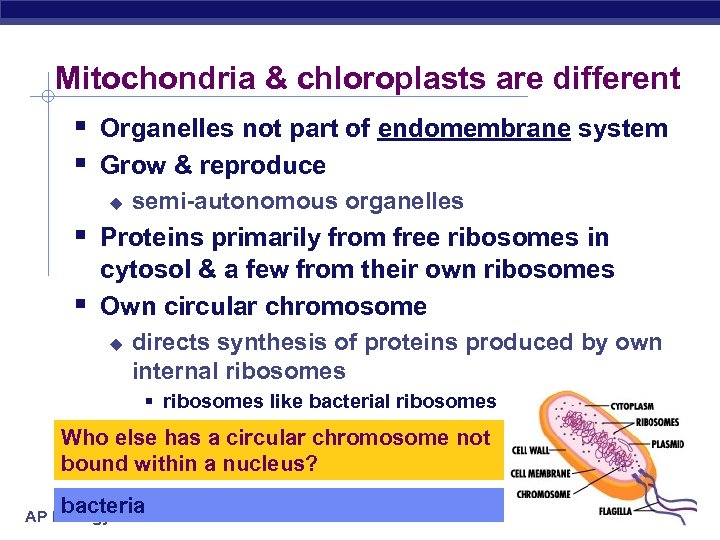
Mitochondria & chloroplasts are different § Organelles not part of endomembrane system § Grow & reproduce u semi-autonomous organelles § Proteins primarily from free ribosomes in § cytosol & a few from their own ribosomes Own circular chromosome u directs synthesis of proteins produced by own internal ribosomes § ribosomes like bacterial ribosomes Who else has a circular chromosome not bound within a nucleus? bacteria AP Biology
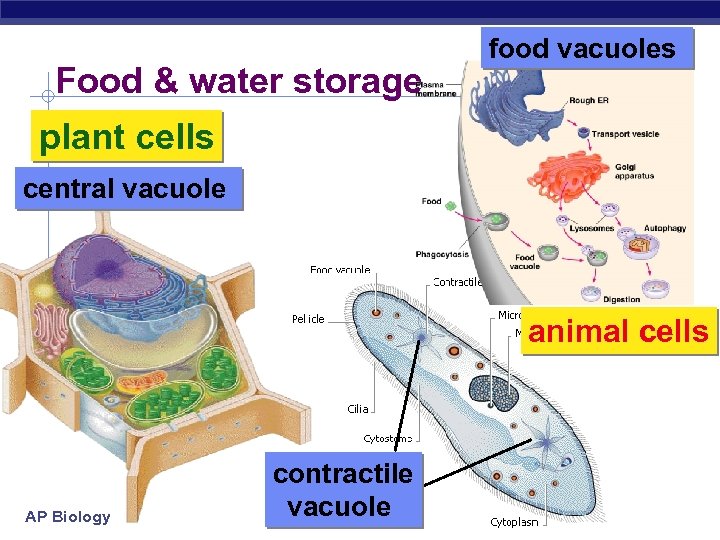
Food & water storage food vacuoles plant cells central vacuole animal cells AP Biology contractile vacuole
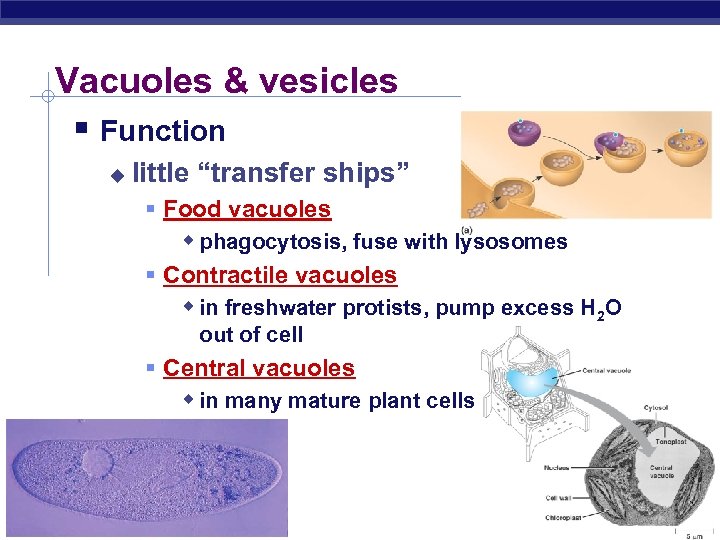
Vacuoles & vesicles § Function u little “transfer ships” § Food vacuoles w phagocytosis, fuse with lysosomes § Contractile vacuoles w in freshwater protists, pump excess H 2 O out of cell § Central vacuoles w in many mature plant cells AP Biology
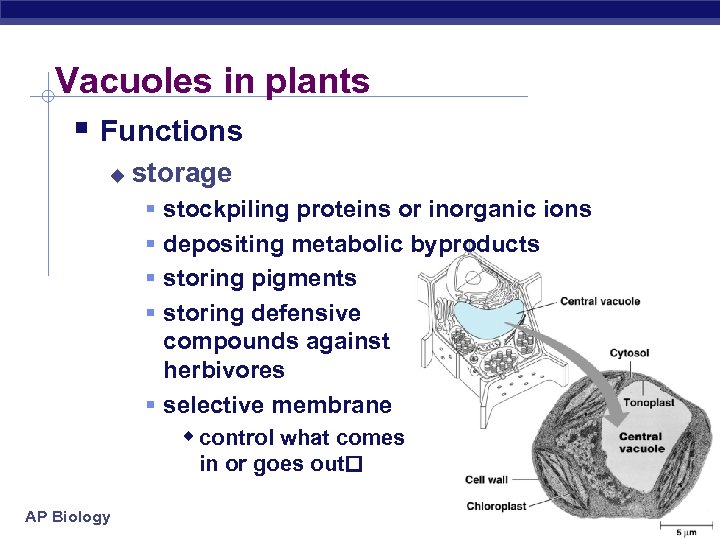
Vacuoles in plants § Functions u storage stockpiling proteins or inorganic ions depositing metabolic byproducts storing pigments storing defensive compounds against herbivores § selective membrane w control what comes § § in or goes out AP Biology
Скачать презентацию The Cell AP Biology Why are cells
69b2d2d952ea6ba621a61e66adc6556e.ppt