 Скачать презентацию The Carnival of Pézenas Every Year between
a73c1259f7a0e28a395773031187f310.ppt
- Количество слайдов: 13



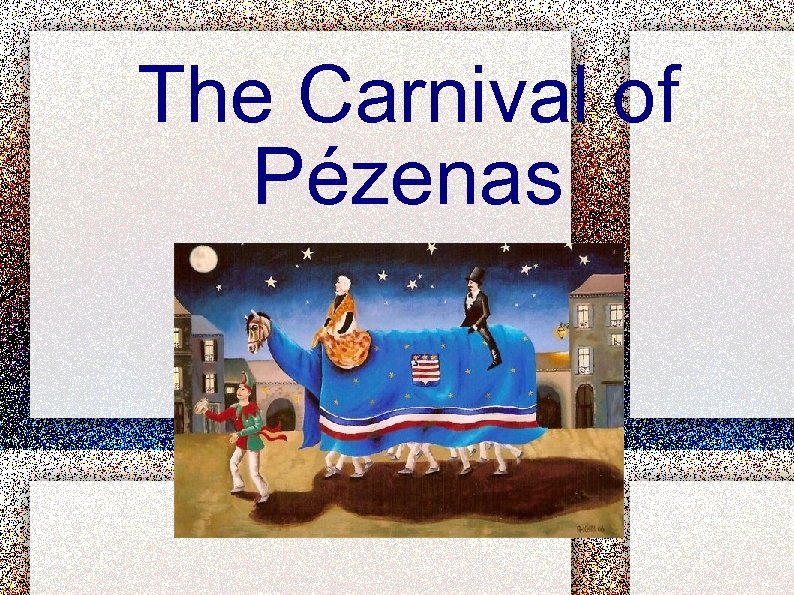
The Carnival of Pézenas
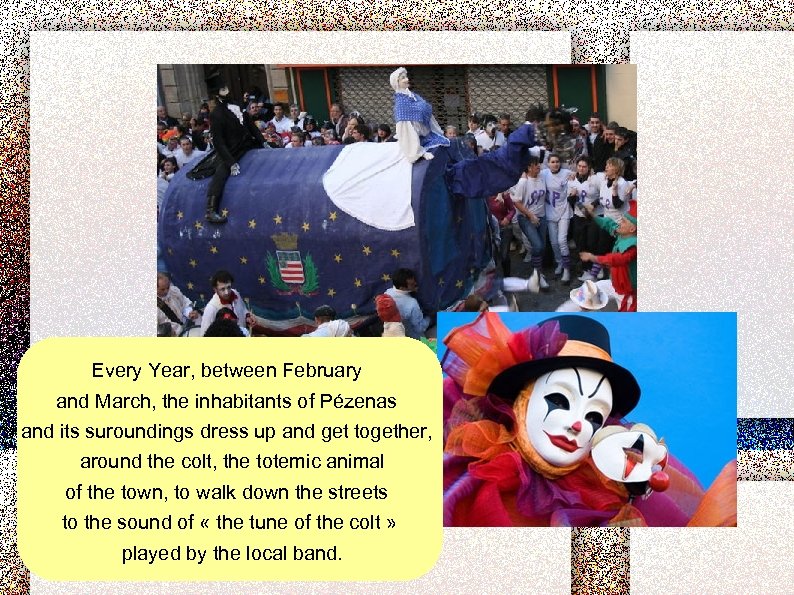
Every Year, between February and March, the inhabitants of Pézenas and its suroundings dress up and get together, around the colt, the totemic animal of the town, to walk down the streets to the sound of « the tune of the colt » played by the local band.
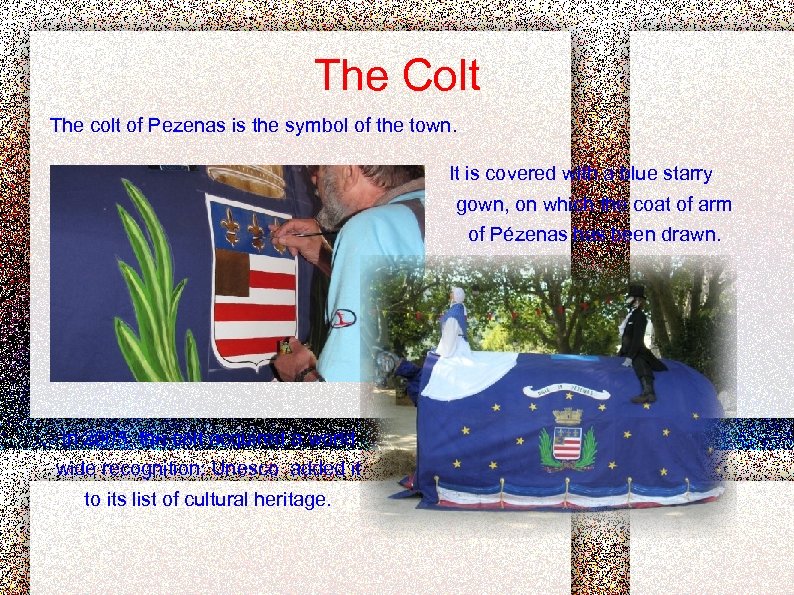
The Colt The colt of Pezenas is the symbol of the town. It is covered with a blue starry gown, on which the coat of arm of Pézenas has been drawn. In 2005 the colt acquired a world wide recognition: Unesco added it to its list of cultural heritage.
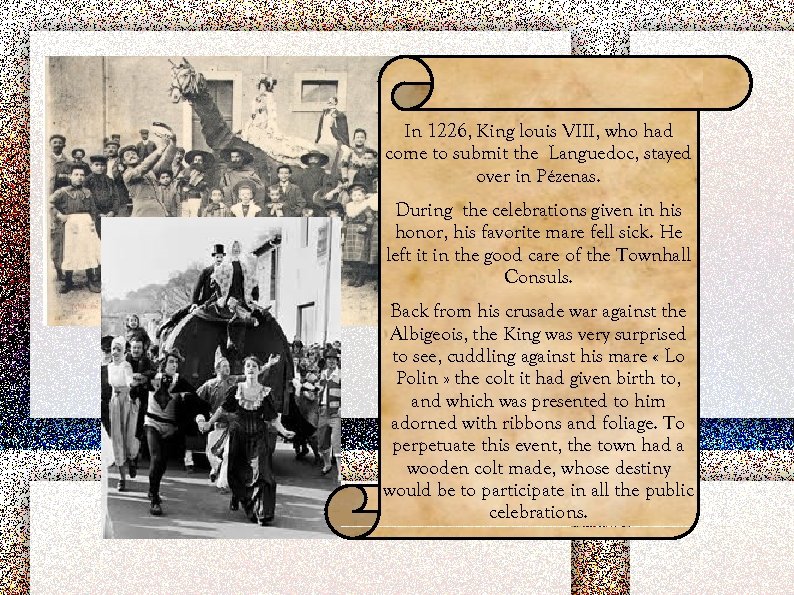
In 1226, King louis VIII, who had come to submit the Languedoc, stayed over in Pézenas. During the celebrations given in his honor, his favorite mare fell sick. He left it in the good care of the Townhall Consuls. Back from his crusade war against the Albigeois, the King was very surprised to see, cuddling against his mare « Lo Polin » the colt it had given birth to, and which was presented to him adorned with ribbons and foliage. To perpetuate this event, the town had a wooden colt made, whose destiny would be to participate in all the public celebrations.
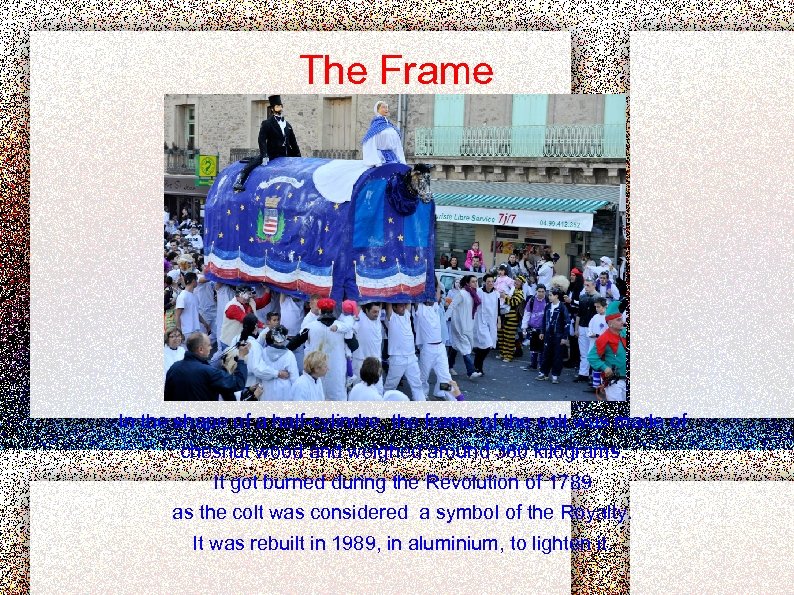
The Frame In the shape of a half-cylindre, the frame of the colt was made of chesnut wood and weighed around 360 kilograms. It got burned during the Revolution of 1789 as the colt was considered a symbol of the Royalty. It was rebuilt in 1989, in aluminium, to lighten it.
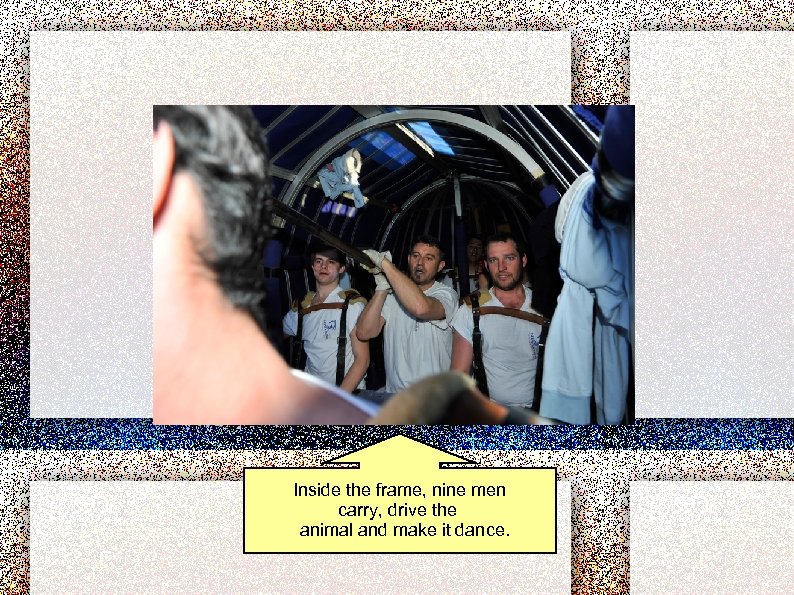
Inside the frame, nine men carry, drive the animal and make it dance.
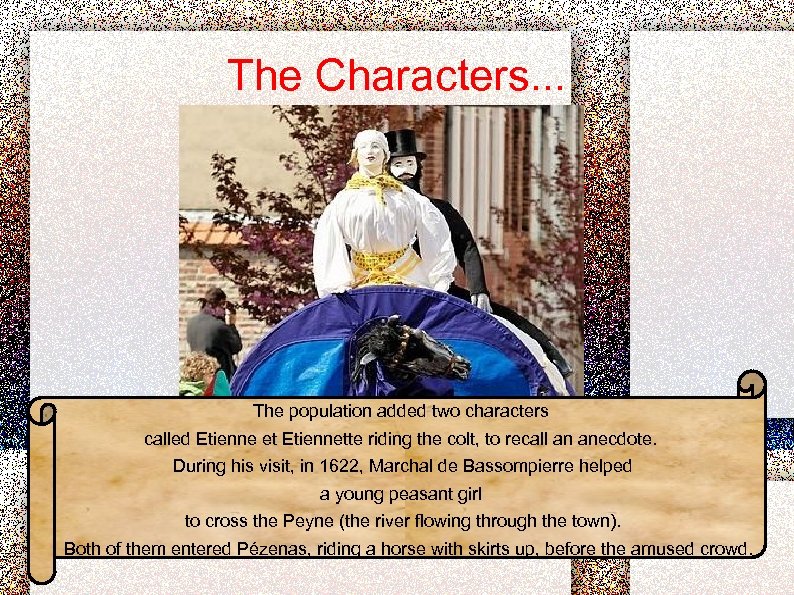
The Characters. . . The population added two characters called Etienne et Etiennette riding the colt, to recall an anecdote. During his visit, in 1622, Marchal de Bassompierre helped a young peasant girl to cross the Peyne (the river flowing through the town). Both of them entered Pézenas, riding a horse with skirts up, before the amused crowd.
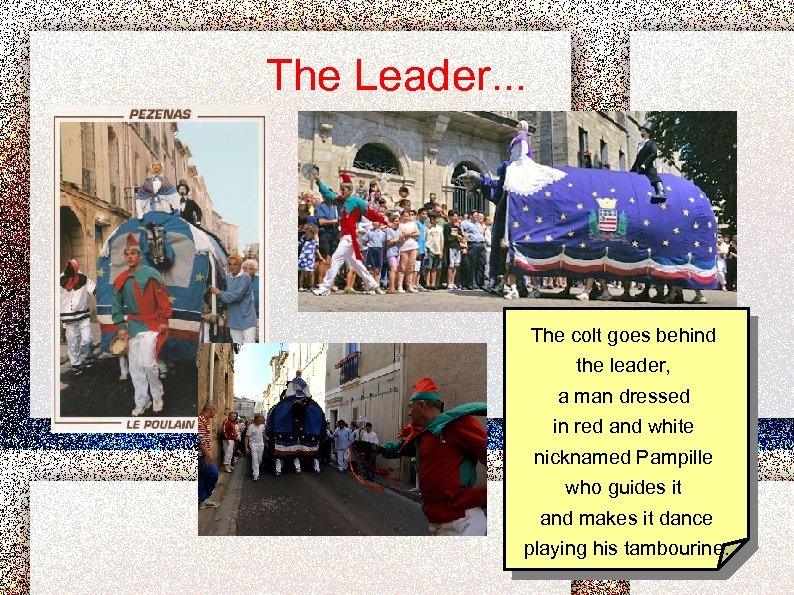
The Leader. . . The colt goes behind the leader, a man dressed in red and white nicknamed Pampille who guides it and makes it dance playing his tambourine.
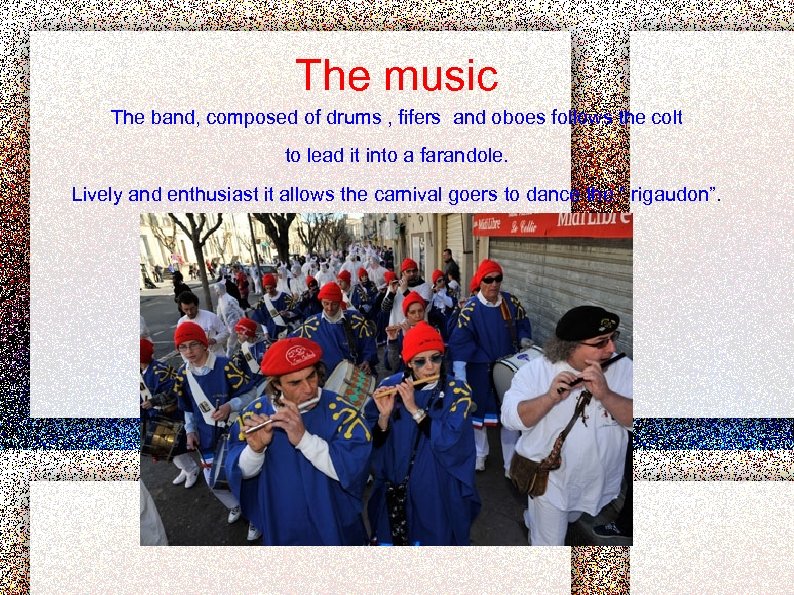
The music The band, composed of drums , fifers and oboes follows the colt to lead it into a farandole. Lively and enthusiast it allows the carnival goers to dance the “ rigaudon”.
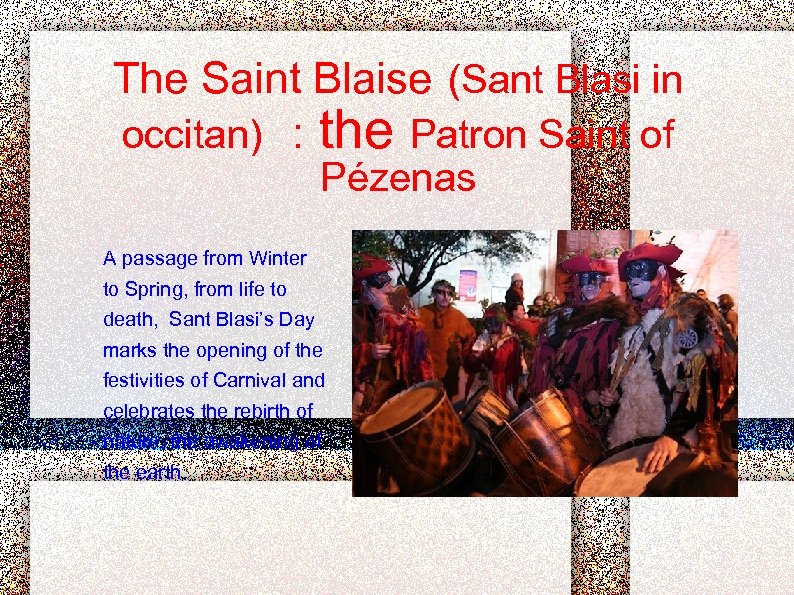
The Saint Blaise (Sant Blasi in occitan) : the Patron Saint of Pézenas A passage from Winter to Spring, from life to death, Sant Blasi’s Day marks the opening of the festivities of Carnival and celebrates the rebirth of nature, the awakening of the earth.
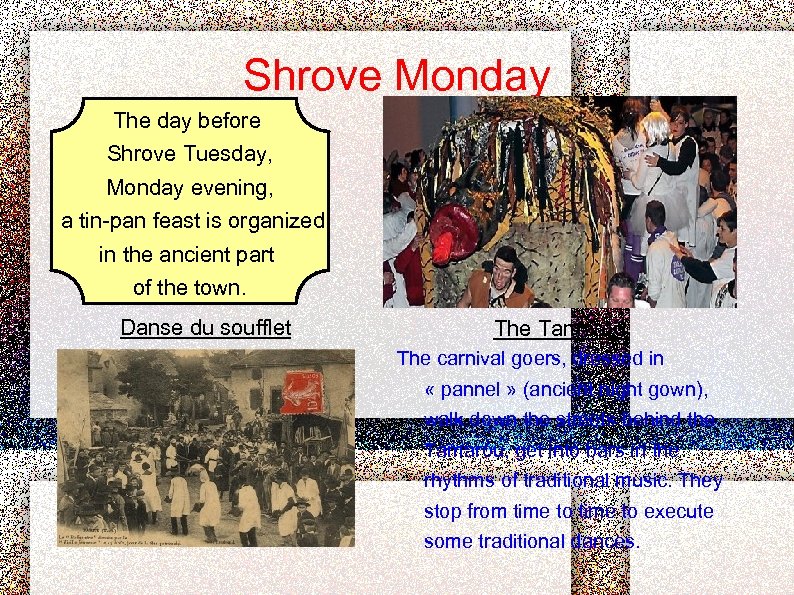
Shrove Monday The day before Shrove Tuesday, Monday evening, a tin-pan feast is organized in the ancient part of the town. Danse du soufflet The Tamarou The carnival goers, dressed in « pannel » (ancient night gown), walk down the streets behind the Tamarou, get into bars in the rhythms of traditional music. They stop from time to execute some traditional dances.
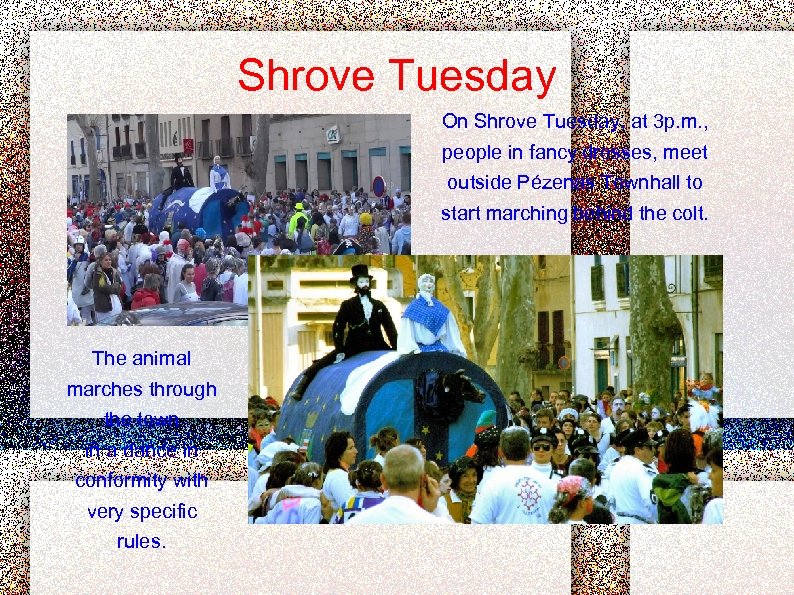
Shrove Tuesday On Shrove Tuesday, at 3 p. m. , people in fancy dresses, meet outside Pézenas Townhall to start marching behind the colt. The animal marches through the town in a dance in conformity with very specific rules.
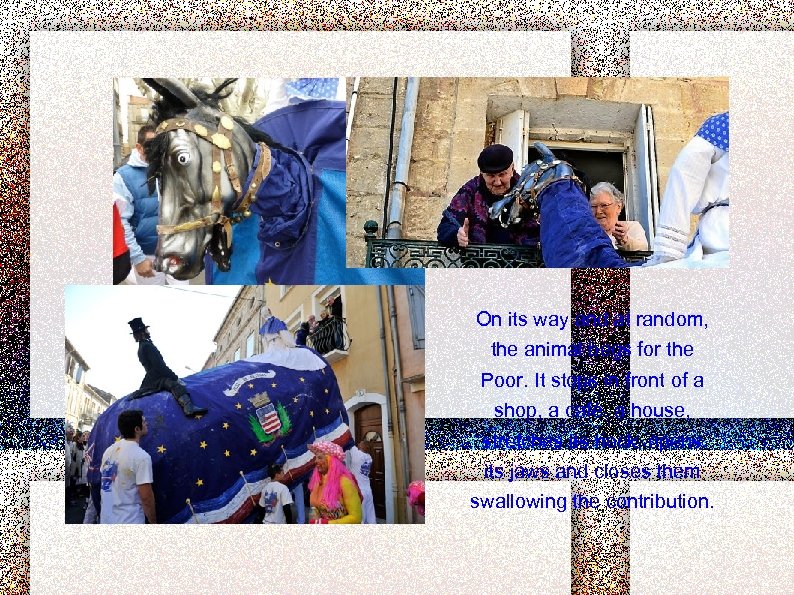
On its way and at random, the animal begs for the Poor. It stops in front of a shop, a café, a house, stretches its neck, opens its jaws and closes them swallowing the contribution.
Скачать презентацию The Carnival of Pézenas Every Year between
a73c1259f7a0e28a395773031187f310.ppt