 Скачать презентацию The Book of Isaiah 1 Background
4ed12a6472ebad7065d83f3578d54932.ppt
- Количество слайдов: 17



The Book of Isaiah
1 Background & Overview Of Isaiah I. Background II. Structure & Content III. Meaning & Application
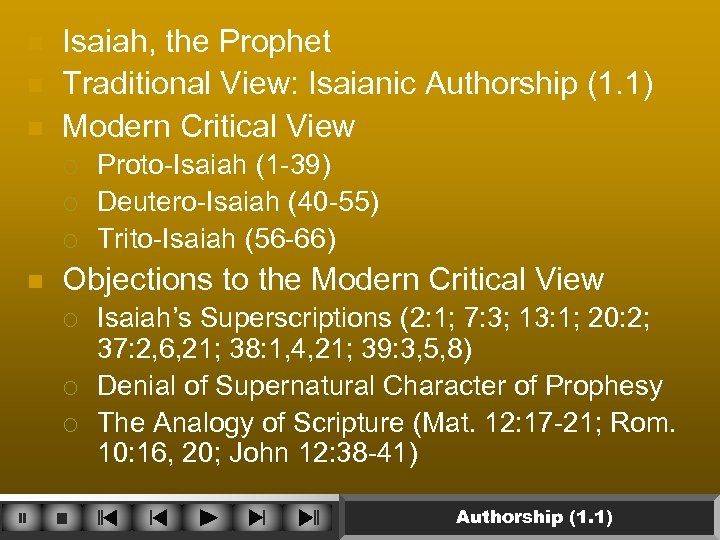
n n n Isaiah, the Prophet Traditional View: Isaianic Authorship (1. 1) Modern Critical View ¡ ¡ ¡ n Proto-Isaiah (1 -39) Deutero-Isaiah (40 -55) Trito-Isaiah (56 -66) Objections to the Modern Critical View ¡ ¡ ¡ Isaiah’s Superscriptions (2: 1; 7: 3; 13: 1; 20: 2; 37: 2, 6, 21; 38: 1, 4, 21; 39: 3, 5, 8) Denial of Supernatural Character of Prophesy The Analogy of Scripture (Mat. 12: 17 -21; Rom. 10: 16, 20; John 12: 38 -41) Authorship (1. 1)
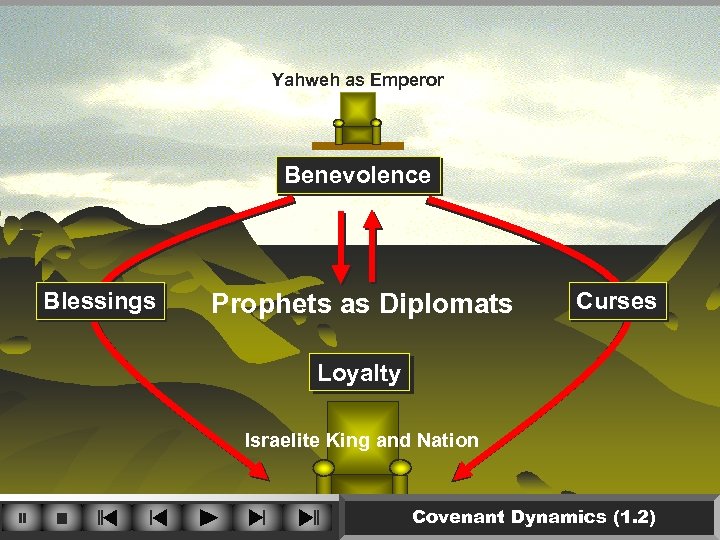
Yahweh as Emperor Benevolence Blessings Prophets as Diplomats Curses Loyalty Israelite King and Nation Vassal King and Covenant Dynamics (1. 2)
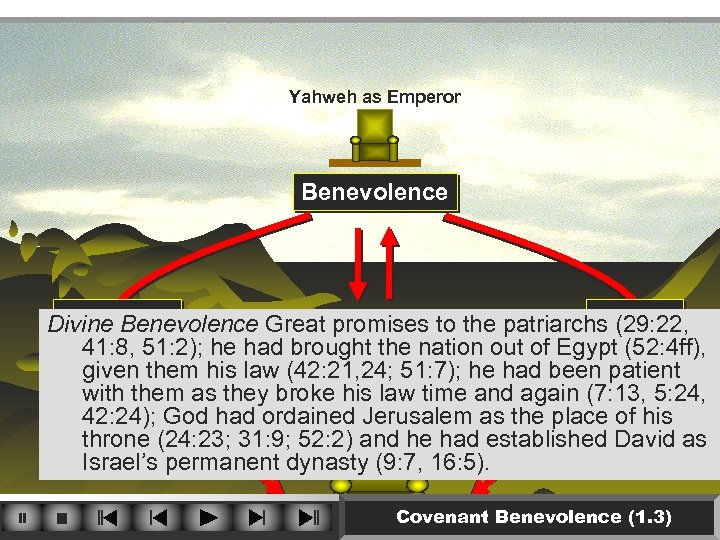
Yahweh as Emperor Benevolence Blessings Curses Prophets as Diplomats Divine Benevolence Great promises to the patriarchs (29: 22, 41: 8, 51: 2); he had brought the nation out of Egypt (52: 4 ff), given them his law (42: 21, 24; 51: 7); he had been patient with them as they broke. Loyalty time and again (7: 13, 5: 24, his law 42: 24); God had ordained Jerusalem as the place of his throne (24: 23; 31: 9; 52: 2) and he had established David as Israelite King and 16: 5). Nation Israel’s permanent dynasty (9: 7, Nation Vassal King and Covenant Benevolence (1. 3) Covenant Benevolence (1. 2)
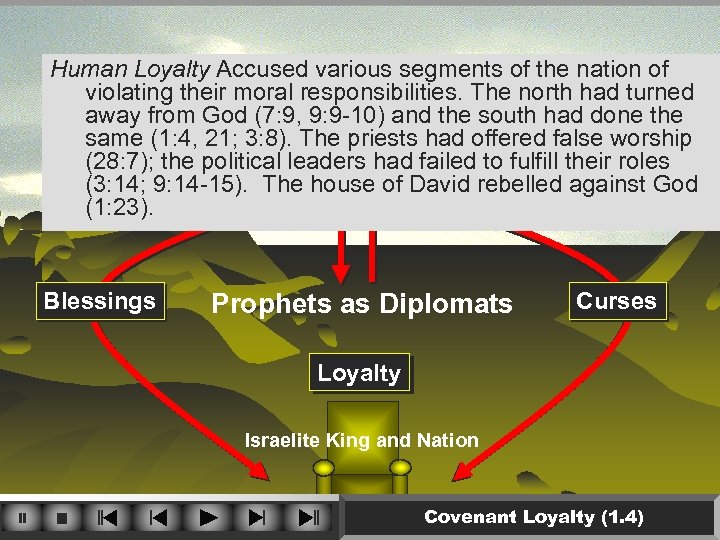
Human Loyalty Accused various segments of the nation of Yahweh as Emperor violating their moral responsibilities. The north had turned away from God (7: 9, 9: 9 -10) and the south had done the same (1: 4, 21; 3: 8). The priests had offered false worship (28: 7); the political leaders had failed to fulfill their roles Benevolence (3: 14; 9: 14 -15). The house of David rebelled against God (1: 23). Blessings Prophets as Diplomats Curses Loyalty Israelite King and Nation Vassal King and Covenant Loyalty (1. 4)
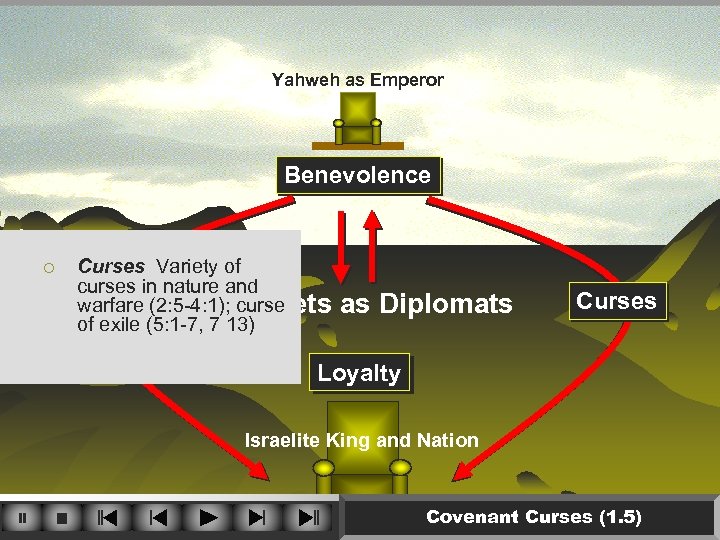
Yahweh as Emperor Benevolence Curses Variety of curses in nature and Blessings warfare (2: 5 -4: 1); curse Prophets of exile (5: 1 -7, 7 13) ¡ as Diplomats Curses Loyalty Israelite King and Nation Vassal King and Covenant Curses (1. 5)
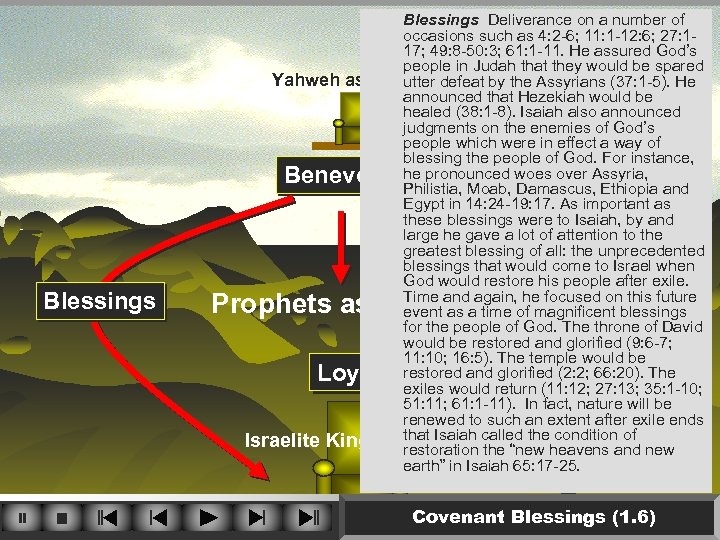
Blessings Deliverance on a number of occasions such as 4: 2 -6; 11: 1 -12: 6; 27: 117; 49: 8 -50: 3; 61: 1 -11. He assured God’s people in Judah that they would be spared Yahweh as Emperor utter defeat by the Assyrians (37: 1 -5). He announced that Hezekiah would be healed (38: 1 -8). Isaiah also announced judgments on the enemies of God’s people which were in effect a way of blessing the people of God. For instance, he pronounced Benevolence Moab, woes over Assyria, and Philistia, Damascus, Ethiopia Egypt in 14: 24 -19: 17. As important as these blessings were to Isaiah, by and large he gave a lot of attention to the greatest blessing of all: the unprecedented blessings that would come to Israel when God would restore his people after exile. Time and again, he focused on this future Curses event as a time of magnificent blessings for the people of God. The throne of David would be restored and glorified (9: 6 -7; 11: 10; 16: 5). The temple would be Loyalty restored and glorified (2: 2; 66: 20). The exiles would return (11: 12; 27: 13; 35: 1 -10; 51: 11; 61: 1 -11). In fact, nature will be renewed to such an extent after exile ends that Isaiah Israelite King and Nation called theheavens and new Nation the “new condition of restoration Vassal King and earth” in Isaiah 65: 17 -25. Prophets as Diplomats Covenant Blessings (1. 6)
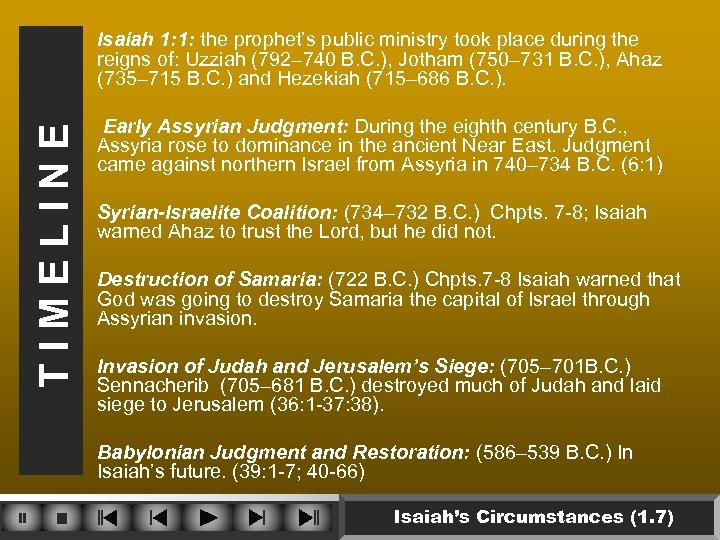
Isaiah 1: 1: the prophet’s public ministry took place during the reigns of: Uzziah (792– 740 B. C. ), Jotham (750– 731 B. C. ), Ahaz (735– 715 B. C. ) and Hezekiah (715– 686 B. C. ). ¡ Early Assyrian Judgment: During the eighth century B. C. , Assyria rose to dominance in the ancient Near East. Judgment came against northern Israel from Assyria in 740– 734 B. C. (6: 1) ¡ Syrian-Israelite Coalition: (734– 732 B. C. ) Chpts. 7 -8; Isaiah warned Ahaz to trust the Lord, but he did not. ¡ Destruction of Samaria: (722 B. C. ) Chpts. 7 -8 Isaiah warned that God was going to destroy Samaria the capital of Israel through Assyrian invasion. ¡ Invasion of Judah and Jerusalem’s Siege: (705– 701 B. C. ) Sennacherib (705– 681 B. C. ) destroyed much of Judah and laid siege to Jerusalem (36: 1 -37: 38). ¡ Babylonian Judgment and Restoration: (586– 539 B. C. ) In Isaiah’s future. (39: 1 -7; 40 -66) TIMELINE ¡ Isaiah’s Circumstances (1. 7)
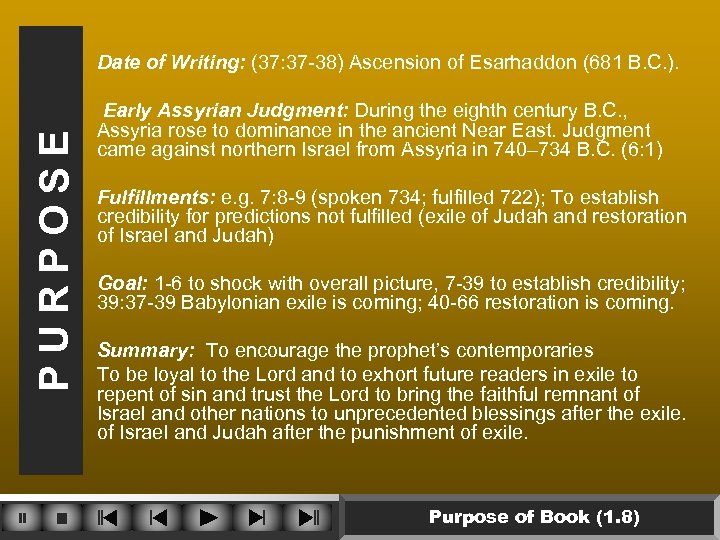
Date of Writing: (37: 37 -38) Ascension of Esarhaddon (681 B. C. ). ¡ Early Assyrian Judgment: During the eighth century B. C. , Assyria rose to dominance in the ancient Near East. Judgment came against northern Israel from Assyria in 740– 734 B. C. (6: 1) PURPOSE ¡ ¡ Fulfillments: e. g. 7: 8 -9 (spoken 734; fulfilled 722); To establish credibility for predictions not fulfilled (exile of Judah and restoration of Israel and Judah) ¡ Goal: 1 -6 to shock with overall picture, 7 -39 to establish credibility; 39: 37 -39 Babylonian exile is coming; 40 -66 restoration is coming. ¡ Summary: To encourage the prophet’s contemporaries To be loyal to the Lord and to exhort future readers in exile to repent of sin and trust the Lord to bring the faithful remnant of Israel and other nations to unprecedented blessings after the exile. of Israel and Judah after the punishment of exile. ¡ Purpose of Book (1. 8)
1 Background & Overview Of Isaiah I. Background II. Structure & Content III. Meaning & Application
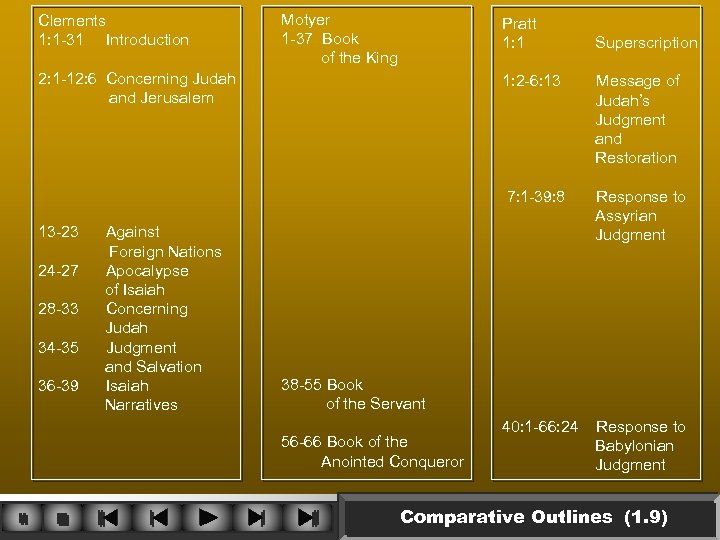
Clements 1: 1 -31 Introduction Motyer 1 -37 Book of the King Pratt 1: 1 2: 1 -12: 6 Concerning Judah and Jerusalem Superscription 24 -27 28 -33 34 -35 36 -39 Against Foreign Nations Apocalypse of Isaiah Concerning Judah Judgment and Salvation Isaiah Narratives Message of Judah’s Judgment and Restoration 7: 1 -39: 8 13 -23 1: 2 -6: 13 Response to Assyrian Judgment 40: 1 -66: 24 Response to Babylonian Judgment 38 -55 Book of the Servant 56 -66 Book of the Anointed Conqueror Comparative Outlines (1. 9)
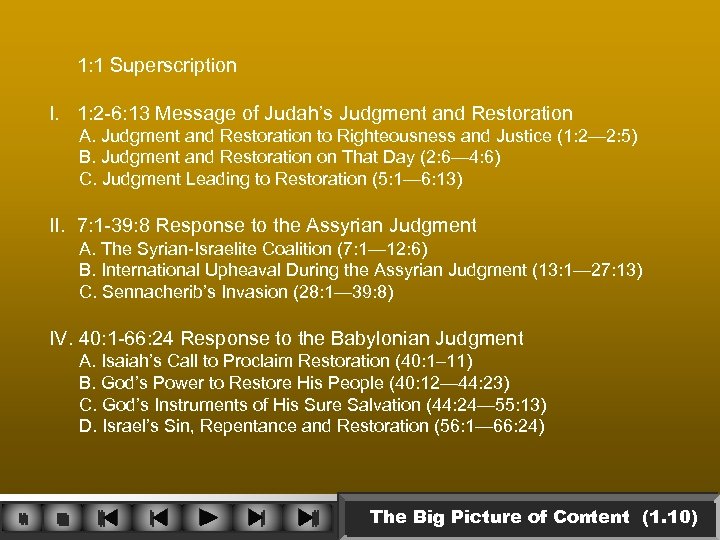
1: 1 Superscription I. 1: 2 -6: 13 Message of Judah’s Judgment and Restoration A. Judgment and Restoration to Righteousness and Justice (1: 2— 2: 5) B. Judgment and Restoration on That Day (2: 6— 4: 6) C. Judgment Leading to Restoration (5: 1— 6: 13) II. 7: 1 -39: 8 Response to the Assyrian Judgment A. The Syrian-Israelite Coalition (7: 1— 12: 6) B. International Upheaval During the Assyrian Judgment (13: 1— 27: 13) C. Sennacherib’s Invasion (28: 1— 39: 8) IV. 40: 1 -66: 24 Response to the Babylonian Judgment A. Isaiah’s Call to Proclaim Restoration (40: 1– 11) B. God’s Power to Restore His People (40: 12— 44: 23) C. God’s Instruments of His Sure Salvation (44: 24— 55: 13) D. Israel’s Sin, Repentance and Restoration (56: 1— 66: 24) The Big Picture of Content (1. 10)
1 Background & Overview Of Isaiah I. Background II. Structure & Content III. Meaning & Application
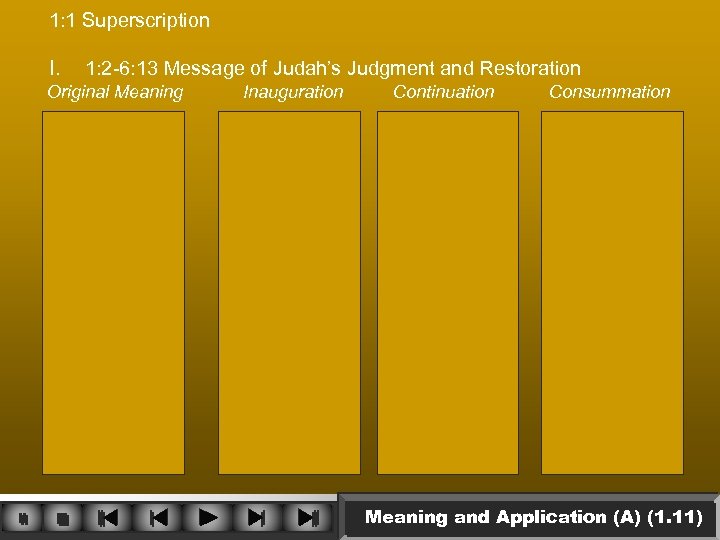
1: 1 Superscription I. 1: 2 -6: 13 Message of Judah’s Judgment and Restoration Original Meaning Inauguration Continuation Consummation Meaning and Application (A) (1. 11)
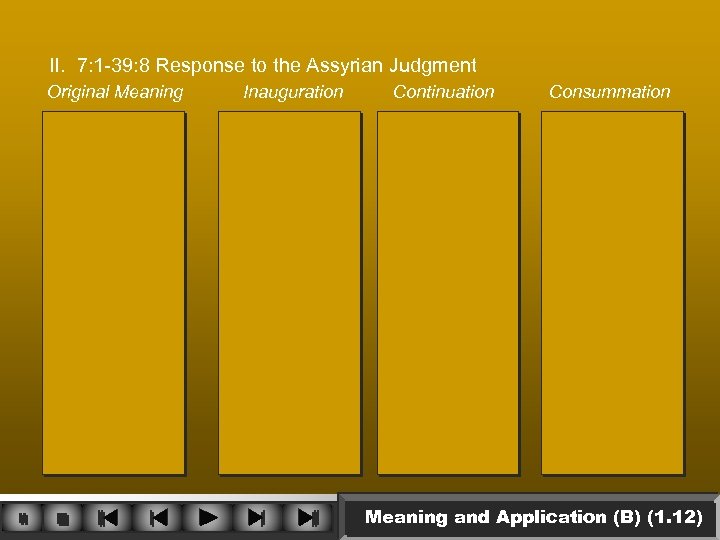
II. 7: 1 -39: 8 Response to the Assyrian Judgment Original Meaning Inauguration Continuation Consummation Meaning and Application (B) (1. 12)
IV. 40: 1 -66: 24 Response to the Babylonian Judgment Original Meaning Inauguration Continuation Consummation Meaning and Application (C) (1. 13)
Скачать презентацию The Book of Isaiah 1 Background
4ed12a6472ebad7065d83f3578d54932.ppt