 Скачать презентацию the birth of Romantic poetry o the late
Romanti poetry.ppt
- Количество слайдов: 53



the birth of Romantic poetry o the late 18 th century o the Age of Enlightenment - emphasis on science, reason and being intellectual o the French Revolution (1789) o industrialization - the poor condition of workers, the new class-conflicts and the pollution of the environment
The Romantics. Themes o regular language - poetry you could actually understand o focus on emotions and feelings o celebrating nature - reaction to the Enlightenment o represent the individual artist
regular language 'Tis hard to say, if greater Want of Skill Appear in Writing or in Judging ill, But, of the two, less dang'rous is th'Offence, To tire our Patience, than mis-lead our Sense‘ Alexander Pope An Essay on Criticism
regular language I have a boy of five years old; His face is fair and fresh to see; His limbs are cast in beauty's mould, And dearly he loves me. ‘ William Wordsworth Anecdote for Fathers
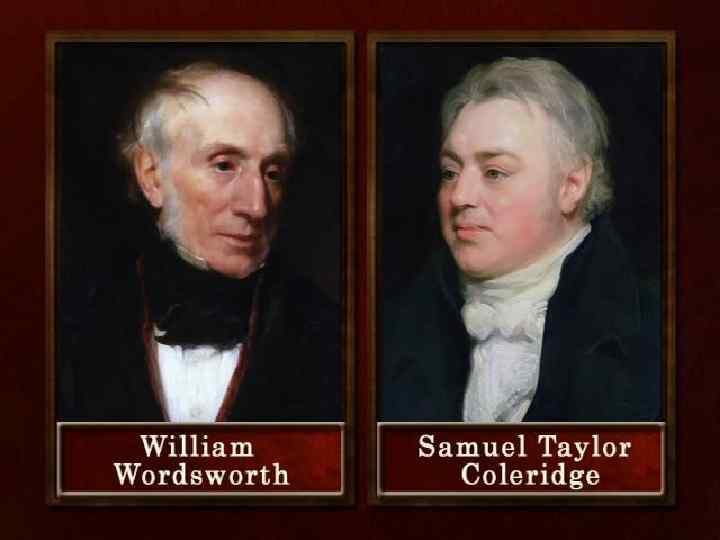
Major Romantic Poets Lake poets (first generation of Romantic poets ) William Wordsworth Samuel Taylor Coleridge second generation of Romantic poets Percy Bysshe Shelley John Keats Lord Byron
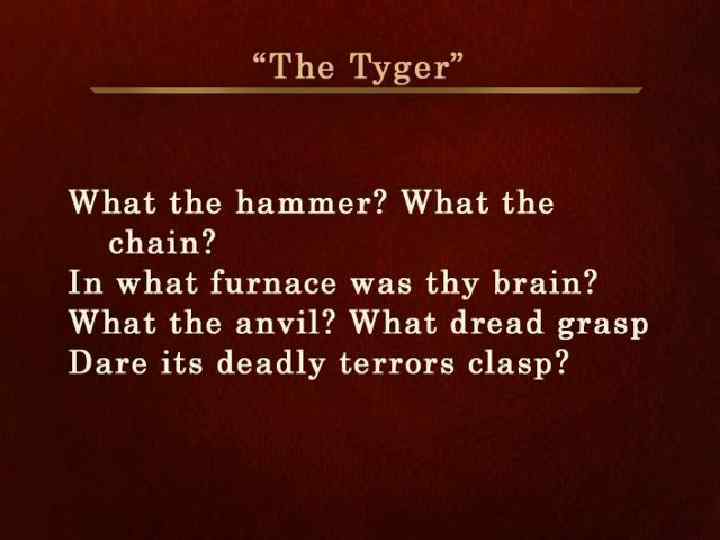
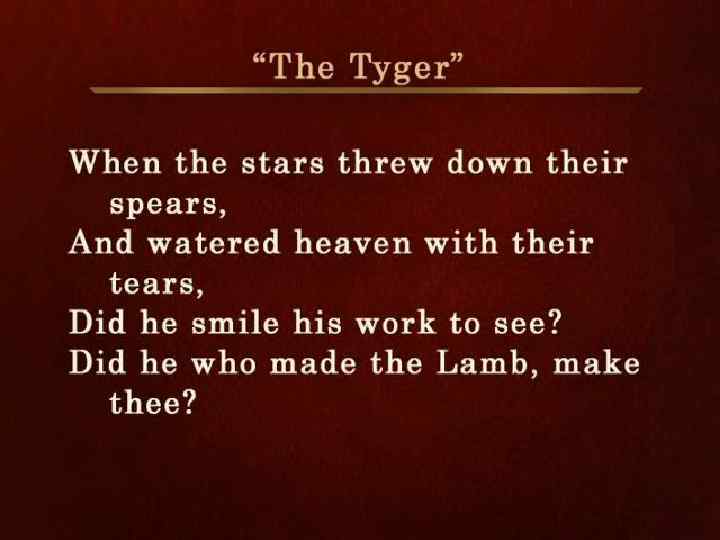
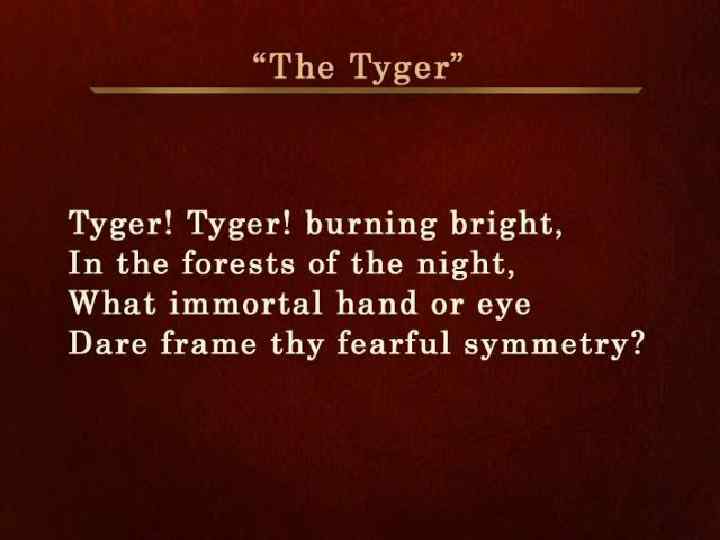
and William Blake ? ? ?
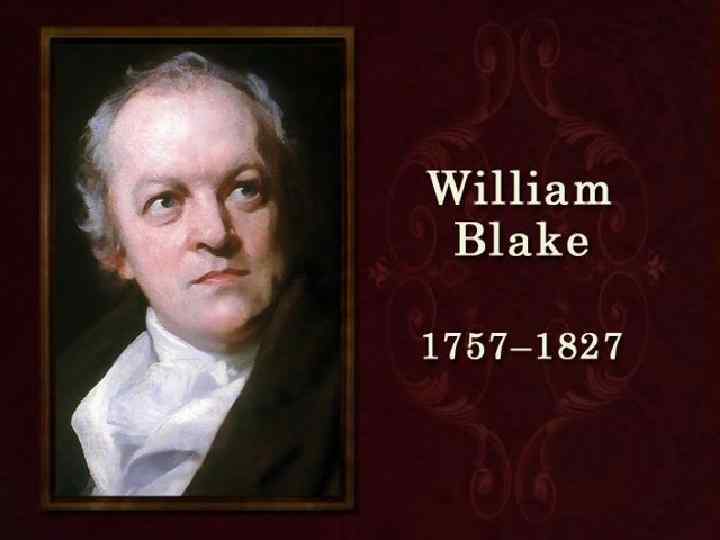
o 1775 - birth, 2 d of 5 children - the son of a humble but decent tradesman o 1767 – birth of Robert Blake o drawing school (11) o began writing poetry (12) o apprenticed to a London engraving (14) o 1779 – began study in the Royal Academy; commercial engraving for bookseller o 1781 – married Catherine Boucher o relief etching, illuminated printing
Facts to remember o radical thinker, idealistically revolutionary: The French Revolution (1791), America: A Prophecy (1793), Visions of the Daughters of Albion (1793) o enthusiastically religious o had interesting ideas about marriage and women (Mary Wollstonecraft, Original Stories from Real Life ) o pioneer of the free love movement
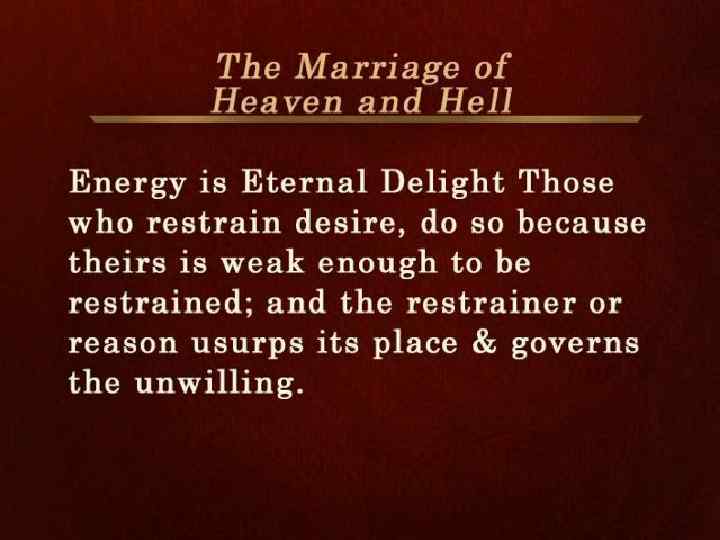
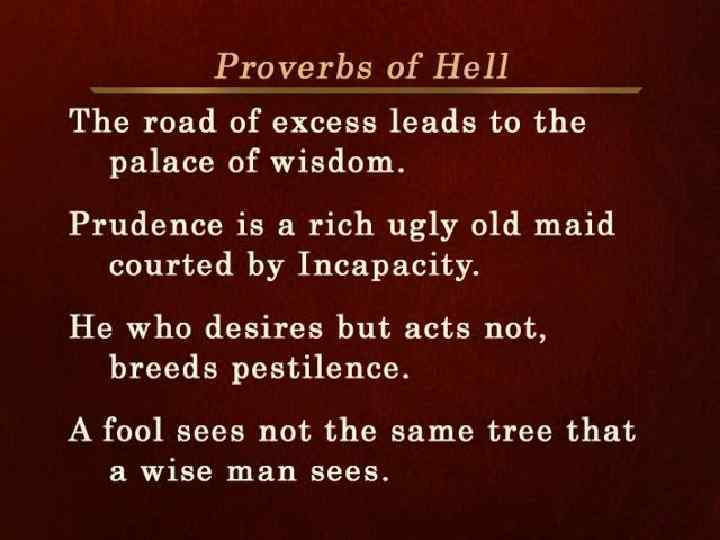
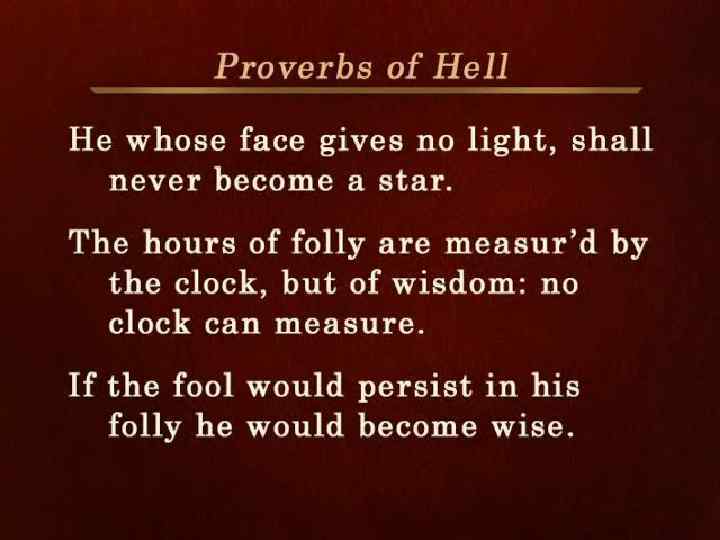
Major works – Blakean style o The Songs of Innocence (1789) and Experience (1793) - 1794 o The Marriage of Heaven and Hell (1793) o Jerusalem (1820)
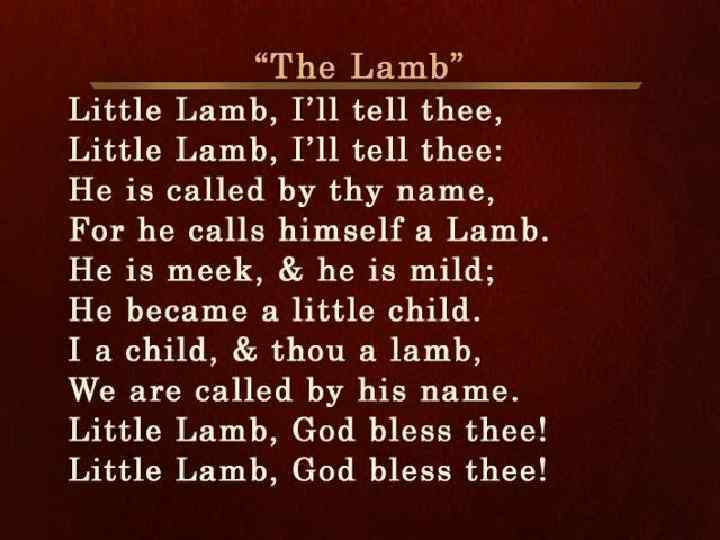
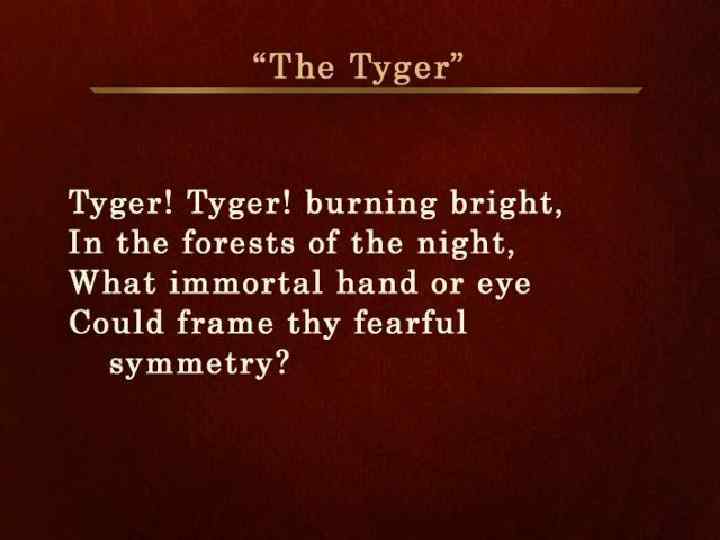
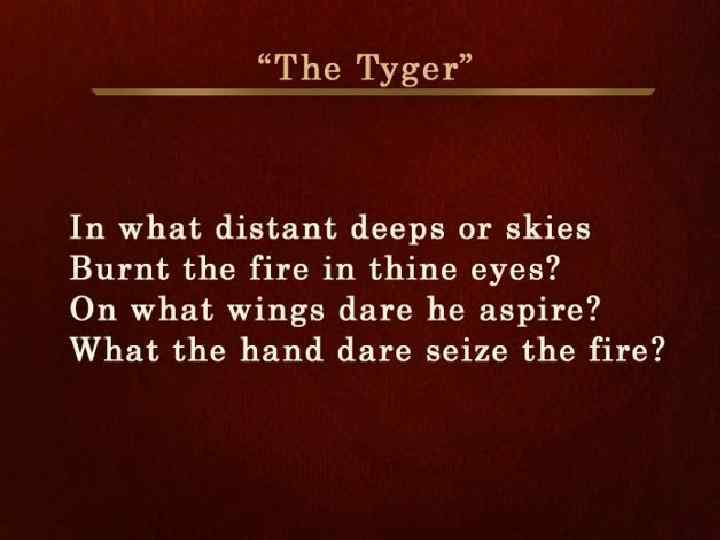
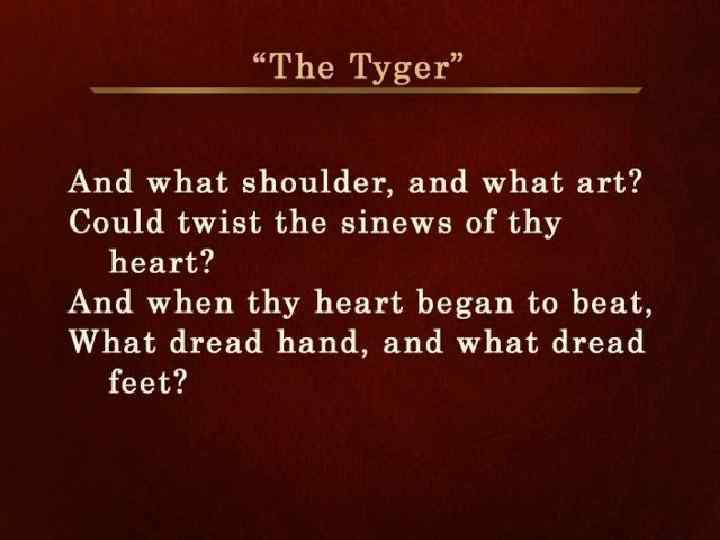
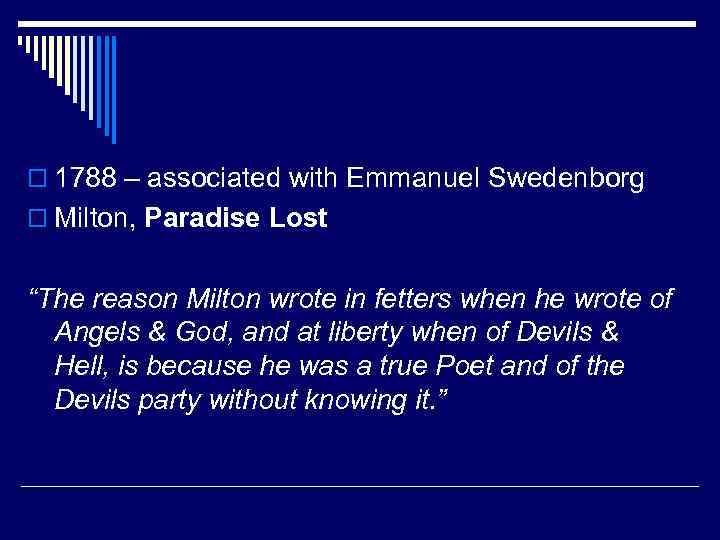
o 1788 – associated with Emmanuel Swedenborg o Milton, Paradise Lost “The reason Milton wrote in fetters when he wrote of Angels & God, and at liberty when of Devils & Hell, is because he was a true Poet and of the Devils party without knowing it. ”
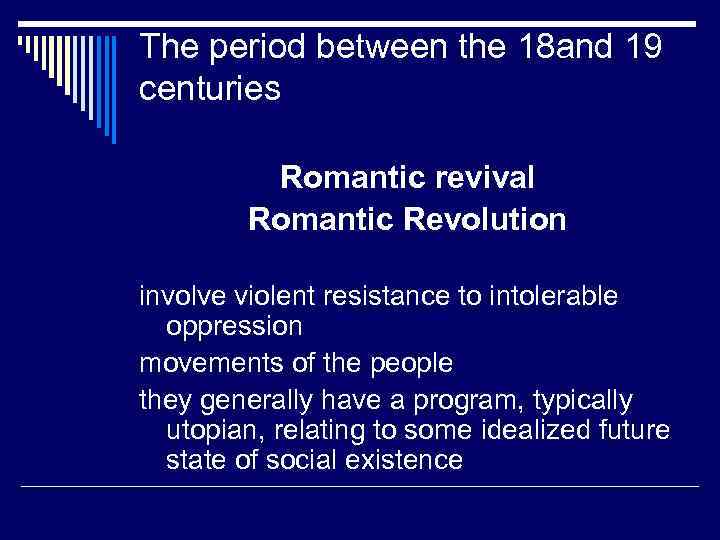
The period between the 18 and 19 centuries Romantic revival Romantic Revolution involve violent resistance to intolerable oppression movements of the people they generally have a program, typically utopian, relating to some idealized future state of social existence
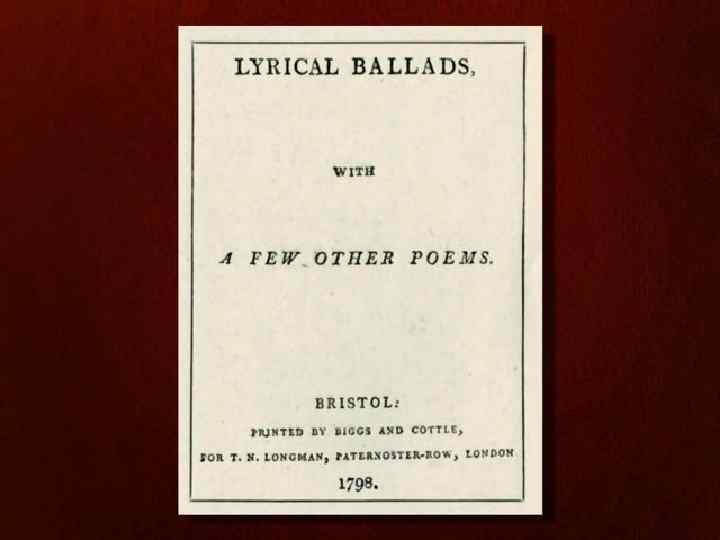
Lyrical Ballads, 1798 the most influential book of poetry in English literature – the birth of the Romantic Poetry Movement is the publication of this book. o Ballads are poetry of the folk. They do not, historically, have single authors but are the products of a communal voice. o The ballad revival also marked a desire to return to cleansing simplicities, away from the industrialization, institutionalization, and bureaucratization that were transforming the world.
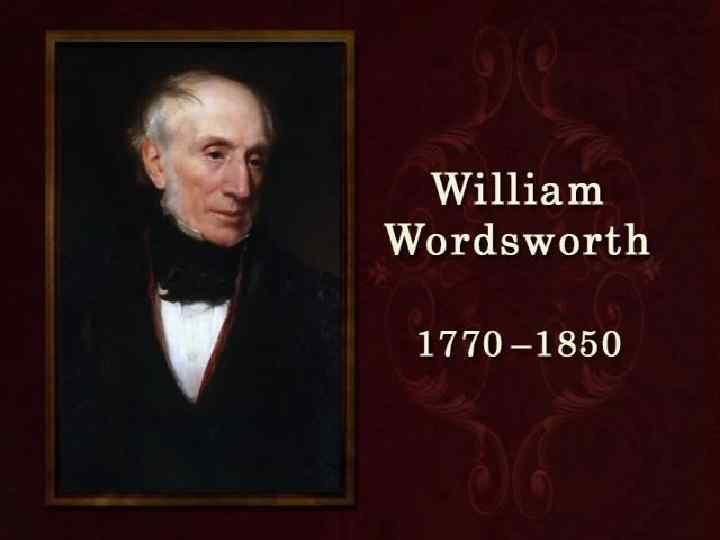
o was born in the Lake District o was “allowed to run wild in nature” - pantheistic: God inheres in the natural world around us. God is in nature. o grammar school, attended Cambridge University o In the early 1800 s - settled in the Lake District, met Samuel Taylor Coleridge o extraordinarily introverted: Loneliness and creativity are at the heart of Wordsworth’s poetry, and loneliness, for him, is a creative state.
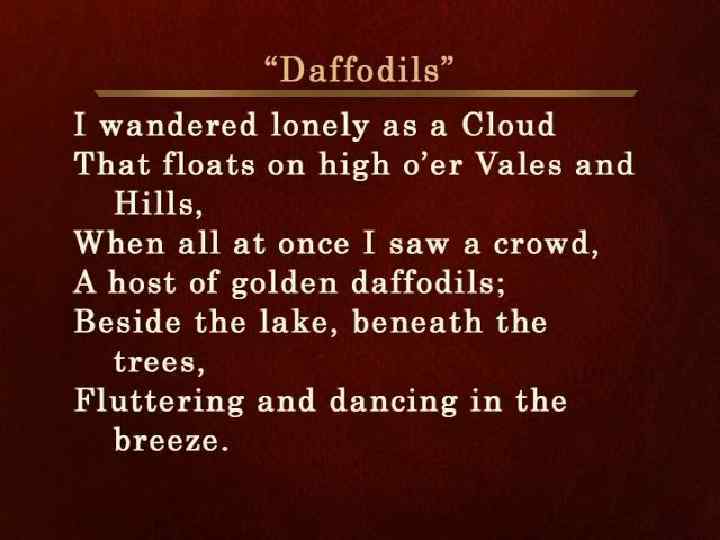
'Lines Composed a Few Miles above Tintern Abbey, on Revisiting the Banks of the Wye during a Tour, July 13, 1798'. 'Lines Composed a Few Miles above Tintern Abbey, ' 'Tintern Abbey'
o Welsh abbey o August of 1793 - summer of 1798 o 160 -line poem o Tintern Abbey - founded around the 1100 s, church - completed in 1301 o 1536 - disbanded o Written in accessible, ordinary language o blank verse o two main themes: memory and Nature worship o pantheistic (God and Nature are the same thing )
Five years have past; five summers, with the length Of five long winters! and again I hear These waters, rolling from their mountain-springs With a soft inland murmur. -Once again Do I behold these steep and lofty cliffs, That on a wild and secluded scene impress Thoughts of more deep seclusion; and connect The landscape with the quiet of the sky.
These beauteous forms, Through a long absence, have not been to me As is a landscape to a blind man's eye: But oft, in lonely rooms, and 'mid the din Of towns and cities, I have owed to them In hours of weariness
…little, nameless, unremembered, acts Of kindness and love my dearest Friend My dear, dear Friend dear, dear Sister Therefore let the moon Shine on thee in thy solitary walk; And let the misty mountain-winds be free To blow against thee
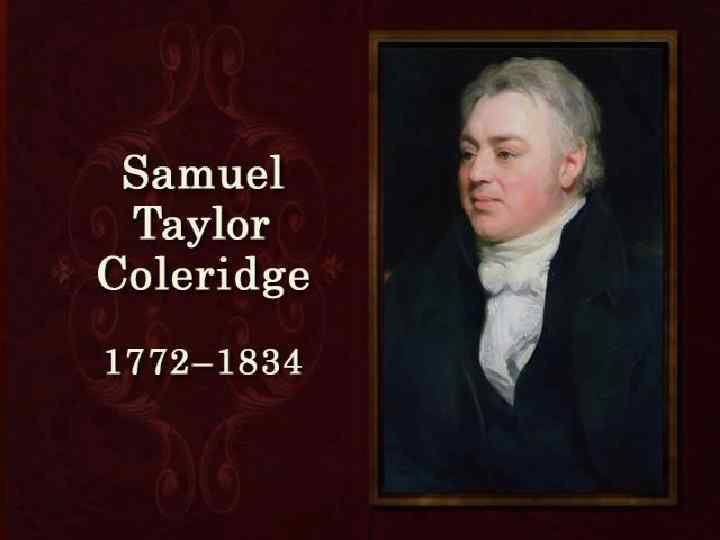
o born in 1772 in a country town in England o His father was the vicar of a local church and headmaster of a local school o school in London o at Jesus College - befriended the writer Robert Southey o a plan to create a pantisocracy - a utopian society where everyone is equal in status and role (Pennsylvania ) o 1795 - met William Wordsworth, huge influence on him (leaders of this blossoming Romantic Movement in poetry )
Major Works o 1798 – poem Frost at Midnight (conversation poem: talks about his upbringing in the city and he worries and hopes that his son will get to really experience nature; importances of nature vs. the city; based on life) o conversation poems: The Eolian Harp o This Lime-Tree Bower My Prison o The Nightingale
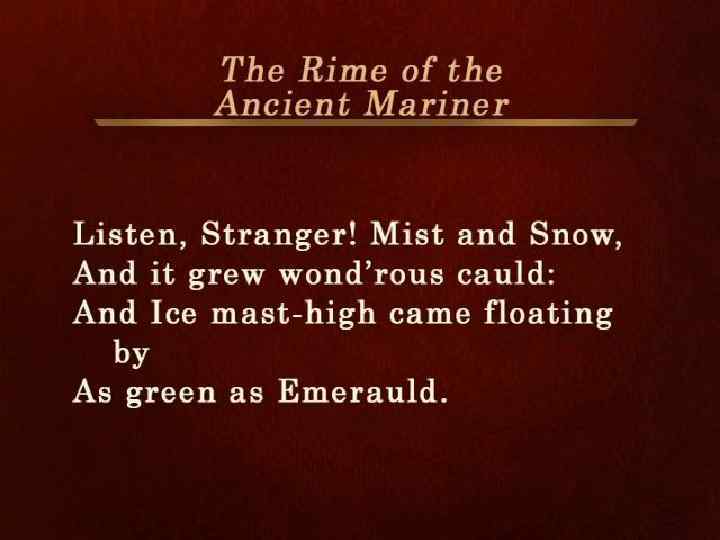
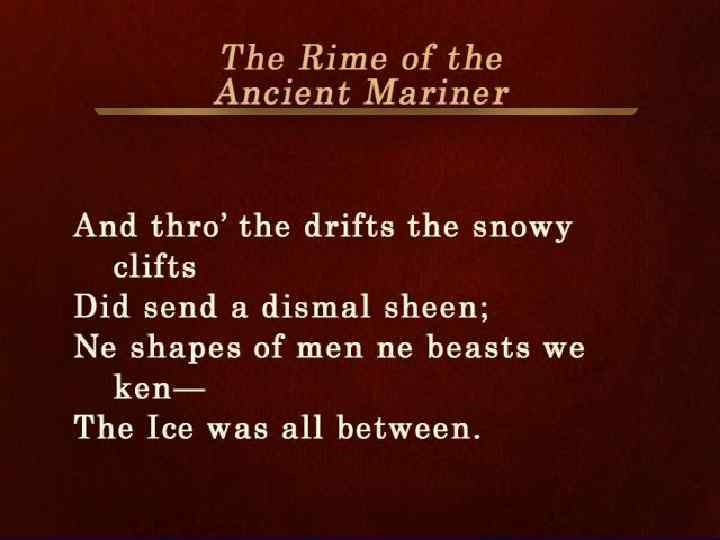
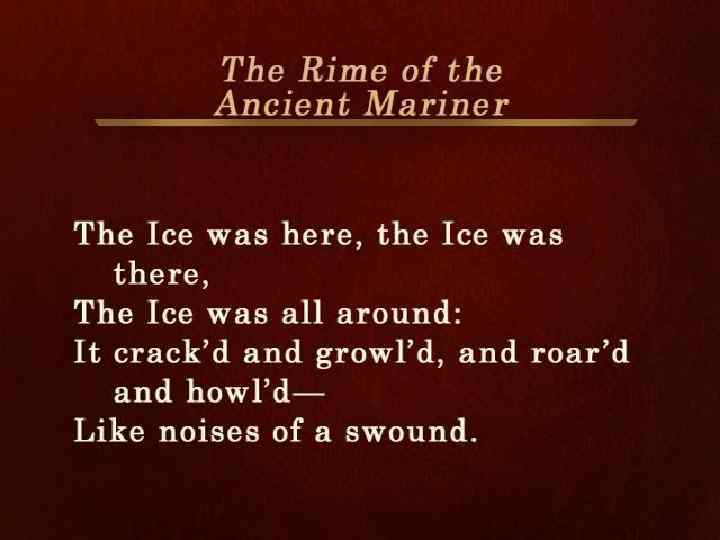
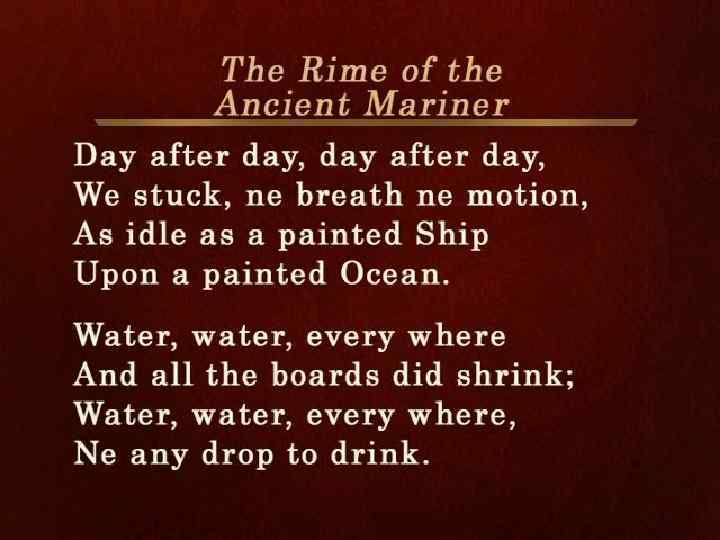
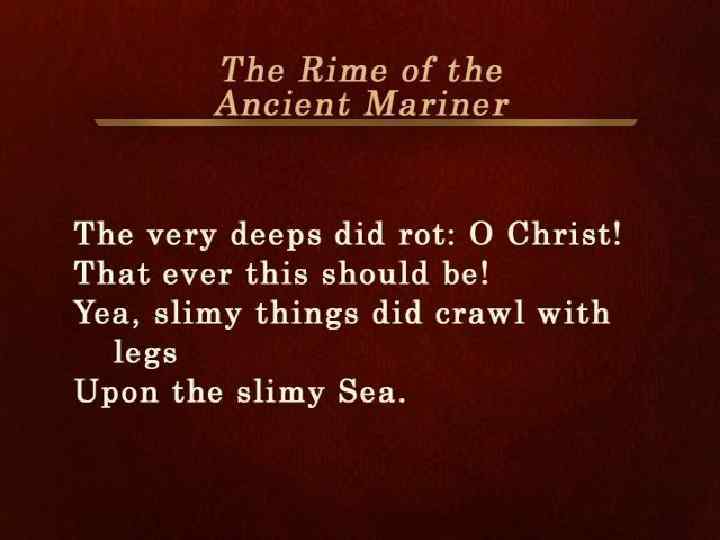
'The Rime of the Ancient Mariner' 1798 o adventure, horror, and mystery + zombies Romantic themes that come up in the poem: o nature (the idea of the natural world), o supernatural forces (zombies), o strong human emotions, o the idea of sin and restoration (you do something bad but you can be redeemed for it). o accessible, modern language – NO!!! o fairly antiquated language deliberately
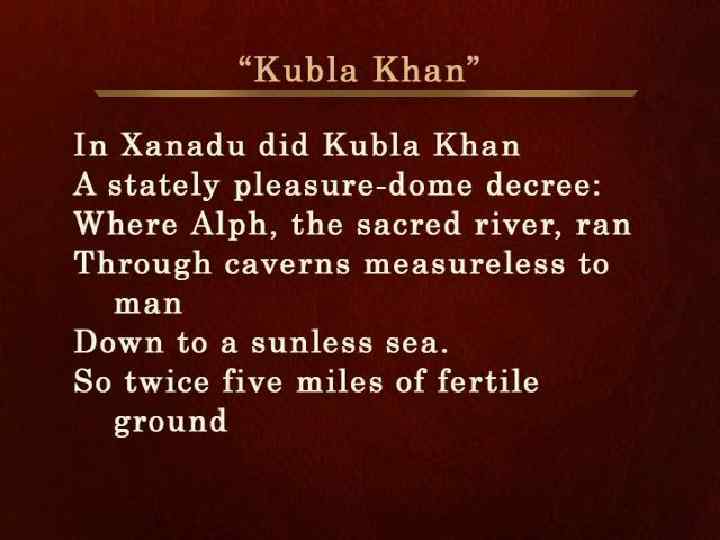
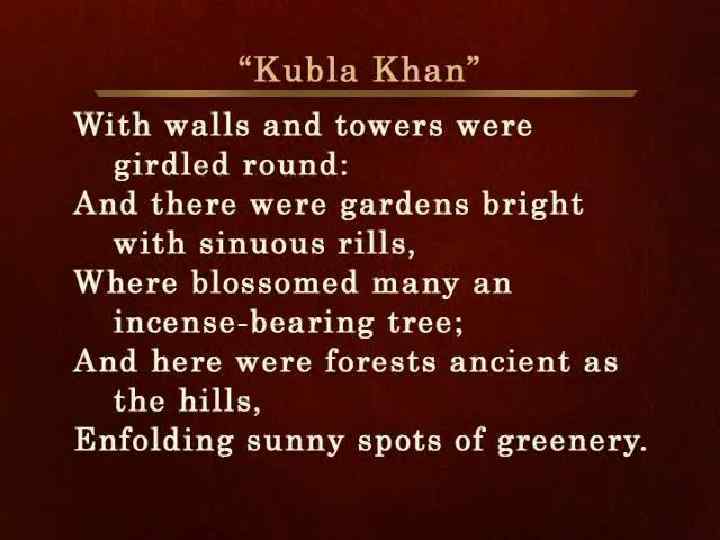
o Coleridge wrote Kubla Khan after an opium- induced dream o Got interrupted, couldn’t finish o three important facets of Romantic poetry: imagination celebrated, nature and mysticism.
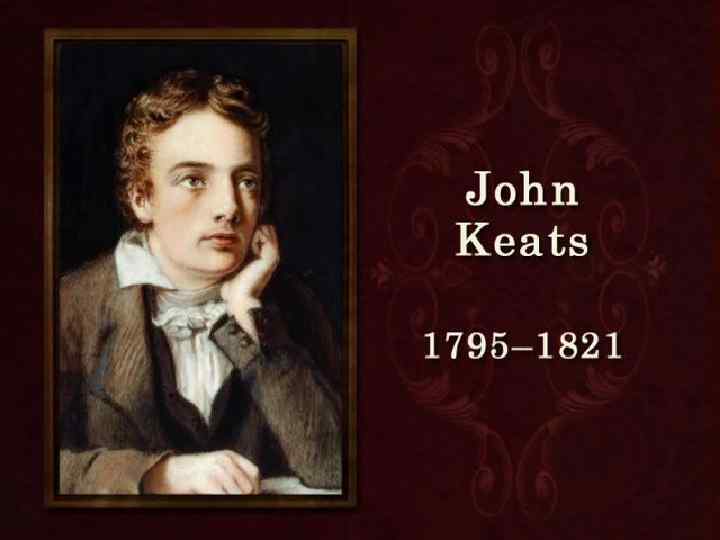
“If poetry comes not as naturally as the leaves to a tree, it had better not come at all. ” “Keatsianism”
 Скачать презентацию the birth of Romantic poetry o the late
Romanti poetry.ppt