 Скачать презентацию The Biology of Cancer December 12 2006
b6e6910926a36af833f40f1720fd1c1c.ppt
- Количество слайдов: 36



The Biology of Cancer December 12, 2006
Cancer: A Cellular Disease
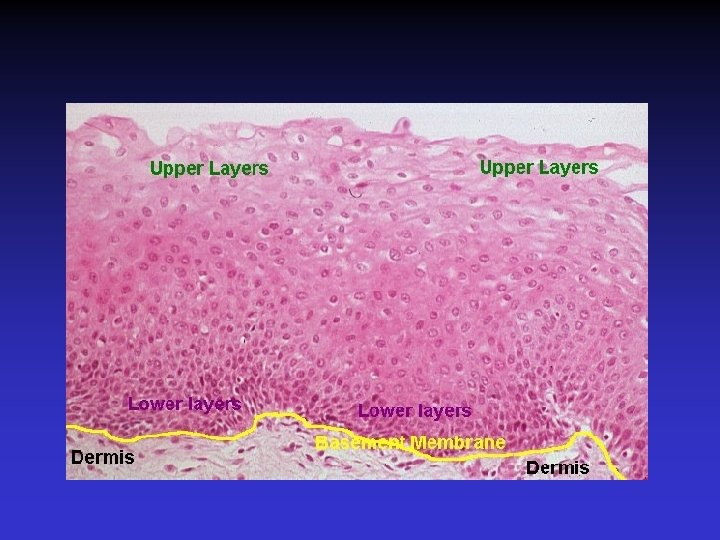
Principles of Cellular Growth • Ability to produce exact replica – essential component of life • Normal cellular regulation – Balance between division and death (apoptosis) – Limits on proliferation • Physical boundaries (e. g. basement membrane) • Tissue pressure contact inhibition – Cell cycle regulation • Error correction – Lack of fidelity in cellular reproduction genetic instability – Repair genes – Immune mechanisms: removal of non-self cells – Apoptosis
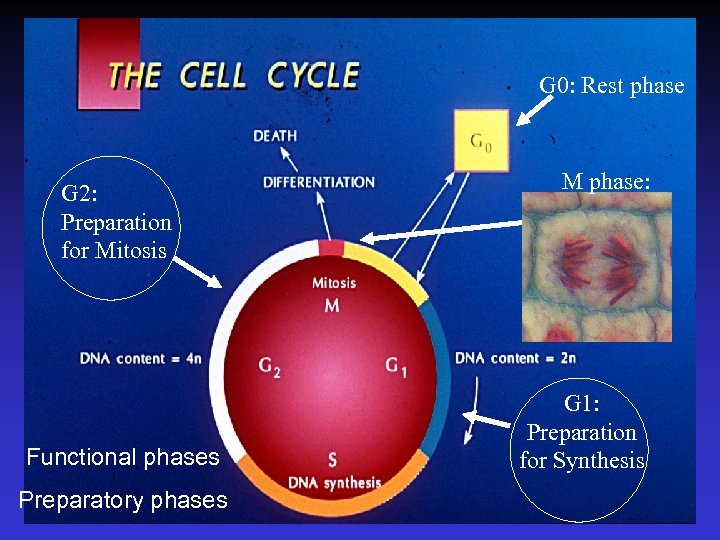
G 0: Rest phase G 2: Preparation for Mitosis Functional phases Preparatory phases M phase: G 1: Preparation for Synthesis
Cell Cycle Check Points • Events of cell cycle highly ordered: – different extra cellular/intracellular events • Progression through cell cycle controlled by: – regulation of gene products – checkpoints genes
Normal cellular stop signals • Cellular hypoxia (outgrowth of blood supply) • Decreased availability of nutrients • Alternation in cytokine/hormonal milieu • Accumulation in toxic metabolites • Inhibitition of cell-cell contact
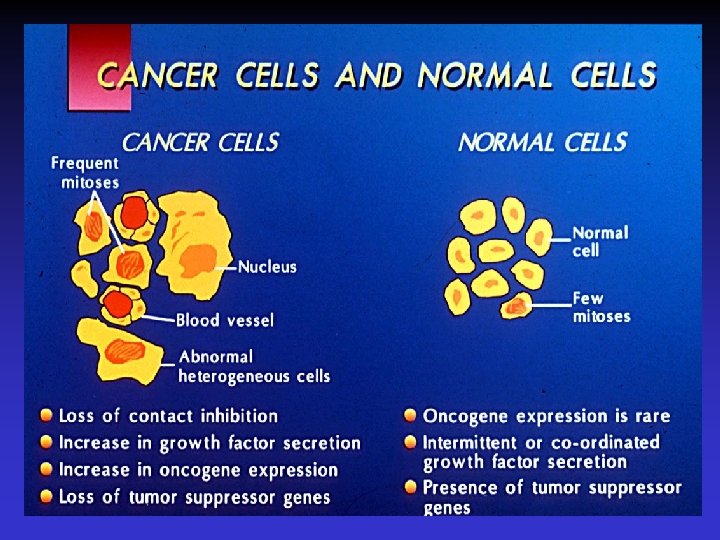
Cancel: Cellular Derangements • In-exact replica – Genetic instability – Loss of certain function, gain of others • Abnormal cellular regulation: Loss of Balance – – Enhanced proliferation Disruption of Physical boundaries Increased tissue pressure, loss of contact inhibition Inhibition of apoptosis (programmed cell death) • Loss of error correction – – – Lack of fidelity in cellular reproduction genetic instability Loss of Repair genes Immune inhibition (anergy) Inhibition of apoptosis Selective advantage certain clones
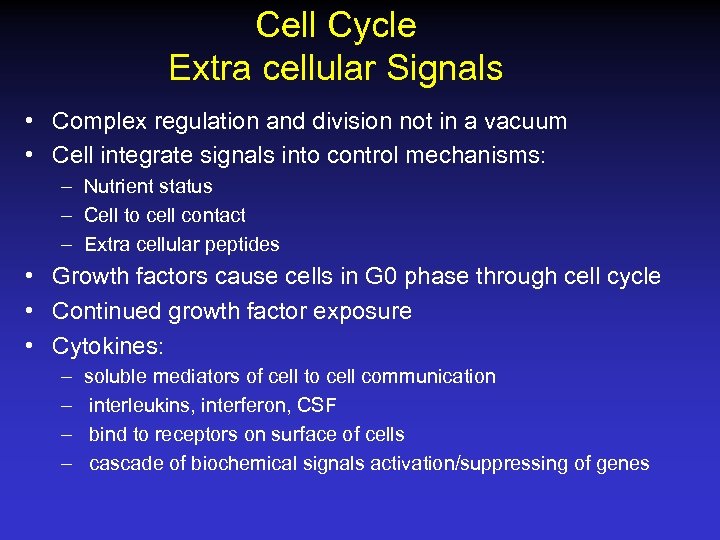
Cell Cycle Extra cellular Signals • Complex regulation and division not in a vacuum • Cell integrate signals into control mechanisms: – Nutrient status – Cell to cell contact – Extra cellular peptides • Growth factors cause cells in G 0 phase through cell cycle • Continued growth factor exposure • Cytokines: – – soluble mediators of cell to cell communication interleukins, interferon, CSF bind to receptors on surface of cells cascade of biochemical signals activation/suppressing of genes
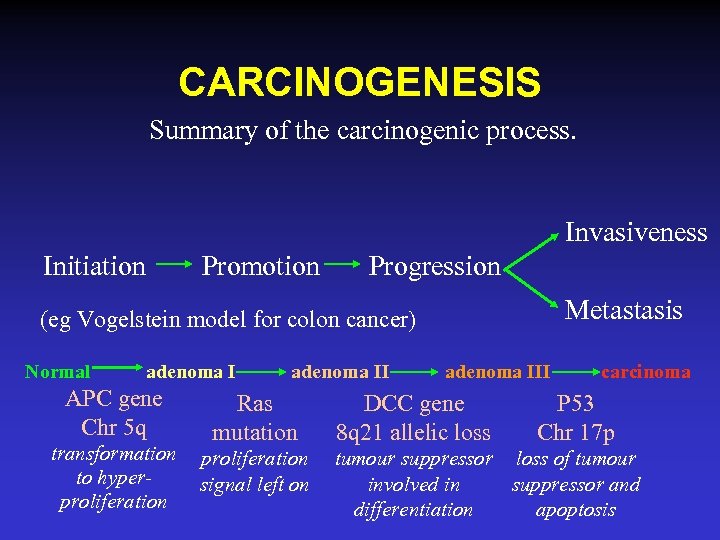
CARCINOGENESIS Summary of the carcinogenic process. Invasiveness Initiation Promotion Progression Metastasis (eg Vogelstein model for colon cancer) Normal adenoma I APC gene Chr 5 q transformation to hyperproliferation adenoma II Ras mutation proliferation signal left on adenoma III DCC gene 8 q 21 allelic loss carcinoma P 53 Chr 17 p tumour suppressor loss of tumour involved in suppressor and differentiation apoptosis
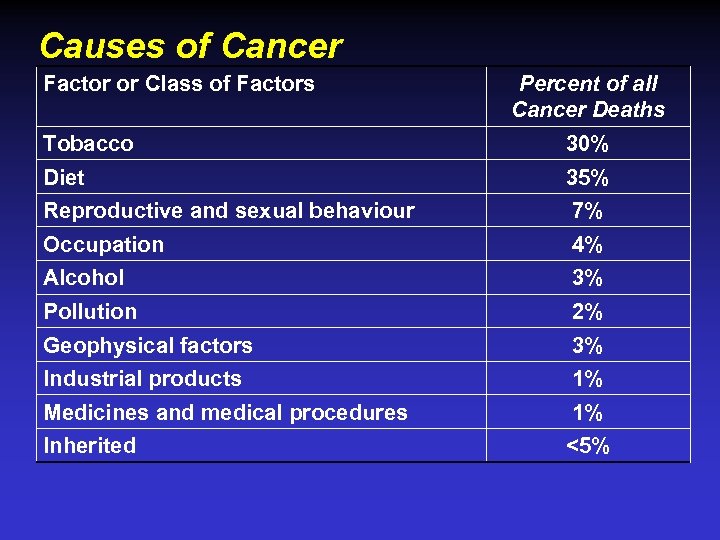
Causes of Cancer Factor or Class of Factors Percent of all Cancer Deaths Tobacco 30% Diet 35% Reproductive and sexual behaviour 7% Occupation 4% Alcohol 3% Pollution 2% Geophysical factors 3% Industrial products 1% Medicines and medical procedures 1% Inherited <5%
Life-cycle • 1 cm 3 -> 1 g tumor ( 109) cells – 1 cm the limit of clinical detection – 30 doublings occurred prior to clinical detection • Only 10 more doublings (3 logs) – 1 kg of tumor – terminal disease • Pre-clinical phase 75% of “life of tumor”
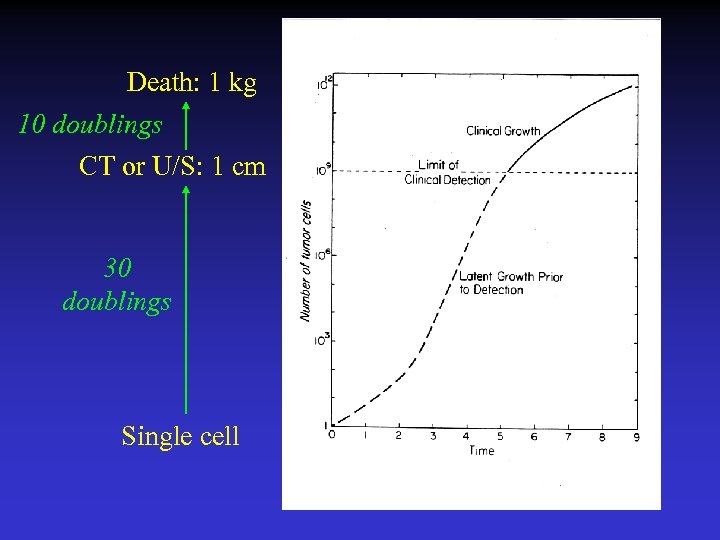
Death: 1 kg 10 doublings CT or U/S: 1 cm 30 doublings Single cell
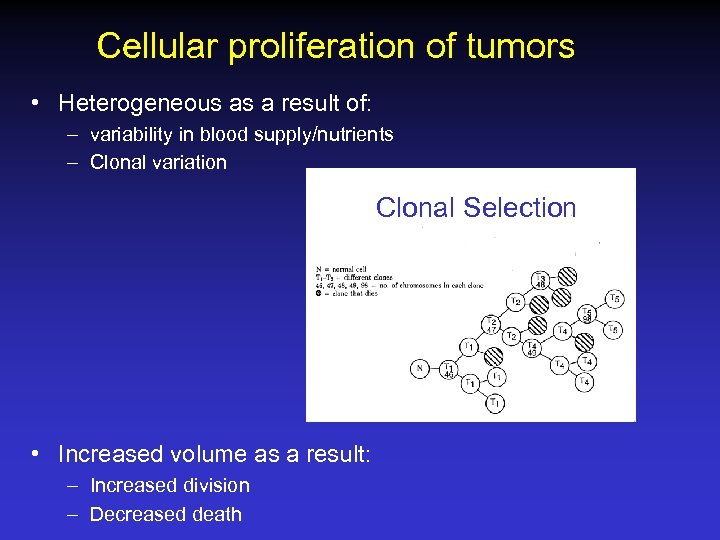
Cellular proliferation of tumors • Heterogeneous as a result of: – variability in blood supply/nutrients – Clonal variation Clonal Selection • Increased volume as a result: – Increased division – Decreased death
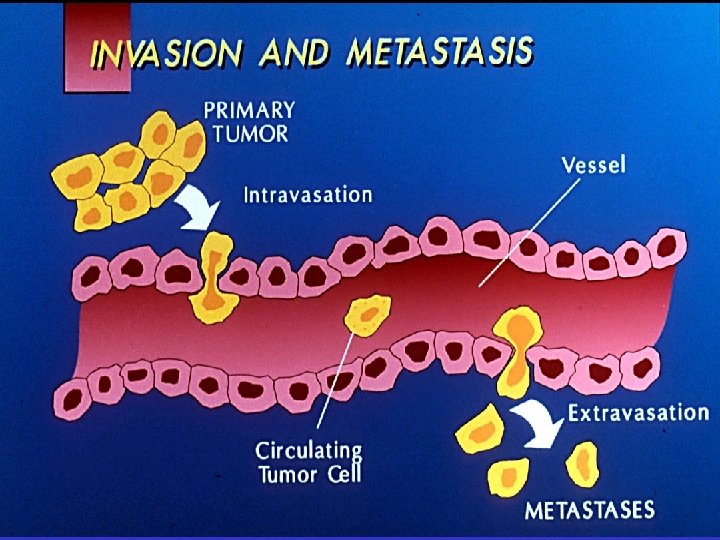
Principles of Metastases • Principle cause of death • Mainly routes of dissemination: – via blood steam – lymphatic • Are flow and organ specific • Establishment of metastases is inefficient: – subpopulation/clone have the abilities to metastases – generally most malignant/aggressive
Steps in Metastatic Cascade • Escape • Travel through the blood/lymphatic system • Arrest/attachment • Establishment of clone
Metastases: Escape • May be biologically facilitated by: – ability to commit vascular invasion – cell necrosis – molecules of the cell surface – protease ( enzyme) secretion by tumor
Metastases: Travel • Blood supply ( angiogenesis) must be adequate • Adequate lymphatic drainage • Special circulatory circumstances
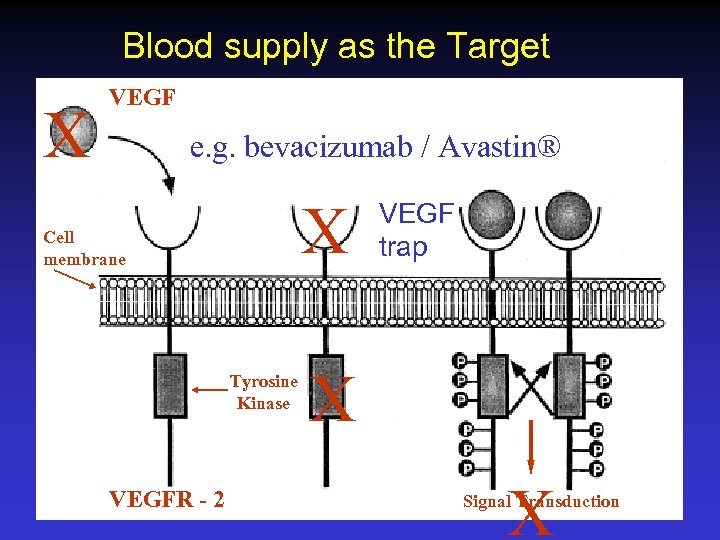
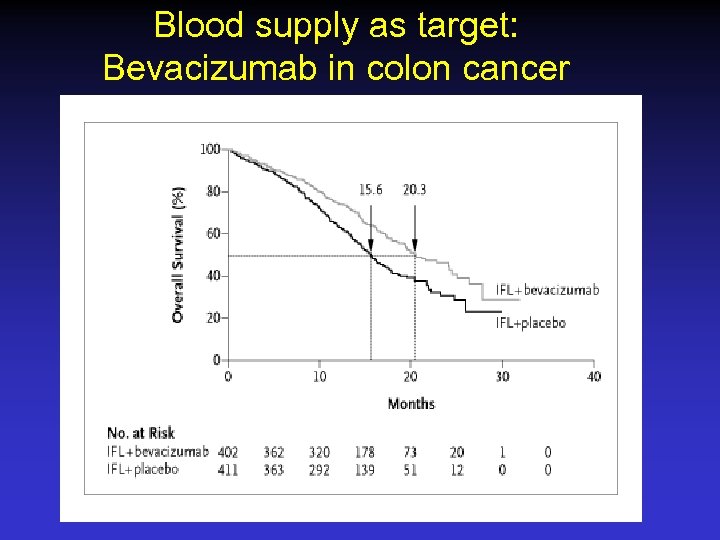
Angiogenesis • Concept first put forward by Folkman • Tumour produces factors to induce / generate its own blood supply • VEGF one of the most important mediators • Interacts with endothelial cell receptors : – VEGFR-1 and VEGFR-2 • Essential for normal embryonic vasculogenesis • VEGF upregulated in many cancer types
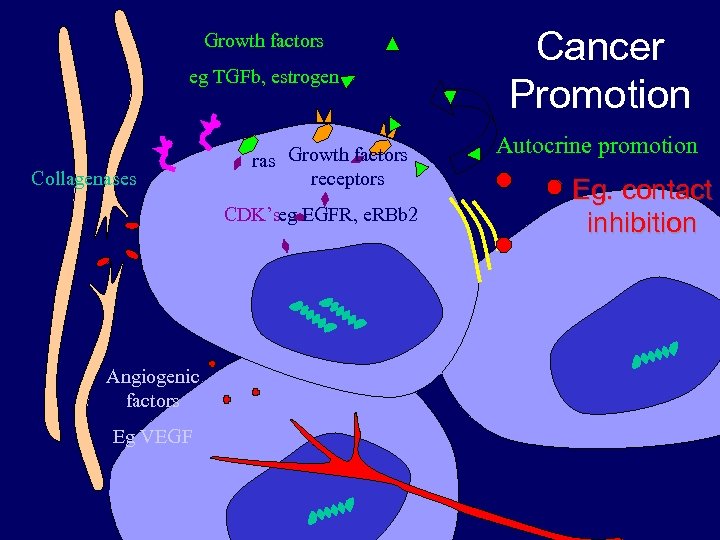
Growth factors eg TGFb, estrogen Collagenases ras Growth factors receptors CDK’seg EGFR, e. RBb 2 Angiogenic factors Eg VEGF Cancer Promotion Autocrine promotion Eg. contact inhibition
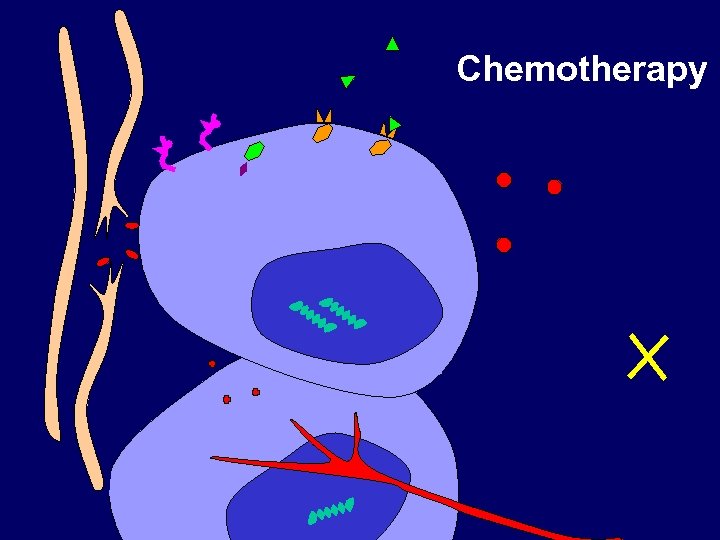
Chemotherapy
Principles of Chemotherapy • Exponential relationship between dose and kill – small decrease in drug dose results in large increase in cell survival • Cycling cells at greatest risk • Multiple courses of therapy – each treatment kills same proportion (not number) of cells – e. g. : 3 log killed 1010 to 107 1 log regrowth between cycles
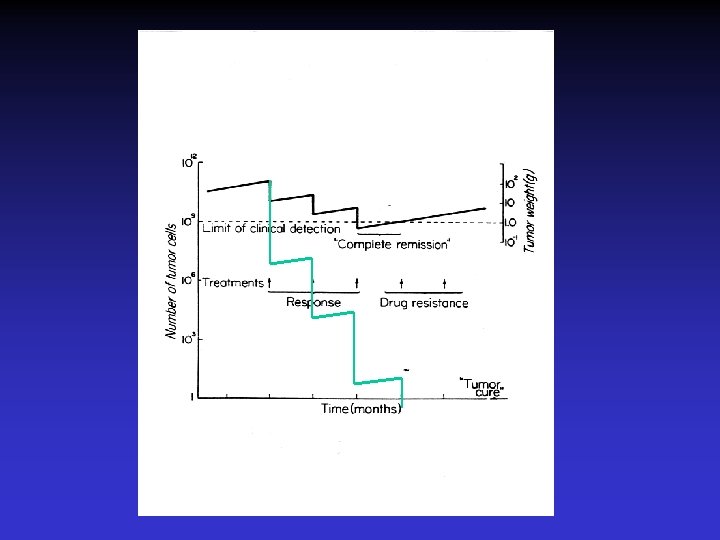
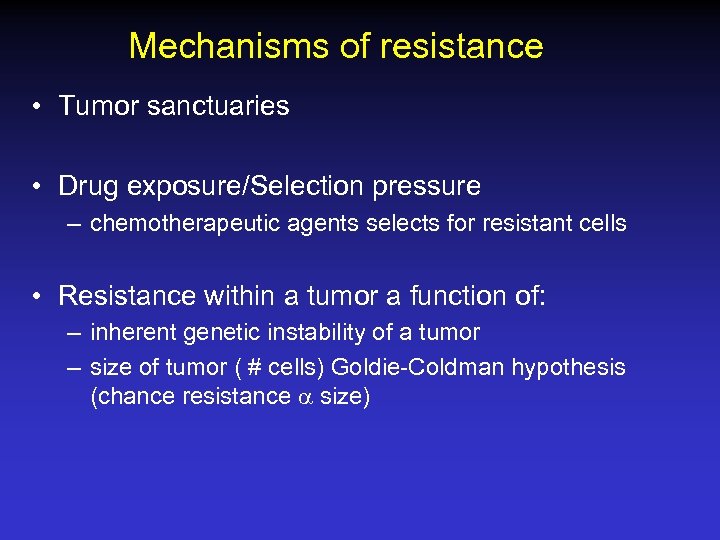
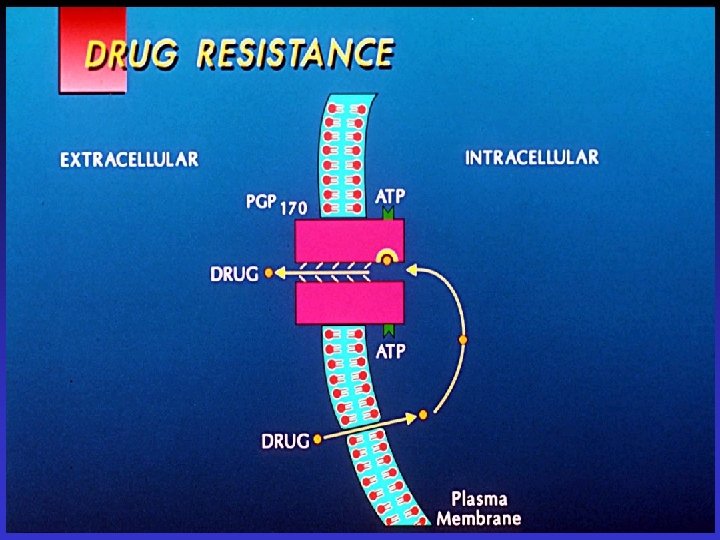
Mechanisms of resistance • Tumor sanctuaries • Drug exposure/Selection pressure – chemotherapeutic agents selects for resistant cells • Resistance within a tumor a function of: – inherent genetic instability of a tumor – size of tumor ( # cells) Goldie-Coldman hypothesis (chance resistance a size)
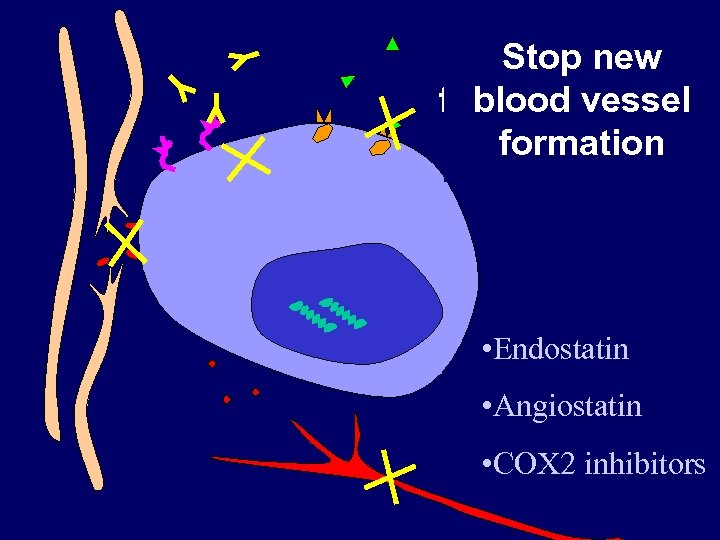
Stop Block growth Turn off the Stop new Stimulate Chemotherapy destruction of factor receptors blood vessel renegade immune barriers “grow” signal formation system • • Herceptin • Endostatin Farnesyl • Matrix • Interferon transferase metalloproteinase • Rituxan • Angiostatin • Mo. Ab’s inhibitors • Tamoxifen • COX 2 inhibitors
Blood supply as the Target X VEGF e. g. bevacizumab / Avastin® X Cell membrane Tyrosine Kinase VEGFR - 2 VEGF trap X X Signal Transduction
Blood supply as target: Bevacizumab in colon cancer
Generalized Staging Principles: TNM • Stage I – Organ confinement • Stage II – Locally advanced / larger / penetration • Stage III – Nodal involvement • Stage IV – Metastatic Look for: Molecular staging elements
Lymph Nodes • Prognosticator – E. g. colon N 0 25% recurrence (less than 4 negative nodes 50%) N 1 (1 -3 nodes) 60% recurrence N 2 (4+ nodes) 70% recurrence • Source of disease – Axillary dissection as a therapeutic intervention – TME • Techniques for analysis – Toluene fat dissolving techniques (yield) – Immunohistochemistry for cytokeratins • The sentinel node – Extensive focused analysis
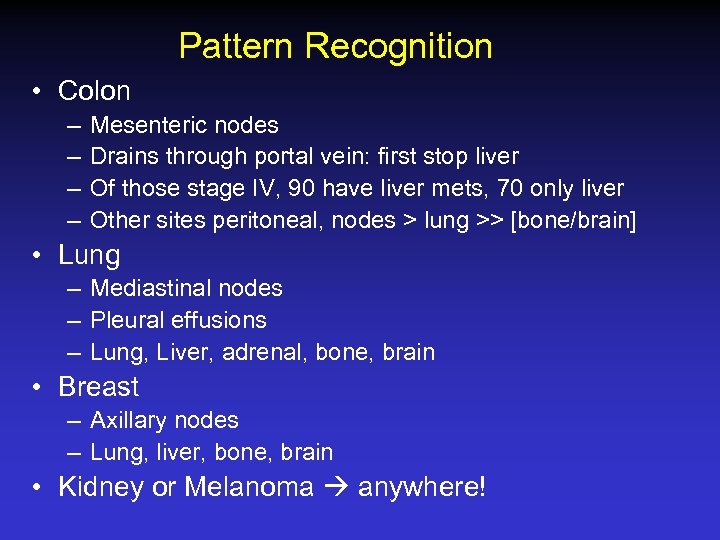
Pattern Recognition • Colon – – Mesenteric nodes Drains through portal vein: first stop liver Of those stage IV, 90 have liver mets, 70 only liver Other sites peritoneal, nodes > lung >> [bone/brain] • Lung – Mediastinal nodes – Pleural effusions – Lung, Liver, adrenal, bone, brain • Breast – Axillary nodes – Lung, liver, bone, brain • Kidney or Melanoma anywhere!
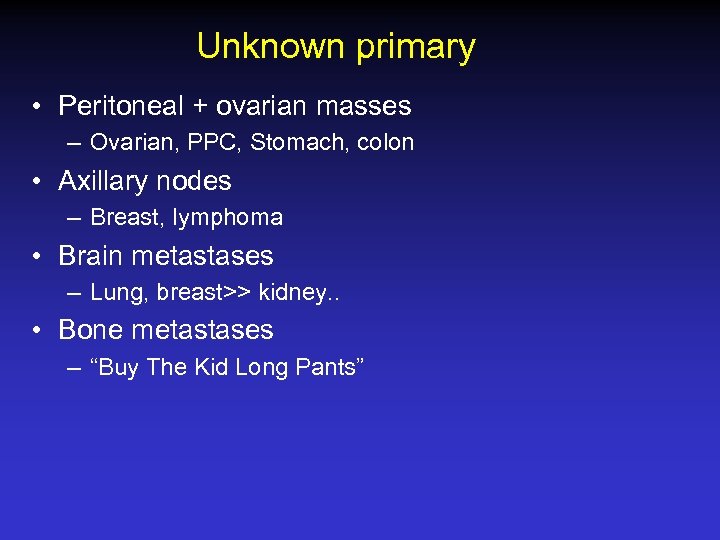
Unknown primary • Peritoneal + ovarian masses – Ovarian, PPC, Stomach, colon • Axillary nodes – Breast, lymphoma • Brain metastases – Lung, breast>> kidney. . • Bone metastases – “Buy The Kid Long Pants”
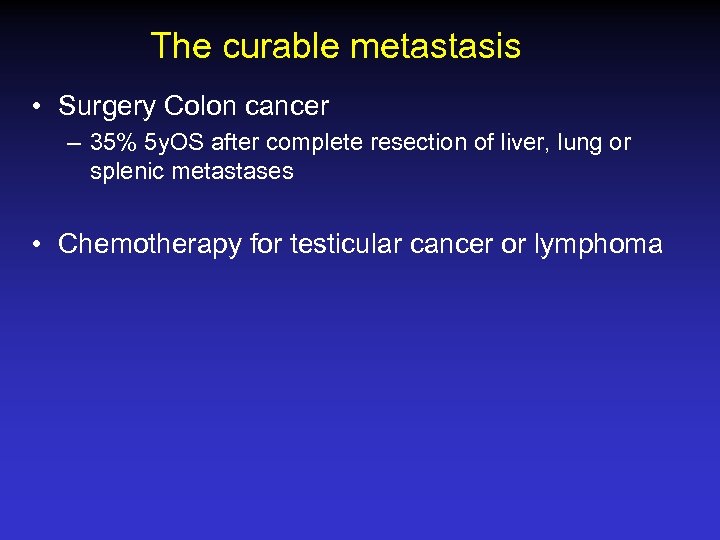
The curable metastasis • Surgery Colon cancer – 35% 5 y. OS after complete resection of liver, lung or splenic metastases • Chemotherapy for testicular cancer or lymphoma

Thank-you for your attention!
Скачать презентацию The Biology of Cancer December 12 2006
b6e6910926a36af833f40f1720fd1c1c.ppt