 Скачать презентацию The Better Buildings Breakfast Bright Green Buildings The
bee248c18ca01f9fc6f8546c61c8ffde.ppt
- Количество слайдов: 29



The Better Buildings Breakfast Bright Green Buildings: The Convergence of Green and Intelligent Buildings Ronald J. Zimmer CAE President & CEO Continental Automated Buildings Association www. CABA. org
CABA Vision “CABA is the authoritative knowledge-based forum advancing the application and integration of automation in the residential and commercial building industry. ”

CABA BOARD OF DIRECTORS
Source: CABA’s Convergence of Green and Intelligent Buildings Report
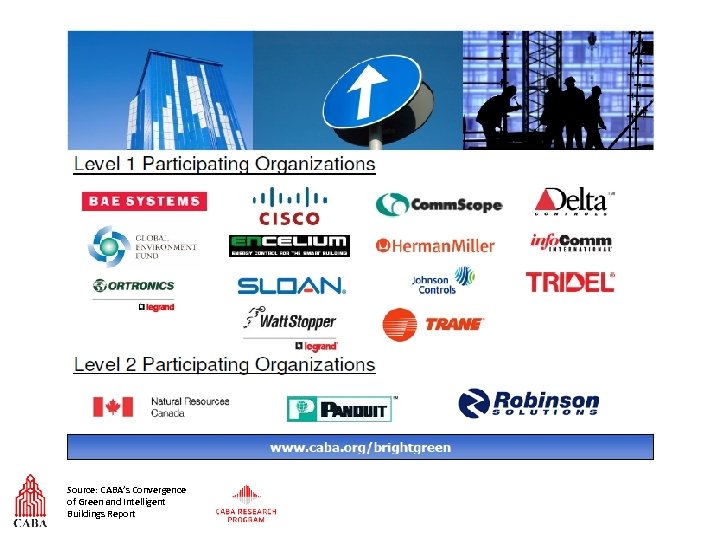
Source: CABA’s Convergence of Green and Intelligent Buildings Report
Source: CABA’s Convergence of Green and Intelligent Buildings Report
Source: CABA’s Convergence of Green and Intelligent Buildings Report
Source: CABA’s Convergence of Green and Intelligent Buildings Report
Source: CABA’s Convergence of Green and Intelligent Buildings Report
Source: CABA’s Convergence of Green and Intelligent Buildings Report
Source: CABA’s Convergence of Green and Intelligent Buildings Report
Source: CABA’s Convergence of Green and Intelligent Buildings Report
Source: CABA’s Convergence of Green and Intelligent Buildings Report
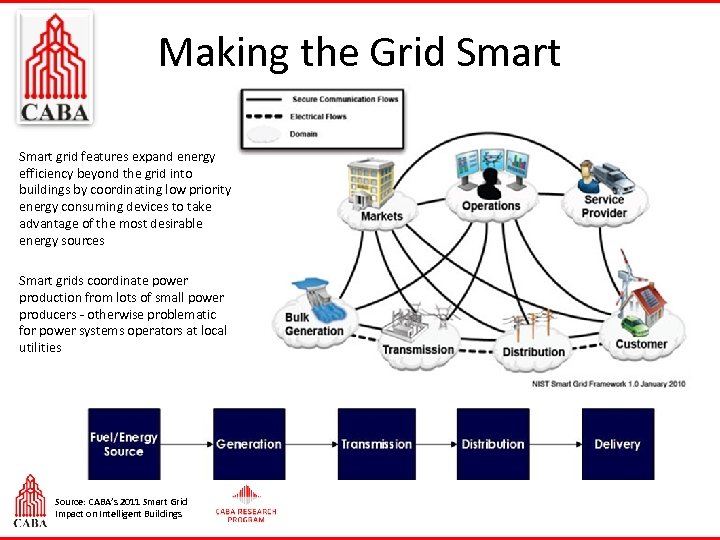
Making the Grid Smart grid features expand energy efficiency beyond the grid into buildings by coordinating low priority energy consuming devices to take advantage of the most desirable energy sources Smart grids coordinate power production from lots of small power producers - otherwise problematic for power systems operators at local utilities Source: CABA’s 2011 Smart Grid Impact on Intelligent Buildings
Smart Grid Impact on Intelligent Buildings Research Study 2011 The Continental Automated Buildings Association (CABA) CABA and the following CABA Members funded this Research Project: Ruby Sponsor: Emerald Sponsors Diamond Sponsors 15
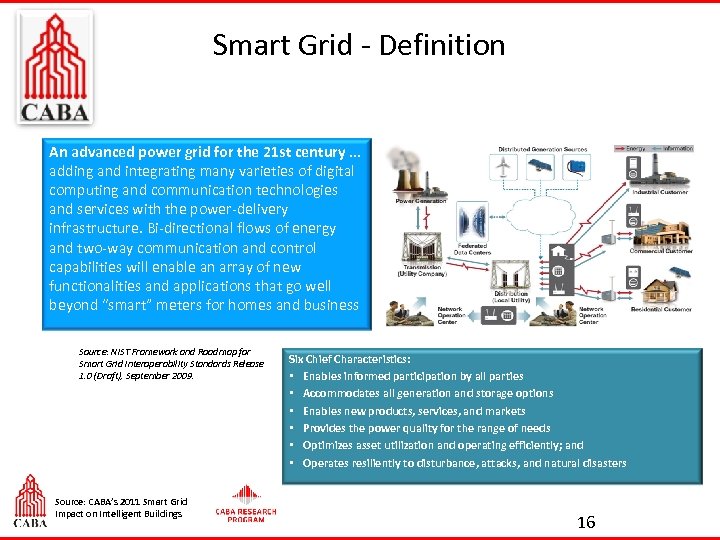
Smart Grid - Definition An advanced power grid for the 21 st century. . . adding and integrating many varieties of digital computing and communication technologies and services with the power-delivery infrastructure. Bi-directional flows of energy and two-way communication and control capabilities will enable an array of new functionalities and applications that go well beyond “smart” meters for homes and business Source: NIST Framework and Roadmap for Smart Grid Interoperability Standards Release 1. 0 (Draft), September 2009. Source: CABA’s 2011 Smart Grid Impact on Intelligent Buildings Six Chief Characteristics: • Enables informed participation by all parties • Accommodates all generation and storage options • Enables new products, services, and markets • Provides the power quality for the range of needs • Optimizes asset utilization and operating efficiently; and • Operates resiliently to disturbance, attacks, and natural disasters 16
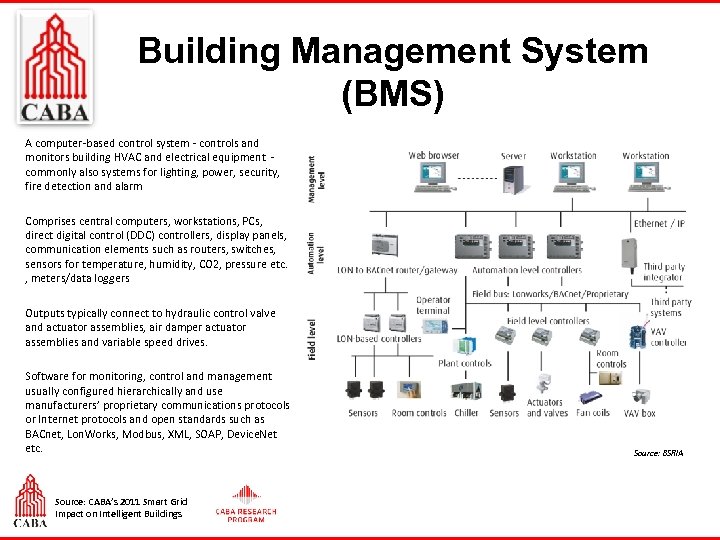
Building Management System (BMS) A computer-based control system - controls and monitors building HVAC and electrical equipment - commonly also systems for lighting, power, security, fire detection and alarm Comprises central computers, workstations, PCs, direct digital control (DDC) controllers, display panels, communication elements such as routers, switches, sensors for temperature, humidity, CO 2, pressure etc. , meters/data loggers Outputs typically connect to hydraulic control valve and actuator assemblies, air damper actuator assemblies and variable speed drives. Software for monitoring, control and management usually configured hierarchically and use manufacturers’ proprietary communications protocols or Internet protocols and open standards such as BACnet, Lon. Works, Modbus, XML, SOAP, Device. Net etc. Source: CABA’s 2011 Smart Grid Impact on Intelligent Buildings Source: BSRIA
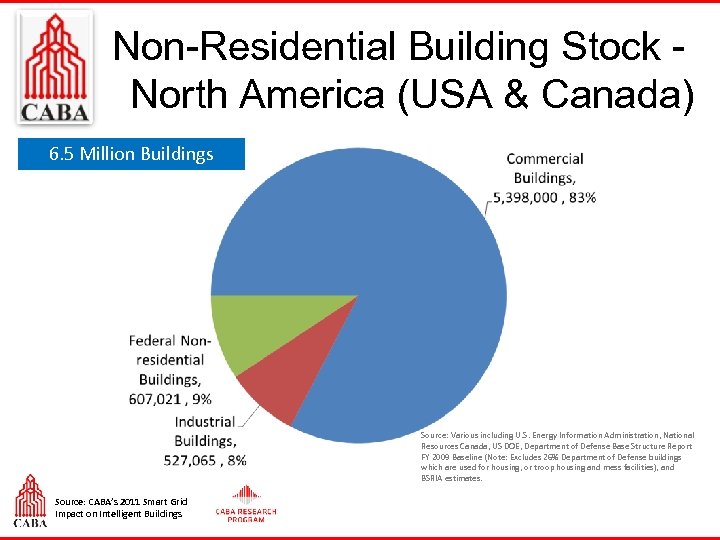
Non-Residential Building Stock North America (USA & Canada) 6. 5 Million Buildings Source: Various including U. S. Energy Information Administration, National Resources Canada, US DOE, Department of Defense Base Structure Report FY 2009 Baseline (Note: Excludes 26% Department of Defense buildings which are used for housing, or troop housing and mess facilities), and BSRIA estimates. Source: CABA’s 2011 Smart Grid Impact on Intelligent Buildings
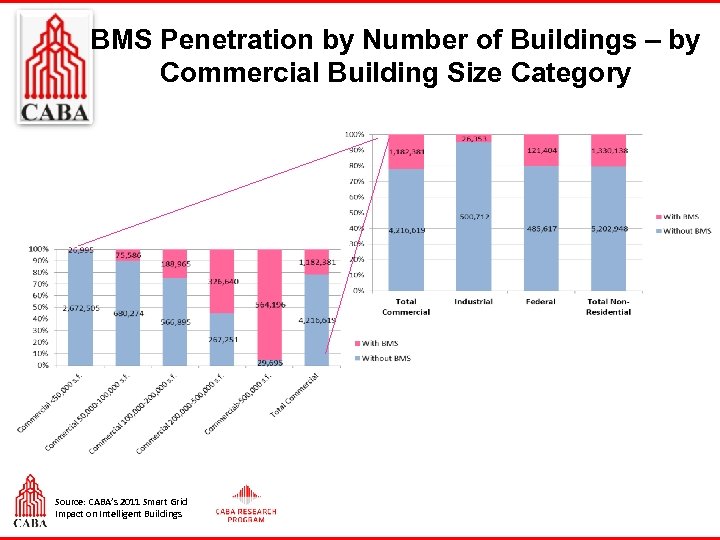
BMS Penetration by Number of Buildings – by Commercial Building Size Category Source: CABA’s 2011 Smart Grid Impact on Intelligent Buildings
Number of Utilities in North America 3, 100 Utilities in the USA (approx) • About 100 Investor owned companies (produce 70% of the electricity) • About 1000 Rural cooperatives • About 2000 Municipal power companies 380 Utilities in Canada (approx) • 16 major electric utilities: • 8 provincially owned • 7 investor-owned • 2 municipally owned • 2 are territorial Crown Corporations • Additional 4 privately-owned in Ontario • About 364 smaller utilities across Canada (87% located in Ontario) • Most owned by municipalities. Do not own generating capacity; usually purchase power from the major utility in their province. • Several small investor-owned with own generating capacity. Source: CABA’s 2011 Smart Grid Impact on Intelligent Buildings
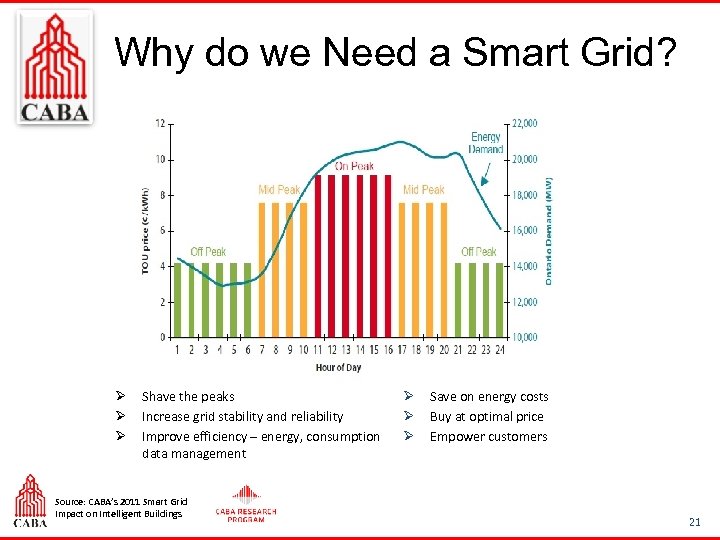
Why do we Need a Smart Grid? Ø Ø Ø Shave the peaks Increase grid stability and reliability Improve efficiency – energy, consumption data management Source: CABA’s 2011 Smart Grid Impact on Intelligent Buildings Ø Ø Ø Save on energy costs Buy at optimal price Empower customers 21
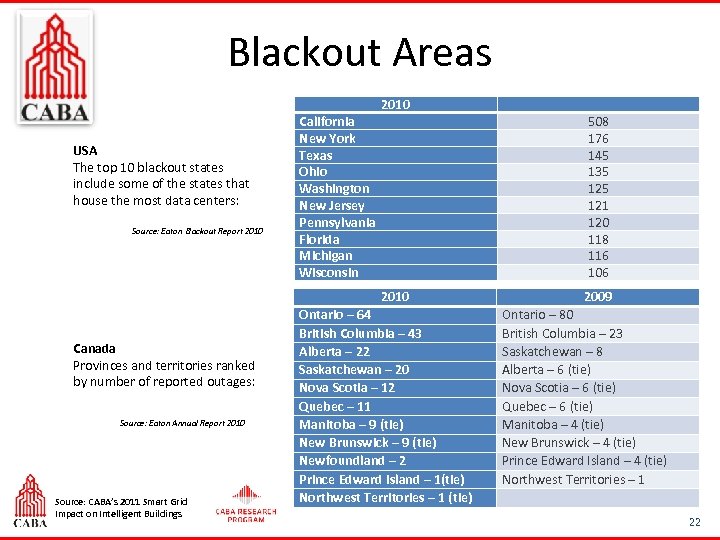
Blackout Areas Source: Eaton Blackout Report 2010 Canada Provinces and territories ranked by number of reported outages: Source: Eaton Annual Report 2010 Source: CABA’s 2011 Smart Grid Impact on Intelligent Buildings 508 176 145 135 121 120 118 116 106 2010 USA The top 10 blackout states include some of the states that house the most data centers: California New York Texas Ohio Washington New Jersey Pennsylvania Florida Michigan Wisconsin 2010 2009 Ontario – 64 British Columbia – 43 Alberta – 22 Saskatchewan – 20 Nova Scotia – 12 Quebec – 11 Manitoba – 9 (tie) New Brunswick – 9 (tie) Newfoundland – 2 Prince Edward Island – 1(tie) Northwest Territories – 1 (tie) Ontario – 80 British Columbia – 23 Saskatchewan – 8 Alberta – 6 (tie) Nova Scotia – 6 (tie) Quebec – 6 (tie) Manitoba – 4 (tie) New Brunswick – 4 (tie) Prince Edward Island – 4 (tie) Northwest Territories – 1 22
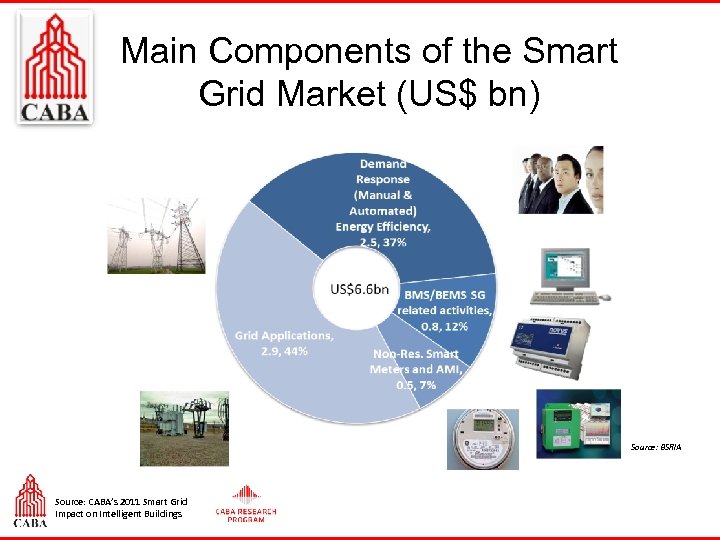
Main Components of the Smart Grid Market (US$ bn) Source: BSRIA Source: CABA’s 2011 Smart Grid Impact on Intelligent Buildings
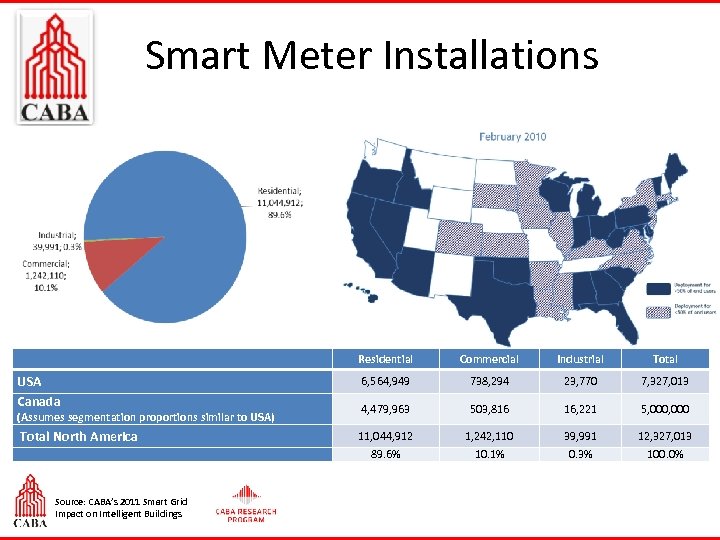
Smart Meter Installations Residential Commercial Industrial Total USA Canada 6, 564, 949 738, 294 23, 770 7, 327, 013 4, 479, 963 503, 816 16, 221 5, 000 Total North America 11, 044, 912 1, 242, 110 39, 991 12, 327, 013 89. 6% 10. 1% 0. 3% 100. 0% (Assumes segmentation proportions similar to USA) Source: CABA’s 2011 Smart Grid Impact on Intelligent Buildings
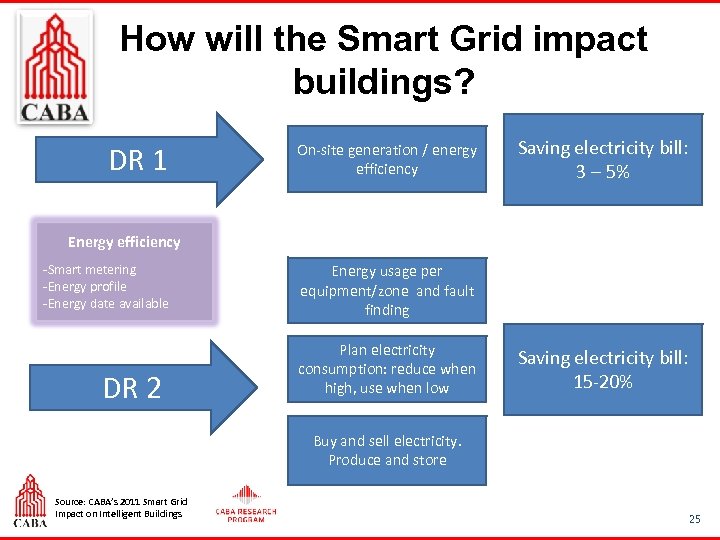
How will the Smart Grid impact buildings? DR 1 On-site generation / energy efficiency Saving electricity bill: 3 – 5% Energy efficiency -Smart metering -Energy profile -Energy date available DR 2 Energy usage per equipment/zone and fault finding Plan electricity consumption: reduce when high, use when low Saving electricity bill: 15 -20% Buy and sell electricity. Produce and store Source: CABA’s 2011 Smart Grid Impact on Intelligent Buildings 25
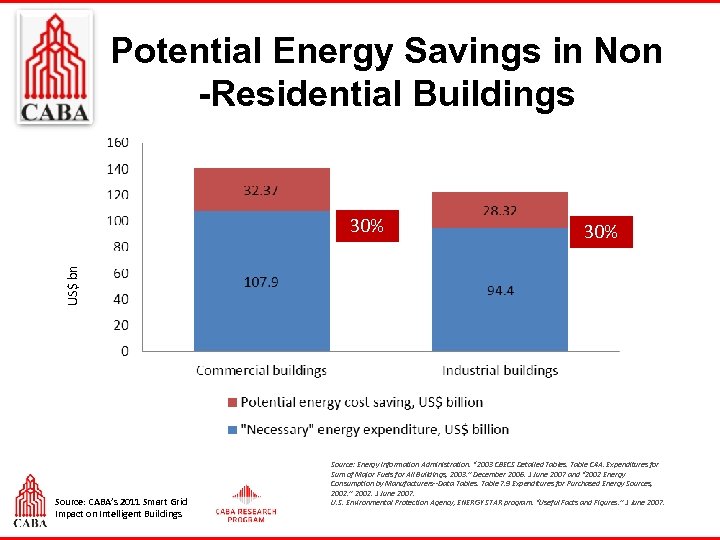
Potential Energy Savings in Non -Residential Buildings 30% US$ bn 30% Source: CABA’s 2011 Smart Grid Impact on Intelligent Buildings Source: Energy Information Administration. “ 2003 CBECS Detailed Tables. Table C 4 A. Expenditures for Sum of Major Fuels for All Buildings, 2003. ” December 2006. 1 June 2007 and “ 2002 Energy Consumption by Manufacturers--Data Tables. Table 7. 9 Expenditures for Purchased Energy Sources, 2002. ” 2002. 1 June 2007. U. S. Environmental Protection Agency, ENERGY STAR program. “Useful Facts and Figures. ” 1 June 2007.
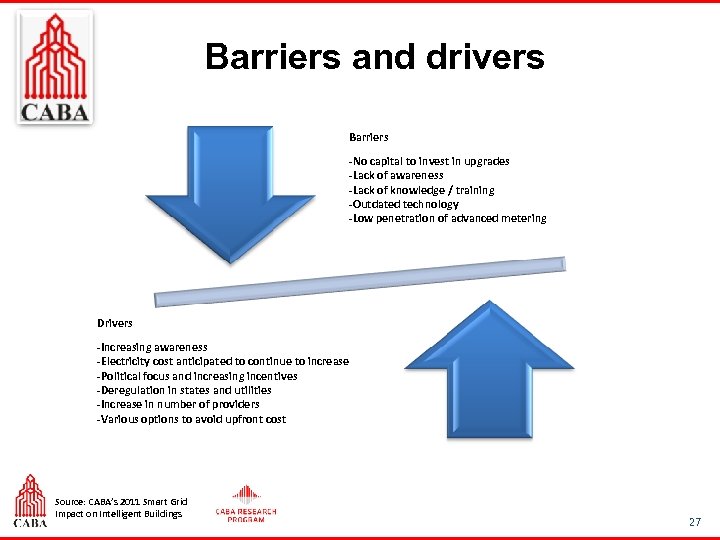
Barriers and drivers Barriers -No capital to invest in upgrades -Lack of awareness -Lack of knowledge / training -Outdated technology -Low penetration of advanced metering Drivers -Increasing awareness -Electricity cost anticipated to continue to increase -Political focus and increasing incentives -Deregulation in states and utilities -Increase in number of providers -Various options to avoid upfront cost Source: CABA’s 2011 Smart Grid Impact on Intelligent Buildings 27
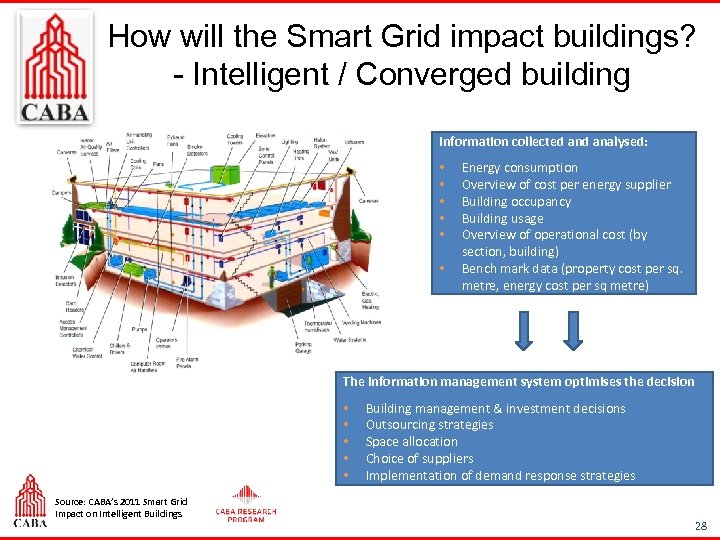
How will the Smart Grid impact buildings? - Intelligent / Converged building Information collected analysed: • • • Energy consumption Overview of cost per energy supplier Building occupancy Building usage Overview of operational cost (by section, building) Bench mark data (property cost per sq. metre, energy cost per sq metre) The information management system optimises the decision • • • Source: CABA’s 2011 Smart Grid Impact on Intelligent Buildings Building management & investment decisions Outsourcing strategies Space allocation Choice of suppliers Implementation of demand response strategies 28
Your Information Source for Home & Building Automation 1173 Cyrville Road, Suite 210 Ottawa, ON K 1 J 7 S 6 613. 686. 1814 Toll free: 888. 798. CABA (2222) Fax: 613. 744. 7833 CABA@CABA. org http: //www. twitter. com/caba_news http: //www. linkedin. com/groups? gid=2121884 http: //www. CABA. org
Скачать презентацию The Better Buildings Breakfast Bright Green Buildings The
bee248c18ca01f9fc6f8546c61c8ffde.ppt