 Скачать презентацию The benefits of ECEC and basic education Prof
16ea5d6ebc5eb14d2a44b0e054f97581.ppt
- Количество слайдов: 8



The benefits of ECEC and basic education Prof. Ides Nicaise HIVA / Dept of Ed. Sc. K. U. Leuven
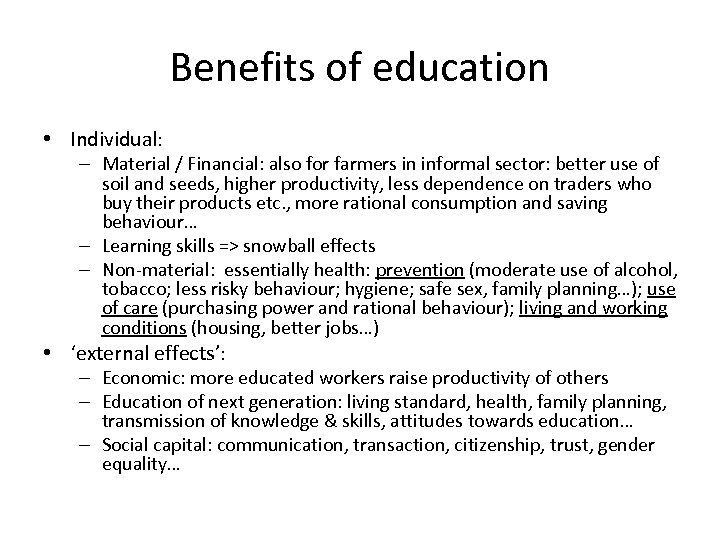
Benefits of education • Individual: – Material / Financial: also for farmers in informal sector: better use of soil and seeds, higher productivity, less dependence on traders who buy their products etc. , more rational consumption and saving behaviour… – Learning skills => snowball effects – Non-material: essentially health: prevention (moderate use of alcohol, tobacco; less risky behaviour; hygiene; safe sex, family planning…); use of care (purchasing power and rational behaviour); living and working conditions (housing, better jobs…) • ‘external effects’: – Economic: more educated workers raise productivity of others – Education of next generation: living standard, health, family planning, transmission of knowledge & skills, attitudes towards education… – Social capital: communication, transaction, citizenship, trust, gender equality…
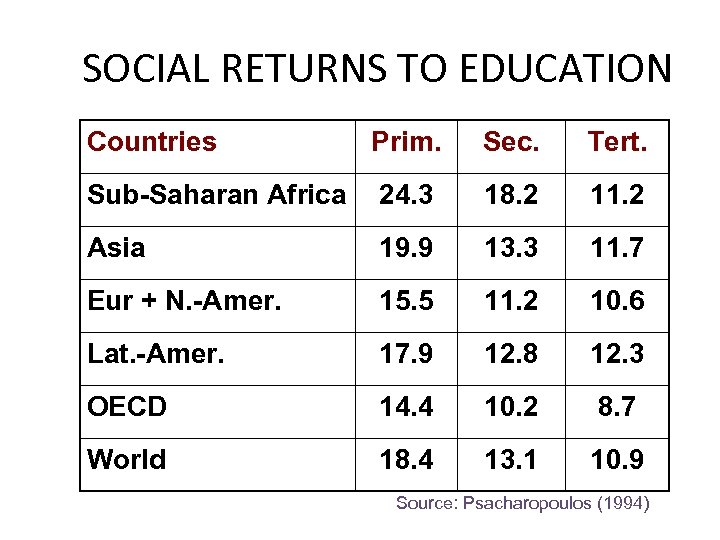
SOCIAL RETURNS TO EDUCATION Countries Prim. Sec. Tert. Sub-Saharan Africa 24. 3 18. 2 11. 2 Asia 19. 9 13. 3 11. 7 Eur + N. -Amer. 15. 5 11. 2 10. 6 Lat. -Amer. 17. 9 12. 8 12. 3 OECD 14. 4 10. 2 8. 7 World 18. 4 13. 1 10. 9 Source: Psacharopoulos (1994)
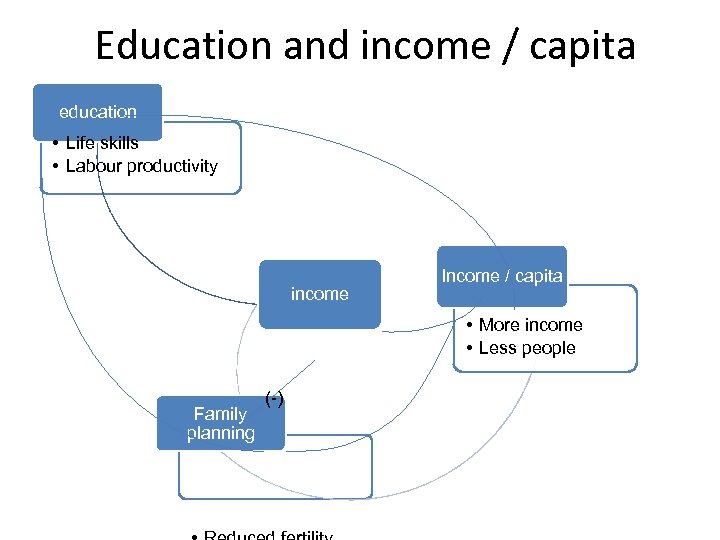
Education and income / capita education • Life skills • Labour productivity income Income / capita • More income • Less people Family planning (-)
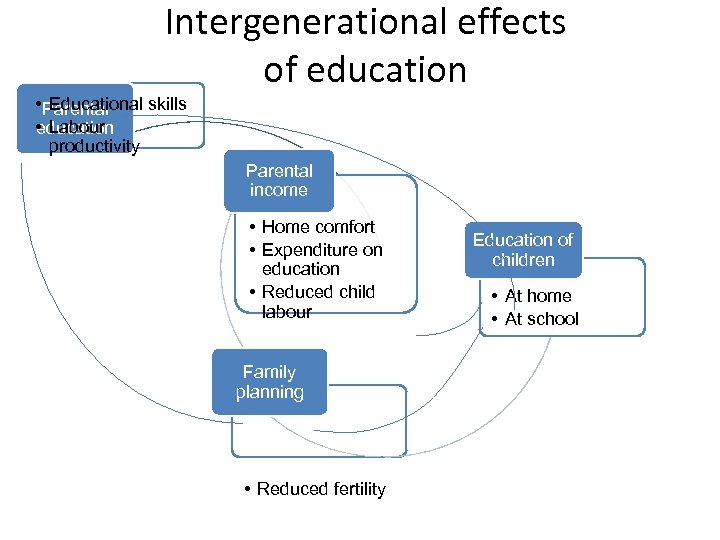
Intergenerational effects of education • Parental Educational skills • Labour education productivity Parental income • Home comfort • Expenditure on education • Reduced child labour Family planning • Reduced fertility Education of children • At home • At school
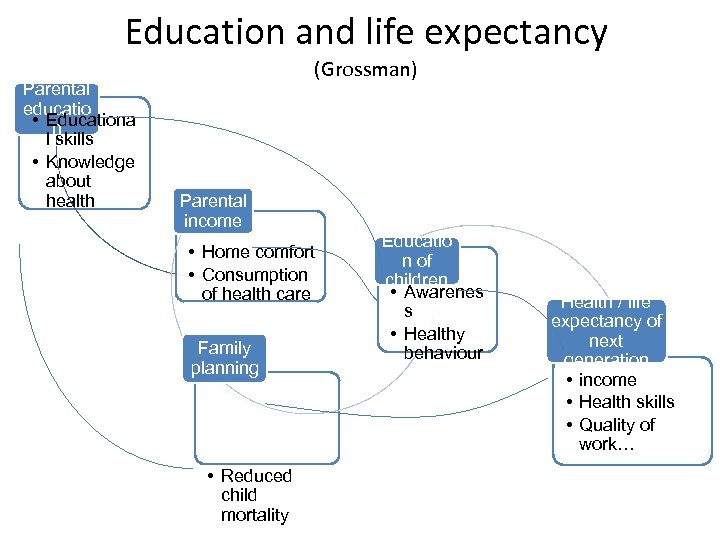
Education and life expectancy Parental educatio • Educationa n l skills • Knowledge about health (Grossman) Parental income • Home comfort • Consumption of health care Family planning • Reduced child mortality Educatio n of children • Awarenes s • Healthy behaviour Health / life expectancy of next generation • income • Health skills • Quality of work…
Why is basic education so profitable? • Key skills (communication, basic maths, hygiene) are learnt in primary school • Primary = more useful for rural areas secondary education = typically useful for industry and services => in urban settings • Tertiary = important but serious problems of – Mismatch (N-Africa) – Brain drain (medical sector, IT…): almost all physicians trained in Congo leave the country
Challenges • Health problems (undernourishment, AIDS) • Population growth and movements • Economic conditions • Government debt • Poverty of population => education is lesser priority / opportunity cost of child labour • Wars • Poor governance • Quantity-quality dilemma • Inequalities / exclusion • Language policy • Resources • Relevance of curricula • Teacher professionalisation • ….
Скачать презентацию The benefits of ECEC and basic education Prof
16ea5d6ebc5eb14d2a44b0e054f97581.ppt