 Скачать презентацию The Benefit of Statin Therapy Before and After
2c27a5618060cecf234721af999945d6.ppt
- Количество слайдов: 23



The Benefit of Statin Therapy Before and After Coronary Revascularization C. Michael Gibson, MS, MD Beth Israel Deaconess Medical Center Boston, MA
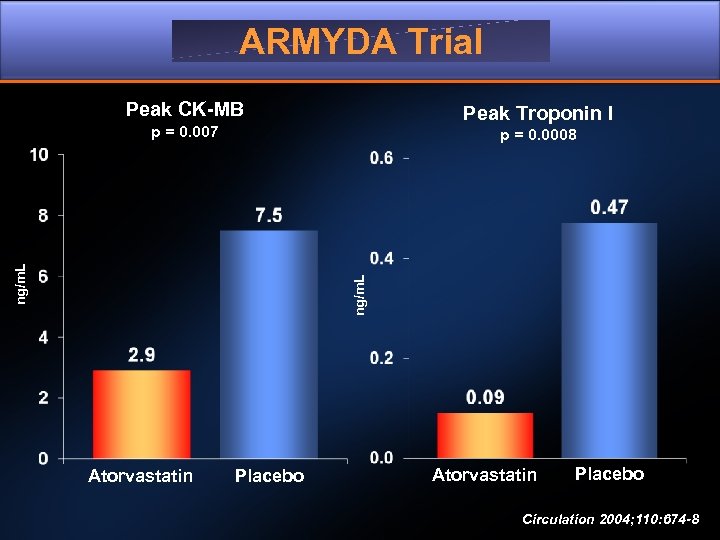
ARMYDA Trial Peak CK-MB Peak Troponin I p = 0. 007 ng/m. L p = 0. 0008 Atorvastatin Placebo Circulation 2004; 110: 674 -8
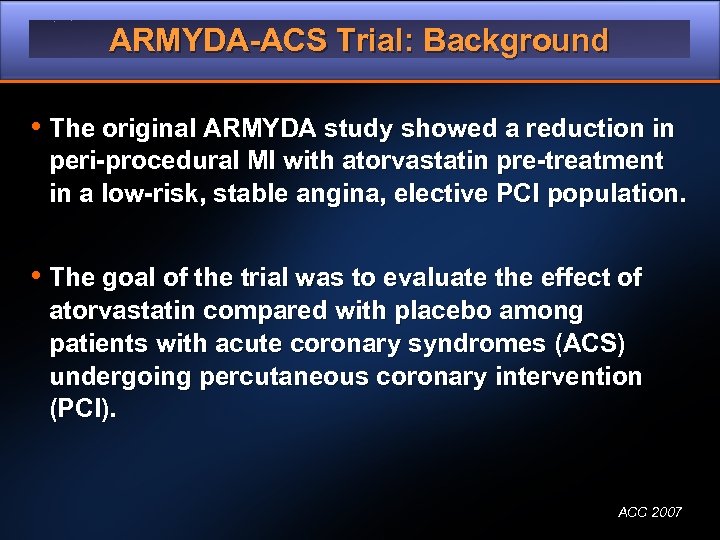
ARMYDA-ACS Trial: Background • The original ARMYDA study showed a reduction in peri-procedural MI with atorvastatin pre-treatment in a low-risk, stable angina, elective PCI population. • The goal of the trial was to evaluate the effect of atorvastatin compared with placebo among patients with acute coronary syndromes (ACS) undergoing percutaneous coronary intervention (PCI). ACC 2007
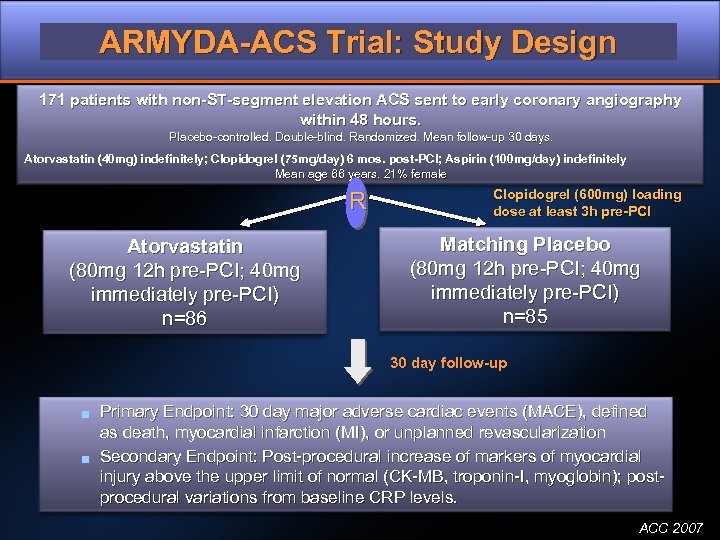
ARMYDA-ACS Trial: Study Design 171 patients with non-ST-segment elevation ACS sent to early coronary angiography within 48 hours. Placebo-controlled. Double-blind. Randomized. Mean follow-up 30 days. Atorvastatin (40 mg) indefinitely; Clopidogrel (75 mg/day) 6 mos. post-PCI; Aspirin (100 mg/day) indefinitely Mean age 66 years. 21% female R Atorvastatin (80 mg 12 h pre-PCI; 40 mg immediately pre-PCI) n=86 Clopidogrel (600 mg) loading dose at least 3 h pre-PCI Matching Placebo (80 mg 12 h pre-PCI; 40 mg immediately pre-PCI) n=85 30 day follow-up g g Primary Endpoint: 30 day major adverse cardiac events (MACE), defined as death, myocardial infarction (MI), or unplanned revascularization Secondary Endpoint: Post-procedural increase of markers of myocardial injury above the upper limit of normal (CK-MB, troponin-I, myoglobin); postprocedural variations from baseline CRP levels. ACC 2007
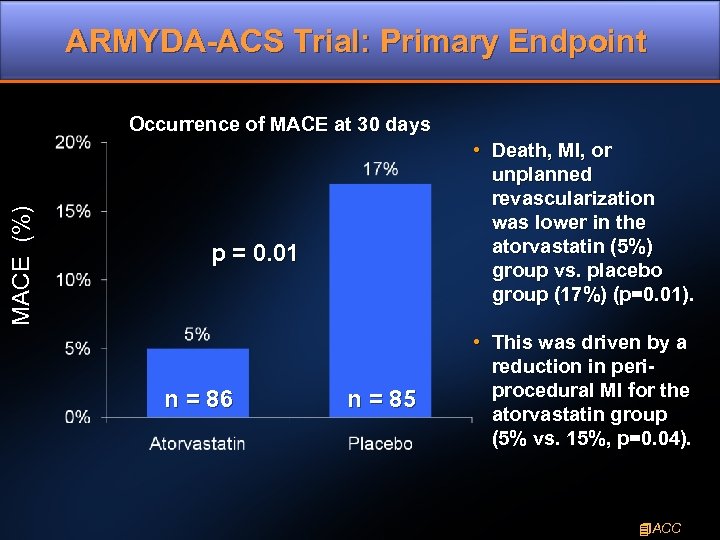
ARMYDA-ACS Trial: Primary Endpoint MACE (%) Occurrence of MACE at 30 days • Death, MI, or unplanned revascularization was lower in the atorvastatin (5%) group vs. placebo group (17%) (p=0. 01). p = 0. 01 n = 86 n = 85 • This was driven by a reduction in periprocedural MI for the atorvastatin group (5% vs. 15%, p=0. 04). 4 ACC
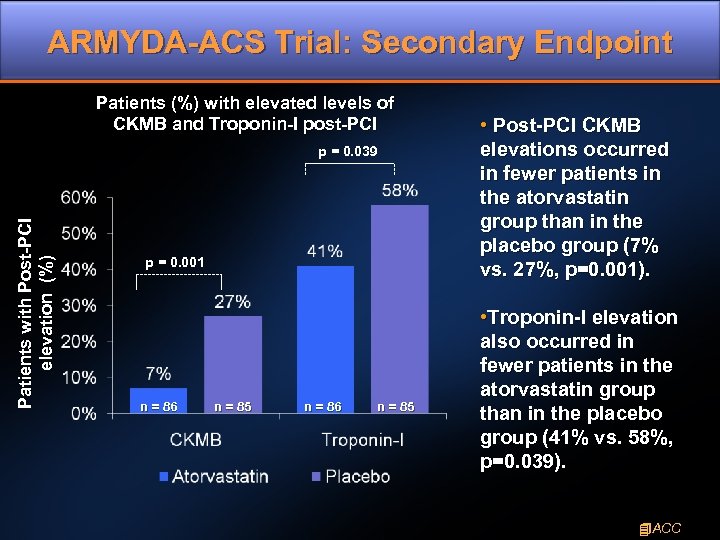
ARMYDA-ACS Trial: Secondary Endpoint Patients (%) with elevated levels of CKMB and Troponin-I post-PCI Patients with Post-PCI elevation (%) p = 0. 039 p = 0. 001 n = 86 n = 85 • Post-PCI CKMB elevations occurred in fewer patients in the atorvastatin group than in the placebo group (7% vs. 27%, p=0. 001). • Troponin-I elevation also occurred in fewer patients in the atorvastatin group than in the placebo group (41% vs. 58%, p=0. 039). 4 ACC
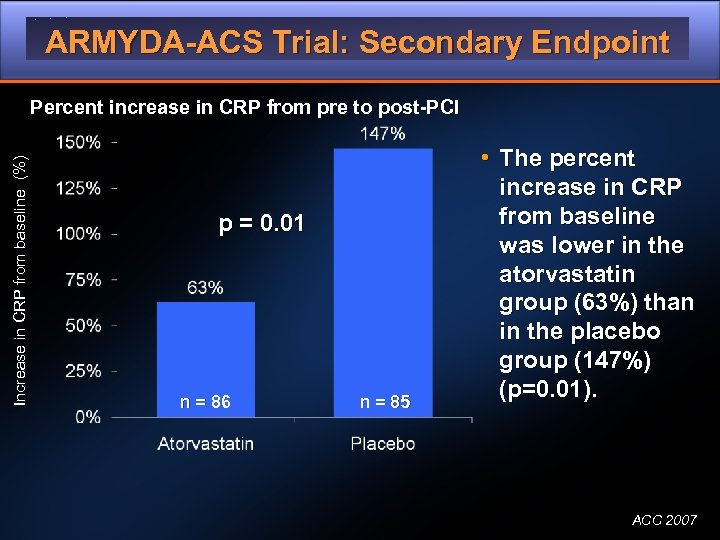
ARMYDA-ACS Trial: Secondary Endpoint Increase in CRP from baseline (%) Percent increase in CRP from pre to post-PCI p = 0. 01 n = 86 n = 85 • The percent increase in CRP from baseline was lower in the atorvastatin group (63%) than in the placebo group (147%) (p=0. 01). ACC 2007
ARMYDA-ACS Trial: Limitations • The optimal timing of a pre-treatment atorvastatin load is unknown, as is the impact of delaying PCI to pre-treat with atorvastatin in an ACS population. • Pre-treatment in the present study was for 12 hours, with a mean time to PCI of 23 hours. However, in an unstable population, time to revascularization is often shorter. 4 ACC
Meta-Analysis of the Role of Statin Therapy in Reducing Myocardial Infarction Following Elective Percutaneous Coronary Intervention Girish R. Mood, MD; Anthony A. Bavry, MD, MPH; Henri Roukoz, MD; and Deepak L. Bhatt, MD
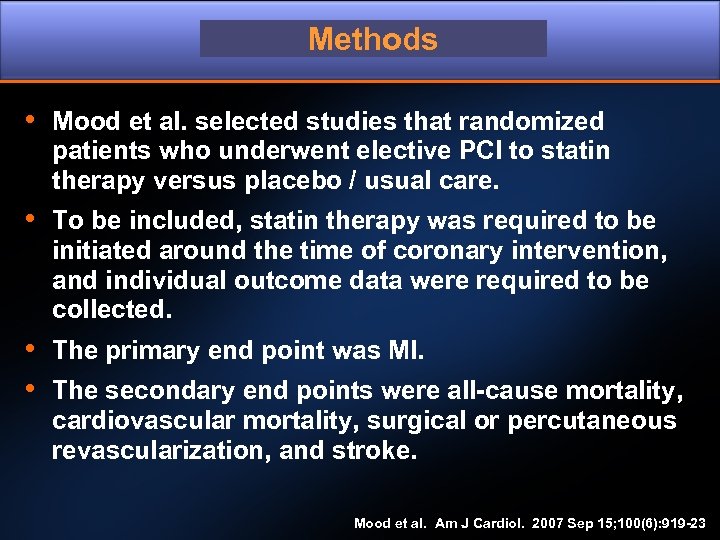
Methods • Mood et al. selected studies that randomized patients who underwent elective PCI to statin therapy versus placebo / usual care. • To be included, statin therapy was required to be initiated around the time of coronary intervention, and individual outcome data were required to be collected. • The primary end point was MI. • The secondary end points were all-cause mortality, cardiovascular mortality, surgical or percutaneous revascularization, and stroke. Mood et al. Am J Cardiol. 2007 Sep 15; 100(6): 919 -23
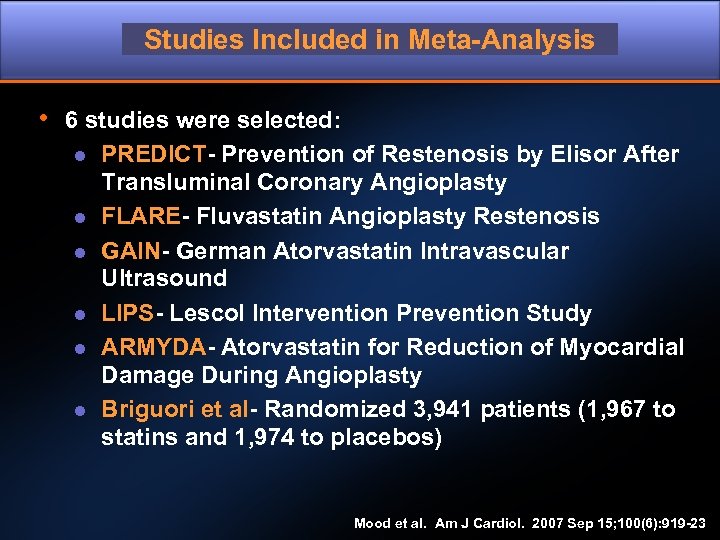
Studies Included in Meta-Analysis • 6 studies were selected: l l l PREDICT- Prevention of Restenosis by Elisor After Transluminal Coronary Angioplasty FLARE- Fluvastatin Angioplasty Restenosis GAIN- German Atorvastatin Intravascular Ultrasound LIPS- Lescol Intervention Prevention Study ARMYDA- Atorvastatin for Reduction of Myocardial Damage During Angioplasty Briguori et al- Randomized 3, 941 patients (1, 967 to statins and 1, 974 to placebos) Mood et al. Am J Cardiol. 2007 Sep 15; 100(6): 919 -23
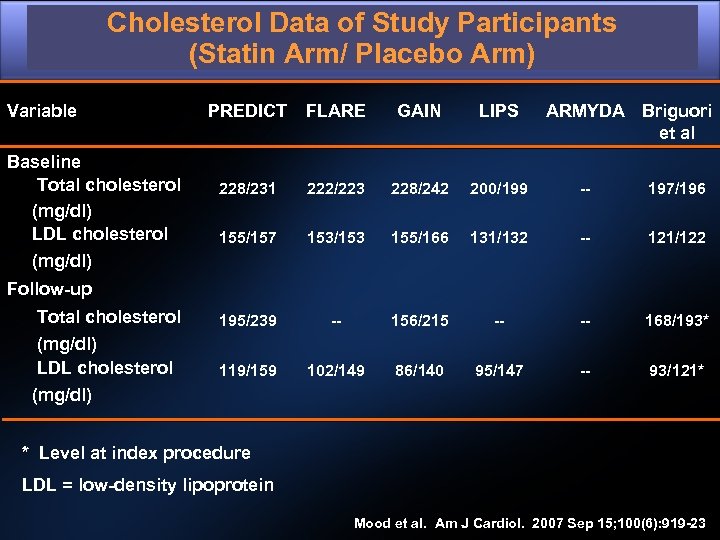
Cholesterol Data of Study Participants (Statin Arm/ Placebo Arm) Variable Baseline Total cholesterol (mg/dl) LDL cholesterol (mg/dl) PREDICT FLARE GAIN LIPS ARMYDA Briguori et al 228/231 222/223 228/242 200/199 -- 197/196 155/157 153/153 155/166 131/132 -- 121/122 195/239 -- 156/215 -- -- 168/193* 119/159 102/149 86/140 95/147 -- 93/121* Follow-up Total cholesterol (mg/dl) LDL cholesterol (mg/dl) * Level at index procedure LDL = low-density lipoprotein Mood et al. Am J Cardiol. 2007 Sep 15; 100(6): 919 -23
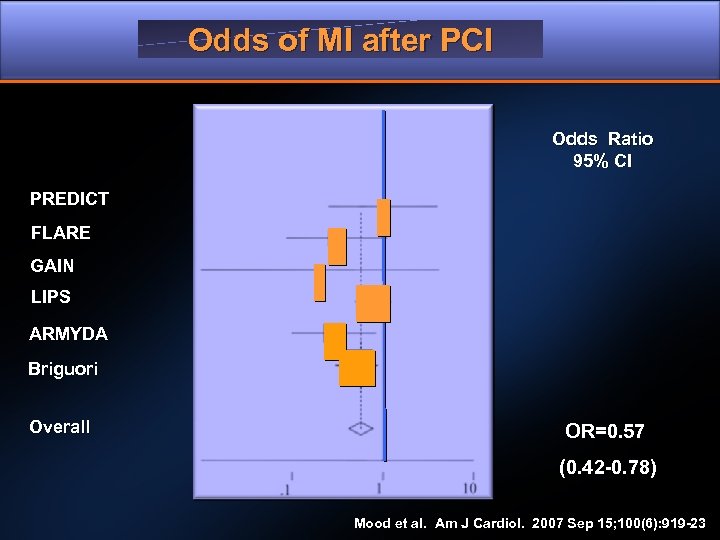
Odds of MI after PCI Odds Ratio 95% CI PREDICT FLARE GAIN LIPS ARMYDA Briguori Overall OR=0. 57 (0. 42 -0. 78) Mood et al. Am J Cardiol. 2007 Sep 15; 100(6): 919 -23
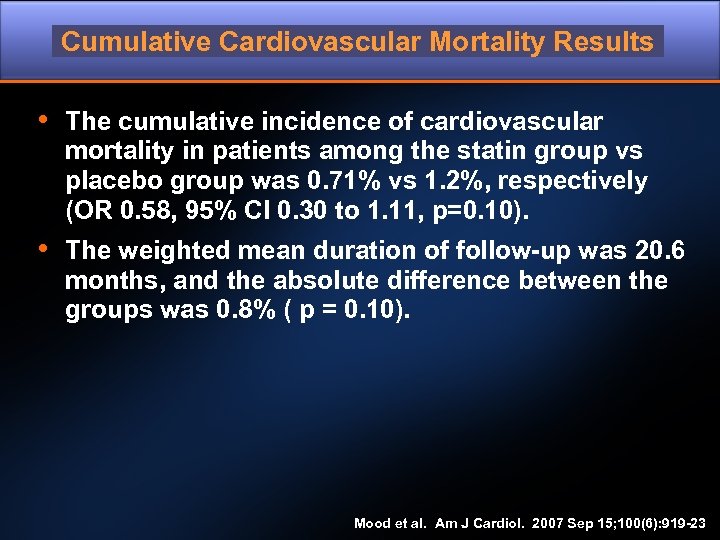
Cumulative Cardiovascular Mortality Results • The cumulative incidence of cardiovascular mortality in patients among the statin group vs placebo group was 0. 71% vs 1. 2%, respectively (OR 0. 58, 95% CI 0. 30 to 1. 11, p=0. 10). • The weighted mean duration of follow-up was 20. 6 months, and the absolute difference between the groups was 0. 8% ( p = 0. 10). Mood et al. Am J Cardiol. 2007 Sep 15; 100(6): 919 -23
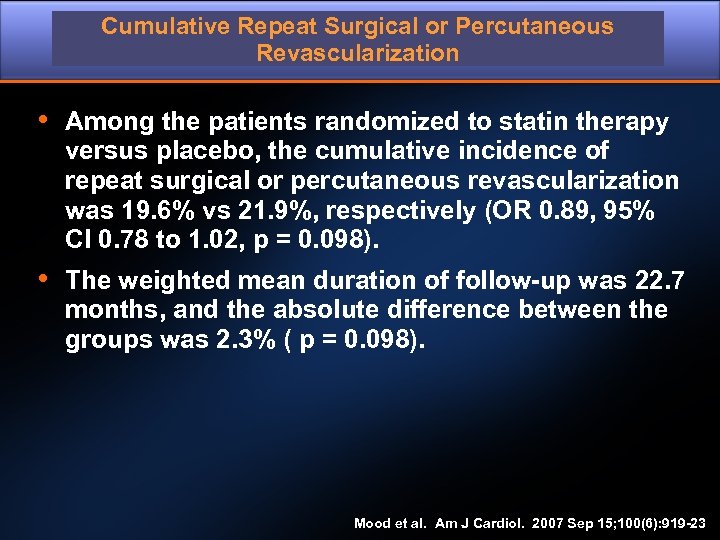
Cumulative Repeat Surgical or Percutaneous Revascularization • Among the patients randomized to statin therapy versus placebo, the cumulative incidence of repeat surgical or percutaneous revascularization was 19. 6% vs 21. 9%, respectively (OR 0. 89, 95% CI 0. 78 to 1. 02, p = 0. 098). • The weighted mean duration of follow-up was 22. 7 months, and the absolute difference between the groups was 2. 3% ( p = 0. 098). Mood et al. Am J Cardiol. 2007 Sep 15; 100(6): 919 -23
Limitations • The follow-up periods ranged from 1 day to 45 months, making it difficult to assess the long-term benefits of statin therapy. Mood et al. Am J Cardiol. 2007 Sep 15; 100(6): 919 -23
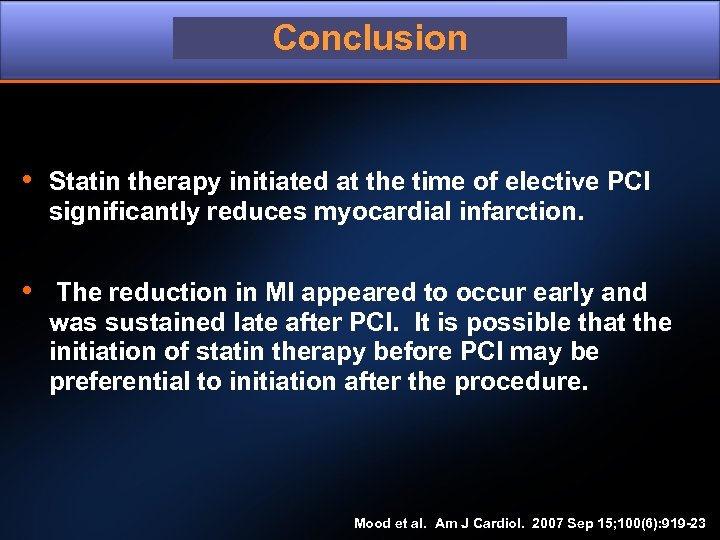
Conclusion • Statin therapy initiated at the time of elective PCI significantly reduces myocardial infarction. • The reduction in MI appeared to occur early and was sustained late after PCI. It is possible that the initiation of statin therapy before PCI may be preferential to initiation after the procedure. Mood et al. Am J Cardiol. 2007 Sep 15; 100(6): 919 -23
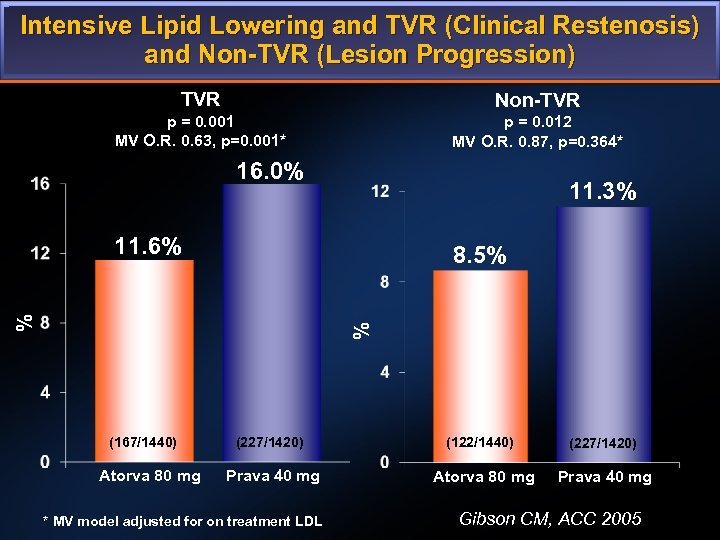
Intensive Lipid Lowering and TVR (Clinical Restenosis) and Non-TVR (Lesion Progression) TVR Non-TVR p = 0. 001 MV O. R. 0. 63, p=0. 001* p = 0. 012 MV O. R. 0. 87, p=0. 364* 16. 0% 11. 3% 11. 6% % % 8. 5% (167/1440) Atorva 80 mg (227/1420) (122/1440) (227/1420) Prava 40 mg Atorva 80 mg Prava 40 mg * MV model adjusted for on treatment LDL Gibson CM, ACC 2005
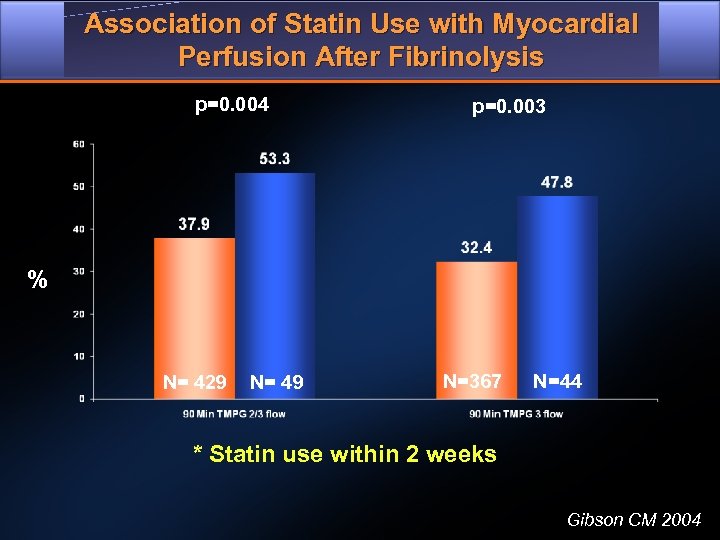
Association of Statin Use with Myocardial Perfusion After Fibrinolysis p=0. 004 p=0. 003 % N= 429 N= 49 N=367 N=44 * Statin use within 2 weeks Gibson CM 2004
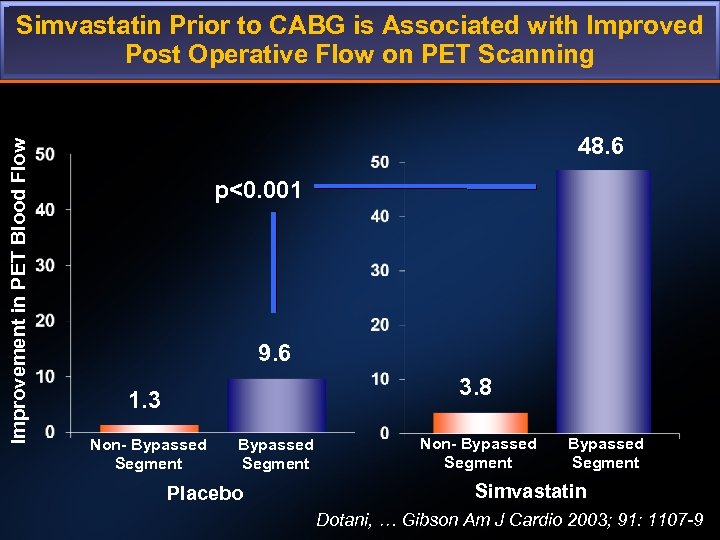
Improvement in PET Blood Flow Simvastatin Prior to CABG is Associated with Improved Post Operative Flow on PET Scanning 48. 6 p<0. 001 9. 6 3. 8 1. 3 Non- Bypassed Segment Placebo Non- Bypassed Segment Simvastatin Dotani, … Gibson Am J Cardio 2003; 91: 1107 -9
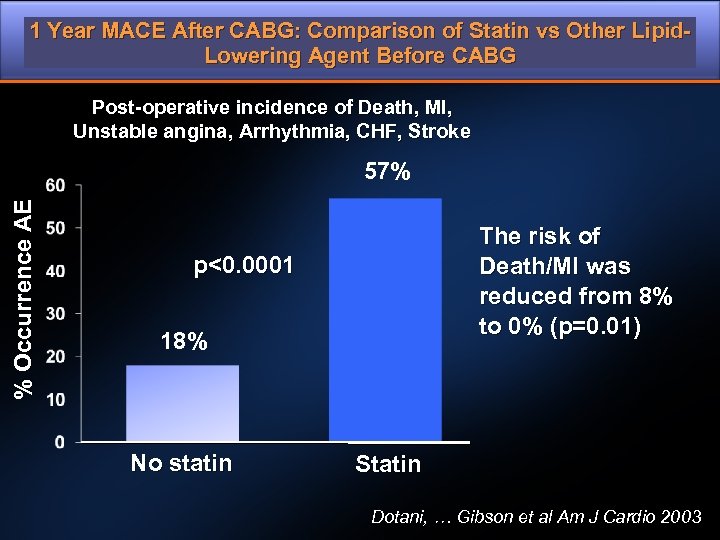
1 Year MACE After CABG: Comparison of Statin vs Other Lipid. Lowering Agent Before CABG Post-operative incidence of Death, MI, Unstable angina, Arrhythmia, CHF, Stroke % Occurrence AE 57% The risk of Death/MI was reduced from 8% to 0% (p=0. 01) p<0. 0001 18% No statin Statin Dotani, … Gibson et al Am J Cardio 2003
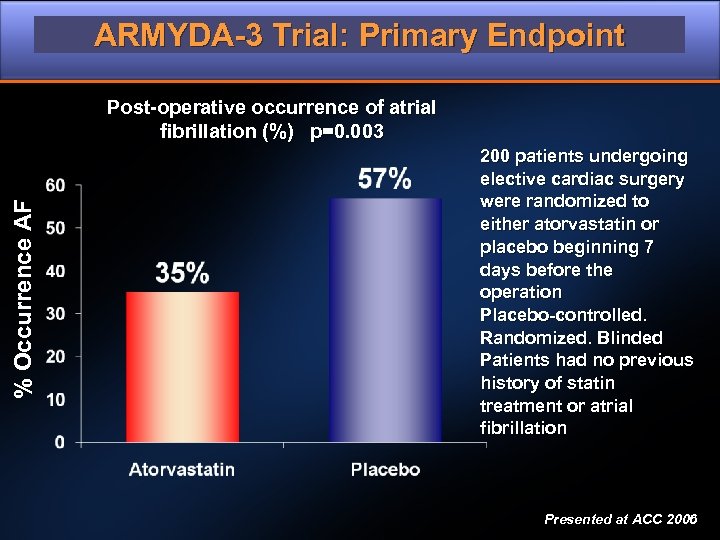
ARMYDA-3 Trial: Primary Endpoint % Occurrence AF Post-operative occurrence of atrial fibrillation (%) p=0. 003 200 patients undergoing elective cardiac surgery were randomized to either atorvastatin or placebo beginning 7 days before the operation Placebo-controlled. Randomized. Blinded Patients had no previous history of statin treatment or atrial fibrillation Presented at ACC 2006
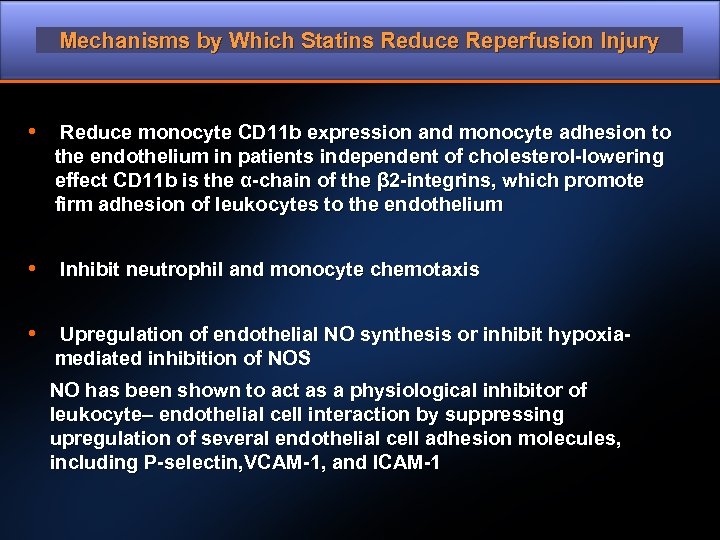
Mechanisms by Which Statins Reduce Reperfusion Injury • Reduce monocyte CD 11 b expression and monocyte adhesion to the endothelium in patients independent of cholesterol-lowering effect CD 11 b is the α-chain of the β 2 -integrins, which promote firm adhesion of leukocytes to the endothelium • Inhibit neutrophil and monocyte chemotaxis • Upregulation of endothelial NO synthesis or inhibit hypoxiamediated inhibition of NOS NO has been shown to act as a physiological inhibitor of leukocyte– endothelial cell interaction by suppressing upregulation of several endothelial cell adhesion molecules, including P-selectin, VCAM-1, and ICAM-1
Скачать презентацию The Benefit of Statin Therapy Before and After
2c27a5618060cecf234721af999945d6.ppt