 Скачать презентацию The Basics of Doing Business on the Internet
1f2e6c2b4ad05aaf9a4aee66035c3b66.ppt
- Количество слайдов: 28



The Basics of Doing Business on the Internet q Questions Answered in this Chapter: – What are the key similarities and differences between e-commerce and brick-and-mortar selling in regard to location? – What are popular methods for marketing an e-commerce store? – How does e-commerce payment differ from brick-and-mortar payment? – What roles does security play in e-commerce? – What challenges exist in e-commerce fulfillment? Sptember 2001 Chaptrt 3: The Basics of Doing Business on the Internet 1
Introduction q q Selling on the Web requires many of the same activities and components needed to conduct business in the offline world Five key components of running an e-commerce store – – – Location and Hosting Marketing and Presentation Payment Security Fulfillment Sptember 2001 Chaptrt 3: The Basics of Doing Business on the Internet 2
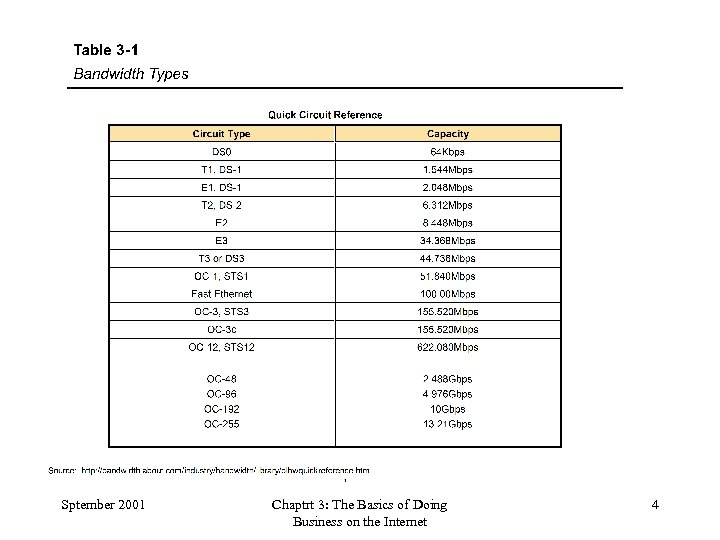
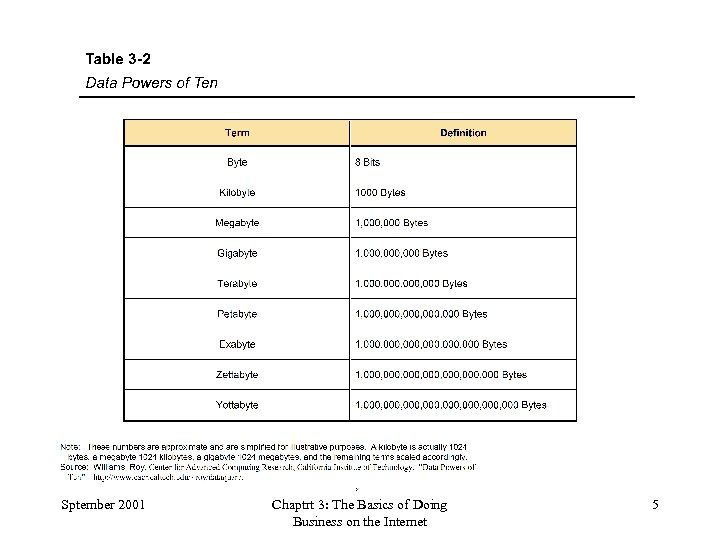
Location and Hosting q Factors to consider in selection of store location – Traffic: Location determines the type and quantity of traffic flow – Image: Location influences how store is perceived – Competition: Preferable to locate store where there is little competition – Convenience: Some locations offer more services to merchants than others – Size: Store must be sufficiently large to accommodate its products and customers. In e-commerce, size determines the requirements for • Bandwidth - The amount of data that can be sent through a connection at once • Processing Power - The amount of data that can be processed by a website at a given time • Data Storage Capacity Sptember 2001 Chaptrt 3: The Basics of Doing Business on the Internet 3
Sptember 2001 Chaptrt 3: The Basics of Doing Business on the Internet 4
Sptember 2001 Chaptrt 3: The Basics of Doing Business on the Internet 5
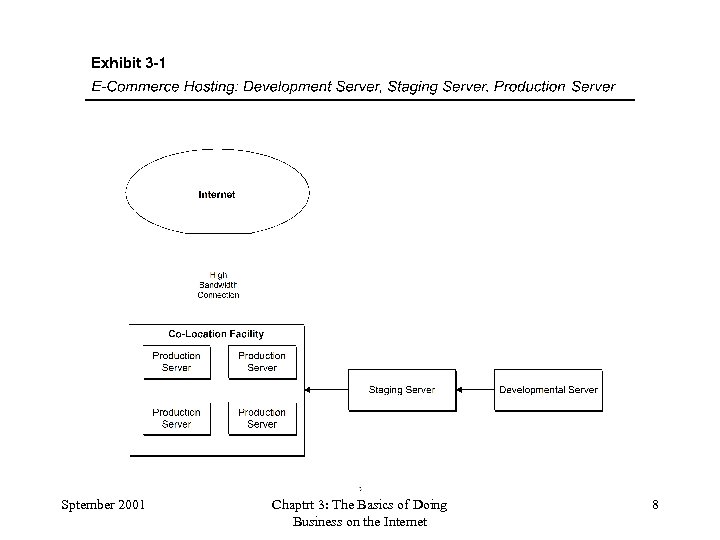
Location and Hosting (Cont’d) q Technology components for creating an e-commerce store location – Domain name registration • Fist Step in creating an e-commerce location • Domain name serves as the e-commerce store's virtual location on the web • The process is similar to getting a license and registration for conducting business at a brick-and-mortar location – Host Selection • Web host serves as a website's secure, high-bandwidth, professionally maintained connection to the Internet. Website content is stored on the host's servers Sptember 2001 Chaptrt 3: The Basics of Doing Business on the Internet 6
Location and Hosting (Cont’d) • Hosting Alternatives – Free Hosting » Limited in the amount of data, bandwidth and type of content » Used for very simple websites – Shared Server Hosting » One server hosts many websites » Cheapest alternative for small businesses – Dedicated Server Hosting » A website is allocated its own dedicated server » Used for larger websites – Co-Located Server Hosting » The customer owns the server and is responsible for maintenance » Offers the most control for outsourced hosting – In-House Hosting » Very resource-demanding » Typically used in large firms Sptember 2001 Chaptrt 3: The Basics of Doing Business on the Internet 7
Sptember 2001 Chaptrt 3: The Basics of Doing Business on the Internet 8
Marketing and Presentation q Next task is to attract and retain customers through a variety of awareness-building activities – – Advertising Guerilla Marketing Direct Marketing Presentation Sptember 2001 Chaptrt 3: The Basics of Doing Business on the Internet 9
Marketing and Presentation (Cont’d) q Advertising In addition to traditional advertising methods, e-commerce can use Web -based marketing efforts – Search Engine and Directory Listings • Most popular method for people to search for stores on the Web • Meta Tags (HTML Tags read by most search engines when indexing the Web) are used to get website listed – Keyword Tags – provide keywords for search engine to associate with website – Description Tags – Allow websites to substitute own description in place of description generated by search engine • Paid Placement is used to gain increased visibility with potential customers – Banner Adds • Most common advertising product on the Web • Can be highly Targeted Sptember 2001 Chaptrt 3: The Basics of Doing Business on the Internet 10
Marketing and Presentation (Cont’d) q Guerilla Marketing – Characteristics of Guerilla Marketing (Traditional & Web-based) • It does not include overt media buys • It relies heavily on word-of-mouth to spread its message • It is generally used by companies with limited budget – Additional Web-based guerilla marketing Techniques • Affiliate Programs – Marketing programs designed to enable merchants to mobilize other websites (affiliates) to help sell products, produce traffic, or build brand • Viral Marketing – Company-developed products, services or information that are passed from user to user Sptember 2001 Chaptrt 3: The Basics of Doing Business on the Internet 11
Marketing and Presentation (Cont’d) q Direct Marketing – Involves direct contact between the company selling a product or service and the intended customer – Often considered intrusive and annoying – Examples of direct marketing: • Brick-and Mortar: Phone solicitations, door-to-door sales, etc. • e-commerce: Unsolicited email (“spam”), newsgroup postings, etc. Sptember 2001 Chaptrt 3: The Basics of Doing Business on the Internet 12
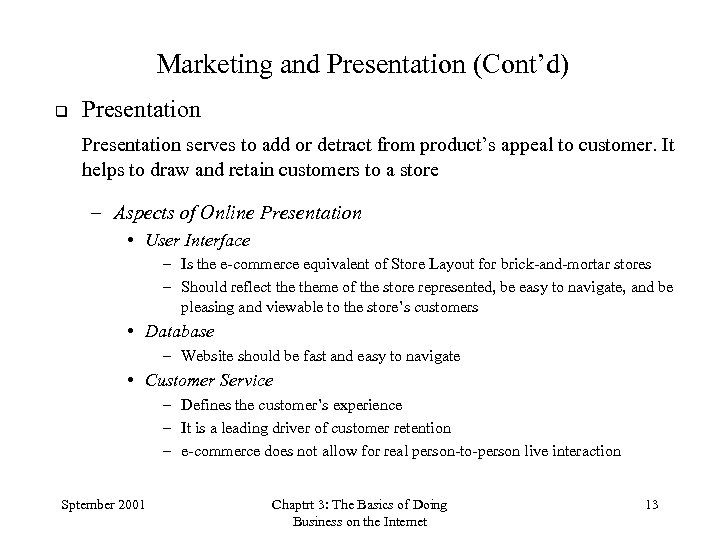
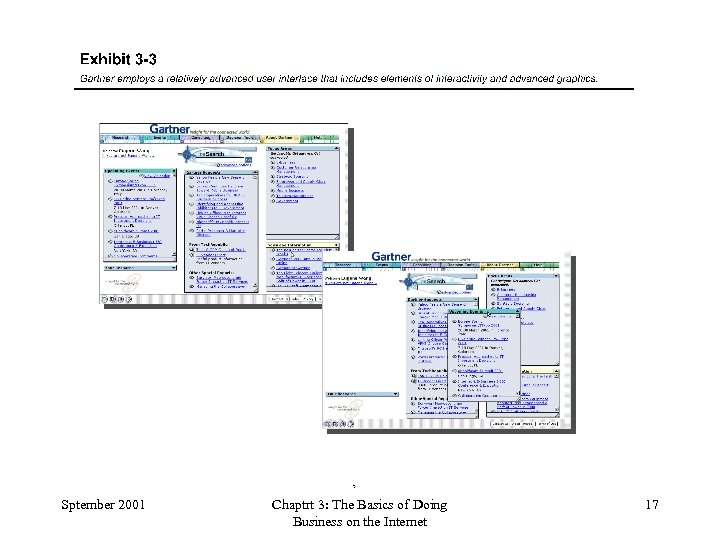
Marketing and Presentation (Cont’d) q Presentation serves to add or detract from product’s appeal to customer. It helps to draw and retain customers to a store – Aspects of Online Presentation • User Interface – Is the e-commerce equivalent of Store Layout for brick-and-mortar stores – Should reflect theme of the store represented, be easy to navigate, and be pleasing and viewable to the store’s customers • Database – Website should be fast and easy to navigate • Customer Service – Defines the customer’s experience – It is a leading driver of customer retention – e-commerce does not allow for real person-to-person live interaction Sptember 2001 Chaptrt 3: The Basics of Doing Business on the Internet 13
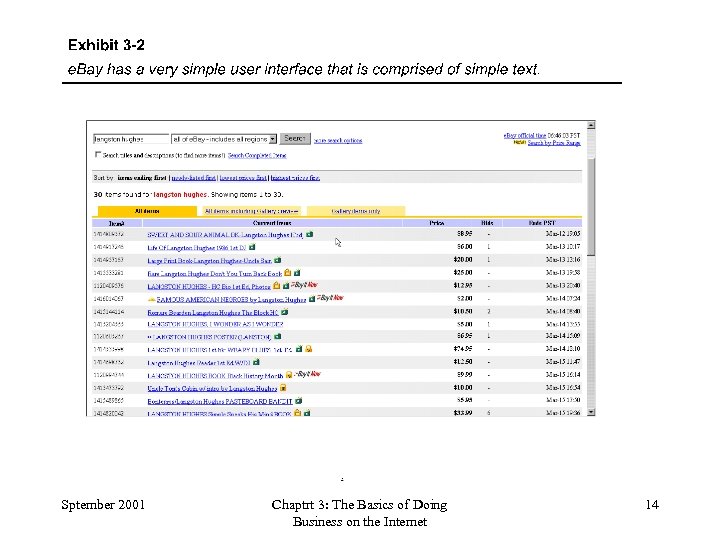
Sptember 2001 Chaptrt 3: The Basics of Doing Business on the Internet 14
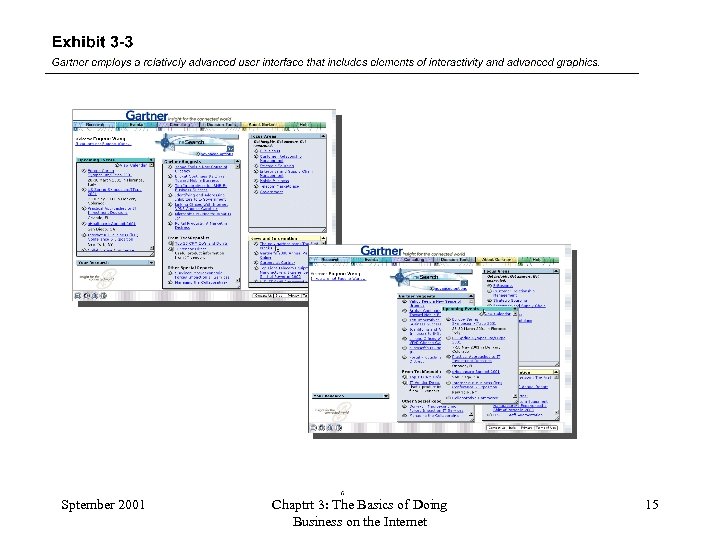
Sptember 2001 Chaptrt 3: The Basics of Doing Business on the Internet 15
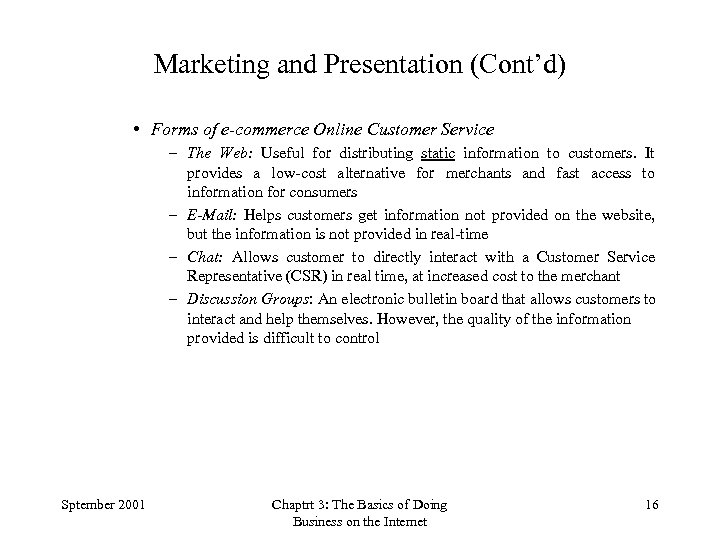
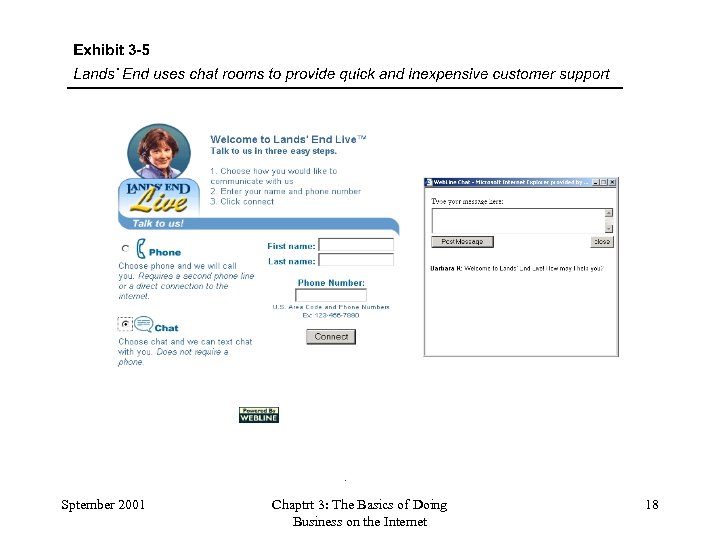
Marketing and Presentation (Cont’d) • Forms of e-commerce Online Customer Service – The Web: Useful for distributing static information to customers. It provides a low-cost alternative for merchants and fast access to information for consumers – E-Mail: Helps customers get information not provided on the website, but the information is not provided in real-time – Chat: Allows customer to directly interact with a Customer Service Representative (CSR) in real time, at increased cost to the merchant – Discussion Groups: An electronic bulletin board that allows customers to interact and help themselves. However, the quality of the information provided is difficult to control Sptember 2001 Chaptrt 3: The Basics of Doing Business on the Internet 16
Sptember 2001 Chaptrt 3: The Basics of Doing Business on the Internet 17
Sptember 2001 Chaptrt 3: The Basics of Doing Business on the Internet 18
Payment q Brick-and-Mortar stores – Accept Cash, Credit Card, Personal Checks, etc. – In the event of credit card fraud, the credit card company assumes liability q e-commerce stores – Credit cards are the dominant form of payment on the web – In the event of credit card fraud, the merchant assumes liability – Because of the ‘Card-Not-Present’ transaction, e-commerce experiences higher fraud rates and thus higher transaction fees Sptember 2001 Chaptrt 3: The Basics of Doing Business on the Internet 19
Security q q To protect their assets, Brick-and-Mortar stores employ relatively simple security technologies (such as cameras, alarms, security tags and security guards) e-commerce stores require more sophisticated and technologically complex security measures – Attacks can potentially come from a worldwide base of hackers – Potential for damage in the event of attack is much greater Sptember 2001 Chaptrt 3: The Basics of Doing Business on the Internet 20
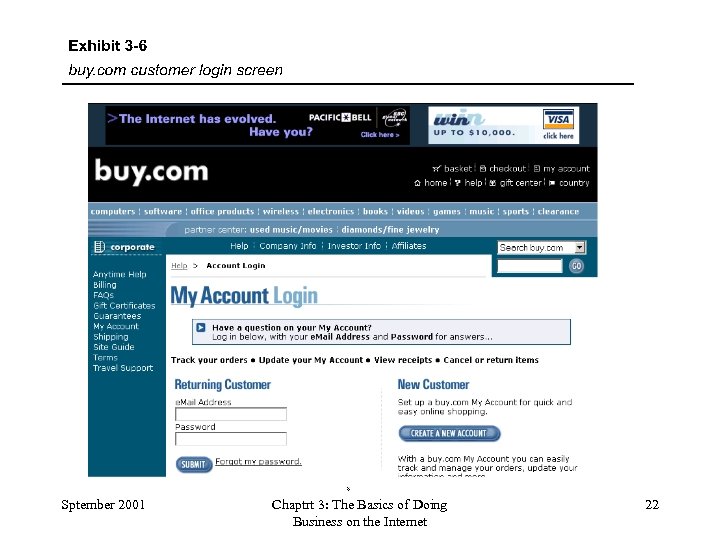
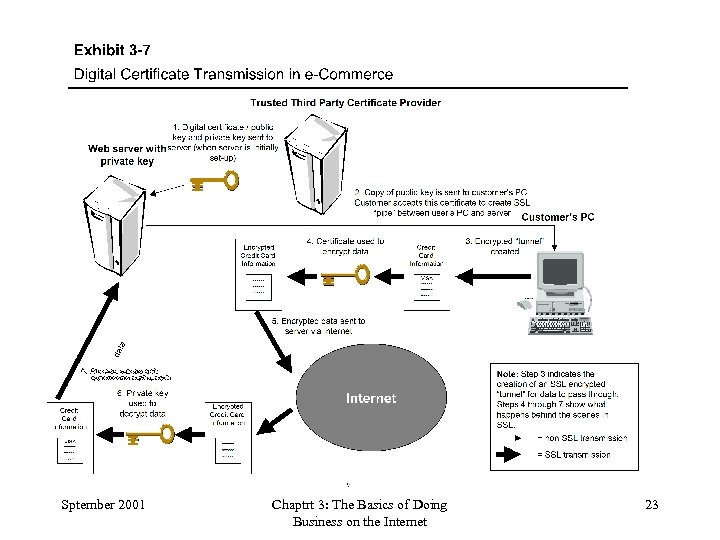
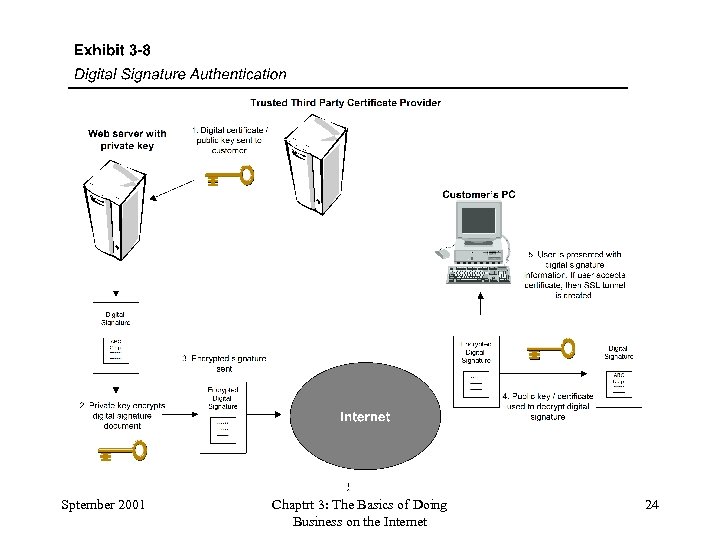
Security (Cont’d) q Technologies to reduce the risk involved in e-commerce transactions – Passwords • Intended to identify who is trying to access the site – Encryption • Encryption refers to the encoding and decoding of information to be transmitted so that only the intended recipient can interpret it • Secure Sockets Layer (SSL) is the most popular security protocol • Public Key Infrastructure (PKI): a set of two software keys are used to ensure that only the creator and intended recipient of encrypted information are able to access it – Public Key – used for encrypting data that will be sent to a computer with the corresponding private key – Private Key – used for decrypting data received from a computer with a corresponding public key Sptember 2001 Chaptrt 3: The Basics of Doing Business on the Internet 21
Sptember 2001 Chaptrt 3: The Basics of Doing Business on the Internet 22
Sptember 2001 Chaptrt 3: The Basics of Doing Business on the Internet 23
Sptember 2001 Chaptrt 3: The Basics of Doing Business on the Internet 24
Security (Cont’d) q Technologies to protect companies from external attacks – Screening Routers • Routers that check to see if they should forward an information packet based on a set of rules set by the network administrator – Proxy Servers (or Gateway) • Servers used to forward packets on behalf of PC’s on a company’s internal network to the Internet. The identity of the PC requesting the information is not transmitted across the Internet – Firewals • Equipment that sits between the Internet and the company’s internal network. It looks at packets coming over a network in real time with potentially malicious content Sptember 2001 Chaptrt 3: The Basics of Doing Business on the Internet 25
Fulfillment 1. 2. 3. 4. Fulfillment encompasses all activities that enable merchants to complete customer orders It is a significant factor in determining profitability of an e-commerce venture For e-commerce, fulfillment is similar to that of catalog sales Burden of delivery is placed solely on merchant Sptember 2001 Chaptrt 3: The Basics of Doing Business on the Internet 26
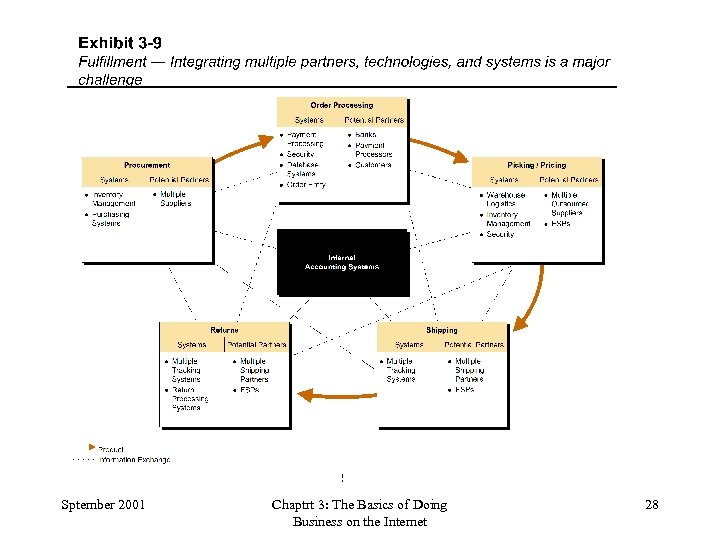
Fulfillment (Cont’d) • Challenges of e-commerce fulfillment – Customer demand for Transparency • Providing increased information demand from Web customers requires seamless integration of different systems and information sources – Multiple Activities and Parties • Must be capable of handling many activities and parties simultaneously – Multiple Systems • Must be able to coordinate between different platforms and computer systems – Capacity Utilization • Must be able to accommodate fulfillment during peak times and yet have efficient capacity utilization during valleys. This can be accomplished by outsourcing fulfillment to third party e-commerce service providers (ESP) Sptember 2001 Chaptrt 3: The Basics of Doing Business on the Internet 27
Sptember 2001 Chaptrt 3: The Basics of Doing Business on the Internet 28
Скачать презентацию The Basics of Doing Business on the Internet
1f2e6c2b4ad05aaf9a4aee66035c3b66.ppt