 Скачать презентацию The Australian Urban e- Research Infrastructure Professor Richard O
c362fef3ddac609b4dd144cddf5412ec.ppt
- Количество слайдов: 23




The Australian Urban (e-)Research Infrastructure Professor Richard O. Sinnott e. Research Director, University of Melbourne 5 th June 2013 rsinnott@unimelb. edu. au Viele Gruezi von Martin!
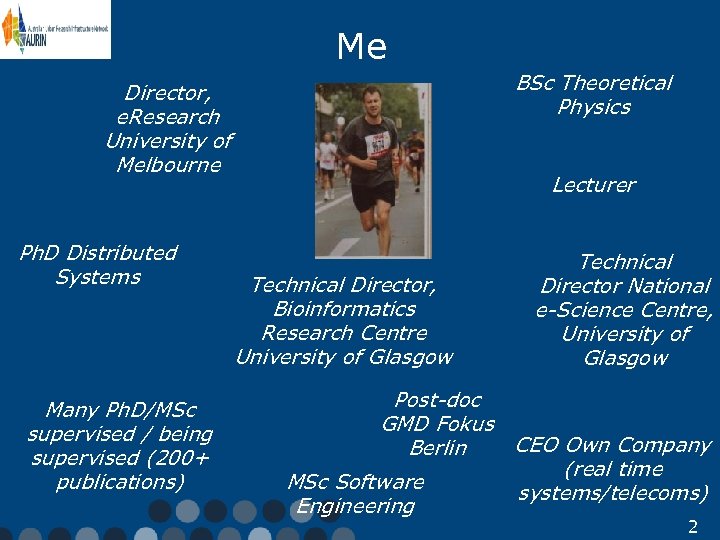
Me BSc Theoretical Physics Director, e. Research University of Melbourne Ph. D Distributed Systems Many Ph. D/MSc supervised / being supervised (200+ publications) Lecturer Technical Director, Bioinformatics Research Centre University of Glasgow Post-doc GMD Fokus Berlin MSc Software Engineering Technical Director National e-Science Centre, University of Glasgow CEO Own Company (real time systems/telecoms) 2
Job description in a nutshell… make “it” happen 3
“it-” = “e-” Expensive!? Enabling Empowering Electronic 2. 718… (through research IT support) Exabytes European? Everywhere Ethics It is not about the e- it is about the r- Exascale 4
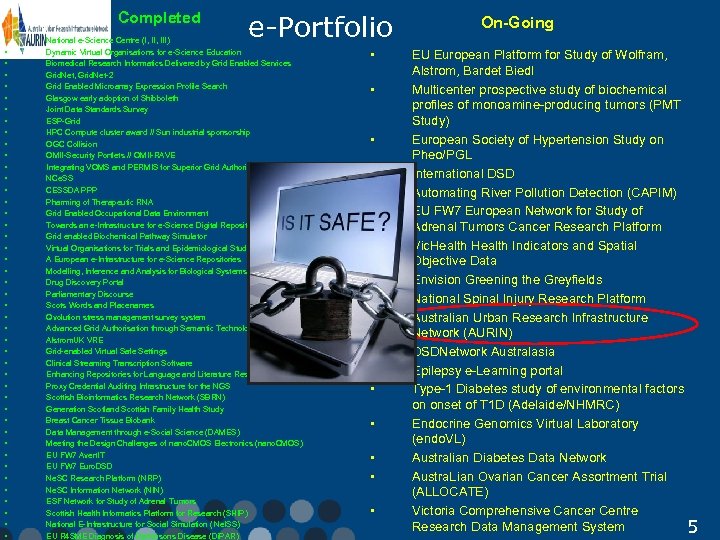
Completed • • • • • • • • • • • e-Portfolio National e-Science Centre (I, III) Dynamic Virtual Organisations for e-Science Education Biomedical Research Informatics Delivered by Grid Enabled Services Grid. Net, Grid. Net-2 Grid Enabled Microarray Expression Profile Search Glasgow early adoption of Shibboleth Joint Data Standards Survey ESP-Grid HPC Compute cluster award // Sun industrial sponsorship OGC Collision OMII-Security Portlets // OMII-RAVE Integrating VOMS and PERMIS for Superior Grid Authorization NCe. SS CESSDA PPP Pharming of Therapeutic RNA Grid Enabled Occupational Data Environment Towards an e-Infrastructure for e-Science Digital Repositories Grid enabled Biochemical Pathway Simulator Virtual Organisations for Trials and Epidemiological Studies A European e-Infrastructure for e-Science Repositories Modelling, Inference and Analysis for Biological Systems up to the Cellular Level Drug Discovery Portal Parliamentary Discourse Scots Words and Placenames Qvolution stress management survey system Advanced Grid Authorisation through Semantic Technologies Shin. Tau Alstrom. UK VRE Grid-enabled Virtual Safe Settings Clinical Streaming Transcription Software Enhancing Repositories for Language and Literature Researchers (ENROLLER) Proxy Credential Auditing Infrastructure for the NGS Scottish Bioinformatics Research Network (SBRN) Generation Scotland Scottish Family Health Study Breast Cancer Tissue Biobank Data Management through e-Social Science (DAMES) Meeting the Design Challenges of nano. CMOS Electronics (nano. CMOS) EU FW 7 Avert. IT EU FW 7 Euro. DSD Ne. SC Research Platform (NRP) Ne. SC Information Network (NIN) ESF Network for Study of Adrenal Tumors Scottish Health Informatics Platform for Research (SHIP) National E-Infrastructure for Social Simulation ( Ne. ISS) EU R 4 SME Diagnosis of Parkinsons Disease (Di. PAR) • • • • • On-Going EU European Platform for Study of Wolfram, Alstrom, Bardet Biedl Multicenter prospective study of biochemical profiles of monoamine-producing tumors (PMT Study) European Society of Hypertension Study on Pheo/PGL International DSD Automating River Pollution Detection (CAPIM) EU FW 7 European Network for Study of Adrenal Tumors Cancer Research Platform Vic. Health Indicators and Spatial Objective Data Envision Greening the Greyfields National Spinal Injury Research Platform Australian Urban Research Infrastructure Network (AURIN) DSDNetwork Australasia Epilepsy e-Learning portal Type-1 Diabetes study of environmental factors on onset of T 1 D (Adelaide/NHMRC) Endocrine Genomics Virtual Laboratory (endo. VL) Australian Diabetes Data Network Austra. Lian Ovarian Cancer Assortment Trial (ALLOCATE) Victoria Comprehensive Cancer Centre Research Data Management System 5
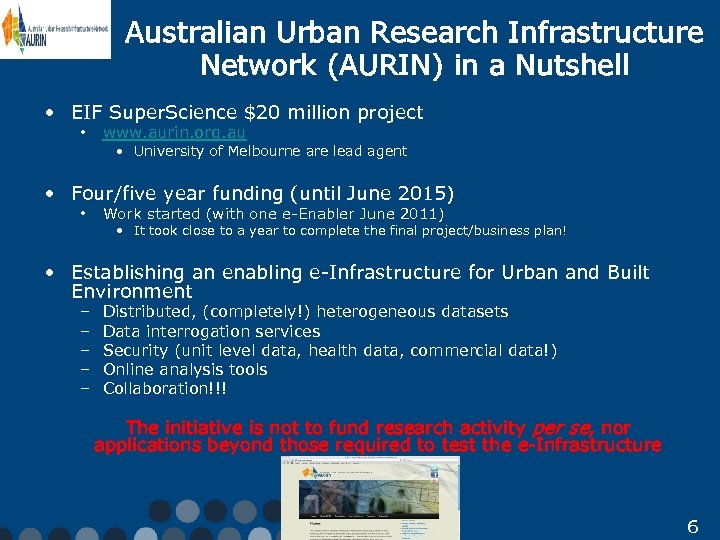
Australian Urban Research Infrastructure Network (AURIN) in a Nutshell • EIF Super. Science $20 million project • www. aurin. org. au • University of Melbourne are lead agent • Four/five year funding (until June 2015) • Work started (with one e-Enabler June 2011) • It took close to a year to complete the final project/business plan! • Establishing an enabling e-Infrastructure for Urban and Built Environment – – – Distributed, (completely!) heterogeneous datasets Data interrogation services Security (unit level data, health data, commercial data!) Online analysis tools Collaboration!!! The initiative is not to fund research activity per se, nor applications beyond those required to test the e-Infrastructure 6
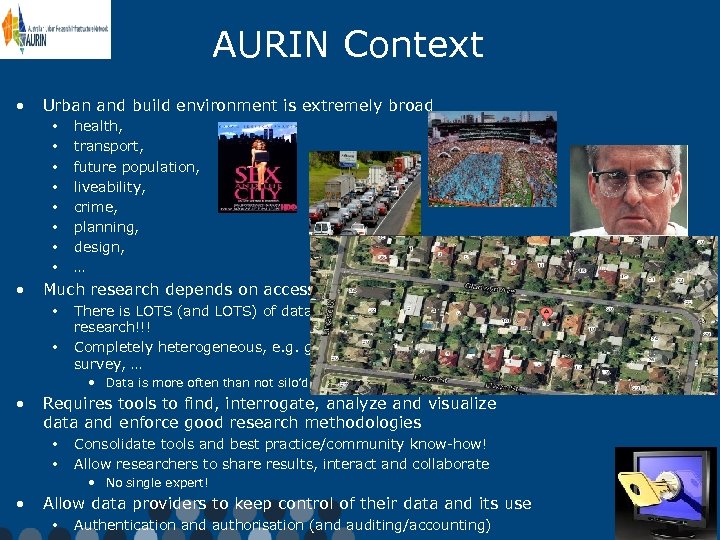
AURIN Context • Urban and build environment is extremely broad • • • health, transport, future population, liveability, crime, planning, design, … Much research depends on access to and usage of data • • There is LOTS (and LOTS) of data of relevance to urban research!!! Completely heterogeneous, e. g. geospatial, statistical, temporal, survey, … • Data is more often than not silo’d • Requires tools to find, interrogate, analyze and visualize data and enforce good research methodologies • • Consolidate tools and best practice/community know-how! Allow researchers to share results, interact and collaborate • No single expert! • Allow data providers to keep control of their data and its use • Authentication and authorisation (and auditing/accounting) 7
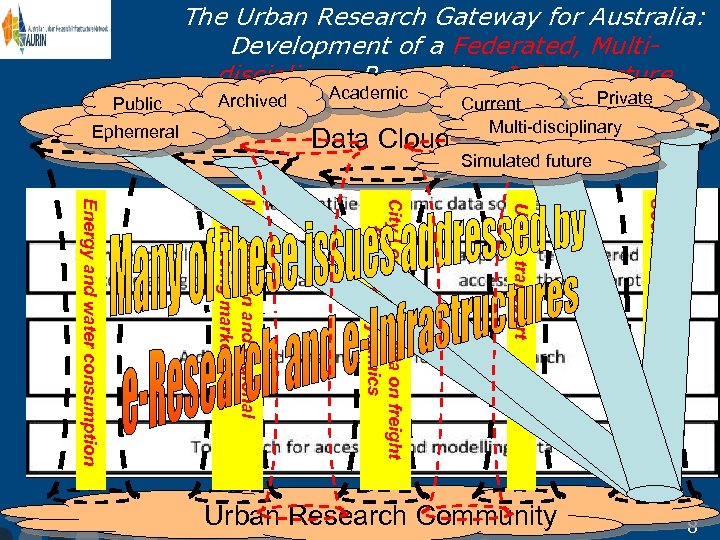
The Urban Research Gateway for Australia: Development of a Federated, Multidisciplinary Research e-Infrastructure Public Archived Ephemeral Academic Data Cloud Private Current Multi-disciplinary Simulated future Social data and indicators Urban transport City Logistics: Data on freight flows and dynamics Metropolitan and regional housing market data Energy and water consumption Urban Research Community 8
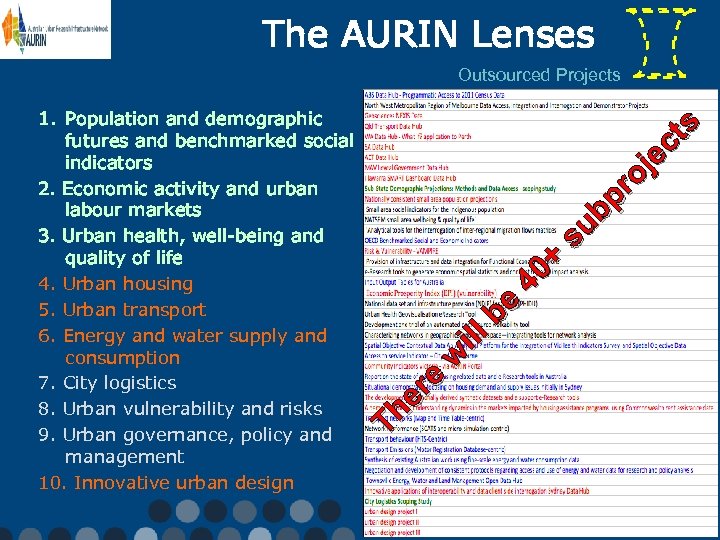
The AURIN Lenses Outsourced Projects 1. Population and demographic futures and benchmarked social indicators 2. Economic activity and urban labour markets 3. Urban health, well-being and quality of life 4. Urban housing 5. Urban transport 6. Energy and water supply and consumption 7. City logistics 8. Urban vulnerability and risks 9. Urban governance, policy and management 10. Innovative urban design re he T be ill w 0+ 4 ts ec oj r bp su 9
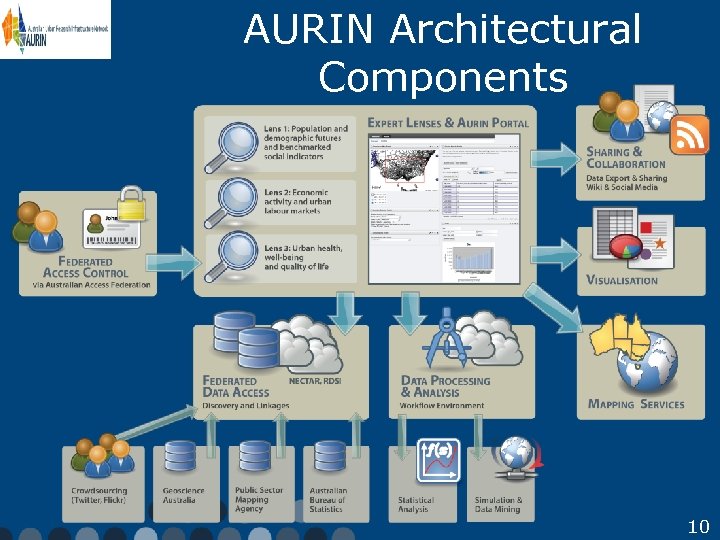
AURIN Architectural Components 10
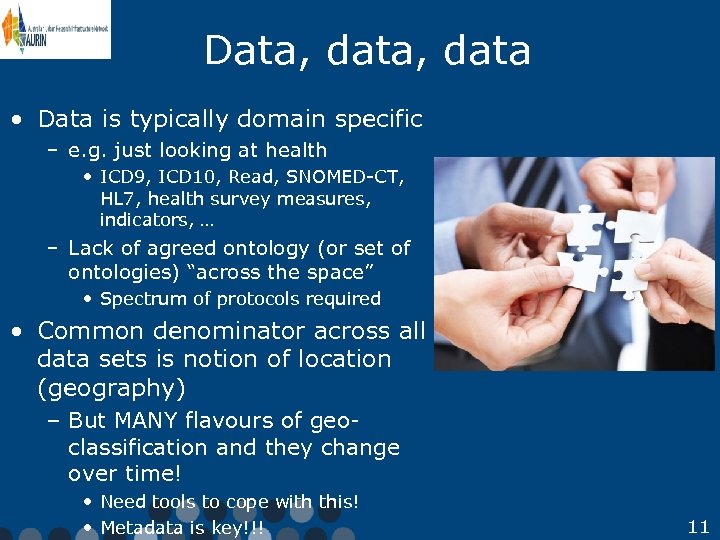
Data, data • Data is typically domain specific – e. g. just looking at health • ICD 9, ICD 10, Read, SNOMED-CT, HL 7, health survey measures, indicators, … – Lack of agreed ontology (or set of ontologies) “across the space” • Spectrum of protocols required • Common denominator across all data sets is notion of location (geography) – But MANY flavours of geoclassification and they change over time! • Need tools to cope with this! • Metadata is key!!! 11
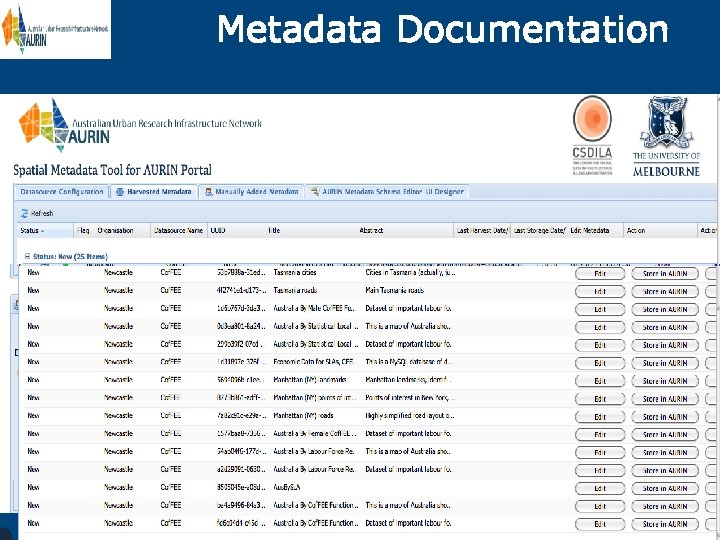
Metadata Documentation 12
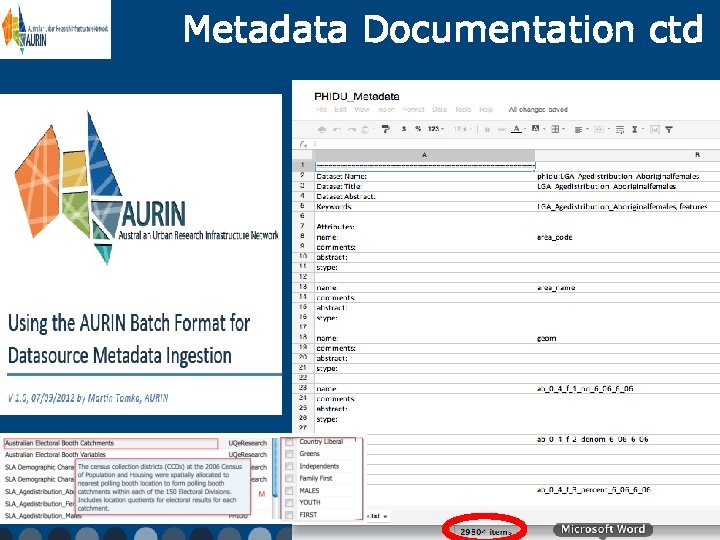
Metadata Documentation ctd 13
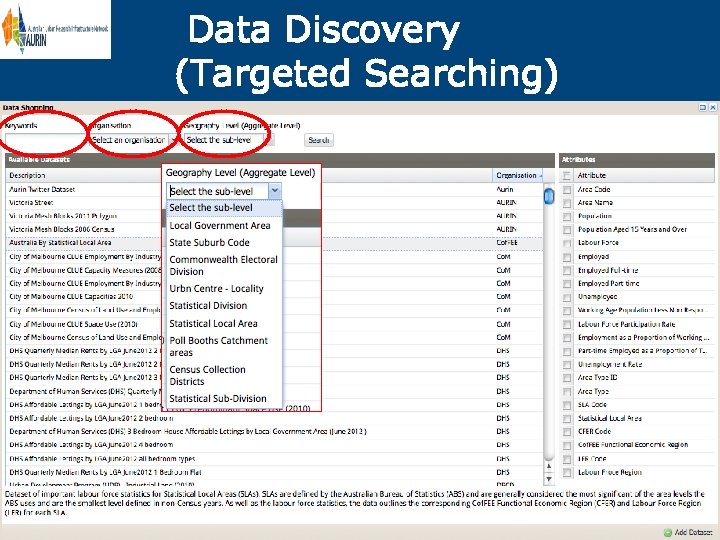
Data Discovery (Targeted Searching) 14
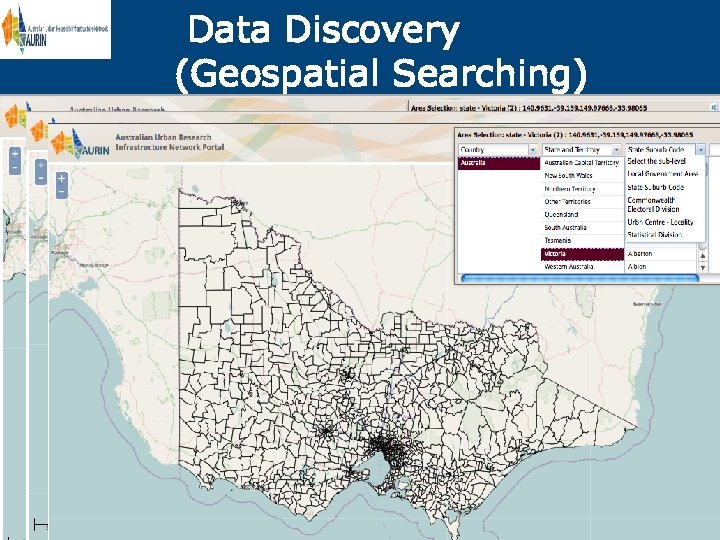
Data Discovery (Geospatial Searching) 15
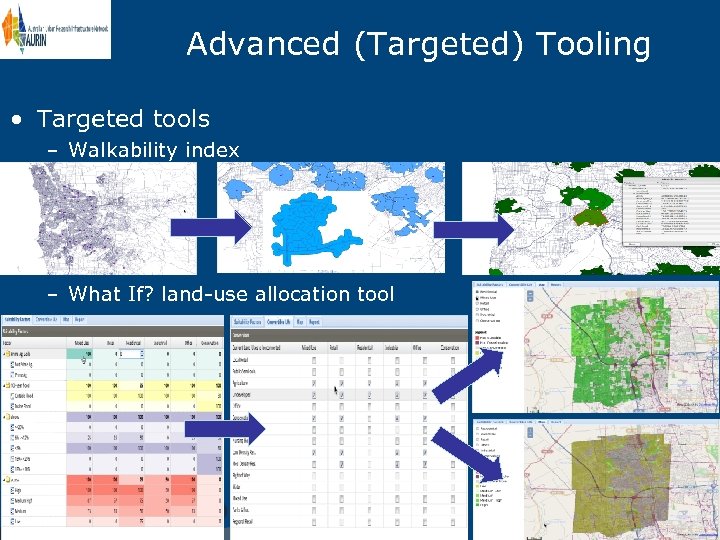
Advanced (Targeted) Tooling • Targeted tools – Walkability index – What If? land-use allocation tool 16
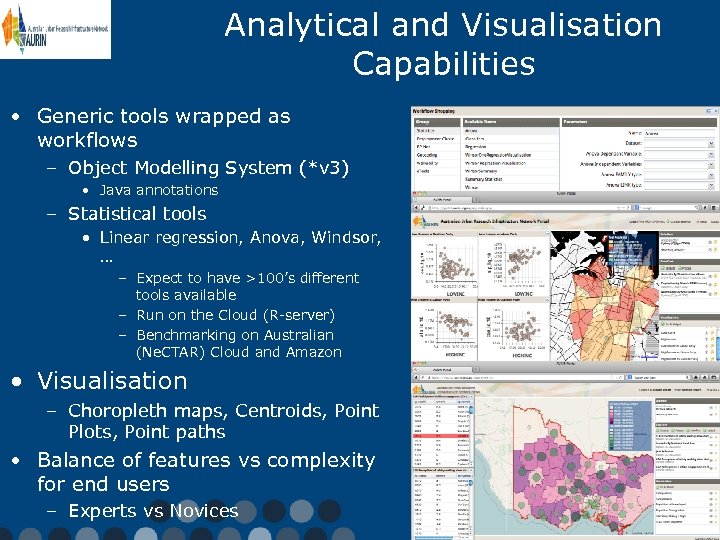
Analytical and Visualisation Capabilities • Generic tools wrapped as workflows – Object Modelling System (*v 3) • Java annotations – Statistical tools • Linear regression, Anova, Windsor, … – Expect to have >100’s different tools available – Run on the Cloud (R-server) – Benchmarking on Australian (Ne. CTAR) Cloud and Amazon • Visualisation – Choropleth maps, Centroids, Point Plots, Point paths • Balance of features vs complexity for end users – Experts vs Novices 17
AURIN Demonstration (typical usage) 18
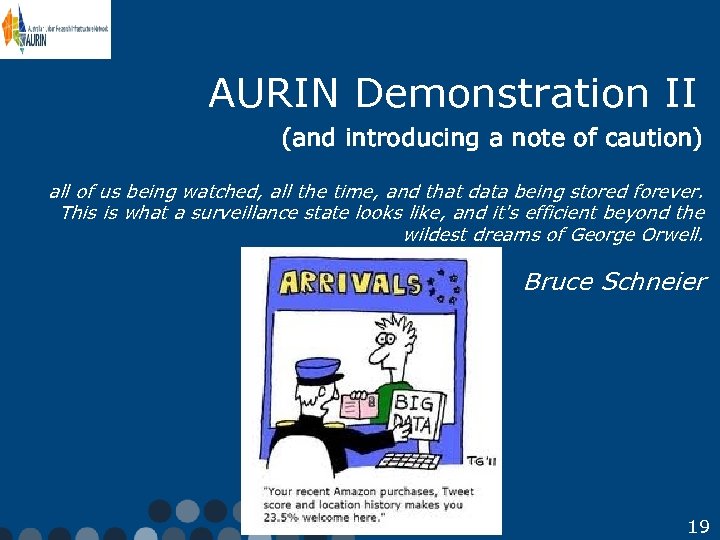
AURIN Demonstration II (and introducing a note of caution) all of us being watched, all the time, and that data being stored forever. This is what a surveillance state looks like, and it's efficient beyond the wildest dreams of George Orwell. Bruce Schneier 19
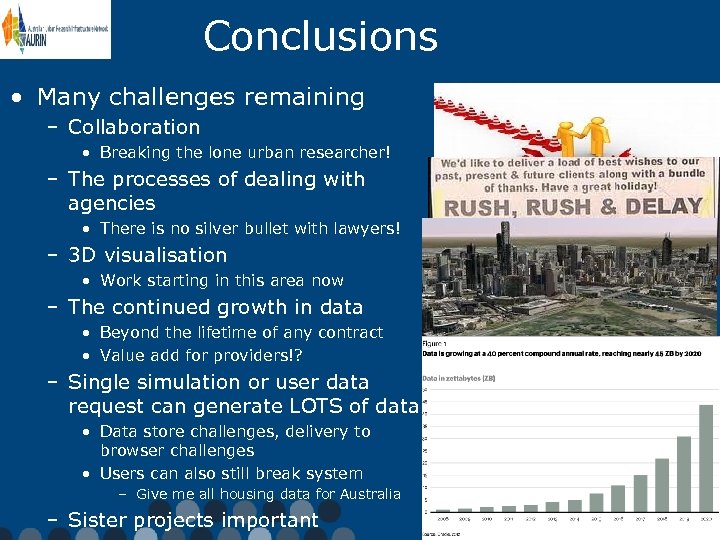
Conclusions • Many challenges remaining – Collaboration • Breaking the lone urban researcher! – The processes of dealing with agencies • There is no silver bullet with lawyers! – 3 D visualisation • Work starting in this area now – The continued growth in data • Beyond the lifetime of any contract • Value add for providers!? – Single simulation or user data request can generate LOTS of data • Data store challenges, delivery to browser challenges • Users can also still break system – Give me all housing data for Australia – Sister projects important 20
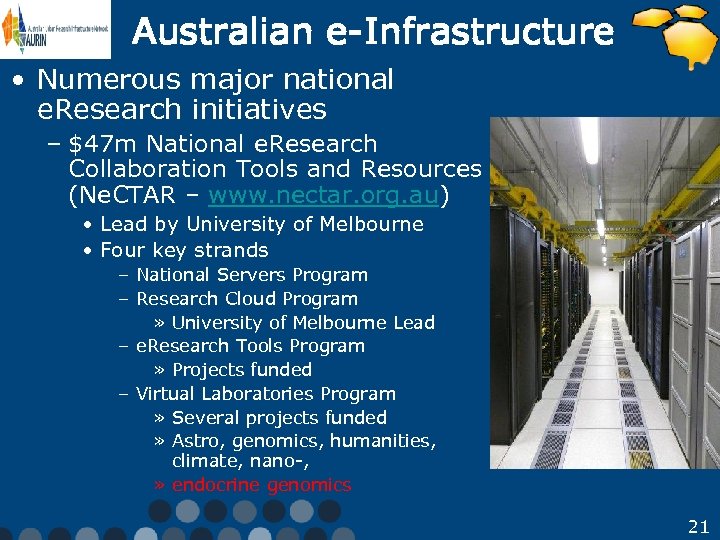
Australian e-Infrastructure • Numerous major national e. Research initiatives – $47 m National e. Research Collaboration Tools and Resources (Ne. CTAR – www. nectar. org. au) • Lead by University of Melbourne • Four key strands – National Servers Program – Research Cloud Program » University of Melbourne Lead – e. Research Tools Program » Projects funded – Virtual Laboratories Program » Several projects funded » Astro, genomics, humanities, climate, nano-, » endocrine genomics 21
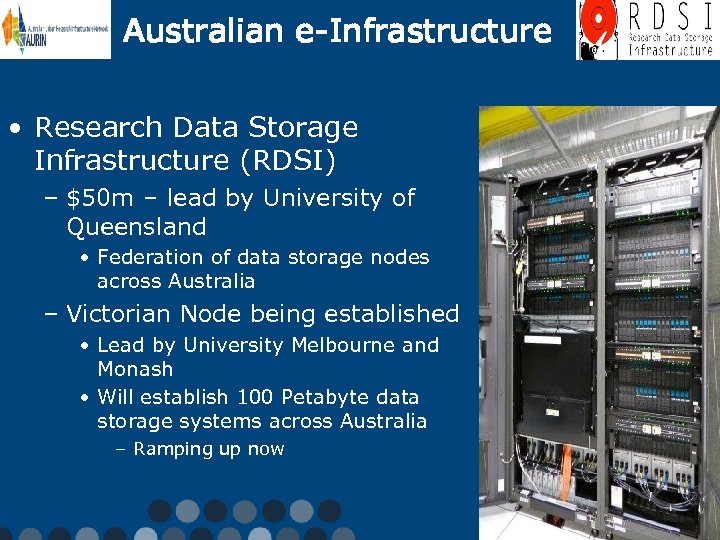
Australian e-Infrastructure • Research Data Storage Infrastructure (RDSI) – $50 m – lead by University of Queensland • Federation of data storage nodes across Australia – Victorian Node being established • Lead by University Melbourne and Monash • Will establish 100 Petabyte data storage systems across Australia – Ramping up now 22
Questions 23
Скачать презентацию The Australian Urban e- Research Infrastructure Professor Richard O
c362fef3ddac609b4dd144cddf5412ec.ppt