Скачать презентацию The Australian Museum Society Well this is Fred
6bd1bf7de7dba05da6127679266ca95d.ppt
- Количество слайдов: 56
 The Australian Museum Society Well, this is Fred Watson, AAO rubbish… 17 May 2005
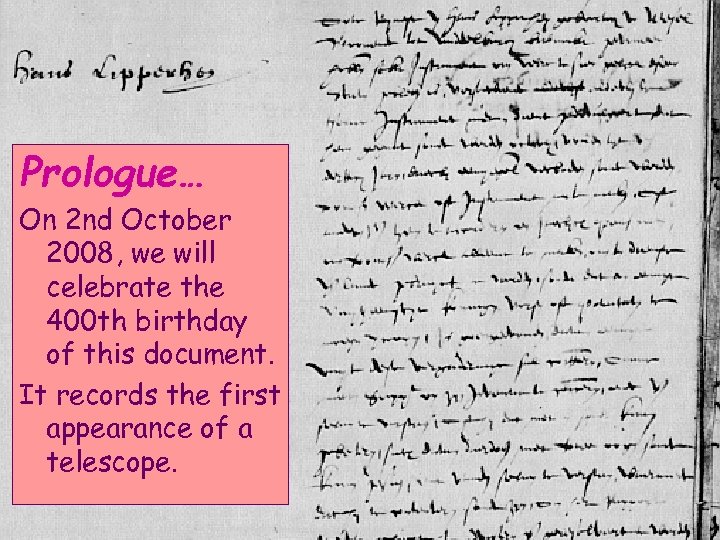 Prologue… On 2 nd October 2008, we will celebrate the 400 th birthday of this document. It records the first appearance of a telescope.
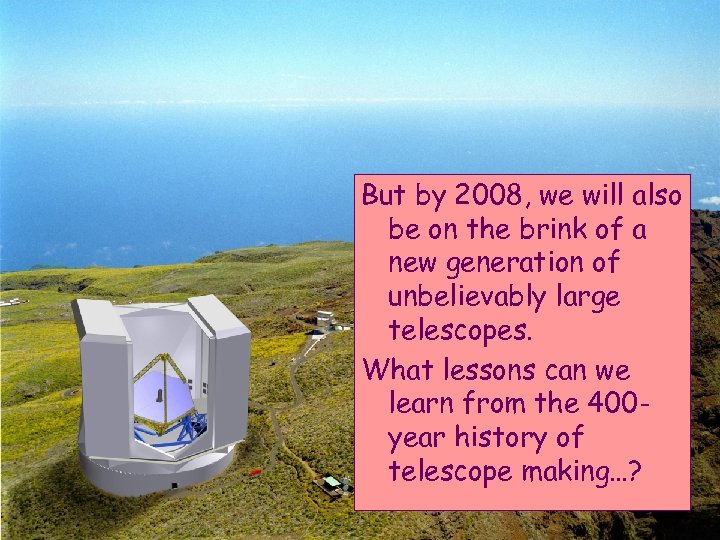 But by 2008, we will also be on the brink of a new generation of unbelievably large telescopes. What lessons can we learn from the 400 year history of telescope making…?
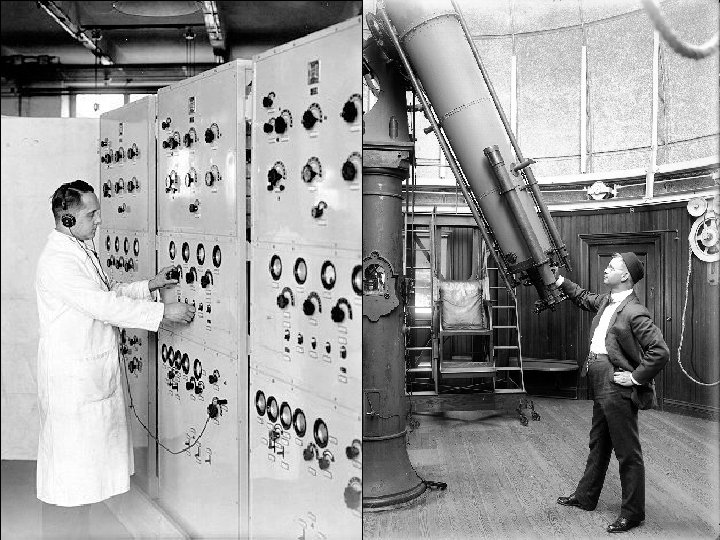 The secret obsessions of astronomers
 Characteristics of astronomy today • Huge range of instrumentation • Infinite computing power • Access to every part of the electromagnetic spectrum: -rays, X-rays, UV, visible (optical), IR, mm-wave, radio
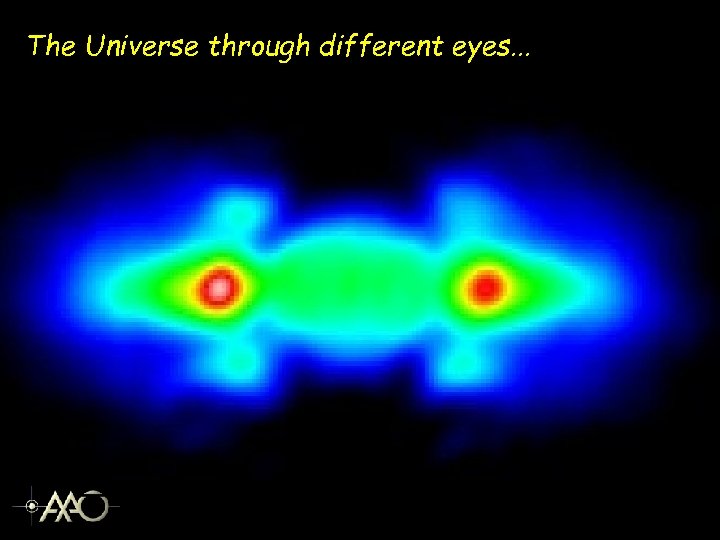 The Universe through different eyes. . .
 What’s so good about optical astronomy? • Visible light is emitted by ‘ordinary matter’ in the Universe—i. e. stars • The visible spectrum is rich in the ‘barcode’ of atomic and molecular features • Optical observations bridge long and short wavebands • You can do it with your feet on the ground
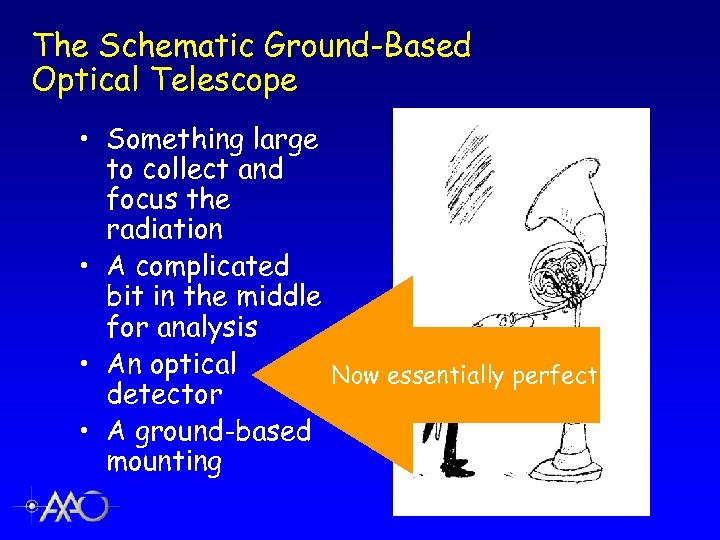 The Schematic Ground-Based Optical Telescope • Something large to collect and focus the radiation • A complicated bit in the middle for analysis • An optical Now essentially perfect detector • A ground-based mounting
 To gather more light from faint sources, telescopes need to become ever bigger
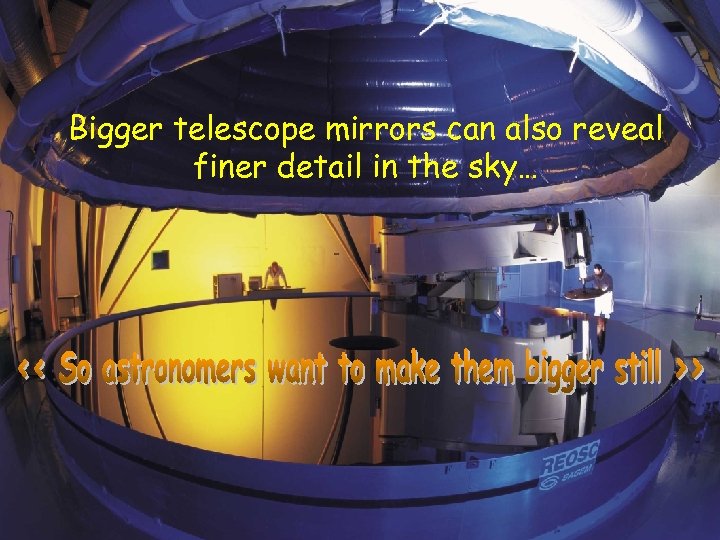 Bigger telescope mirrors can also reveal finer detail in the sky…
 Cautionary tales: the bad telescope casebook
 Andrew Barclay and the ‘Unrevealed Wonders of the Heavens’
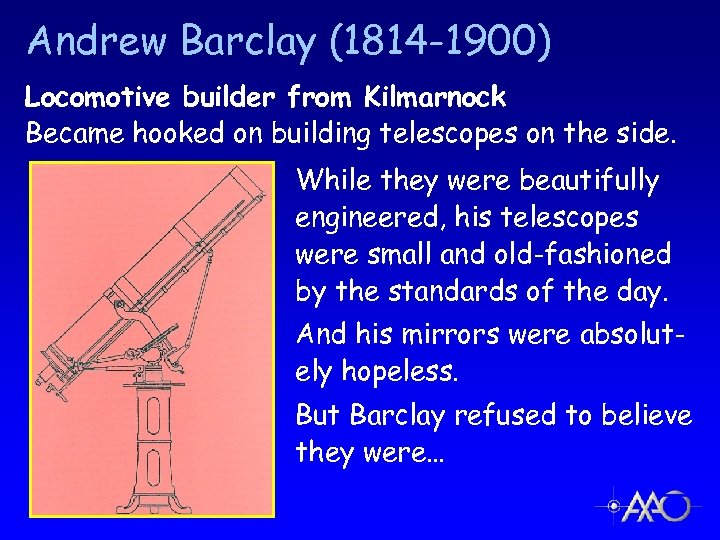 Andrew Barclay (1814 -1900) Locomotive builder from Kilmarnock Became hooked on building telescopes on the side. While they were beautifully engineered, his telescopes were small and old-fashioned by the standards of the day. And his mirrors were absolutely hopeless. But Barclay refused to believe they were…
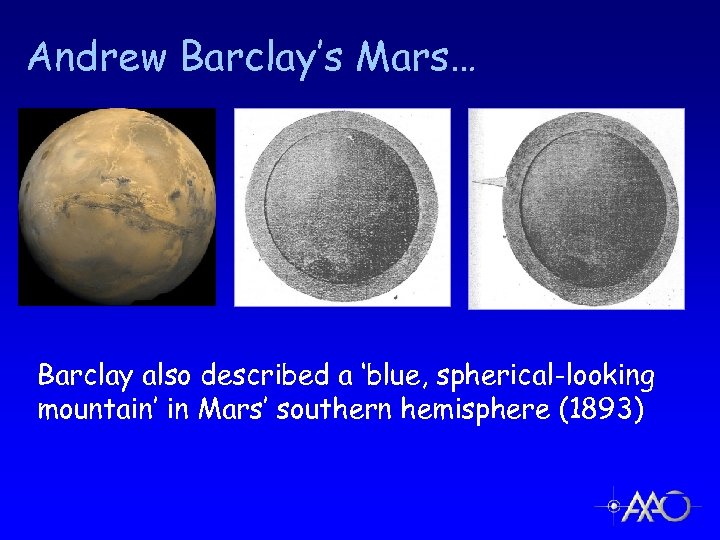 Andrew Barclay’s Mars… Barclay also described a ‘blue, spherical-looking mountain’ in Mars’ southern hemisphere (1893)
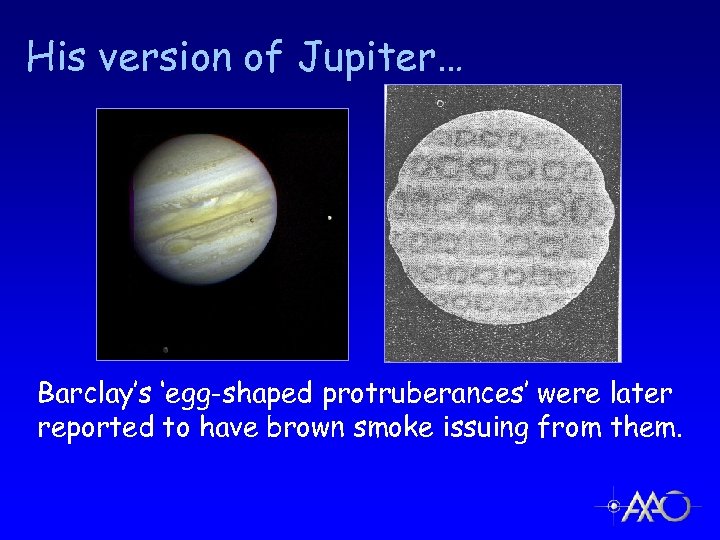 His version of Jupiter… Barclay’s ‘egg-shaped protruberances’ were later reported to have brown smoke issuing from them.
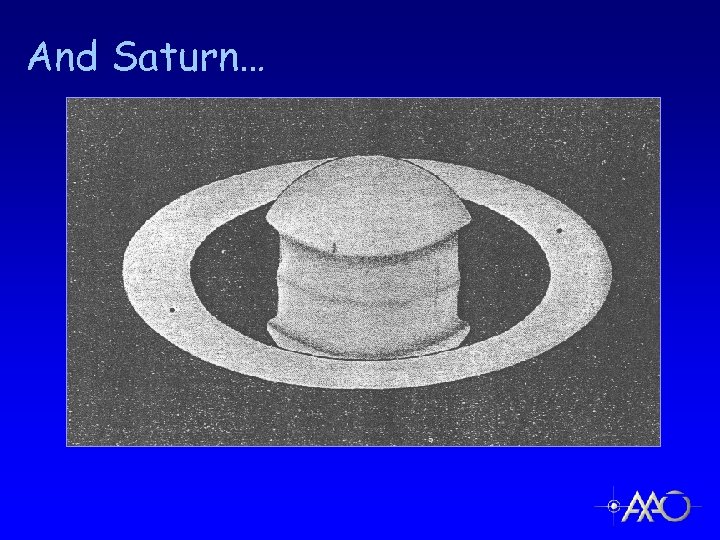 And Saturn…
 The response to Barclay’s work… Barclay’s results appeared in the English Mechanic and were received with utter derision: ‘I can only say that if I had a telescope that exhibited the great planet as depicted in Mr B’s Fig. 1, I would dispose of the optical part for what it would fetch, and convert the tube into a chimney cowl straightway. ’ (And that’s one of the kind ones. ) Barclay protested that he had spent £ 10, 000 learning how to make telescope mirrors. How could there be anything wrong with them? He was clearly not only obstinate, but also stupid.
 Moral number one: Make your mirrors good ones (and listen to people who tell you they aren’t…)
 Johannes Hevelius (1611 -87) and his telescopes
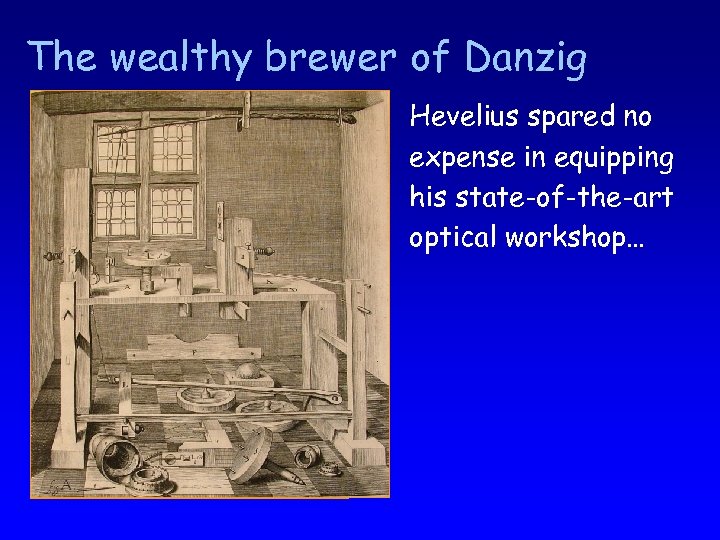 The wealthy brewer of Danzig Hevelius spared no expense in equipping his state-of-the-art optical workshop…
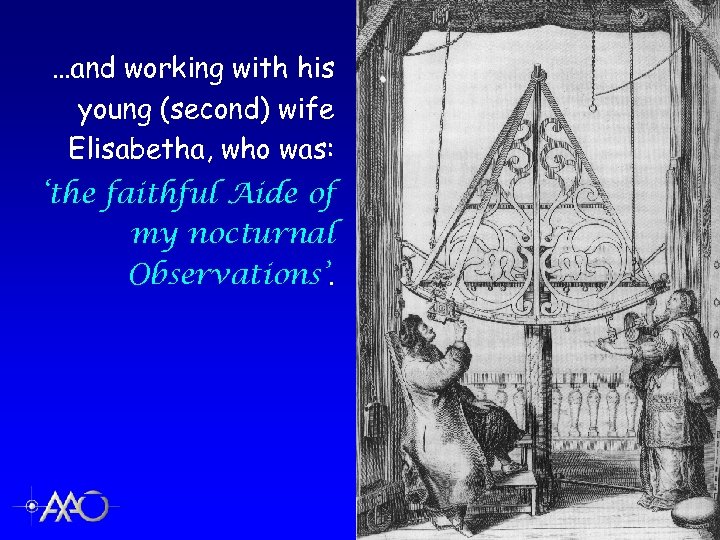 …and working with his young (second) wife Elisabetha, who was: ‘the faithful Aide of my nocturnal Observations’.
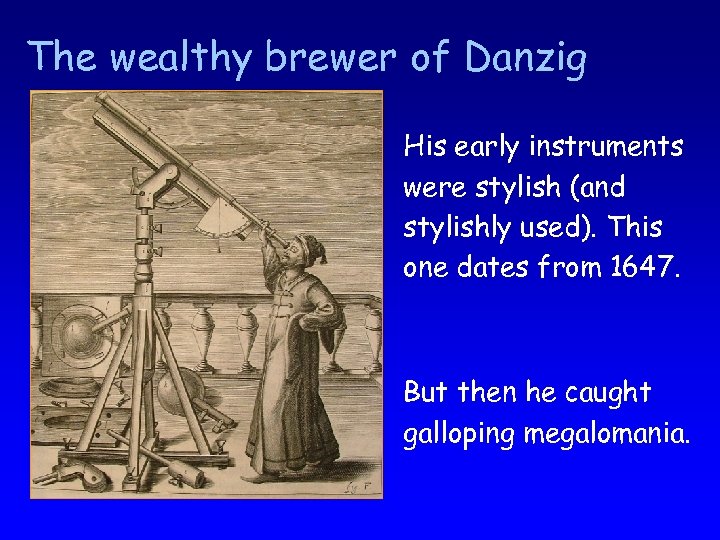 The wealthy brewer of Danzig His early instruments were stylish (and stylishly used). This one dates from 1647. But then he caught galloping megalomania.
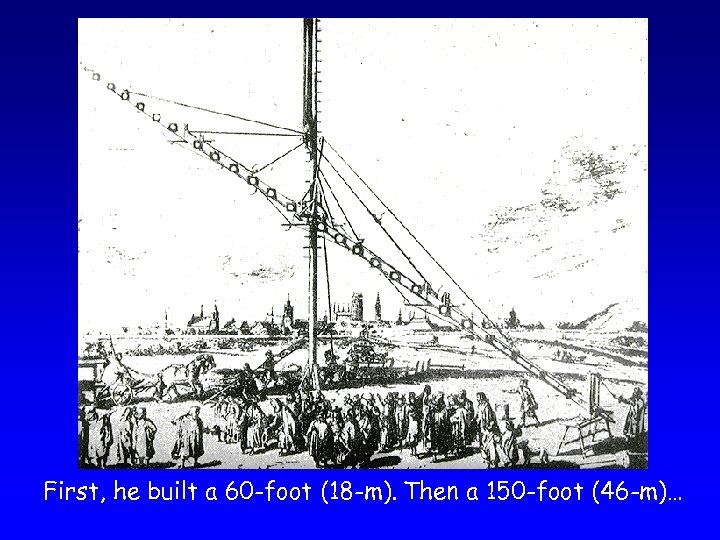 First, he built a 60 -foot (18 -m). Then a 150 -foot (46 -m)…
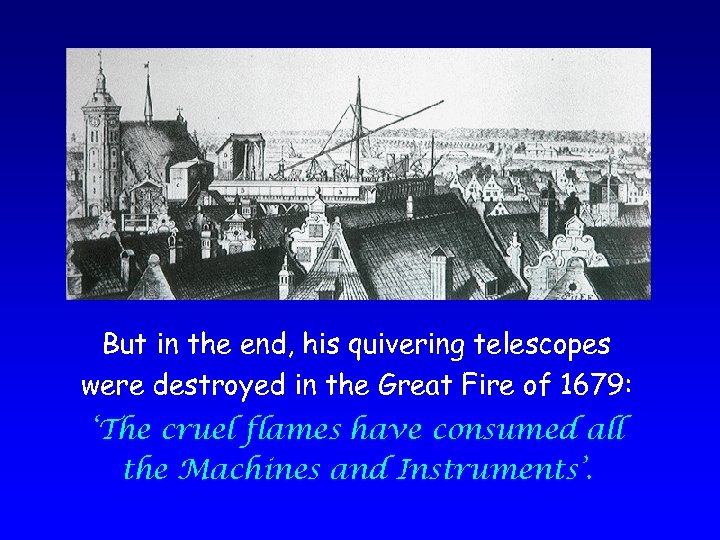 But in the end, his quivering telescopes were destroyed in the Great Fire of 1679: ‘The cruel flames have consumed all the Machines and Instruments’.
 Moral number one: Make your mirrors good ones (and listen to people who tell you they aren’t…) Moral number two: Understand the mechanical limitations of your telescope…
 Sir James South (1785– 1866) and the telescope that sparked a feud
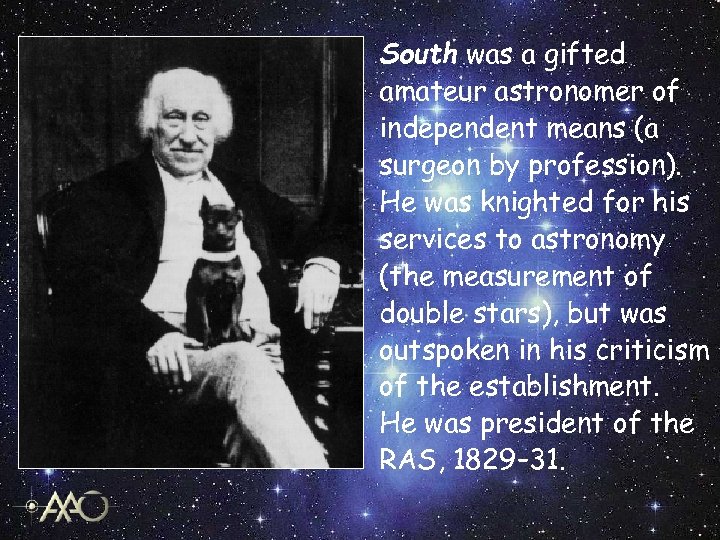 South was a gifted amateur astronomer of independent means (a surgeon by profession). He was knighted for his services to astronomy (the measurement of double stars), but was outspoken in his criticism of the establishment. He was president of the RAS, 1829– 31.
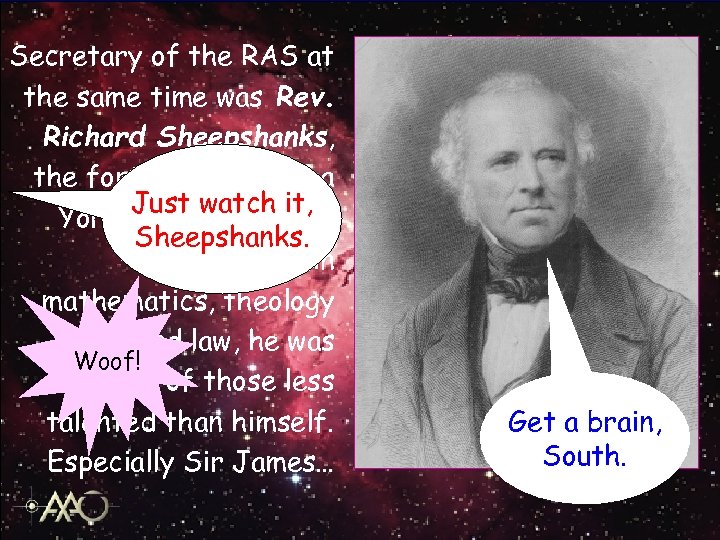 Secretary of the RAS at the same time was Rev. Richard Sheepshanks, the forthright son of a Just watch it, Yorkshire mill-owner. Sheepshanks. With degrees in mathematics, theology and law, he was Woof! scornful of those less talented than himself. Especially Sir James… Get a brain, South.
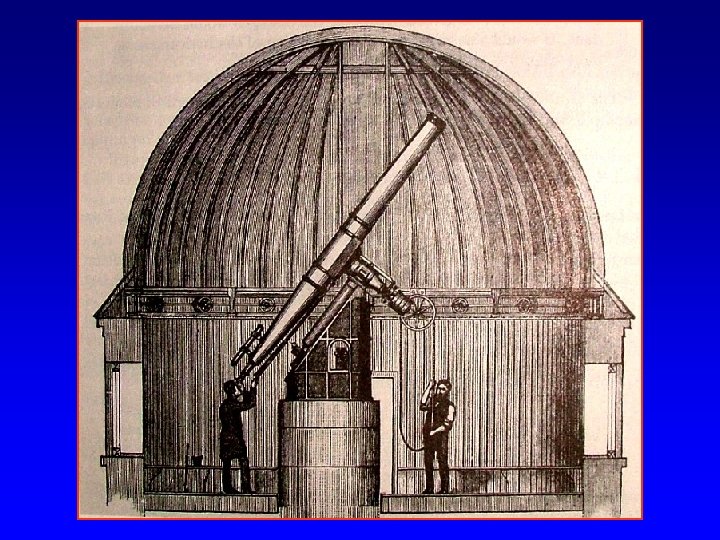
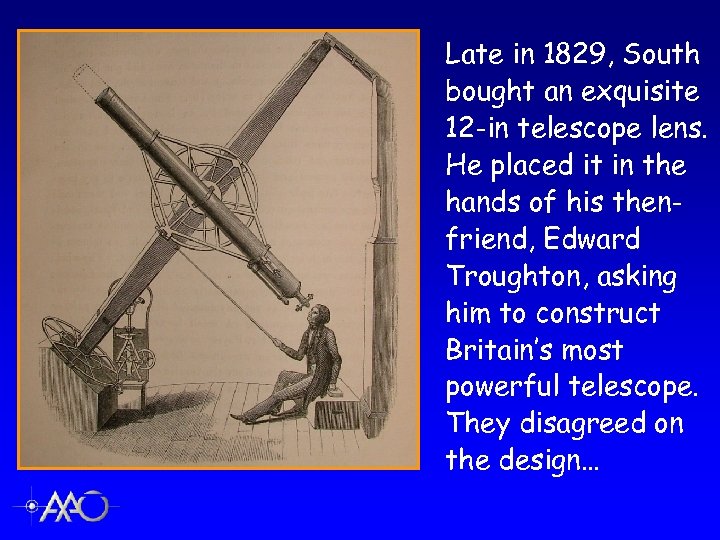 Late in 1829, South bought an exquisite 12 -in telescope lens. He placed it in the hands of his thenfriend, Edward Troughton, asking him to construct Britain’s most powerful telescope. They disagreed on the design…
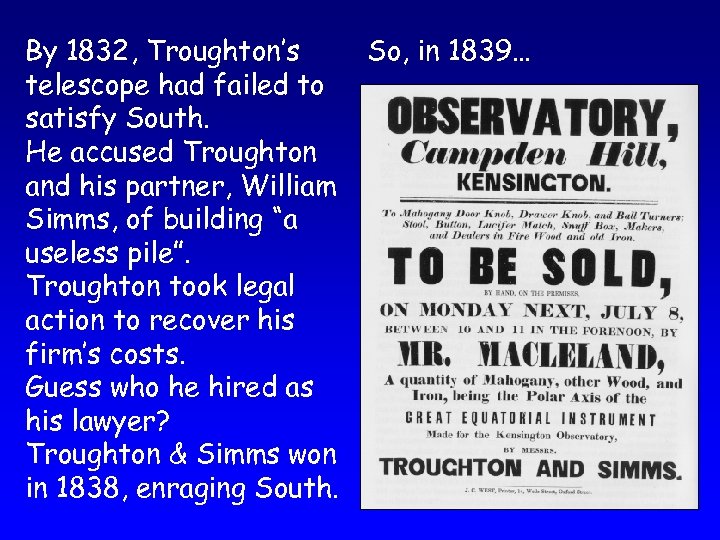 By 1832, Troughton’s telescope had failed to satisfy South. He accused Troughton and his partner, William Simms, of building “a useless pile”. Troughton took legal action to recover his firm’s costs. Guess who he hired as his lawyer? Troughton & Simms won in 1838, enraging South. So, in 1839…
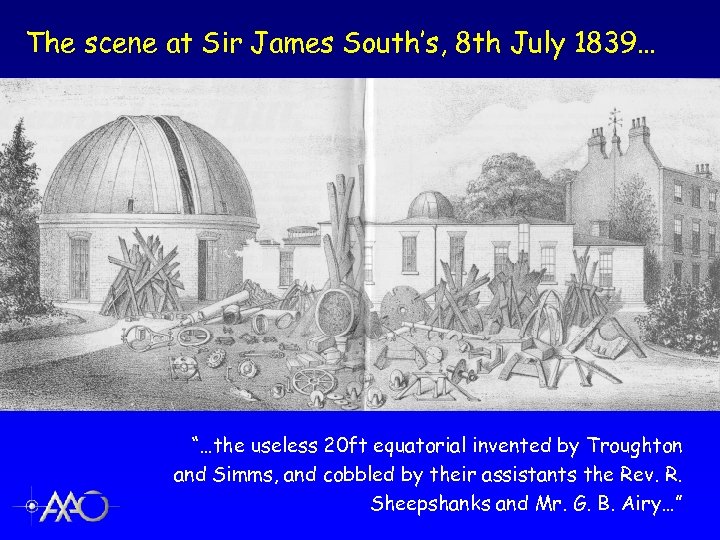 The scene at Sir James South’s, 8 th July 1839… “…the useless 20 ft equatorial invented by Troughton and Simms, and cobbled by their assistants the Rev. R. Sheepshanks and Mr. G. B. Airy…”
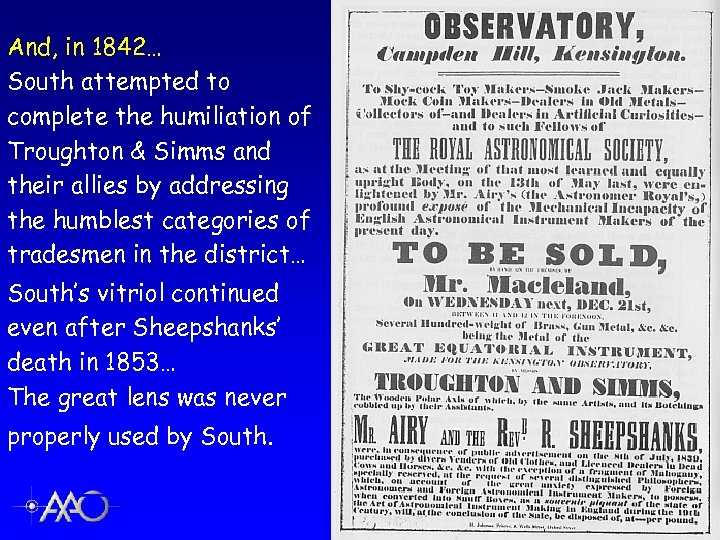 And, in 1842… South attempted to complete the humiliation of Troughton & Simms and their allies by addressing the humblest categories of tradesmen in the district… South’s vitriol continued even after Sheepshanks’ death in 1853… The great lens was never properly used by South.
 Moral number one: Make your mirrors good ones (and listen to people who tell you they aren’t…) Moral number two: Understand the mechanical limitations of your telescope… Moral number three: Agree on exactly what you want - before you start…
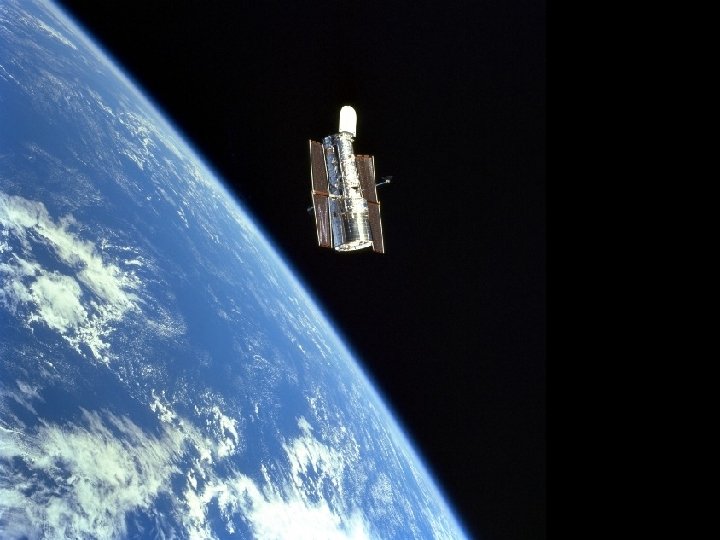
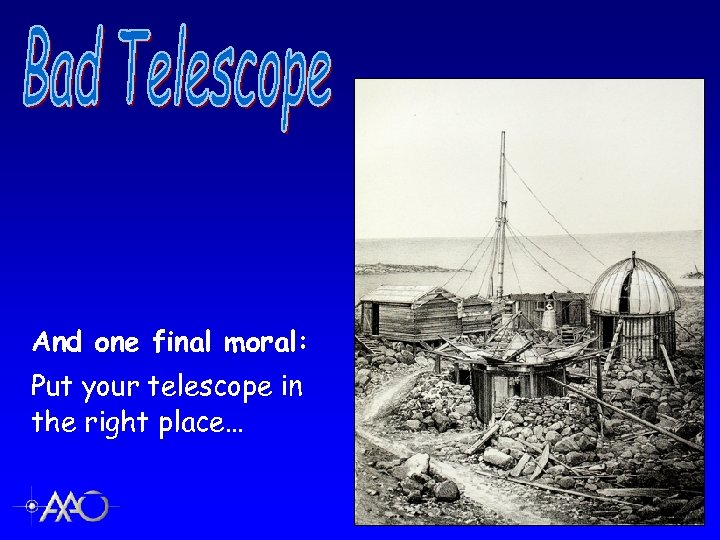 And one final moral: Put your telescope in the right place…
 Against the odds: how icons are created
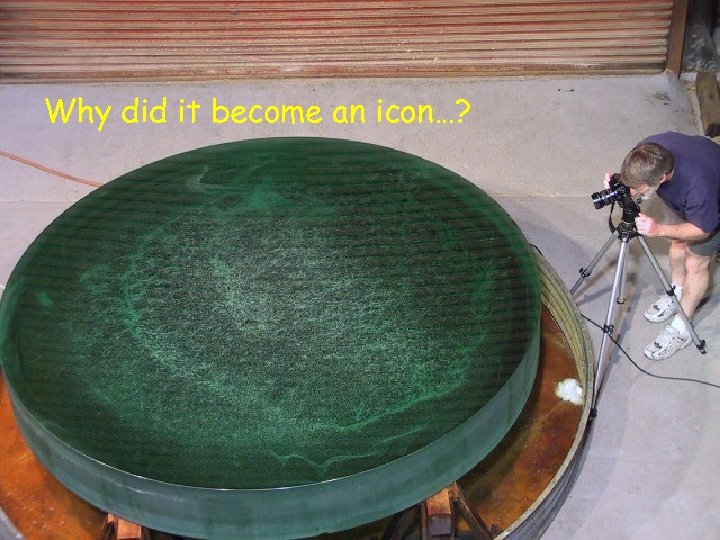 The 100 -inch Hooker telescope (1917) Why did it become an icon…?
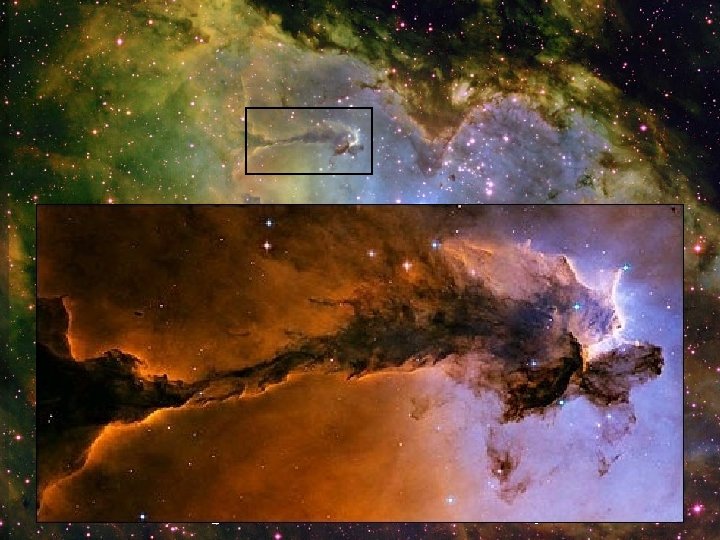 The Eagle Nebula—stellar birthplace
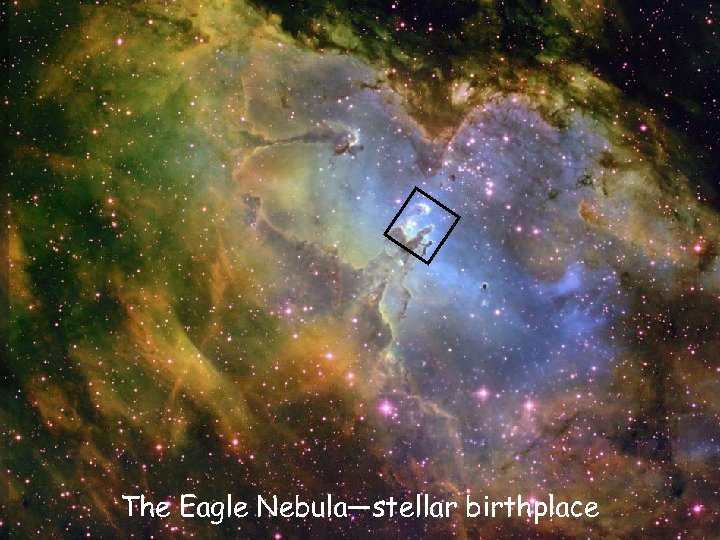 The Eagle Nebula—stellar birthplace
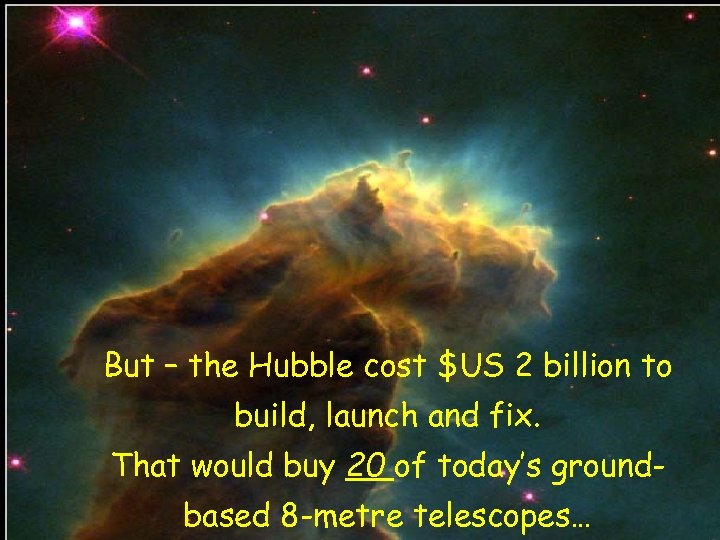 But – the Hubble cost $US 2 billion to build, launch and fix. That would buy 20 of today’s groundbased 8 -metre telescopes…
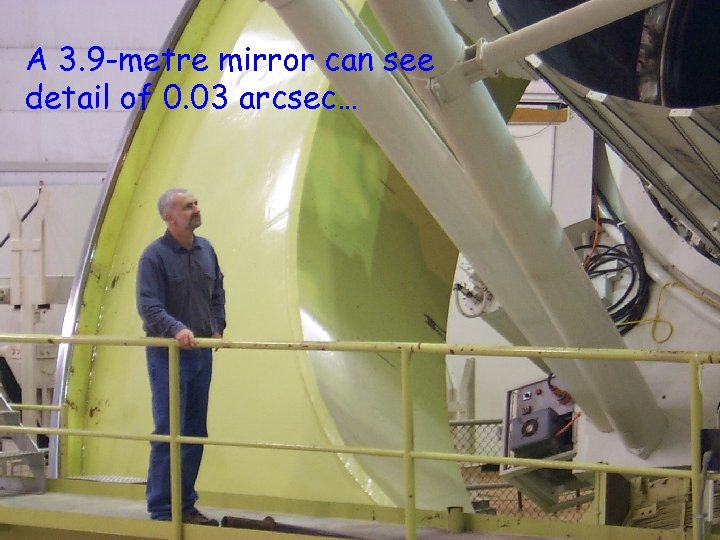 A 3. 9 -metre mirror can see detail of 0. 03 arcsec…
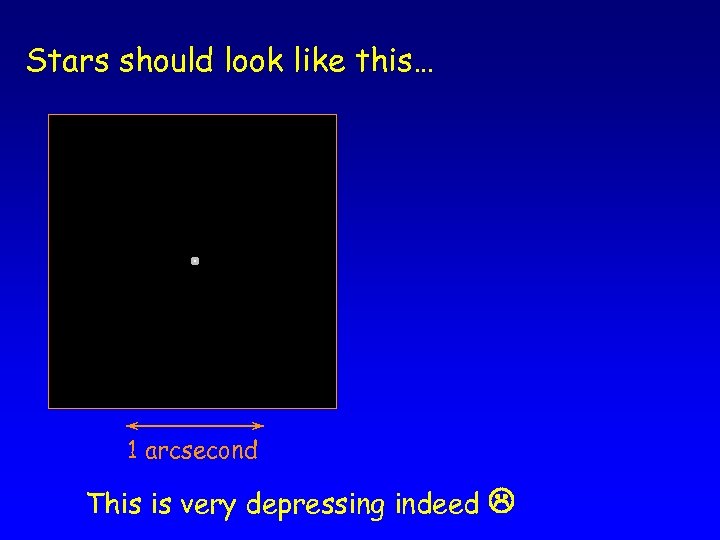 Stars should look like this… 1 arcsecond This is very depressing indeed
 But unusual things happen in Australia…
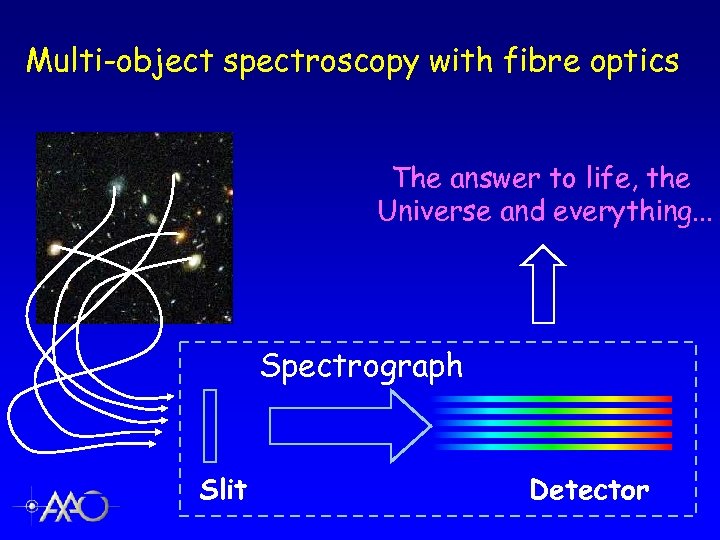 Multi-object spectroscopy with fibre optics The answer to life, the Universe and everything. . . Spectrograph Slit Detector
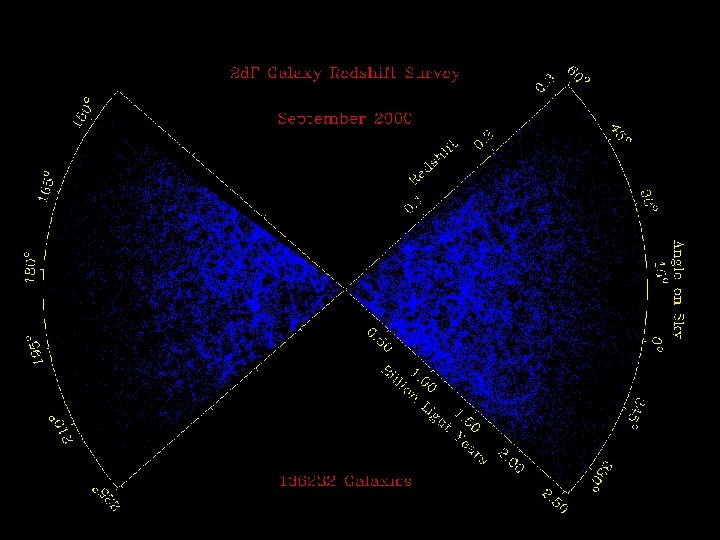
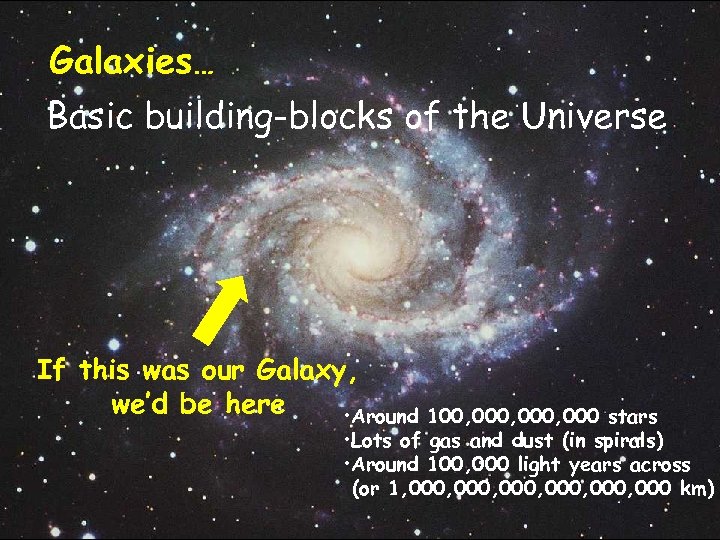 Galaxies… Basic building-blocks of the Universe If this was our Galaxy, we’d be here • Around 100, 000, 000 stars • Lots of gas and dust (in spirals) • Around 100, 000 light years across (or 1, 000, 000 km)
 Applying the lessons…
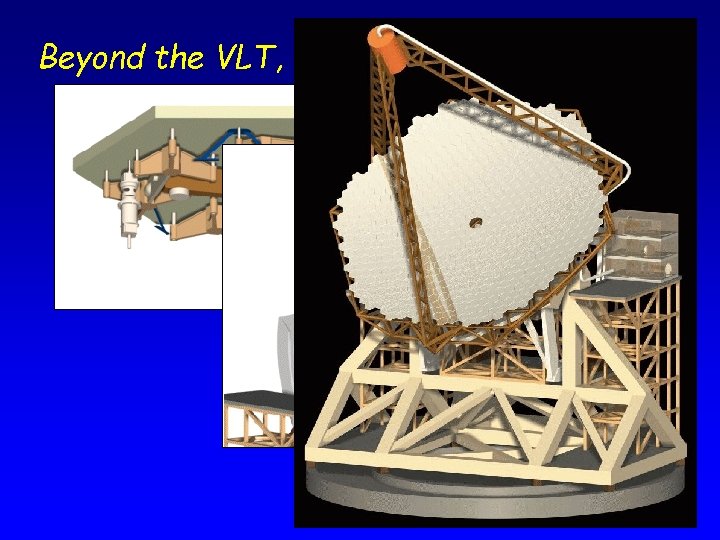 Beyond the VLT, the thinking goes like this:
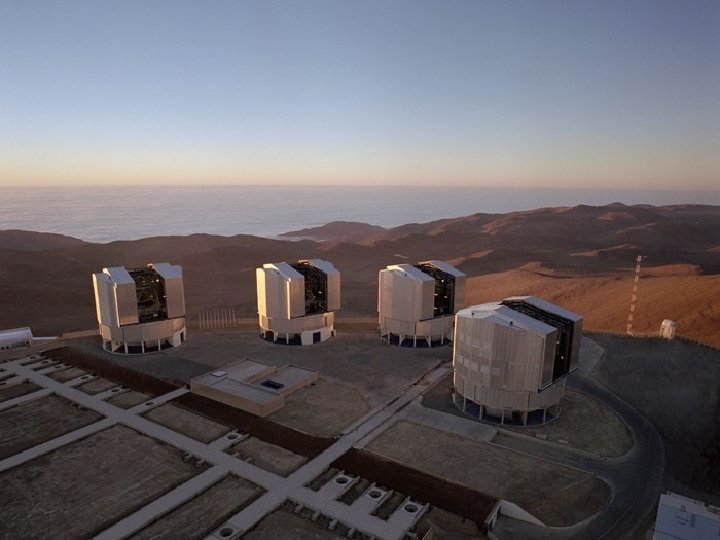
 Future plans for large telescopes. . . VLT: Very Large Telescope 4× 8 m (16 m equiv. ) ELT: Extremely Large Telescope 25 m CELT: California Extremely Large Telescope 30 m GSMT: Giant Segmented-Mirror Telescope 30 m TMT: Thirty-metre Telescope (US + Canada + ? ) Euro 50: formerly SELT…
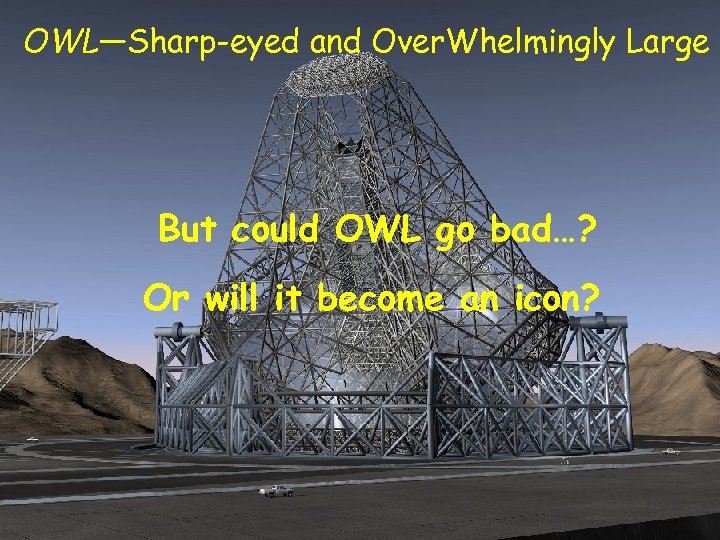 OWL—Sharp-eyed and Over. Whelmingly Large But could OWL go bad…? Or will it become an icon?
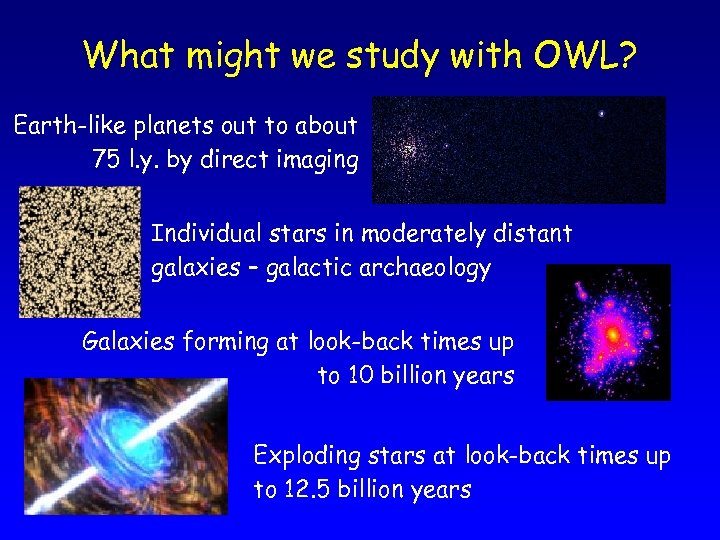 What might we study with OWL? Earth-like planets out to about 75 l. y. by direct imaging Individual stars in moderately distant galaxies – galactic archaeology Galaxies forming at look-back times up to 10 billion years Exploding stars at look-back times up to 12. 5 billion years
 For the full story of telescopes and the crazy people who created them… “A rollicking good yarn” (Sky & Space Magazine) “A lively, entertaining, can’t -put-it down history” (Aust. Sky & Telescope) “A fine piece of science writing…” (Kirkus Reviews, USA) “As riveting as watching paint dry…” (Wayne Webb, xtramsn entertainment website, NZ)