


 Скачать презентацию The Atmosphere Atmospheric Composition Component of
52af668ced70f635c4df8f02a5233d35.ppt
- Количество слайдов: 56
 The Atmosphere
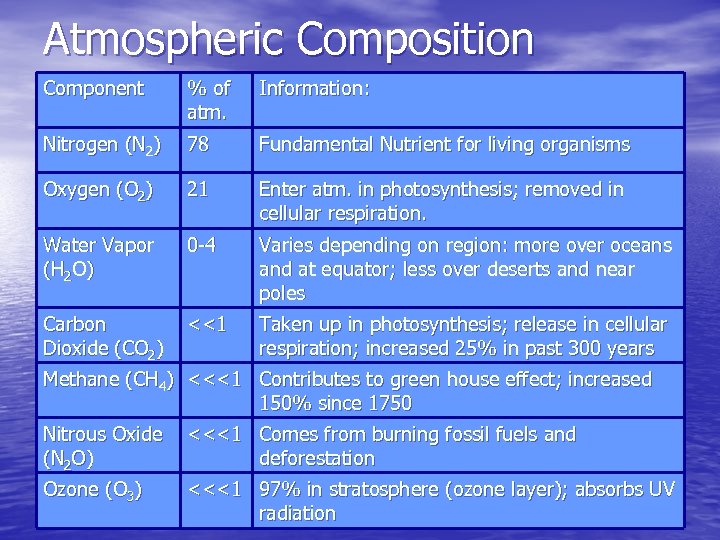 Atmospheric Composition Component % of atm. Information: Nitrogen (N 2) 78 Fundamental Nutrient for living organisms Oxygen (O 2) 21 Enter atm. in photosynthesis; removed in cellular respiration. Water Vapor (H 2 O) 0 -4 Varies depending on region: more over oceans and at equator; less over deserts and near poles Carbon Dioxide (CO 2) <<1 Taken up in photosynthesis; release in cellular respiration; increased 25% in past 300 years Methane (CH 4) <<<1 Contributes to green house effect; increased 150% since 1750 Nitrous Oxide (N 2 O) <<<1 Comes from burning fossil fuels and deforestation Ozone (O 3) <<<1 97% in stratosphere (ozone layer); absorbs UV radiation
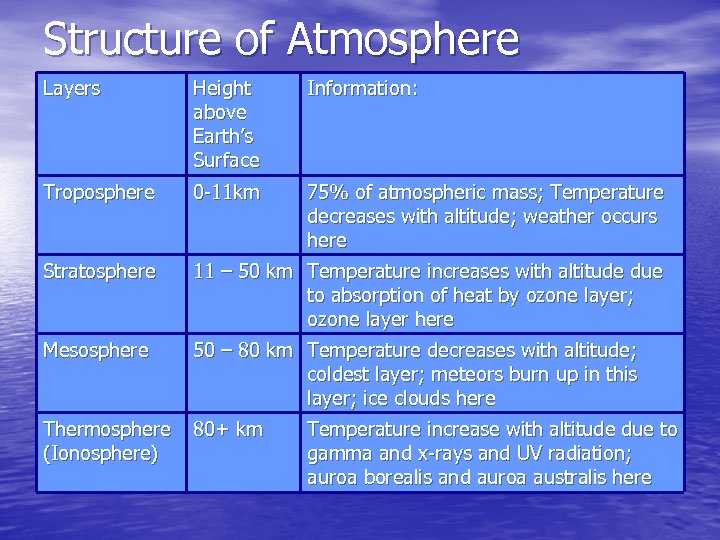 Structure of Atmosphere Layers Height above Earth’s Surface Information: Troposphere 0 -11 km 75% of atmospheric mass; Temperature decreases with altitude; weather occurs here Stratosphere 11 – 50 km Temperature increases with altitude due to absorption of heat by ozone layer; ozone layer here Mesosphere 50 – 80 km Temperature decreases with altitude; coldest layer; meteors burn up in this layer; ice clouds here Thermosphere (Ionosphere) 80+ km Temperature increase with altitude due to gamma and x-rays and UV radiation; auroa borealis and auroa australis here
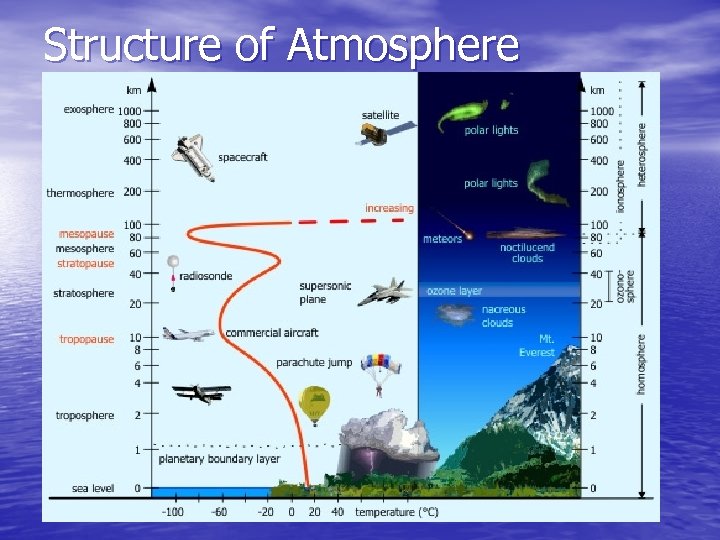 Structure of Atmosphere
 Weather and Climate
 WEATHER ≠ CLIMATE
 Weather • The short-term conditions of the atmosphere in • • a given place Influenced by the movement or transfer of heat energy Influences: – – – – Temperature Air pressure Humidity Precipitation Available sunshine (lack of cloud cover) Wind speed Wind direction
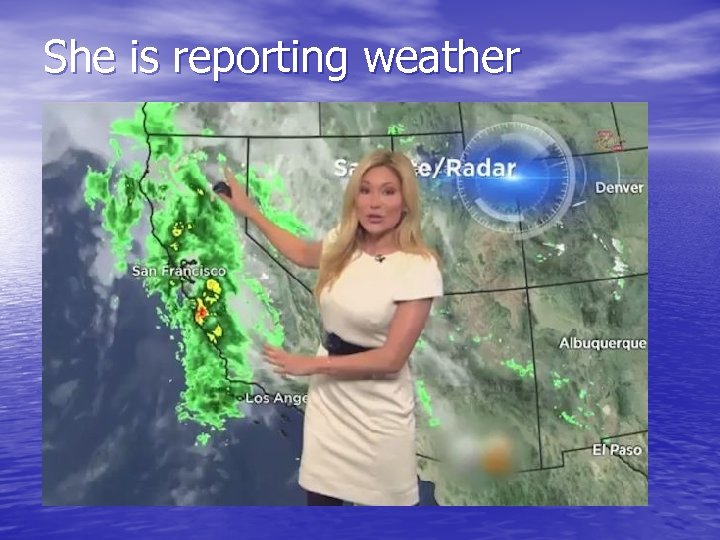 She is reporting weather
 Climate • The total of all weather occurring over a period of years in a given place • Energy transfered through: – Radiation – Conduction – Convection
 Factors that influence climate • • • • Air Mass Air Pressure Albedo Altitude Angle of sunlight Carbon Cycle Clouds Distance to Oceans Fronts Greenhouse Effect Heat (convection) Land Changes Land mass distribution • • • Latitude Location Moisture content of the air Mountain ranges Plate Tectonics Pollution Precession Rotation Solar Output Volcanoes Wind Patterns Human Activity
 Air Mass • Large Body of air that has similar temperature • and moisture content Categorized by: – – – Equatorial Tropical Polar Arctic Continental Maritime
 Air Pressure • Decreases with altitude (99% within 20 mi of earths surface) • Low Pressure Masses: produces cloudy and stormy weather • High Pressure masses: contain cool dense air; drops to Earth’s surface and becomes warmer – Associated with fair (nice) weather
 Albedo • Reflectivity – Oceans – low – Land masses – moderate – Snow and Ice – high • Positive feedback mechanism • Dust in air can form a high albedo layer in the atmosphere and reflects sunlight back – Temporarily cooling the atmosphere
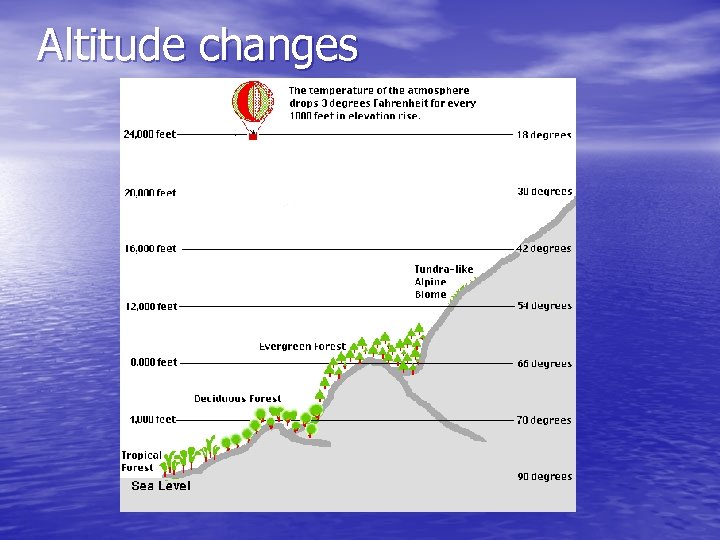
 Altitude • Every 1000 feet (300 m) rise in elevation = 3°F drop in temperature • Every 300 feet (90 m) rise in elevation = 62 mi (100 km) shift north in latitude and biome similarities
 Altitude changes
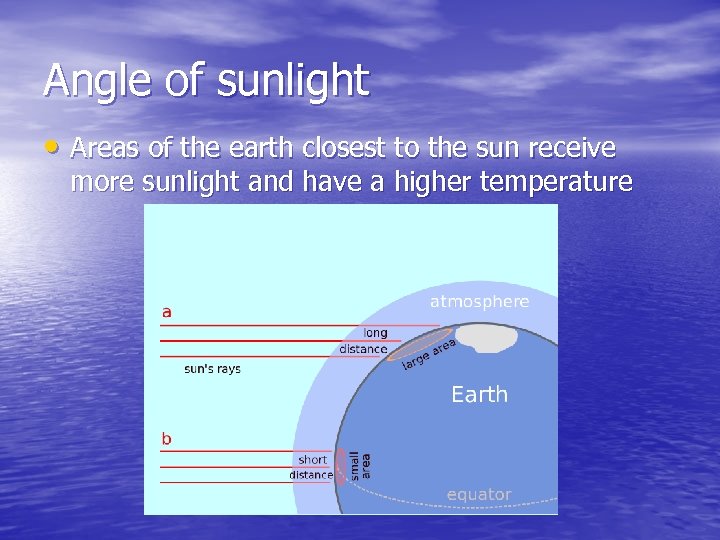 Angle of sunlight • Areas of the earth closest to the sun receive more sunlight and have a higher temperature
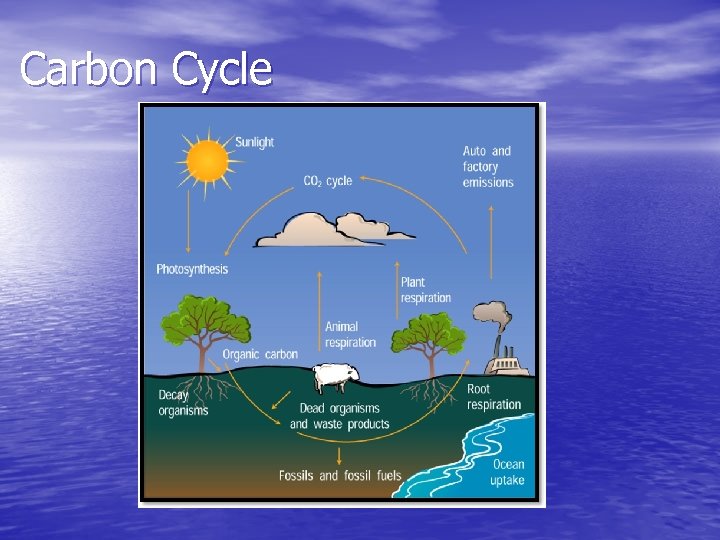 Carbon Cycle
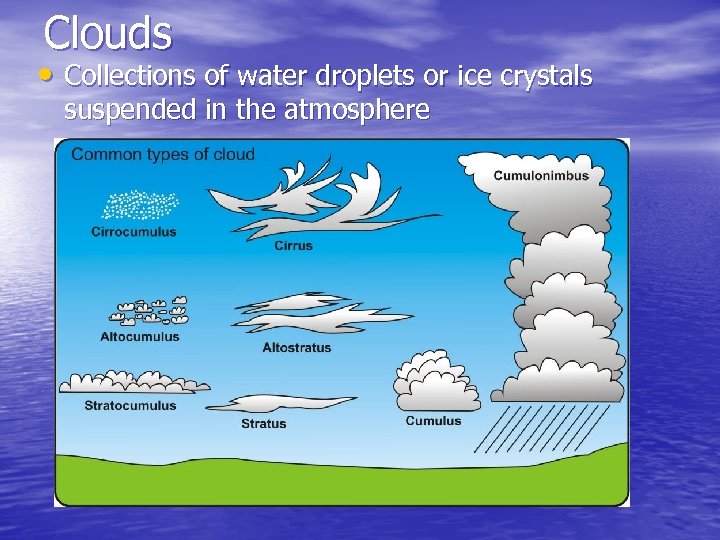 Clouds • Collections of water droplets or ice crystals suspended in the atmosphere
 Distance to Oceans • Oceans are thermally more stable than land – Changes in temperature are more extreme in center of land masses than near the oceans
 Fronts • Boundary between two air masses • Vary by – Temperature – Dew point – Wind direction • Cold fronts – leading edge of an advancing cold air mass – Associated with thunderstorms
 Greenhouse effect • Water, carbon dioxide, and methane trap solar radiation – Too much = Earth too hot to live on – Too little = Earth too cold to live on
 Heat (Convection) Convection: • Primary way energy is transferred from hotter to colder regions in the Earth’s atmosphere • Primary determinant of weather patterns Conduction: • Involves the heat transfer through a substance heat results from different temperatures in different parts of that substance
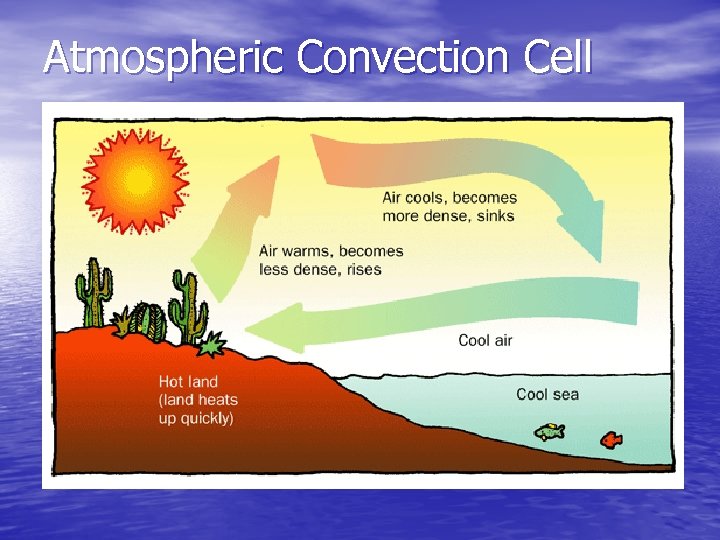 Atmospheric Convection Cell
 Land Mass Distribution • Oceans absorb more solar heat than land masses • Earth receives more solar radiation at low latitudes (near the equator) than at high latitudes • More landmasses near the equator leads to a cooler planet
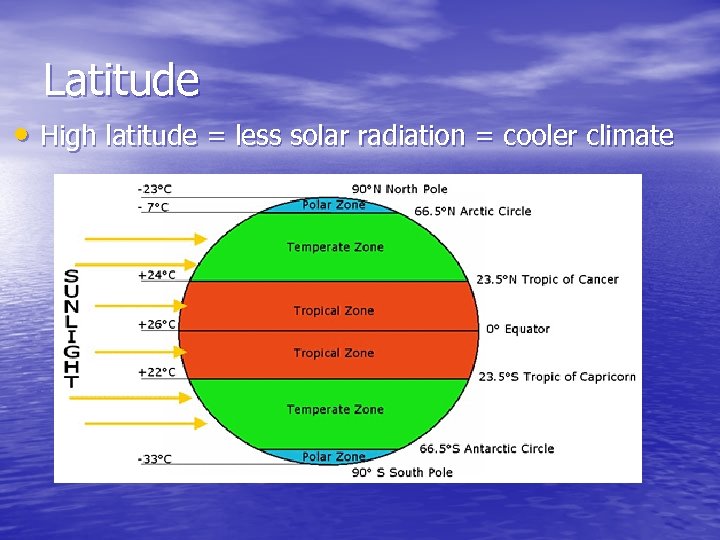 Latitude • High latitude = less solar radiation = cooler climate
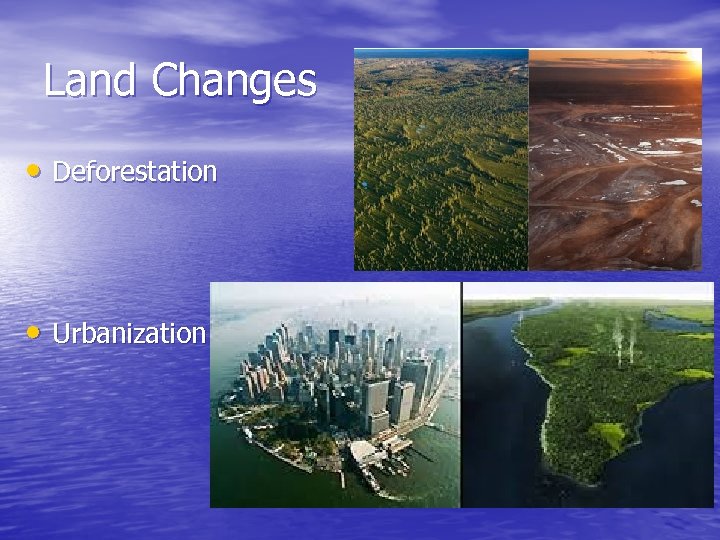 Land Changes • Deforestation • Urbanization
 Moisture Content (Humidity) • Atmospheric water vapor: – Provides moisture for clouds and rain – Acts as a green house gas keeping the Earth warm • A primary determinant of plant growth – Determines type of biome • Dew point – temperature at which condensation takes place
 Mountain Ranges • Force air masses from a low elevation to a high elevation – – – Air mass expands and cools as it rises Relative humidity is raised Clouds form (sometimes get rain) • Windward side of the range gets the most rain • The leeward side gets the least rain creating a rain shadow effect and producing a different biome
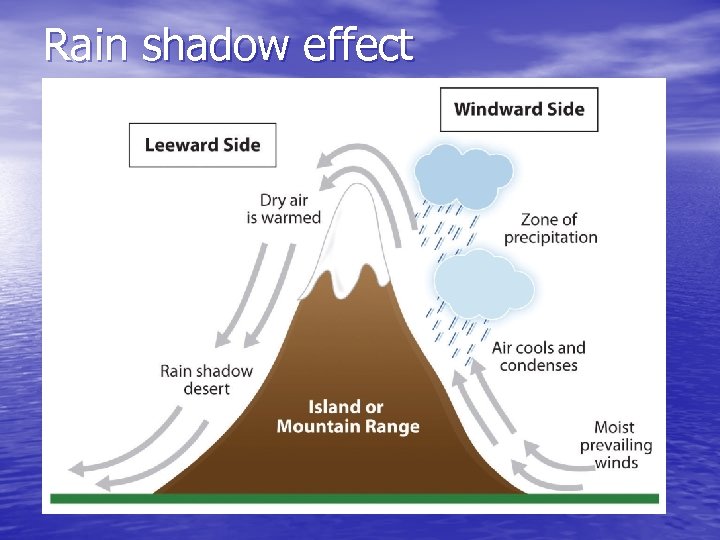 Rain shadow effect
 Plate Tectonics • Stable plate tectonics leads to less volcanism • Less volcanism means less carbon dioxide in the atmosphere cooler planet • More plate movement more volcanism more greenhouse gasses hotter planet
 Pollution • Greenhouse gasses from human sources increase in global temperature • CFC’s damage the ozone layer • Excess sulfur acid rain
 Precession • Precession – the wobble of the Earth on it’s axis • Changes in precession changes in the amount of sunlight the earth receives atmospheric changes
 Rotation • Daily temperature changes are affected by the Earth’s 24 hour rotation cycle (1 day) • Solar radiation warms the planet during the day • Heat escapes the planet at night
 Solar Output
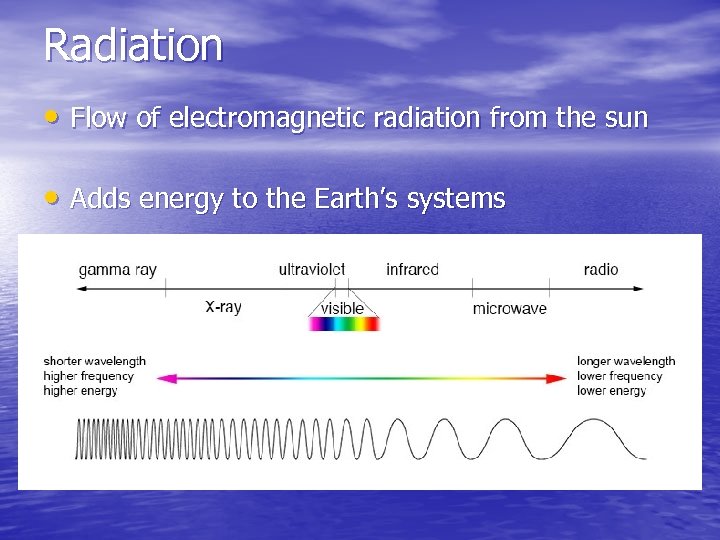 Radiation • Flow of electromagnetic radiation from the sun • Adds energy to the Earth’s systems
 Volcanoes • Volcano aerosols: – Sulfur ejected into the stratosphere warms the stratosphere and cools the troposphere. – Can destroy ozone – Carbon dioxide – green house gas • Increased iron increased biological activity take up carbon dioxide and cool the atmosphere • Large eruptions may trigger El Niño events
 Wind Patterns • Influenced by: – Temperature – Pressure differences – Coriolis effect
 Wind Patterns 1. Sun heats the atmosphere unevenly 2. Air closest to the surface warms and 3. 4. rises Air at high elevations cools and sinks Rising and falling sets up a convection process wind
 Global Air Circulation • Caused and affected by: – Uneven heating of the Earth’s surface – Seasons – The Coriolis effect – The amount of solar radiation reaching the earth’s surface over a given period of time – Convection cells created by areas of warm ocean water
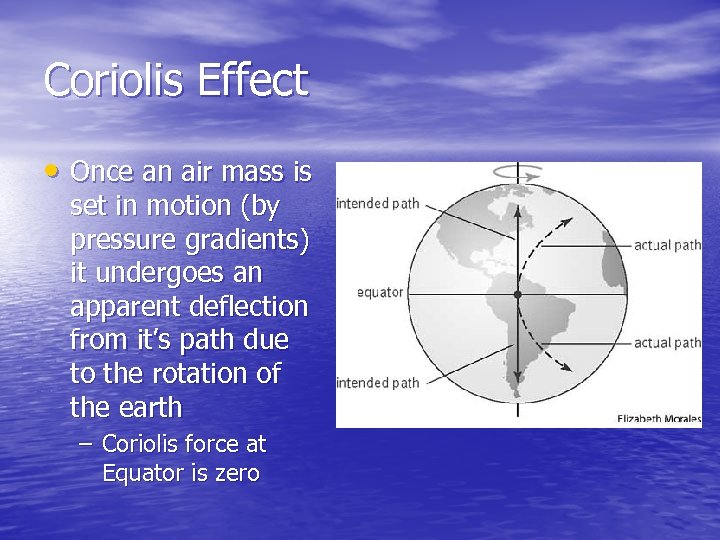 Coriolis Effect • Once an air mass is set in motion (by pressure gradients) it undergoes an apparent deflection from it’s path due to the rotation of the earth – Coriolis force at Equator is zero
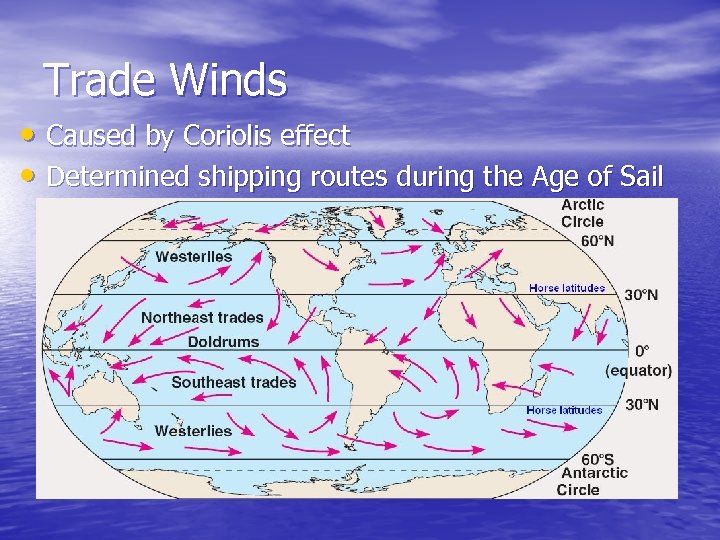 Trade Winds • Caused by Coriolis effect • Determined shipping routes during the Age of Sail
 Human Activity • Human activities that affect the climate: – Deforestation – Urbanization – Heat island effects – Release of pollutants – Burning fossil fuels – Produce acid rain
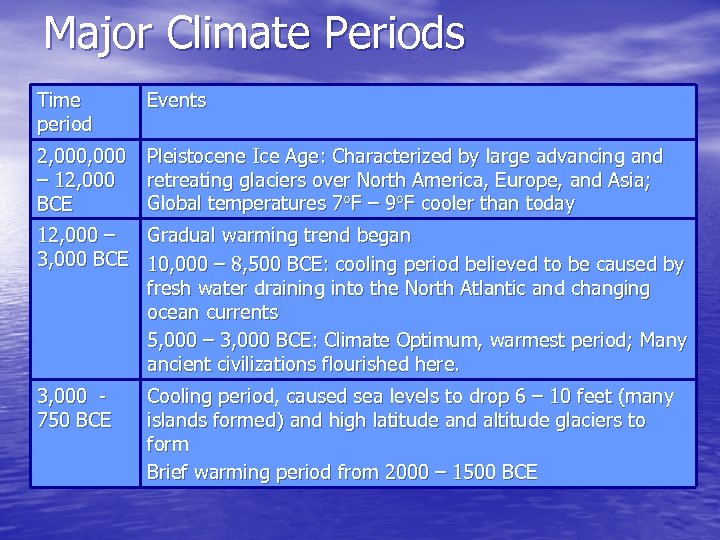 Major Climate Periods Time period Events 2, 000 – 12, 000 BCE Pleistocene Ice Age: Characterized by large advancing and retreating glaciers over North America, Europe, and Asia; Global temperatures 7°F – 9°F cooler than today 12, 000 – Gradual warming trend began 3, 000 BCE 10, 000 – 8, 500 BCE: cooling period believed to be caused by fresh water draining into the North Atlantic and changing ocean currents 5, 000 – 3, 000 BCE: Climate Optimum, warmest period; Many ancient civilizations flourished here. 3, 000 750 BCE Cooling period, caused sea levels to drop 6 – 10 feet (many islands formed) and high latitude and altitude glaciers to form Brief warming period from 2000 – 1500 BCE
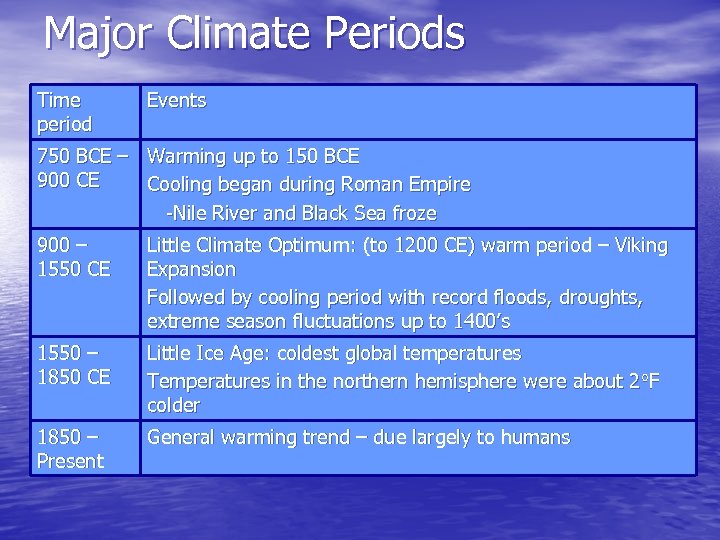 Major Climate Periods Time period Events 750 BCE – Warming up to 150 BCE 900 CE Cooling began during Roman Empire -Nile River and Black Sea froze 900 – 1550 CE Little Climate Optimum: (to 1200 CE) warm period – Viking Expansion Followed by cooling period with record floods, droughts, extreme season fluctuations up to 1400’s 1550 – 1850 CE Little Ice Age: coldest global temperatures Temperatures in the northern hemisphere were about 2°F colder 1850 – Present General warming trend – due largely to humans
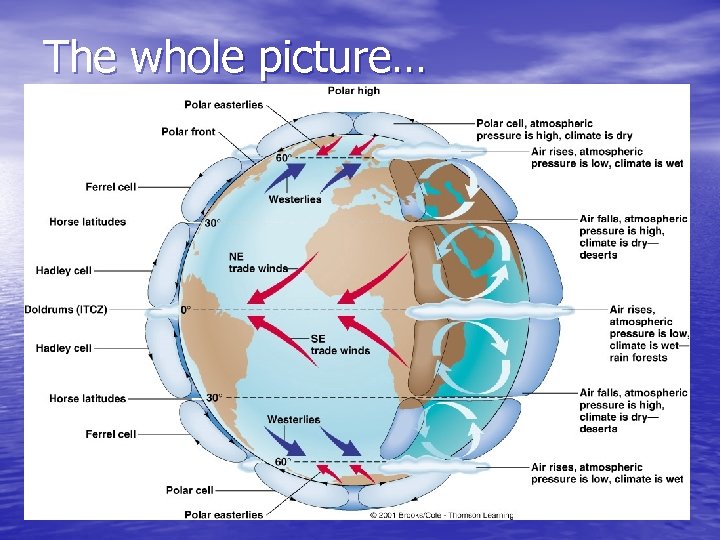
 Atmosphere Circulation Cells • Hadley Air Circulation Cells • Ferrel Air Circulation Cells • Polar Air Circulation Cells Help determine biomes and biogeography of the Earth
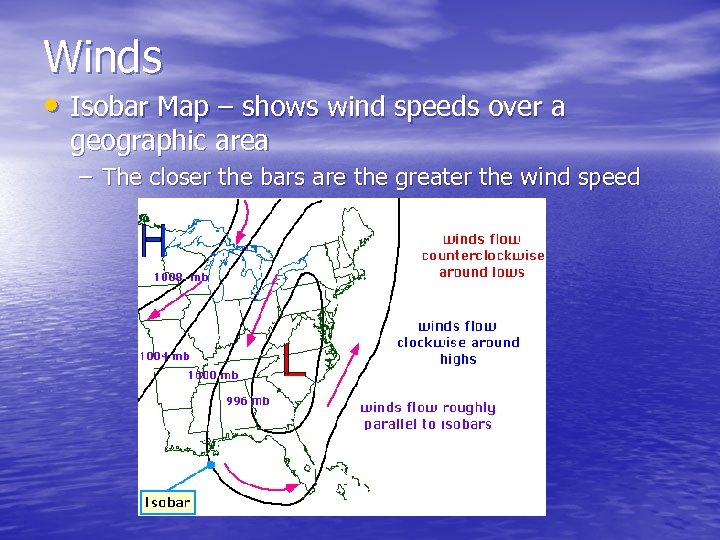 Winds • Isobar Map – shows wind speeds over a geographic area – The closer the bars are the greater the wind speed
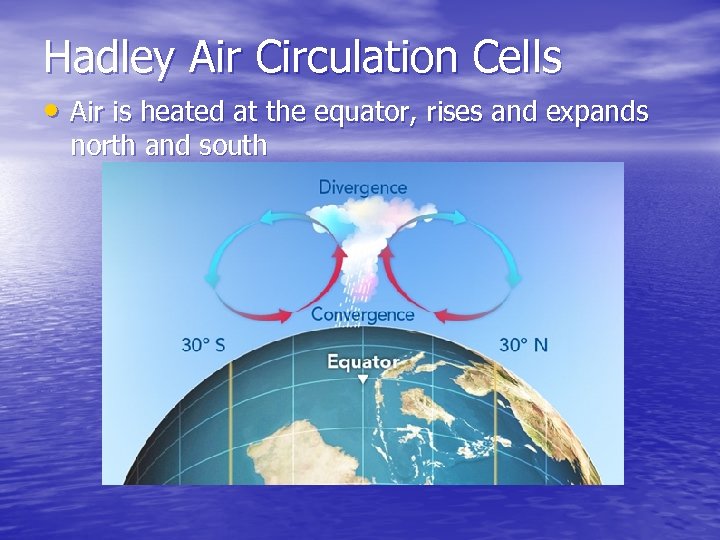 Hadley Air Circulation Cells • Air is heated at the equator, rises and expands north and south
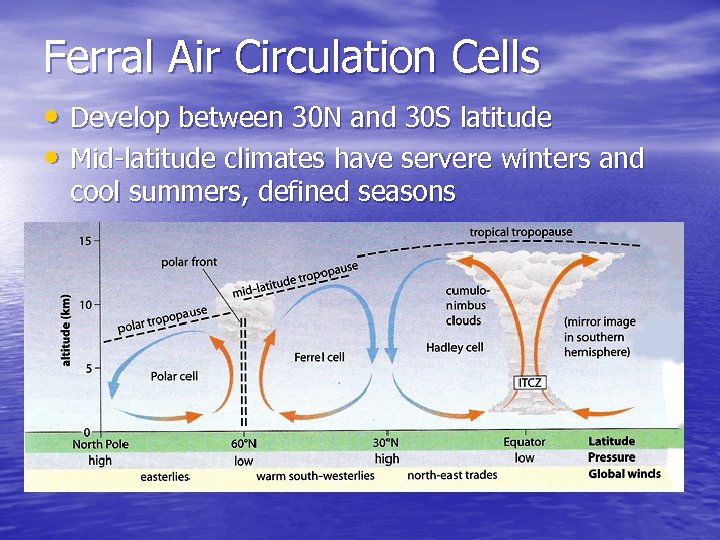 Ferral Air Circulation Cells • Develop between 30 N and 30 S latitude • Mid-latitude climates have servere winters and cool summers, defined seasons
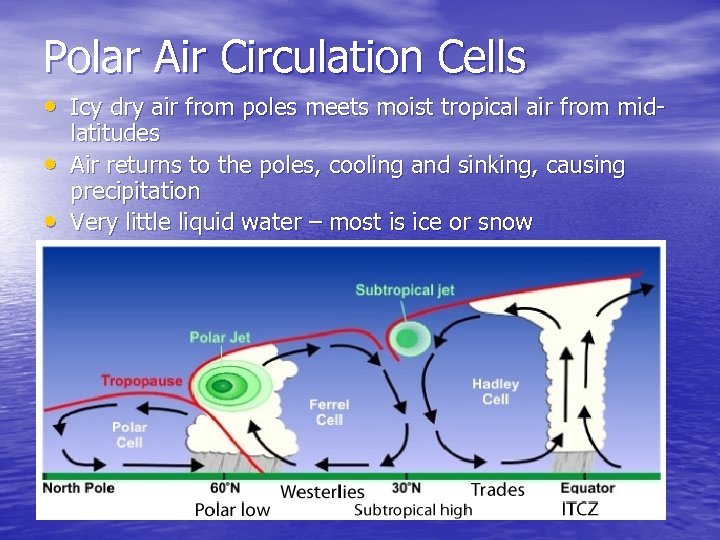 Polar Air Circulation Cells • Icy dry air from poles meets moist tropical air from mid • • latitudes Air returns to the poles, cooling and sinking, causing precipitation Very little liquid water – most is ice or snow
 The whole picture…
 Hurricanes, Cyclones, Typhoons • Same thing different place – Hurricanes – Atlantic and NE Pacific – Cyclones – S Pacific and Indian Oceans – Typhoons – NW Pacific • Most severe weather on planet – Begin with collision of warm ocean areas where trade winds converge • Cyclonic flow is initiated by Coriolis effect
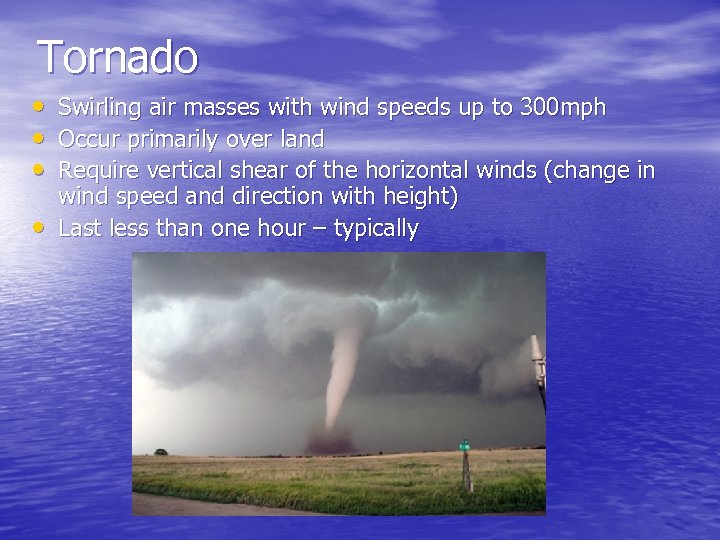 Tornado • • Swirling air masses with wind speeds up to 300 mph Occur primarily over land Require vertical shear of the horizontal winds (change in wind speed and direction with height) Last less than one hour – typically
 Monsoons • Strong violent winds that change direction with the seasons • Blow from land to sea in winter • Blow from sea to land in summer • Summer monsoons provide large quantities of rain
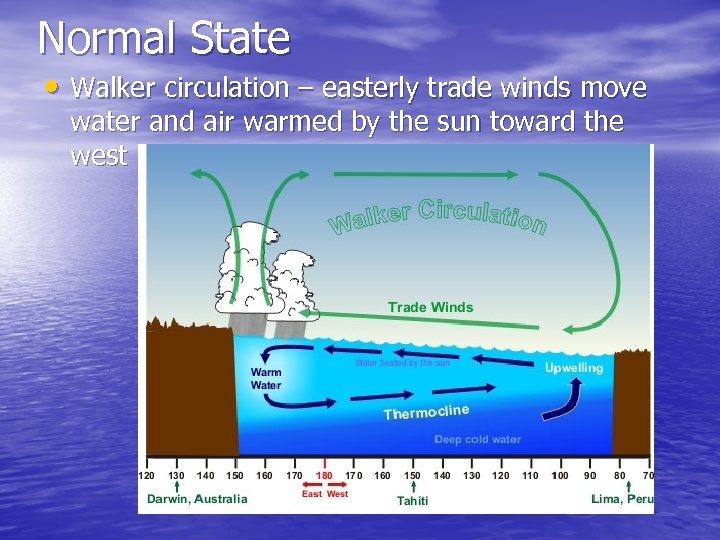 Normal State • Walker circulation – easterly trade winds move water and air warmed by the sun toward the west
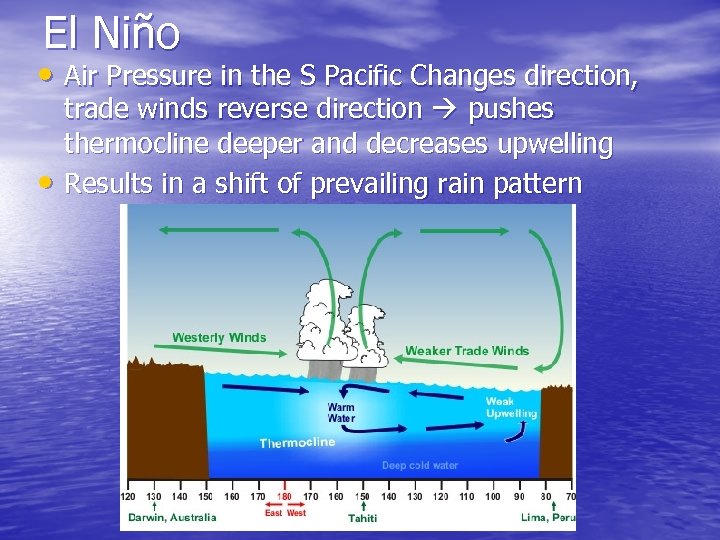 El Niño • Air Pressure in the S Pacific Changes direction, • trade winds reverse direction pushes thermocline deeper and decreases upwelling Results in a shift of prevailing rain pattern
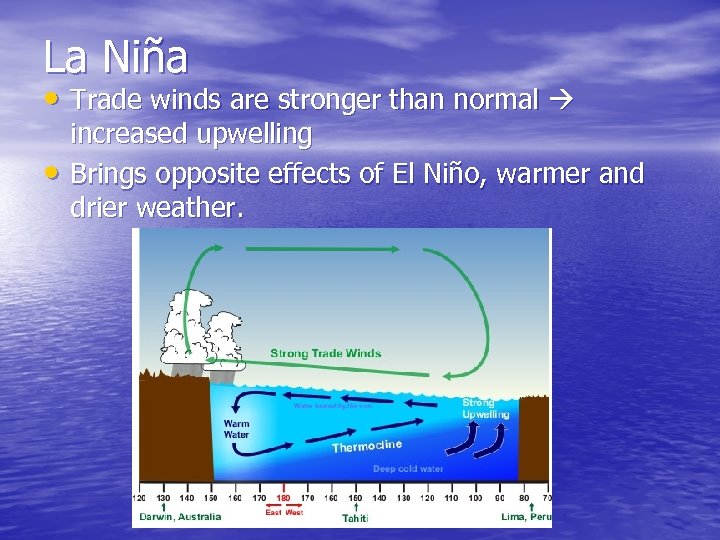 La Niña • Trade winds are stronger than normal • increased upwelling Brings opposite effects of El Niño, warmer and drier weather.