


 Скачать презентацию THE ASSYRIANS HISTORY and CULTURE I slew one
0ce4f3917a16f0da3101bc6efca5b24e.ppt
- Количество слайдов: 32
 THE ASSYRIANS HISTORY and CULTURE “I slew one of every two. I built a wall before the great gates of the city; I flayed the chief men of the rebels, and I covered the wall with their skins. Some were enclosed alive within the bricks of the wall, some were crucified with stakes along the wall; I caused many to be flayed in my presence, and I covered the wall with their skins”. Assyrian inscription.
 Assyrians • Essential Questions: – What are the benefits of military might to a civilization? What are its limits? – What is the proper treatment of defeated peoples?
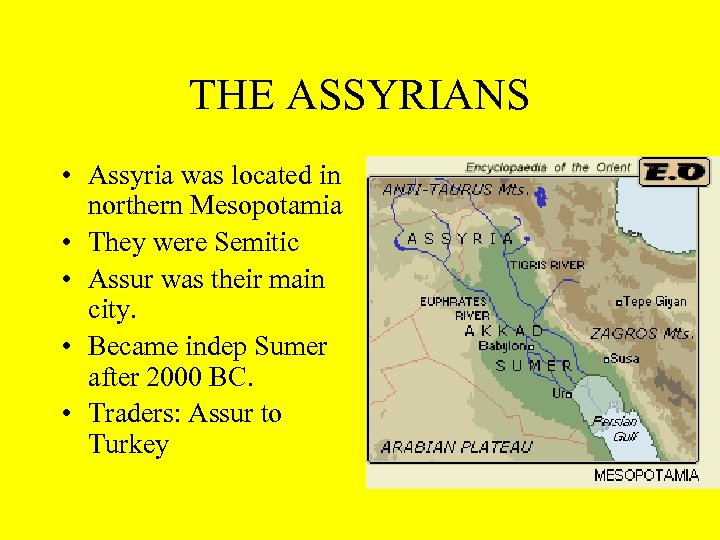 THE ASSYRIANS • Assyria was located in northern Mesopotamia • They were Semitic • Assur was their main city. • Became indep Sumer after 2000 BC. • Traders: Assur to Turkey
 THE ASSYRIANS • BACKGROUND: – 1700 BC conquered by Amorites. – 1360 BC, governor of Assur, Assur-uballit began to call himself king. – Under Tukulti-Ninurta, conquered Babylon in 1225 BC. – 1115 BC under Tiglath-pilesar they expanded north and south. – Capital became Ninevah. – But Assur remained an important city – Main cities: Assur, Ninevah, Arbel, Nimrod
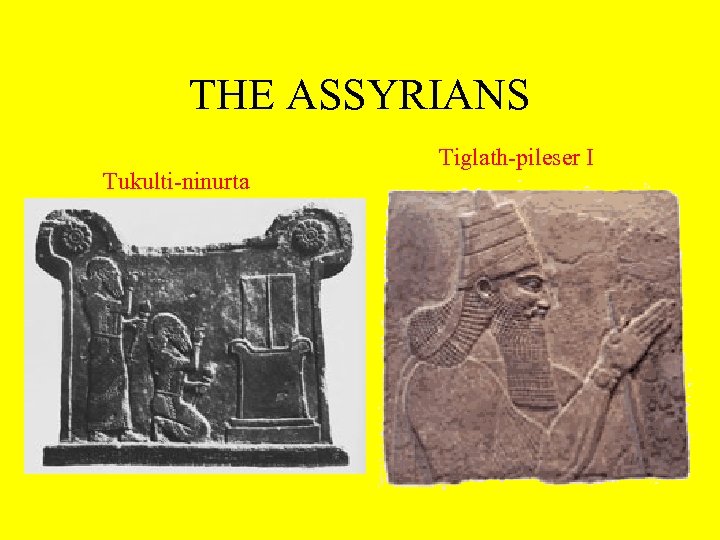 THE ASSYRIANS Tukulti-ninurta Tiglath-pileser I
 THE ASSYRIANS • THE ARMY: – Feared by all. Ruthless, mean. – Every spring, travel down the Tigris. – Return home every fall following Euphrates – Pillaged wherever they went. Took: gold, silver, art, slaves. – These plundering raids took place every year for hundreds of years.
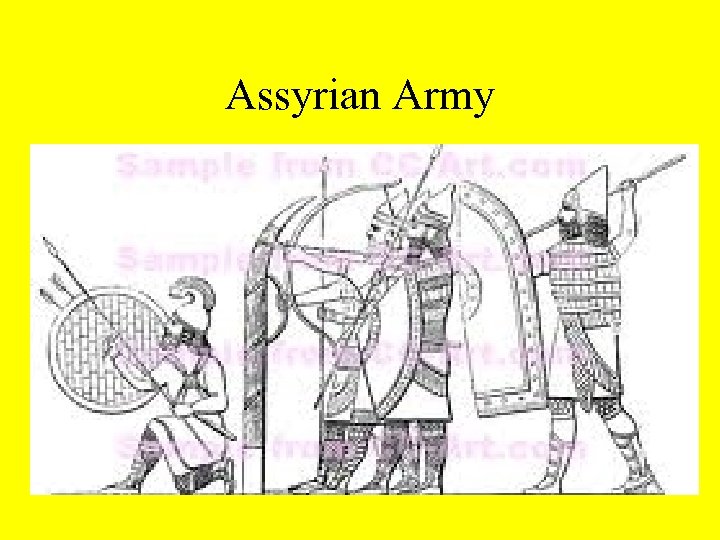 Assyrian Army
 The Assyrians • Policy of Deportation – Goal: – How do you think such a policy and the violent nature of Assyrian rule made other people in M. E. feel about them?
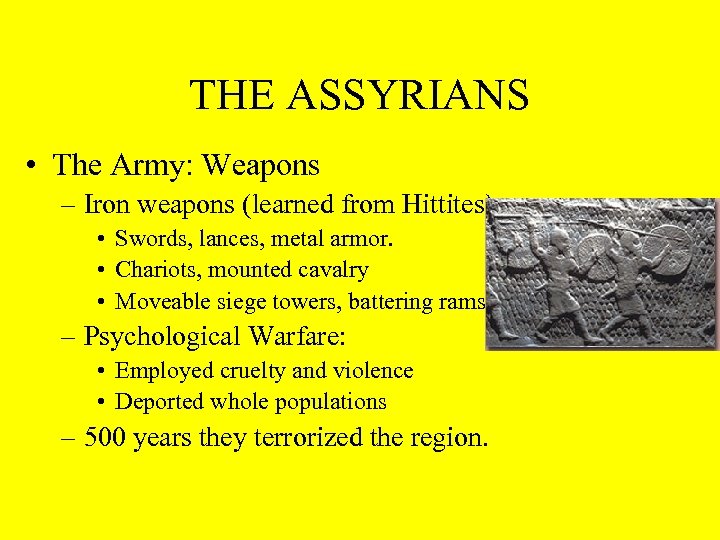 THE ASSYRIANS • The Army: Weapons – Iron weapons (learned from Hittites) • Swords, lances, metal armor. • Chariots, mounted cavalry • Moveable siege towers, battering rams – Psychological Warfare: • Employed cruelty and violence • Deported whole populations – 500 years they terrorized the region.
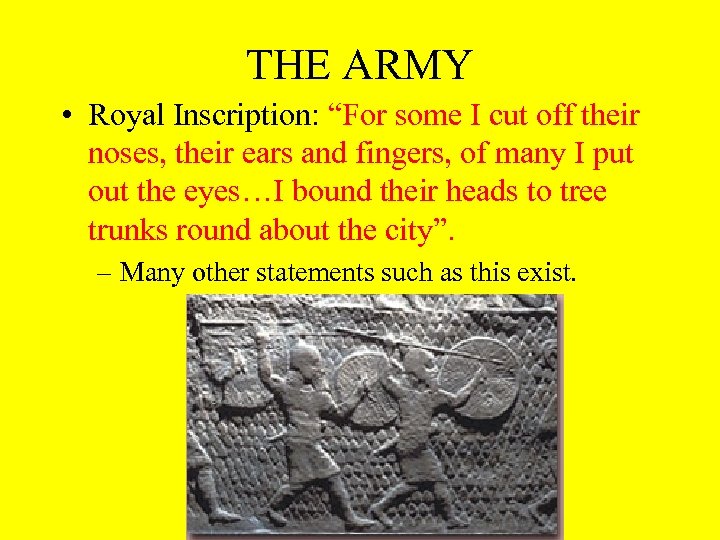 THE ARMY • Royal Inscription: “For some I cut off their noses, their ears and fingers, of many I put out the eyes…I bound their heads to tree trunks round about the city”. – Many other statements such as this exist.
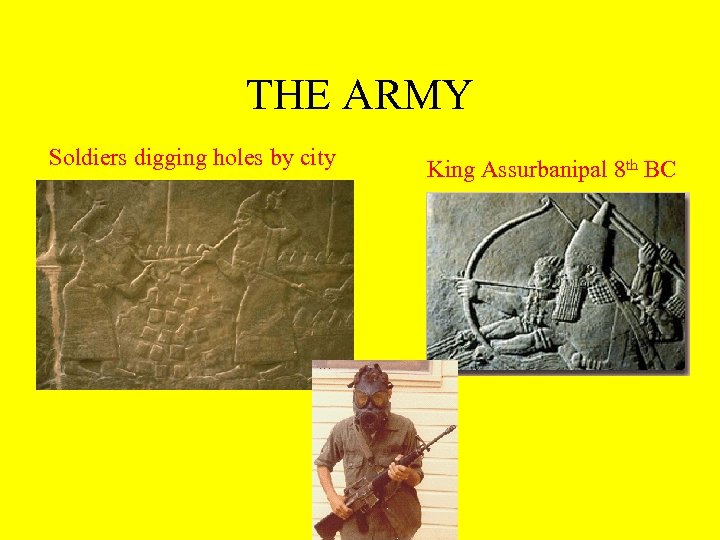 THE ARMY Soldiers digging holes by city King Assurbanipal 8 th BC
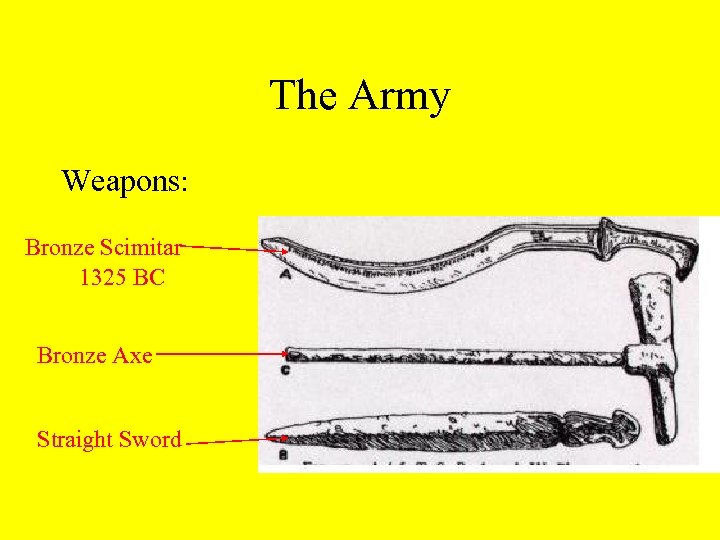 The Army Weapons: Bronze Scimitar 1325 BC Bronze Axe Straight Sword
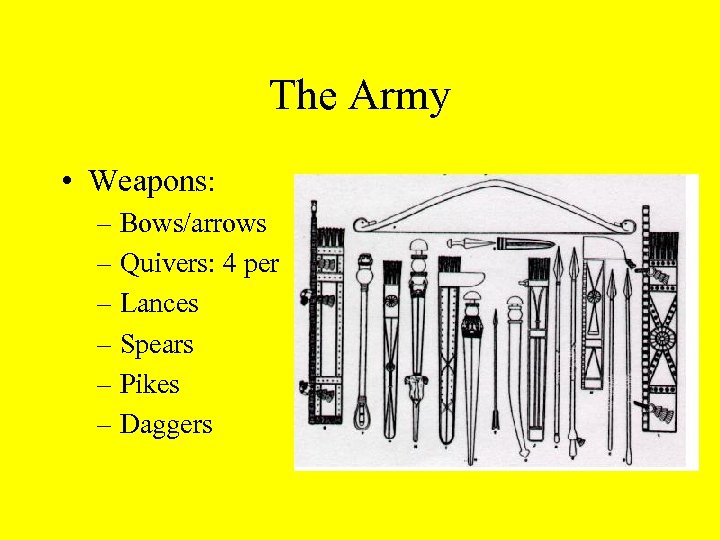 The Army • Weapons: – Bows/arrows – Quivers: 4 per – Lances – Spears – Pikes – Daggers
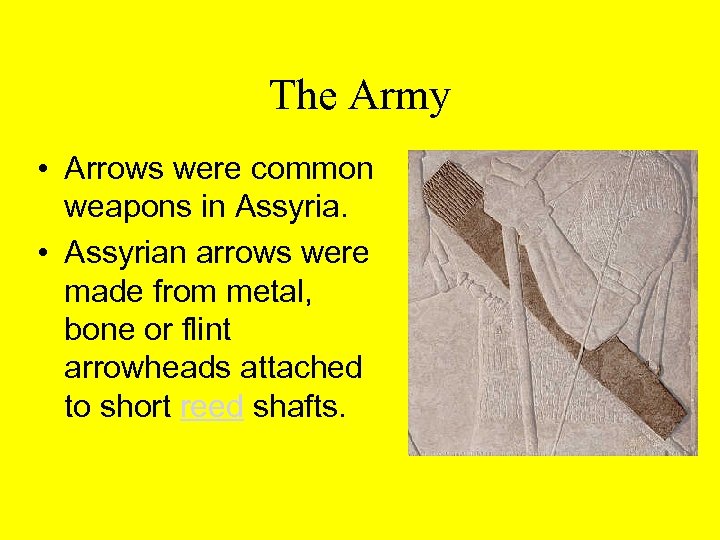 The Army • Arrows were common weapons in Assyria. • Assyrian arrows were made from metal, bone or flint arrowheads attached to short reed shafts.
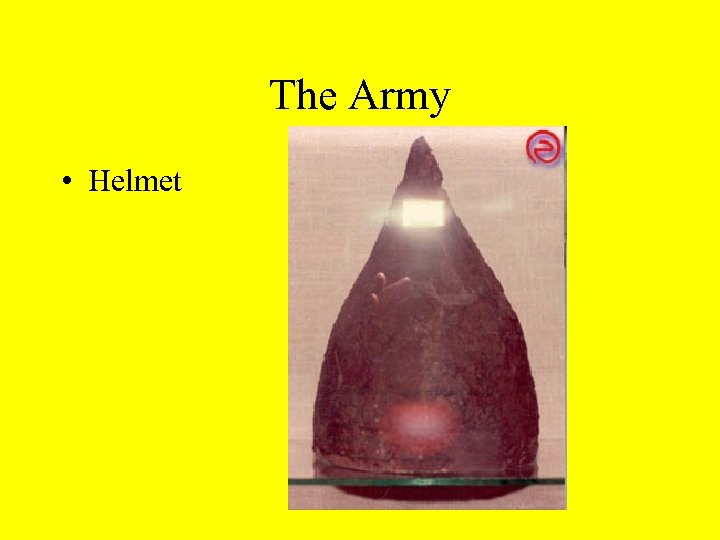 The Army • Helmet
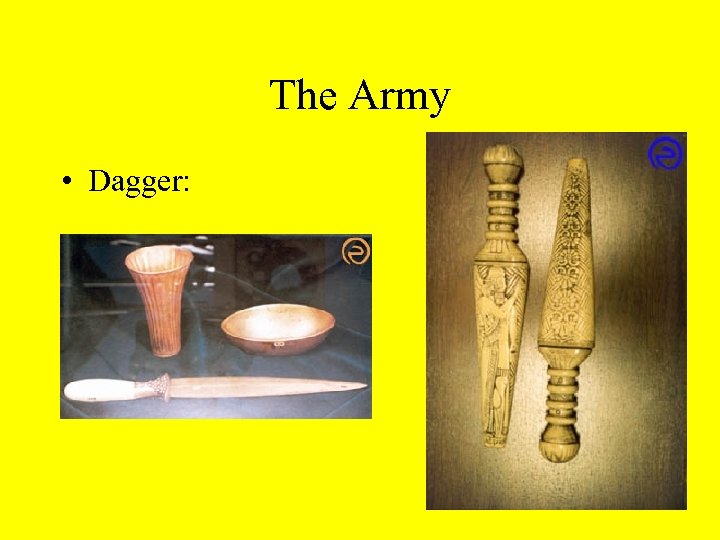 The Army • Dagger:
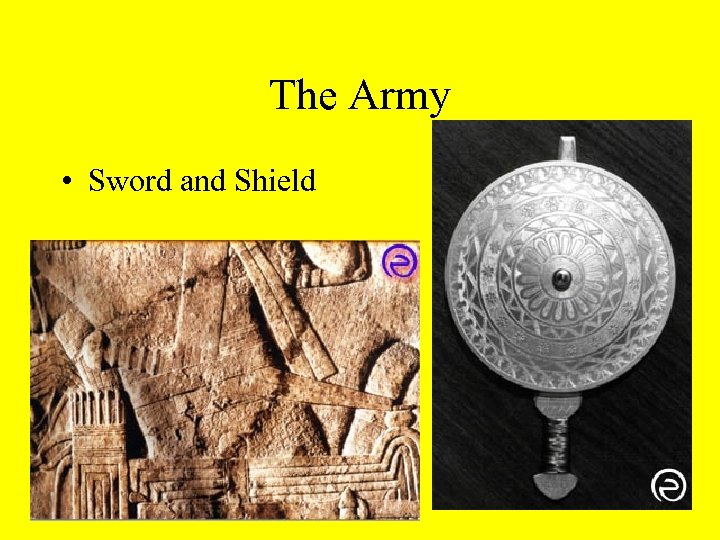 The Army • Sword and Shield
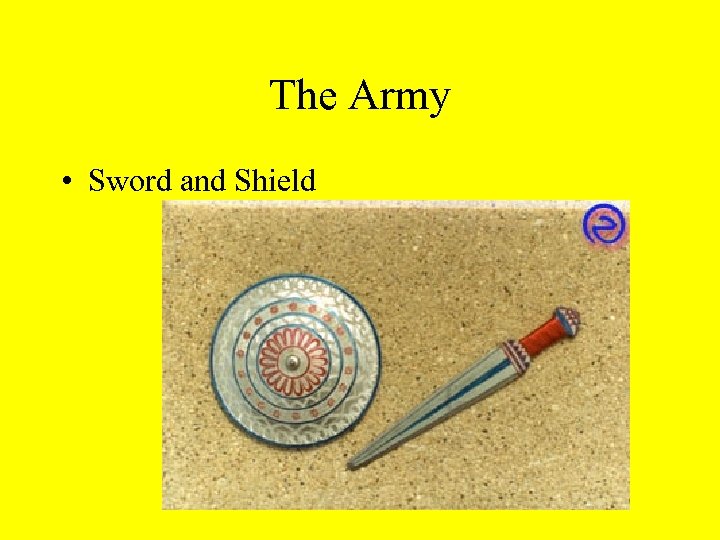 The Army • Sword and Shield
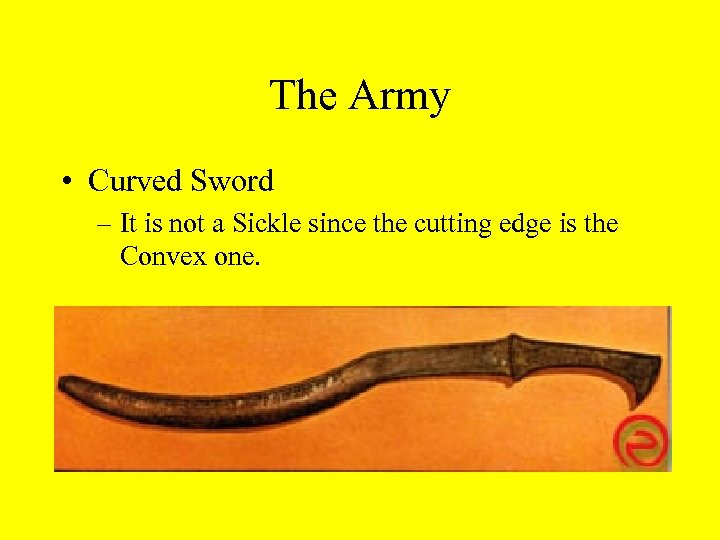 The Army • Curved Sword – It is not a Sickle since the cutting edge is the Convex one.
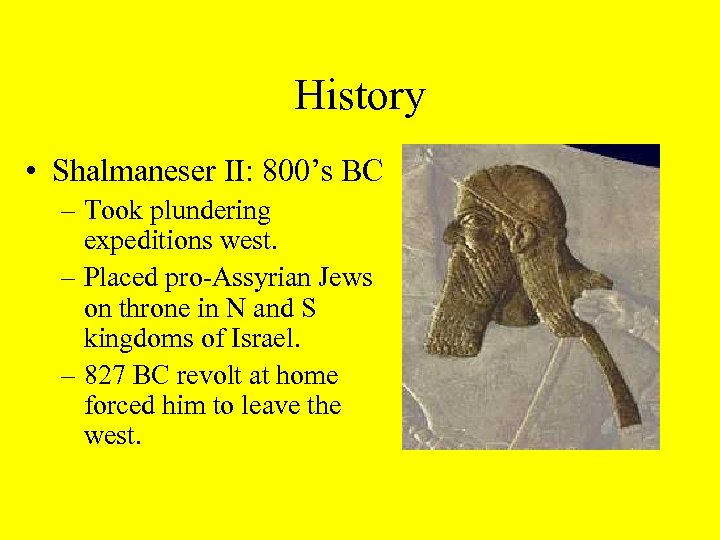 History • Shalmaneser II: 800’s BC – Took plundering expeditions west. – Placed pro-Assyrian Jews on throne in N and S kingdoms of Israel. – 827 BC revolt at home forced him to leave the west.
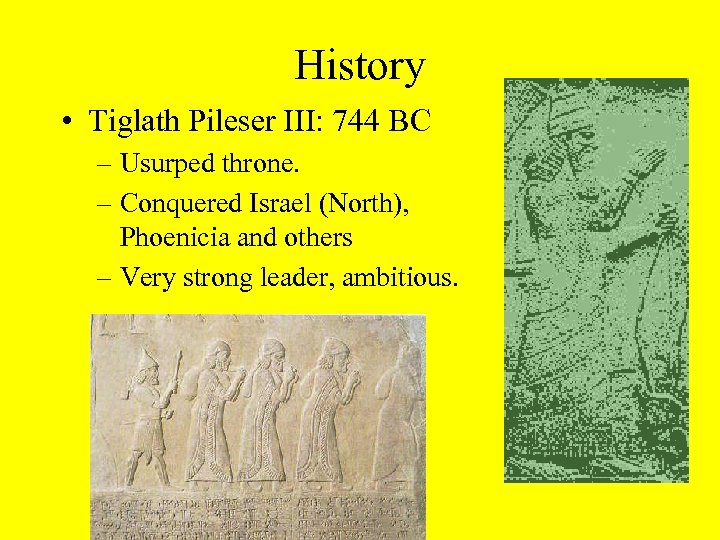 History • Tiglath Pileser III: 744 BC – Usurped throne. – Conquered Israel (North), Phoenicia and others – Very strong leader, ambitious.
 History • Sargon: 722 -705 BC. – Destroyed N kingdom of Israel forever. – He founded the last great Assyrian dynasty – Excavations of his palace at Dur Sharrukin (Khorsabad) have uncovered his personal annals, in which he recorded in detail his destruction of Samaria. His name appears also as Sharrukin.
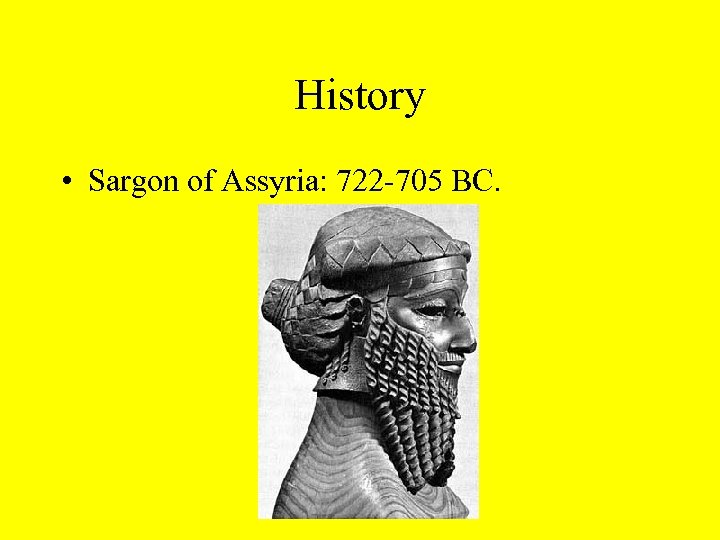 History • Sargon of Assyria: 722 -705 BC.
 History • Sennacherib: 705 – 681 BC – He defeated the Egyptians at Eltekeh (701 B. C. ) – 698 BC Sennacherib captured and destroyed Babylon – He constructed canals and aqueducts and built a magnificent palace at Nineveh – Murdered by his two sons. – Esarheddon, another son succeeded him.
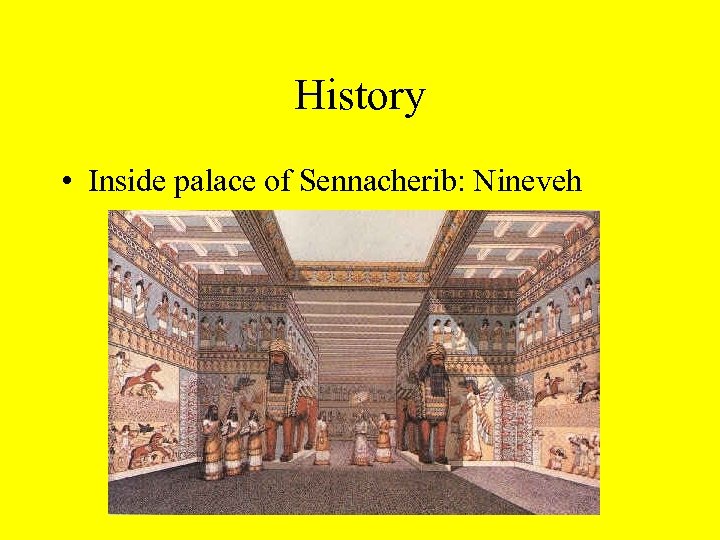 History • Inside palace of Sennacherib: Nineveh
 History • Esarheddon: king of Assyria (681– 668 B. C. ), son of Sennacherib. (Esar-Haddon) – Defeated the Chaldaeans – Most important was his conquest (673– 670 B. C. ) of Egypt – Died on way to subdue revolt in Egypt – He was succeeded by Assurbanipal
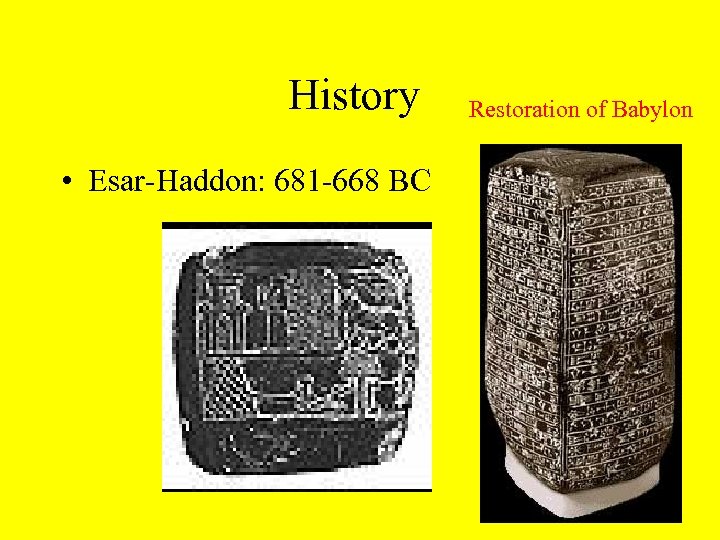 History • Esar-Haddon: 681 -668 BC Restoration of Babylon
 History • Assurbanipal: 668 -633 BC. – Son of Esar-Haddon. – Under Assurbanipal, Assyria reached the height of sumptuous living. – The famous lion-hunt reliefs in the royal palace at Nineveh date from his reign and are among the finest examples of ancient sculpture.
 History • Assurbanipal: – Assurbanipal was interested in learning; excavations at Nineveh have uncovered 22, 000 clay tablets from his library—the chief sources of knowledge of ancient Mesopotamia. – Among the tablets were found copies of the Babylonian flood and creation stories. – His reign ended the greatness of the empire.
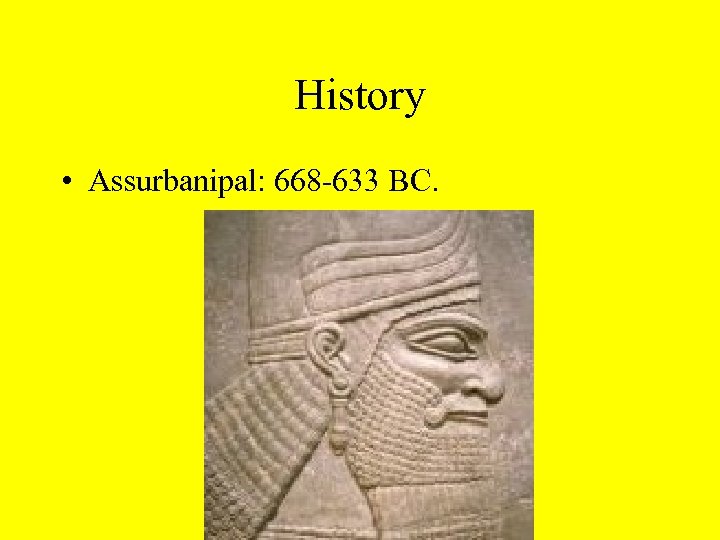 History • Assurbanipal: 668 -633 BC.
 History • After Assurbanipal, the empire was severely weakened. • By 605 BC, Assyria fell to King Nabopolassar of Babylon (Chaldeans).
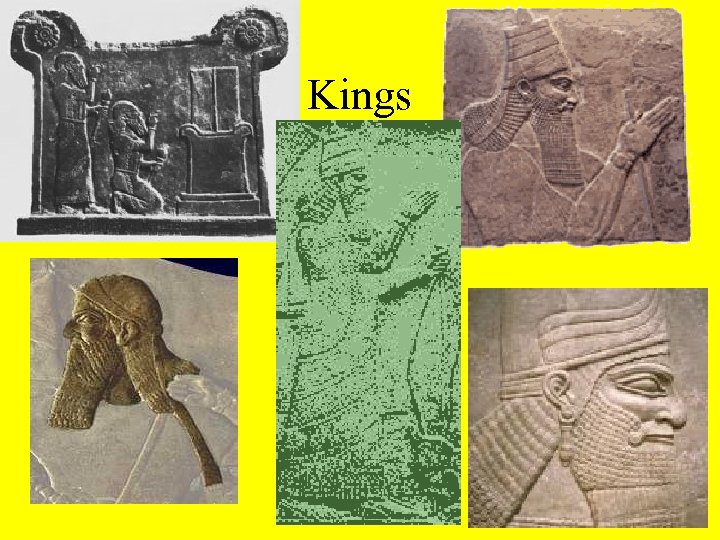 Kings
Kings