 Скачать презентацию The Art of Business In the Footsteps of
88f9be53ccf839b52713afad59127e14.ppt
- Количество слайдов: 183



The Art of Business In the Footsteps of Giants Raymond T. Yeh, Ph. D with Stephanie H. Yeh
Prologue n The word business defined by Chinese character script, Sheng Yi, translates into “the meaning of life. ” n The Art of Business is the author’s exploration into modern business practices to discover how the wisdom of Sun Tzu’s, The Art of War, transcends antiquity. n Thirty leading companies are evaluated in relationship to the five Arts of War; Possibility, Timing, Leverage, Mastery and Leadership. Copyright © 2006 Zero Time Publishing The Art of Business: In the Footsteps of Giants
Art of Possibility Tao Dynamic flowing force described as the moral purpose or vital force that defines existence. Expressions of Tao are the Yin &Yang or light and dark where there is not one without the other. The Tao Experience The Yin Yang Formula One More Piece of the Puzzle Copyright © 2006 Zero Time Publishing The Art of Business: In the Footsteps of Giants
Tao n Holistic – The whole is always there. n Dynamic – The whole is constantly changing. n Inclusive – The whole is inclusive of Yin and Yang within one another. n Harmonious – The whole is balances with the ebb and flow of nature. Copyright © 2006 Zero Time Publishing The Art of Business: In the Footsteps of Giants
The Tao Experience n Vision – What is our dream? n Purpose – How do we fulfill our shared vision? n Values – What do we stand for and how do we behave ethically? Copyright © 2006 Zero Time Publishing The Art of Business: In the Footsteps of Giants
The Yin Yang Formula n Yang – Freedom and empowerment leads to accountability and investment in the organization. n Yin – Accountability and discipline innate in having freedom. Copyright © 2006 Zero Time Publishing The Art of Business: In the Footsteps of Giants
Fueling the Winning Formula n Trust n Each person in the organization trusts that the organization will take care of them through job security, bonuses and employee benefits, that they trust the VPVs are strong and worthy. n The organization trusts that its employees believe the VPVs are strong and worthy and will do their part to achieve them. Copyright © 2006 Zero Time Publishing The Art of Business: In the Footsteps of Giants
One More Piece of the Puzzle n The Tao begins with the dreamers. n The dreamers often create VPVs as a way of communicating their dreams. n These visionaries have an irresistible drive to create a freer more dignified world. Copyright © 2006 Zero Time Publishing The Art of Business: In the Footsteps of Giants
Medtronic Restoring People to Full Life First Success Desperate Days Back To the Garage To The Letter What Tomorrow Brings Copyright © 2006 Zero Time Publishing The Art of Business: In the Footsteps of Giants
Restoring People to Full Life n The word Medtronic is the combination of “Medicine” and “Electronic. ” n 1949 – Medtronic starts with a dream of using tiny electronic devises, either implanted or attached to the body, to reduce the debilitating effects of disease. n Medtronic currently employs approximately 30, 000 people worldwide. Copyright © 2006 Zero Time Publishing The Art of Business: In the Footsteps of Giants
First Success n Bakken chose to focus Medtronic products on those of the highest quality and reliability. n 1957 – Medtronic produces the first battery powered pacemaker. n Medtronic’s pacemaker is used by 300, 000 new patients each year. Copyright © 2006 Zero Time Publishing The Art of Business: In the Footsteps of Giants
Desperate Days n 1960 – Medtronic runs out of money. n The Tao of Medtronic (extracted from its Mission Statement): ■ Vision – To contribute to the restoration of people toward full life. ■ Purpose – To direct growth in the areas of biomedical engineering where the company displays maximum strength and ability. Copyright © 2006 Zero Time Publishing The Art of Business: In the Footsteps of Giants
Desperate Days ■ Values – The greatest possible quality and reliability. § Being the unsurpassed standard of comparison. § Being recognized as a company of dedication, honesty, integrity and service. § Making a fair profit. § Recognizing the personal worth of employees. § Maintaining good citizenship. Copyright © 2006 Zero Time Publishing The Art of Business: In the Footsteps of Giants
Back To the Garage n How do you keep a corporation of 30, 000 employees inspired and connected to the original vision? ■ With Rite’s of Passage. ■ Medallion ceremonies. ■ Indoctrination of Medtronic’s Tao. ■ Testimonials by patients who have been “restored to full life. ” Copyright © 2006 Zero Time Publishing The Art of Business: In the Footsteps of Giants
To The Letter n Employees are required to sign a code of conduct agreement each year. n Violation of this code means grounds for termination. n Medtronic merges only with other companies that share the same values. n Medtronic’s success hinges on the ability to focus on their vision. Copyright © 2006 Zero Time Publishing The Art of Business: In the Footsteps of Giants
What Tomorrow Brings n Continued budget commitment of 10% of revenue to R&D. n $50, 000 grant per project for developing research projects from current employees. n Currently, every seven seconds someone is being helped by one of Medtronic’s products. n Medtronic’s long term goal is to reduce every seven seconds to every second. Copyright © 2006 Zero Time Publishing The Art of Business: In the Footsteps of Giants
Grameen Bank Micro Lending for the Poor A Basic Human Right How it Works Sending Poverty to the Museum Copyright © 2006 Zero Time Publishing The Art of Business: In the Footsteps of Giants
Micro lending for the poor n Lifting the poor out of the perpetual cycle of poverty. n These entrepreneurs were considered unworthy by traditional banks. n Grameen (Village) Bank was started in 1974 by an Economics Professor when he loaned 62 cents apiece to 42 street beggars. Copyright © 2006 Zero Time Publishing The Art of Business: In the Footsteps of Giants
A Basic Human Right n Credit is a basic human right and the poor are as trustworthy as the rich. n “The Tao of Grameen Bank” ■ Vision – A poverty-free society ■ Purpose – Extending credit as a human right ■ Values – Discipline Unity Courage Hard Work Copyright © 2006 Zero Time Publishing The Art of Business: In the Footsteps of Giants
How it Works n Grameen will not cancel loans because of tragedies but will restructure them, thereby instilling self-reliance and confidence. n Bank members are required to form investment groups of 5 borrowers. n All five are in default if one borrower defaults. n Each member is required to deposit 5% of their loan into a group fund. Copyright © 2006 Zero Time Publishing The Art of Business: In the Footsteps of Giants
How it Works n Groups must become members of a “center” comprising 8 groups that can pool their resources collectively. n Sustaining culture is done with celebrations. Copyright © 2006 Zero Time Publishing The Art of Business: In the Footsteps of Giants
Sending Poverty to the Museum n Professor Yunus’ vision is to create a povertyfree society by 2050. n The belief is that poverty does not belong to civilized human society, it belongs to museums. Copyright © 2006 Zero Time Publishing The Art of Business: In the Footsteps of Giants
Southwest Airlines Being Whole The Crusaders The Daily Dance Control? What Control? From the Beginning Yin and Yang Copyright © 2006 Zero Time Publishing The Art of Business: In the Footsteps of Giants
Being Whole n Most dedicated employees. n Highest customer satisfaction. n Most profitable. n Why the “South West Effect” is possible: § A clear and simple purpose of permanently low fares that increase revenue and profitability. § Total job security, profitability and affordable fares. Copyright © 2006 Zero Time Publishing The Art of Business: In the Footsteps of Giants
The Crusaders n Herb Kelleher fought for 4 years against 15 corporate lawyers to get his vision, SWA, off the ground. n Every employee is in the business of empowering people to fly. n The Mission of Southwest Airlines: Dedication to the highest quality of Customer Service delivered with a sense of warmth, friendliness, individual pride and Company Spirit. Copyright © 2006 Zero Time Publishing The Art of Business: In the Footsteps of Giants
The Crusaders n Creativity and innovation are encouraged. n Clear purpose fosters a sense of pride and ownership. Copyright © 2006 Zero Time Publishing The Art of Business: In the Footsteps of Giants
The Daily Dance n SWA won the Triple Crown Award 5 years in a row for: ■ Fewest delays ■ Fewest complaints and ■ Fewest incidents of mishandled luggage. n On-time performance depends on the coordination of 11 different functional areas. n This coordinated effort happens 3, 000 times per day. Copyright © 2006 Zero Time Publishing The Art of Business: In the Footsteps of Giants
Control? What Control? n Herb Kelleher: “What control? Don’t have control, don’t want control, if we had control we’d screw it up, you know? ” n The Tao of Southwest Airlines: ■ Vision – Liberating people to fly-democratizing the skies. ■ Purpose – Total job security, profitability and affordable fares. ■ Values – Integrity Trust Copyright © 2006 Zero Time Publishing The Art of Business: In the Footsteps of Giants
Control? What Control? Mutual Respect Inclusion Openness Excellence Courage Frugality Initiative Fun Copyright © 2006 Zero Time Publishing The Art of Business: In the Footsteps of Giants
Control? What Control? n The result of SWA values: ■ Encourages employees to take initiative and be accountable. ■ Employees have an exceptional longevity with SWA. ■ Allows SWA to have a substantial cash balance. ■ Creates customer loyalty. Copyright © 2006 Zero Time Publishing The Art of Business: In the Footsteps of Giants
From the Beginning n The spirit of SWA’s employees is the hardest thing to copy or create. n The culture is so strong at SWA that peer pressure becomes a significant training influence. n From the early days, “A Day in the Field” was instituted where executive officers spend the day working side by side with other employees. Copyright © 2006 Zero Time Publishing The Art of Business: In the Footsteps of Giants
Yin and Yang n Freedom and accountability fueled by trust; a rare and precious asset. n Employees are free to arrange schedules within their work groups. n Employees have freedom to take action to serve and assist customers and co-workers. Copyright © 2006 Zero Time Publishing The Art of Business: In the Footsteps of Giants
Yin and Yang n “Culture Committee: ” ■ Reviews current strategic decisions for conformity to values. ■ Communicates values to the ever growing family of SWA. n Yearly Award Banquets celebrate those employees who have extraordinarily contributed to SWA’s spirit. Copyright © 2006 Zero Time Publishing The Art of Business: In the Footsteps of Giants
Possibility – Sustaining the Dream n For true dreamers nothing is impossible: ■ “. . . that credit is a human right, ■ that Frankenstein could be real, ■ that the masses should be liberated to fly? ” n The visionaries have developed and nurtured a culture to manifest their dream by organizing their institution around its soul. ■ Vision – A shared vision provides a collective identity which will move an organization ahead as a whole. Copyright © 2006 Zero Time Publishing The Art of Business: In the Footsteps of Giants
Possibility – Sustaining the Dream ■ Purpose – Guides people in the organization to move in synchrony towards its vision. ■ Values – Form the concrete ethical guidelines for employees and officers. n To balance the equation, accountability and responsibility are cultivated. n Institutionalizing the dream: ■ Celebrate – To remember their higher purpose and daily actions that have changed the world. Copyright © 2006 Zero Time Publishing The Art of Business: In the Footsteps of Giants
Possibility – Sustaining the Dream ■ Dignity – Reinvented every day through empowerment, inclusion and personal recognition. ■ Cultivate Culture – Chief Culture Officers will be prevalent in future organizations; corporate culture is where the dream and the higher purpose will continue to flourish. n The Tao of truly great companies are expressions of freedom and liberation. Copyright © 2006 Zero Time Publishing The Art of Business: In the Footsteps of Giants
Art of Timing “All of us, …, have a cubic centimeter of chance… from time to time…The…warrior…is to be alert, deliberately waiting, so…he has the necessary speed, the prowess, to pick it up. ” Carlos Castaneda Creating the Cubic Centimeter of Chance “Think Backward While Moving Forward. ” Three Approaches to Interact With the Future Copyright © 2006 Zero Time Publishing The Art of Business: In the Footsteps of Giants
Creating the Cubic Centimeter of Chance n Create a strategic road map. n Letting go of long held views to create lasting values. n Clearly defining your competitive space to keep the company on a focused path. Copyright © 2006 Zero Time Publishing The Art of Business: In the Footsteps of Giants
“Think Backward While Moving Forward” n Know the end game vision of the company. n Establish incremental goals to empower companies to co-create their future. n Define the competitive space to allow dedication of resources, attention and agile speed in action. Copyright © 2006 Zero Time Publishing The Art of Business: In the Footsteps of Giants
Three Approaches to Interact With the Future n Predict and Respond n Predict and Influence n Co-Create Copyright © 2006 Zero Time Publishing The Art of Business: In the Footsteps of Giants
Royal Dutch / Shell n Using scenario analysis to create future memories Shell was aware of and prepared for the 1973 oil crisis. n Predict and Respond. n Not interfering with the direction of the future Copyright © 2006 Zero Time Publishing The Art of Business: In the Footsteps of Giants
Royal Dutch / Shell Skirmishing with the future Shell’s Scenarios Experience South Africa’s Flight of the Flamingos Co-Creating the Future Copyright © 2006 Zero Time Publishing The Art of Business: In the Footsteps of Giants
Skirmishing With the Future n Scenario planning forces decision makers to create stories about the future that weave multiple factors into an understandable format. n Shell focuses on collaboration and synthesis rather than deep analysis: ■ Uncover the key frames of reference. ■ Identify the key drivers of change. ■ Use workshops to gather, share, test and link ideas. Copyright © 2006 Zero Time Publishing The Art of Business: In the Footsteps of Giants
Skirmishing With the Future ■ Craft the scenarios. ■ Test and qualify the scenarios. Copyright © 2006 Zero Time Publishing The Art of Business: In the Footsteps of Giants
Shell’s Scenarios Experience n Helped the company grow and change in the oil crises of 1973. n Shell uses predict and respond scenario planning for both global and focused stories throughout the company. n Shell considers scenario planning a cornerstone of their decision making process. Copyright © 2006 Zero Time Publishing The Art of Business: In the Footsteps of Giants
South Africa’s Flight of the Flamingos n 1994 – Using Shells’ scenario planning method, guided by Adam Kahane, the Mont Fleur forum with 22 members came up with four scenarios: ■ Ostrich ■ Lame Duck ■ Icarus ■ Flight of the Flamingos Copyright © 2006 Zero Time Publishing The Art of Business: In the Footsteps of Giants
Co-Creating the Future n Mont Fleur participants were not observers trying to adapt to the future, they were active participants trying to influence the future. n Co-creating the future takes passionate, active participation with an inspiration to serve a higher purpose. Copyright © 2006 Zero Time Publishing The Art of Business: In the Footsteps of Giants
Intel – Leaping into the Future with Moore’s Law n Noyce co-invented the integrated circuit. n Moore developed Moore’s Law, a guiding force to keep pace with industry. n Grove, a scientist turned management guru, lead Intel to the top. n Moore’s Law, Intel’s end game and vision, states that the number of transistors on a chip doubles every 18 -24 months. Copyright © 2006 Zero Time Publishing The Art of Business: In the Footsteps of Giants
Intel – Leaping into the Future with Moore’s Law Defining the Competitive Space Seizing Opportunities Strategic Inflection Point Intel’s Fresh Fruit Business Influencing the Future When Moore’s Law Hits the Limit Copyright © 2006 Zero Time Publishing The Art of Business: In the Footsteps of Giants
Defining the Competitive Space n 3 rd Try: Using silicon gate technology the chip was not too difficult to produce and not so easy as to invite early competition. n Unappreciated sleeper product, EPROM, generated a major portion of profit for 10 years. n When market prices dropped 90% in 9 months Intel moved into microprocessors. Copyright © 2006 Zero Time Publishing The Art of Business: In the Footsteps of Giants
Seizing Opportunities n 1996 – Intel’s Ted Hoff created the first “computer on a chip. ” n With the introduction of the 386 chip Intel second sourced nothing, which secured its place on top of the heap. n Controlling price and software of the 386 chip, Intel assumed the dominant position in the industry. Copyright © 2006 Zero Time Publishing The Art of Business: In the Footsteps of Giants
Strategic Inflection Point n Instead of being fired by the board, Grove and Moore changed the course of Intel by moving out of the memory business. n This was a strategic inflection point; change the course or disappear. Copyright © 2006 Zero Time Publishing The Art of Business: In the Footsteps of Giants
Intel’s Fresh Fruit Business n Moore’s Law dictates capturing high volume early in a chips life. n If high volume is not captured inventory rots. n Industry shared expectations have increased productivity and demand for semiconductor products. Copyright © 2006 Zero Time Publishing The Art of Business: In the Footsteps of Giants
Influencing the Future n To introduce new, unknown technology Intel slashes prices. n Marketing to end users increased Intel’s market share. n Intel began to move information to computer super stores through Retail Mangers that educated key people in these stores. n Field Application Engineers (FAE) provide support to microprocessor-based product manufacturers. n Key Management Principles: Copyright © 2006 Zero Time Publishing The Art of Business: In the Footsteps of Giants
Influencing the Future ■ Invest in R&D – Budget remains steady and stable. ■ Use Minimum Information – Speed and time to market not full understanding. ■ Outsource Equipment for Speed – Keeps Intel focused on the cutting edge. ■ Take Risks – Stay ahead of obsolescence. ■ Develop a Problem Solving Culture – Questions and applied responsibility. ■ Strategic and Operational Planning – Synchronizes Intel’s vision and goals. Copyright © 2006 Zero Time Publishing The Art of Business: In the Footsteps of Giants
When Moore’s Law Hits the Limit n Moore, with a smile, acknowledges this limit. n Where will Intel take its technology when Moore’s Law hits the Limit? Copyright © 2006 Zero Time Publishing The Art of Business: In the Footsteps of Giants
Southwest Airlines – Strike With the Force and Alacrity of a Puma n Readiness with empowered, dedicated employees not long term planning n SWA sticks to its plan: short haul, point to point, frequent flights, rock bottom fares, job security and profit n At the ready, SWA is able to “strike with the force and alacrity of a puma” Copyright © 2006 Zero Time Publishing The Art of Business: In the Footsteps of Giants
Southwest Airlines – Strike With the Force and Alacrity of a Puma Skirmishing with the Future Co-creating a Better Future Copyright © 2006 Zero Time Publishing The Art of Business: In the Footsteps of Giants
Skirmishing with the Future n What are some scenarios of the future? ■ Plans are not implemented but ready responses to keep SWA from being blindsided. ■ Kelleher advocates overlaying past events on the present to see where similarities might be going. ■ With this strategy he leads SWA to many anchor points instead of just one. n What are our competitors about to do? Copyright © 2006 Zero Time Publishing The Art of Business: In the Footsteps of Giants
Skirmishing with the Future ■ Kelleher focuses on outer conditions of market. ■ Constantly asking, “What are our competitors doing, thinking about doing? ” n How can we distract our competitors from what we’re doing? ■ Lots of activity to cover actual intention. ■ Making moves that predict competitors counter moves. Copyright © 2006 Zero Time Publishing The Art of Business: In the Footsteps of Giants
Skirmishing with the Future ■ Kelleher banks on his “unpredictableness. ” n Does an opportunity fit the SWA strategy? ■ SWA considers how the new city-pair will fit into the existing network of flights. ■ Using scenarios and precise formulas, refined synergistic levels of planning, SWA can predict within 5% what traffic will be with given fare and frequency rates. Copyright © 2006 Zero Time Publishing The Art of Business: In the Footsteps of Giants
Skirmishing with the Future n Do the economy and the culture support a growth opportunity? ■ Kelleher limits the amount of growth by watching the community culture. ■ When expanding SWA moves swiftly with the attitude that, “If it doesn’t work, you can always stop it. ” Copyright © 2006 Zero Time Publishing The Art of Business: In the Footsteps of Giants
Co-creating a Better Future n SWA stands poised to move quickly. n Employees empower SWA to remain lean, speedy and agile. n SWA co-creates a future that allows people more freedom to fly, employees with job security and profitability. Copyright © 2006 Zero Time Publishing The Art of Business: In the Footsteps of Giants
Mirror, Mirror on the Wall – The Value of Time n When Shell looks into the mirror, it sees a myriad of possibilities but rarely seeks to change or influence the world itself. n When Intel looks into the mirror, it sees the pioneering role it plays in the semiconductor industry, a trailblazer. n When SWA looks into the mirror, it sees itself creating freedom for people to fly, relying on agility, wit and the spirit of SWA employees Copyright © 2006 Zero Time Publishing The Art of Business: In the Footsteps of Giants
Mirror, Mirror on the Wall – The Value of Time to respond with speed and innovation to any barrier or opportunity. n What can leaders learn from Shell, Intel and SWA? ■ Start with a roadmap. ■ A roadmap requires leaders to move with fluid grace along the time scale, leaping nimbly between visioning and implementation. ■ Following the roadmap will lead them where the action will be. Copyright © 2006 Zero Time Publishing The Art of Business: In the Footsteps of Giants
Art of Leverage n Leveraging predictable responses. n Leveraging pride. n Leveraging resources and/or internal strengths. n Avoid un-leveraged frontal assaults. Copyright © 2006 Zero Time Publishing The Art of Business: In the Footsteps of Giants
Art of Leverage Points of Leverage The Process of Leverage The Market Inflection Point A Journey into the Land of Leverage Copyright © 2006 Zero Time Publishing The Art of Business: In the Footsteps of Giants
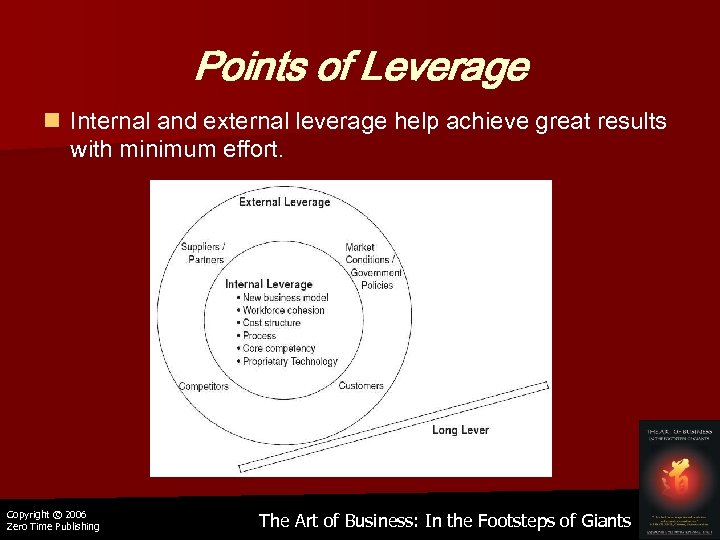
Points of Leverage n Internal and external leverage help achieve great results with minimum effort. Copyright © 2006 Zero Time Publishing The Art of Business: In the Footsteps of Giants
The Process of Leverage n Identify resources needed in environment without prejudice as to where they are. n Understand predictable patterns that affect resources. n Create a space to channel patterns to your advantage. Copyright © 2006 Zero Time Publishing The Art of Business: In the Footsteps of Giants
The Market Inflection Point n Value Centered Model – People are basically good and will do the right thing. n Innovative Market Strategy – Equal competition with a computer and internet connection. n Product and Process Innovation – By connecting 30 million buyers and sellers, e. Bay has increased the social utility of the goods and services offered. Copyright © 2006 Zero Time Publishing The Art of Business: In the Footsteps of Giants

The Market Inflection Point n Cost and Delivery Efficiency – e. Bay is a virtual commercial crossroad and large community. It leaves the selling up to individuals. n In unison these categories spur new market growth, at the same time lowering the price of services and products dramatically. Copyright © 2006 Zero Time Publishing The Art of Business: In the Footsteps of Giants
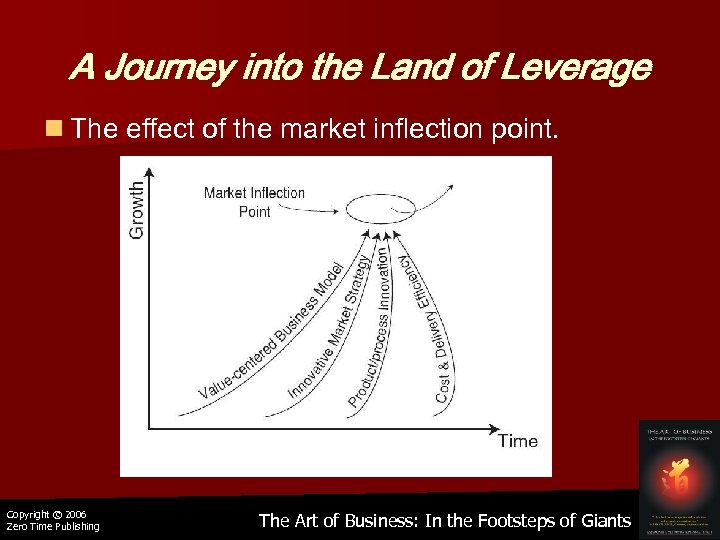
A Journey into the Land of Leverage n The effect of the market inflection point. Copyright © 2006 Zero Time Publishing The Art of Business: In the Footsteps of Giants
Wal-Mart – An Agent for Customer n Sam Walton spent much of his early years spending time in competitors stores. n The Wal-Mart greeters were originally hired to cut down on shop lifting; they were kept because they also enhanced the customer service image. Copyright © 2006 Zero Time Publishing The Art of Business: In the Footsteps of Giants
Wal-Mart – An Agent for Customer In the Beginning: Small Town Strategy An Agent for Customer Merchandise Driven Cost and Delivery Efficiency The Wal-Mart Effect Copyright © 2006 Zero Time Publishing The Art of Business: In the Footsteps of Giants
In the Beginning: Small Town Strategy n Walton’s “think small” strategy: ■ One store at a time. ■ Ear to the ground. ■ Push responsibility/authority down. ■ Force ideas to bubble up. ■ Fight bureaucracy. Copyright © 2006 Zero Time Publishing The Art of Business: In the Footsteps of Giants
An Agent for Customer n Employees are encouraged to negotiate on behalf of the customer. n Wal-Mart pioneered the idea of “a store within a store. ” n Wal-Mart’s guiding principle is “Always low prices. ” Copyright © 2006 Zero Time Publishing The Art of Business: In the Footsteps of Giants
Merchandise Driven n Merchandising managers are put in charge of the stores “within the store. ” n “…senior management strikes a fine balance between autonomy and control. ” Copyright © 2006 Zero Time Publishing The Art of Business: In the Footsteps of Giants

Cost and Delivery Efficiency n Frugality says if expenses are controlled lots of different mistakes are affordable. n Wal-Mart’s distribution system is considered the best in the industry: ■ Hardware – Stocking > 80, 000 items with a turnaround of < 2 days time from the originating order to receiving the order at origin. ■ Process – Suppliers become partners achieving efficiency and savings. Copyright © 2006 Zero Time Publishing The Art of Business: In the Footsteps of Giants
Cost and Delivery Efficiency ■ Information Technology - Wal-Mart manages information not inventory. ■ People – Dedicated employees continue to make the difference for Wal-Mart. Copyright © 2006 Zero Time Publishing The Art of Business: In the Footsteps of Giants
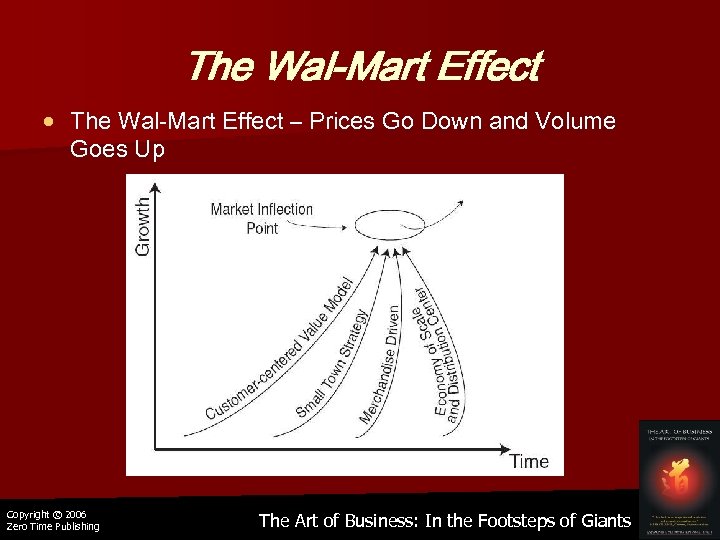
The Wal-Mart Effect – Prices Go Down and Volume Goes Up Copyright © 2006 Zero Time Publishing The Art of Business: In the Footsteps of Giants
Dell Inc. – The Direct Connection n Bypassing middlemen and recruiting “high potential” customers. n Using the Direct Model (DM), Dell captures 40% of the world market share. Copyright © 2006 Zero Time Publishing The Art of Business: In the Footsteps of Giants
Dell Inc. – The Direct Connection The Direct Model Build to Order (BTO) Strategy Market Strategy Management Principles at Dell Drive for Customer Value Exchange Inventory for Information Copyright © 2006 Zero Time Publishing Focus on Velocity, Volume, and Value Embrace Constant Change Understand the Criticality of Coordination Virtual Integration The Dell Effect Next Step? The Art of Business: In the Footsteps of Giants
The Direct Model n Selling products directly to end user. n Extending the reach of its DM, Dell utilized the Internet to become legendary. Copyright © 2006 Zero Time Publishing The Art of Business: In the Footsteps of Giants
Build to Order (BTO) Strategy n Dell’s BTO strategy is based on pull vs push. n Market pull is based on demand. n Dell strives to quickly respond to market conditions, competitor changes and changing customer preferences. n Dell’s customers are mostly repeat and require less support. Copyright © 2006 Zero Time Publishing The Art of Business: In the Footsteps of Giants
Market Strategy n Segmentation ■ Dell creates complete business units around different customer types. ■ Newly emerging customer groups are quickly recognized and catered to. n Technology Standardization ■ Identifies markets whose technology is becoming standardized. ■ Using its BTO technology, Dell strikes before commoditization occurs. Copyright © 2006 Zero Time Publishing The Art of Business: In the Footsteps of Giants
Management Principles at Dell n Drive for customer value. n Exchange inventory for information. n Focus on velocity, value and volume. n Embrace constant change. n Understand the criticality of coordination. Copyright © 2006 Zero Time Publishing The Art of Business: In the Footsteps of Giants
Drive for Customer Value n Three key metrics of improvement to increase 15% during every 12 month period: ■ Order and Delivery – Orders shipped to customers by targeted date. ■ Installation and Operation – Customer calls to tech support that require a part dispatched within 30 days. ■ Service – Resolved on-site service calls within the target time frame. Copyright © 2006 Zero Time Publishing The Art of Business: In the Footsteps of Giants
Exchange Inventory for Information n Information is easily stored and kept. n Information is easily moved and discarded. n Information mistakes are easier to correct than inventory mistakes. Copyright © 2006 Zero Time Publishing The Art of Business: In the Footsteps of Giants
Focus on Velocity, Volume, and Value n Velocity – Responding quickly to changing requirements. n Volume – As velocity increases volume follows suit. n Value – Increased velocity and volume mean savings for customers while compression of time adds value for stockholders. Copyright © 2006 Zero Time Publishing The Art of Business: In the Footsteps of Giants
Embrace Constant Change n The only known constant is change. n Dell drives changes for greater control. n Dell sells “solutions not systems. ” Copyright © 2006 Zero Time Publishing The Art of Business: In the Footsteps of Giants
Understand the Criticality of Coordination n Empowerment is critical. n Aggressive communication. n Coordination keeps people from working against one another. Copyright © 2006 Zero Time Publishing The Art of Business: In the Footsteps of Giants
Virtual Integration n Ecological approach – all entities receive the same information. n Each entity has knowledge of their part of the information and acts accordingly. n Using the “ecological approach” Dell’s business model results in virtual integration, where the sharing of information across vertical integration creates blurred boundaries. Copyright © 2006 Zero Time Publishing The Art of Business: In the Footsteps of Giants
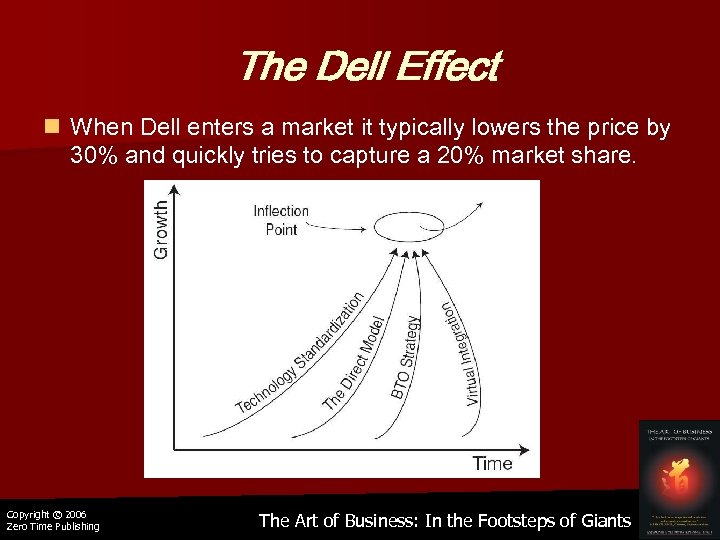
The Dell Effect n When Dell enters a market it typically lowers the price by 30% and quickly tries to capture a 20% market share. Copyright © 2006 Zero Time Publishing The Art of Business: In the Footsteps of Giants
Next Step? Revolutionizing the infrastructure of business models in major global companies? Copyright © 2006 Zero Time Publishing The Art of Business: In the Footsteps of Giants
Southwest Airlines – Think Small n Twin pillars of success are Kelleher’s concern for his people and SWA’s ability to survive. n The whole of Kelleher’s leverage philosophy is “Think small. ” Copyright © 2006 Zero Time Publishing The Art of Business: In the Footsteps of Giants
Southwest Airlines – Think Small A Value-Centered Culture Market Strategy Service Mentality A Company of Families Low Cost Structure and Speed Think Small The Southwest Effect Copyright © 2006 Zero Time Publishing The Art of Business: In the Footsteps of Giants
A Value-Centered Culture n The Power of Collective Identity n High Performance from Bridging Work and Family n Effectiveness of Principle-Based Relationships Copyright © 2006 Zero Time Publishing The Art of Business: In the Footsteps of Giants
Market Strategy n Filling in ■ SWA spends 75% on existing routes and 25% on new markets. ■ SWA fills in their existing framework before venturing new city-pair flights. n Unpredictability ■ Kelleher uses competitor’s predictable patterns in his favor. ■ SWA leverages Kelleher’s un-predictable nature. Copyright © 2006 Zero Time Publishing The Art of Business: In the Footsteps of Giants
Market Strategy n Patience ■ Expansion is limited by maintenance of its culture. ■ Consideration as to how new city-pair flights will fit into existing network. Copyright © 2006 Zero Time Publishing The Art of Business: In the Footsteps of Giants
Service Mentality n Two tangibles: More flights and lower fares. n One less tangible: Excellent service quality. n All departments are required to hire for the same qualities. Copyright © 2006 Zero Time Publishing The Art of Business: In the Footsteps of Giants
A Company of Families n Inclusion n SWA enjoys successful relationships with unions. n Proactively builds relationships with airports and Air Traffic Controllers. Copyright © 2006 Zero Time Publishing The Art of Business: In the Footsteps of Giants
Low Cost Structure and Speed n SWA believes it is imperative to have quick response capability. n SWA stays low cost with a strong balance sheet allowing it to do whatever happens to pop up. Copyright © 2006 Zero Time Publishing The Art of Business: In the Footsteps of Giants
Think Small n “Think small and act small, and we will get bigger. Think big and act big, and we will get smaller. ” n Courage is a necessary component of thinking small. Copyright © 2006 Zero Time Publishing The Art of Business: In the Footsteps of Giants
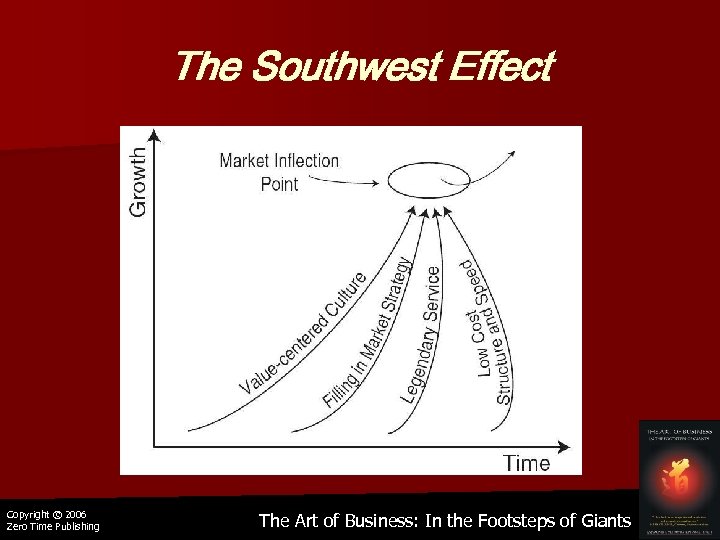
The Southwest Effect Copyright © 2006 Zero Time Publishing The Art of Business: In the Footsteps of Giants
Finding the Long Lever n Identify what resources you need and where they are in your environment, regardless where they are located. n Understand the predictable patterns in and around the players that affect the resources. n Create a channel or new space to redirect those resources for your own use. Copyright © 2006 Zero Time Publishing The Art of Business: In the Footsteps of Giants
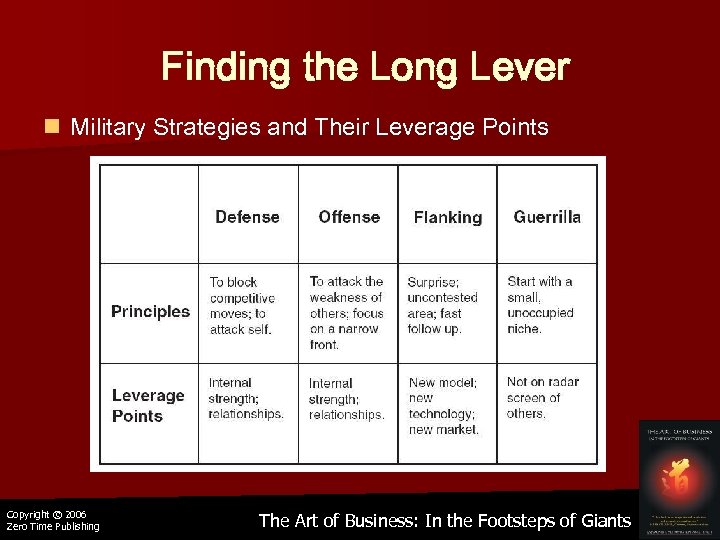
Finding the Long Lever n Military Strategies and Their Leverage Points Copyright © 2006 Zero Time Publishing The Art of Business: In the Footsteps of Giants
The Art of Mastery n Mastery comes from the heart. n Depth of character and fairness balanced by a competitive spirit. n Mastery, as defined by Lance Armstrong, is an inner passion of the heart and stillness of the mind. Copyright © 2006 Zero Time Publishing The Art of Business: In the Footsteps of Giants
The Art of Mastery A Metaphor Doing the Fosbury Flop Organizational Mastery Achieving Mastery The Journey to Mastery Copyright © 2006 Zero Time Publishing The Art of Business: In the Footsteps of Giants
A Metaphor n Level 1 – Sword and Man are One – Tremendous discipline and talent. n Level 2 – Sword in Mind, No Sword in Hand – Precision without apparent effort. n Level 3 – No Sword in Hand or Mind – Winning without fighting. Copyright © 2006 Zero Time Publishing The Art of Business: In the Footsteps of Giants
Doing the Fosbury Flop n Companies maintain awareness and balance in constant preparation. n Leading companies prepare themselves to see and leap to the next plateau. n Awareness and balance are the cornerstones of great leaps. Copyright © 2006 Zero Time Publishing The Art of Business: In the Footsteps of Giants
Organizational Mastery n Balance of infrastructure, learning capacity, knowledge, culture and spiritual component. n Drive, continually raising the bar, pushing the edge. n Growth should be balanced within each of the three axes. Copyright © 2006 Zero Time Publishing The Art of Business: In the Footsteps of Giants
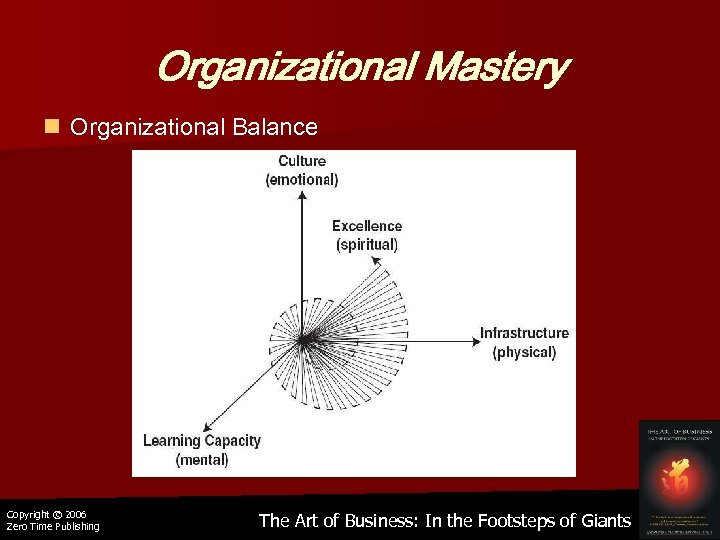
Organizational Mastery n Organizational Balance Copyright © 2006 Zero Time Publishing The Art of Business: In the Footsteps of Giants
Achieving Mastery n Different elements at different levels ■ Discipline and Talent – Build a strong foundation for excellence. ■ Passion – Bonded with passion and a strong covenant with the organization. ■ Wisdom – In a quest for internal perfection people gain wisdom to transcend from knowledge to intuition. ■ Surrendering to Tao – Synchronizes an organization with its destiny. Copyright © 2006 Zero Time Publishing The Art of Business: In the Footsteps of Giants
The Journey to Mastery requires balance and expansion among and between infrastructure, culture, learning capability and excellence. Copyright © 2006 Zero Time Publishing The Art of Business: In the Footsteps of Giants
Singapore – Thinking Schools, Learning Nation, and Gracious Society n Singapore’s per capita GNP went from US$320 to US$37, 000 in a 41 year span. n Singapore’s impossible journey was made possible by an indomitable spirit, a tremendous investment in its people and an unstoppable desire to be the best. Copyright © 2006 Zero Time Publishing The Art of Business: In the Footsteps of Giants
Singapore – Thinking Schools, Learning Nation, and Gracious Society From Bare Survival to International Presence Thinking Schools, Learning Nation Strive to Be the Best Adapt to Constant Change Towards A Gracious Society Singapore’s Path to Mastery Copyright © 2006 Zero Time Publishing The Art of Business: In the Footsteps of Giants
From Bare Survival to International Presence n Kuan Yew Lee built on the natural resource of Singapore’s people and skill. n When foothold was threatened, Singapore leapt to the next plateau. n This plateau focused on more capital-intensive industries. n Singapore’s next leap is to economizing knowledge. Copyright © 2006 Zero Time Publishing The Art of Business: In the Footsteps of Giants
Thinking Schools, Learning Nation n Singapore’s Education Service recognized education will take Singapore from poverty to prosperity. n In 1999 Singaporean students were ranked first in math and second in science. n Singapore recruits world-class talent from other countries. n Scholarships are offered to cultivate domestic talent. Copyright © 2006 Zero Time Publishing The Art of Business: In the Footsteps of Giants
Strive to Be the Best n Perfect blend of traditional Confucian meritocracy with western civil service is a key part of Singapore’s excellence. n Singapore has invested and saved more than any other nation. Copyright © 2006 Zero Time Publishing The Art of Business: In the Footsteps of Giants
Adapt to Constant Change n Assume the future will be different from the present. n PS 21 – Advocates a code of conduct with core values for customer-oriented service. n Government executives are assigned simultaneous roles in different agencies to “broaden their horizons. ” n Singapore’s key asset is its ability to adapt. Copyright © 2006 Zero Time Publishing The Art of Business: In the Footsteps of Giants
Towards A Gracious Society n Singapore is now adding the flavor and flair of the arts to their stable culture. n Singapore walks the edge with grace and style. Copyright © 2006 Zero Time Publishing The Art of Business: In the Footsteps of Giants
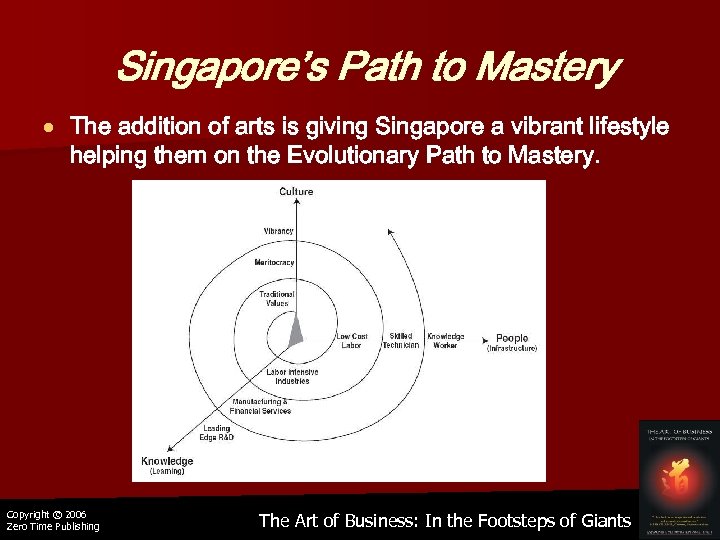
Singapore’s Path to Mastery The addition of arts is giving Singapore a vibrant lifestyle helping them on the Evolutionary Path to Mastery. Copyright © 2006 Zero Time Publishing The Art of Business: In the Footsteps of Giants
The UCLA Bruins – Be Quick but Don’t Hurry n John Wooden was more interested in his players’ life potential than winning. n Mastery meant the balance to play near peak performance no matter the circumstances. n Wooden’s definition of success was the key factor in the Bruins’ success. “Success is peace of mind as a result of knowing you have made the effort to do the best of which you are capable. ” n Emphasis on effort not winning. Copyright © 2006 Zero Time Publishing The Art of Business: In the Footsteps of Giants
The UCLA Bruins – Be Quick but Don’t Hurry Practicing Under Pressure Four Steps to Learning Balance, Balance On the Edge UCLA Bruin’s Masterful Journey Copyright © 2006 Zero Time Publishing The Art of Business: In the Footsteps of Giants
Practicing Under Pressure n Concentration on seemingly ridiculous details helped build a solid foundation. n Wooden applied heavy pressure on players during practice not at games. n He promoted consistent precision and accuracy. Copyright © 2006 Zero Time Publishing The Art of Business: In the Footsteps of Giants
Four Steps to Learning n Making mistakes is essential to learning. n The Four Laws of Learning written by Swen Nater, one of Wooden’s players, captures the essence of the coach’s approach. n These four laws are ■ Demonstration ■ Imitation ■ Correction ■ Repetition Copyright © 2006 Zero Time Publishing The Art of Business: In the Footsteps of Giants
Balance, Balance n Attention to each player’s physical, mental and emotional balance. n Focus on life skills such as precision, accountability and attention to detail. n Wooden practiced balance between personal and professional life, encouraging the same from the Bruins. Copyright © 2006 Zero Time Publishing The Art of Business: In the Footsteps of Giants
On the Edge n “Be quick but don’t hurry. ” Don’t cut corners. n Wooden wanted his players to be balanced on the edge. Copyright © 2006 Zero Time Publishing The Art of Business: In the Footsteps of Giants
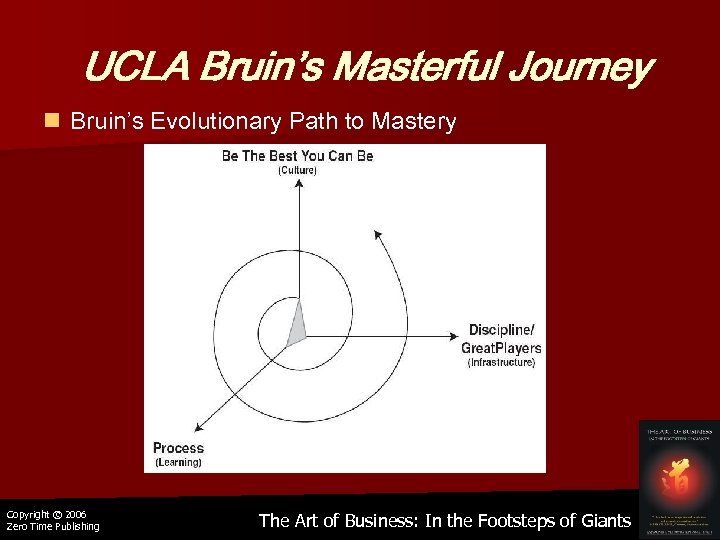
UCLA Bruin’s Masterful Journey n Bruin’s Evolutionary Path to Mastery Copyright © 2006 Zero Time Publishing The Art of Business: In the Footsteps of Giants
Southwest Airlines – Lean, Fit, and Ready n Ready, fire, aim! Otherwise too much time and energy is spent on aiming. n “Be a squirrel at all times. ” n Every customer and penny saved counts at SWA. n SWA has very little long term debt. Copyright © 2006 Zero Time Publishing The Art of Business: In the Footsteps of Giants
Southwest Airlines – Lean, Fit, and Ready Keep It Simple Old Fashioned Values Lean, Fit, and Ready The SWA Journey Copyright © 2006 Zero Time Publishing The Art of Business: In the Footsteps of Giants
Keep It Simple n Simplicity in processes including rules, type of airplanes, in flight extras and cleaning personnel. n Increased airtime – point-to-point vs hub-andspoke. n Simplified boarding process – no assigned seating. Copyright © 2006 Zero Time Publishing The Art of Business: In the Footsteps of Giants
Old Fashioned Values n The organization is accountable and responsible for their actions. n SWA looks for talented and ethical team players. n Environment is kept stable by not adding too many new workers at once. Copyright © 2006 Zero Time Publishing The Art of Business: In the Footsteps of Giants
Lean, Fit, and Ready n Frugality n Focus on simplicity n Trusting nature Copyright © 2006 Zero Time Publishing The Art of Business: In the Footsteps of Giants
The SWA Journey n SWA’s culture has always been the old fashioned value of “making a difference. ” n Burning the 750 -page manual has kept SWA’s processes simple and streamlined. n Infrastructure is maintained by hiring the right people and educating them on frugality. Copyright © 2006 Zero Time Publishing The Art of Business: In the Footsteps of Giants
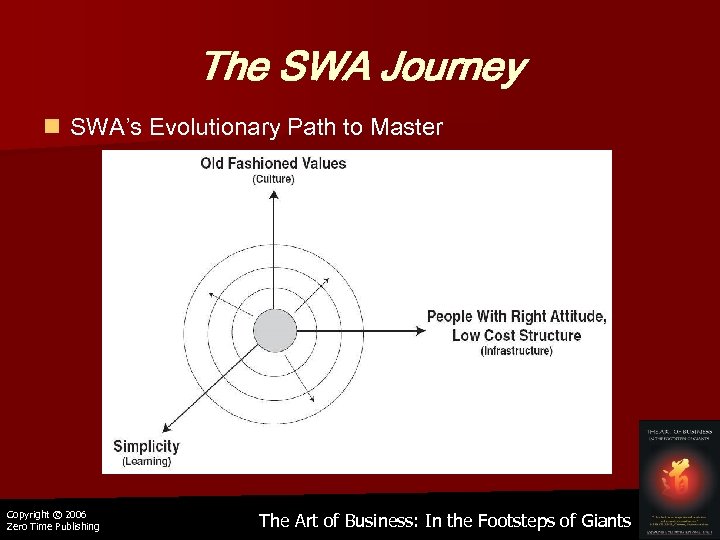
The SWA Journey n SWA’s Evolutionary Path to Master Copyright © 2006 Zero Time Publishing The Art of Business: In the Footsteps of Giants
A Master’s Journey n Mastery is a never-ending journey n Mastery is About the Journey n Tao Determines Level of Mastery n Masters Inspire with the Impossible n Keys to Mastery ■ Striving for inner achievement of excellence ■ With passionate vigilance ■ While maintaining balance. Copyright © 2006 Zero Time Publishing The Art of Business: In the Footsteps of Giants
A Master’s Journey n Ingredients of Mastery ■ Talent ■ Powerful cohesive passion ■ Surrender to a higher purpose Copyright © 2006 Zero Time Publishing The Art of Business: In the Footsteps of Giants
The Art of Leadership n Marks of a true leader ■ Releasing one’s ego. ■ Absolute commitment to succeed. ■ Alignment with a higher purpose. Copyright © 2006 Zero Time Publishing The Art of Business: In the Footsteps of Giants
The Art of Leadership What is Leadership? Walking With Leaders Copyright © 2006 Zero Time Publishing The Art of Business: In the Footsteps of Giants
What is Leadership? “Leadership is the process of attracting the right people and influencing them to collaborate together towards a common vision, with unwavering resolve, while, at the same time, liberating their potential to achieve the best possible results. ” Copyright © 2006 Zero Time Publishing The Art of Business: In the Footsteps of Giants
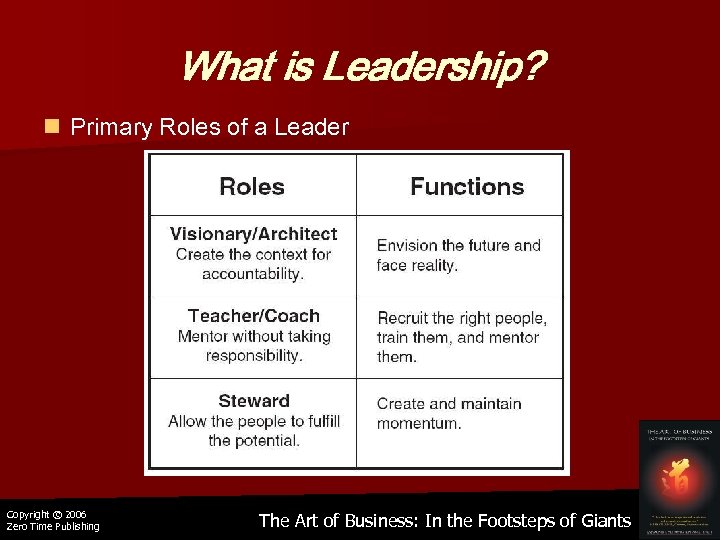
What is Leadership? n Primary Roles of a Leader Copyright © 2006 Zero Time Publishing The Art of Business: In the Footsteps of Giants
Walking With Leaders Walk with K. T. Li, John Wooden, Earl Bakken and Herb Kelleher to witness how they walk their talk. Copyright © 2006 Zero Time Publishing The Art of Business: In the Footsteps of Giants
John Wooden – Success is Peace of Mind “What impressed me most about [John Wooden] was his spirit, conviction, and his ability to totally be in the present, ” says Dr. Yeh. Copyright © 2006 Zero Time Publishing The Art of Business: In the Footsteps of Giants
John Wooden – Success is Peace of Mind Early Influence Be True to Yourself – The Pyramid of Success Be Quick But Don’t Hurry Learn Walk the Talk Let Go Copyright © 2006 Zero Time Publishing The Art of Business: In the Footsteps of Giants
Early Influence n Wooden’s mother taught him that “hard work and patience are the grist of life. ” n His father taught him “that a person’s true strength lies in his gentleness. ” n High school teacher, Lawrence Shidler, had his students write essays about success. Copyright © 2006 Zero Time Publishing The Art of Business: In the Footsteps of Giants
Be True to Yourself – The Pyramid of Success n Wooden’s definition of success is happiness and peace of mind. n Setting goals within your reach of being the best you can be. n Using an internal measuring stick vs an external measuring stick. Copyright © 2006 Zero Time Publishing The Art of Business: In the Footsteps of Giants
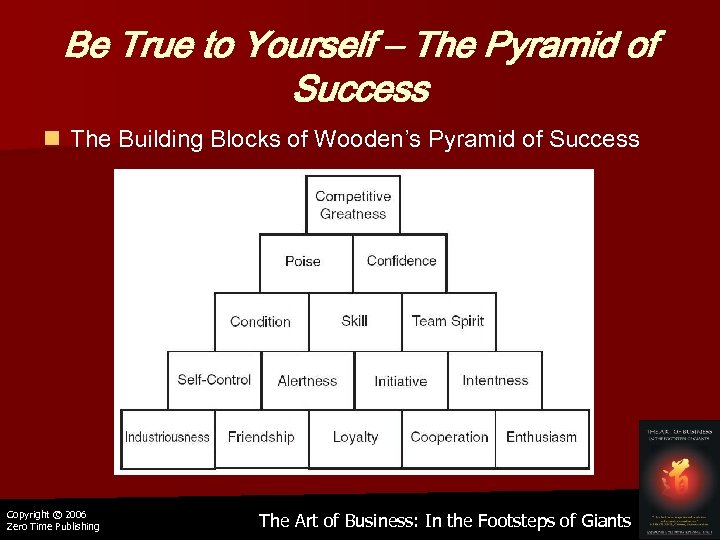
Be True to Yourself – The Pyramid of Success n The Building Blocks of Wooden’s Pyramid of Success Copyright © 2006 Zero Time Publishing The Art of Business: In the Footsteps of Giants
Be Quick But Don’t Hurry n Old adage; “Timing is everything. ” n Wooden’s twist on the old adage; “You don’t want activity without achievement. ” Copyright © 2006 Zero Time Publishing The Art of Business: In the Footsteps of Giants
Focus on What You Can Control n Points of focus for the Bruins ■ Effort ■ Teamwork ■ Inner achievement ■ Focusing on effort, not winning. Copyright © 2006 Zero Time Publishing The Art of Business: In the Footsteps of Giants
Learn n Wooden taught the Bruins to learn by listening and experimenting. n Making mistakes. n Listening to their mistakes. Copyright © 2006 Zero Time Publishing The Art of Business: In the Footsteps of Giants
Walk the Talk n Teach by being a living example. n Walking the talk by demonstration is a leader’s daily task. Copyright © 2006 Zero Time Publishing The Art of Business: In the Footsteps of Giants
Let Go n Have faith in your teaching – letting them go to be the best they can be. n His father’s creed internalized and summarized in Wooden’s own words: “I am an ordinary man who is true to his beliefs. ” Copyright © 2006 Zero Time Publishing The Art of Business: In the Footsteps of Giants
Earl Bakken – Ready, Fire, Aim North Hawaii Community Hospital (NHCH), dream come true for Bakken, brings Eastern and Western medicine together. Copyright © 2006 Zero Time Publishing The Art of Business: In the Footsteps of Giants
Earl Bakken – Ready, Fire, Aim Early Influence Dare to Dream Create a Roadmap for the Future Recruit Great People Customer First Ready, Fire, Aim! Copyright © 2006 Zero Time Publishing The Art of Business: In the Footsteps of Giants
Early Influence n Bakken’s mother supported and encouraged his interests. n Pastor, Dr. Christofer Hagen, told Bakken that he had a responsibility to help, not hurt, with his scientific career. Copyright © 2006 Zero Time Publishing The Art of Business: In the Footsteps of Giants
Dare to Dream n NHCH, displays the dream of becoming the most healing hospital in the world proudly, in a huge mural, on its entrance hall wall. n Always communicating the Mission of the company is important. n Exposing yourself to new ideas and technology all the time. Copyright © 2006 Zero Time Publishing The Art of Business: In the Footsteps of Giants
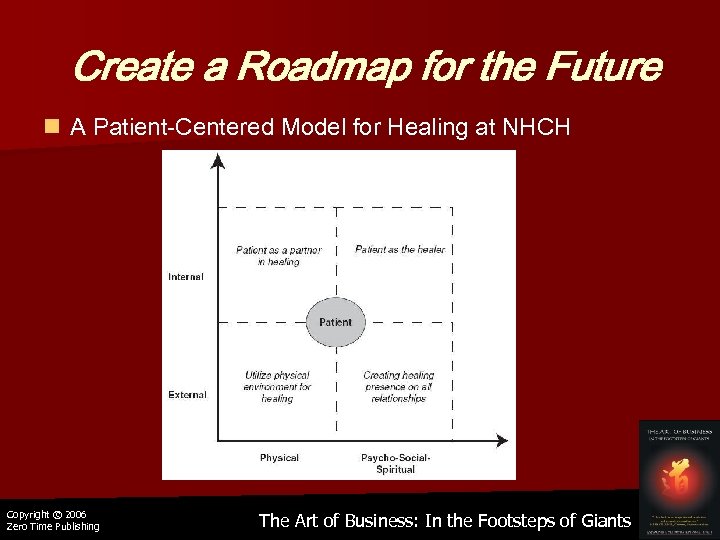
Create a Roadmap for the Future n A Patient-Centered Model for Healing at NHCH Copyright © 2006 Zero Time Publishing The Art of Business: In the Footsteps of Giants
Recruit Great People n People are the most important asset a company has. n Listening to them is one of the best management techniques. Copyright © 2006 Zero Time Publishing The Art of Business: In the Footsteps of Giants
Customer First Individual employees must allow themselves to touch and be touched by customers. Copyright © 2006 Zero Time Publishing The Art of Business: In the Footsteps of Giants
Ready, Fire, Aim! n Ready – VPNs n Fire – Action n Aim – Persistence Copyright © 2006 Zero Time Publishing The Art of Business: In the Footsteps of Giants
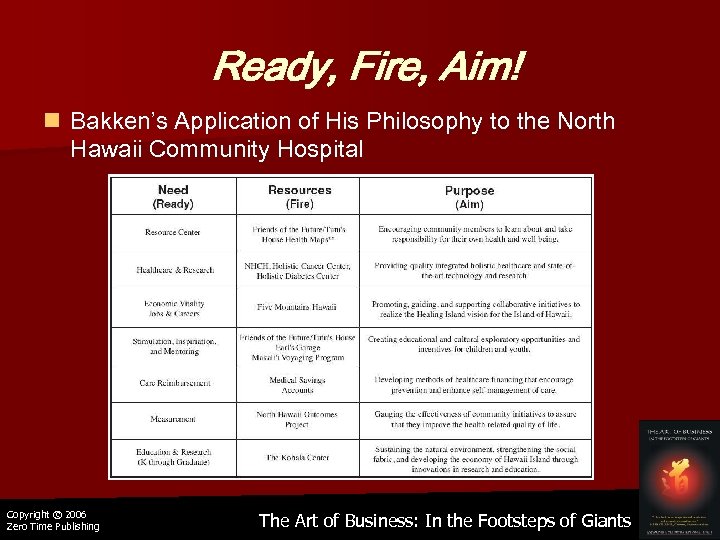
Ready, Fire, Aim! n Bakken’s Application of His Philosophy to the North Hawaii Community Hospital Copyright © 2006 Zero Time Publishing The Art of Business: In the Footsteps of Giants
Herb Kelleher – Making a Difference While Having Fun Kelleher is a legend in the worlds of aviation and business. Copyright © 2006 Zero Time Publishing The Art of Business: In the Footsteps of Giants
Herb Kelleher – Making a Difference While Having Fun Early Influence Confidence Humility Focus Unwavering Resolve to Succeed Be Quick But Stay Balanced Passion Make a Difference While Having Fun Walk the Talk Copyright © 2006 Zero Time Publishing The Art of Business: In the Footsteps of Giants
Early Influence n Kelleher was raised by his mother after losing three brothers and his father in World War II. n Kelleher is an American CEO without ego. n He has never been concerned about position or title. Copyright © 2006 Zero Time Publishing The Art of Business: In the Footsteps of Giants
Humility n Treat people without regard to their position and as sacred individuals. n Humility is another trademark of leadership. Copyright © 2006 Zero Time Publishing The Art of Business: In the Footsteps of Giants
Unwavering Resolve to Succeed n 1999 – Kelleher was diagnosed with cancer and “…kicked its ass. ” n When SWA’s Board was ready to close the doors, Kelleher offered to finance their legal expenses. Copyright © 2006 Zero Time Publishing The Art of Business: In the Footsteps of Giants
Passion n Bill Bradley vs James Street n Passion: Longevity vs 6 month deal. n Herb Kelleher – God made him a friendly guy. Copyright © 2006 Zero Time Publishing The Art of Business: In the Footsteps of Giants
Walk the Talk n Kelleher has been consistent in his adherence to extraordinary ethical conduct and fair dealing. n Herb Kelleher – WYSIWYG Copyright © 2006 Zero Time Publishing The Art of Business: In the Footsteps of Giants
Confidence n Kelleher has the confidence to support his workers. n Confidence to respond quickly and decisively to industry pressure. Copyright © 2006 Zero Time Publishing The Art of Business: In the Footsteps of Giants
Focus n Total ability to make people feel like they are the only one in the world. n Although flamboyant in marketing ploys, Kelleher’s communication is sincere and down to earth. Copyright © 2006 Zero Time Publishing The Art of Business: In the Footsteps of Giants
Be Quick But Stay Balanced Ready, fire and if you have to, re-aim! Copyright © 2006 Zero Time Publishing The Art of Business: In the Footsteps of Giants
Make a Difference While Having Fun n Being good to others and being happy about it. n Having your own needs meant by meeting the needs of others. n Kelleher’s exuberant personality has guided SWA to real enjoyment in “making a difference. ” Copyright © 2006 Zero Time Publishing The Art of Business: In the Footsteps of Giants
Essential Qualities of Leadership n Values – Leaders must walk their talk, period. “Ethical behavior is an expression of how a leader upholds his or her values. ” n Dream – Subjugate personal aims to the higher purpose of making a difference. “Passion is an expression of a leader’s dream. ” n Commitment – “Never give up, never give up. Never, never, ” Churchill. ■ Forbearance – Struggle through defeats without giving up. Copyright © 2006 Zero Time Publishing The Art of Business: In the Footsteps of Giants
Essential Qualities of Leadership ■ Self-discipline – Use self-discipline to create consistency in behavior. ■ Courage – The result of commitment, becomes infectious. “Courage is the ultimate expression of commitment. ” n Excellence – Let go of fear to achieve confidence in quest for excellence. “Confidence and a bias for action are expressions of excellence. ” Copyright © 2006 Zero Time Publishing The Art of Business: In the Footsteps of Giants
Essential Qualities of Leadership n Vulnerability – Trust people, the diversity in each and unique gift each one brings. “Empowerment is an expression of vulnerability. ” n Humility – Let go of ego to gain insight. “Service and poise are expressions of humility. ” n Peace of Mind – Inner joy, not forcing will on others and present in the moment. “Presence and joy are expressions of having peace of mind. ” Copyright © 2006 Zero Time Publishing The Art of Business: In the Footsteps of Giants
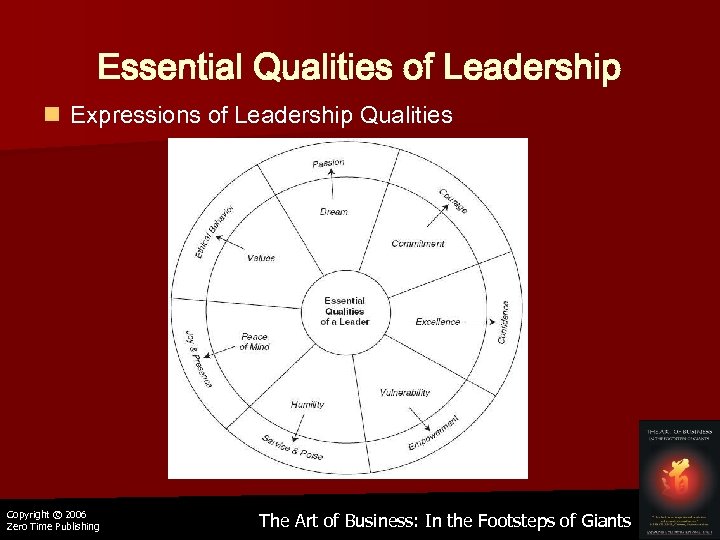
Essential Qualities of Leadership n Expressions of Leadership Qualities Copyright © 2006 Zero Time Publishing The Art of Business: In the Footsteps of Giants
In the Footsteps of Giants n Businesses are living organisms. n Flows are links between harmonious, mutually beneficial relationships and the always changing business environment. n The T-Strategy ■ Art of Possibility allows the organization to find its soul or Tao. ■ Art of Timing helps the organization stay aligned with its destiny. Copyright © 2006 Zero Time Publishing The Art of Business: In the Footsteps of Giants
In the Footsteps of Giants ■ Art of Leverage allows entry into specific chosen markets. ■ Art of Mastery maintains operational excellence. Copyright © 2006 Zero Time Publishing The Art of Business: In the Footsteps of Giants
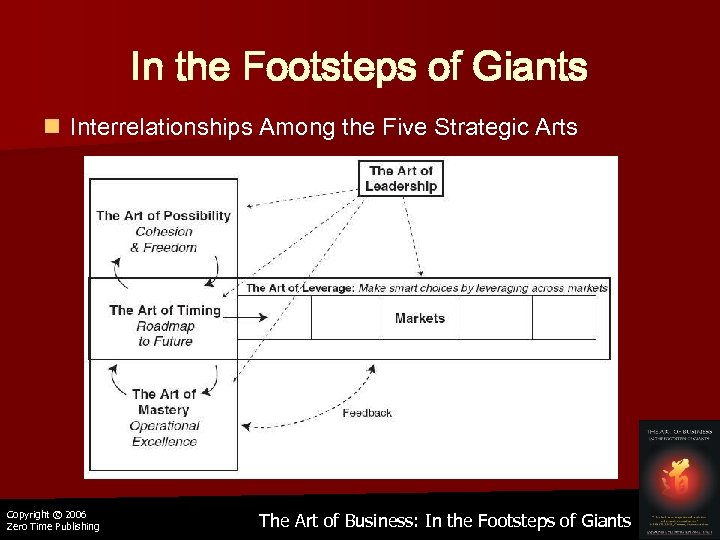
In the Footsteps of Giants n Interrelationships Among the Five Strategic Arts Copyright © 2006 Zero Time Publishing The Art of Business: In the Footsteps of Giants
In the Footsteps of Giants n To successfully practice these Arts one must look inside to understand know their purpose. n Armed with this knowledge, leaders can successfully use the five arts to: ■ Mobilize people around a shared future (Possibility). ■ Adapt rapidly to changing conditions (Timing, Leverage, Mastery). ■ Innovate constantly using the ingenuity of a company of leaders (Leadership). Copyright © 2006 Zero Time Publishing The Art of Business: In the Footsteps of Giants
Epilogue n To define your personal path ask yourself: ■ Am I true to my beliefs? ■ How committed am I to my path? ■ Do I see and utilize the gifts each person brings? ■ Do I have time to think whole? ■ Do I put my best effort into whatever I do? ■ Am I providing joy? ■ Am I making a difference? Copyright © 2006 Zero Time Publishing The Art of Business: In the Footsteps of Giants
Epilogue We leave you with this quote from Nelson Mandela’s inaugural speech: And as we let our light shine, We unconsciously give other people permission to do the same. As we are liberated from our own fear, Our presence automatically liberates others. ” Copyright © 2006 Zero Time Publishing The Art of Business: In the Footsteps of Giants
Скачать презентацию The Art of Business In the Footsteps of
88f9be53ccf839b52713afad59127e14.ppt