


 Скачать презентацию The Annie E Casey Foundation Juvenile Detention Alternatives
9c1742546ba992856df3cfc254dc3345.ppt
- Количество слайдов: 24
 The Annie E. Casey Foundation Juvenile Detention Alternatives Initiative JDAI Council of State Governments May 17, 2009 Rand Young, WA State JDAI Coordinator rand_young@msn. com 509 -624 -4924
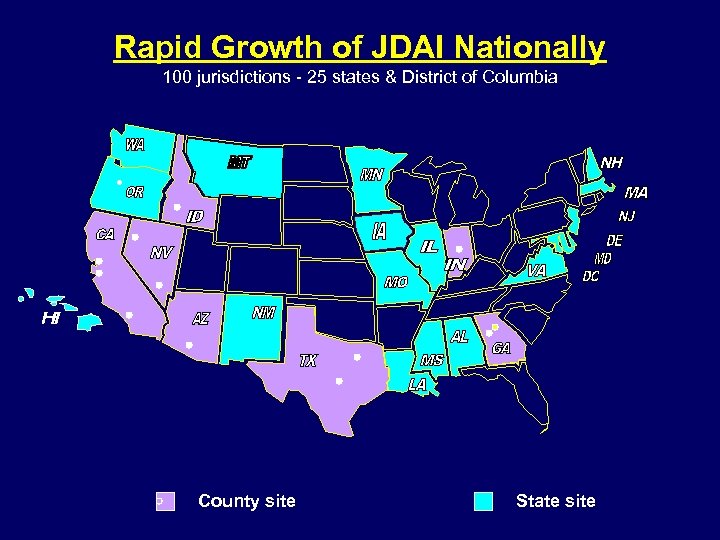 Rapid Growth of JDAI Nationally 100 jurisdictions - 25 states & District of Columbia ● County site State site
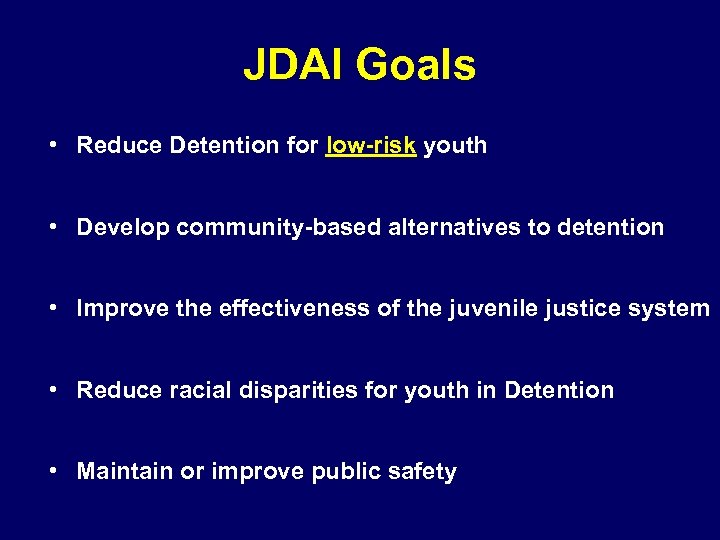 JDAI Goals • Reduce Detention for low-risk youth • Develop community-based alternatives to detention • Improve the effectiveness of the juvenile justice system • Reduce racial disparities for youth in Detention • Maintain or improve public safety
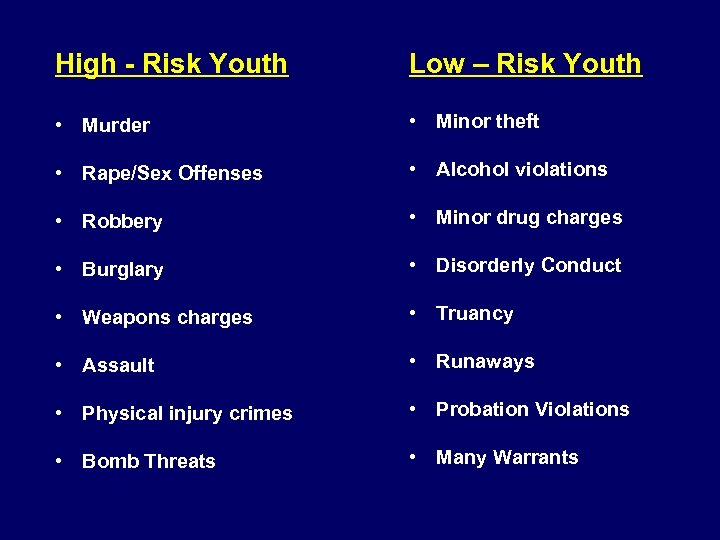 High - Risk Youth Low – Risk Youth • Murder • Minor theft • Rape/Sex Offenses • Alcohol violations • Robbery • Minor drug charges • Burglary • Disorderly Conduct • Weapons charges • Truancy • Assault • Runaways • Physical injury crimes • Probation Violations • Bomb Threats • Many Warrants
 Reducing Detention is Good Public Policy • Maintains or improves public safety • Cost-effective for taxpayers • Produces better outcomes
 What we have learned about detaining youth • Reducing detention for low-risk youth has not increased crime • Detention is the most expensive crime reduction strategy • Detention is not particularly effective in reducing crime • Low-risk youth can be negatively influenced by high-risk youth • Detention interrupts school – youth fall further behind and dropout • Detention can pull youth deeper into the criminal justice system • Detained youth are more likely to reoffend than youth not detained
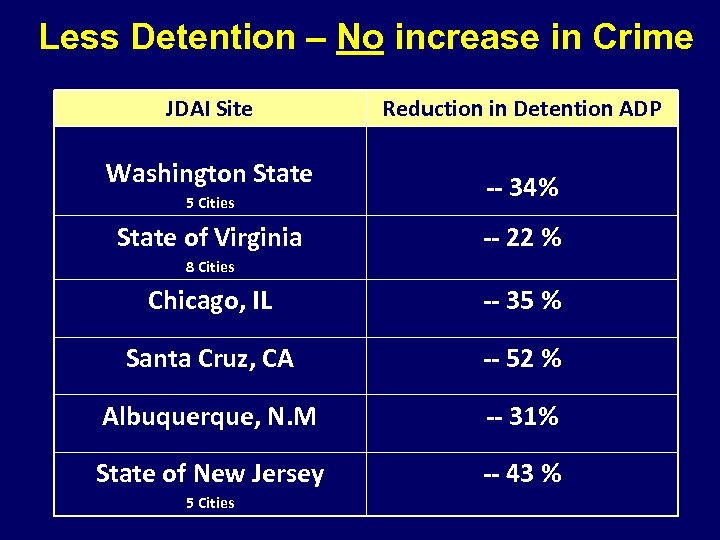 Less Detention – No increase in Crime JDAI Site Washington State 5 Cities State of Virginia Reduction in Detention ADP -- 34% -- 22 % 8 Cities Chicago, IL -- 35 % Santa Cruz, CA -- 52 % Albuquerque, N. M -- 31% State of New Jersey -- 43 % 5 Cities
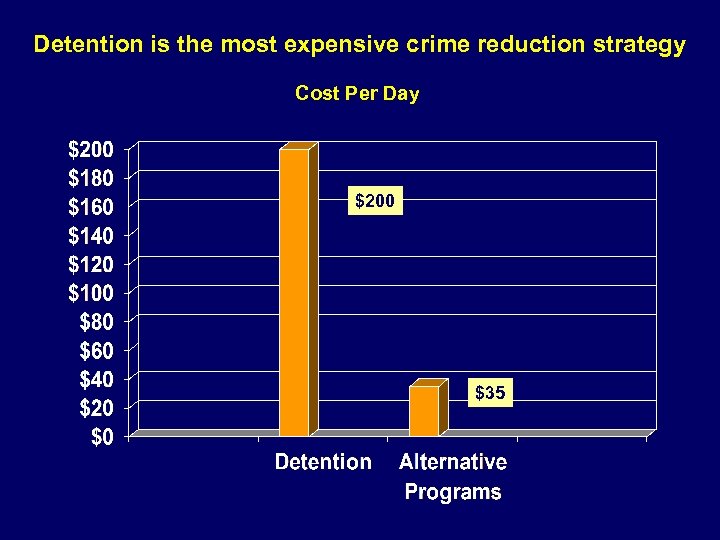 Detention is the most expensive crime reduction strategy Cost Per Day $200 $35
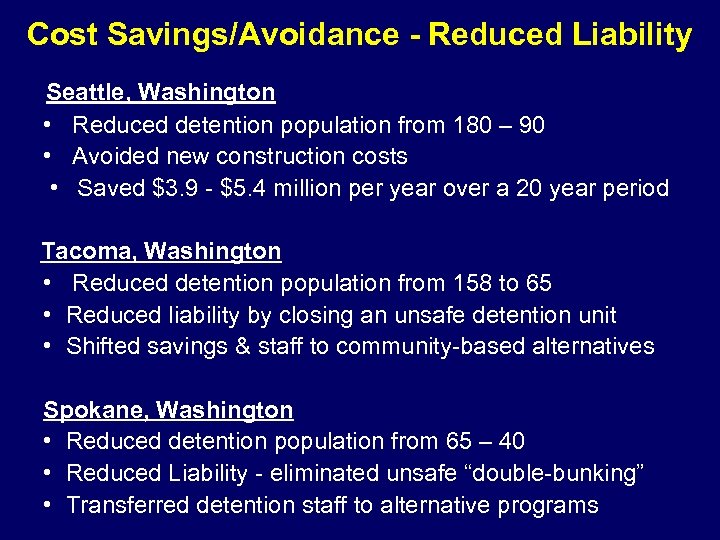 Cost Savings/Avoidance - Reduced Liability Seattle, Washington • Reduced detention population from 180 – 90 • Avoided new construction costs • Saved $3. 9 - $5. 4 million per year over a 20 year period Tacoma, Washington • Reduced detention population from 158 to 65 • Reduced liability by closing an unsafe detention unit • Shifted savings & staff to community-based alternatives Spokane, Washington • Reduced detention population from 65 – 40 • Reduced Liability - eliminated unsafe “double-bunking” • Transferred detention staff to alternative programs
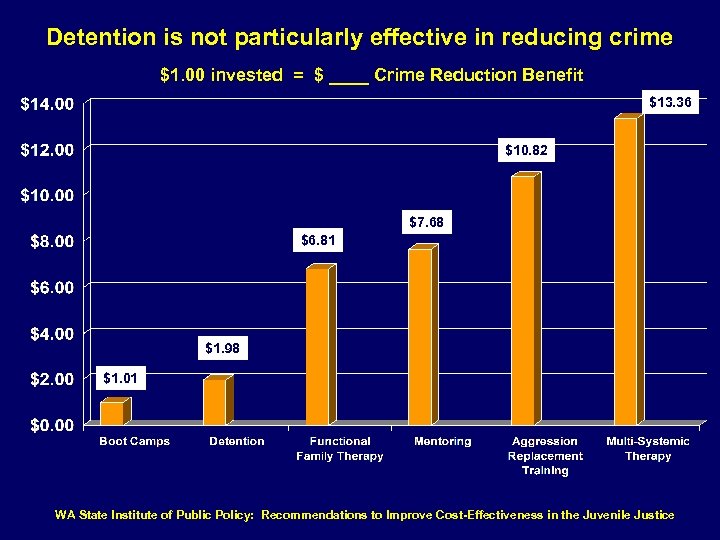 Detention is not particularly effective in reducing crime $1. 00 invested = $ ____ Crime Reduction Benefit $13. 36 $10. 82 $7. 68 $6. 81 $1. 98 $1. 01 WA State Institute of Public Policy: Recommendations to Improve Cost-Effectiveness in the Juvenile Justice
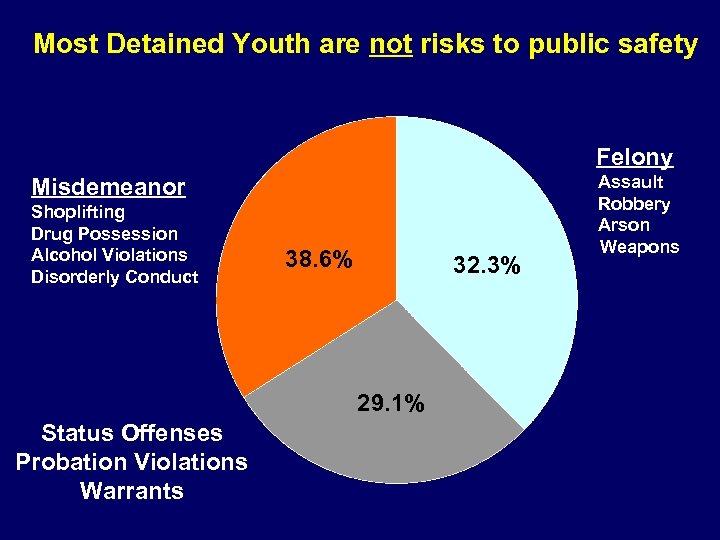 Most Detained Youth are not risks to public safety Felony Misdemeanor Shoplifting Drug Possession Alcohol Violations Disorderly Conduct 38. 6% 32. 3% 29. 1% Status Offenses Probation Violations Warrants Assault Robbery Arson Weapons
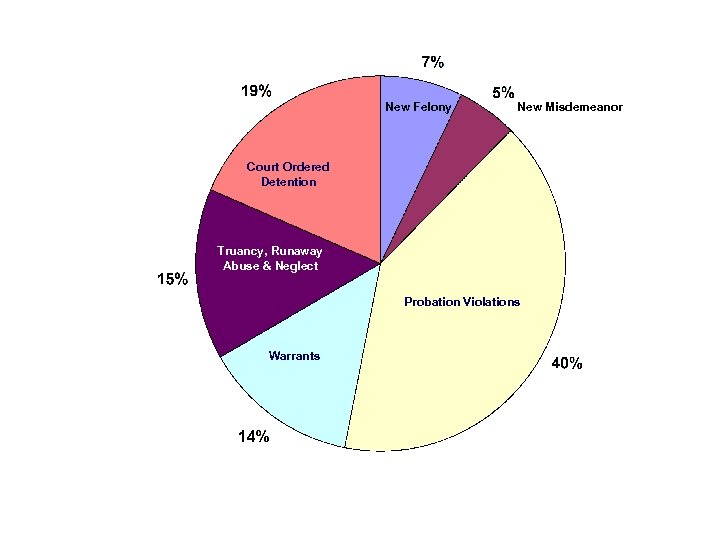 New Felony New Misdemeanor Court Ordered Detention Truancy, Runaway Abuse & Neglect Probation Violations Warrants
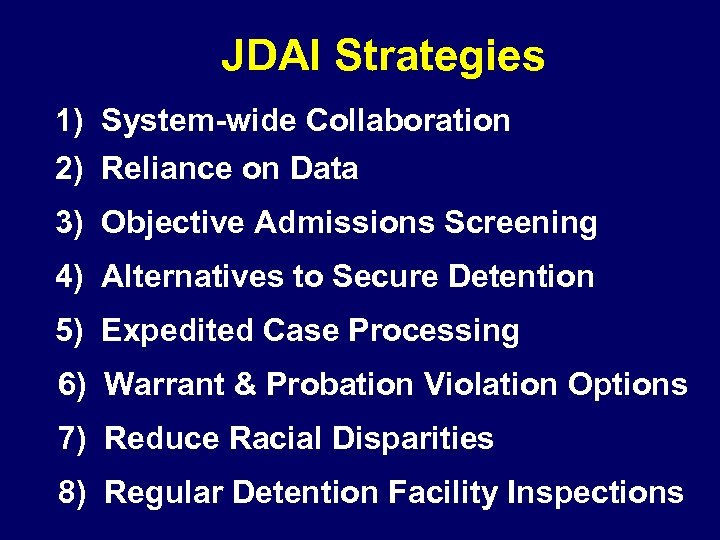 JDAI Strategies 1) System-wide Collaboration 2) Reliance on Data 3) Objective Admissions Screening 4) Alternatives to Secure Detention 5) Expedited Case Processing 6) Warrant & Probation Violation Options 7) Reduce Racial Disparities 8) Regular Detention Facility Inspections
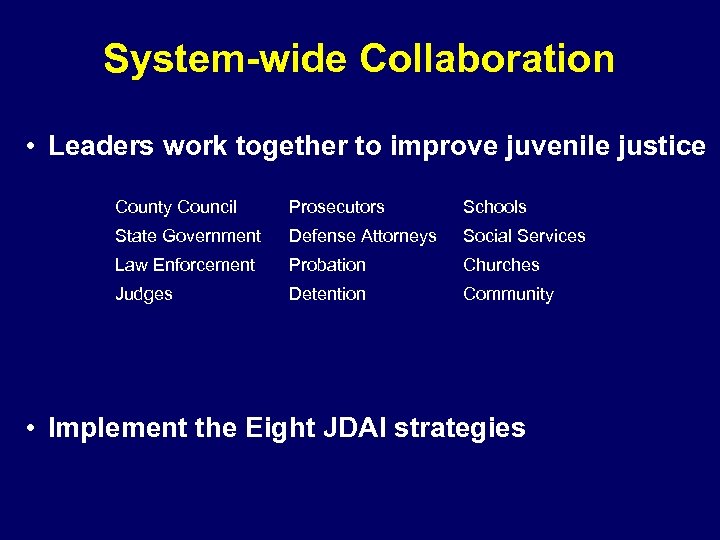 System-wide Collaboration • Leaders work together to improve juvenile justice County Council Prosecutors Schools State Government Defense Attorneys Social Services Law Enforcement Probation Churches Judges Detention Community • Implement the Eight JDAI strategies
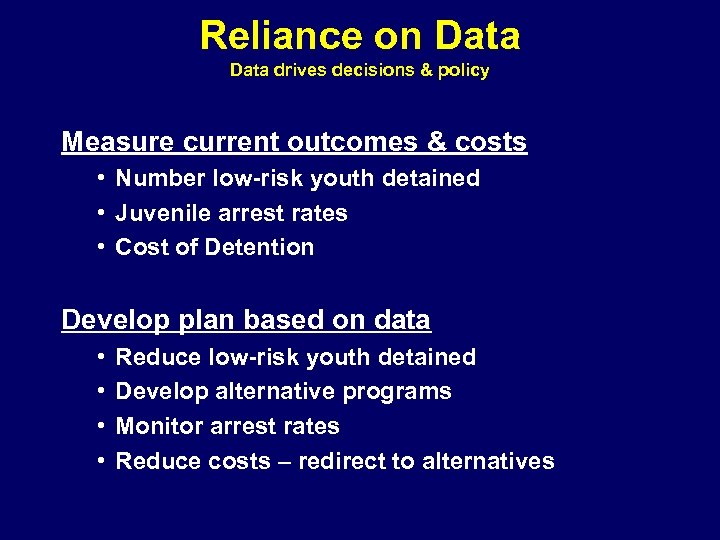 Reliance on Data drives decisions & policy Measure current outcomes & costs • Number low-risk youth detained • Juvenile arrest rates • Cost of Detention Develop plan based on data • • Reduce low-risk youth detained Develop alternative programs Monitor arrest rates Reduce costs – redirect to alternatives
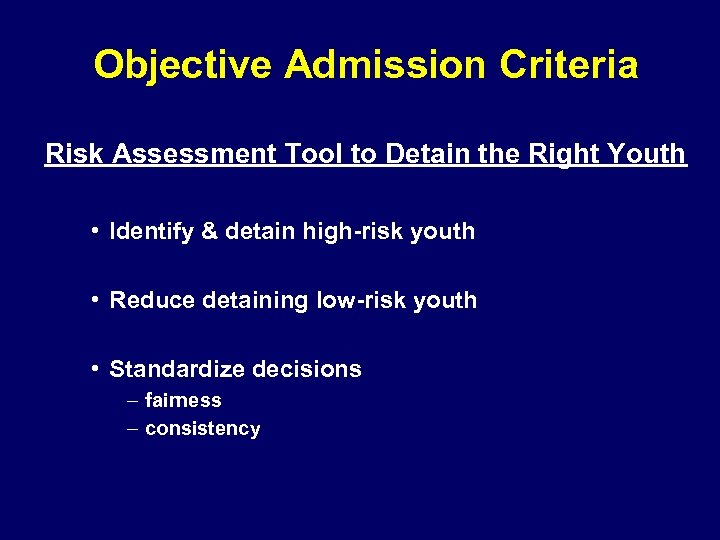 Objective Admission Criteria Risk Assessment Tool to Detain the Right Youth • Identify & detain high-risk youth • Reduce detaining low-risk youth • Standardize decisions – fairness – consistency
 Alternatives to Secure Detention • Community Service Work Projects • House Arrest & Electronic Monitoring • Weekend Programs • Day & Evening Reporting Centers • Foster & Shelter Care Programs
 Expedited Case Processing • Youth learn best with a swift consequence • Improve coordination: Prosecutor, Defense & Probation • Reduce court case continuances • Identify stalled cases & problem solve
 Probation Violation Options • Consistent sanctions for all youth • Match sanction with the seriousness of violation • Develop immediate informal sanctions • Use Alternative Programs • Make Detention the last resort
 Warrant Options – Minimize FTAs • Expedite court process • Court Hearing Reminder Calls • In-Person Reminder Contacts • Verify notice of hearing was received
 Reduce Racial Disparities • Prioritize reducing racial disparities • Measure rates of racial disparities at decision points • • Detention Sentencing Sanctioning Transfers to Adult System • Adopt “standardized” methods of decision making • Detention Risk Assessment Tool • Standardize Probation Violation Sanctions
 Regular Detention Facility Inspections • Annual Self-Inspections • Measure compliance with JDAI Standards • Update policies and make improvements
 JDAI Technical Assistance • Small grants for travel & coordination • Technical Assistance Providers • Tools, Guides, Publications • jdaihelpdesk. org • Model Site Visits • JDAI National Conferences
 “The daily detention population in our facility has greatly reduced but without a resultant compromise in community safety. In fact, just the opposite: we have the lowest rates of reoffense that we’ve ever had. ” Amy Holmes Hehn Multnomah County District Attorney