


 Скачать презентацию The Ancient Near East The Ancient Near
a313c4fa5ff9abddcb426f562cd60c5d.ppt
- Количество слайдов: 52
 The Ancient Near East
 The Ancient Near East l Common themes? l Differences?
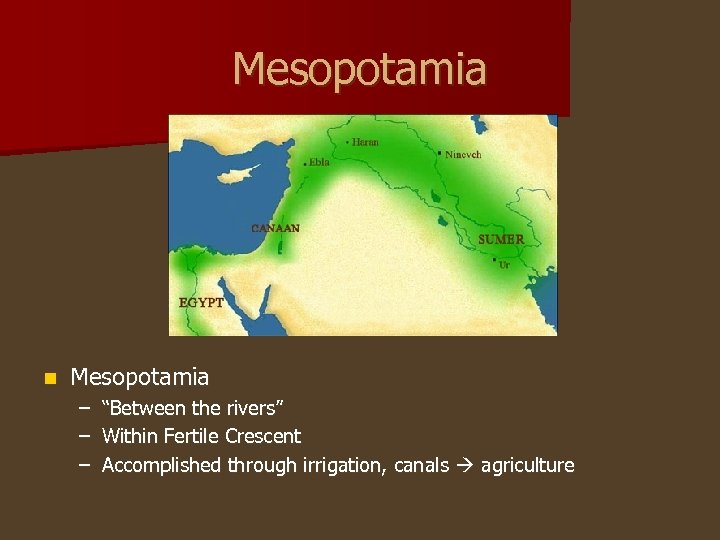 Mesopotamia n Mesopotamia – – – “Between the rivers” Within Fertile Crescent Accomplished through irrigation, canals agriculture
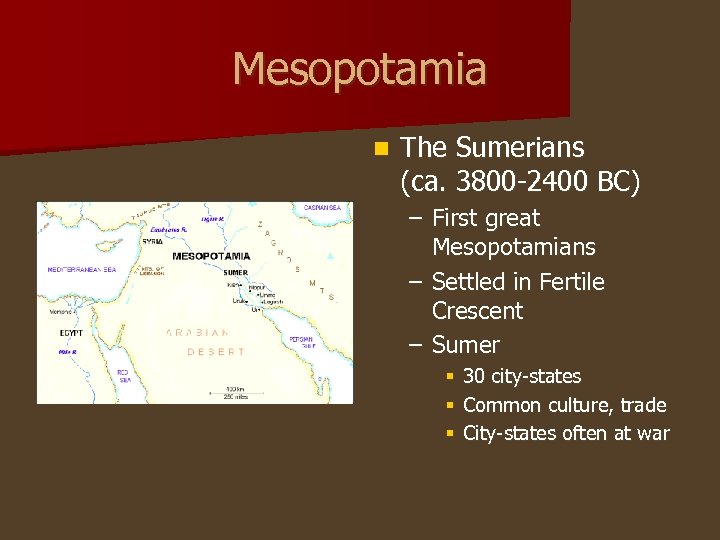 Mesopotamia n The Sumerians (ca. 3800 -2400 BC) – First great Mesopotamians – Settled in Fertile Crescent – Sumer § § § 30 city-states Common culture, trade City-states often at war
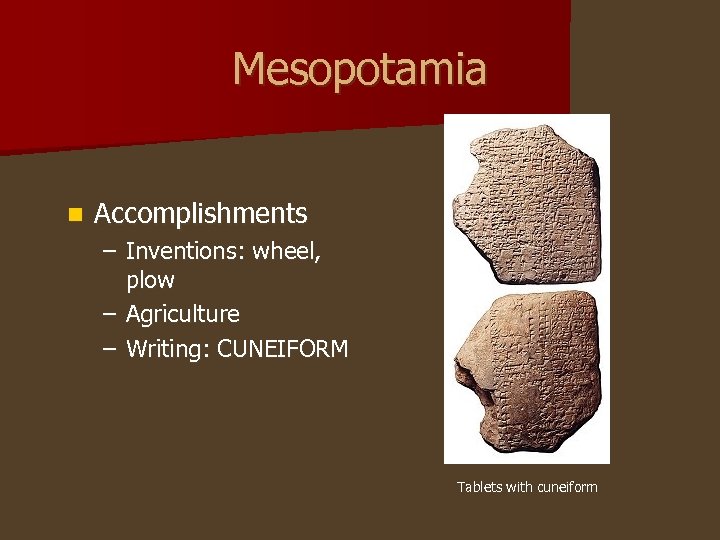 Mesopotamia n Accomplishments – Inventions: wheel, plow – Agriculture – Writing: CUNEIFORM Tablets with cuneiform
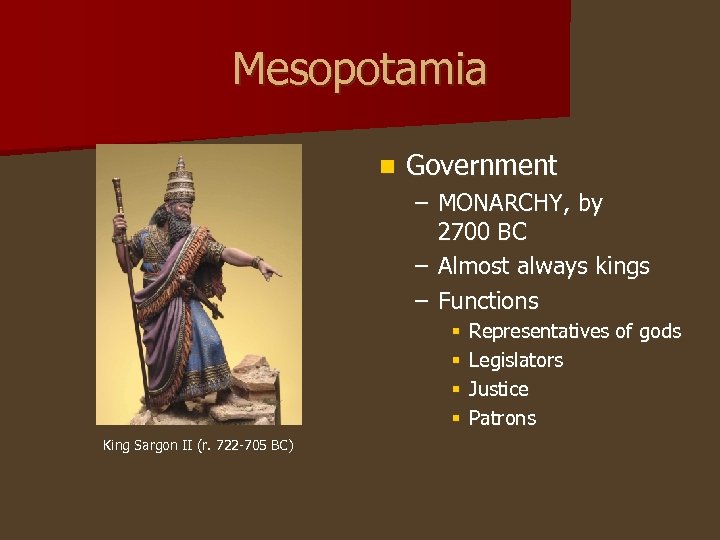 Mesopotamia n Government – MONARCHY, by 2700 BC – Almost always kings – Functions § § King Sargon II (r. 722 -705 BC) Representatives of gods Legislators Justice Patrons
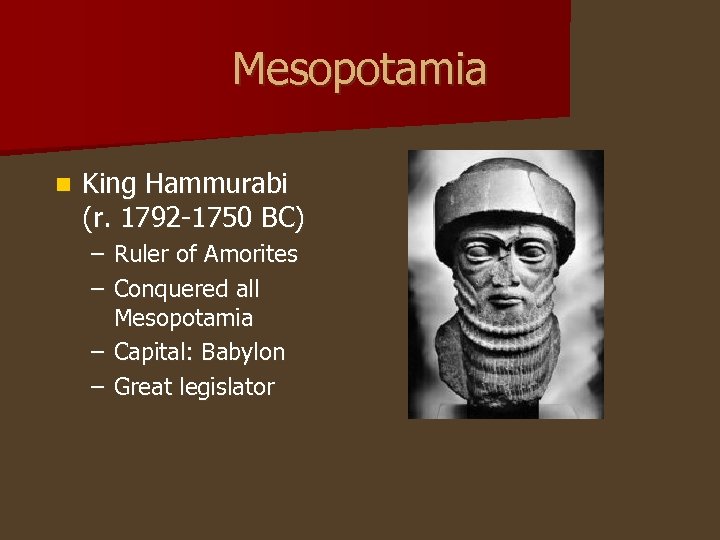 Mesopotamia n King Hammurabi (r. 1792 -1750 BC) – Ruler of Amorites – Conquered all Mesopotamia – Capital: Babylon – Great legislator
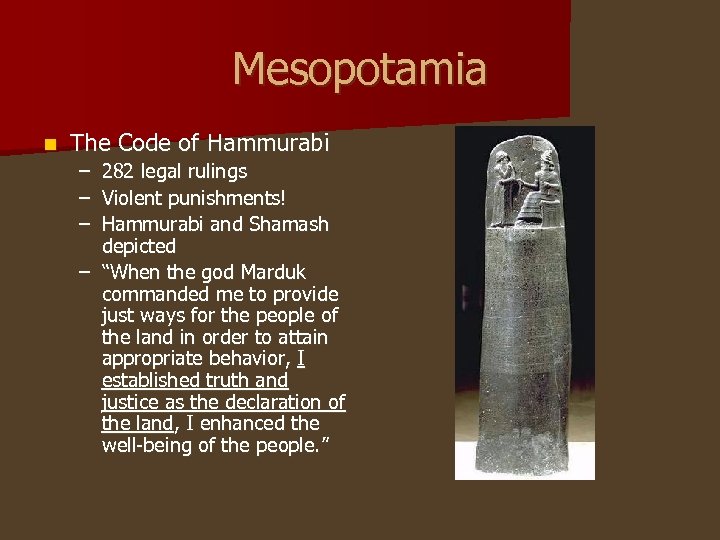 Mesopotamia n The Code of Hammurabi – 282 legal rulings – Violent punishments! – Hammurabi and Shamash depicted – “When the god Marduk commanded me to provide just ways for the people of the land in order to attain appropriate behavior, I established truth and justice as the declaration of the land, I enhanced the well-being of the people. ”
 Mesopotamia n The Code of Hammurabi – “ 196. If a man put out the eye of another man, his eye shall be put out. – 197. If he break the other man’s bone, his bone shall be broken. – 198. If he put out the eye of a freed man, or break the bone of a freed man, he shall pay one gold mina. – 199. If he put out the eye of a man’s slave, or break the bone of a man’s slave, he shall pay one-half of its value. ”
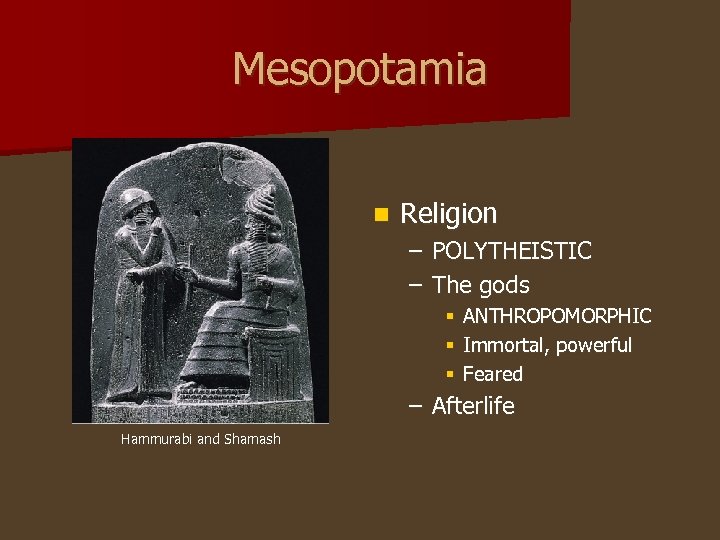 Mesopotamia n Religion – POLYTHEISTIC – The gods § § § ANTHROPOMORPHIC Immortal, powerful Feared – Afterlife Hammurabi and Shamash
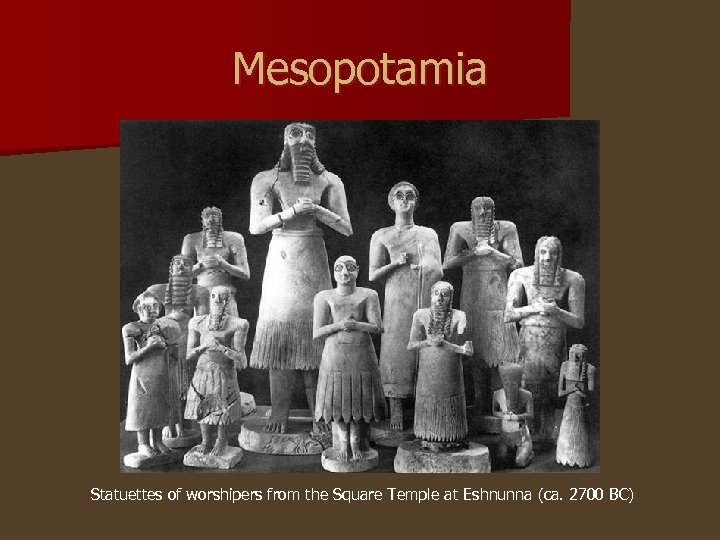 Mesopotamia Statuettes of worshipers from the Square Temple at Eshnunna (ca. 2700 BC)
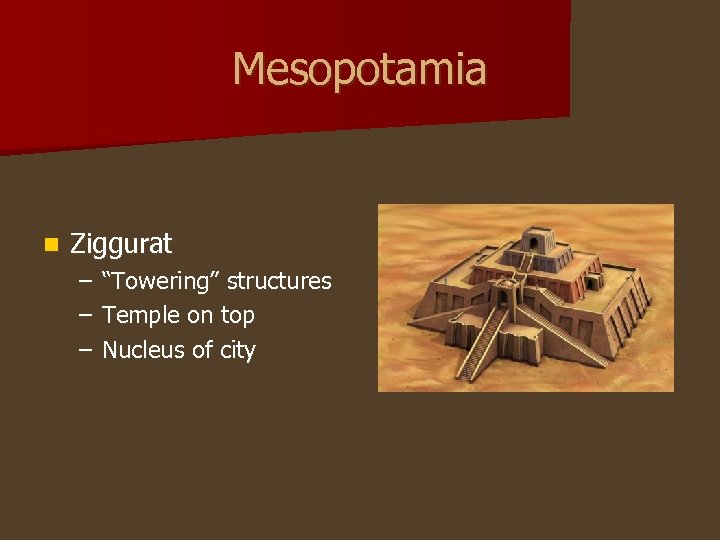 Mesopotamia n Ziggurat – – – “Towering” structures Temple on top Nucleus of city
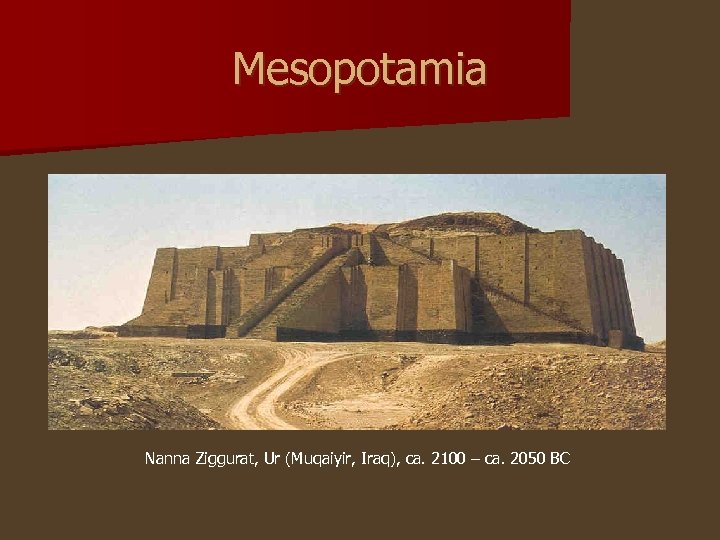 Mesopotamia Nanna Ziggurat, Ur (Muqaiyir, Iraq), ca. 2100 – ca. 2050 BC
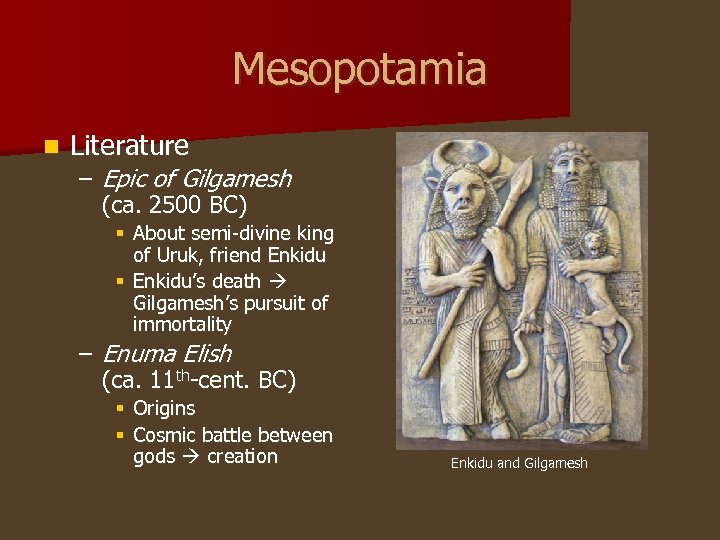 Mesopotamia n Literature – Epic of Gilgamesh (ca. 2500 BC) § About semi-divine king of Uruk, friend Enkidu § Enkidu’s death Gilgamesh’s pursuit of immortality – Enuma Elish (ca. 11 th-cent. BC) § Origins § Cosmic battle between gods creation Enkidu and Gilgamesh
 Mesopotamia n Questions?
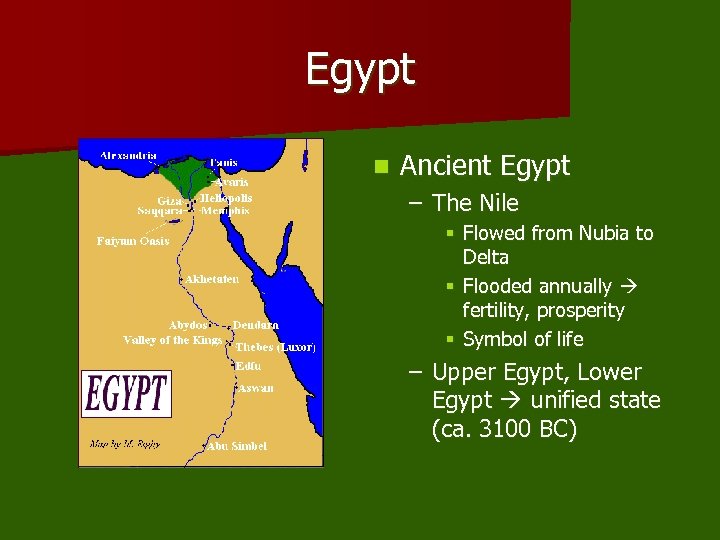 Egypt n Ancient Egypt – The Nile § Flowed from Nubia to Delta § Flooded annually fertility, prosperity § Symbol of life – Upper Egypt, Lower Egypt unified state (ca. 3100 BC)
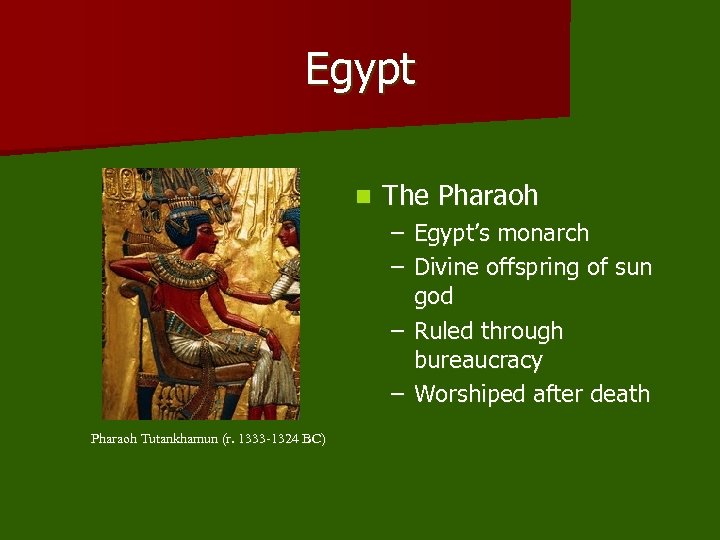 Egypt n The Pharaoh – Egypt’s monarch – Divine offspring of sun god – Ruled through bureaucracy – Worshiped after death Pharaoh Tutankhamun (r. 1333 -1324 BC)
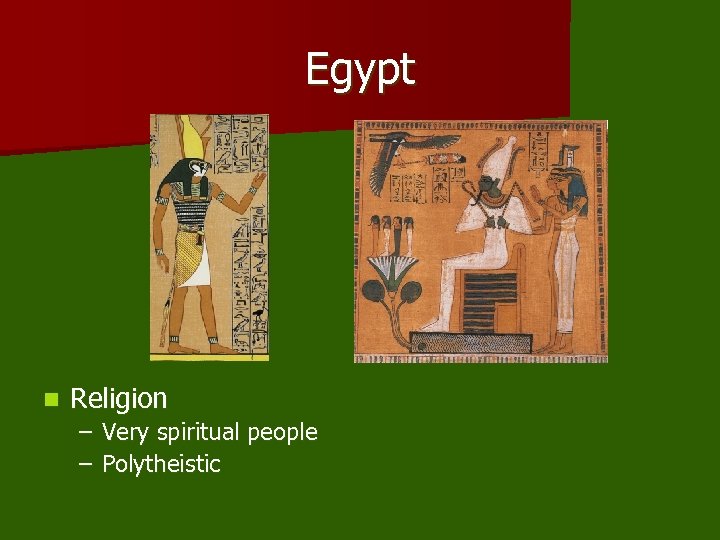 Egypt n Religion – Very spiritual people – Polytheistic
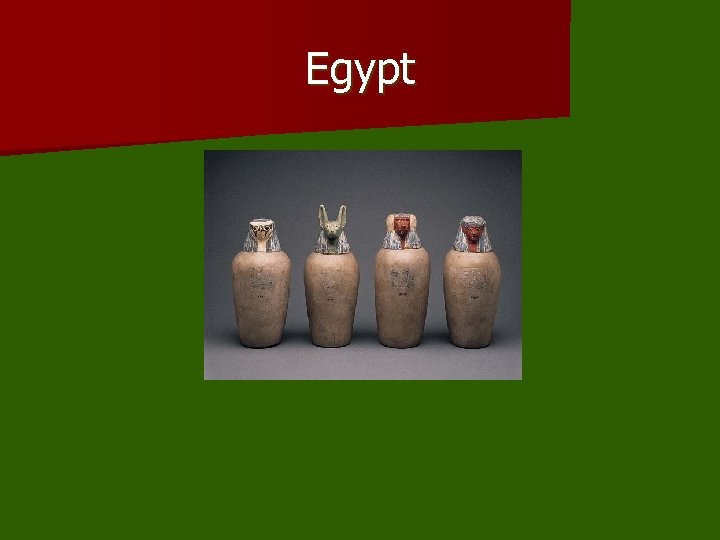
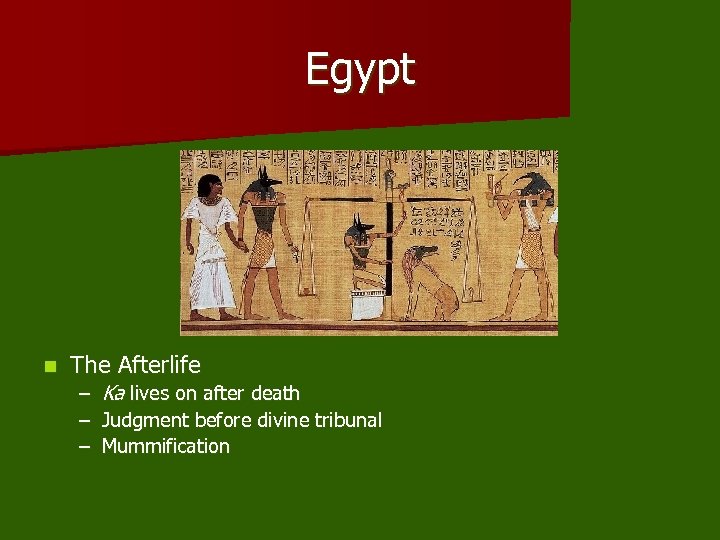 Egypt n The Afterlife – Ka lives on after death – Judgment before divine tribunal – Mummification
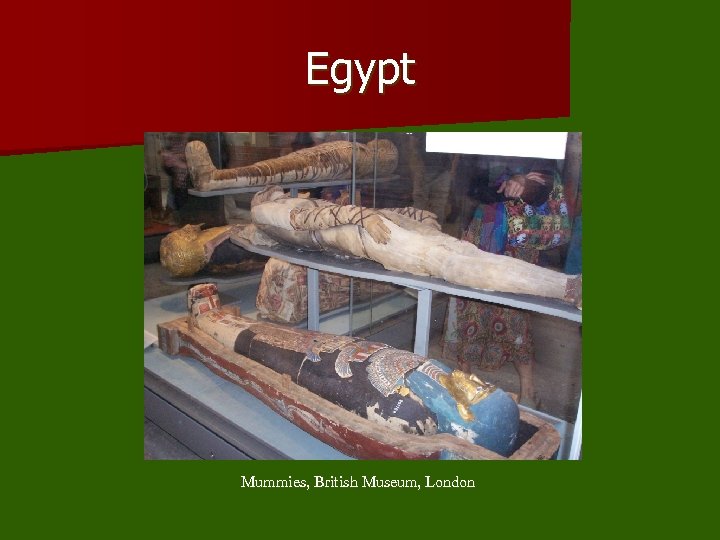 Egypt Mummies, British Museum, London
 Egypt
Egypt
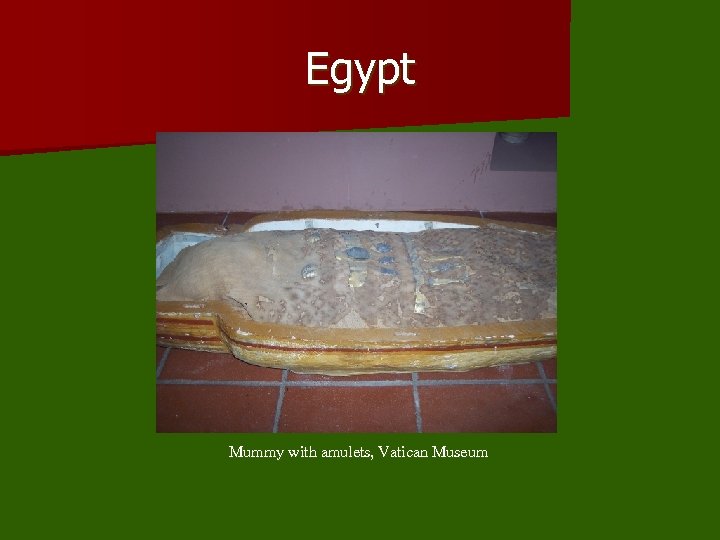 Egypt Mummy with amulets, Vatican Museum
 Egypt
Egypt
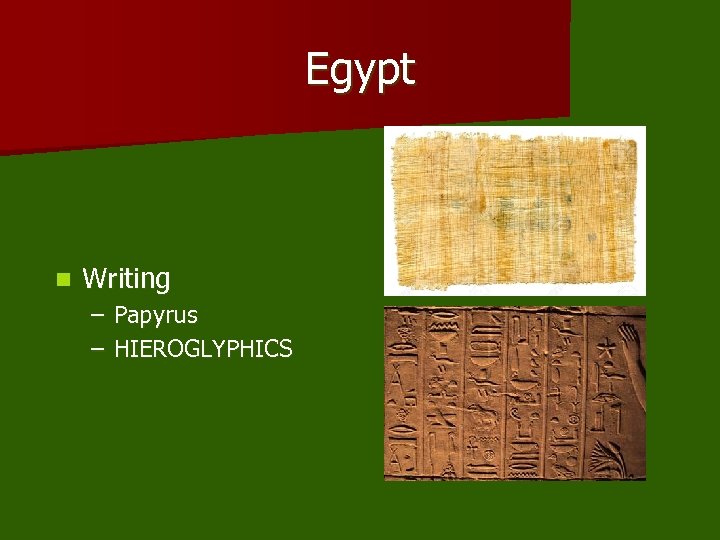 Egypt n Writing – Papyrus – HIEROGLYPHICS
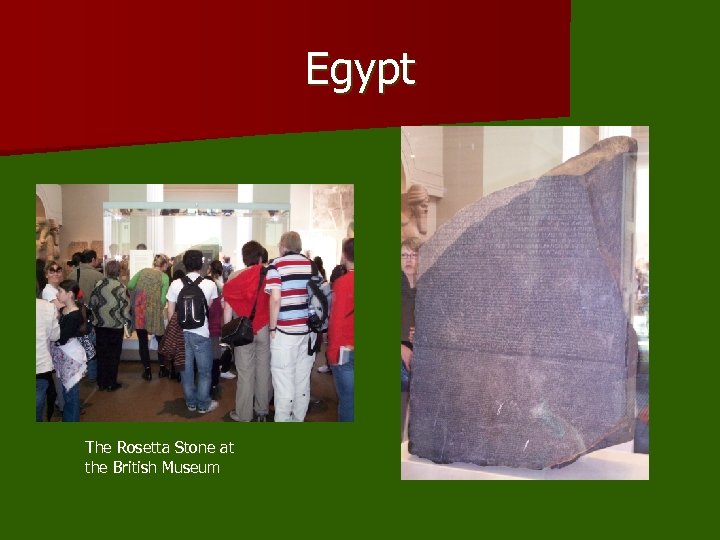 Egypt The Rosetta Stone at the British Museum
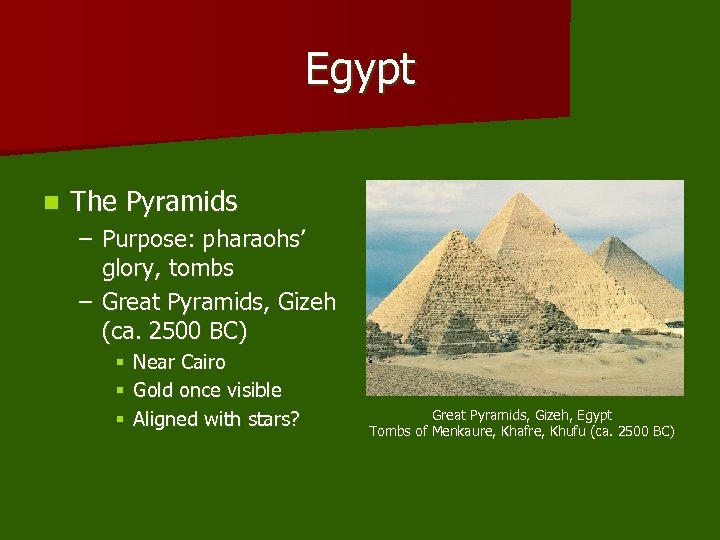 Egypt n The Pyramids – Purpose: pharaohs’ glory, tombs – Great Pyramids, Gizeh (ca. 2500 BC) § Near Cairo § Gold once visible § Aligned with stars? Great Pyramids, Gizeh, Egypt Tombs of Menkaure, Khafre, Khufu (ca. 2500 BC)
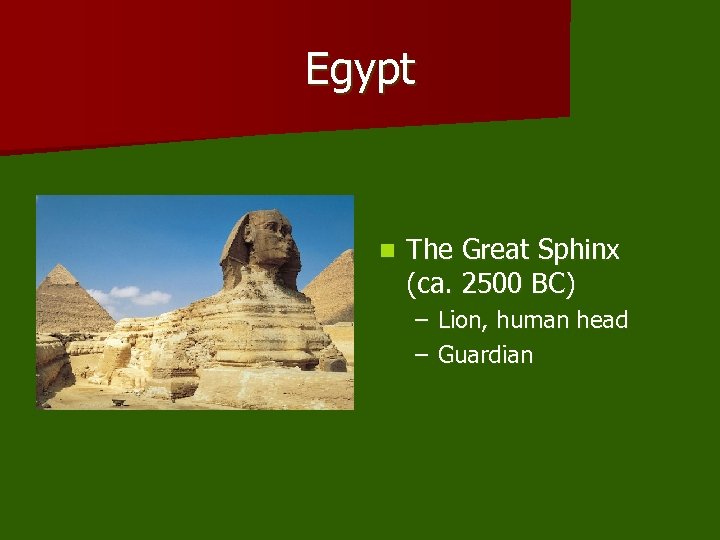 Egypt n The Great Sphinx (ca. 2500 BC) – Lion, human head – Guardian
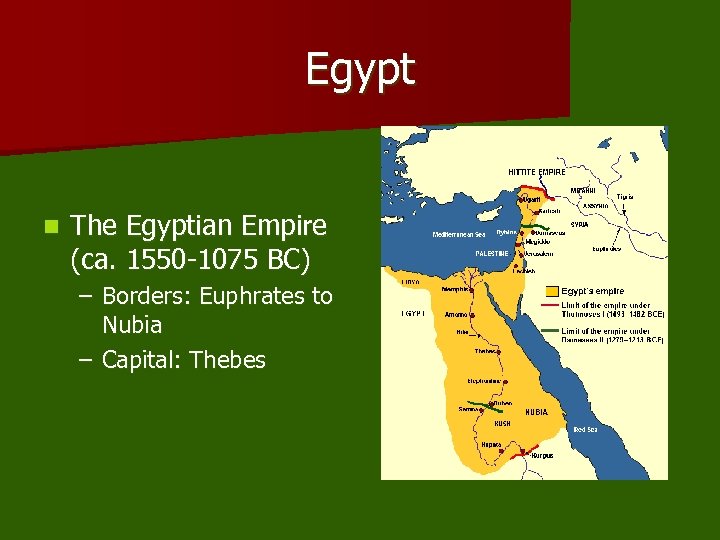 Egypt n The Egyptian Empire (ca. 1550 -1075 BC) – Borders: Euphrates to Nubia – Capital: Thebes
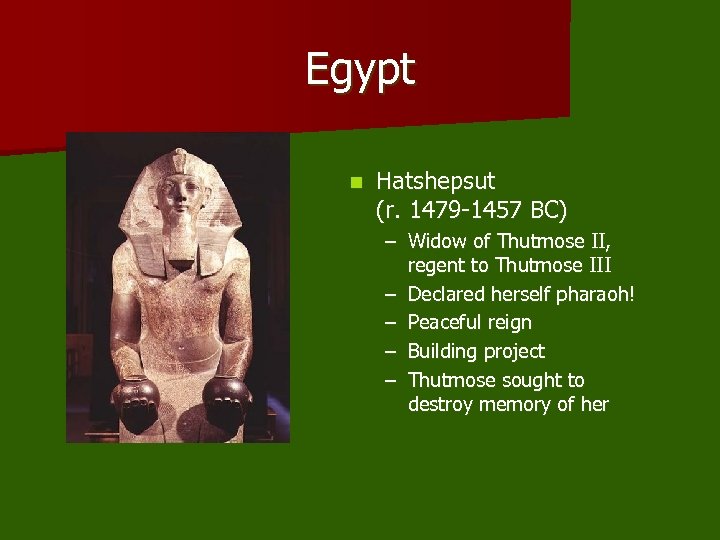 Egypt n Hatshepsut (r. 1479 -1457 BC) – Widow of Thutmose II, regent to Thutmose III – Declared herself pharaoh! – Peaceful reign – Building project – Thutmose sought to destroy memory of her
 Egypt n Decline of Egypt (ca. 1076 BC) – Pharaohs lost power to priests – Empire disintegrated – Prominent international role lost – Suffered invasions, occupations
 Egypt n Questions?
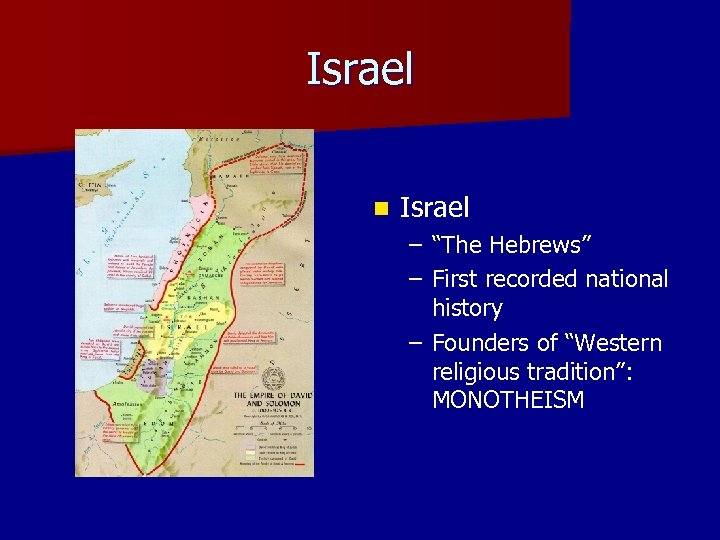 Israel n Israel – “The Hebrews” – First recorded national history – Founders of “Western religious tradition”: MONOTHEISM
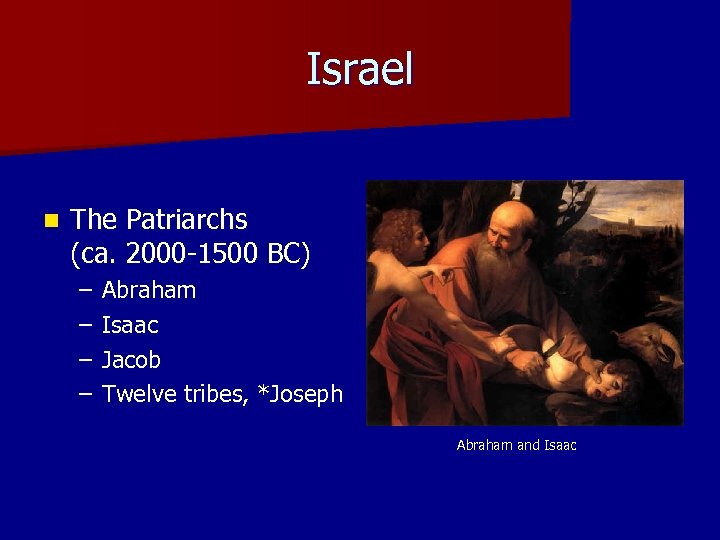 Israel n The Patriarchs (ca. 2000 -1500 BC) – – Abraham Isaac Jacob Twelve tribes, *Joseph Abraham and Isaac
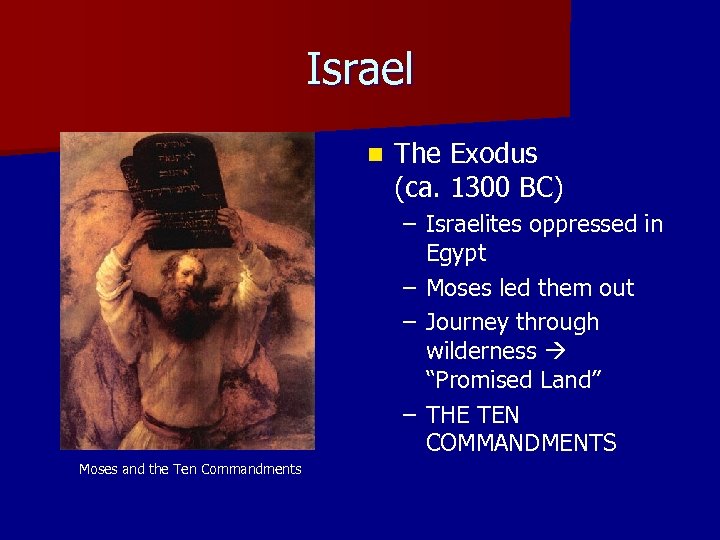 Israel n The Exodus (ca. 1300 BC) – Israelites oppressed in Egypt – Moses led them out – Journey through wilderness “Promised Land” – THE TEN COMMANDMENTS Moses and the Ten Commandments
 Israel
 Israel
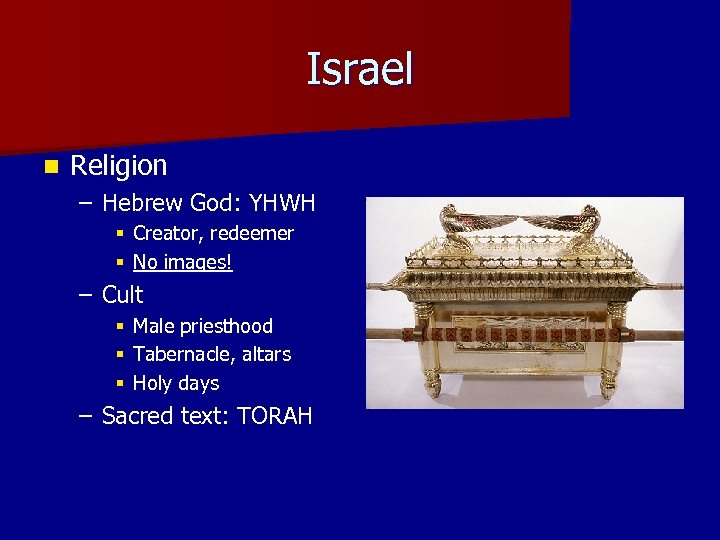 Israel n Religion – Hebrew God: YHWH § Creator, redeemer § No images! – Cult § Male priesthood § Tabernacle, altars § Holy days – Sacred text: TORAH
 Israel
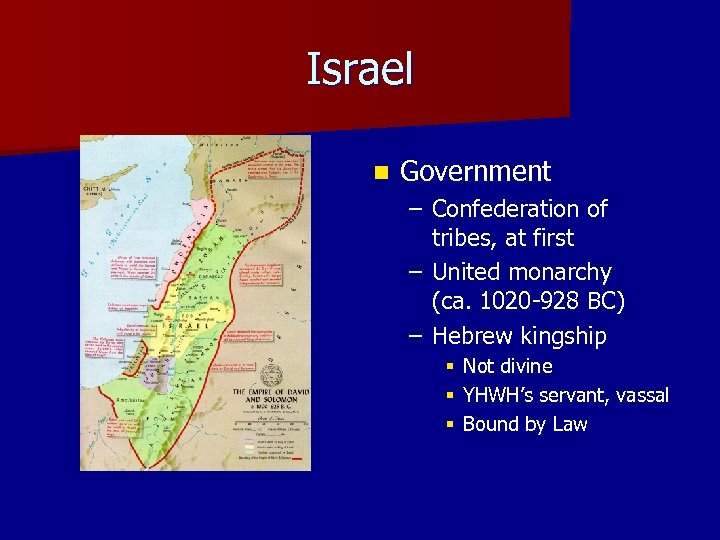 Israel n Government – Confederation of tribes, at first – United monarchy (ca. 1020 -928 BC) – Hebrew kingship § Not divine § YHWH’s servant, vassal § Bound by Law
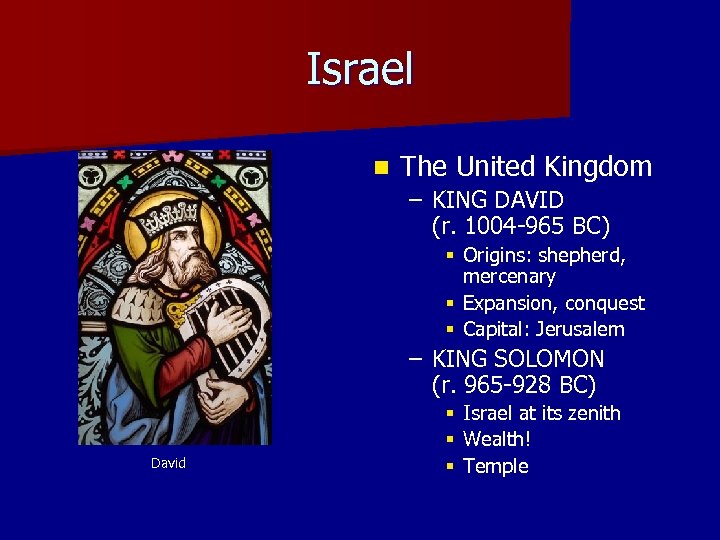 Israel n The United Kingdom – KING DAVID (r. 1004 -965 BC) § Origins: shepherd, mercenary § Expansion, conquest § Capital: Jerusalem – KING SOLOMON (r. 965 -928 BC) David § § § Israel at its zenith Wealth! Temple
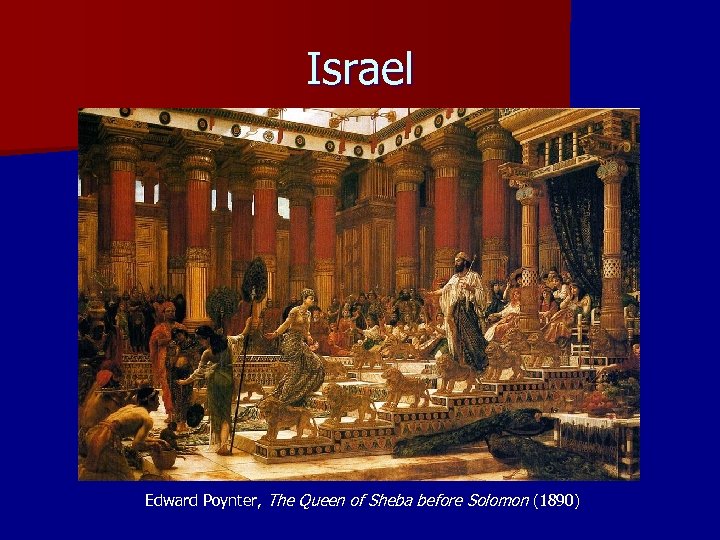 Israel Edward Poynter, The Queen of Sheba before Solomon (1890)
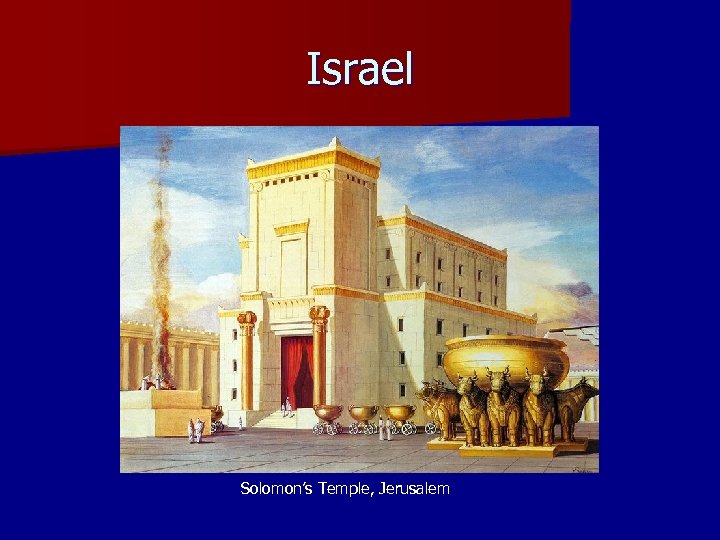 Israel Solomon’s Temple, Jerusalem
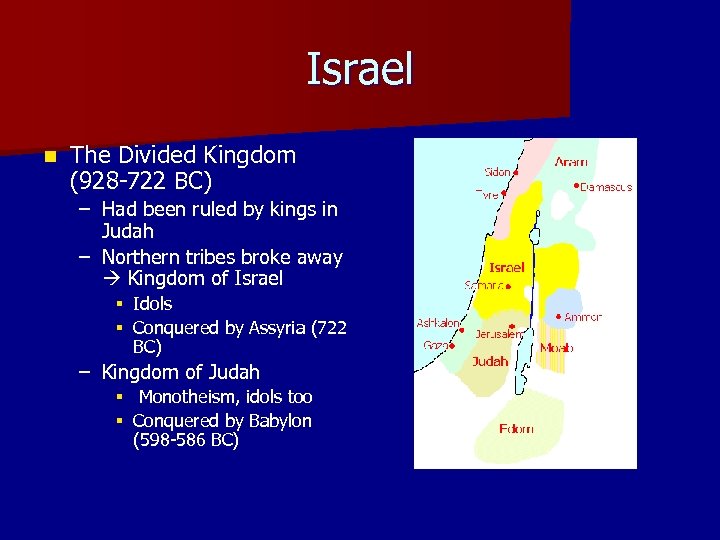 Israel n The Divided Kingdom (928 -722 BC) – Had been ruled by kings in Judah – Northern tribes broke away Kingdom of Israel § Idols § Conquered by Assyria (722 BC) – Kingdom of Judah § Monotheism, idols too § Conquered by Babylon (598 -586 BC)
 Israel n Questions?
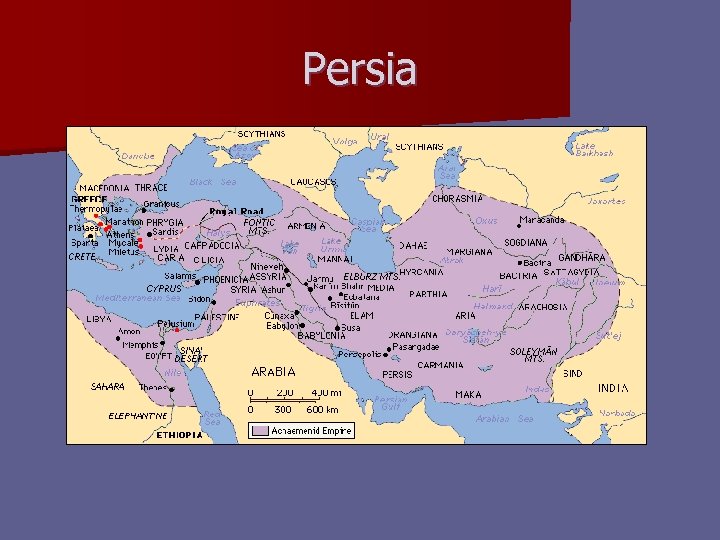
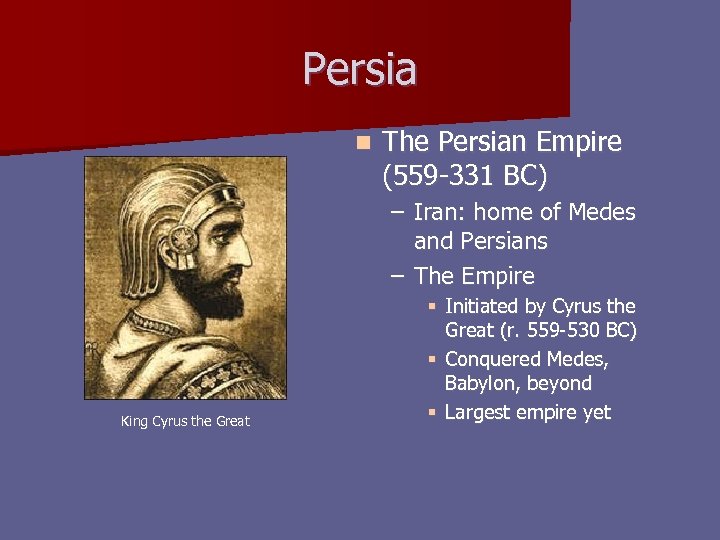 Persia n The Persian Empire (559 -331 BC) – Iran: home of Medes and Persians – The Empire King Cyrus the Great § Initiated by Cyrus the Great (r. 559 -530 BC) § Conquered Medes, Babylon, beyond § Largest empire yet
 Persia
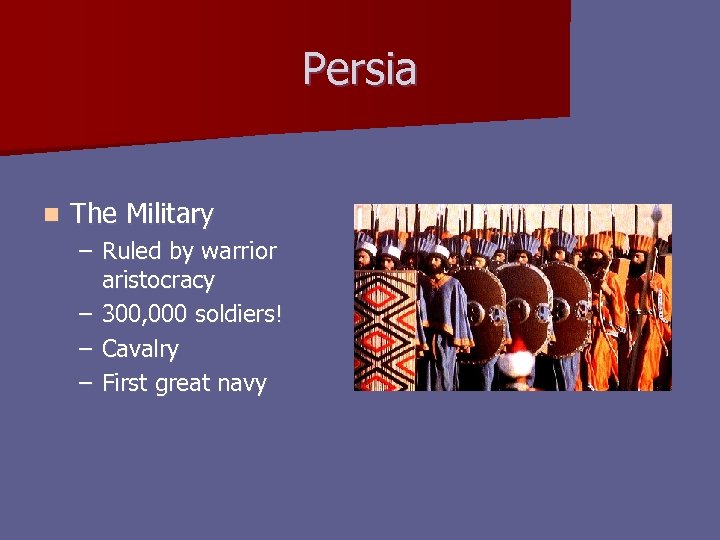 Persia n The Military – Ruled by warrior aristocracy – 300, 000 soldiers! – Cavalry – First great navy
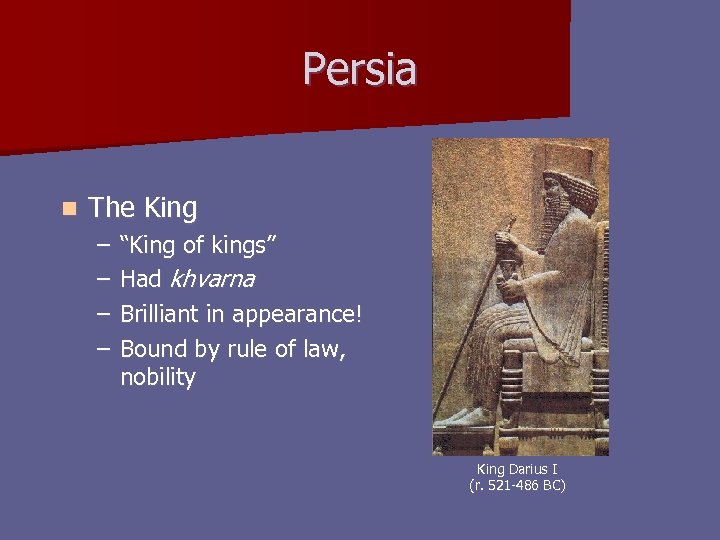 Persia n The King – – “King of kings” Had khvarna Brilliant in appearance! Bound by rule of law, nobility King Darius I (r. 521 -486 BC)
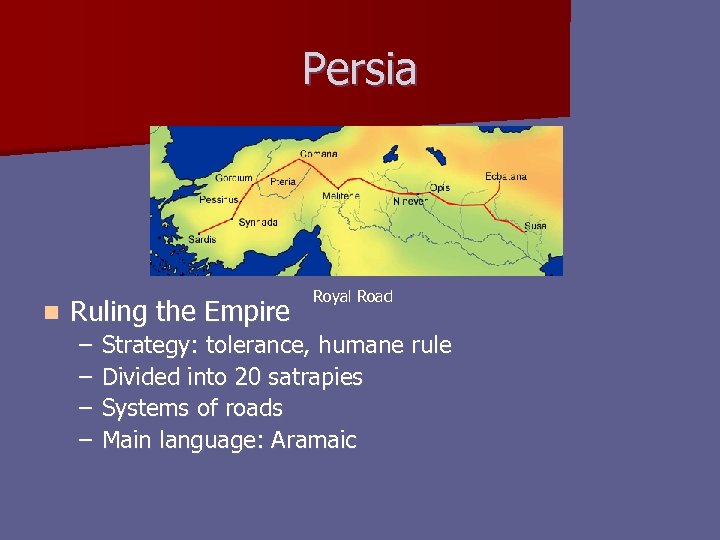 Persia n Ruling the Empire – – Royal Road Strategy: tolerance, humane rule Divided into 20 satrapies Systems of roads Main language: Aramaic
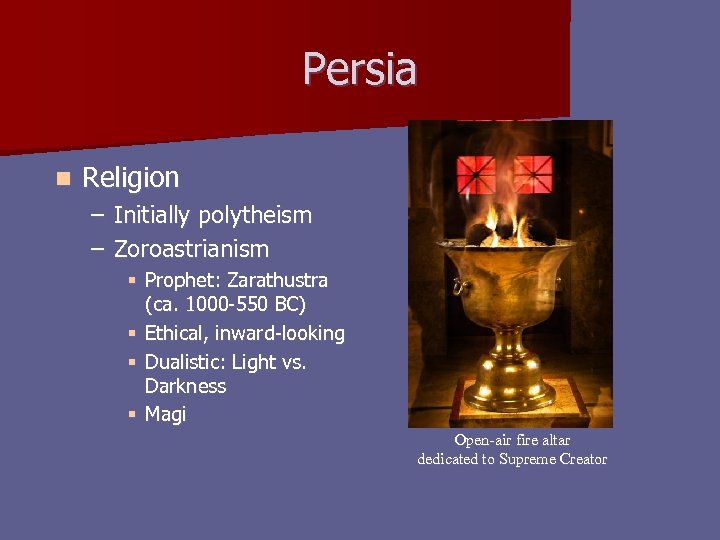 Persia n Religion – Initially polytheism – Zoroastrianism § Prophet: Zarathustra (ca. 1000 -550 BC) § Ethical, inward-looking § Dualistic: Light vs. Darkness § Magi Open-air fire altar dedicated to Supreme Creator
 Persia n Questions?
 The Ancient Near East l Common themes? l Differences?