 Скачать презентацию The Ancient Hebrews Judaism The Chosen People
5f3e698d2214f4dec20948d761431095.ppt
- Количество слайдов: 11



The Ancient Hebrews & Judaism The Chosen People & the Rise of Monotheism
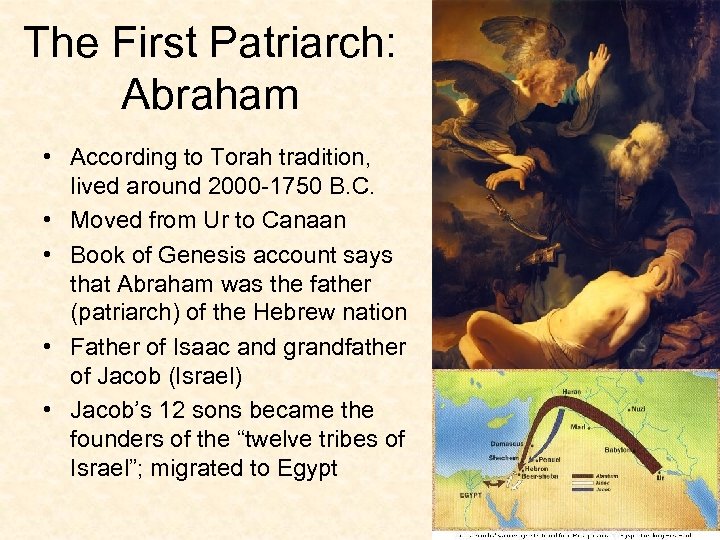
The First Patriarch: Abraham • According to Torah tradition, lived around 2000 -1750 B. C. • Moved from Ur to Canaan • Book of Genesis account says that Abraham was the father (patriarch) of the Hebrew nation • Father of Isaac and grandfather of Jacob (Israel) • Jacob’s 12 sons became the founders of the “twelve tribes of Israel”; migrated to Egypt
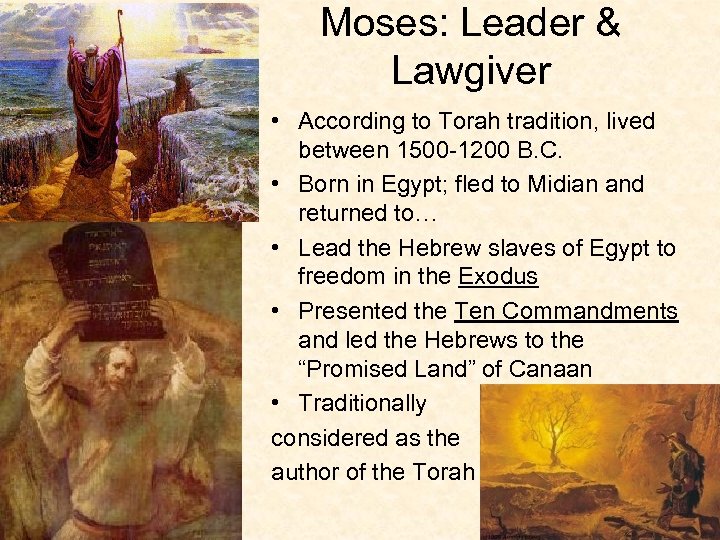
Moses: Leader & Lawgiver • According to Torah tradition, lived between 1500 -1200 B. C. • Born in Egypt; fled to Midian and returned to… • Lead the Hebrew slaves of Egypt to freedom in the Exodus • Presented the Ten Commandments and led the Hebrews to the “Promised Land” of Canaan • Traditionally considered as the author of the Torah
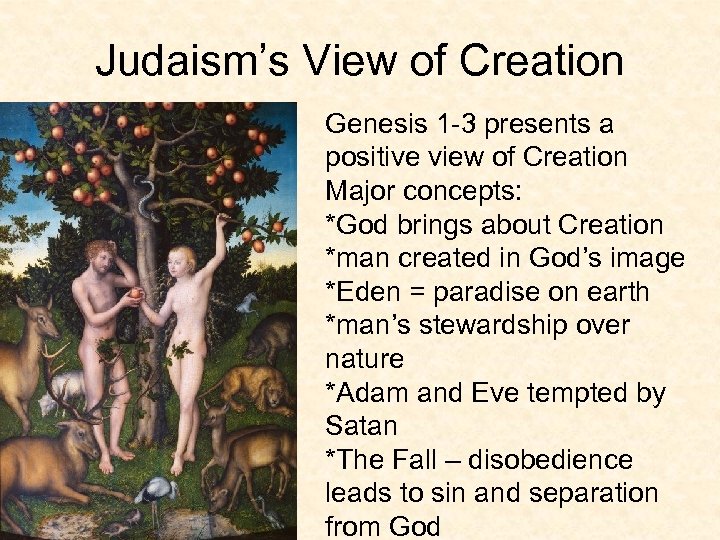
Judaism’s View of Creation Genesis 1 -3 presents a positive view of Creation Major concepts: *God brings about Creation *man created in God’s image *Eden = paradise on earth *man’s stewardship over nature *Adam and Eve tempted by Satan *The Fall – disobedience leads to sin and separation from God
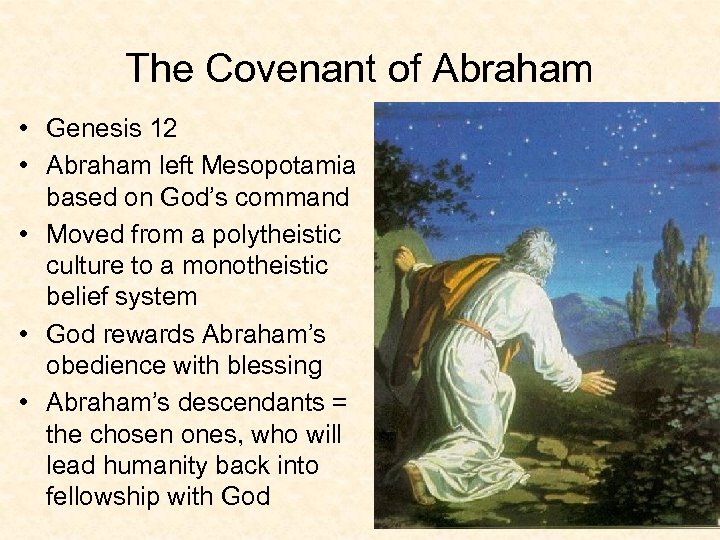
The Covenant of Abraham • Genesis 12 • Abraham left Mesopotamia based on God’s command • Moved from a polytheistic culture to a monotheistic belief system • God rewards Abraham’s obedience with blessing • Abraham’s descendants = the chosen ones, who will lead humanity back into fellowship with God
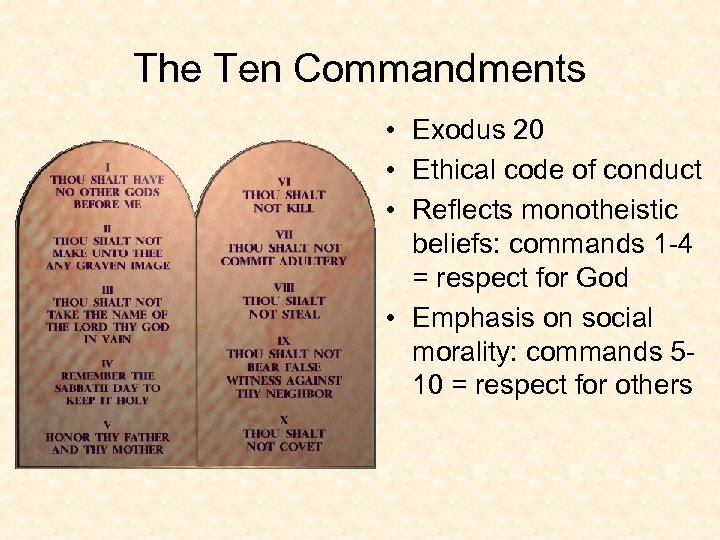
The Ten Commandments • Exodus 20 • Ethical code of conduct • Reflects monotheistic beliefs: commands 1 -4 = respect for God • Emphasis on social morality: commands 510 = respect for others
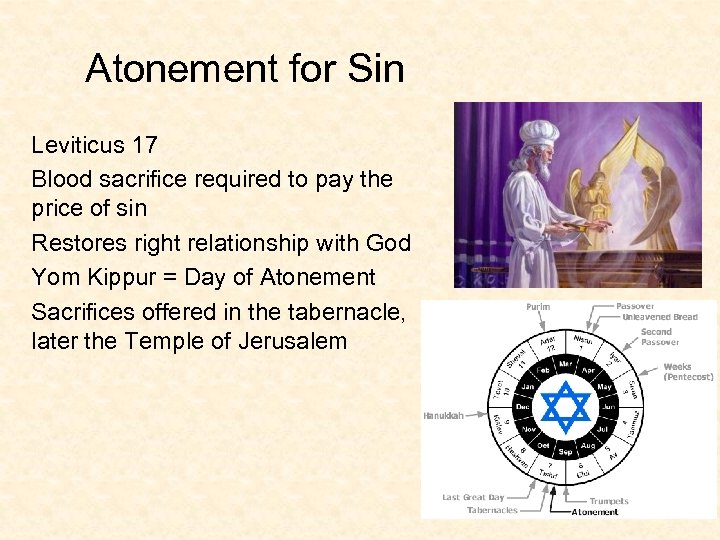
Atonement for Sin Leviticus 17 Blood sacrifice required to pay the price of sin Restores right relationship with God Yom Kippur = Day of Atonement Sacrifices offered in the tabernacle, later the Temple of Jerusalem
Confession of Faith *Deuteronomy 6 *“Hear, O Israel: The Lord our God, the Lord is one. Love the Lord your God with all your heart and with all your soul and with all your strength. ” *The Shema emphasizes a personal relationship between the believer and God *Equality of all before God *God is ONE – emphasis on monotheism
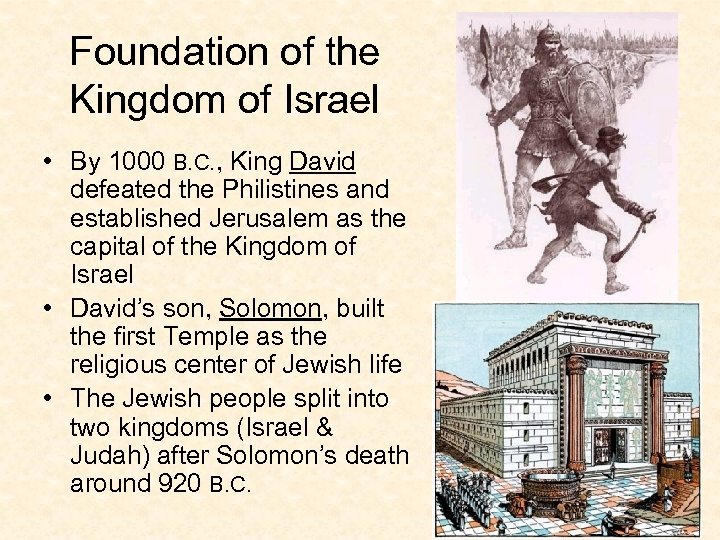
Foundation of the Kingdom of Israel • By 1000 B. C. , King David defeated the Philistines and established Jerusalem as the capital of the Kingdom of Israel • David’s son, Solomon, built the first Temple as the religious center of Jewish life • The Jewish people split into two kingdoms (Israel & Judah) after Solomon’s death around 920 B. C.
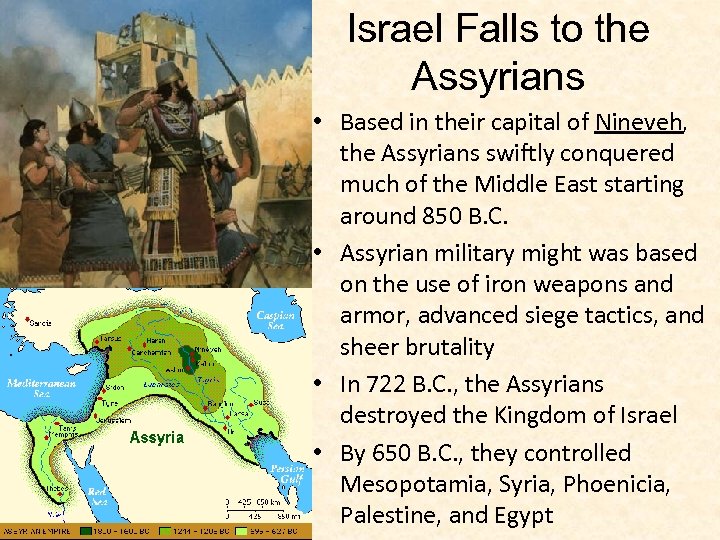
Israel Falls to the Assyrians • Based in their capital of Nineveh, the Assyrians swiftly conquered much of the Middle East starting around 850 B. C. • Assyrian military might was based on the use of iron weapons and armor, advanced siege tactics, and sheer brutality • In 722 B. C. , the Assyrians destroyed the Kingdom of Israel • By 650 B. C. , they controlled Mesopotamia, Syria, Phoenicia, Palestine, and Egypt
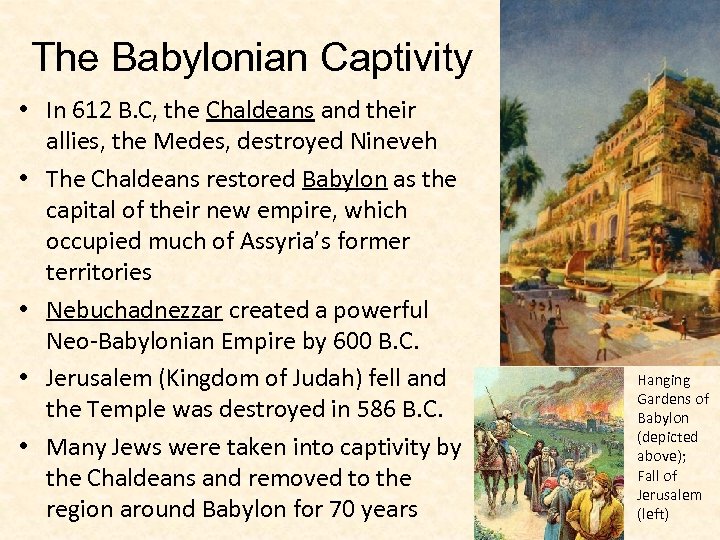
The Babylonian Captivity • In 612 B. C, the Chaldeans and their allies, the Medes, destroyed Nineveh • The Chaldeans restored Babylon as the capital of their new empire, which occupied much of Assyria’s former territories • Nebuchadnezzar created a powerful Neo-Babylonian Empire by 600 B. C. • Jerusalem (Kingdom of Judah) fell and the Temple was destroyed in 586 B. C. • Many Jews were taken into captivity by the Chaldeans and removed to the region around Babylon for 70 years Hanging Gardens of Babylon (depicted above); Fall of Jerusalem (left)
Скачать презентацию The Ancient Hebrews Judaism The Chosen People
5f3e698d2214f4dec20948d761431095.ppt