


 Скачать презентацию The Anatomy and Physiology of the Grid Revisited
b3e4f3beec02af0e5d208053c80414eb.ppt
- Количество слайдов: 33
 The Anatomy and Physiology of the Grid Revisited Nenad Medvidovic USC-CSSE and Computer Science Department University of Southern California neno@usc. edu http: //csse. usc. edu/~neno/ Collaborative work with Joshua Garcia, Ivo Krka, Chris Mattmann, and Daniel Popescu
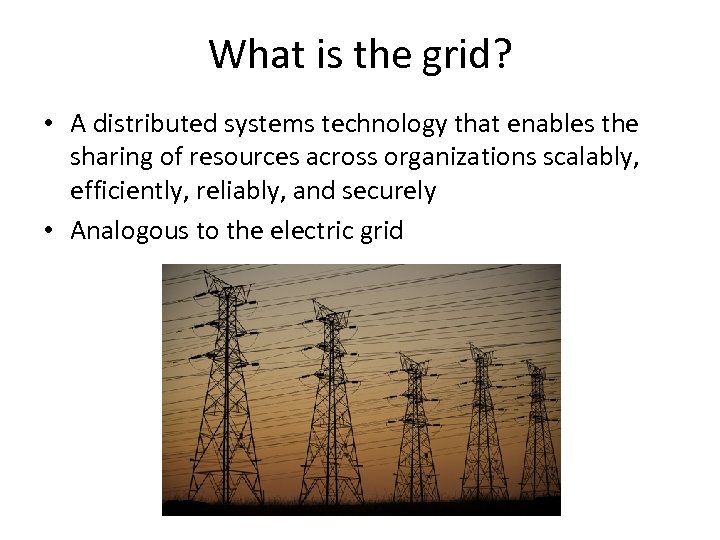 What is the grid? • A distributed systems technology that enables the sharing of resources across organizations scalably, efficiently, reliably, and securely • Analogous to the electric grid
 Why Study the Grid? • A highly successful technology • Deficiencies in the existing guidance for building grids Ø More to come • Grids are not easy to build – See CERN’s Large Hadron Collider • Their architecture was published very early – “anatomy” and “physiology” • Yet “What is (not) a grid? ” is still a subject of debate
 The Architectural Perspective • Grids are large, complex systems – Thousands of nodes or more – Span many agency boundaries • Qualities of Service (Qo. S) are critical – Scalability – Security – Performance – Reliability . . . • Software architecture is just what the doctor ordered Ø The set of principal design decisions about a software system [Taylor, Medvidovic, Dashofy 2009]
 So, What Did We Set out to Do? • Study grid’s reference requirements and architecture • Study the architectures of existing grid technologies • Compare the two ØKnowing that there will likely be very few straightforward answers • Suggest how to fix any discrepancies ØKnowing that there will likely be very few straightforward answers
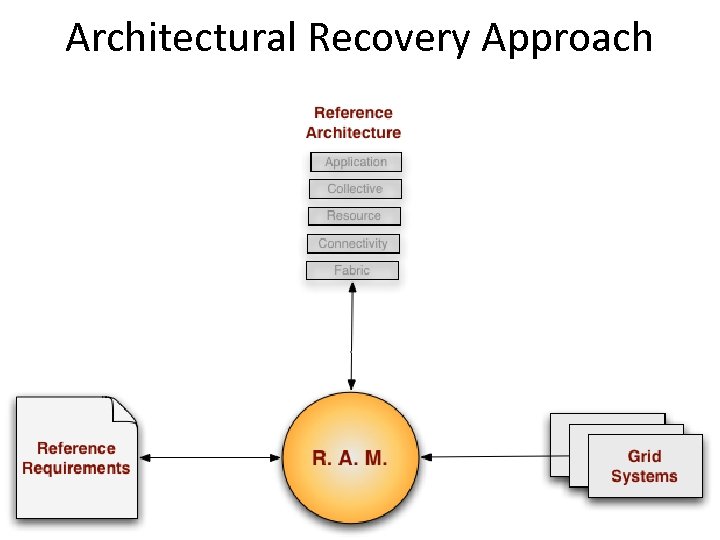 Architectural Recovery Approach
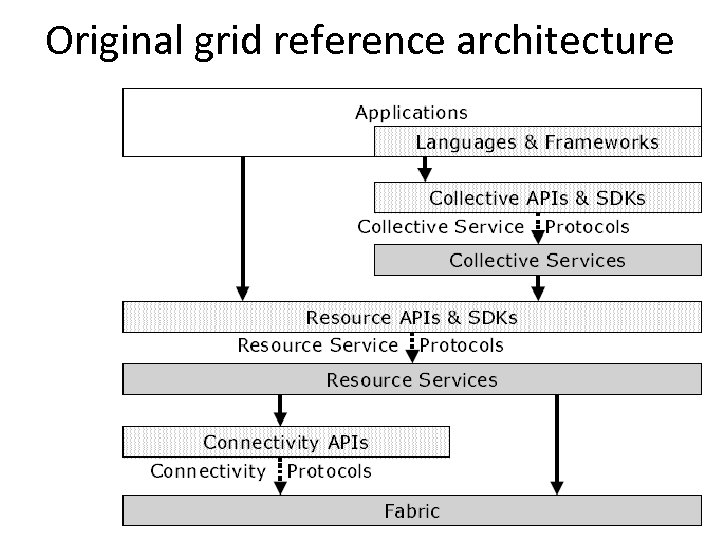 Original grid reference architecture
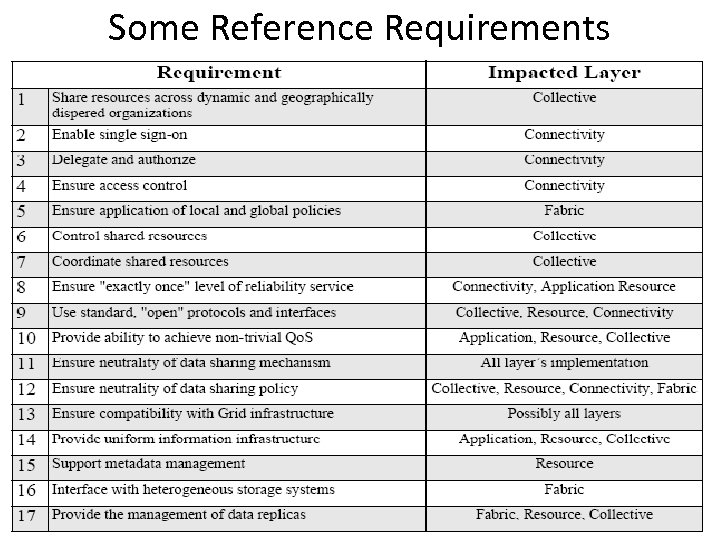 Some Reference Requirements
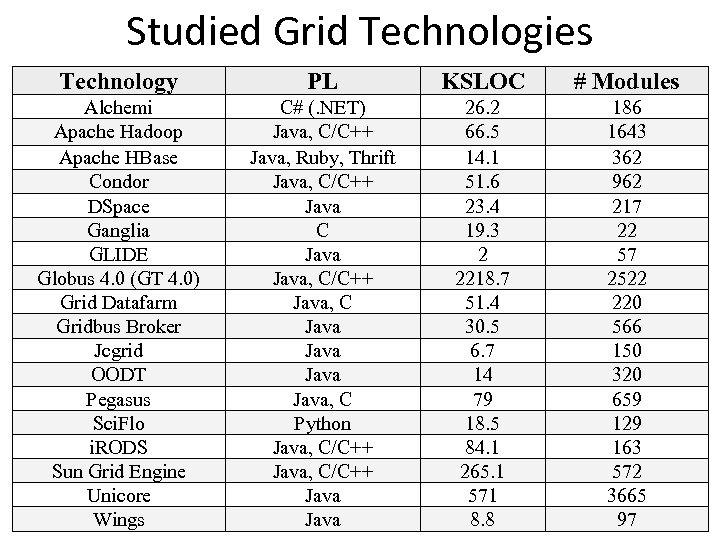 Studied Grid Technologies Technology PL KSLOC # Modules Alchemi Apache Hadoop Apache HBase Condor DSpace Ganglia GLIDE Globus 4. 0 (GT 4. 0) Grid Datafarm Gridbus Broker Jcgrid OODT Pegasus Sci. Flo i. RODS Sun Grid Engine Unicore Wings C# (. NET) Java, C/C++ Java, Ruby, Thrift Java, C/C++ Java C Java, C/C++ Java, C Java, C Python Java, C/C++ Java 26. 2 66. 5 14. 1 51. 6 23. 4 19. 3 2 2218. 7 51. 4 30. 5 6. 7 14 79 18. 5 84. 1 265. 1 571 8. 8 186 1643 362 962 217 22 57 2522 220 566 150 320 659 129 163 572 3665 97
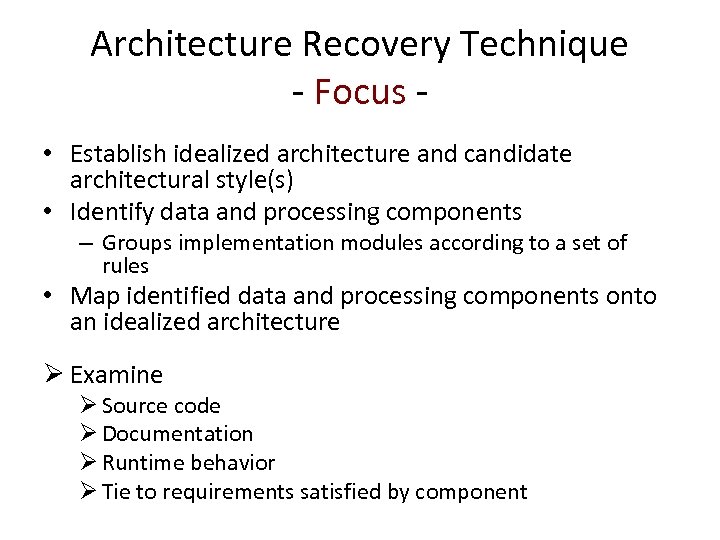 Architecture Recovery Technique - Focus • Establish idealized architecture and candidate architectural style(s) • Identify data and processing components – Groups implementation modules according to a set of rules • Map identified data and processing components onto an idealized architecture Ø Examine Ø Source code Ø Documentation Ø Runtime behavior Ø Tie to requirements satisfied by component
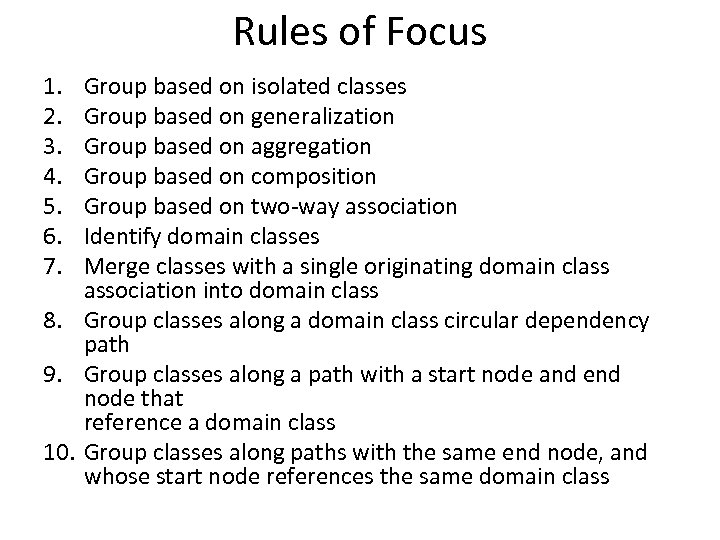 Rules of Focus 1. 2. 3. 4. 5. 6. 7. Group based on isolated classes Group based on generalization Group based on aggregation Group based on composition Group based on two-way association Identify domain classes Merge classes with a single originating domain class association into domain class 8. Group classes along a domain class circular dependency path 9. Group classes along a path with a start node and end node that reference a domain class 10. Group classes along paths with the same end node, and whose start node references the same domain class
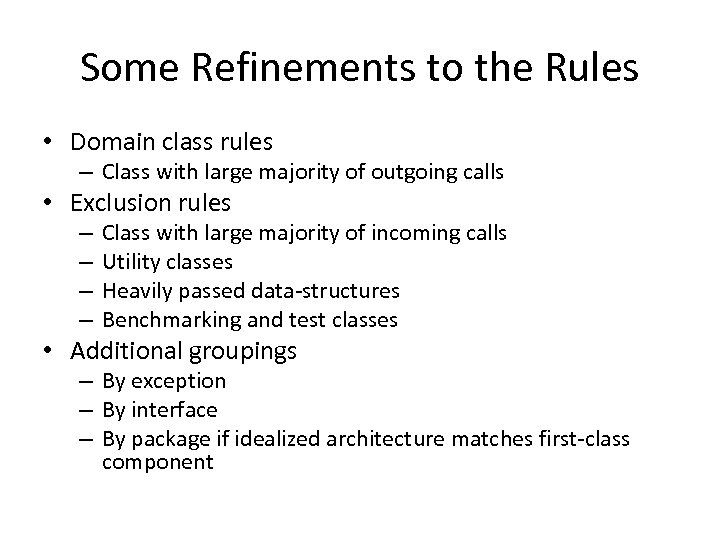 Some Refinements to the Rules • Domain class rules – Class with large majority of outgoing calls • Exclusion rules – – Class with large majority of incoming calls Utility classes Heavily passed data-structures Benchmarking and test classes • Additional groupings – By exception – By interface – By package if idealized architecture matches first-class component
 Focus Rules for Distributed Systems • Infer distributor connectors from idealized architecture • Classes with methods and names similar to first-class components are domain classes • Classes importing network communication libraries are domain classes • main() functions often identify first-class components • Classes deployed onto different hosts must be grouped separately
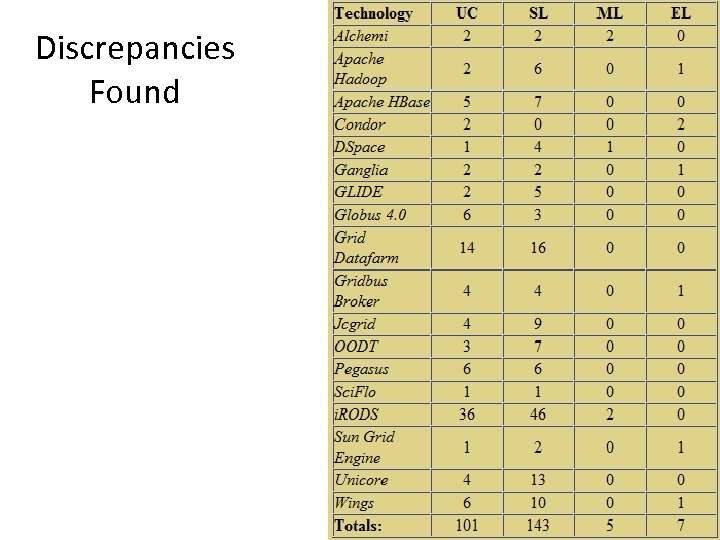
 Discovered discrepancies • • Empty layers Skipped Layers Up-calls Multi-layer components
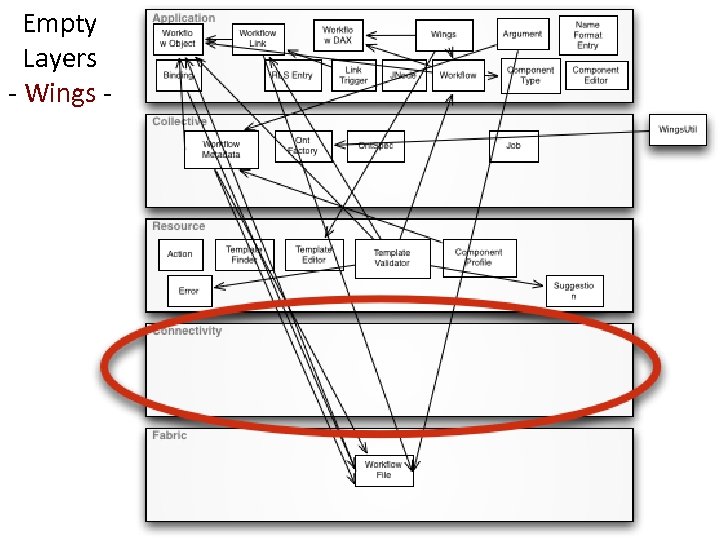 Empty Layers - Wings -
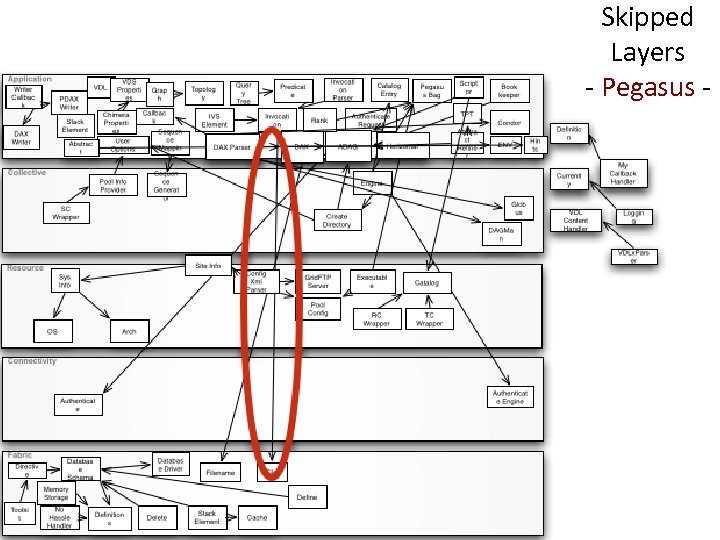 Skipped Layers - Pegasus -
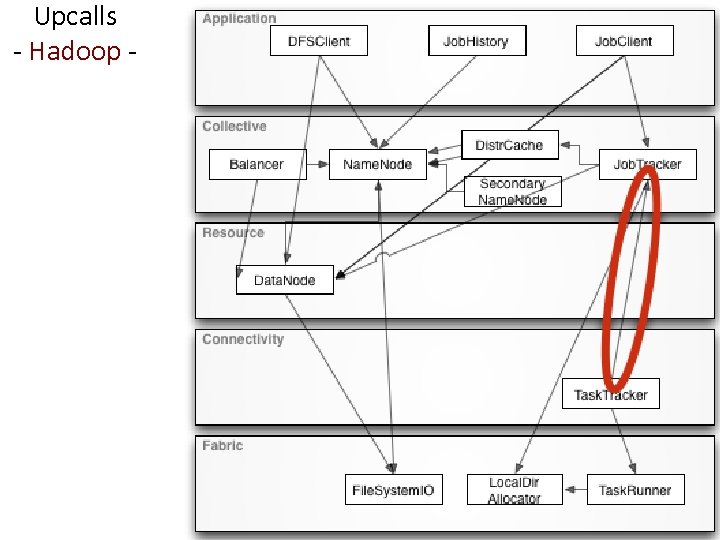 Upcalls - Hadoop -
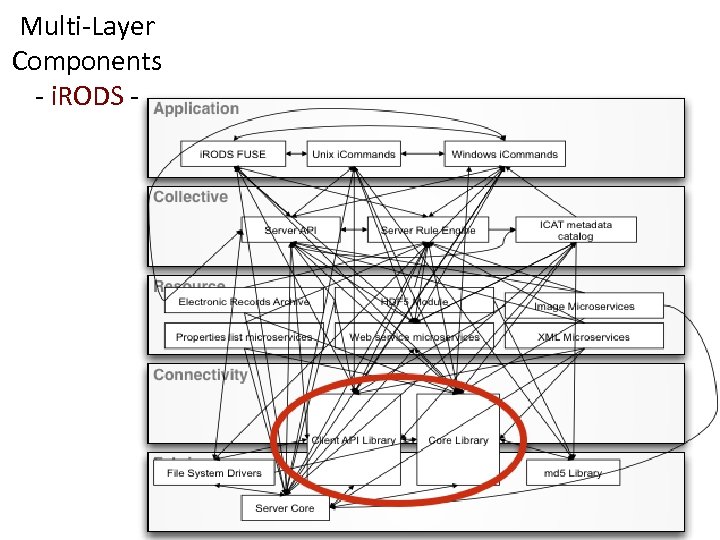 Multi-Layer Components - i. RODS -
 What about Globus?
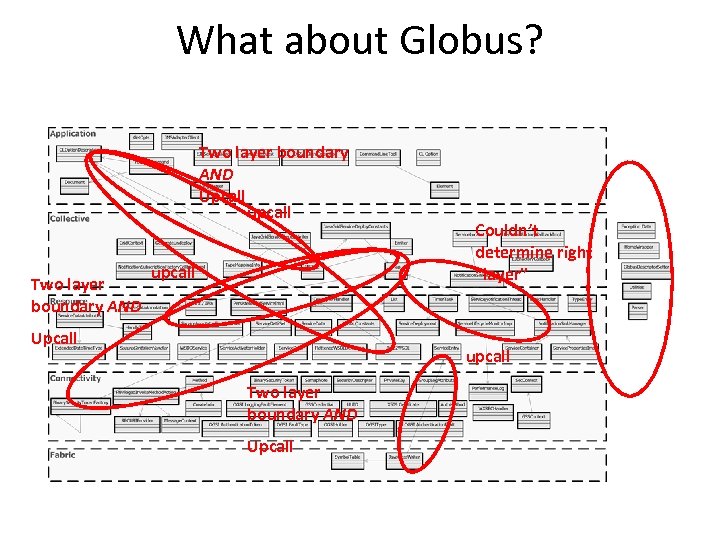 What about Globus? Two layer boundary AND Upcall upcall Two layer boundary AND upcall Upcall Couldn’t determine right “layer” upcall Two layer boundary AND Upcall
 Discrepancies Found
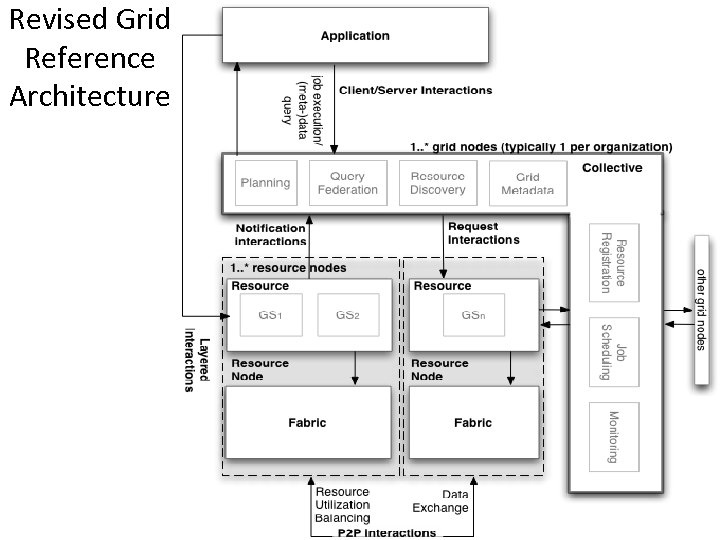
 Revised Grid Architecture • • The connectivity layer is eliminated Explicitly addressing deployment view Subsystem types rather than layer-oriented Four architectural styles comprise the grid – Client/server – Peer-to-peer – Layered – Event-based • An improved classification of grid technologies
 Revised Grid Reference Architecture
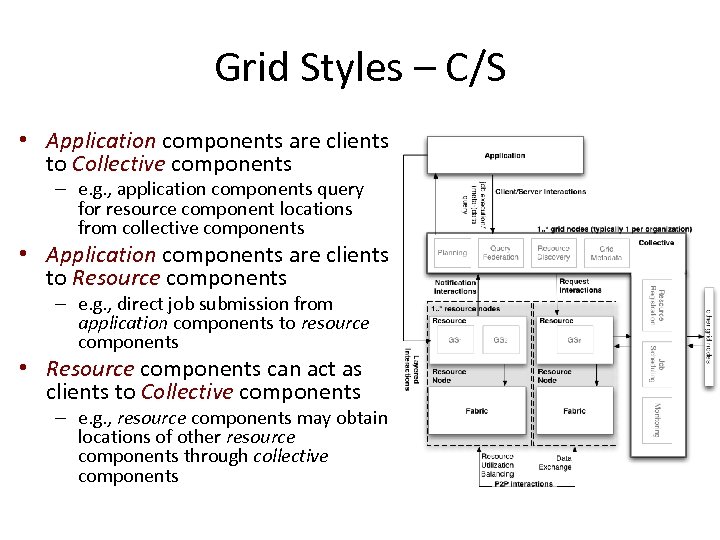 Grid Styles – C/S • Application components are clients to Collective components – e. g. , application components query for resource component locations from collective components • Application components are clients to Resource components – e. g. , direct job submission from application components to resource components • Resource components can act as clients to Collective components – e. g. , resource components may obtain locations of other resource components through collective components
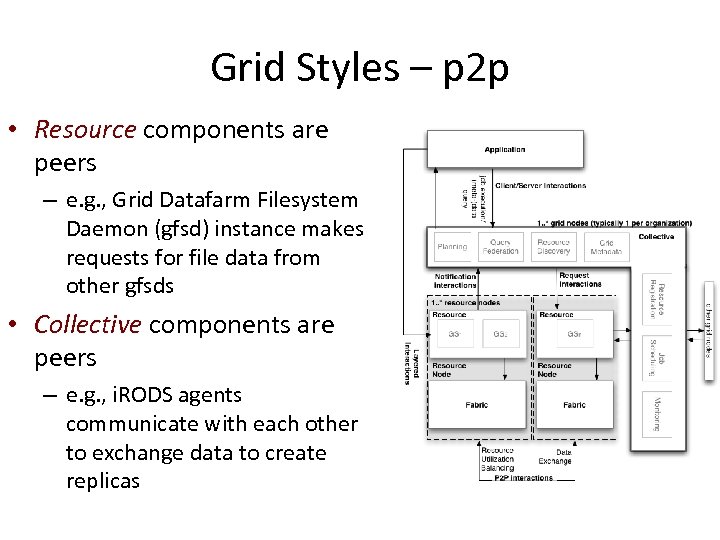 Grid Styles – p 2 p • Resource components are peers – e. g. , Grid Datafarm Filesystem Daemon (gfsd) instance makes requests for file data from other gfsds • Collective components are peers – e. g. , i. RODS agents communicate with each other to exchange data to create replicas
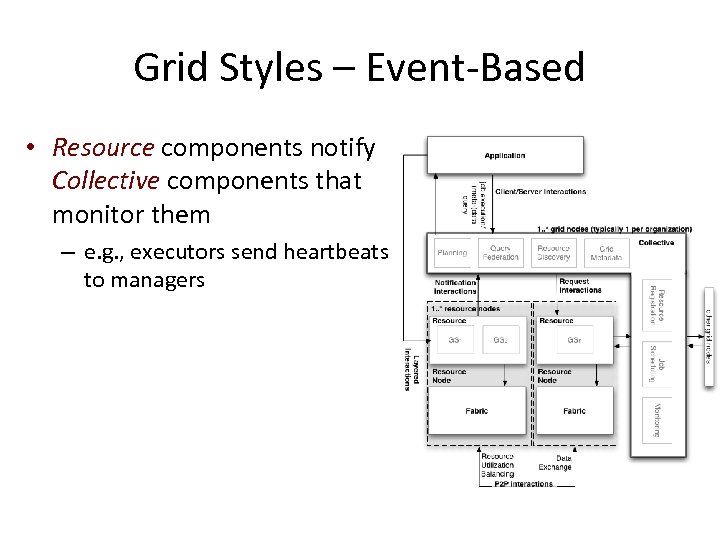 Grid Styles – Event-Based • Resource components notify Collective components that monitor them – e. g. , executors send heartbeats to managers
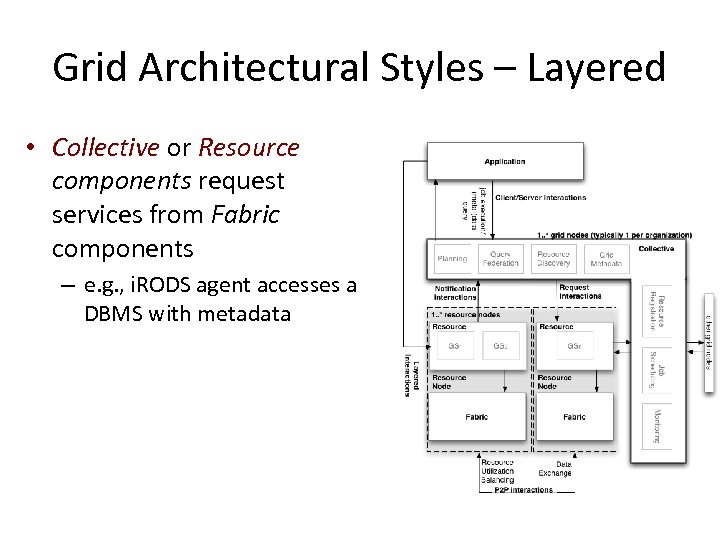 Grid Architectural Styles – Layered • Collective or Resource components request services from Fabric components – e. g. , i. RODS agent accesses a DBMS with metadata
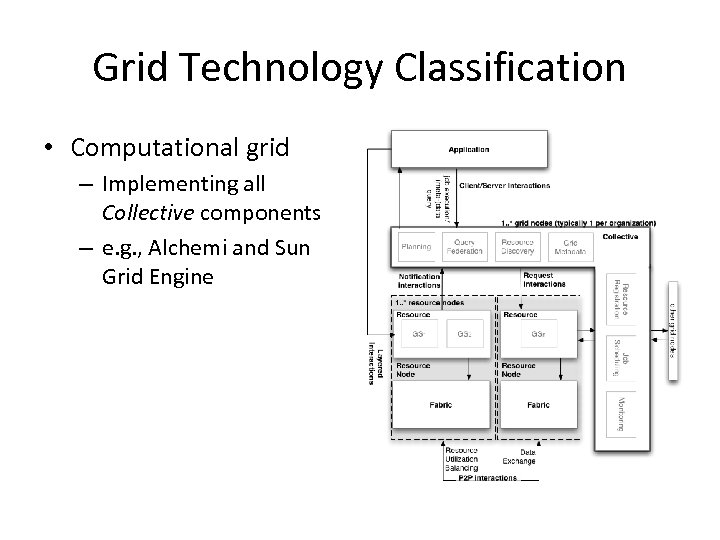 Grid Technology Classification • Computational grid – Implementing all Collective components – e. g. , Alchemi and Sun Grid Engine
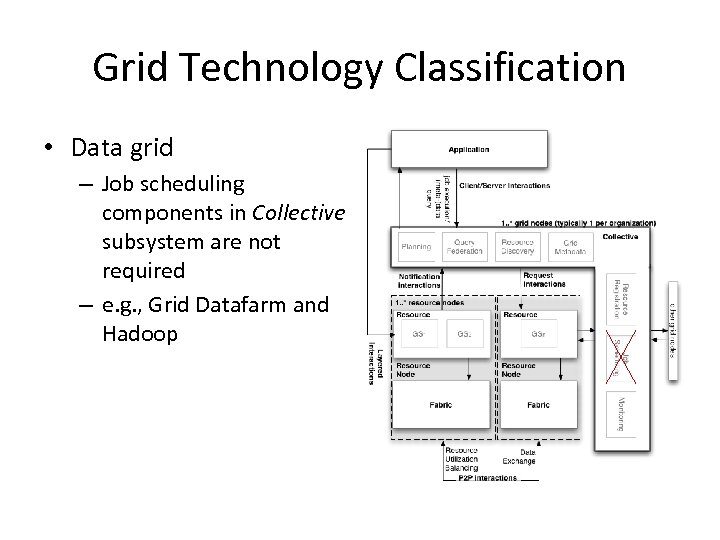 Grid Technology Classification • Data grid – Job scheduling components in Collective subsystem are not required – e. g. , Grid Datafarm and Hadoop
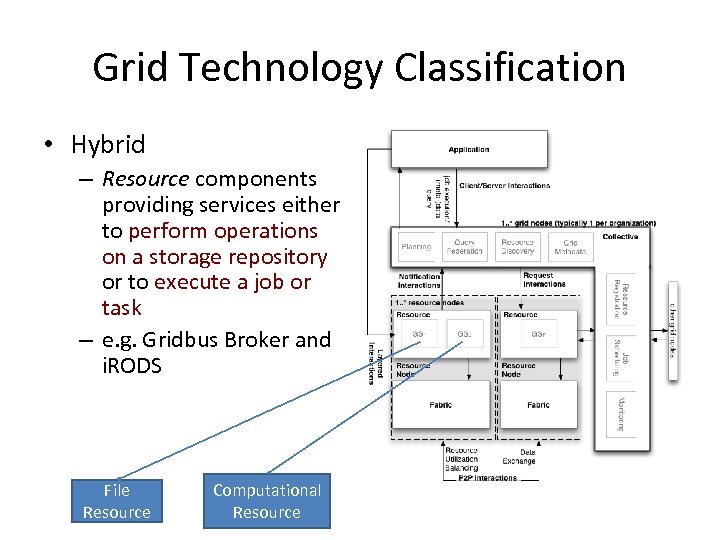 Grid Technology Classification • Hybrid – Resource components providing services either to perform operations on a storage repository or to execute a job or task – e. g. Gridbus Broker and i. RODS File Resource Computational Resource
 Correcting Violations in the Reference Architecture • Why were there originally so many upcalls? – Legitimate client-server and event-based communication • Why so many skipped layer calls? – The Fabric layer was at the wrong level of abstraction – Mostly utility classes that should be abstracted away • Why so many multi-layer components? – Connectivity layer was at the wrong level of abstraction – Not a layer, but utility libraries to enable connector functionality – Also accounts for skipped layer calls • Benefit of the deployment view – Essential for distributed systems – Helped to identify that the Fabric layer was not abstracted properly
 Where Are We Currently? • There are remaining violations – Are they legitimate or a result of an improperly recast reference architecture? • Original Focus is not ideal for recovering systems of these types – Distributed systems realized by a middleware • A more automated approach that combines static and dynamic analysis would be preferable • Use the recast reference architecture to build a new grid • What are the overarching grid principles?
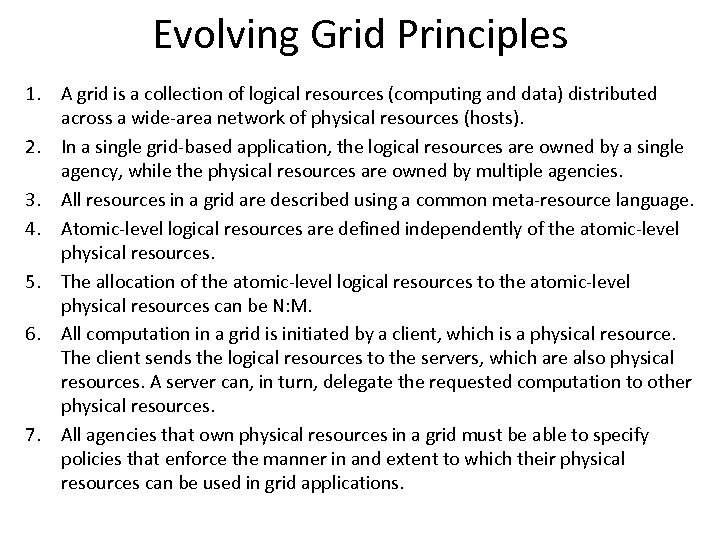 Evolving Grid Principles 1. A grid is a collection of logical resources (computing and data) distributed across a wide-area network of physical resources (hosts). 2. In a single grid-based application, the logical resources are owned by a single agency, while the physical resources are owned by multiple agencies. 3. All resources in a grid are described using a common meta-resource language. 4. Atomic-level logical resources are defined independently of the atomic-level physical resources. 5. The allocation of the atomic-level logical resources to the atomic-level physical resources can be N: M. 6. All computation in a grid is initiated by a client, which is a physical resource. The client sends the logical resources to the servers, which are also physical resources. A server can, in turn, delegate the requested computation to other physical resources. 7. All agencies that own physical resources in a grid must be able to specify policies that enforce the manner in and extent to which their physical resources can be used in grid applications.