



 The analysis of words
 A one syllable word is never divided Melt /melt/ Field /ˈfiːld/
 When two or more consonants come between two vowels, the word is usually divided between the first two consonants Car. pet /ˈkɑːpɪt/ Com. pare /kəmˈpeər/ Ad. dress /əˈdres/ An. nounced /əˈnaʊnst/ Fun. ny /ˈfʌn. i/ Id. ler /ˈaɪd. lər/
 When a single consonant comes between two vowels in a word, it is usually divided after the consonant (and the vowel is short) Bus. y /ˈbɪz. i/ Met. al /ˈmet. əl/ Writ. er /ˈraɪt. ər/
 When a single consonant comes between two vowels in a word, it is usually divided before the consonant (and the vowel is long) Meet. ing /ˈmiːtɪŋ/
 When a word has a prefix or suffix, the word is divided between the affix and the root Re. state /ˌriːˈsteɪt/ Mis. spell /mɪsˈspel/ Ex. cite. ment/ɪkˈsaɪt. mənt/ Right. ly /ˈraɪt. li/ Id. ler /ˈaɪd. lər/ Ex. haus. tive /ɪɡˈzɔː. stɪv/ Cy. cling /ˈsaɪ. kliŋ/ Mon. i. tor /ˈmɒn. ɪ. tər/
 Consonant-le (C-le) syllables Also known as the stable final syllable, Cle combinations are found only at the ends of words. Pay. a. ble /ˈpeɪ. ə. bl/ Nee. dle /ˈniːdl/ Syl. la. ble /ˈsɪl. ə. bl/
 When there are two vowels together that don’t represent a long vowel sound or a diphthong, divide the syllables between the vowels. Li. on /laɪ. ən/ Tow. er /taʊ. ər/ Flow. er /flaʊ. ər/ High. er /haɪ. ər/
 When be, de, ex and re at the beginning of a word, they make a syllable of their own. Re. spect /rɪˈspekt/ Be. tween /bɪˈtwiːn/
 The English long monophthongs, diphthongs and unstressed short vowels always occur in a phonetically open syllable Houses /ˈhaʊ. zɪz/
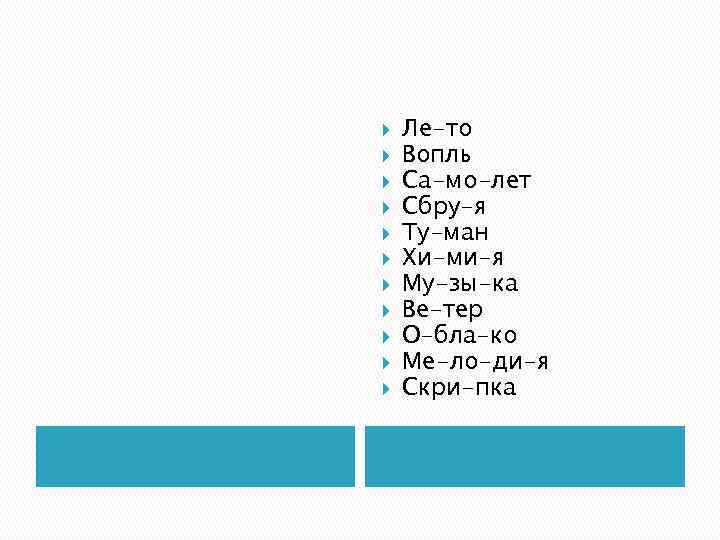 Ле-то Вопль Са-мо-лет Сбру-я Ту-ман Хи-ми-я Му-зы-ка Ве-тер О-бла-ко Ме-ло-ди-я Скри-пка