


 Скачать презентацию The American West The Pony Express n
6424f795882c39b9cf809e35e3b4e719.ppt
- Количество слайдов: 26
 The American West
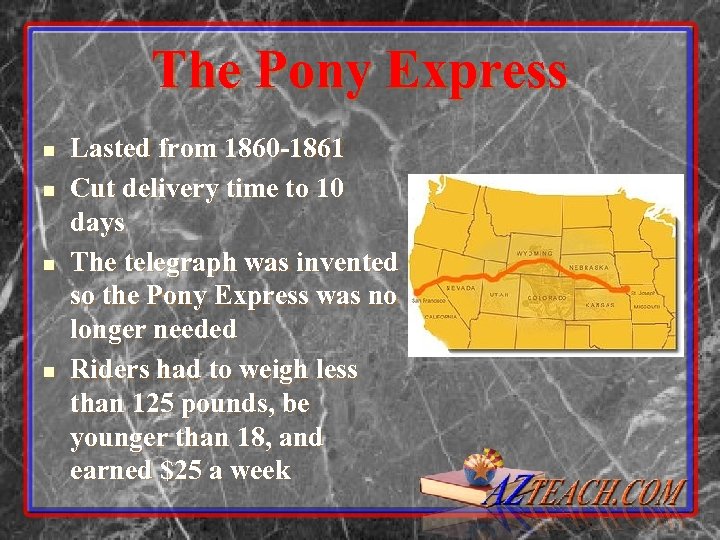 The Pony Express n n Lasted from 1860 -1861 Cut delivery time to 10 days The telegraph was invented so the Pony Express was no longer needed Riders had to weigh less than 125 pounds, be younger than 18, and earned $25 a week
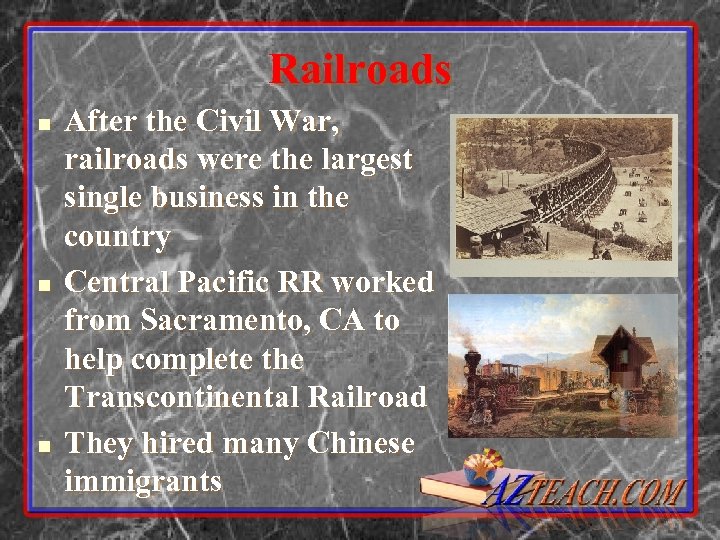 Railroads n n n After the Civil War, railroads were the largest single business in the country Central Pacific RR worked from Sacramento, CA to help complete the Transcontinental Railroad They hired many Chinese immigrants
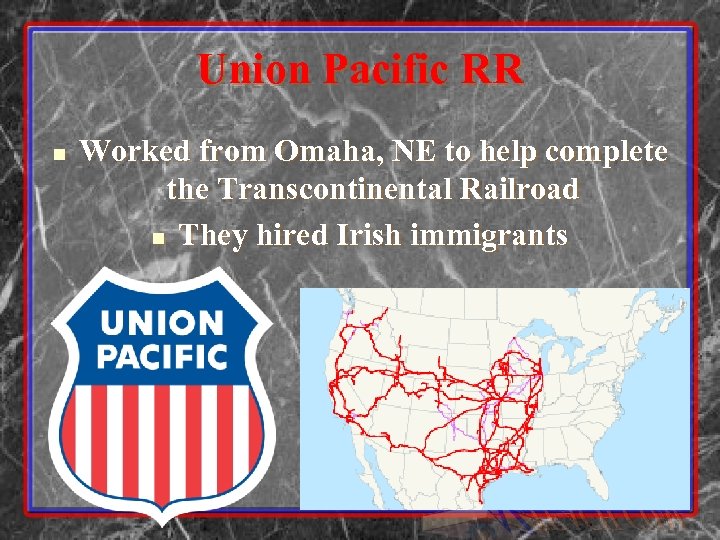 Union Pacific RR n Worked from Omaha, NE to help complete the Transcontinental Railroad n They hired Irish immigrants
 Railroads n n n The government offered incentives to RR companies In exchange for millions of acres of land from the federal government, railroads agreed to carry U. S. mail and soldiers at reduced rates Problems with building the RR-mountains, weather, dynamite
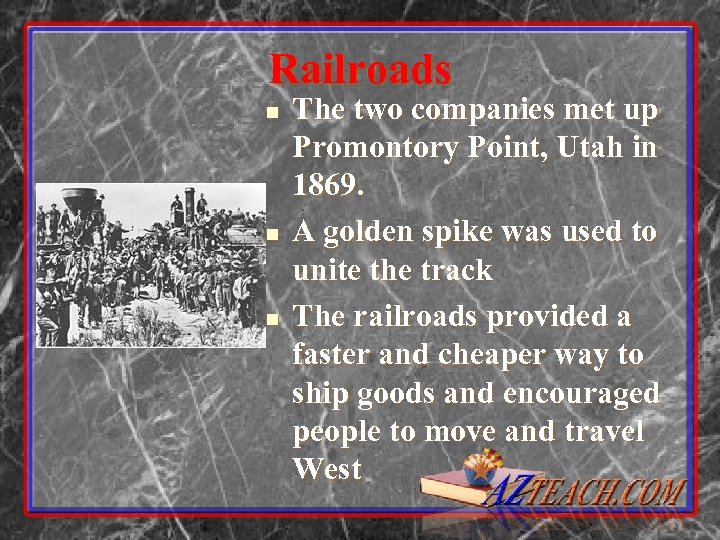 Railroads n n n The two companies met up Promontory Point, Utah in 1869. A golden spike was used to unite the track The railroads provided a faster and cheaper way to ship goods and encouraged people to move and travel West
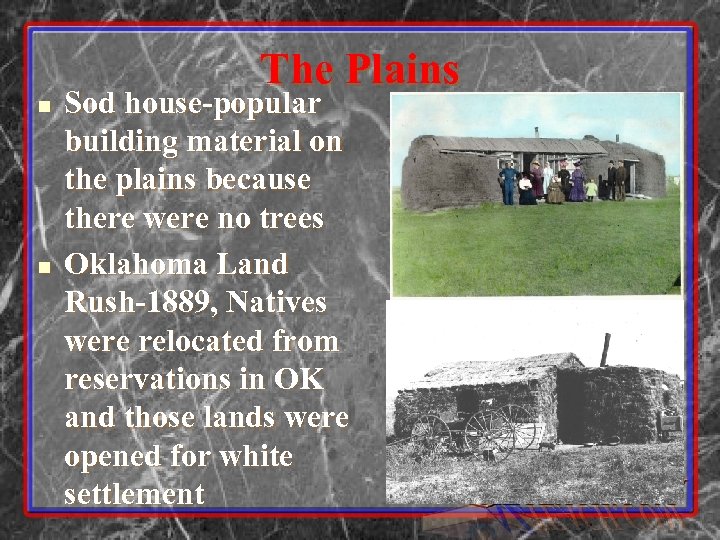 The Plains n n Sod house-popular building material on the plains because there were no trees Oklahoma Land Rush-1889, Natives were relocated from reservations in OK and those lands were opened for white settlement
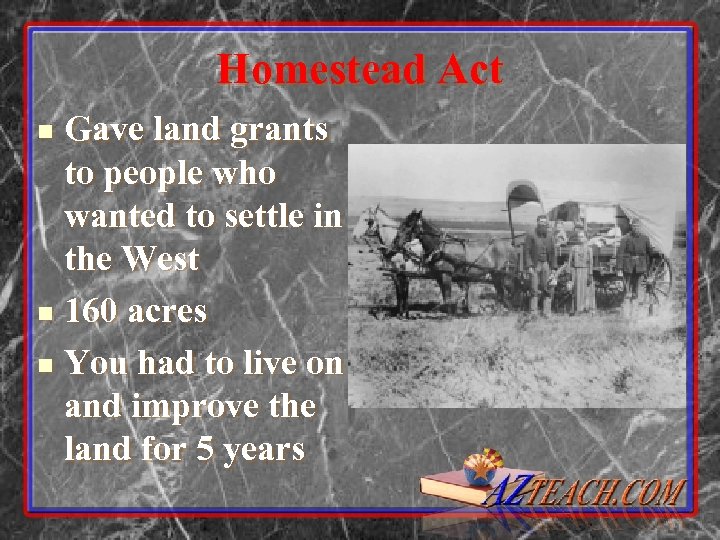 Homestead Act Gave land grants to people who wanted to settle in the West n 160 acres n You had to live on and improve the land for 5 years n
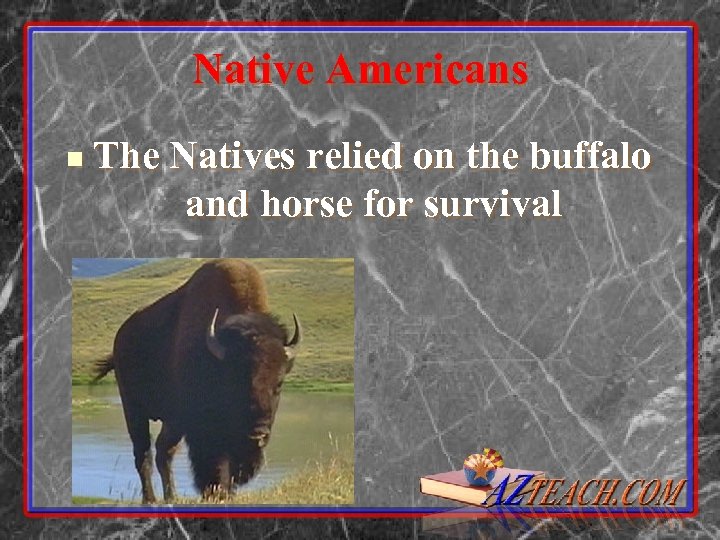 Native Americans n The Natives relied on the buffalo and horse for survival
 Destruction of the buffalo n n n White settlement reduced buffalo grazing land cut off migration routes White settlers’ livestock carried diseases The U. S. Army encouraged the destruction of the buffalo to try and wipe out the Plains Indians and force them onto reservations Whites hunted buffalo for sport and profit In 1800, we had 60 million buffalo, in 1860 = 15 million and 1894 only a few hundred remained!
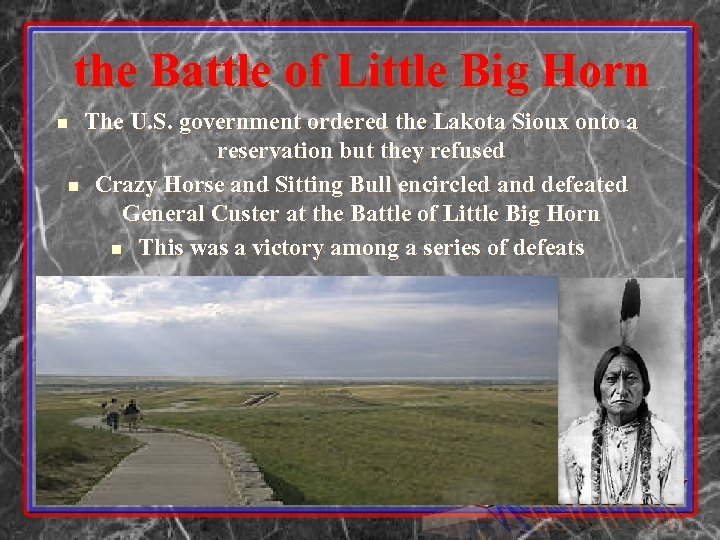 the Battle of Little Big Horn The U. S. government ordered the Lakota Sioux onto a reservation but they refused n Crazy Horse and Sitting Bull encircled and defeated General Custer at the Battle of Little Big Horn n This was a victory among a series of defeats n
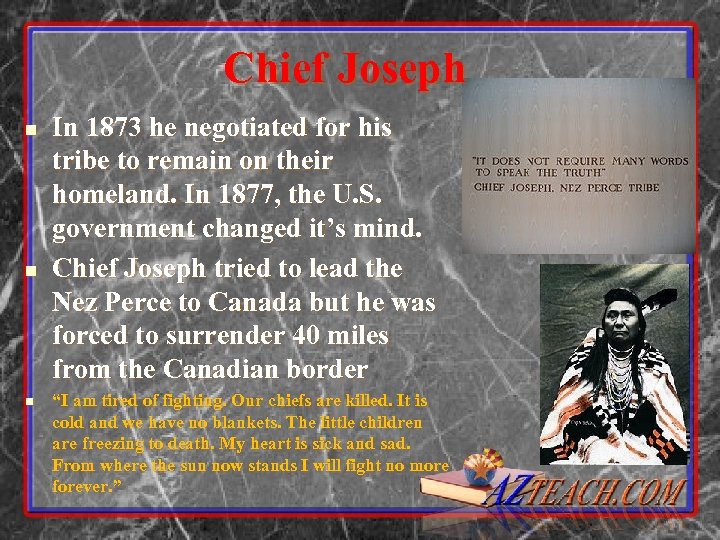 Chief Joseph n n n In 1873 he negotiated for his tribe to remain on their homeland. In 1877, the U. S. government changed it’s mind. Chief Joseph tried to lead the Nez Perce to Canada but he was forced to surrender 40 miles from the Canadian border “I am tired of fighting. Our chiefs are killed. It is cold and we have no blankets. The little children are freezing to death. My heart is sick and sad. From where the sun now stands I will fight no more forever. ”
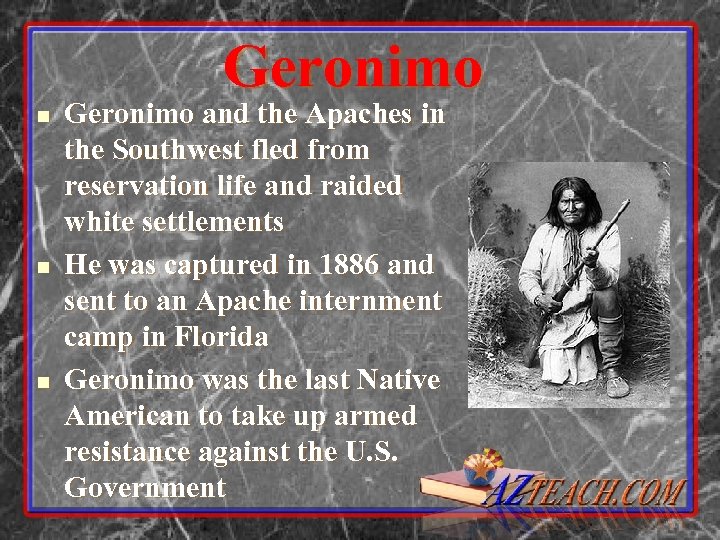 Geronimo n n n Geronimo and the Apaches in the Southwest fled from reservation life and raided white settlements He was captured in 1886 and sent to an Apache internment camp in Florida Geronimo was the last Native American to take up armed resistance against the U. S. Government
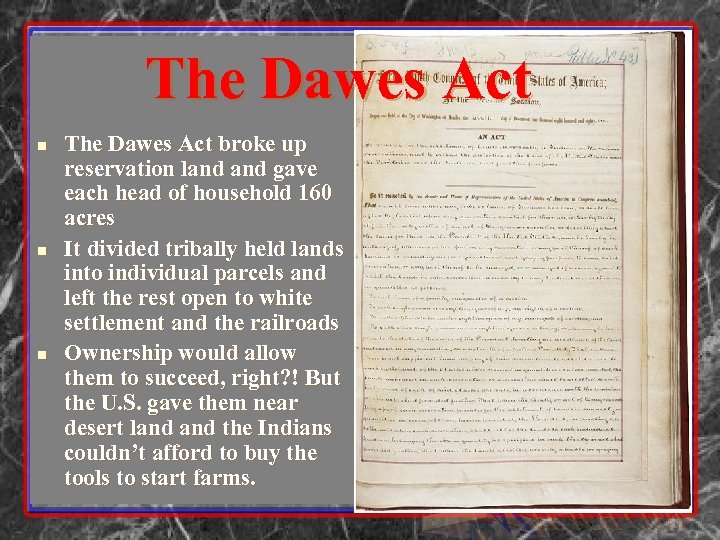 The Dawes Act n n n The Dawes Act broke up reservation land gave each head of household 160 acres It divided tribally held lands into individual parcels and left the rest open to white settlement and the railroads Ownership would allow them to succeed, right? ! But the U. S. gave them near desert land the Indians couldn’t afford to buy the tools to start farms.
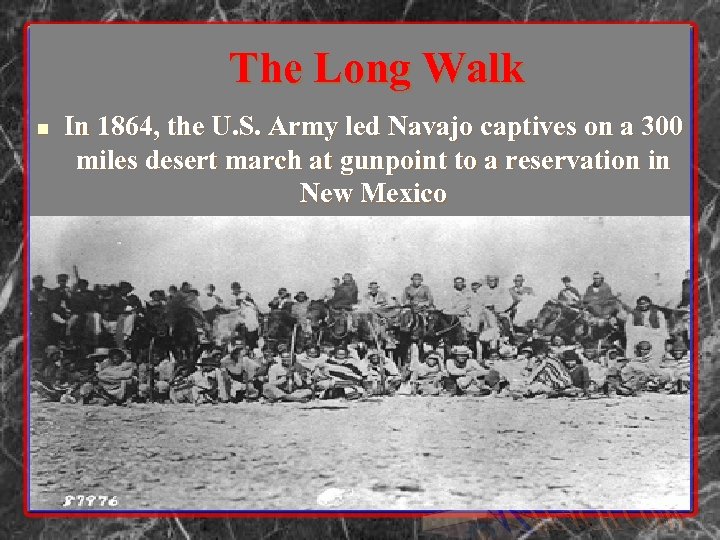 The Long Walk n In 1864, the U. S. Army led Navajo captives on a 300 miles desert march at gunpoint to a reservation in New Mexico
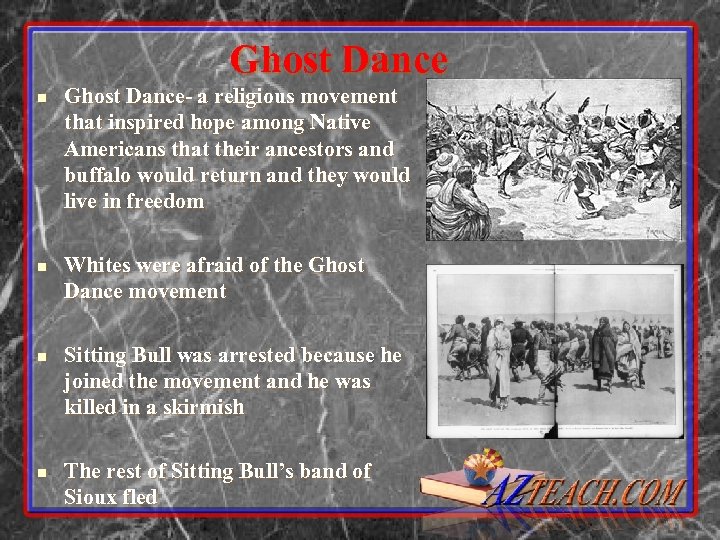 Ghost Dance n n Ghost Dance- a religious movement that inspired hope among Native Americans that their ancestors and buffalo would return and they would live in freedom Whites were afraid of the Ghost Dance movement Sitting Bull was arrested because he joined the movement and he was killed in a skirmish The rest of Sitting Bull’s band of Sioux fled
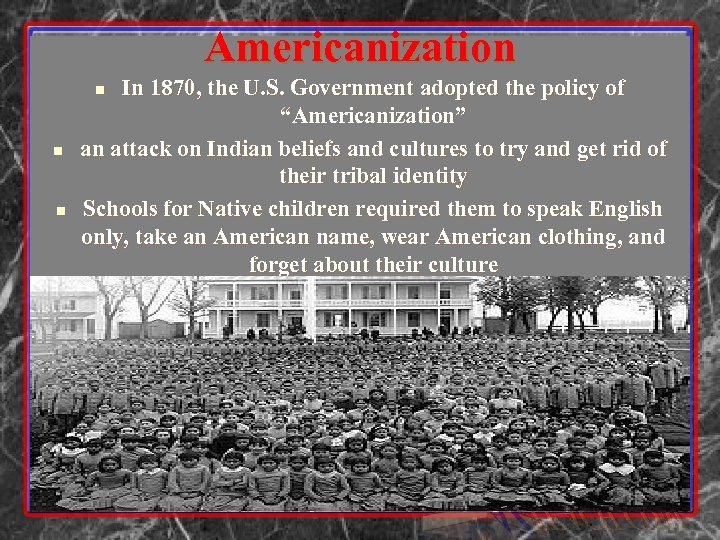 Americanization In 1870, the U. S. Government adopted the policy of “Americanization” an attack on Indian beliefs and cultures to try and get rid of their tribal identity Schools for Native children required them to speak English only, take an American name, wear American clothing, and forget about their culture n n n
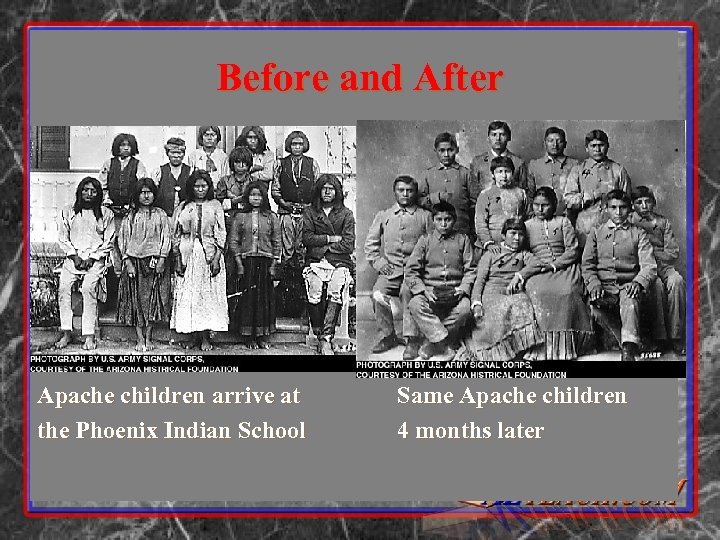 Before and After Apache children arrive at the Phoenix Indian School Same Apache children 4 months later
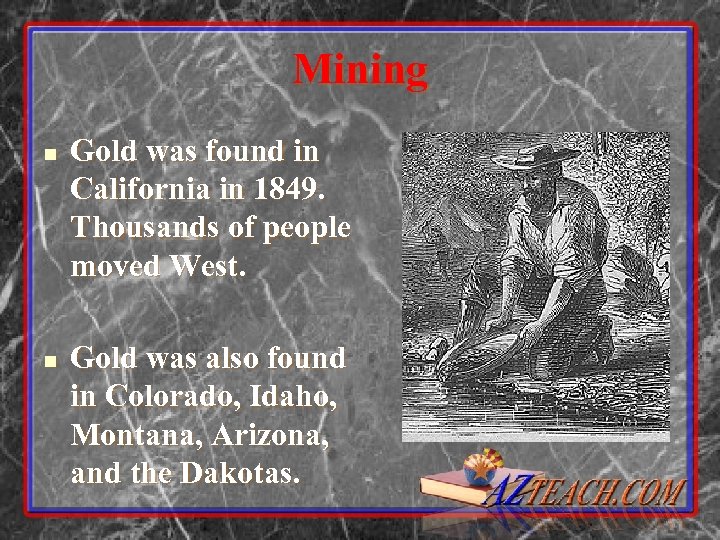 Mining n n Gold was found in California in 1849. Thousands of people moved West. Gold was also found in Colorado, Idaho, Montana, Arizona, and the Dakotas.
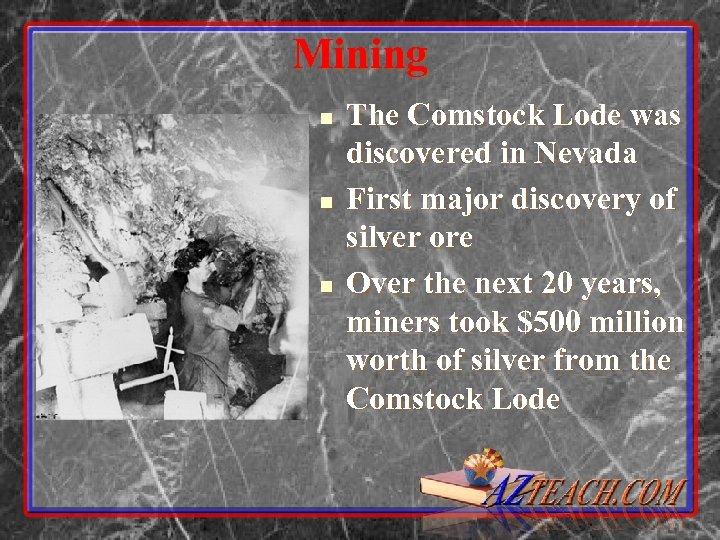 Mining n n n The Comstock Lode was discovered in Nevada First major discovery of silver ore Over the next 20 years, miners took $500 million worth of silver from the Comstock Lode
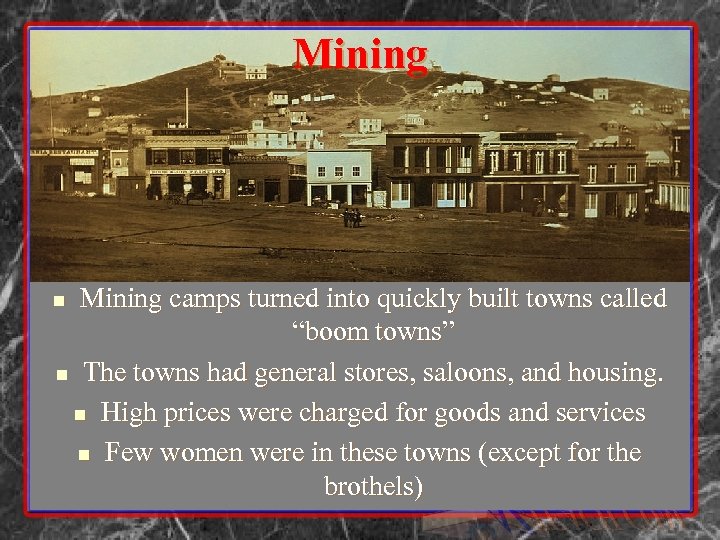 Mining camps turned into quickly built towns called “boom towns” n The towns had general stores, saloons, and housing. n High prices were charged for goods and services n Few women were in these towns (except for the brothels) n
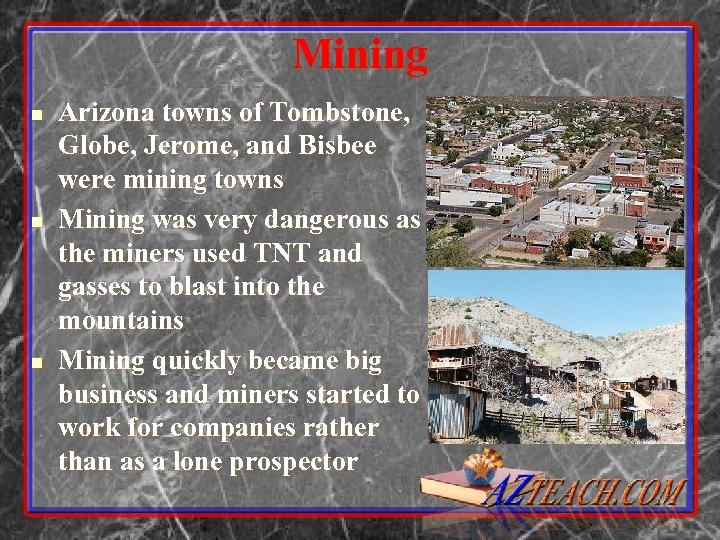 Mining n n n Arizona towns of Tombstone, Globe, Jerome, and Bisbee were mining towns Mining was very dangerous as the miners used TNT and gasses to blast into the mountains Mining quickly became big business and miners started to work for companies rather than as a lone prospector
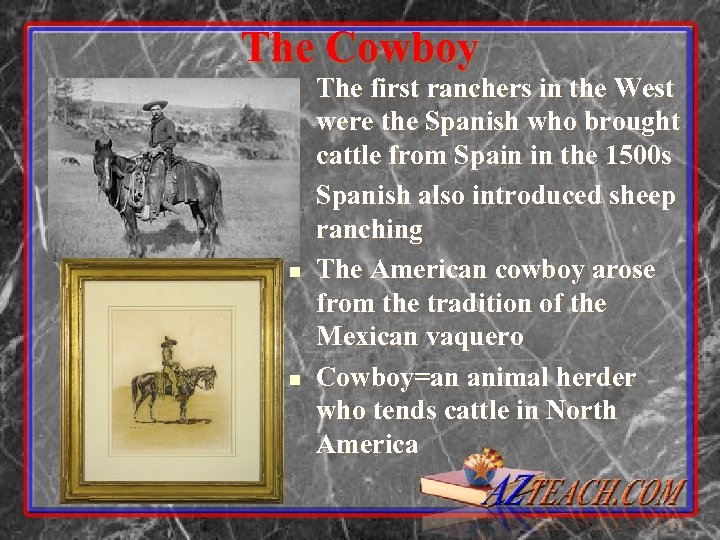 The Cowboy n n The first ranchers in the West were the Spanish who brought cattle from Spain in the 1500 s Spanish also introduced sheep ranching The American cowboy arose from the tradition of the Mexican vaquero Cowboy=an animal herder who tends cattle in North America
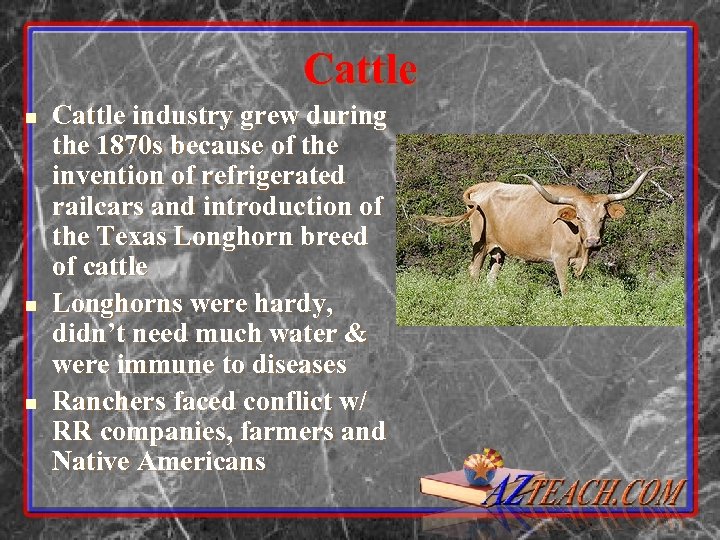 Cattle n n n Cattle industry grew during the 1870 s because of the invention of refrigerated railcars and introduction of the Texas Longhorn breed of cattle Longhorns were hardy, didn’t need much water & were immune to diseases Ranchers faced conflict w/ RR companies, farmers and Native Americans
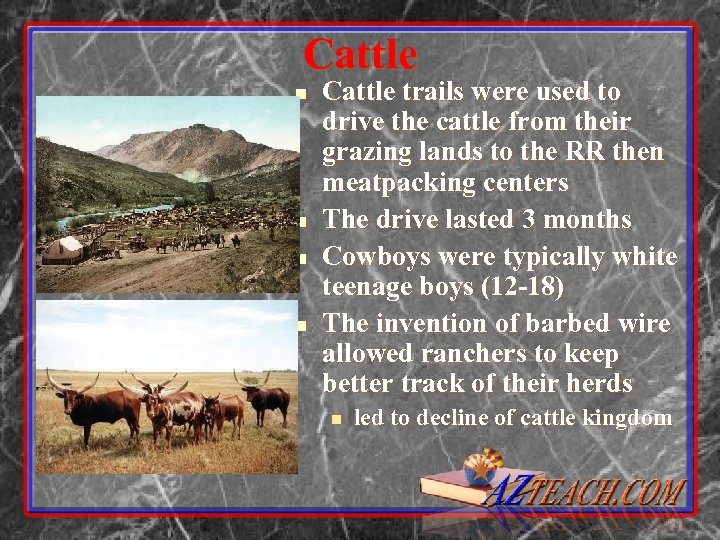 Cattle n n Cattle trails were used to drive the cattle from their grazing lands to the RR then meatpacking centers The drive lasted 3 months Cowboys were typically white teenage boys (12 -18) The invention of barbed wire allowed ranchers to keep better track of their herds n led to decline of cattle kingdom
 QUESTIONS?