


 Скачать презентацию The Aging Workforce Jack Tiffany PA-C Industrial
c0954d5e717f19bc535e51561e6ea3f7.ppt
- Количество слайдов: 36
 The Aging Workforce
 Jack Tiffany, PA-C Industrial Medical Associates 515 -560 -8660 jacktiffany@verizon. net © Jack Tiffany 2006
 Terms “Older” worker: anyone at least 55 years of age “Baby Boomer”: anyone born between 1946 & 1964
 Recent studies have shown that many Baby Boomers expect to continue working at least part-time as they move into what have traditionally been thought of as the “retirement years. ”
 Should employers be concerned?
 NEW YORK--(BUSINESS WIRE)--Feb. 28, 2006 -- More than one-third (34%) of all employers - and nearly half (46%) with 25, 000 or more workers - agree that the aging workforce will have a significant impact on their company, yet more than three-quarters (79%) have not taken any steps to accommodate older workers, according to the 2005/2006 Met. Life Employee Benefits Trend Study.
 Is this a new trend?
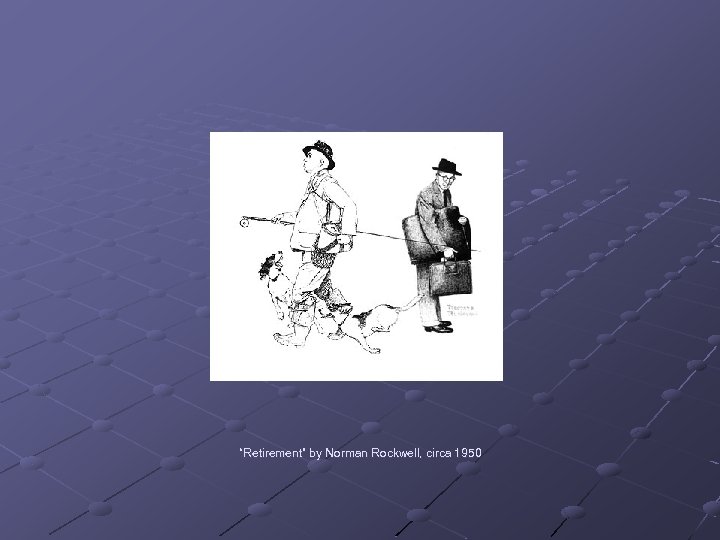 “Retirement” by Norman Rockwell, circa 1950
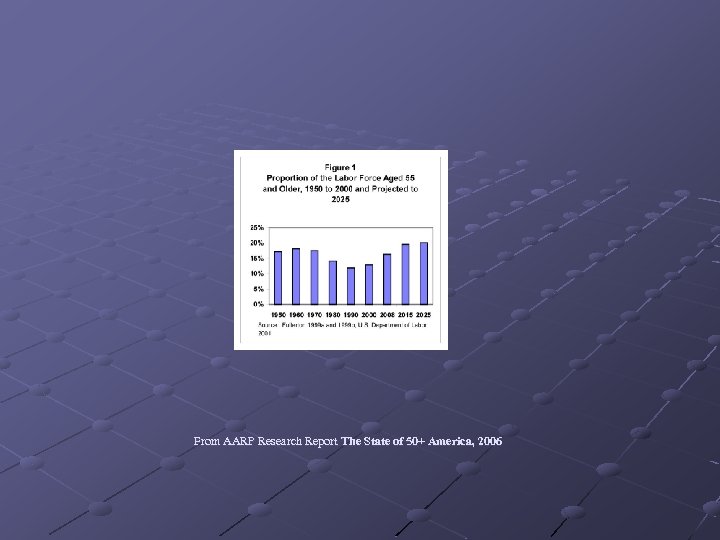 From AARP Research Report The State of 50+ America, 2006
 Are Baby Boomers different from previous generation?
 Baby Boomers have different beliefs about work From Living Longer, Working Longer: The Changing Landscape of the Aging Workforce – A Met. Life Study
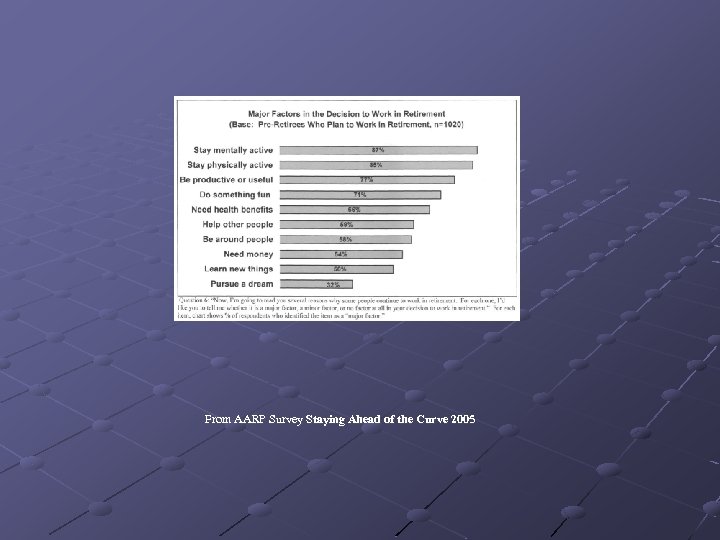 From AARP Survey Staying Ahead of the Curve 2005
 But…
But…
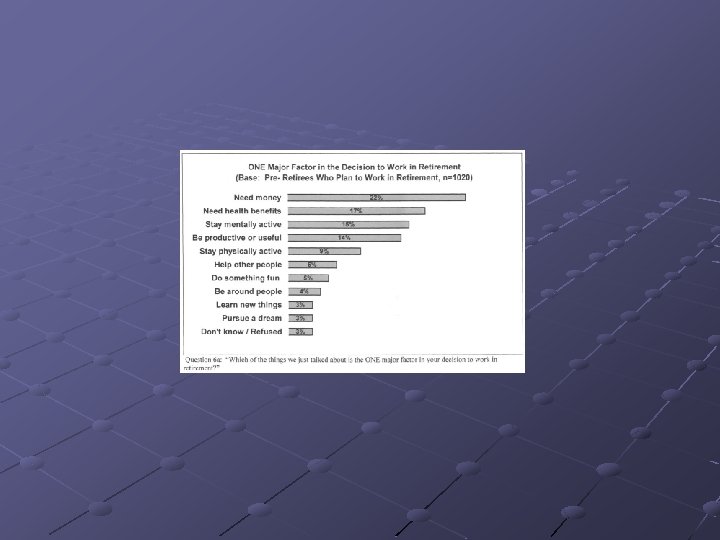
 Yet…there is one major difference
 Baby Boomers are more obese & they have more obesity related arthritis From Obesity and Arthritis Among Baby Boomers, American Journal of Public Health, September, 2005
 In an Arthritis Foundation-funded study, researchers from the Beth Israel Deaconess Medical Center and the Harvard School of Medicine analyzed data from the U. S. Bureau of the Census and the National Center for Health Statistics to compare obesity trends of the "baby boomer" generation (born 1946 -1965) as compared to that of the so-called "silent" generation (born 1926 -1945). The results of this analysis was startling. Between the ages of 35 -44, between 28 percent and 32 percent of baby boomers were obese. At the same age, only 14 percent to 18 percent of the silent generation was obese. In addition, the percentage of obesity in baby boomers between ages 25 and 44 was nearly identical to that of the silent generation when they were 10 to 20 years older. Therefore, baby boomers are becoming more obese earlier than the previous generation and are living longer with the health effects of that obesity.
 One hundred forty million person aged 20 and older are currently employed in the United States. Twenty-nine percent of them are obese, up from 20% a decade ago. With obesity comes an increased rate of work limitation, along with significantly increased rates of hypertension, dyslipidemia, type 2 diabetes, the metabolic syndrome, and arthritis. From Pfizer Facts Obesity in the United States Workforce, 2004 http: //www. pfizer. com/pfizer/download/health/pubs_facts_ obesity. pdf
 58% of adults in NYS are overweight or obese. From CDC BRFSS, 2004
 Add obesity to
 Natural effects of aging on our bodies Loss of muscle mass (fewer & shorter muscle fibers) causes loss of strength (large & small muscles), flexibility, & range of motion. Reduced visual capacity (acuity, depth perception, field of vision); 60 yo requires 2 -3 times more light than 20 yo Slower mental processing of information – decreases reaction time; lessens ability to utilize muscles effectively – decreases dexterity & coordination From CNA Risk Control Document The Aging Workforce: How will it Affect Your Business, 2006
 Plus
Plus
 Hearing Loss Hearing loss represents the third most prevalent health complaint in older adults following arthritis and stroke Age, excessive noise exposure, and treatment with ototoxic medications all contribute to hearing loss Data indicate an alarming increase in the prevalence and incidence of hearing loss at earlier stages in life, especially among men in the 35 -to-60 age group Compromised auditory ability in speech communication and in sound localization and detection can pose a safety risk to affected individuals as well as to coworkers From Hearing health and care: The need for improved hearing loss prevention and hearing conservation practices, Stephen A. Fausti, et al, Journal of Rehabilitation & Research, Volume 42, Number 4, July/August 2005
 And employers will see a higher prevalence of chronic illnesses & a higher incidence of injuries & MSDs
 Employers should be concerned 55 -64 year olds accounted for 12. 6% of workforce & 23% of workforce fatalities in 1998 22. 2% report activity limitation caused by chronic conditions Health insurance costs 1. 7 -2. 6 times higher than workers in 40 s Although injury rates are lower for older workers, when injuries occur they are more severe & more costly to treat & compensate Median number lost time days due to work injuries & illnesses was 10 days compared to 5 days for rest of workforce in 1998 Absenteeism & presenteeism = lost & reduced productivity From AARP Report Health & Safety Issues in an Aging Workforce, 2001 Workforce,
 Employers will also face a shortage of younger workers
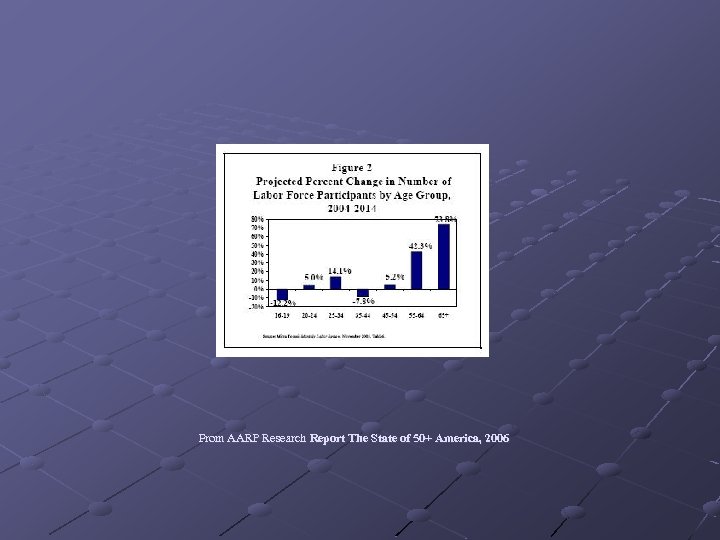 From AARP Research Report The State of 50+ America, 2006
 Consequently
 Employers will need to retain and/or recruit older workers
 So…what do employers do?
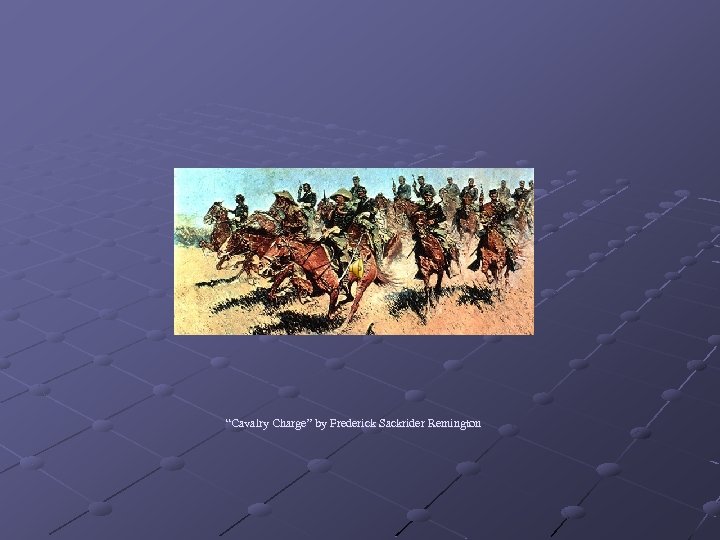 “Cavalry Charge” by Frederick Sackrider Remington
 Have an effective ergonomic program in place…
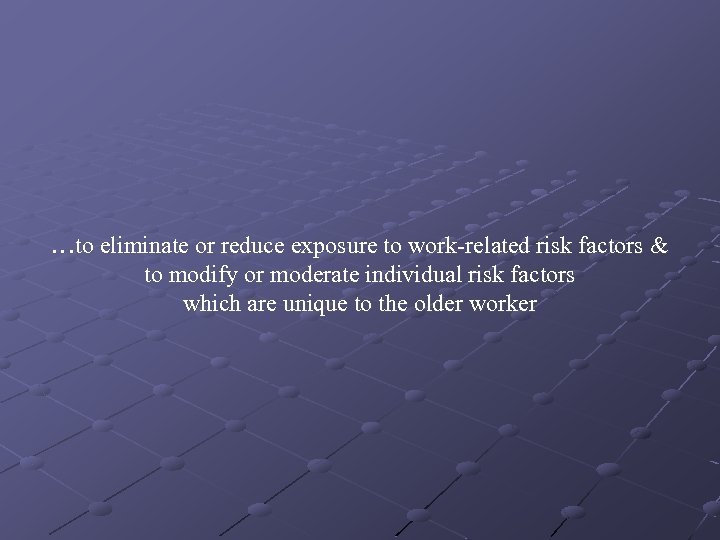 …to eliminate or reduce exposure to work-related risk factors & to modify or moderate individual risk factors which are unique to the older worker
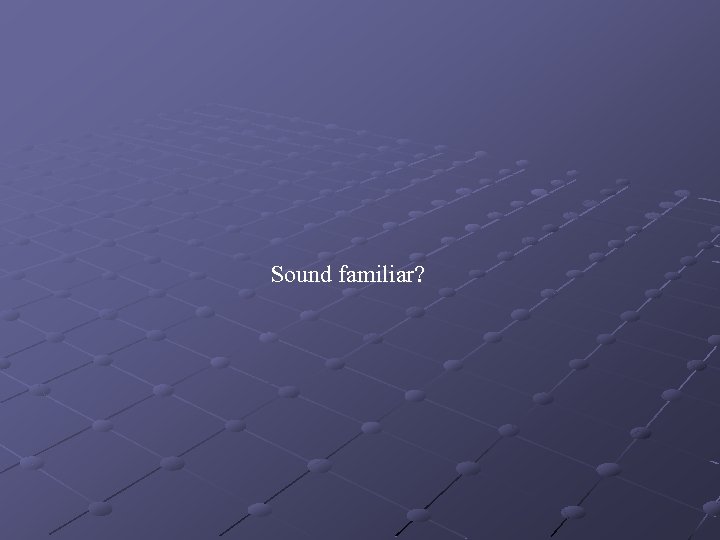 Sound familiar?
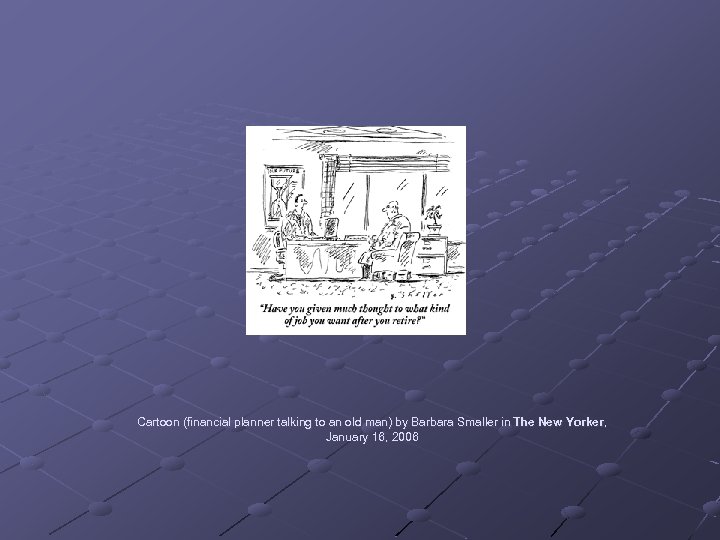 Cartoon (financial planner talking to an old man) by Barbara Smaller in The New Yorker, January 16, 2006
 Discussion