


 Скачать презентацию The Aggregate Supply Aggregate Demand Model 2012 Copyright
828a11840e49b4f8cdb10d22e8d6ea0f.ppt
- Количество слайдов: 46
 The Aggregate Supply/ Aggregate Demand Model 2012 Copyright 2004 Mc. Graw-Hill Australia Pty Ltd PPTs t/a Macroeconomics 7/e by Jackson and Mc. Iver Slides prepared by Muni Perumal, University of Canberra, Australia 6 -1
 Learning Objectives • Introduce the Keynesian Aggregate Expenditure model and discuss the importance of the multiplier effect. • Introduce the of aggregate demand aggregate supply model. Copyright 2004 Mc. Graw-Hill Australia Pty Ltd PPTs t/a Macroeconomics 7/e by Jackson and Mc. Iver Slides prepared by Muni Perumal, University of Canberra, Australia 8 -2
 Autonomous Expenditure Changes • Shifts in the AE curve due to changes in autonomous expenditure – result in new equilibrium levels of output (GDP) – how much output changes by depends on the size of the expenditure multiplier Copyright 2004 Mc. Graw-Hill Australia Pty Ltd PPTs t/a Macroeconomics 7/e by Jackson and Mc. Iver Slides prepared by Muni Perumal, University of Canberra, Australia 7 -3
 Expenditure Multiplier • A change in autonomous expenditure results in a change in equilibrium income that is a multiple of the initial change • The multiplier is defined as the ratio of the change in GDP arising from a change in autonomous spending Copyright 2004 Mc. Graw-Hill Australia Pty Ltd PPTs t/a Macroeconomics 7/e by Jackson and Mc. Iver Slides prepared by Muni Perumal, University of Canberra, Australia 7 -4
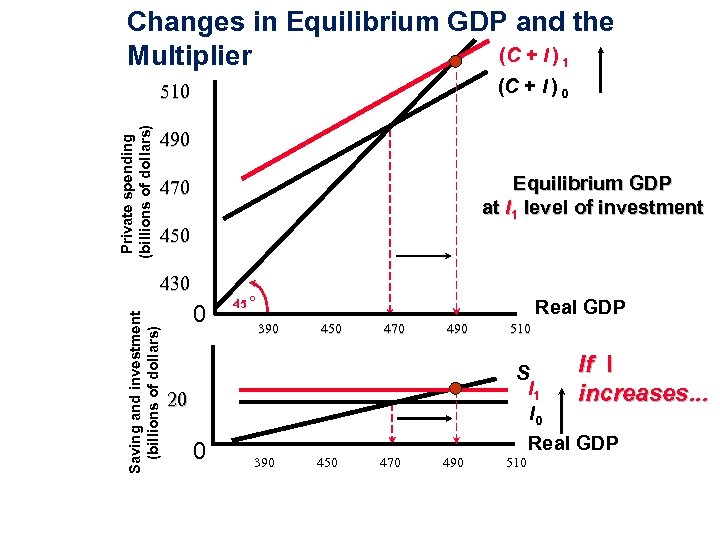 Changes in Equilibrium GDP and the (C + I ) 1 Multiplier (C + I ) 0 Private spending (billions of dollars) 510 490 Equilibrium GDP at I 1 level of investment 470 450 Saving and investment (billions of dollars) 430 0 45 o Real GDP 390 450 470 490 20 0 390 450 470 490 510 If I S I 1 increases. . . I 0 Real GDP 510 Copyright 2004 Mc. Graw-Hill Australia Pty Ltd PPTs t/a Macroeconomics 7/e by Jackson and Mc. Iver Slides prepared by Muni Perumal, University of Canberra, Australia 7 -5
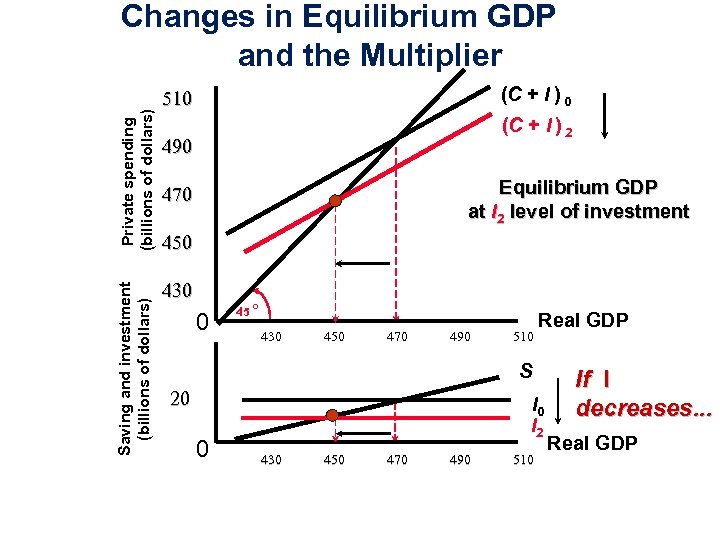 Saving and investment (billions of dollars) Private spending (billions of dollars) Changes in Equilibrium GDP and the Multiplier (C + I ) 0 510 (C + I ) 2 490 Equilibrium GDP at I 2 level of investment 470 450 430 0 45 o 430 450 470 490 510 Real GDP S 20 0 I 2 430 450 470 490 510 If I decreases. . . Real GDP Copyright 2004 Mc. Graw-Hill Australia Pty Ltd PPTs t/a Macroeconomics 7/e by Jackson and Mc. Iver Slides prepared by Muni Perumal, University of Canberra, Australia 7 -6
 The Multiplier Effect • A change in autonomous spending gives rise to a larger change in GDP • The multiplier effect arises because initial increase in aggregate expenditure will induce successive rounds of increased expenditure Copyright 2004 Mc. Graw-Hill Australia Pty Ltd PPTs t/a Macroeconomics 7/e by Jackson and Mc. Iver Slides prepared by Muni Perumal, University of Canberra, Australia 7 -7
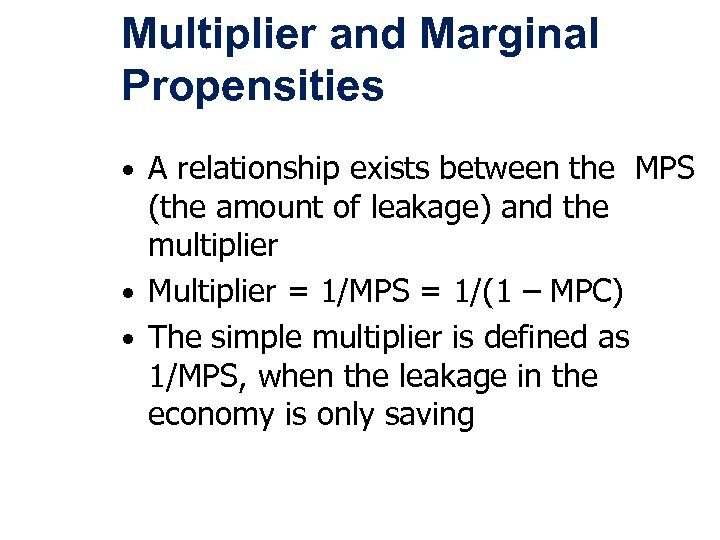 Multiplier and Marginal Propensities • A relationship exists between the MPS (the amount of leakage) and the multiplier • Multiplier = 1/MPS = 1/(1 – MPC) • The simple multiplier is defined as 1/MPS, when the leakage in the economy is only saving Copyright 2004 Mc. Graw-Hill Australia Pty Ltd PPTs t/a Macroeconomics 7/e by Jackson and Mc. Iver Slides prepared by Muni Perumal, University of Canberra, Australia 7 -8
 Recessionary Gap • The amount by which aggregate expenditures are deficient to that required to generate the full employment level of GDP • Produces a concretionary impact upon the economy Copyright 2004 Mc. Graw-Hill Australia Pty Ltd PPTs t/a Macroeconomics 7/e by Jackson and Mc. Iver Slides prepared by Muni Perumal, University of Canberra, Australia 7 -9
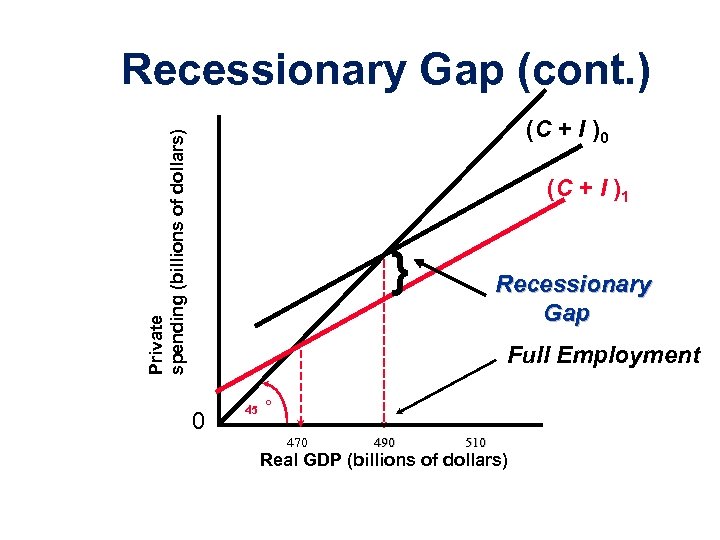 Recessionary Gap (cont. ) Private spending (billions of dollars) (C + I )0 (C + I )1 } Recessionary Gap Full Employment 0 45 o 470 490 510 Real GDP (billions of dollars) Copyright 2004 Mc. Graw-Hill Australia Pty Ltd PPTs t/a Macroeconomics 7/e by Jackson and Mc. Iver Slides prepared by Muni Perumal, University of Canberra, Australia 7 -10
 Inflationary Gap • Is the amount by which aggregate spending exceeds that required to achieve full employment • Produces an inflationary effect on the economy Copyright 2004 Mc. Graw-Hill Australia Pty Ltd PPTs t/a Macroeconomics 7/e by Jackson and Mc. Iver Slides prepared by Muni Perumal, University of Canberra, Australia 7 -11
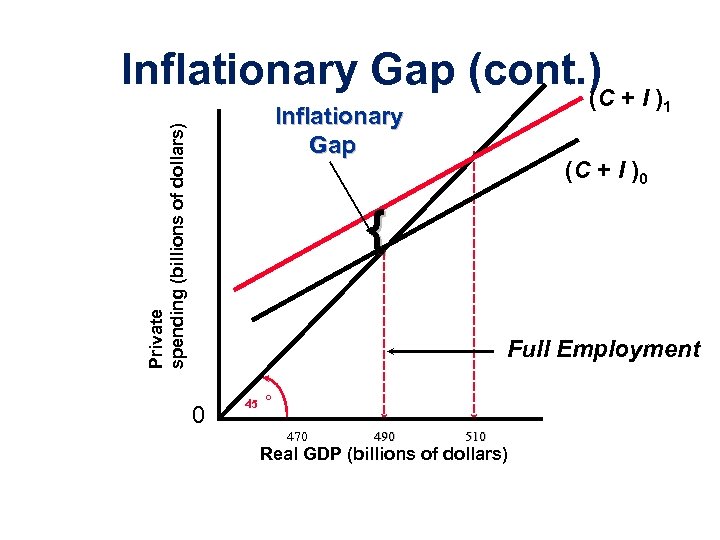 Inflationary Gap (cont. ) (C + I )1 Private spending (billions of dollars) Inflationary Gap (C + I )0 { Full Employment 0 45 o 470 490 510 Real GDP (billions of dollars) Copyright 2004 Mc. Graw-Hill Australia Pty Ltd PPTs t/a Macroeconomics 7/e by Jackson and Mc. Iver Slides prepared by Muni Perumal, University of Canberra, Australia 7 -12
 Aggregate Demand (AD) • Represents the amount of goods and services that consumers, businesses, government and foreign buyers are willing and able to buy at various price levels Copyright 2004 Mc. Graw-Hill Australia Pty Ltd PPTs t/a Macroeconomics 7/e by Jackson and Mc. Iver Slides prepared by Muni Perumal, University of Canberra, Australia 8 -13
 AD Curve The AD curve is downsloping due to: • Interest-rate effect • Real-balances effect (wealth effect) • Foreign-purchases effect Copyright 2004 Mc. Graw-Hill Australia Pty Ltd PPTs t/a Macroeconomics 7/e by Jackson and Mc. Iver Slides prepared by Muni Perumal, University of Canberra, Australia 8 -14
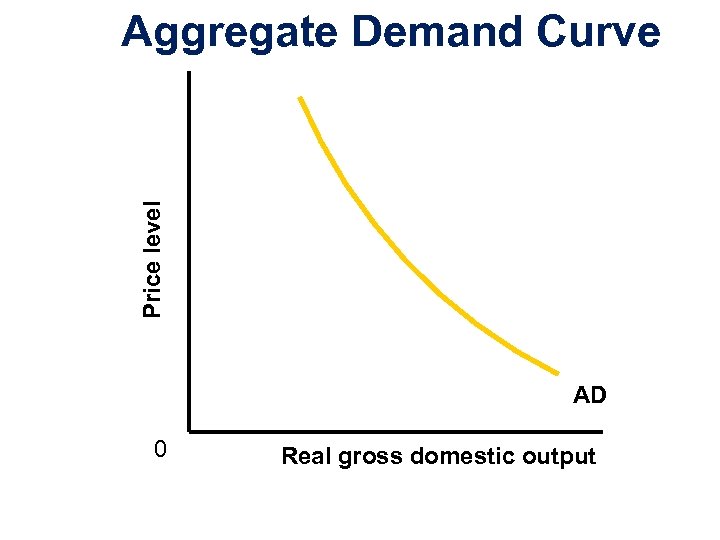 Price level Aggregate Demand Curve AD 0 Real gross domestic output Copyright 2004 Mc. Graw-Hill Australia Pty Ltd PPTs t/a Macroeconomics 7/e by Jackson and Mc. Iver Slides prepared by Muni Perumal, University of Canberra, Australia 8 -15
 Interest-Rate Effect • Rising price level causes higher nominal interest rates, which causes reduction in certain kinds of consumption and investment spending —most importantly, investment spending Copyright 2004 Mc. Graw-Hill Australia Pty Ltd PPTs t/a Macroeconomics 7/e by Jackson and Mc. Iver Slides prepared by Muni Perumal, University of Canberra, Australia 8 -16
 Real-Balances Effect • Also known as ‘wealth effect’ • At a higher price level, the real value or purchasing power of the accumulated financial assets held by the public falls (real wealth falls), leading to a fall in consumption spending Copyright 2004 Mc. Graw-Hill Australia Pty Ltd PPTs t/a Macroeconomics 7/e by Jackson and Mc. Iver Slides prepared by Muni Perumal, University of Canberra, Australia 8 -17
 Foreign-Purchases Effect • Higher domestic prices cause the relative price of foreign goods (local goods) to decrease (increase) • This causes increased imports and decreased exports, resulting in a fall in net exports Copyright 2004 Mc. Graw-Hill Australia Pty Ltd PPTs t/a Macroeconomics 7/e by Jackson and Mc. Iver Slides prepared by Muni Perumal, University of Canberra, Australia 8 -18
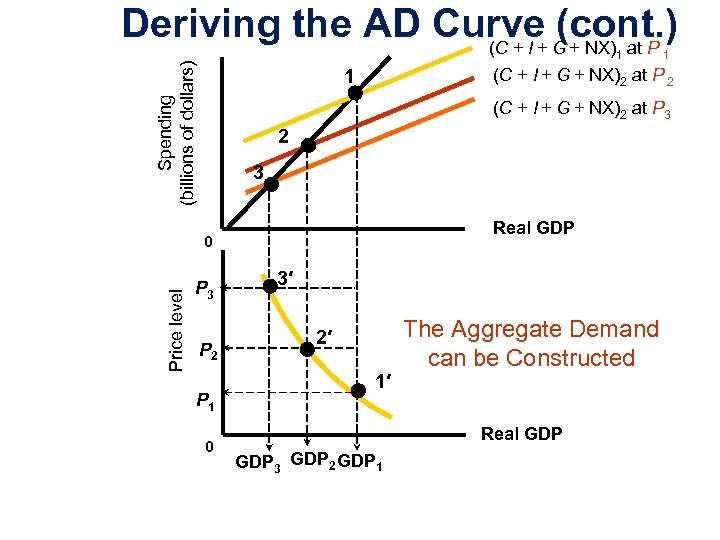 Deriving the AD Curve G + NX) at P (cont. ) (C + I + Spending (billions of dollars) 1 (C + I + G + NX)2 at P 2 1 (C + I + G + NX)2 at P 3 2 3 Real GDP 0 Price level 1 P 3 P 2 P 1 0 3′ 2′ 1′ The Aggregate Demand can be Constructed Real GDP 3 GDP 2 GDP 1 Copyright 2004 Mc. Graw-Hill Australia Pty Ltd PPTs t/a Macroeconomics 7/e by Jackson and Mc. Iver Slides prepared by Muni Perumal, University of Canberra, Australia 8 -19
 Non-Price Determinants of Aggregate Demand • Results in shift in the AD curve – Household consumption – Investment spending – Government spending and taxes – Exports – Imports – But what changes these? Copyright 2004 Mc. Graw-Hill Australia Pty Ltd PPTs t/a Macroeconomics 7/e by Jackson and Mc. Iver Slides prepared by Muni Perumal, University of Canberra, Australia 8 -20
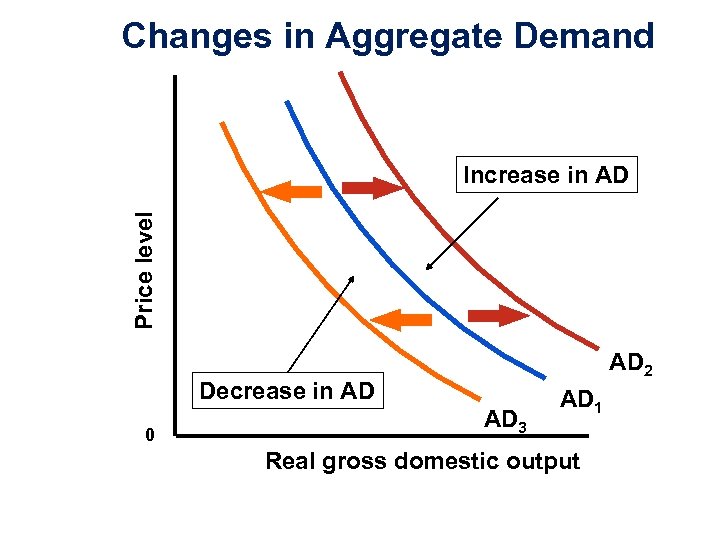 Changes in Aggregate Demand Price level Increase in AD AD 2 Decrease in AD 0 AD 3 AD 1 Real gross domestic output Copyright 2004 Mc. Graw-Hill Australia Pty Ltd PPTs t/a Macroeconomics 7/e by Jackson and Mc. Iver Slides prepared by Muni Perumal, University of Canberra, Australia 8 -21
 Aggregate Supply (AS) • Indicates the level of real GDP that will be produced at each possible price level Copyright 2004 Mc. Graw-Hill Australia Pty Ltd PPTs t/a Macroeconomics 7/e by Jackson and Mc. Iver Slides prepared by Muni Perumal, University of Canberra, Australia 8 -22
 Short-Run Aggregate Supply Curve • Upward sloping and is constructed on the basis of two assumptions: – a given price level – nominal wages have been established on the expectations that the given price level will persist Copyright 2004 Mc. Graw-Hill Australia Pty Ltd PPTs t/a Macroeconomics 7/e by Jackson and Mc. Iver Slides prepared by Muni Perumal, University of Canberra, Australia 8 -23
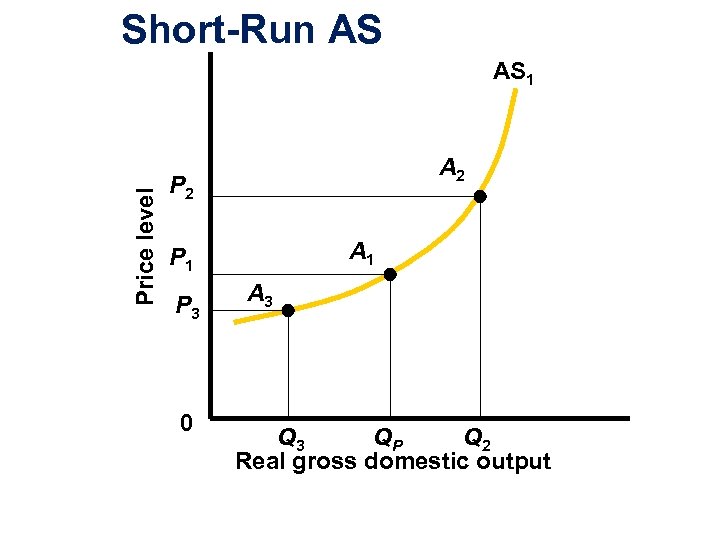 Short-Run AS Price level AS 1 A 2 P 2 A 1 P 3 0 A 3 QP Q 2 Real gross domestic output Copyright 2004 Mc. Graw-Hill Australia Pty Ltd PPTs t/a Macroeconomics 7/e by Jackson and Mc. Iver Slides prepared by Muni Perumal, University of Canberra, Australia 8 -24
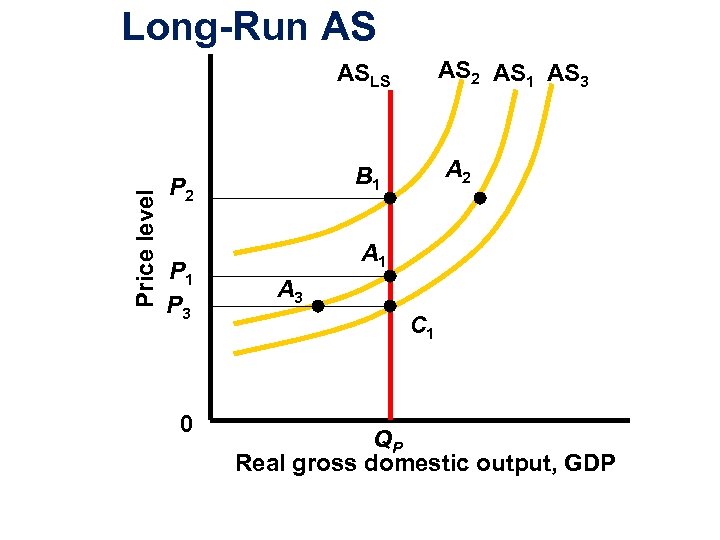 Long-Run AS AS 2 AS 1 AS 3 Price level ASLS P 2 P 1 P 3 0 A 2 B 1 A 3 C 1 QP Real gross domestic output, GDP Copyright 2004 Mc. Graw-Hill Australia Pty Ltd PPTs t/a Macroeconomics 7/e by Jackson and Mc. Iver Slides prepared by Muni Perumal, University of Canberra, Australia 8 -25
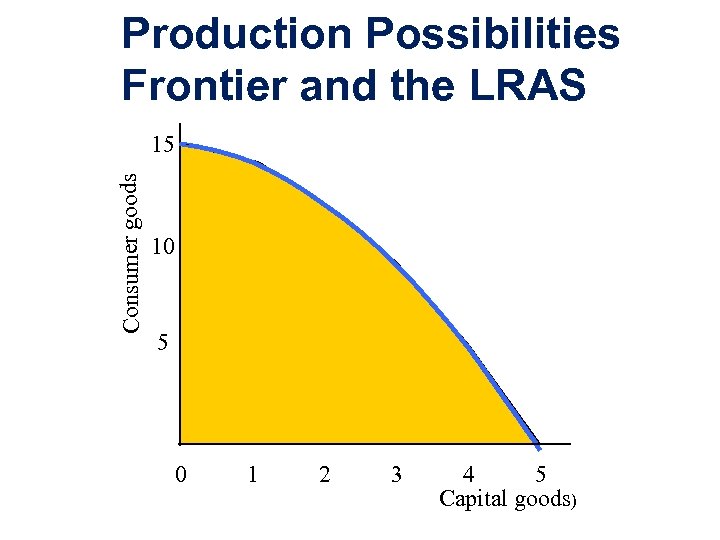 Production Possibilities Frontier and the LRAS Consumer goods 15 10 5 0 1 2 3 4 5 Capital goods)
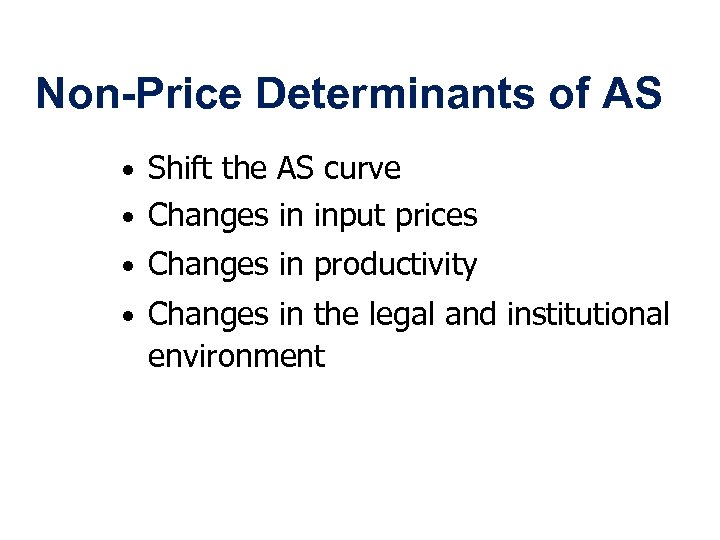 Non-Price Determinants of AS • Shift the AS curve • Changes in input prices • Changes in productivity • Changes in the legal and institutional environment Copyright 2004 Mc. Graw-Hill Australia Pty Ltd PPTs t/a Macroeconomics 7/e by Jackson and Mc. Iver Slides prepared by Muni Perumal, University of Canberra, Australia 8 -27
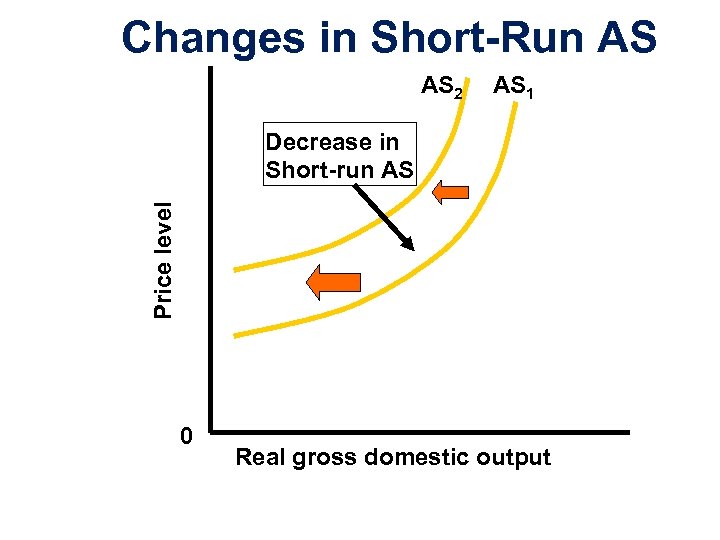 Changes in Short-Run AS AS 2 AS 1 Price level Decrease in Short-run AS 0 Real gross domestic output Copyright 2004 Mc. Graw-Hill Australia Pty Ltd PPTs t/a Macroeconomics 7/e by Jackson and Mc. Iver Slides prepared by Muni Perumal, University of Canberra, Australia 8 -28
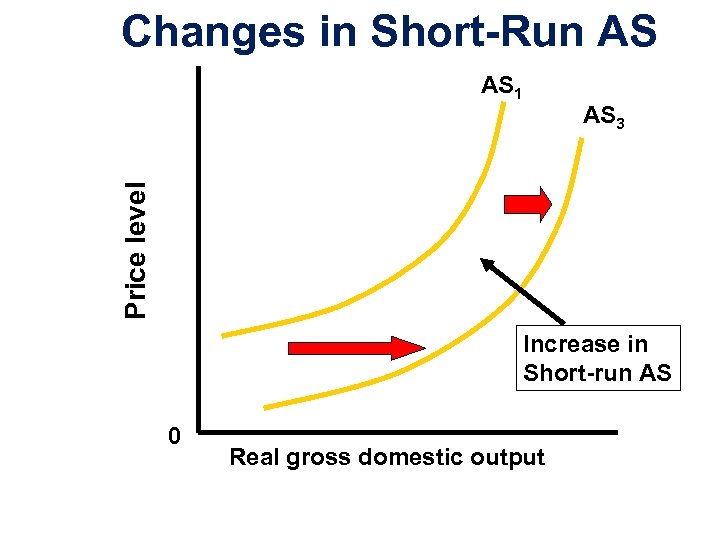 Changes in Short-Run AS AS 3 Price level AS 1 Increase in Short-run AS 0 Real gross domestic output Copyright 2004 Mc. Graw-Hill Australia Pty Ltd PPTs t/a Macroeconomics 7/e by Jackson and Mc. Iver Slides prepared by Muni Perumal, University of Canberra, Australia 8 -29
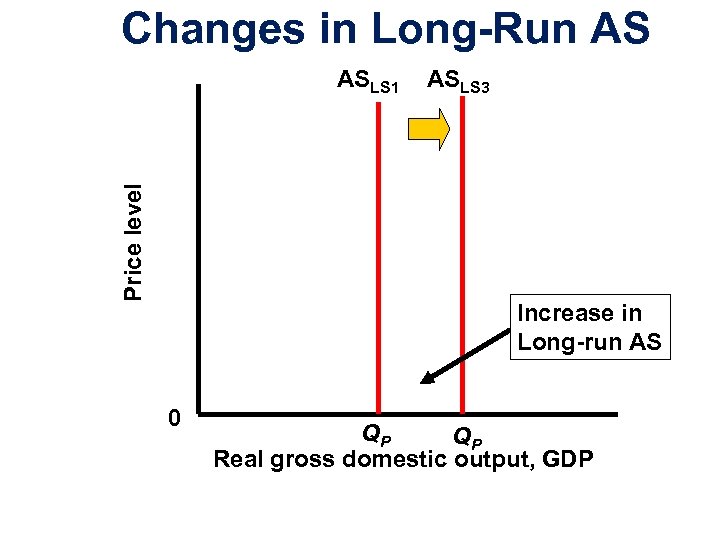 Changes in Long-Run AS Price level ASLS 1 ASLS 3 Increase in Long-run AS 0 QP QP Real gross domestic output, GDP Copyright 2004 Mc. Graw-Hill Australia Pty Ltd PPTs t/a Macroeconomics 7/e by Jackson and Mc. Iver Slides prepared by Muni Perumal, University of Canberra, Australia 8 -30
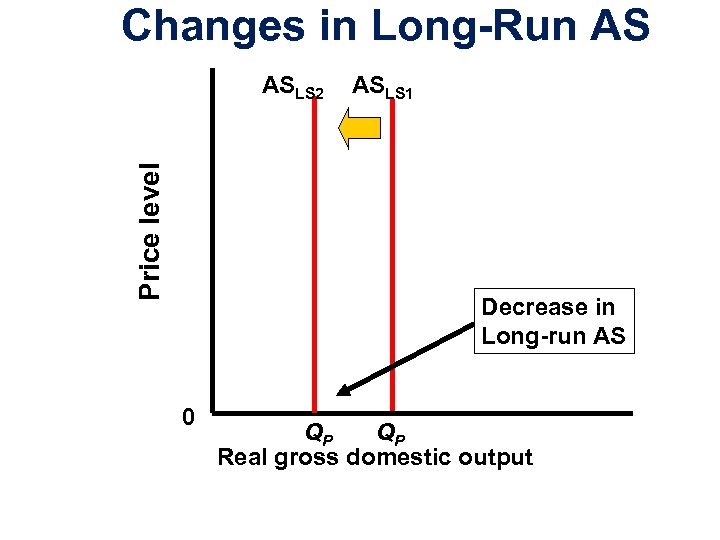 Changes in Long-Run AS Price level ASLS 2 ASLS 1 Decrease in Long-run AS 0 QP QP Real gross domestic output Copyright 2004 Mc. Graw-Hill Australia Pty Ltd PPTs t/a Macroeconomics 7/e by Jackson and Mc. Iver Slides prepared by Muni Perumal, University of Canberra, Australia 8 -31
 Equilibrium • Intersection of AS and AD determines equilibrium real GDP and the price level • At all other points there will be pressure on real GDP and/or prices to change Copyright 2004 Mc. Graw-Hill Australia Pty Ltd PPTs t/a Macroeconomics 7/e by Jackson and Mc. Iver Slides prepared by Muni Perumal, University of Canberra, Australia 8 -32
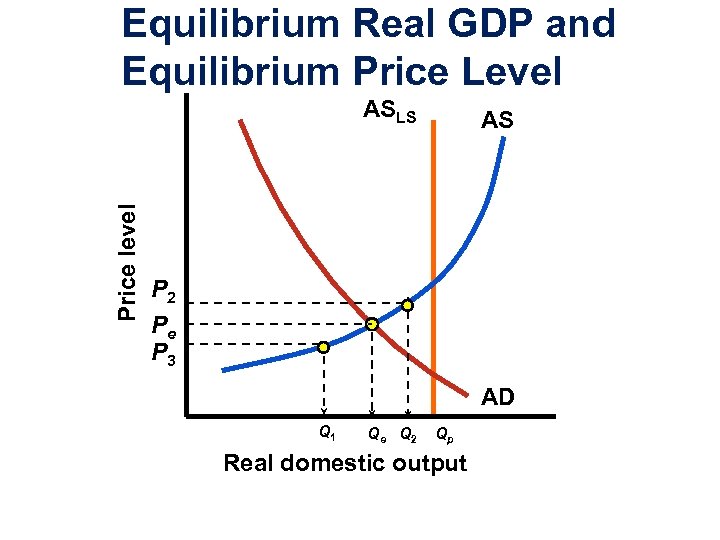 Equilibrium Real GDP and Equilibrium Price Level Price level ASLS AS P 2 Pe P 3 AD Q 1 Qe Q 2 Qp Real domestic output Copyright 2004 Mc. Graw-Hill Australia Pty Ltd PPTs t/a Macroeconomics 7/e by Jackson and Mc. Iver Slides prepared by Muni Perumal, University of Canberra, Australia 8 -33
 Shift in Aggregate Demand the Price Level • The effects of an increase in aggregate demand on the price level depend upon the position of the shortrun aggregate supply in which it occurs • Demand-pull inflation is a situation of rising prices due to shift in AD Copyright 2004 Mc. Graw-Hill Australia Pty Ltd PPTs t/a Macroeconomics 7/e by Jackson and Mc. Iver Slides prepared by Muni Perumal, University of Canberra, Australia 8 -34
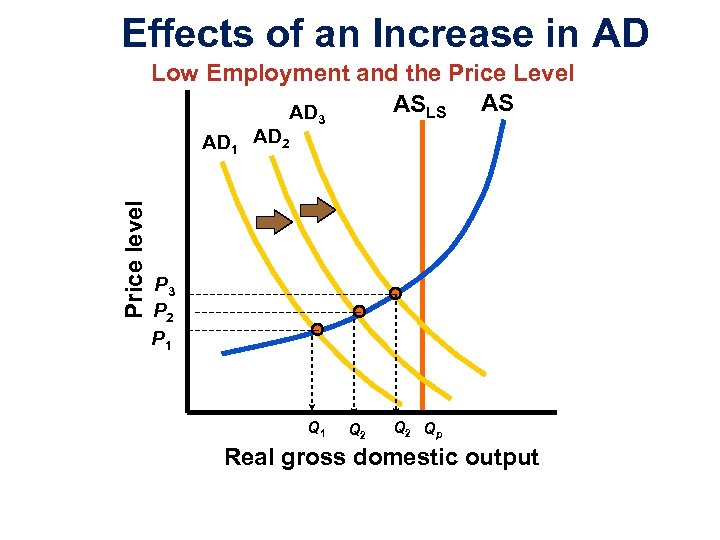 Effects of an Increase in AD Low Employment and the Price Level ASLS AS AD 3 Price level AD 1 AD 2 P 3 P 2 P 1 Q 2 Qp Real gross domestic output Copyright 2004 Mc. Graw-Hill Australia Pty Ltd PPTs t/a Macroeconomics 7/e by Jackson and Mc. Iver Slides prepared by Muni Perumal, University of Canberra, Australia 8 -35
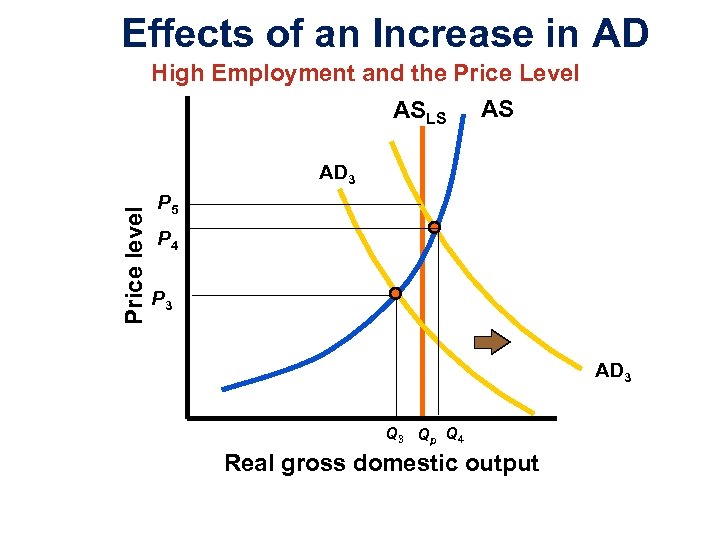 Effects of an Increase in AD High Employment and the Price Level ASLS AS Price level AD 3 P 5 P 4 P 3 AD 3 Qp Q 4 Real gross domestic output Copyright 2004 Mc. Graw-Hill Australia Pty Ltd PPTs t/a Macroeconomics 7/e by Jackson and Mc. Iver Slides prepared by Muni Perumal, University of Canberra, Australia 8 -36
 Shift in Aggregate Supply and the Price Level Causes • Higher production costs shift the AS leftwards, resulting in higher prices and lower real GDP • Leads to cost-push inflation • Adverse shifts in the aggregate supply result in stagflation, a situation of higher prices and higher unemployment Copyright 2004 Mc. Graw-Hill Australia Pty Ltd PPTs t/a Macroeconomics 7/e by Jackson and Mc. Iver Slides prepared by Muni Perumal, University of Canberra, Australia 8 -37
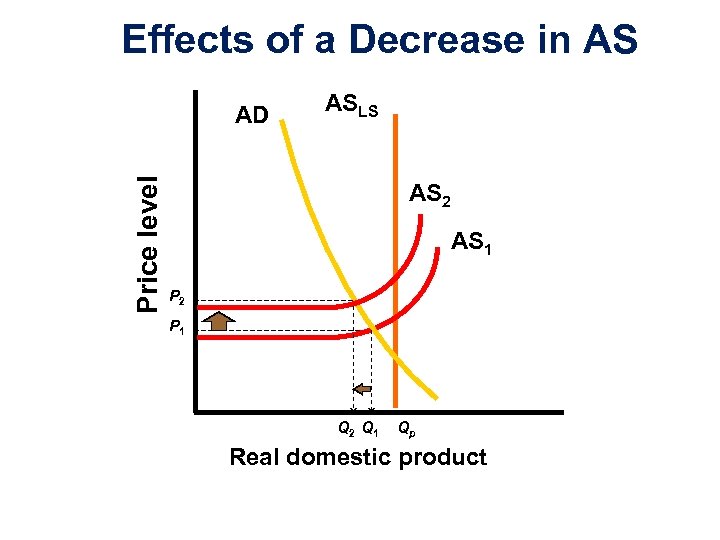 Effects of a Decrease in AS Price level AD ASLS AS 2 AS 1 P 2 P 1 Q 2 Q 1 Qp Real domestic product Copyright 2004 Mc. Graw-Hill Australia Pty Ltd PPTs t/a Macroeconomics 7/e by Jackson and Mc. Iver Slides prepared by Muni Perumal, University of Canberra, Australia 8 -38
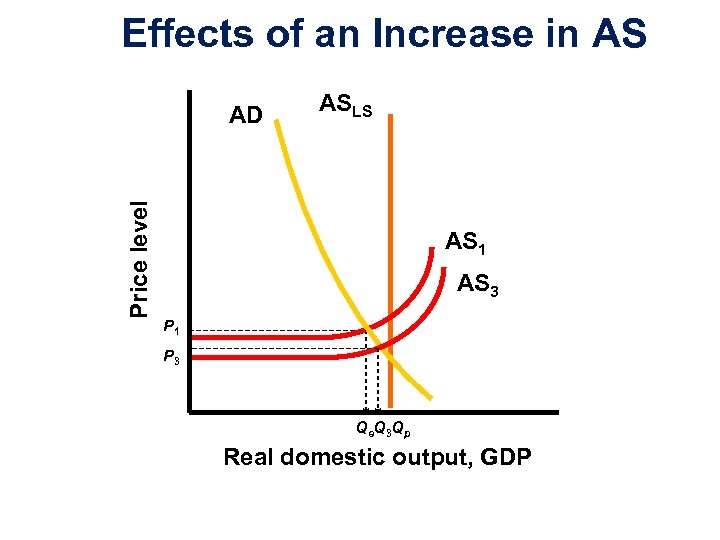 Effects of an Increase in AS Price level AD ASLS AS 1 AS 3 P 1 P 3 Qe. Q 3 Qp Real domestic output, GDP Copyright 2004 Mc. Graw-Hill Australia Pty Ltd PPTs t/a Macroeconomics 7/e by Jackson and Mc. Iver Slides prepared by Muni Perumal, University of Canberra, Australia 8 -39
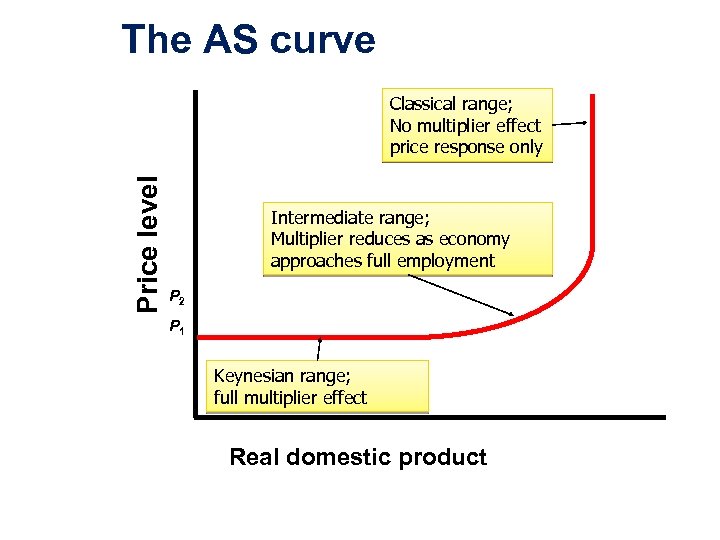 The AS curve Price level Classical range; No multiplier effect price response only Intermediate range; Multiplier reduces as economy approaches full employment P 2 P 1 Keynesian range; full multiplier effect Real domestic product Copyright 2004 Mc. Graw-Hill Australia Pty Ltd PPTs t/a Macroeconomics 7/e by Jackson and Mc. Iver Slides prepared by Muni Perumal, University of Canberra, Australia 8 -40 6 -40
 Demand-Pull Inflation • Occurs when an increase in AD pulls up the price level • Graphically: AD shifts rightward along a stable AS curve • Short-run: increased prices and real output Copyright 2004 Mc. Graw-Hill Australia Pty Ltd PPTs t/a Macroeconomics 7/e by Jackson and Mc. Iver Slides prepared by Muni Perumal, University of Canberra, Australia 14 -41
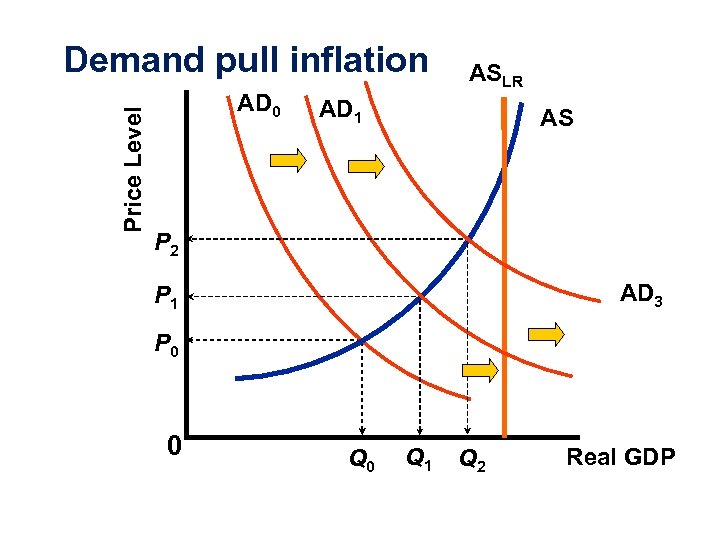 Price Level Demand pull inflation AD 0 ASLR AD 1 AS P 2 AD 3 P 1 P 0 0 Q 1 Q 2 Real GDP 14 -42
 Cost-Push Inflation • Occurs when an increase in the cost of production at each price level shifts the AS curve leftward, resulting in increased prices • Short run: increased prices and decreased real output (and more unemployment) 14 -43
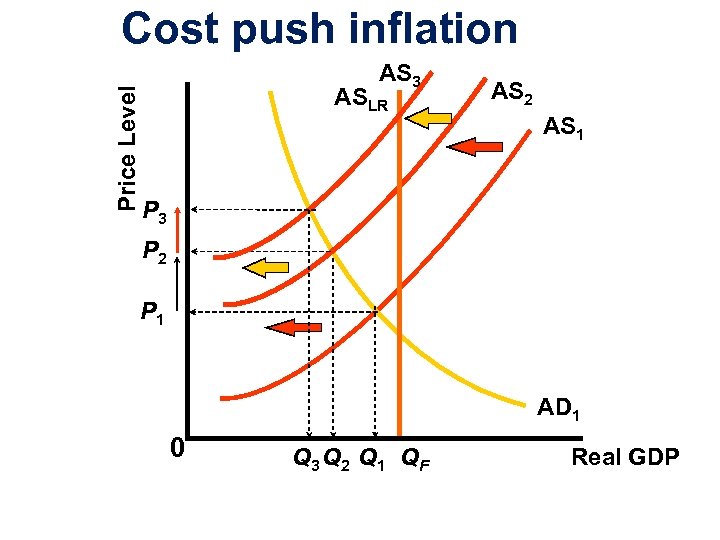 Price Level Cost push inflation AS 3 ASLR AS 2 AS 1 P 3 P 2 P 1 AD 1 0 Q 3 Q 2 Q 1 QF Real GDP 14 -44
 Demand-Pull Inflation • In the short run demand-pull inflation will drive up the price level and increase output • In the long run, the increase in aggregate demand has only moved the economy along the vertical aggregate supply curve ASLR 14 -45
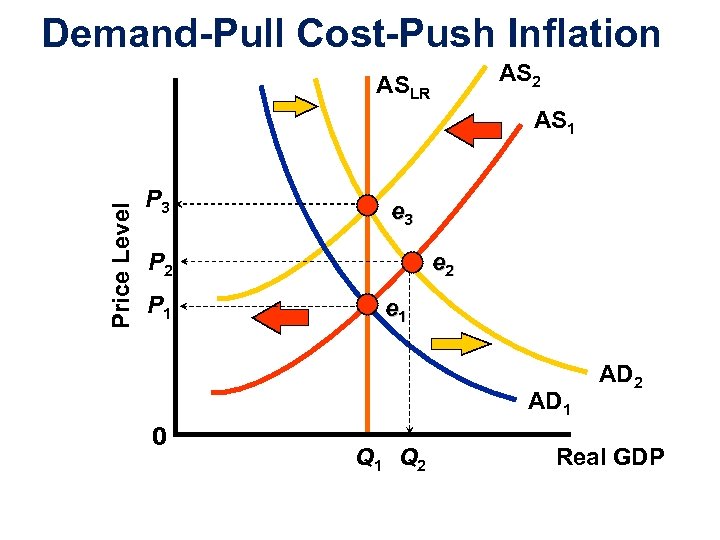 Demand-Pull Cost-Push Inflation AS 2 ASLR Price Level AS 1 P 3 e 2 P 1 e 1 AD 1 0 Q 1 Q 2 Copyright 2004 Mc. Graw-Hill Australia Pty Ltd PPTs t/a Macroeconomics 7/e by Jackson and Mc. Iver Slides prepared by Muni Perumal, University of Canberra, Australia AD 2 Real GDP 14 -46