


 Скачать презентацию The Actuarial Profession making financial sense of the
cb7ef8196da72edd777dc431ca4ba737.ppt
- Количество слайдов: 32
 The Actuarial Profession making financial sense of the future The Cost of Capital for Financial Firms Jon Exley and Andrew Smith Applications of Financial Theory Working Party Finance & Investment Conference 2003 The Caledonian Hilton Hotel, Edinburgh
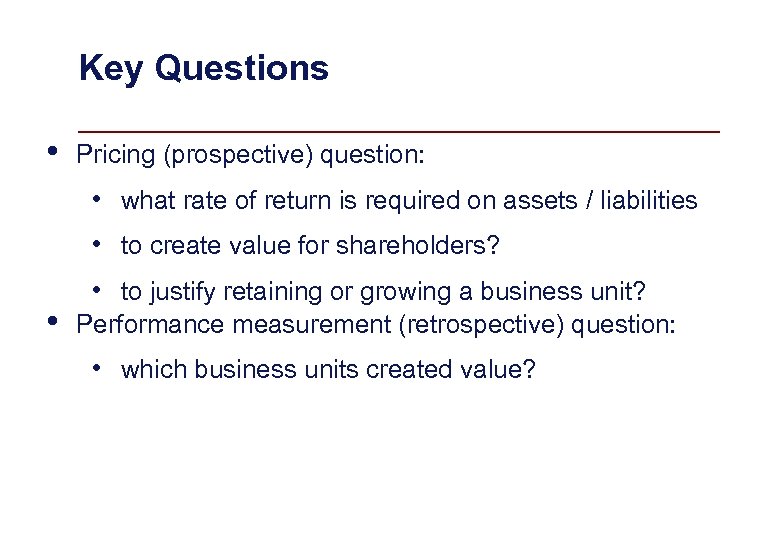 Key Questions • Pricing (prospective) question: • what rate of return is required on assets / liabilities • to create value for shareholders? • • to justify retaining or growing a business unit? Performance measurement (retrospective) question: • which business units created value?
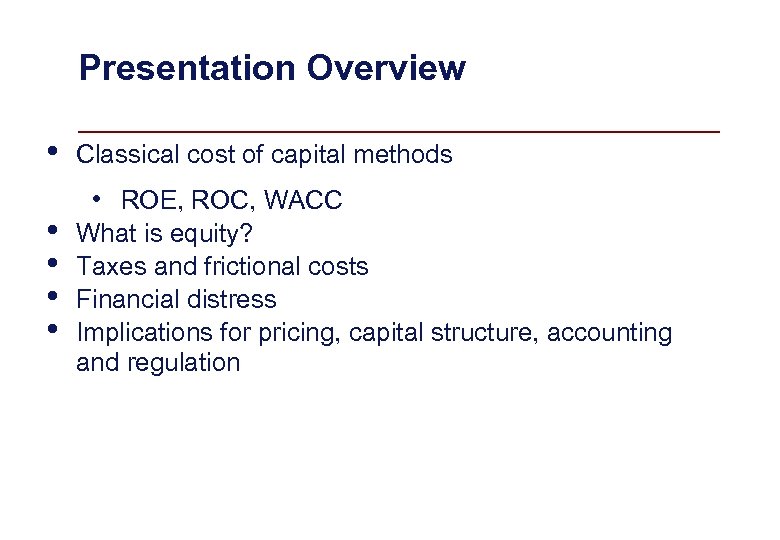 Presentation Overview • • • Classical cost of capital methods • ROE, ROC, WACC What is equity? Taxes and frictional costs Financial distress Implications for pricing, capital structure, accounting and regulation
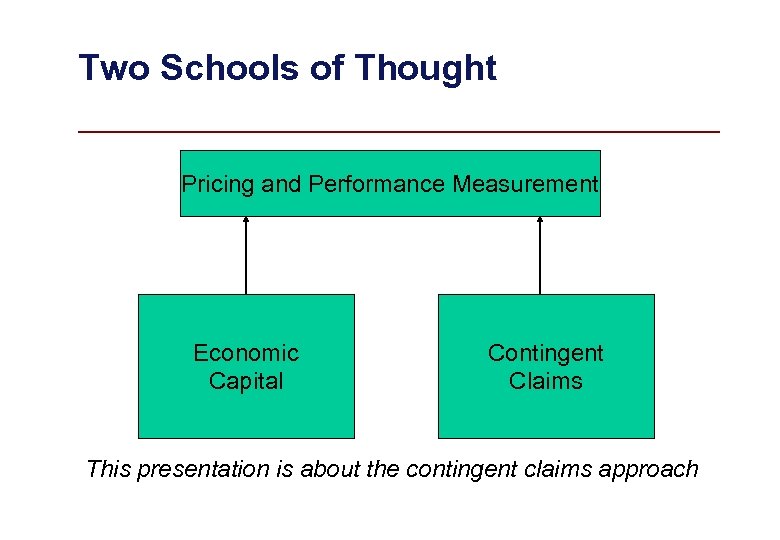 Two Schools of Thought Pricing and Performance Measurement Economic Capital Contingent Claims This presentation is about the contingent claims approach
 The Actuarial Profession making financial sense of the future The Cost of Capital for Financial Firms Part I: Classical Theory
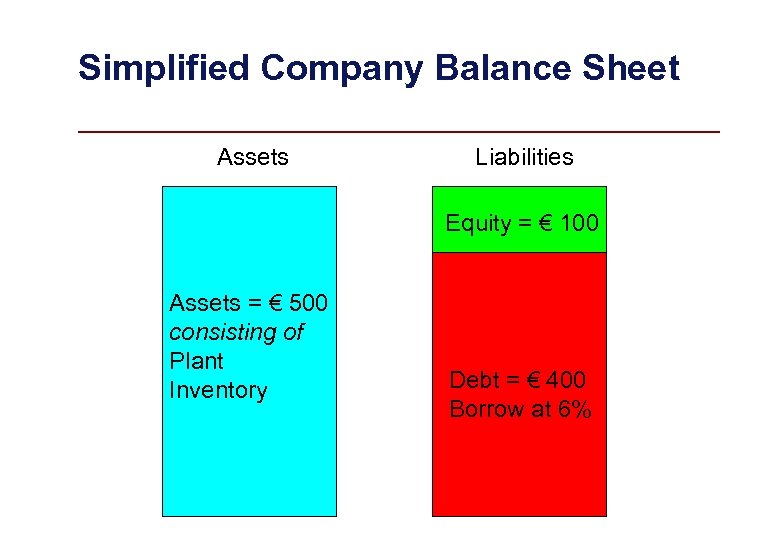 Simplified Company Balance Sheet Assets Liabilities Equity = € 100 Assets = € 500 consisting of Plant Inventory Debt = € 400 Borrow at 6%
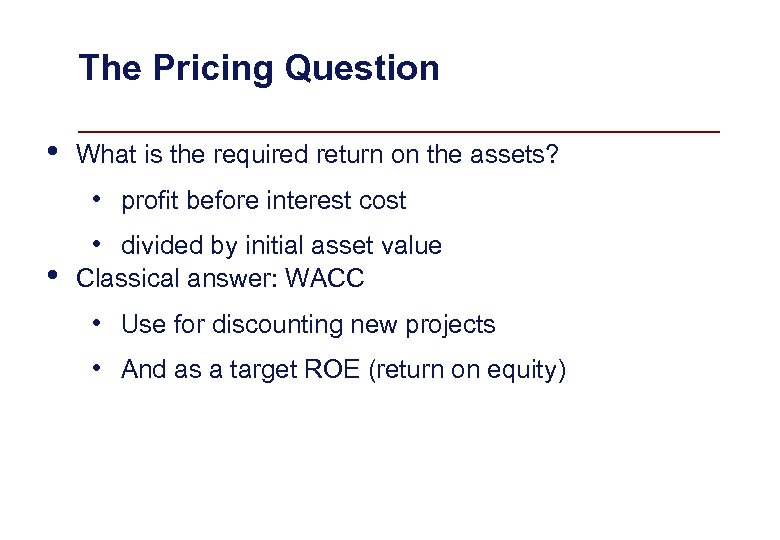 The Pricing Question • What is the required return on the assets? • profit before interest cost • • divided by initial asset value Classical answer: WACC • Use for discounting new projects • And as a target ROE (return on equity)
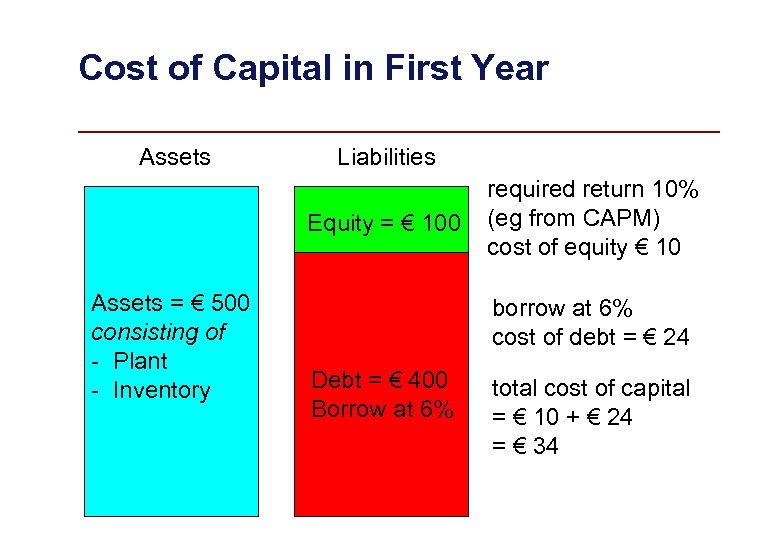 Cost of Capital in First Year Assets Liabilities Equity = € 100 Assets = € 500 consisting of - Plant - Inventory required return 10% (eg from CAPM) cost of equity € 10 borrow at 6% cost of debt = € 24 Debt = € 400 Borrow at 6% total cost of capital = € 10 + € 24 = € 34
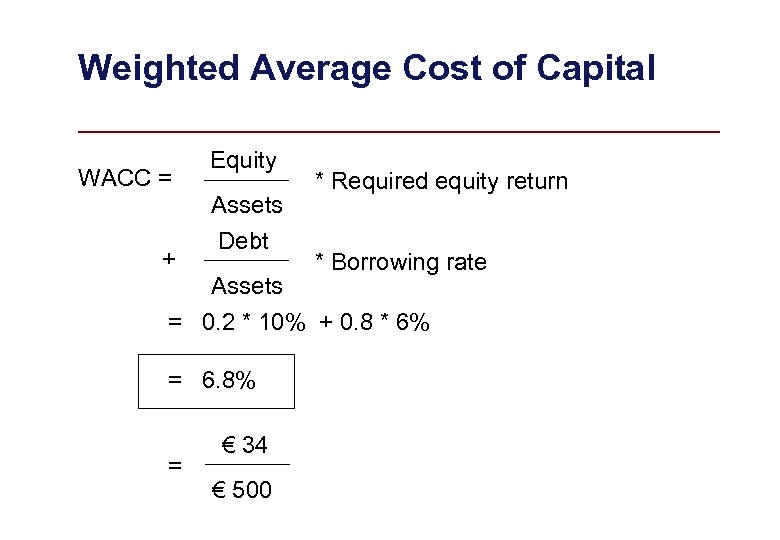 Weighted Average Cost of Capital WACC = + Equity Assets Debt Assets * Required equity return * Borrowing rate = 0. 2 * 10% + 0. 8 * 6% = 6. 8% = € 34 € 500
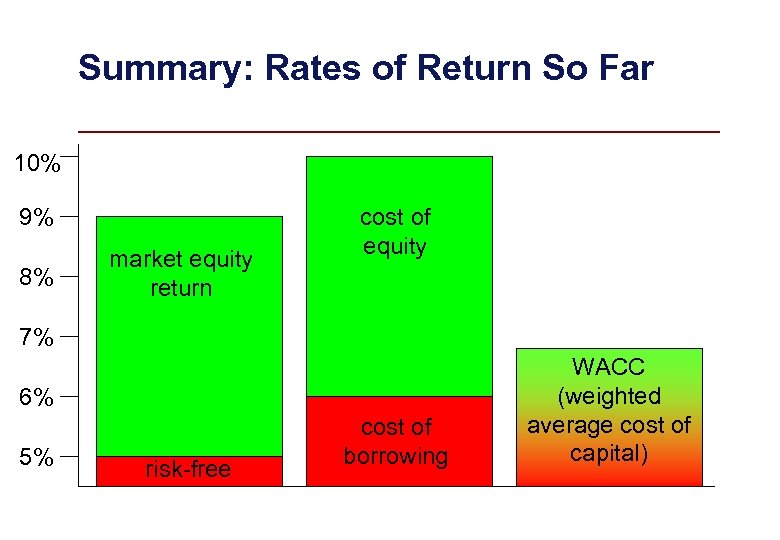 Summary: Rates of Return So Far 10% 9% 8% market equity return cost of equity 7% 6% 5% risk-free cost of borrowing WACC (weighted average cost of capital)
 Banking and Insurance • Industrial model translates readily to banking • assets (loans) to be priced • given the cost of financing (equity, debt and • deposits) Insurance more challenging • debt = policyholder liabilities • pricing problem relates to liabilities, not assets • Cost of Equity more useful than WACC
 The Actuarial Profession making financial sense of the future The Cost of Capital for Financial Firms Part II: What is equity?
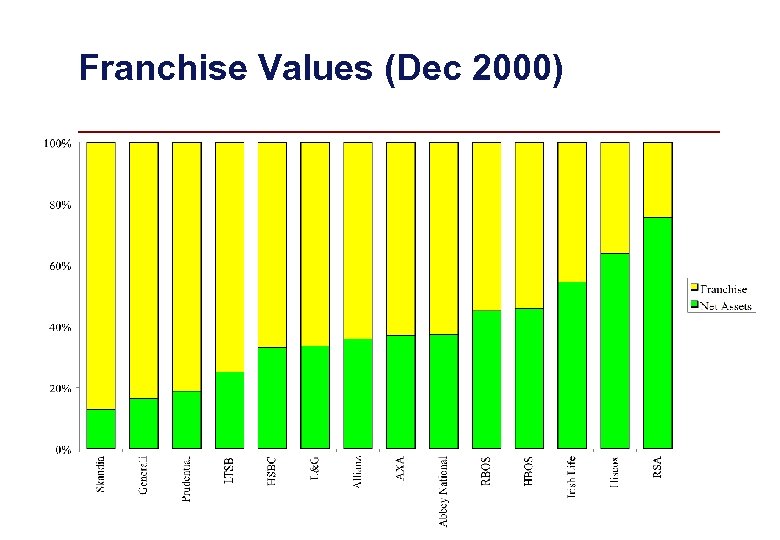
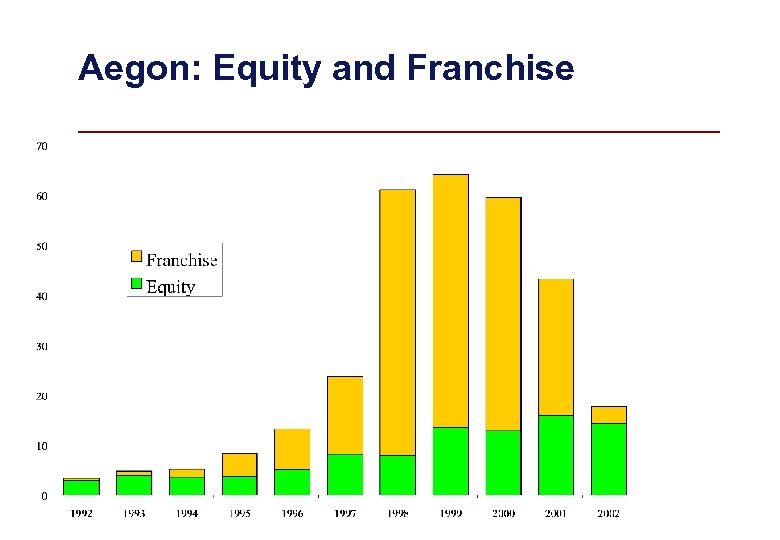
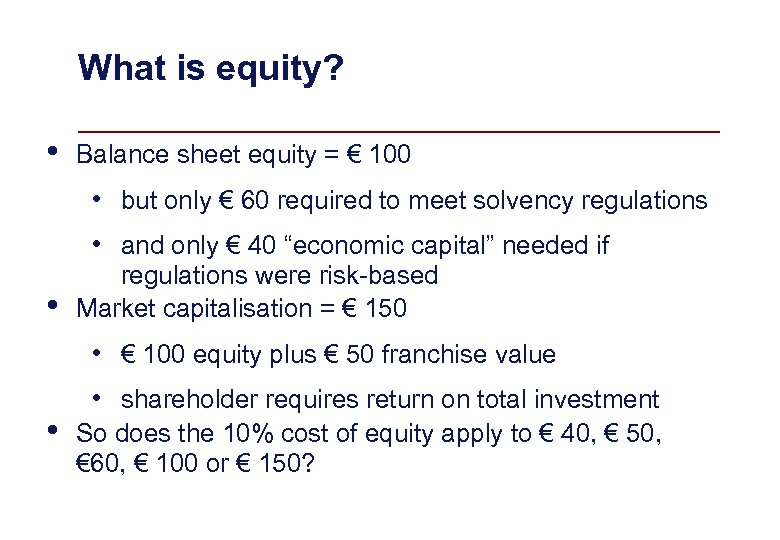 What is equity? • Balance sheet equity = € 100 • but only € 60 required to meet solvency regulations • and only € 40 “economic capital” needed if • regulations were risk-based Market capitalisation = € 150 • € 100 equity plus € 50 franchise value • • shareholder requires return on total investment So does the 10% cost of equity apply to € 40, € 50, € 60, € 100 or € 150?
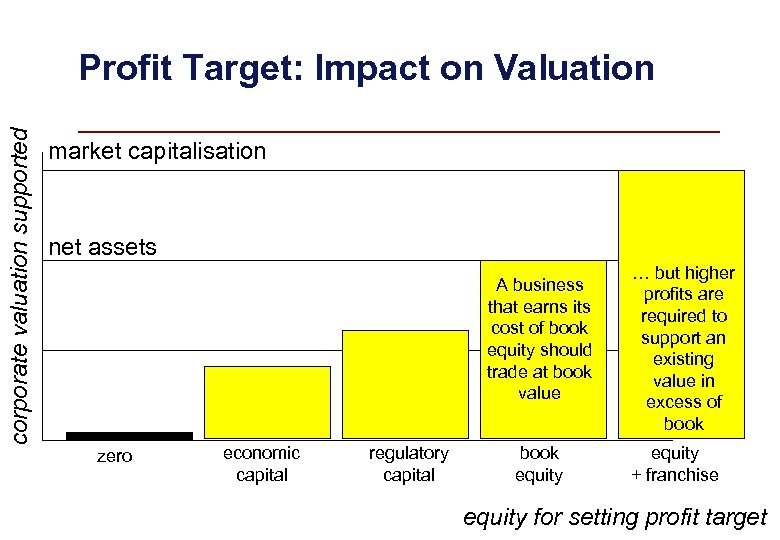 corporate valuation supported Profit Target: Impact on Valuation market capitalisation net assets A business that earns its cost of book equity should trade at book value zero economic capital regulatory capital book equity … but higher profits are required to support an existing value in excess of book equity + franchise equity for setting profit target
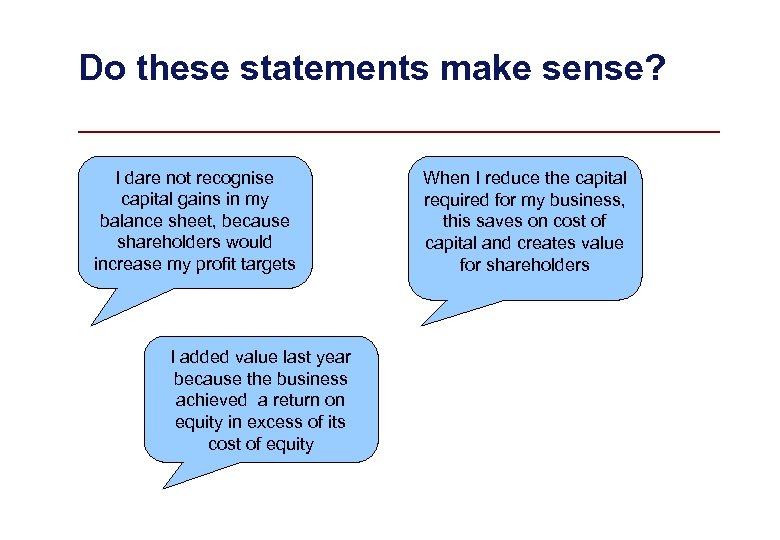 Do these statements make sense? I dare not recognise capital gains in my balance sheet, because shareholders would increase my profit targets I added value last year because the business achieved a return on equity in excess of its cost of equity When I reduce the capital required for my business, this saves on cost of capital and creates value for shareholders
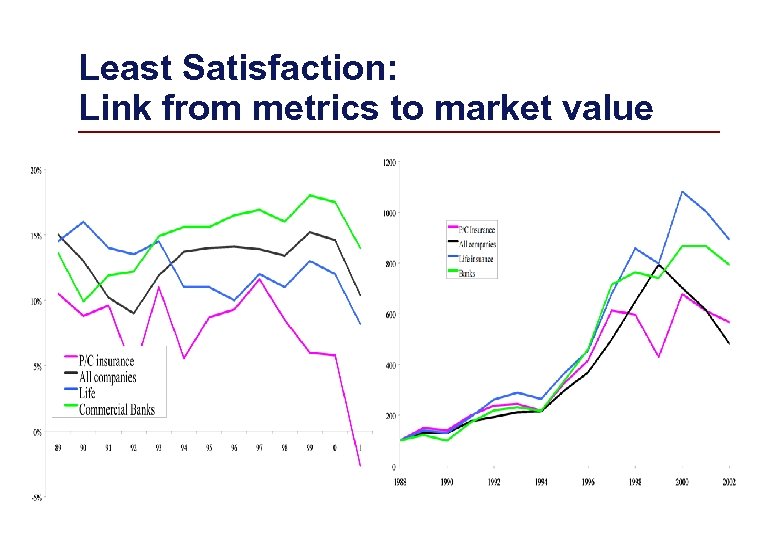 Least Satisfaction: Link from metrics to market value
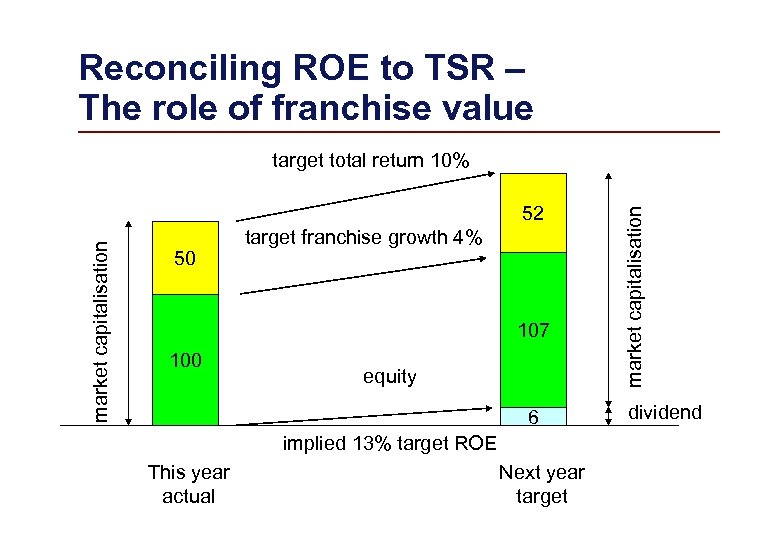 Reconciling ROE to TSR – The role of franchise value market capitalisation 52 50 target franchise growth 4% 107 100 equity 6 implied 13% target ROE This year actual Next year target market capitalisation target total return 10% dividend
 Franchise Values (Dec 2000)
 Aegon: Equity and Franchise
 The Actuarial Profession making financial sense of the future The Cost of Capital for Financial Firms Part III: Taxes and Agency Costs
 Tax and Agency Costs • • Tax: rate τ1 on profit Agency costs • Arising from principal / agent conflicts • Related to management control over resources • Proportional to Equity capital or Profit • Rate τ2 on equity, rate τ3 on profit
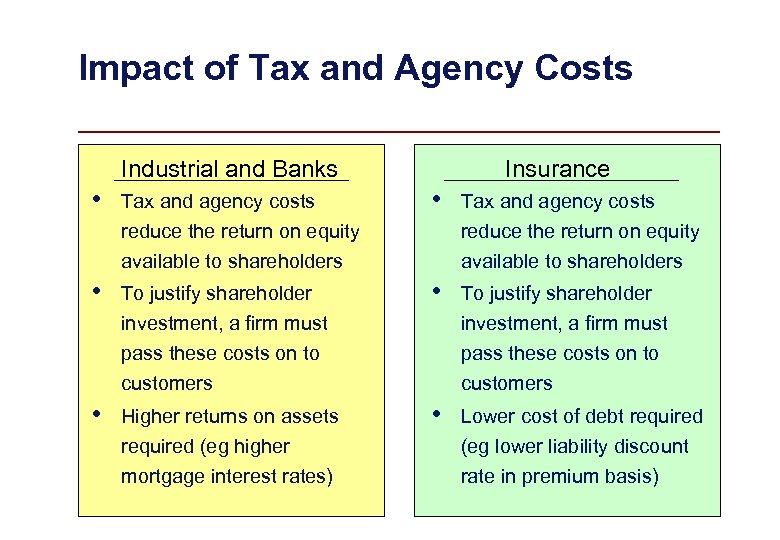 Impact of Tax and Agency Costs Industrial and Banks Insurance • Tax and agency costs reduce the return on equity available to shareholders • To justify shareholder investment, a firm must pass these costs on to customers • Higher returns on assets required (eg higher mortgage interest rates) • Lower cost of debt required (eg lower liability discount rate in premium basis)
 The Actuarial Profession making financial sense of the future The Cost of Capital for Financial Firms Part IV: Financial Distress Costs
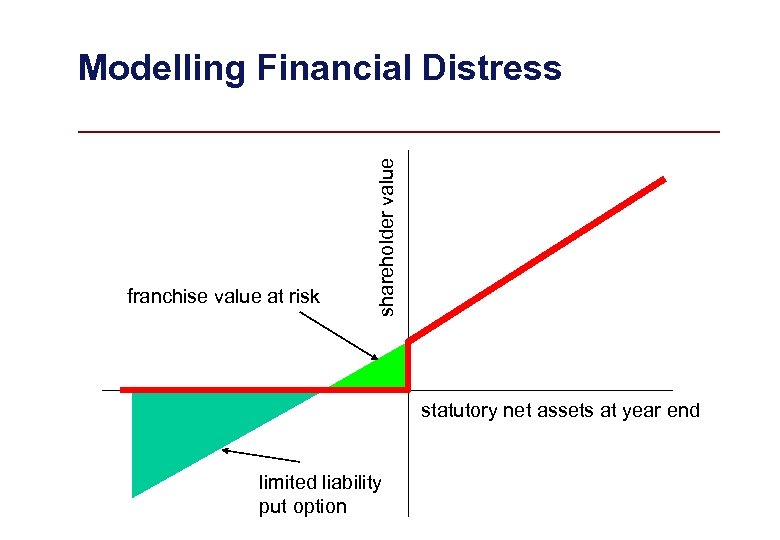 franchise value at risk shareholder value Modelling Financial Distress statutory net assets at year end limited liability put option
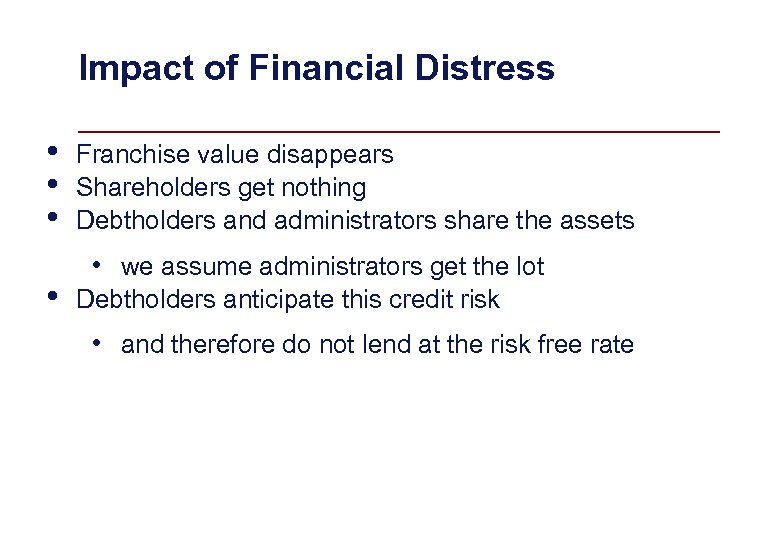 Impact of Financial Distress • • Franchise value disappears Shareholders get nothing Debtholders and administrators share the assets • we assume administrators get the lot Debtholders anticipate this credit risk • and therefore do not lend at the risk free rate
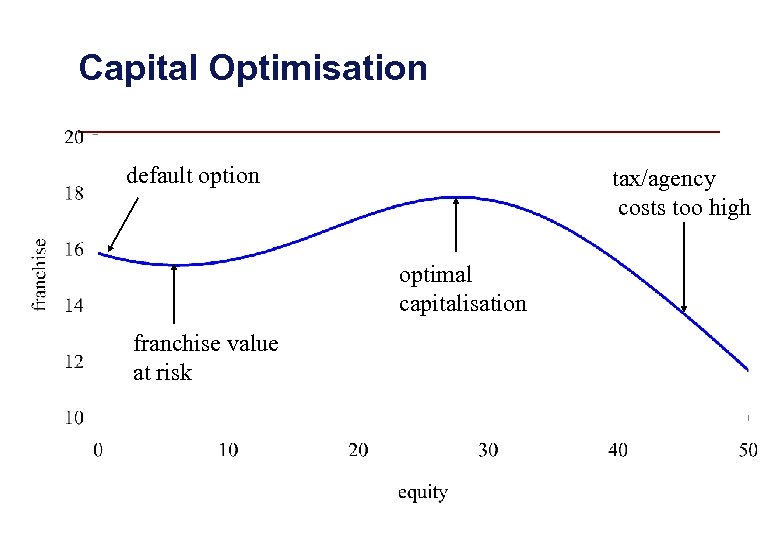 Capital Optimisation default option tax/agency costs too high optimal capitalisation franchise value at risk
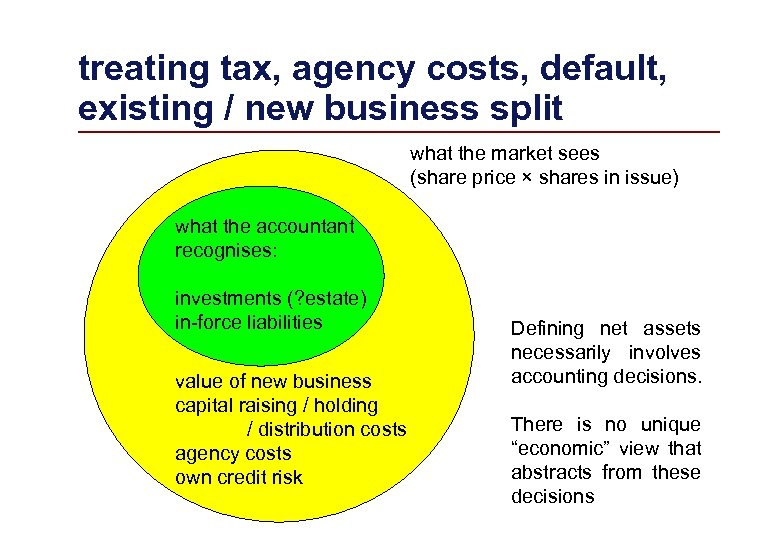 treating tax, agency costs, default, existing / new business split what the market sees (share price × shares in issue) what the accountant recognises: investments (? estate) in-force liabilities value of new business capital raising / holding / distribution costs agency costs own credit risk Defining net assets necessarily involves accounting decisions. There is no unique “economic” view that abstracts from these decisions
 The Actuarial Profession making financial sense of the future The Cost of Capital for Financial Firms Part V: Pricing
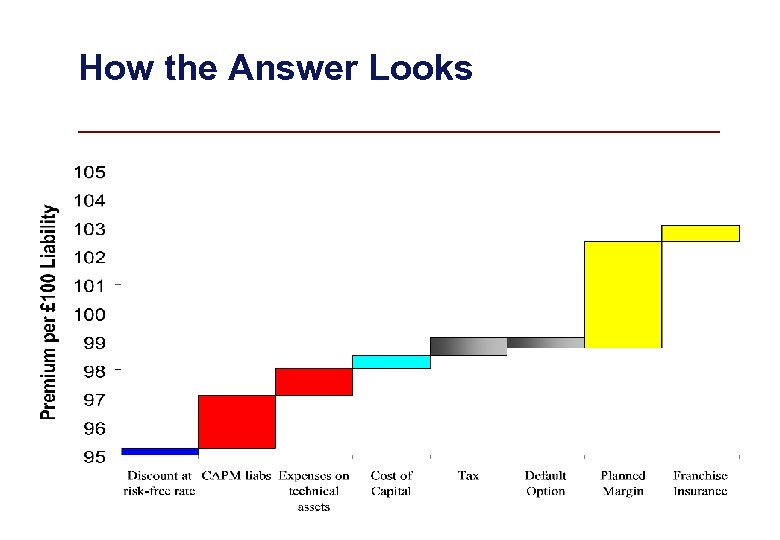 How the Answer Looks
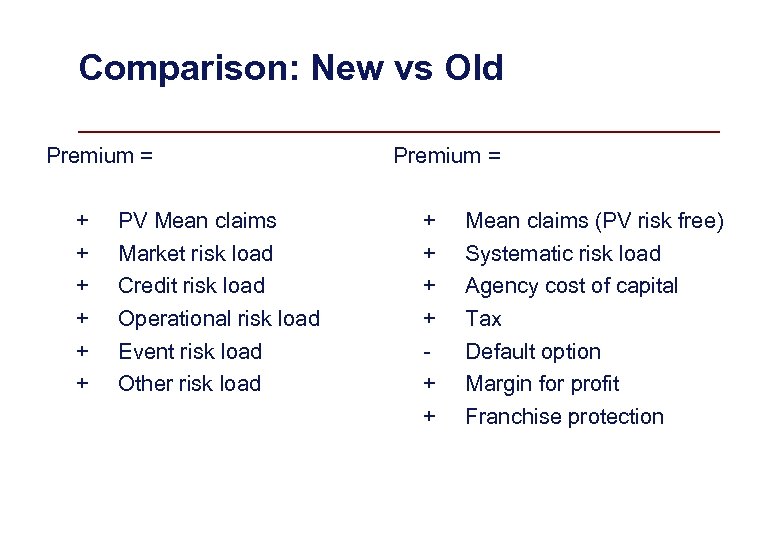 Comparison: New vs Old Premium = + + + PV Mean claims Market risk load Credit risk load Operational risk load Event risk load Other risk load Premium = + + + Mean claims (PV risk free) Systematic risk load Agency cost of capital Tax Default option Margin for profit Franchise protection
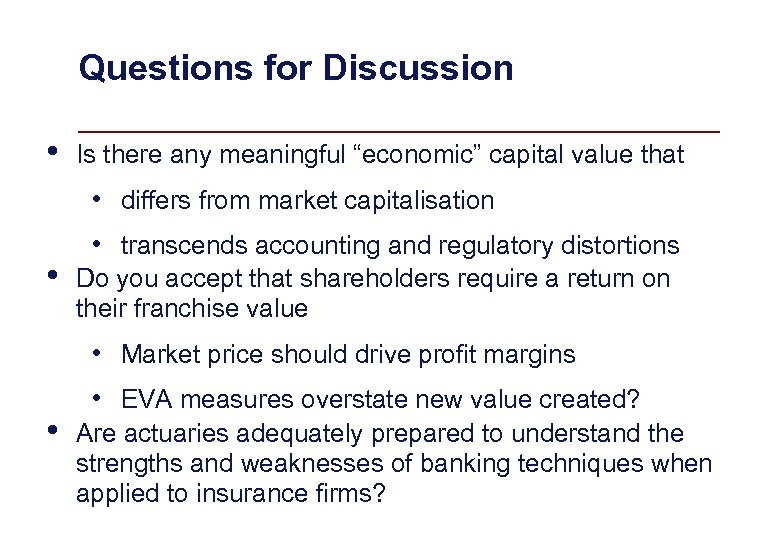 Questions for Discussion • Is there any meaningful “economic” capital value that • differs from market capitalisation • • transcends accounting and regulatory distortions Do you accept that shareholders require a return on their franchise value • Market price should drive profit margins • • EVA measures overstate new value created? Are actuaries adequately prepared to understand the strengths and weaknesses of banking techniques when applied to insurance firms?
 The Actuarial Profession making financial sense of the future The Cost of Capital for Financial Firms Jon Exley and Andrew Smith Applications of Financial Theory Working Party Finance & Investment Conference 2003 The Caledonian Hilton Hotel, Edinburgh