 Скачать презентацию The 4 th pan-European assessment Belgrade report the
93fbcd2177338e69edd67c178451082a.ppt
- Количество слайдов: 50



The 4 th pan-European assessment “Belgrade report”, the Environment for Europe process and beyond…. . David Stanners European Environment Agency 1
Outline 1. The Belgrade report: process & results 2. Environment for Europe process 16 years on. . 3. Towards a shared environmental information system 2
Outline 1. The Belgrade report: process & results 2. Environment for Europe process 16 years on. . 3. Towards a shared environmental information system 3
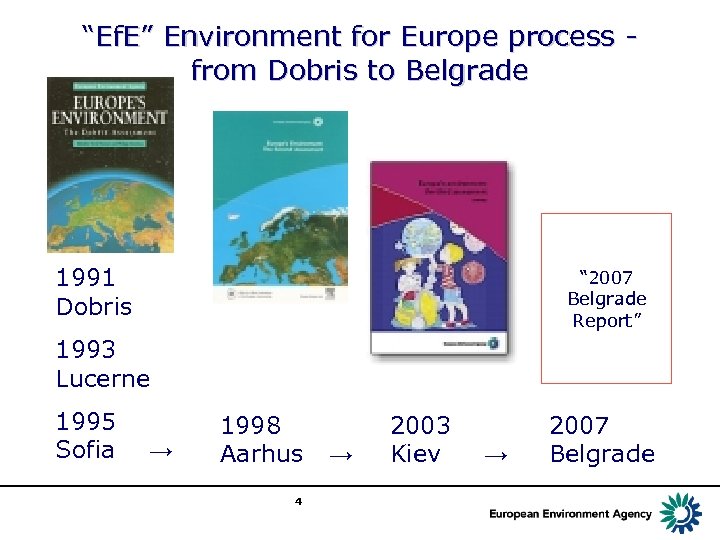
“Ef. E” Environment for Europe process from Dobris to Belgrade 1991 Dobris “ 2007 Belgrade Report” 1993 Lucerne 1995 Sofia → 1998 Aarhus 4 → 2003 Kiev → 2007 Belgrade
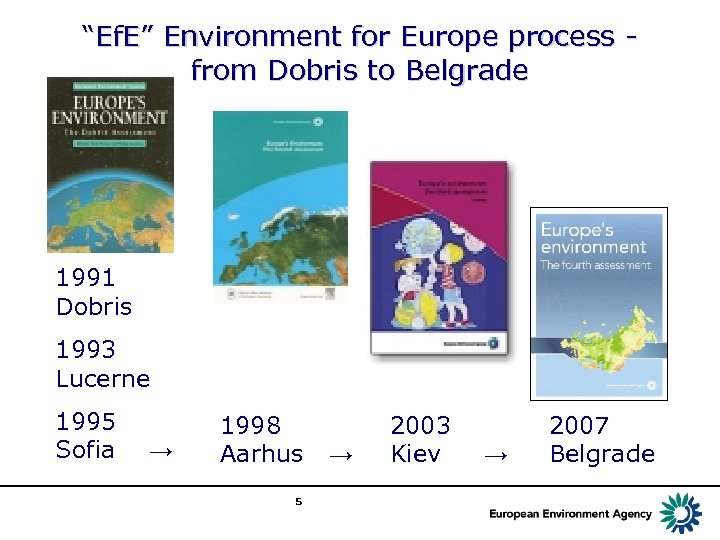
“Ef. E” Environment for Europe process from Dobris to Belgrade 1991 Dobris 1993 Lucerne 1995 Sofia → 1998 Aarhus 5 → 2003 Kiev → 2007 Belgrade
6
7
Kiev Ministerial declaration (23 June 2003): “ 30. We call on EEA to prepare the fourth assessment report for the next Ef. E ministerial conference building on new partnerships, especially with UNECE and UNEP…………………” 8
EEA mandate for the Belgrade report: To produce……. Kiev Conference (June 2003) • Short, policy oriented report • Indicator based • Responding to Belgrade agenda • Support in assessing progress on EECCA strategy • Based on recent information 9
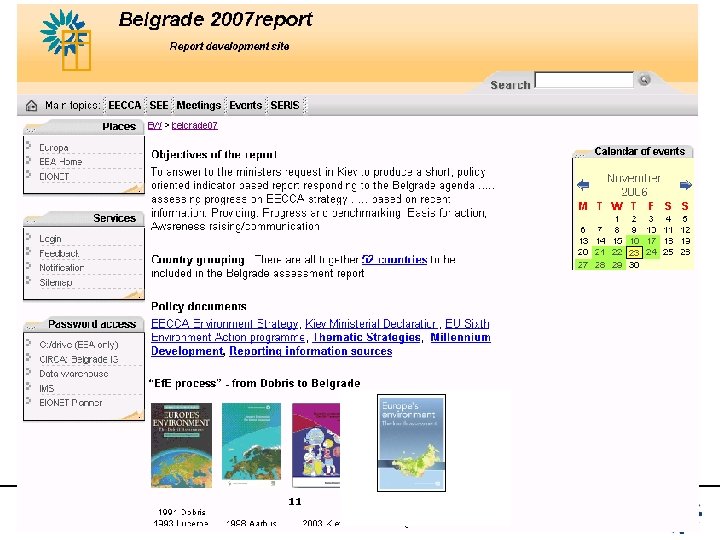
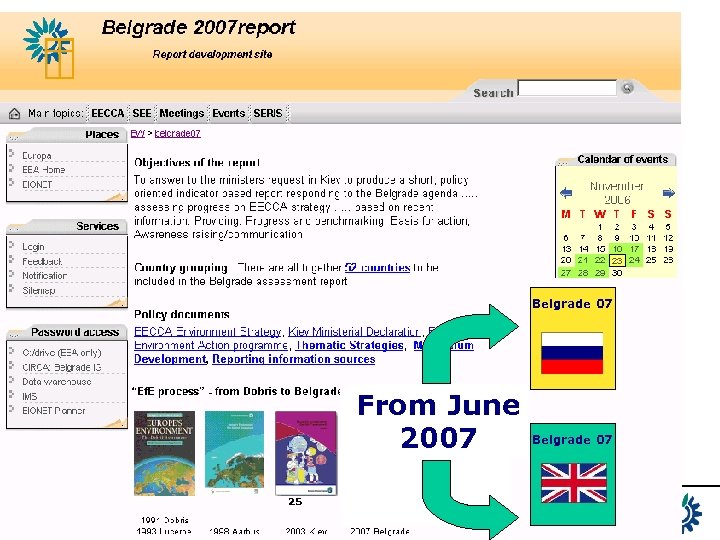
Objectives of Belgrade report • To answer to the ministers request in Kiev request to produce a short, policy oriented indicator based report responding to the Belgrade agenda to support …. . assessing progress on EECCA strategy…. based on recent information. ü ü ü Progress and benchmarking Basis for action Awareness raising Ø Belgrade reportal: http: //eea. eionet. europa. eu/ 10
11
Belgrade report- Table of contents 1. Setting the scene (Europe and the wider world, trade and environment, sustainable development, socio-economic parameters) 2. Environment and health and quality of life (air, water, soil, chemicals) 3. Climate change 4. Nature and biodiversity 5. Marine environment 6. Natural resources and wastes (including sustainable production and consumption) 7. Sectoral integration (energy, transport, agriculture, tourism) 12
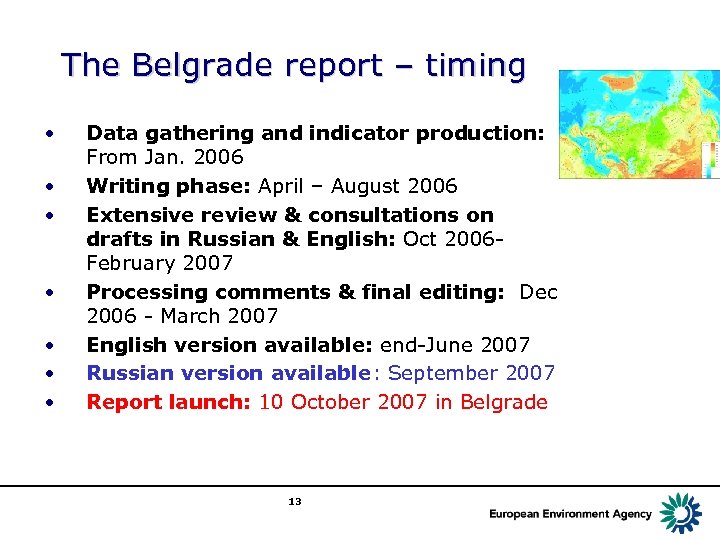
The Belgrade report – timing • • Data gathering and indicator production: From Jan. 2006 Writing phase: April – August 2006 Extensive review & consultations on drafts in Russian & English: Oct 2006 February 2007 Processing comments & final editing: Dec 2006 - March 2007 English version available: end-June 2007 Russian version available: September 2007 Report launch: 10 October 2007 in Belgrade 13
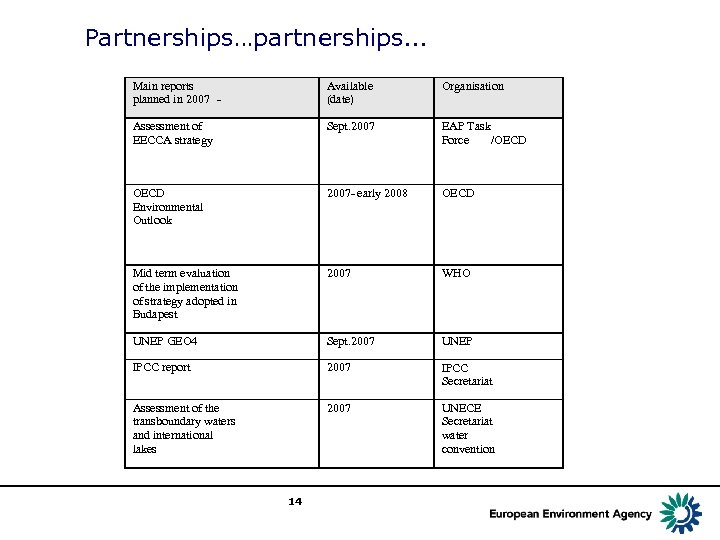
Partnerships…partnerships… Main reports planned in 2007 - Available (date) Organisation Assessment of EECCA strategy Sept. 2007 EAP Task Force /OECD Environmental Outlook 2007 - early 2008 OECD Mid term evaluation of the implementation of strategy adopted in Budapest 2007 WHO UNEP GEO 4 Sept. 2007 UNEP IPCC report 2007 IPCC Secretariat Assessment of the transboundary waters and international lakes 2007 UNECE Secretariat water convention 14
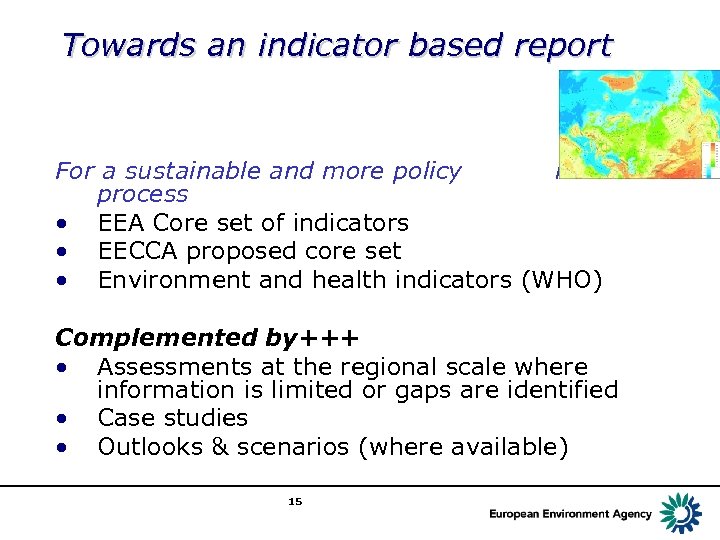
Towards an indicator based report For a sustainable and more policy relevant process • EEA Core set of indicators • EECCA proposed core set • Environment and health indicators (WHO) Complemented by+++ • Assessments at the regional scale where information is limited or gaps are identified • Case studies • Outlooks & scenarios (where available) 15
Executive Summary • English version available in Circa Interest Group/Belgrade 2007 at: http: //eea. eionet. europa. eu/Members/irc/envirowin dows/belgrade_07/library? l=/report_development/e xecutive_progress/consultationdoc/_EN_1. 0_&a=d&c ookie=1 16
Executive Summary: key messages Environment and Health: Inland Waters • • Unsafe water, poor sanitation and insufficient hygiene result in 18 000 premature deaths each year, mostly in children in EECCA and SEE; rural populations in these regions are much more affected. More than 100 million people in the pan-European region still do not have access to safe drinking water and adequate sanitation. In EECCA and SEE the quality of water supply and sanitation services has deteriorated continuously over the past 15 years. The rural population is affected more than urban citizens. Twelve countries in the pan-European region (one third of region’s population) water-stressed. High leakage losses in water distribution systems, poor management and maintenance of irrigation systems, and unsustainable cropping patterns all exacerbate the impacts of droughts and water scarcity. 17
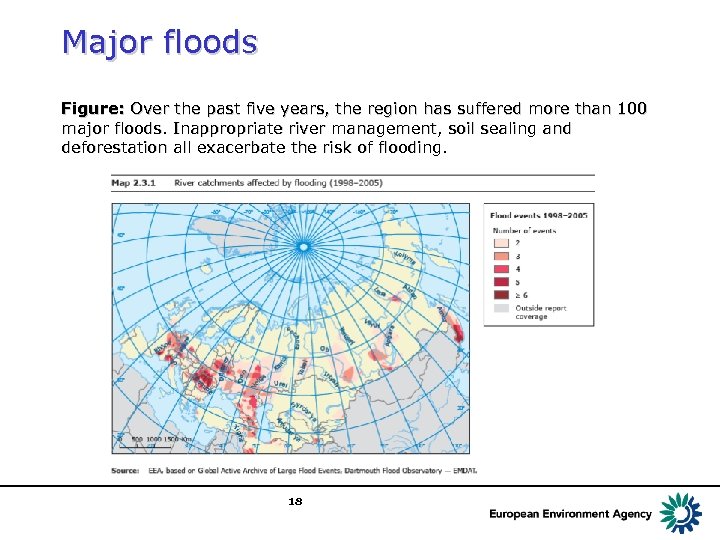
Major floods Figure: Over the past five years, the region has suffered more than 100 major floods. Inappropriate river management, soil sealing and deforestation all exacerbate the risk of flooding. 18
Env. & health and quality of life – direct impacts and more complex concerns (multicausality & interlinkages) • • Major environment-related health concerns in the pan-European region continue to be linked to poor air and water quality, hazardous chemicals, and noise. These are often interconnected through common driving forces or pressures. Although cause and effect relationships are hard to establish, associations between outdoor and indoor air pollution, water and soil contamination, hazardous chemicals and noise and respiratory and cardiovascular diseases, cancer, asthma, allergies, as well as disorders of reproductive and neuro-developmental systems. . 19
Low level exposures, mixtures and children • • • Growing concern about adverse impacts of exposures to low levels of chemicals, often in complex mixtures. Several adult diseases are suggested to be linked to exposure in very early childhood or exposure of parents before conception. Persistent chemicals with long-term effects, and those used in long-life articles, may present risks even after their production has been phased out. 20
Belgrade consultation & dissemination processes - novelties • Consultation in Russian & English (Oct 2006 to Feb 2007) allowing wide participation of EECCA experts & institutions; • Two dedicated consultation meetings funded under EU TACIS activity: • EECCA NGOs & others 16 -17 Nov; • UNECE/WGEMA 27 -29 Nov 21
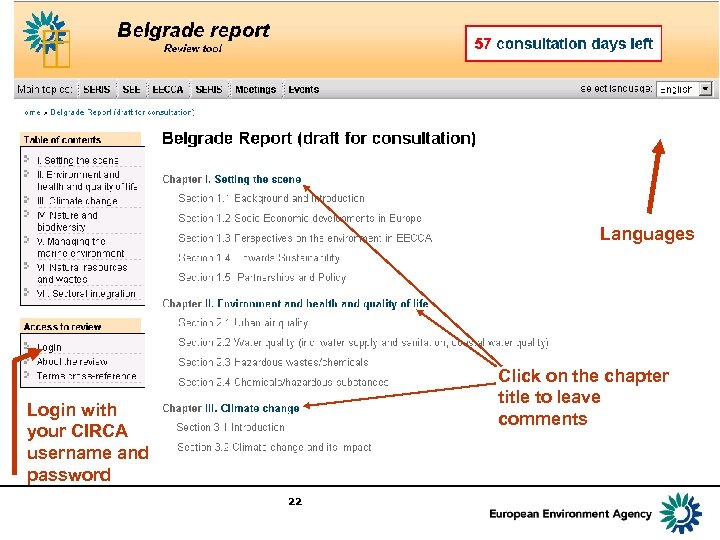
Languages Click on the chapter title to leave comments Login with your CIRCA username and password 22
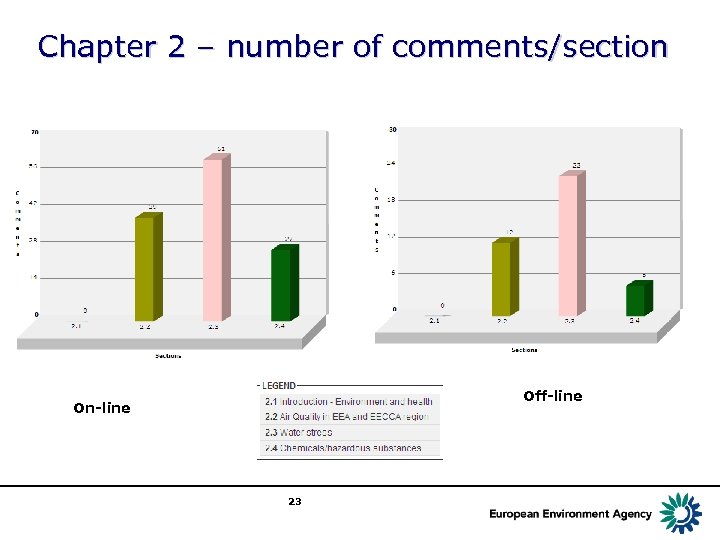
Chapter 2 – number of comments/section Off-line On-line 23
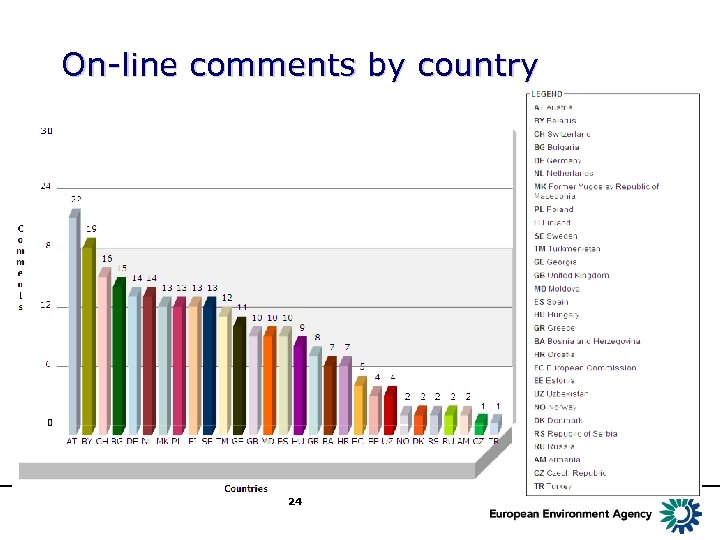
On-line comments by country 24
Belgrade 07 From June 2007 25 Belgrade 07
Outline 1. The Belgrade report: process & results 2. Environment for Europe process 16 years on. . 3. Towards a shared environmental information system 26
“Environment for Europe” process Ministerial Conference 10 -12 October 2007 Belgrade. . . and beyond? . . ? 27
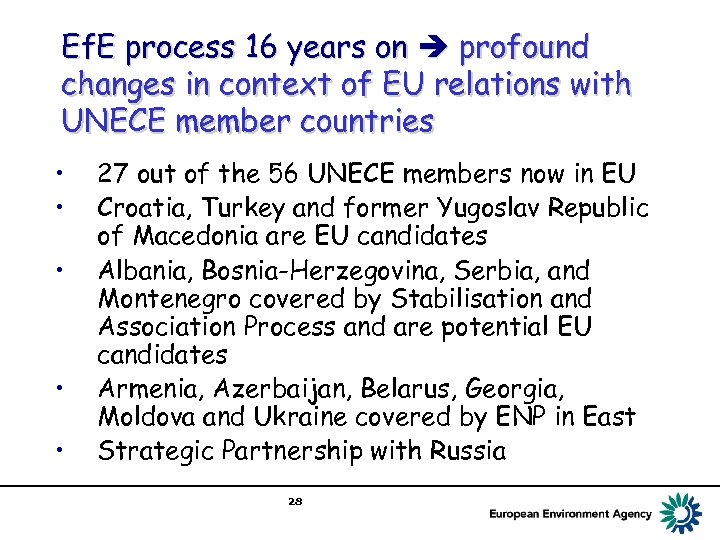
Ef. E process 16 years on profound changes in context of EU relations with UNECE member countries • • • 27 out of the 56 UNECE members now in EU Croatia, Turkey and former Yugoslav Republic of Macedonia are EU candidates Albania, Bosnia-Herzegovina, Serbia, and Montenegro covered by Stabilisation and Association Process and are potential EU candidates Armenia, Azerbaijan, Belarus, Georgia, Moldova and Ukraine covered by ENP in East Strategic Partnership with Russia 28
Ef. E process 16 years on Many new opportunities for closer cooperation between EU and EECCA countries: • European Neighbourhood Policy now strengthened • The EU-Central Asia Political Dialogue • Recent Commission Communication on Black Sea Synergy 29
The strengthened European Neighbourhood Policy (ENP) Communication from the Commission on Strengthening the European Neighbourhood Policy (COM(2006) 726 final) Measures proposed to strengthen Policy: • promotion of people-to-people contacts • enhancing regional co-operation • building a thematic dimension to cover e. g. : ü Environment ü Transport ü Energy • Effective implementation of multilateral agreements & processes 30
European Commission focus in future Ef. E process (SEC(2007) 633, 21. 05. 2007) • • • Actively participating in the implementation work of the existing UNECE environmental conventions, Contributing to UNECE Environmental Performance Reviews, Facilitating and supporting the network of EECCA Regional Environmental Centres Participating in selected sub-regional initiatives of relevance to the Ef. E process, in particular those focussed on Central Asia. Contributing, with EU Member States, to improvement of the water sector in the EECCA region towards the objectives of the EU Water Initiative (EUWI). 31
EC opinion of UNECE focus in future Ef. E process (SEC(2007) 633, 21. 05. 2007) • Facilitate implementation of UN environmental conventions in region, especially transboundary scope • Regional level coordinating of 2002 Johannesburg Plan of Implementation • Environment Performance Reviews for policy guidance and important overview for potential donors. 32
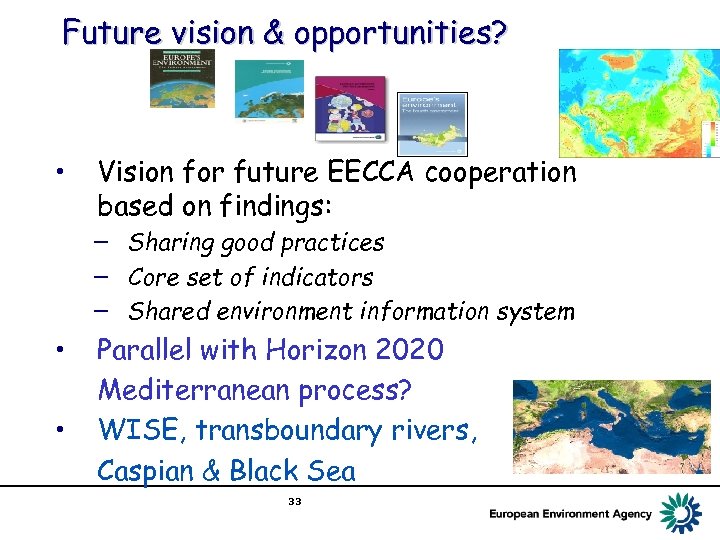
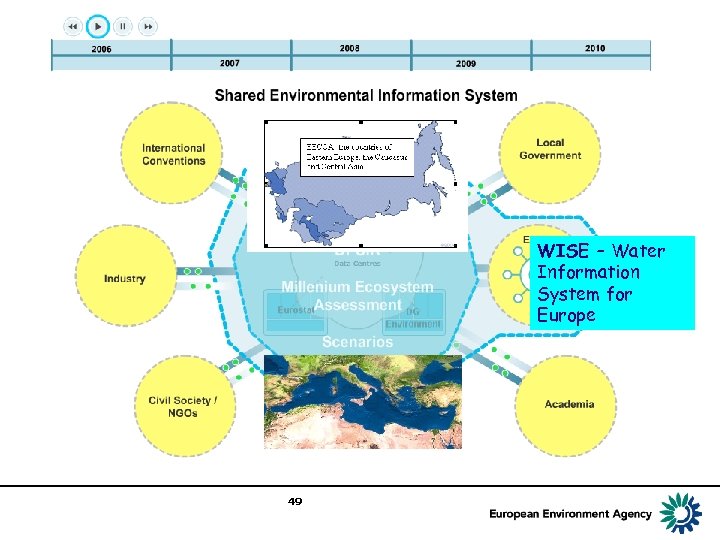
Future vision & opportunities? • Vision for future EECCA cooperation based on findings: − Sharing good practices − Core set of indicators − Shared environment information system • • Parallel with Horizon 2020 Mediterranean process? WISE, transboundary rivers, Caspian & Black Sea 33
EEA role in future Ef. E process? 1. Streamlining information systems • • Data flows & indicators Information infrastructures • • • Conventions Sub-regional & thematic initiatives Intercountry and regional comparisons 2. Review & monitoring of progress 3. Comparative analysis to learn lessons and share of experiences Ø Development of shared information system prerequisite for future work Ø For water (WISE) already begun 34
Outline 1. The Belgrade report: process & results 2. Environment for Europe process 16 years on. . 3. Towards a shared environmental information system 35
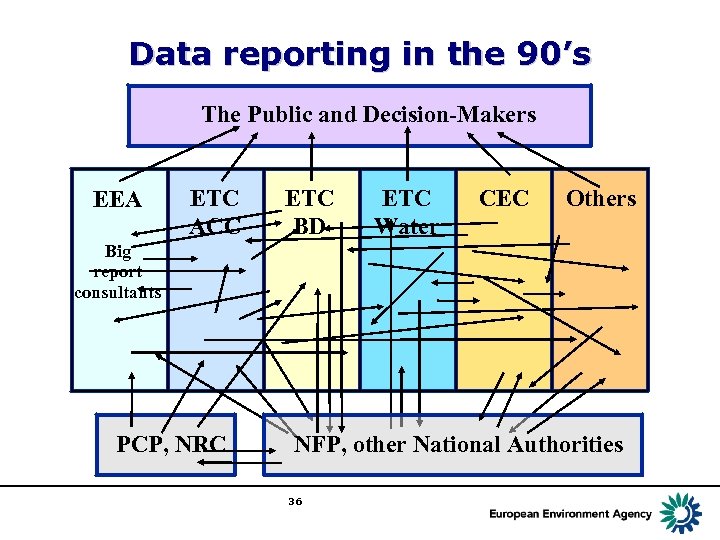
Data reporting in the 90’s The Public and Decision-Makers EEA ETC ACC ETC BD ETC Water CEC Others Big report consultants PCP, NRC NFP, other National Authorities 36
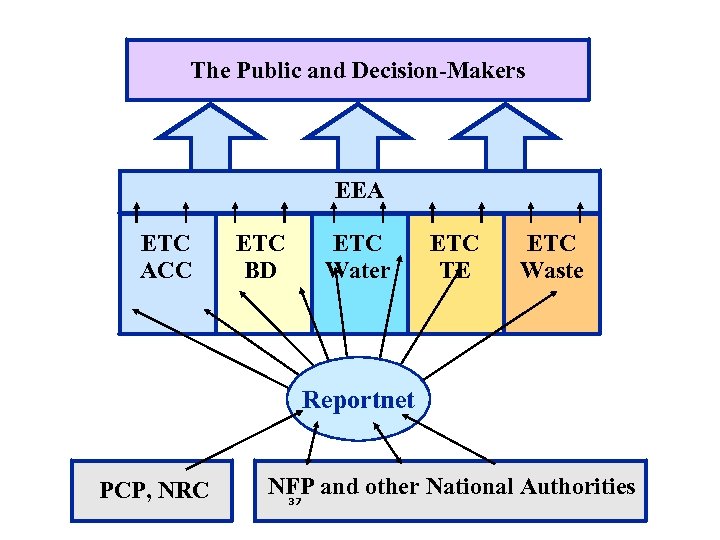
The Public and Decision-Makers EEA ETC ACC ETC BD ETC Water ETC TE ETC Waste Reportnet PCP, NRC NFP and other National Authorities 37
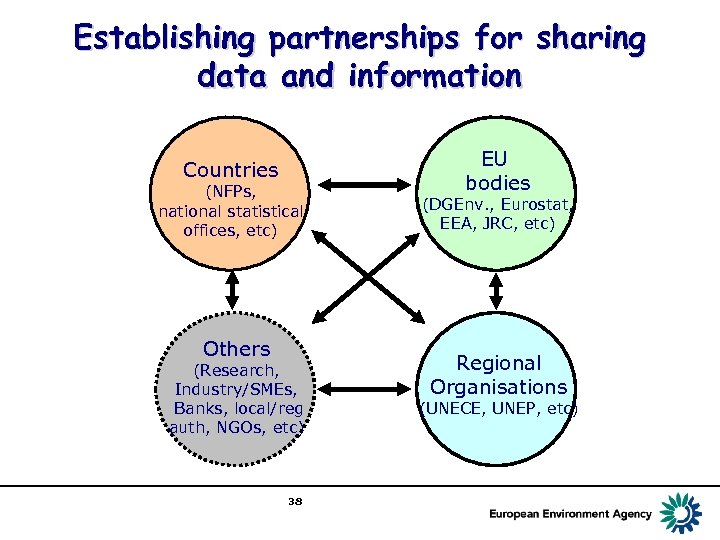
Establishing partnerships for sharing data and information Countries (NFPs, national statistical offices, etc) Others (Research, Industry/SMEs, Banks, local/reg auth, NGOs, etc) 38 EU bodies (DGEnv. , Eurostat, EEA, JRC, etc) Regional Organisations (UNECE, UNEP, etc)
39
or… 40
41
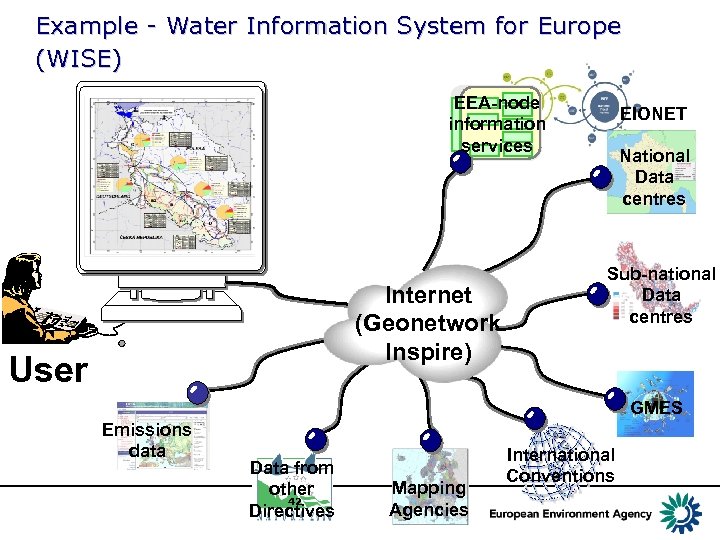
Example - Water Information System for Europe (WISE) EEA-node information services Internet (Geonetwork Inspire) User EIONET National Data centres Sub-national Data centres GMES Emissions data Data from other 42 Directives Mapping Agencies International Conventions
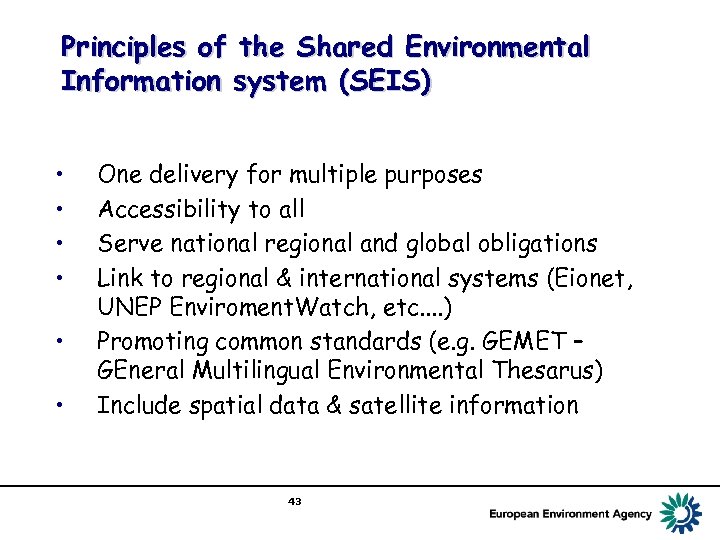
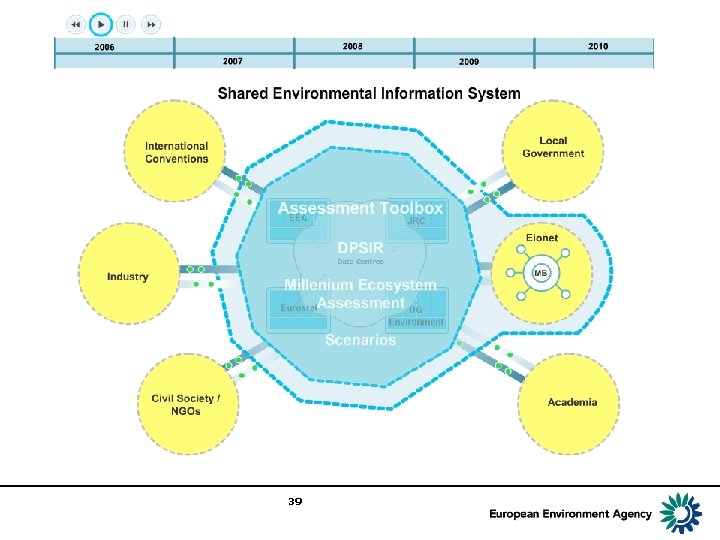
Principles of the Shared Environmental Information system (SEIS) • • • One delivery for multiple purposes Accessibility to all Serve national regional and global obligations Link to regional & international systems (Eionet, UNEP Enviroment. Watch, etc. . ) Promoting common standards (e. g. GEMET – GEneral Multilingual Environmental Thesarus) Include spatial data & satellite information 43
Principles of the Shared Environmental Information system (SEIS) • • • One delivery for multiple purposes Accessibility to all Serve national regional and global obligations Link to regional & international systems (Eionet, UNEP Enviroment. Watch, etc. . ) Promoting common standards (e. g. GEMET – GEneral Multilingual Environmental Thesarus) Include spatial data & satellite information 44
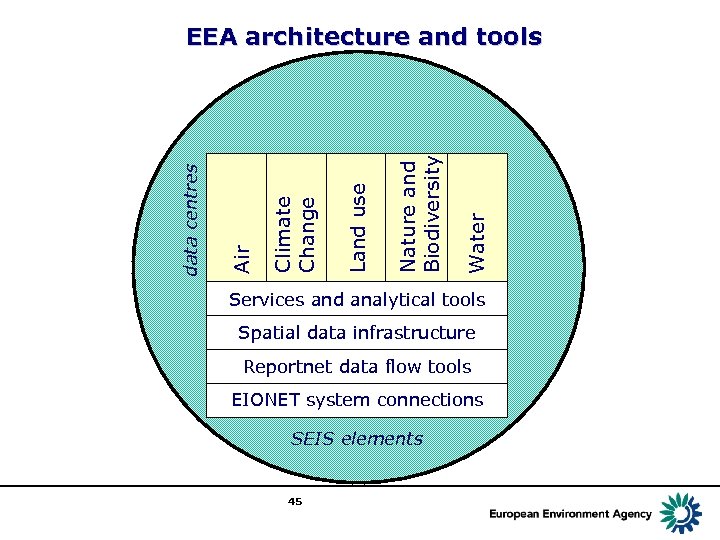
Water Nature and Biodiversity Land use Climate Change Air data centres EEA architecture and tools Services and analytical tools Spatial data infrastructure Reportnet data flow tools EIONET system connections SEIS elements 45
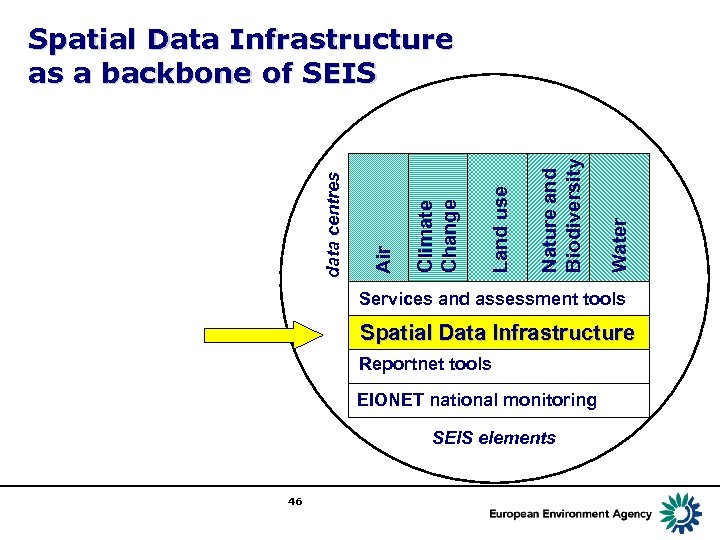
Water Nature and Biodiversity Land use Climate Change Air data centres Spatial Data Infrastructure as a backbone of SEIS Services and assessment tools Spatial Data Infrastructure Reportnet tools EIONET national monitoring SEIS elements 46
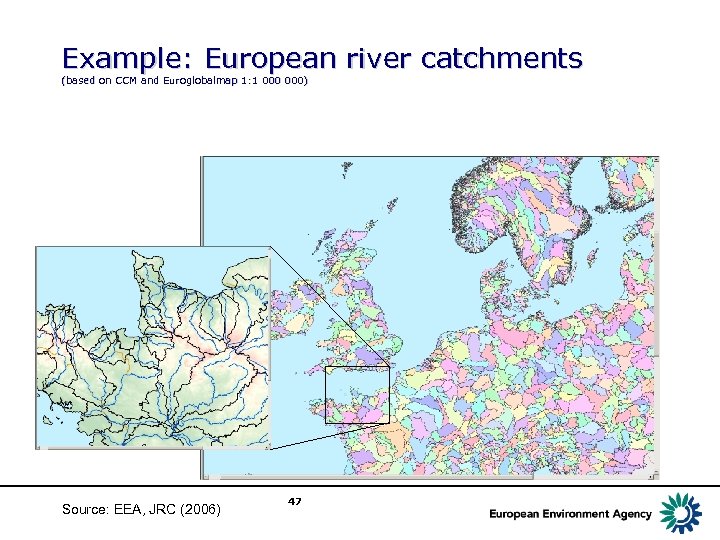
Example: European river catchments (based on CCM and Euroglobalmap 1: 1 000) Source: EEA, JRC (2006) 47
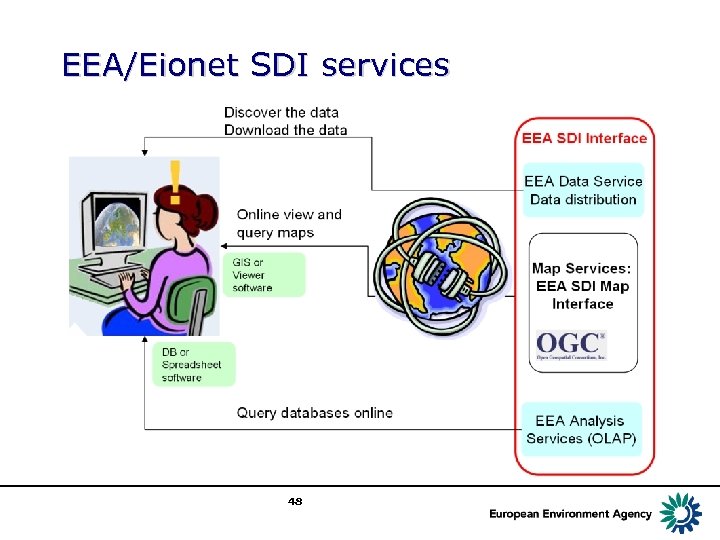
EEA/Eionet SDI services 48
WISE – Water Information System for Europe 49
Thank you! www. eea. europa. eu 50
Скачать презентацию The 4 th pan-European assessment Belgrade report the
93fbcd2177338e69edd67c178451082a.ppt