


 Скачать презентацию The 4 th International Seville Conference on Future-Oriented
f6b497262e8aeb7e7a83d02dd06b3860.ppt
- Количество слайдов: 14
 The 4 th International Seville Conference on Future-Oriented Technology Analysis (FTA) 12 & 13 May 2011 Global urban sanitation system hotspots: mass markets for disruptive onsite wastewater treatment technologies? An European perspective Eckhard Störmer, Christian Binz, Bernhard Truffer Eawag (CH) and Z_punkt (D)
 Mass markets for disruptive wwt technologies To. C – problem sketch: limitations of the dominant design for the new markets – the FTA approach: Technology Roadmapping for disruptive technologies – the results • mass markets • new technologies • market actors and new business concepts – conclusions
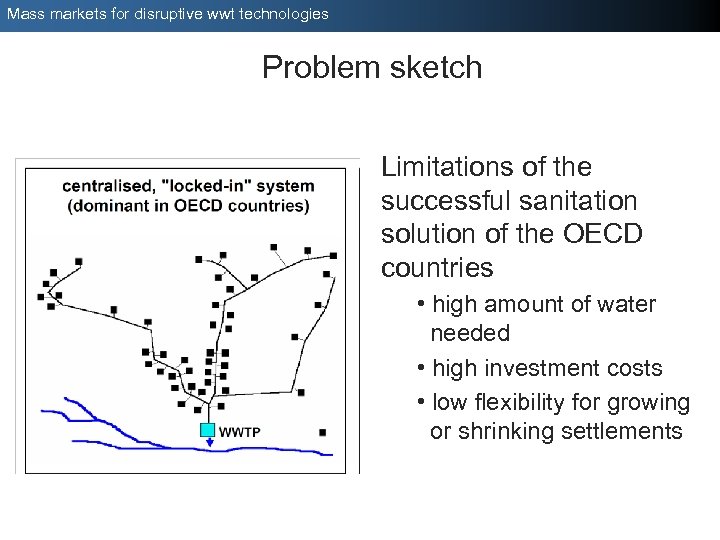 Mass markets for disruptive wwt technologies Problem sketch Limitations of the successful sanitation solution of the OECD countries • high amount of water needed • high investment costs • low flexibility for growing or shrinking settlements
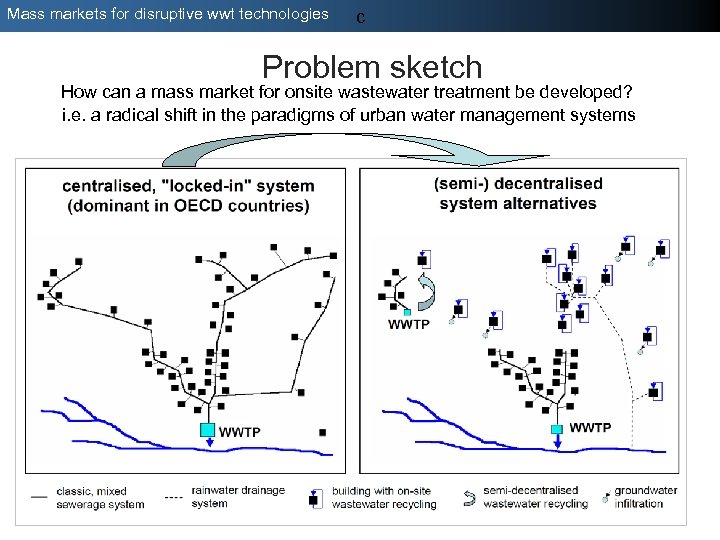 Mass markets for disruptive wwt technologies c Problem sketch How can a mass market for onsite wastewater treatment be developed? i. e. a radical shift in the paradigms of urban water management systems
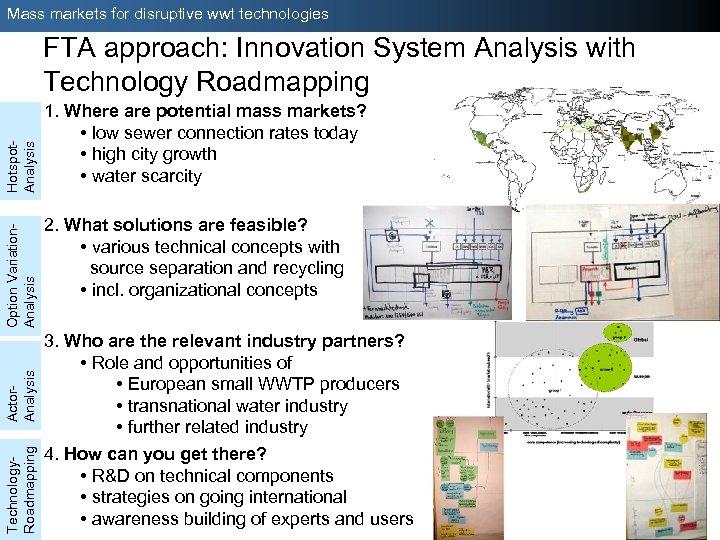 Mass markets for disruptive wwt technologies Technology. Roadmapping Actor. Analysis Option Variation. Analysis Hotspot. Analysis FTA approach: Innovation System Analysis with Technology Roadmapping 1. Where are potential mass markets? • low sewer connection rates today • high city growth • water scarcity 2. What solutions are feasible? • various technical concepts with source separation and recycling • incl. organizational concepts 3. Who are the relevant industry partners? • Role and opportunities of • European small WWTP producers • transnational water industry • further related industry 4. How can you get there? • R&D on technical components • strategies on going international • awareness building of experts and users
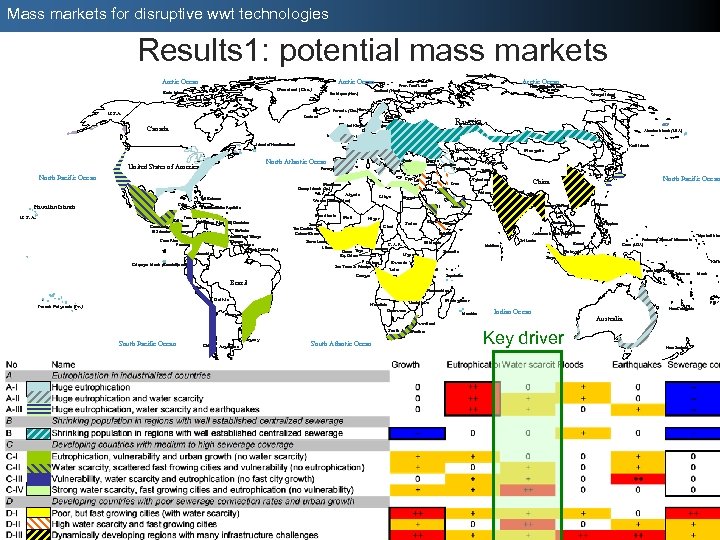 Mass markets for disruptive wwt technologies Results 1: potential mass markets Ellesmere Island Arctic Ocean Banks Island Victoria Island Severnaya Zemlya Arctic Ocean Greenland (Den. ) Jan Mayen (Nor. ) Wrangel Island Norway Faroe Is. (Den. ) Finland Iceland Ireland Island of Newfoundland North Atlantic Ocean United States of America Portugal Russia North Pacific Ocean Cyp. Leb. Israel Tunisia Morocco Canary Islands (Sp. ) Cuba Libya Western Sahara (Mor. ) Kuwait Mauritania Belize Haiti. Puerto Rico (US) Dominica Honduras Guatemala Barbados El Salvador Nicaragua Trinidad and Tobago Costa Rica Guyana Venezuela Panama Suriname French Guiana (Fr. ) Colombia Senegal The Gambia Guinea-Bissau Guinea Sierra Leone Liberia Mali Niger Cameroon Ghana Togo Eq. Guinea Rwanda Zaire Angola Malawi Zambia Bolivia French Polynesia (Fr. ) Paraguay Chile Uruguay Argentina India Burundi Tanzania Japan North Pacific Ocean Bhu. Bang. Taiwan Myanmar (Burma) Laos Thailand Vietnam Philippines Cambodia Andaman Islands (India) Sri Lanka Brunei Maldives Somalia Federated States of Micronesia Guam (USA) Marshall Islan Malaysia Singapore Kiriba Indonesia Papua New Guinea Seychelles Solomon Islands Mozambique Zimbabwe Namibia Botswana South Atlantic Ocean U. A. Arabia. E. Oman Kenya Swaziland South Africa Lesotho South Pacific Ocean Nepal Pakistan Ethiopia C. A. R. Congo Brazil S. Korea China Yemen Uganda Sao Tome & Principe N. Korea Djibouti Benin Côte D’Ivoire Nigeria Gabon Ecuador Galapagos Islands (Ecuador) Eritrea Sudan Chad Burkina Faso Kuril Islands Mongolia Qatar Saudi Jam. Aleutian Islands (USA) Afghanistan Iraq Egypt Dominican Republic Peru Syria Jordan Algeria The Bahamas Mexico 60° Estonia Latvia Lithuania Neth. Poland Belarus Bel. Germany Ukraine Czech. Slovak. Aus. Hung. Kazakhstan Moldova France Switz. Slov. Romania Cro. Yugo. Bos. Uzbekistan Georgia Italy Mac. Bulgaria Kyrgyzstan Armenia Azerbaijan Albania Spain Turkmenistan Tajikistan Greece Turkey Sweden United Kingdom Den. Canada U. S. A. New Siberian Islands Baffin Island U. S. A. Hawaiian Islands Arctic Ocean Franz Josef Land Svalbard (Nor. ) Novaya Zemlya Madagascar Mauritius Fiji Indian Ocean Key driver New Caledonia Australia New Zealand
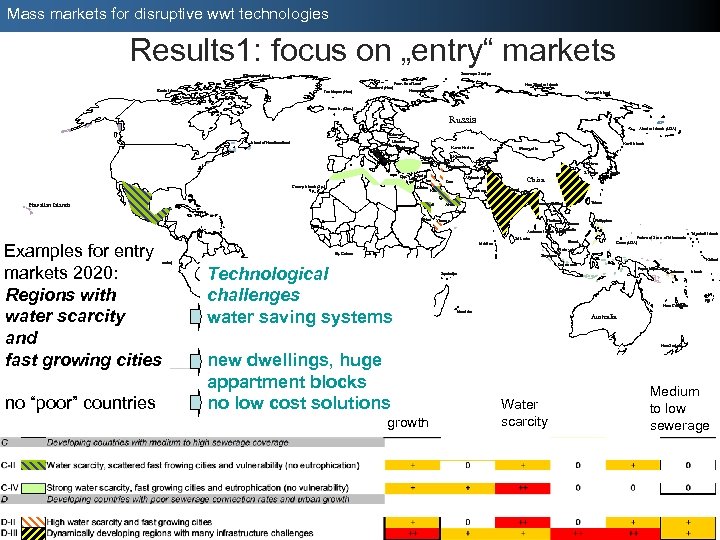 Mass markets for disruptive wwt technologies Results 1: focus on „entry“ markets Severnaya Zemlya Ellesmere Island Banks Island Jan Mayen (Nor. ) Victoria Island Franz Josef Land Svalbard (Nor. ) Novaya Zemlya New Siberian Islands Wrangel Island Baffin Island Faroe Is. (Den. ) Russia 60° Aleutian Islands (USA) Belarus Bel. Island of Newfoundland Ukraine Slovak. Moldova Slov. Cro. Yugo. Bos. Mac. Cyp. Leb. Syria Iraq Israel Jordan Kuwait Canary Islands (Sp. ) Kuril Islands Kazakhstan Uzbekistan Georgia Armenia Azerbaijan Turkmenistan Mongolia Kyrgyzstan N. Korea Tajikistan S. Korea Iran Pakistan Nepal Qatar Hawaiian Islands Saudi Eritrea U. A. Arabia. E. Oman Japan China Afghanistan India Bhu. Bang. Taiwan Myanmar (Burma) Laos Yemen Thailand Vietnam Philippines Cambodia Andaman Islands (India) Examples for entry markets 2020: Regions with water scarcity and fast growing cities Galapagos Islands (Ecuador) no “poor” countries Sri Lanka Brunei Maldives Federated States of Micronesia Guam (USA) Marshall Islands Malaysia Eq. Guinea Singapore Technological challenges water saving systems Kiribati Indonesia Sao Tome & Principe Papua New Guinea Seychelles Solomon Islands Fiji New Caledonia Mauritius Australia New Zealand new dwellings, huge appartment blocks no low cost solutions City growth Water scarcity Medium to low sewerage
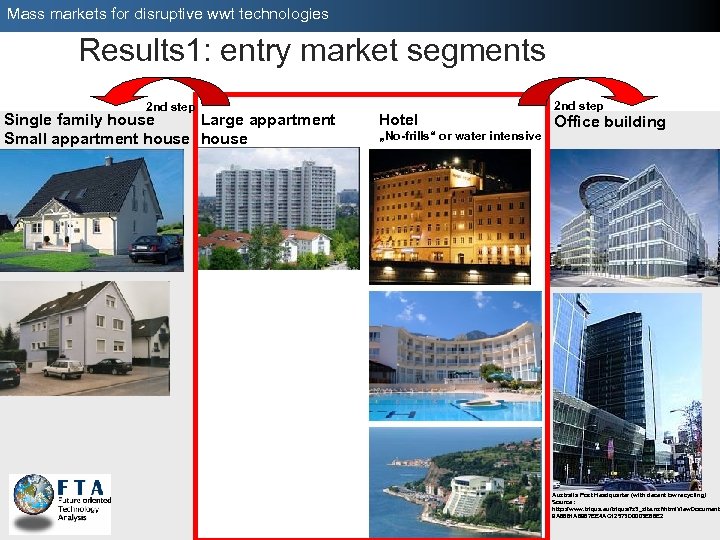 Mass markets for disruptive wwt technologies Results 1: entry market segments 2 nd step Single family house Large appartment Small appartment house Hotel „No-frills“ or water intensive 2 nd step Office building Australia Post Headquarter (with decent bw recycling) Source: http: //www. triqua. eu/triqua/fs 3_site. nsf/html. View. Document 9 A 6881 A 6987 EE 4 AC 12573 D 0003 E 86 E 2
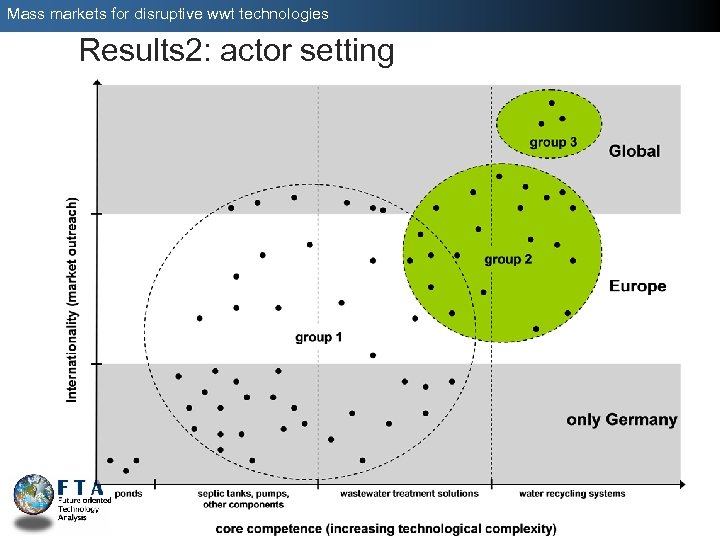 Mass markets for disruptive wwt technologies Results 2: actor setting
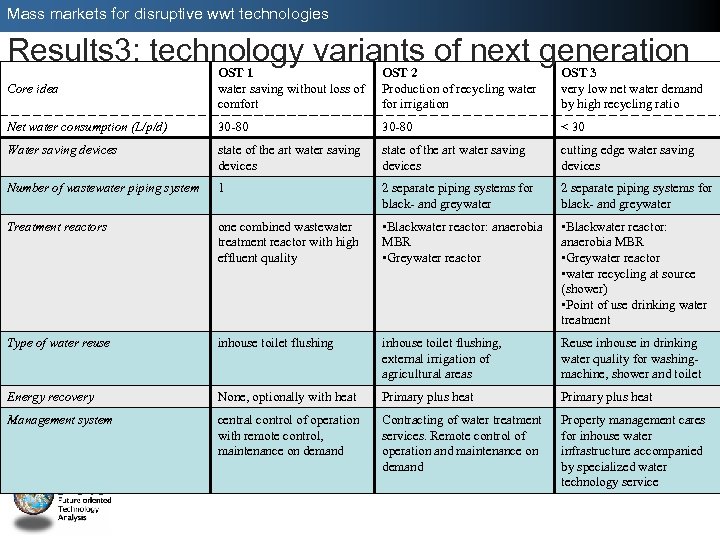 Mass markets for disruptive wwt technologies Results 3: technology variants of next generation Core idea OST 1 water saving without loss of comfort OST 2 Production of recycling water for irrigation OST 3 very low net water demand by high recycling ratio Net water consumption (L/p/d) 30 -80 < 30 Water saving devices state of the art water saving devices cutting edge water saving devices Number of wastewater piping system 1 2 separate piping systems for black- and greywater Treatment reactors one combined wastewater treatment reactor with high effluent quality • Blackwater reactor: anaerobia MBR • Greywater reactor • water recycling at source (shower) • Point of use drinking water treatment Type of water reuse inhouse toilet flushing, external irrigation of agricultural areas Reuse inhouse in drinking water quality for washingmachine, shower and toilet Energy recovery None, optionally with heat Primary plus heat Management system central control of operation with remote control, maintenance on demand Contracting of water treatment services. Remote control of operation and maintenance on demand Property management cares for inhouse water infrastructure accompanied by specialized water technology service
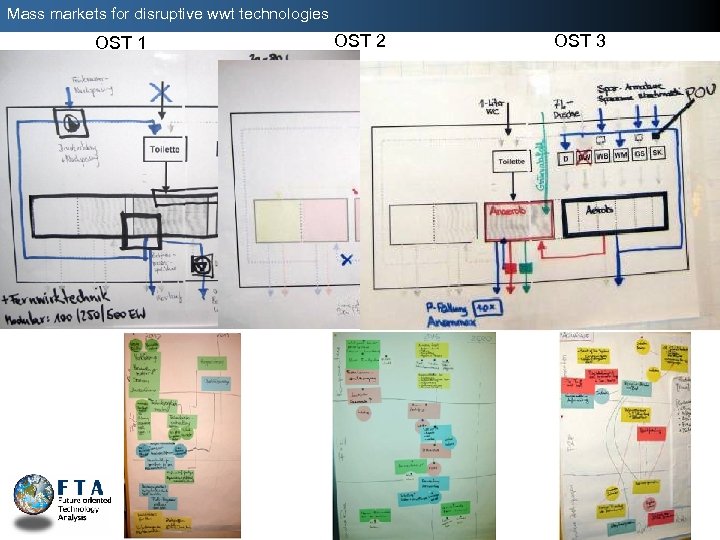 Mass markets for disruptive wwt technologies OST 1 OST 2 OST 3
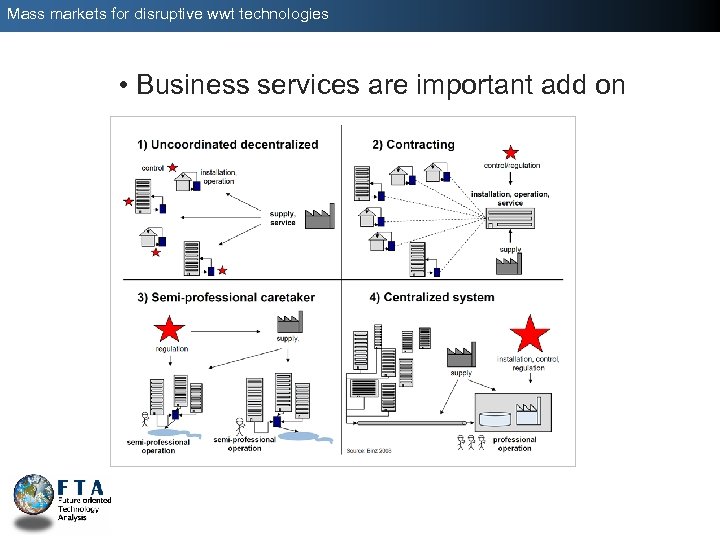 Mass markets for disruptive wwt technologies • Business services are important add on
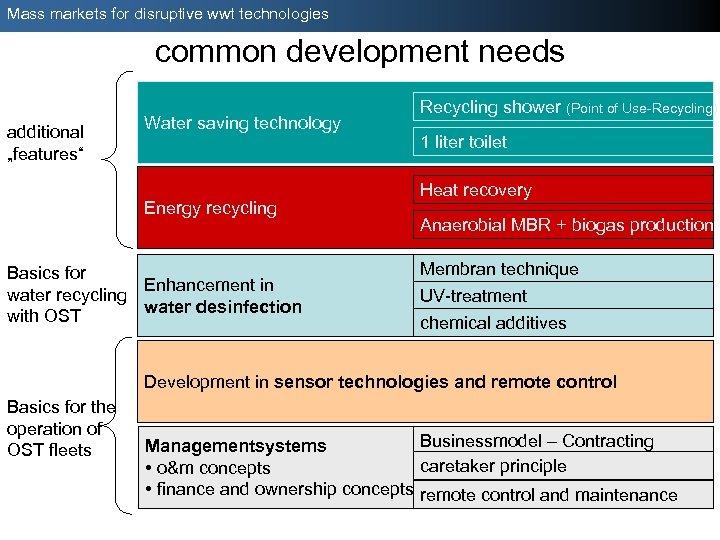 Mass markets for disruptive wwt technologies common development needs additional „features“ Water saving technology Energy recycling Basics for Enhancement in water recycling water desinfection with OST Recycling shower (Point of Use-Recycling) 1 liter toilet Heat recovery Anaerobial MBR + biogas production Membran technique UV-treatment chemical additives Development in sensor technologies and remote control Basics for the operation of OST fleets Businessmodel – Contracting Managementsystems caretaker principle • o&m concepts • finance and ownership concepts remote control and maintenance
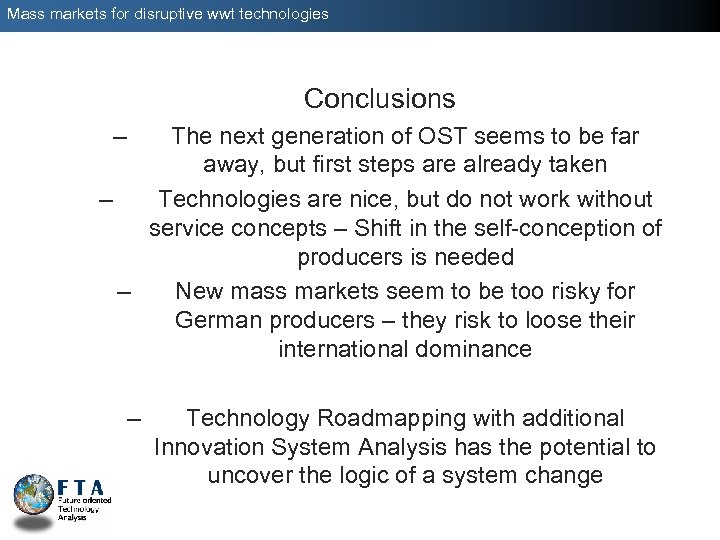 Mass markets for disruptive wwt technologies Conclusions – The next generation of OST seems to be far away, but first steps are already taken – Technologies are nice, but do not work without service concepts – Shift in the self-conception of producers is needed – New mass markets seem to be too risky for German producers – they risk to loose their international dominance – Technology Roadmapping with additional Innovation System Analysis has the potential to uncover the logic of a system change