


 Скачать презентацию The 4 th International Conference on Population Geographies
fab33397a75c914d923856fb8405676d.ppt
- Количество слайдов: 19
 The 4 th International Conference on Population Geographies The University of Hong Kong: 10 -13 July 2007 Female Labor Migration from Okinawa to Central Japan Current Conditions and Future Prospects Presenter: Michiyo Yoshida Setsunan University, Osaka, Japan
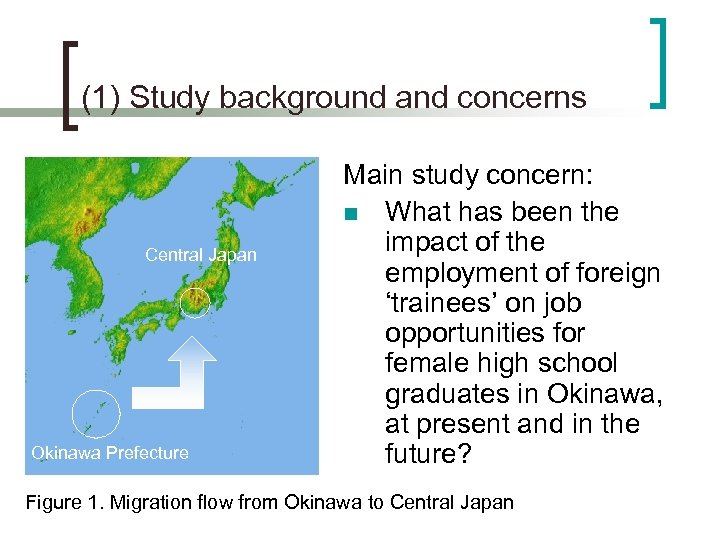 (1) Study background and concerns Central Japan Okinawa Prefecture Main study concern: n What has been the impact of the employment of foreign ‘trainees’ on job opportunities for female high school graduates in Okinawa, at present and in the future? Figure 1. Migration flow from Okinawa to Central Japan
 (2)Data collection Interviews with staff members of: n a public employment agency n the labour management section of a textile company n a junior college
 (4) Structure of presentation 1. Okinawa’s labour market 2. Ichinomiya’s industries 3. Methods used to recruit female workers: from the 1950 s to the mid 1980 s 4. Decline of the work-study programme: from the late 1980 s to the present day
 1. Okinawa’s labour market
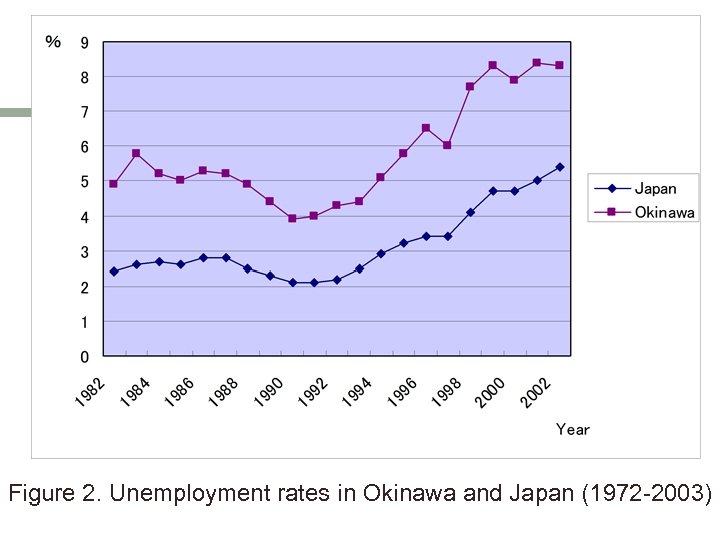 Figure 2. Unemployment rates in Okinawa and Japan (1972 -2003)
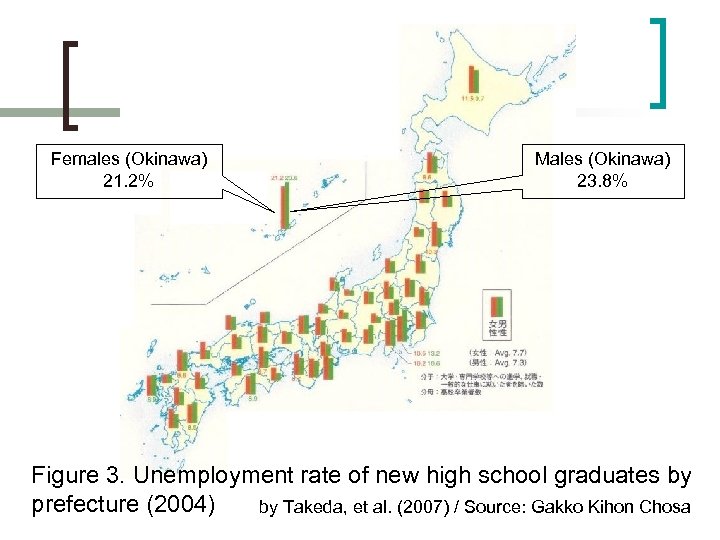 Females (Okinawa) 21. 2% Males (Okinawa) 23. 8% Figure 3. Unemployment rate of new high school graduates by prefecture (2004) by Takeda, et al. (2007) / Source: Gakko Kihon Chosa
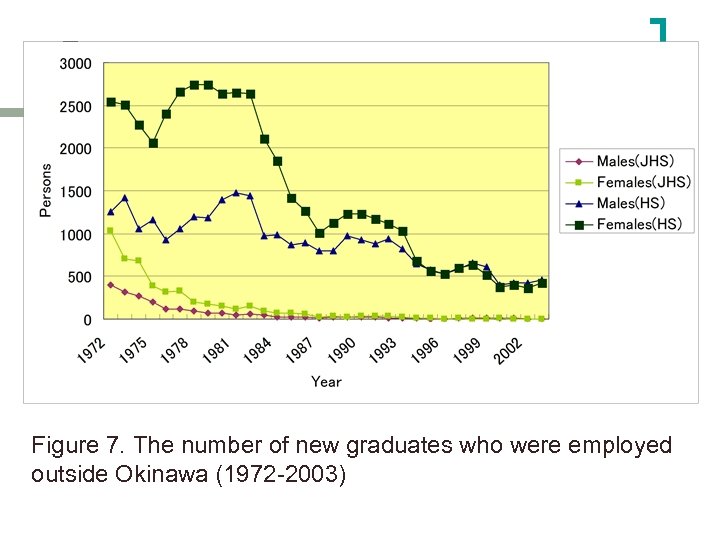 Figure 7. The number of new graduates who were employed outside Okinawa (1972 -2003)
 2. Ichinomiya’s industries
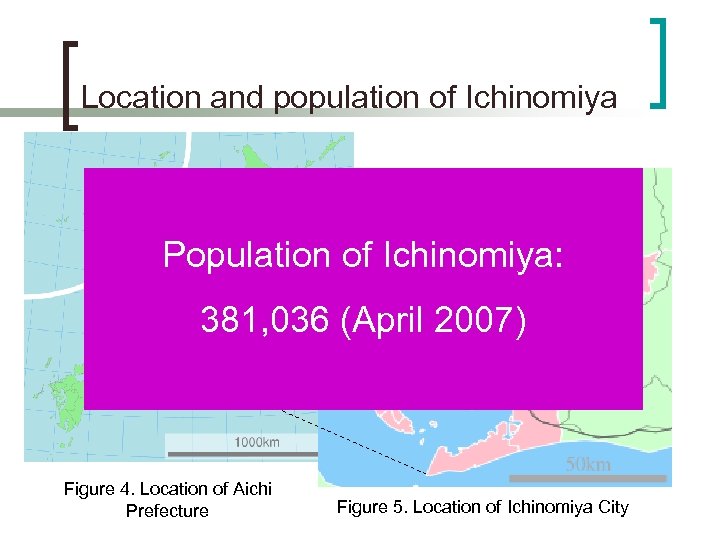 Location and population of Ichinomiya Nagoya Population of Ichinomiya: 381, 036 (April 2007) Figure 4. Location of Aichi Prefecture Figure 5. Location of Ichinomiya City
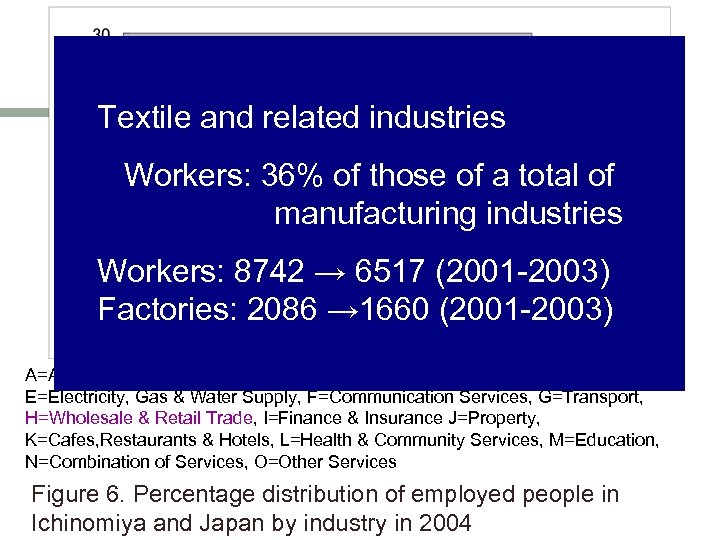 (2)Industries Textile and related industries Workers: 36% of those of a total of manufacturing industries Workers: 8742 → 6517 (2001 -2003) Factories: 2086 → 1660 (2001 -2003) ★ A=Agriculture, Forestry & Fishing, B=Mining, C=Construction, D=Manufacturing, E=Electricity, Gas & Water Supply, F=Communication Services, G=Transport, H=Wholesale & Retail Trade, I=Finance & Insurance J=Property, K=Cafes, Restaurants & Hotels, L=Health & Community Services, M=Education, N=Combination of Services, O=Other Services Figure 6. Percentage distribution of employed people in Ichinomiya and Japan by industry in 2004
 3. Methods used to recruit female workers From the 1950 s to the mid 1980 s
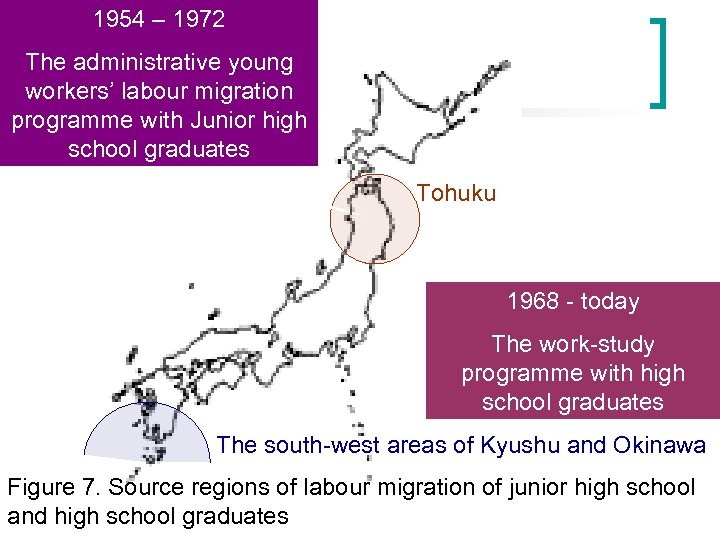 1954 – 1972 The administrative young workers’ labour migration programme with Junior high school graduates Tohuku 1968 - today The work-study programme with high school graduates The south-west areas of Kyushu and Okinawa Figure 7. Source regions of labour migration of junior high school and high school graduates
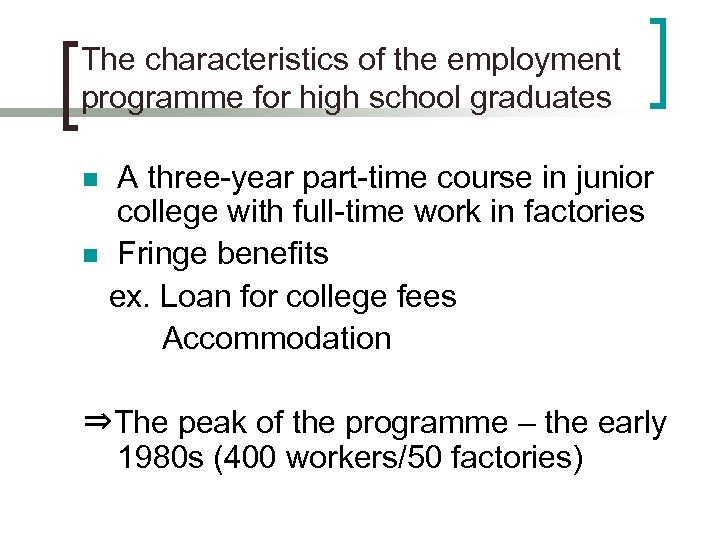 The characteristics of the employment programme for high school graduates A three-year part-time course in junior college with full-time work in factories n Fringe benefits ex. Loan for college fees Accommodation n ⇒The peak of the programme – the early 1980 s (400 workers/50 factories)
 4. Decline of the work-study programme From the late 1980 s to the present day
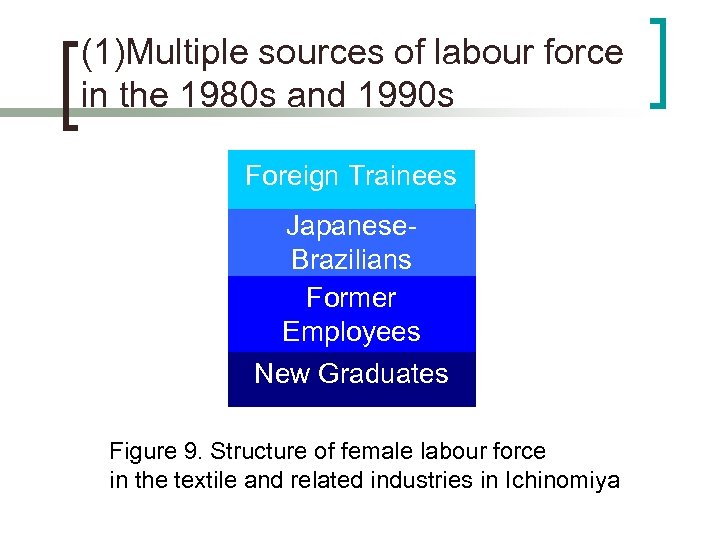 (1)Multiple sources of labour force in the 1980 s and 1990 s Foreign Trainees Japanese. Brazilians Former Employees New Graduates Figure 9. Structure of female labour force in the textile and related industries in Ichinomiya
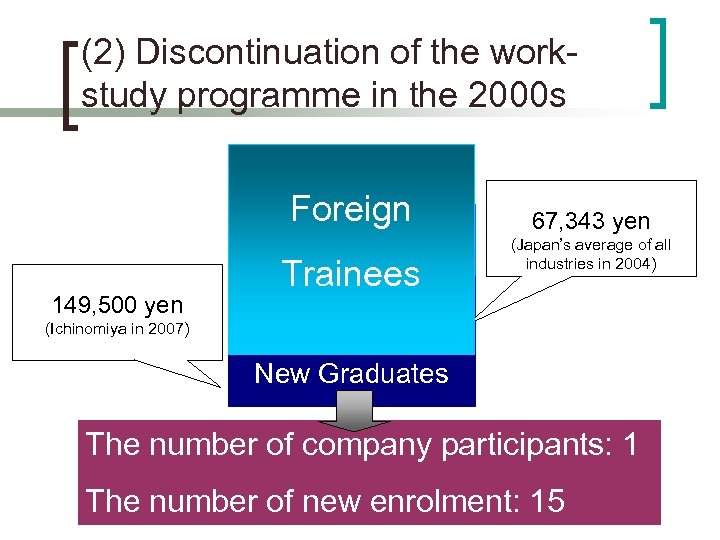 (2) Discontinuation of the workstudy programme in the 2000 s Foreign Trainees Foreign 149, 500 yen (Ichinomiya in 2007) Japanese. Brazilians Trainees Former Employees New Graduates 67, 343 yen (Japan’s average of all industries in 2004) The number of company participants: 1 Figure 10. Change in the structure of female labour force in the textile and related industries in The number of new enrolment: 15 Ichinomiya
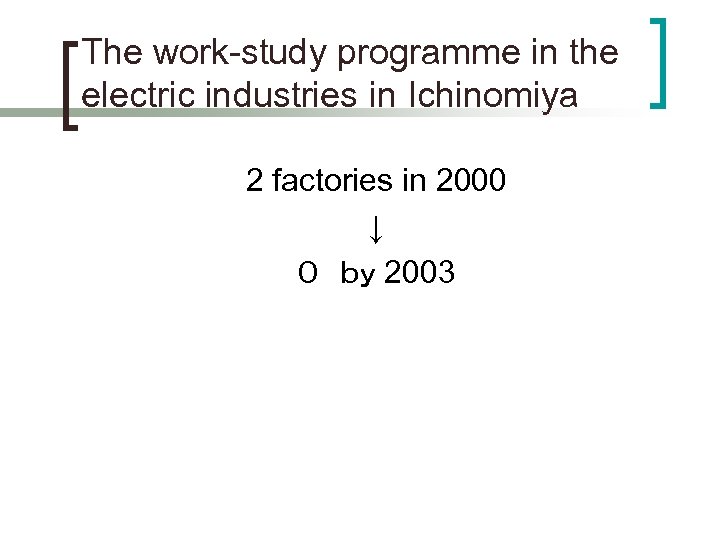 The work-study programme in the electric industries in Ichinomiya 2 factories in 2000 ↓ 0 by 2003
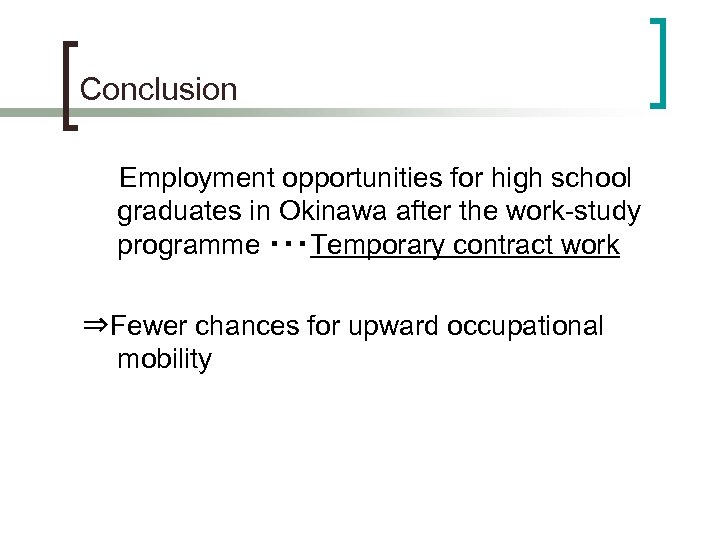 Conclusion Employment opportunities for high school graduates in Okinawa after the work-study programme ・・・Temporary contract work ⇒Fewer chances for upward occupational mobility