


 Скачать презентацию The 2007 Congressional Elections in the Philippines An
d9c6ffcb6f338638bd6d7dacb7153eb5.ppt
- Количество слайдов: 43
 The 2007 Congressional Elections in the Philippines: An Initial Assessment Presentation at the National Endowment for Democracy May 24, 2007 By Chito Gascon Executive Director – LIBERTAS Reagan-Fascell Democracy Fellow
 Discussion Outline CONTEXT Historical & strategic Current conjuncture Nature of Philippine elections CONFIGURATION / CONDUCT Balance of political forces Issues raised Outcomes, trends, and flashpoints CHALLENGES / CONSIDERATIONS General observations and conclusions Scenarios and directions Policy recommendations
 Catholic Bishops’ Statement (CBCP) January 2007 “ These coming elections in May 2007 are especially important. Many of our current political problems, which have hindered fuller economic development and social justice, especially for the poor, can be traced to unresolved questions concerning the conduct of past elections. As a nation, we cannot afford yet another controversial exercise that further aggravates social distrust and hopelessness. ”
 Basic Political Facts 85 M people in 7 K islands in South-east Asia (10 major languages) 350 years of Spanish rule American rule during the 1 st Half of the 20 th century Prior to & immediately after WW 2 a republican system was put in place patterned after the USA Widespread poverty, inequality, and injustice Internal armed conflicts Authoritarian rule (1972 -1986) 1986: Transition to democracy One of the few democracies in the region
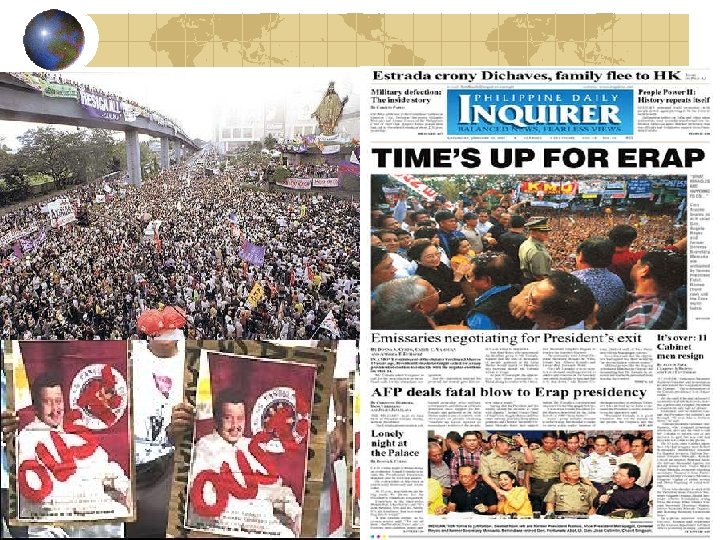
 The Downturn 1997: Asian Financial Crisis First Major Push for Charter-Change (CHACHA) Top-down Perceived as an effort for perpetuation of power 1998 Presidential Elections Rise of a populist candidate Resurgence of Marcos-style politics and persons Bad governance, scandals, corruption 2001: ’PEOPLEPOWER’ Revolt (EDSA 2) Reform-oriented BUT elite-driven
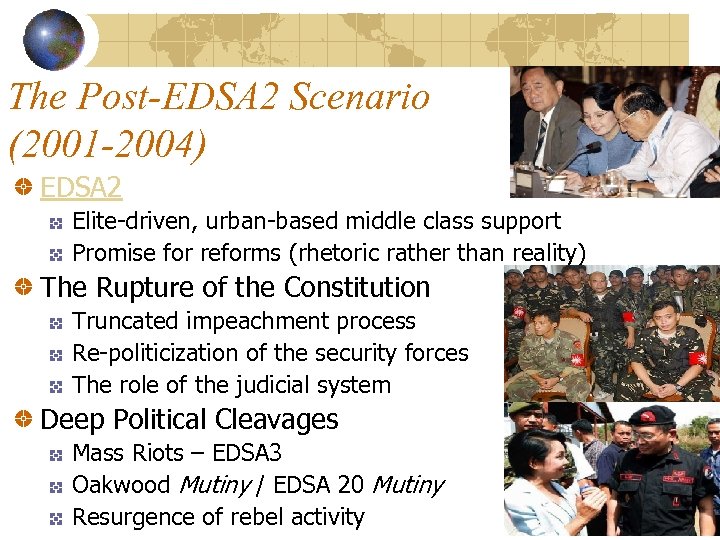 The Post-EDSA 2 Scenario (2001 -2004) EDSA 2 Elite-driven, urban-based middle class support Promise for reforms (rhetoric rather than reality) The Rupture of the Constitution Truncated impeachment process Re-politicization of the security forces The role of the judicial system Deep Political Cleavages Mass Riots – EDSA 3 Oakwood Mutiny / EDSA 20 Mutiny Resurgence of rebel activity
 The 2004 Elections & Their Aftermath: Watershed Year that led to the Backwater Notwithstanding the political divide, the 2004 national elections were seen as a critical step to ultimately resolving the impasse The crisis of LEGITIMACY from 2001 was aggravated by revelations of widespread electoral fraud from the 2004 elections, which only partially came to light in 2005, in the wake of the Hello Garci Scandal
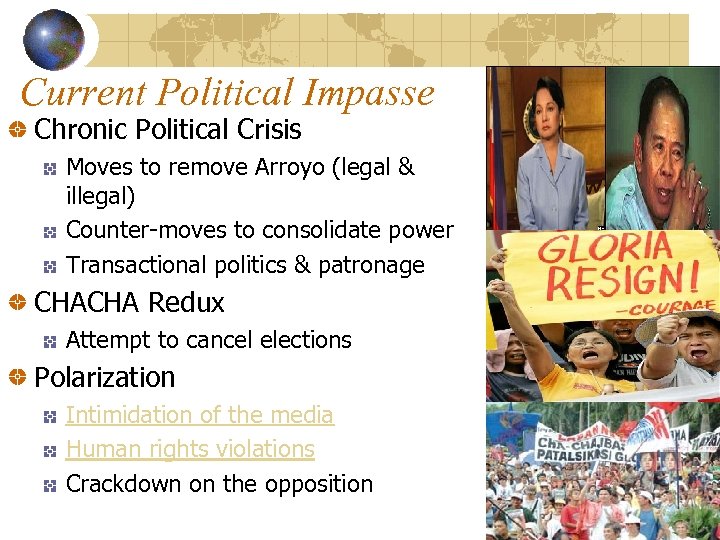 Current Political Impasse Chronic Political Crisis Moves to remove Arroyo (legal & illegal) Counter-moves to consolidate power Transactional politics & patronage CHACHA Redux Attempt to cancel elections Polarization Intimidation of the media Human rights violations Crackdown on the opposition
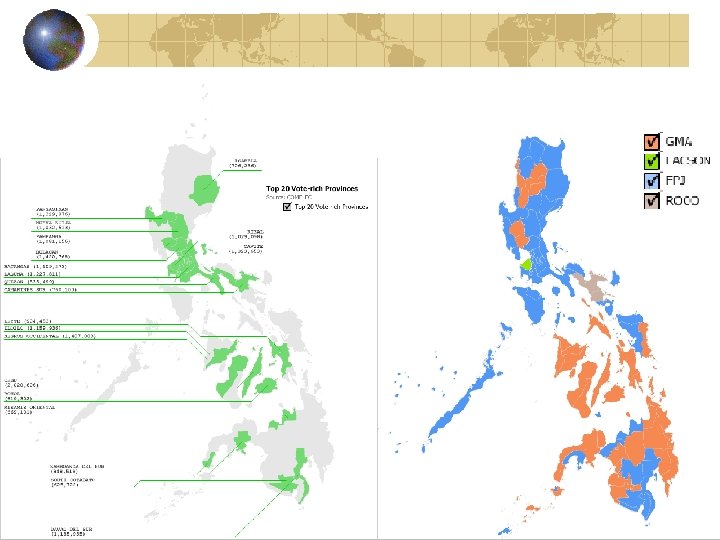
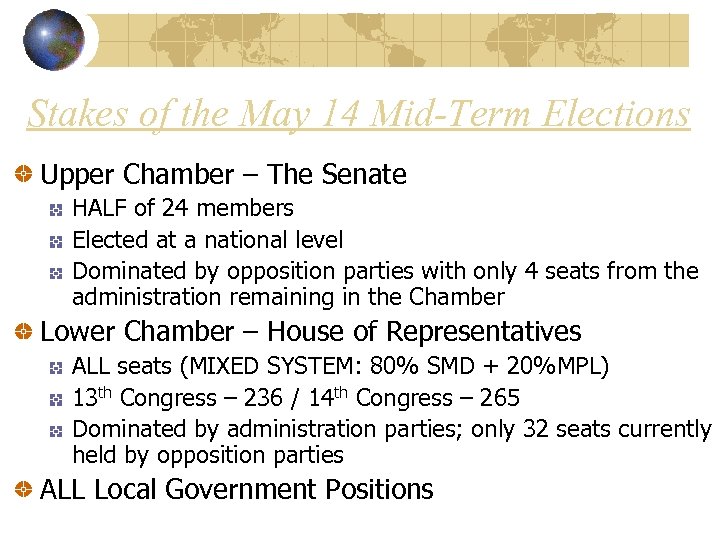 Stakes of the May 14 Mid-Term Elections Upper Chamber – The Senate HALF of 24 members Elected at a national level Dominated by opposition parties with only 4 seats from the administration remaining in the Chamber Lower Chamber – House of Representatives ALL seats (MIXED SYSTEM: 80% SMD + 20%MPL) 13 th Congress – 236 / 14 th Congress – 265 Dominated by administration parties; only 32 seats currently held by opposition parties ALL Local Government Positions
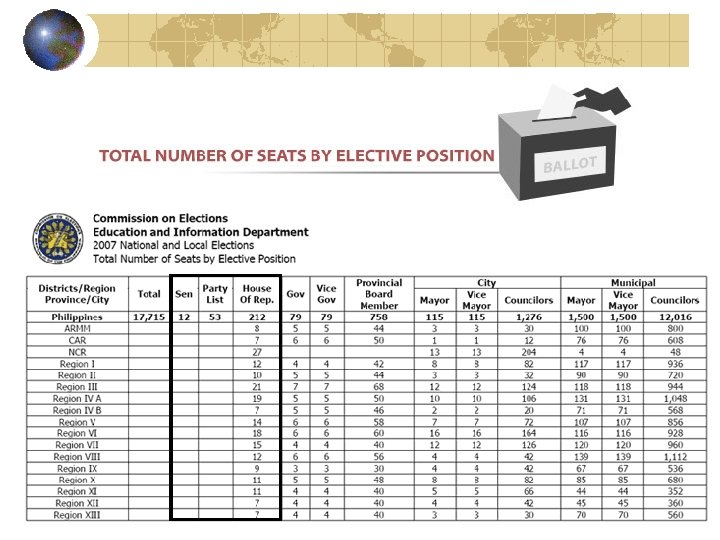
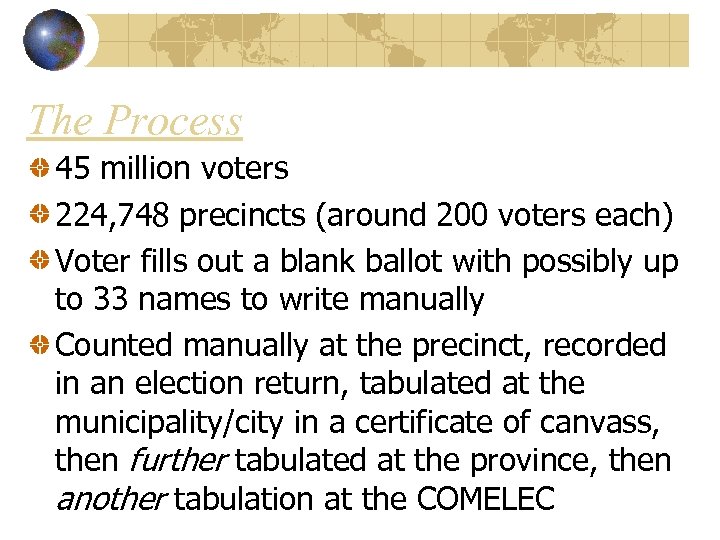 The Process 45 million voters 224, 748 precincts (around 200 voters each) Voter fills out a blank ballot with possibly up to 33 names to write manually Counted manually at the precinct, recorded in an election return, tabulated at the municipality/city in a certificate of canvass, then further tabulated at the province, then another tabulation at the COMELEC
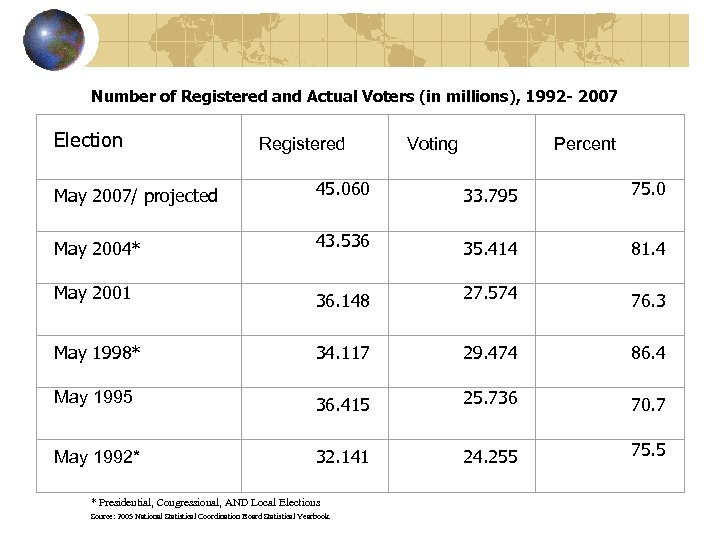 Number of Registered and Actual Voters (in millions), 1992 - 2007 Election Registered Voting Percent May 2007/ projected 45. 060 33. 795 75. 0 May 2004* 43. 536 35. 414 81. 4 May 2001 36. 148 27. 574 76. 3 May 1998* 34. 117 29. 474 86. 4 May 1995 36. 415 25. 736 70. 7 May 1992* 32. 141 24. 255 75. 5 * Presidential, Congressional, AND Local Elections Source: 2005 National Statistical Coordination Board Statistical Yearbook.
 The Philippine Elections as 3 Markets Distinct but interrelated markets: • National market for senators • Local markets for congressmen with national consequences • Purely local markets for governor, mayor, and local council members
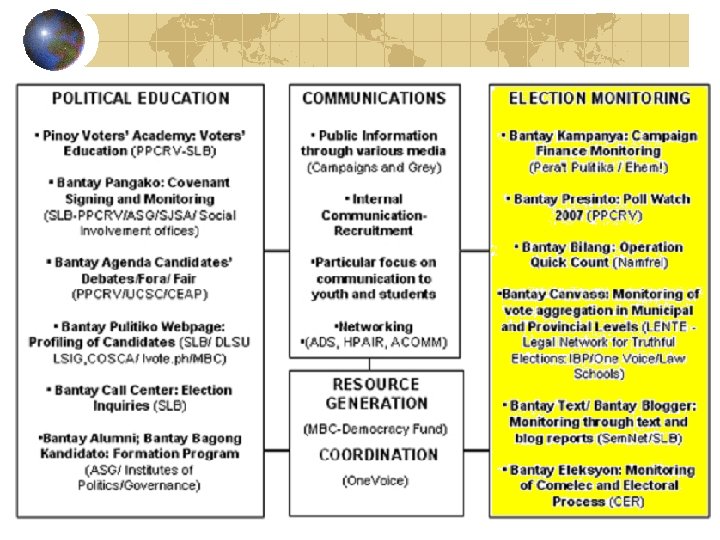
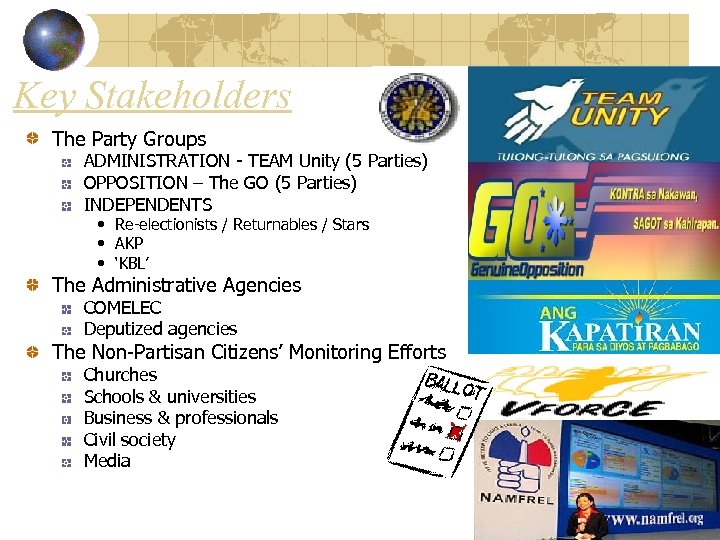 Key Stakeholders The Party Groups ADMINISTRATION - TEAM Unity (5 Parties) OPPOSITION – The GO (5 Parties) INDEPENDENTS • Re-electionists / Returnables / Stars • AKP • ‘KBL’ The Administrative Agencies COMELEC Deputized agencies The Non-Partisan Citizens’ Monitoring Efforts Churches Schools & universities Business & professionals Civil society Media
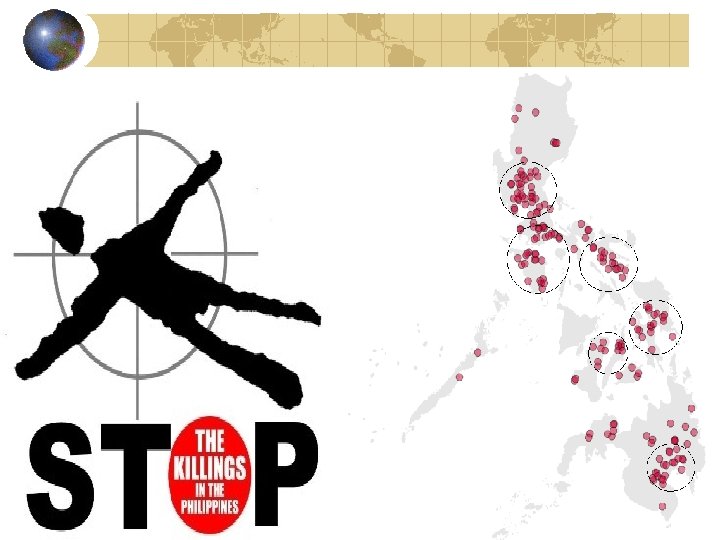
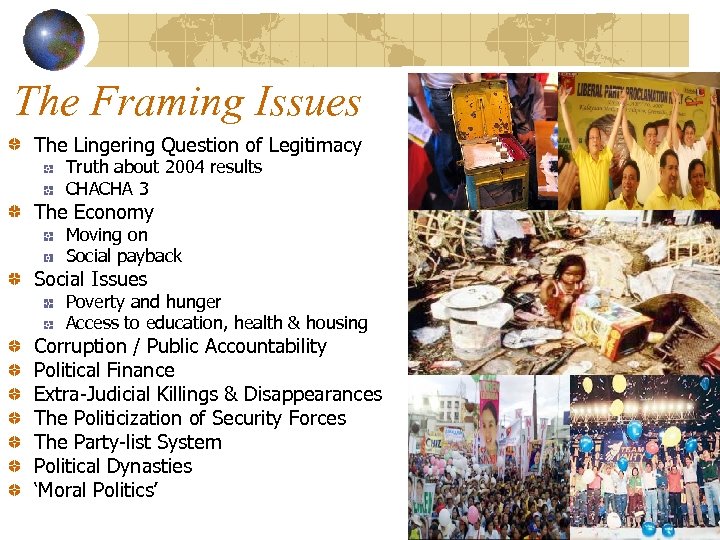 The Framing Issues The Lingering Question of Legitimacy Truth about 2004 results CHACHA 3 The Economy Moving on Social payback Social Issues Poverty and hunger Access to education, health & housing Corruption / Public Accountability Political Finance Extra-Judicial Killings & Disappearances The Politicization of Security Forces The Party-list System Political Dynasties ‘Moral Politics’
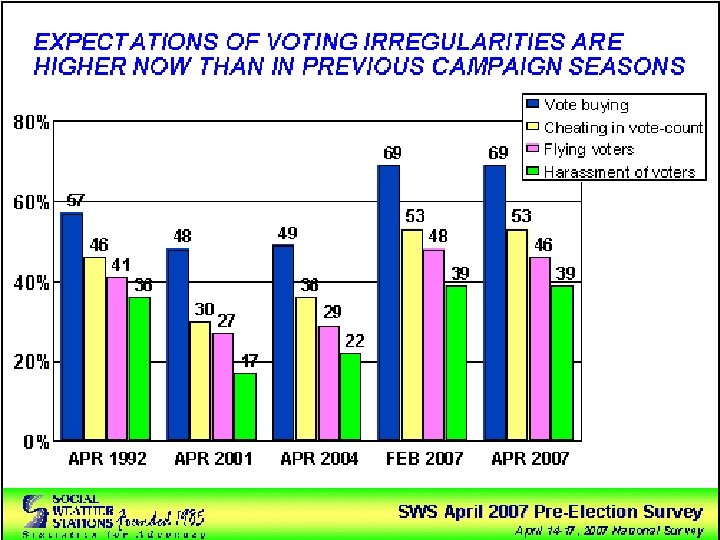
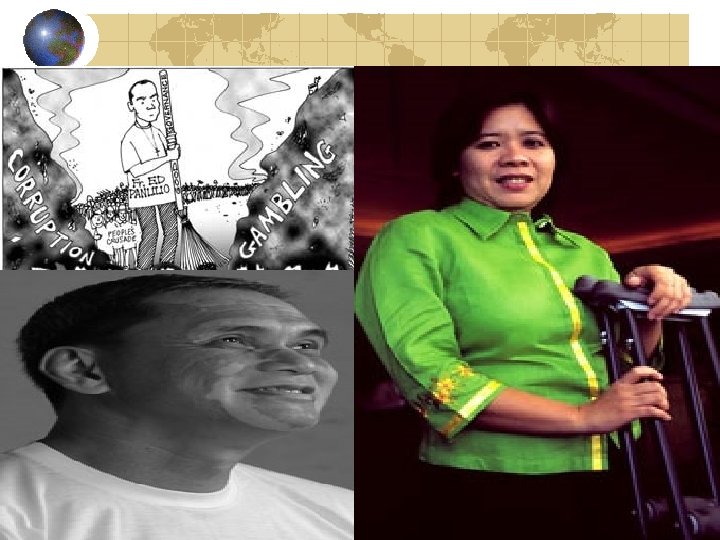
 Trends, Flashpoints, and Outcomes No substantial improvement in the administration of the election Problems with voter’s lists (reports of padding / other irregularities) Widespread Incidences of fraud (retail/wholesale) Weakness in enforcing election laws (campaign finance/others) Rejection of some political dynasties & consolidation of others Election-related violence Politicization of security forces Proxy wars and iconic battles Emergence of a new generation of national leaders
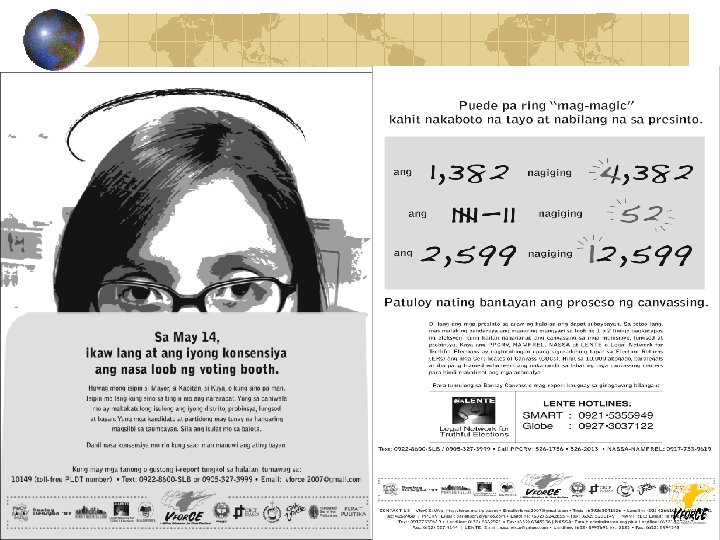
 Trends, Flashpoints, and Outcomes (continued) The senate vote as barometer of public sentiment Exit polls & counts show unequivocal opposition victory YET, results remain in doubt because of vote manipulation [8 -2]-2 /[ 8 -1]-3 / [7 -2]-3 / [7 -1]-4 / [6 -2]-4 UNLESS ‘Magic’ happens Paradox: virtual hegemony of the ruling coalition at the local level YET the failure to deliver votes in the senate 80% win for the ruling parties in the House (at least 70 districts uncontested) The so-called COMMAND vote (a myth except in the ARMM) Some cracks in the façade of unity (LAKAS vs KAMPI) Marginal gains for opposition forces in the House
 Some Post-Election Scenarios Unfolding Electoral Scenarios: MASSIVE CHEATING MODERATE CHEATING TOLERABLE CHEATING Post-Election Governance Scenarios Legitimacy issue may linger BUT possible resolution would be through a utilitarian strategy (neither through democratic or revolutionary means) Crossroads: 1) gridlock or 2) workable compromise on some issues For things to move forward, the government must accept the results
 The Search for Common Ground Building Foundations for the Next Government Critical to sustain economic growth and reduce public desperation Initiate credible political, electoral, and administrative reforms to reduce imperfections in the political process and ensure credible elections in 2010 that help return stability Alternative Attitudes to the Result: Best outcome • Administration focuses on reforms rather than survival • Administration agrees to compromise for the common good Worst outcome • Administration views its partial win as endorsement of its policies • The rebuke of administration intensifies the political hostilities
 Considerations / Initial Steps Complete full automation of elections ahead of 2010 Further reduce opportunities for human intervention / human error in the counting & tabulation process Separate election adjudication & election disputes resolution from elections management functions Improve the capacity of the COMELEC Enforce election laws fully (particularly on campaign contribution & expenditure) coupled with a vigorous anticorruption effort Support civic-ed /voters ed / citizen’s oversight Initiate law reform legislation (party law / political finance) Rationalize the mobilization of election officers to include citizen volunteers Create civilian oversight & control over security forces
 Possible Options & Recommendations In order to renew civic engagement in defense of democracy: v Some key principles to this political engagement v Consider programs and activities at laying foundations for the restoration of a consensus for democracy in the run-up to the 2010 General Elections through among others: § Restoring full credibility to the electoral process § Cleaning-up the institutions and systems for election administration § Political party development, strengthening, and consolidation § Alternative candidates emerge with distinct visions of governance § Preventing a blow-out of the economic situation in the interim period § Spreading the benefits of economic growth § Pursuing reform agenda in social expenditure (education, infrastructure) § Reducing drivers of political polarization such as violence and exclusion



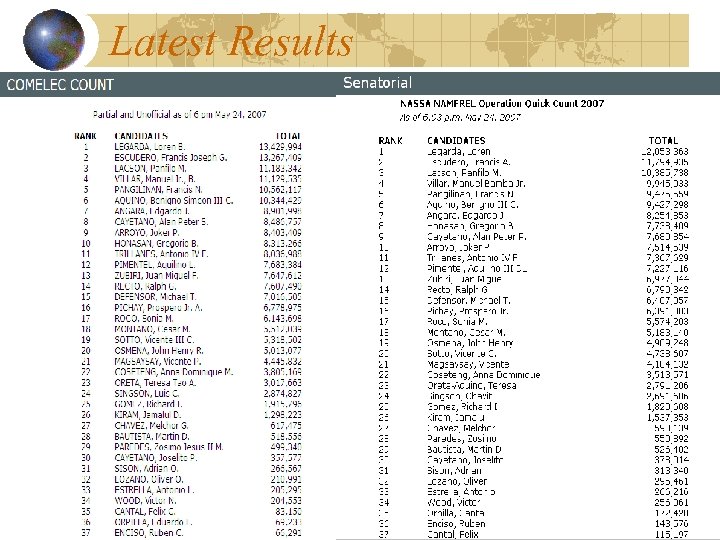 Latest Results
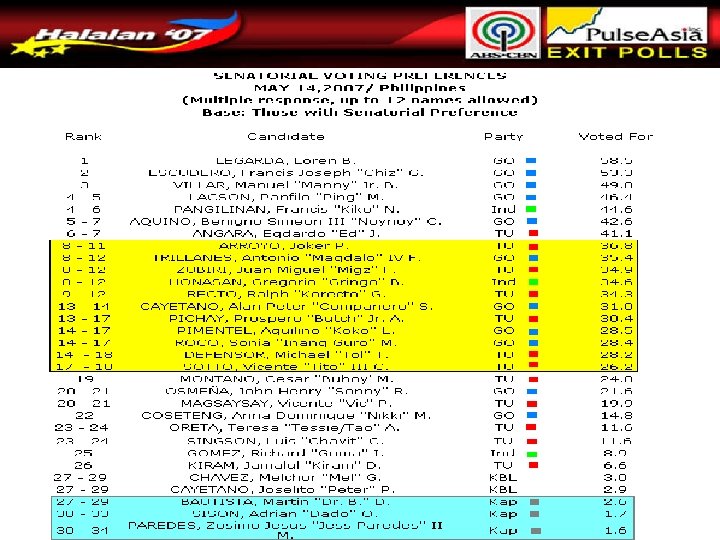
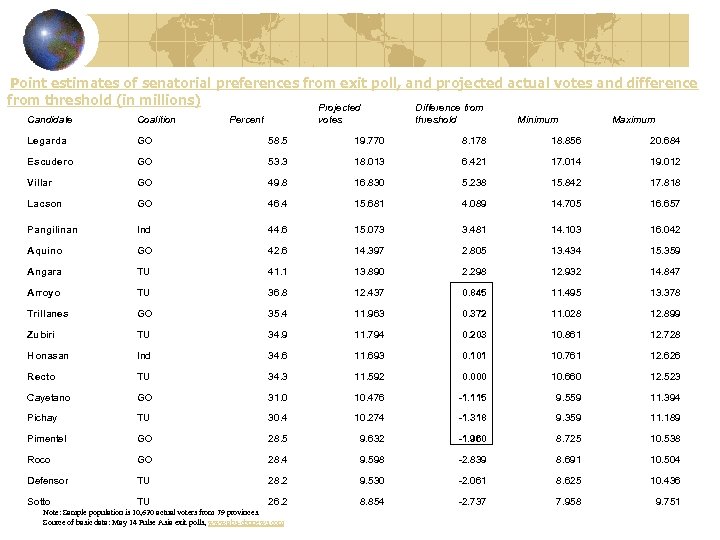 Point estimates of senatorial preferences from exit poll, and projected actual votes and difference from threshold (in millions) Projected Difference from Candidate Coalition Percent votes Legarda GO 58. 5 19. 770 8. 178 18. 856 20. 684 Escudero GO 53. 3 18. 013 6. 421 17. 014 19. 012 Villar GO 49. 8 16. 830 5. 238 15. 842 17. 818 Lacson GO 46. 4 15. 681 4. 089 14. 705 16. 657 Pangilinan Ind 44. 6 15. 073 3. 481 14. 103 16. 042 Aquino GO 42. 6 14. 397 2. 805 13. 434 15. 359 Angara TU 41. 1 13. 890 2. 298 12. 932 14. 847 Arroyo TU 36. 8 12. 437 0. 845 11. 495 13. 378 Trillanes GO 35. 4 11. 963 0. 372 11. 028 12. 899 Zubiri TU 34. 9 11. 794 0. 203 10. 861 12. 728 Honasan Ind 34. 6 11. 693 0. 101 10. 761 12. 626 Recto TU 34. 3 11. 592 0. 000 10. 660 12. 523 Cayetano GO 31. 0 10. 476 -1. 115 9. 559 11. 394 Pichay TU 30. 4 10. 274 -1. 318 9. 359 11. 189 Pimentel GO 28. 5 9. 632 -1. 960 8. 725 10. 538 Roco GO 28. 4 9. 598 -2. 839 8. 691 10. 504 Defensor TU 28. 2 9. 530 -2. 061 8. 625 10. 436 Sotto TU 26. 2 8. 854 -2. 737 7. 958 9. 751 Note: Sample population is 10, 620 actual voters from 79 provinces. Source of basic data: May 14 Pulse Asia exit polls, www. abs-cbnnews. com threshold Minimum Maximum
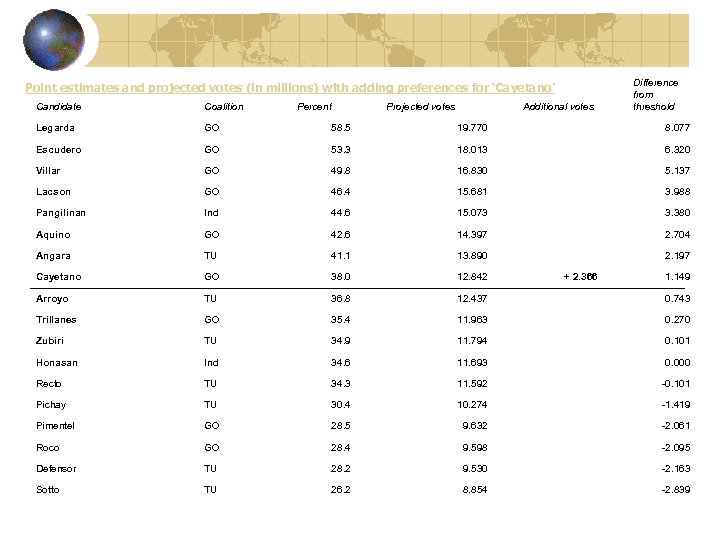 Point estimates and projected votes (in millions) with adding preferences for ‘Cayetano’ Percent Projected votes Additional votes Difference from threshold Candidate Coalition Legarda GO 58. 5 19. 770 8. 077 Escudero GO 53. 3 18. 013 6. 320 Villar GO 49. 8 16. 830 5. 137 Lacson GO 46. 4 15. 681 3. 988 Pangilinan Ind 44. 6 15. 073 3. 380 Aquino GO 42. 6 14. 397 2. 704 Angara TU 41. 1 13. 890 2. 197 Cayetano GO 38. 0 12. 842 Arroyo TU 36. 8 12. 437 0. 743 Trillanes GO 35. 4 11. 963 0. 270 Zubiri TU 34. 9 11. 794 0. 101 Honasan Ind 34. 6 11. 693 0. 000 Recto TU 34. 3 11. 592 -0. 101 Pichay TU 30. 4 10. 274 -1. 419 Pimentel GO 28. 5 9. 632 -2. 061 Roco GO 28. 4 9. 598 -2. 095 Defensor TU 28. 2 9. 530 -2. 163 Sotto TU 26. 2 8. 854 -2. 839 + 2. 366 1. 149
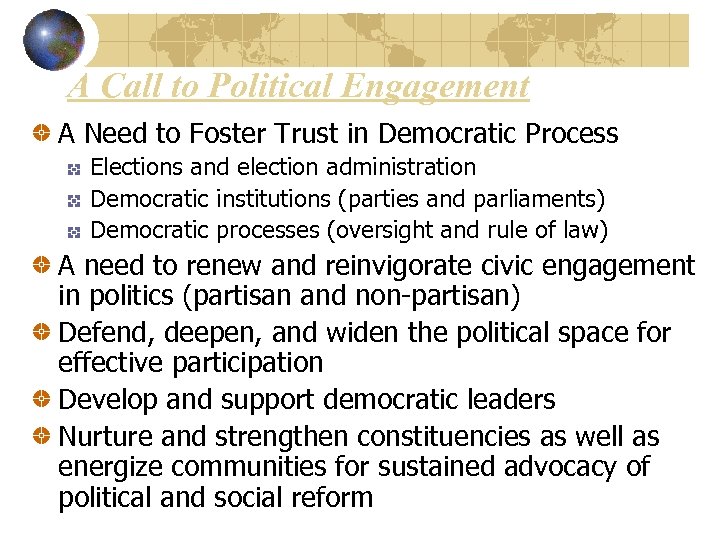 A Call to Political Engagement A Need to Foster Trust in Democratic Process Elections and election administration Democratic institutions (parties and parliaments) Democratic processes (oversight and rule of law) A need to renew and reinvigorate civic engagement in politics (partisan and non-partisan) Defend, deepen, and widen the political space for effective participation Develop and support democratic leaders Nurture and strengthen constituencies as well as energize communities for sustained advocacy of political and social reform
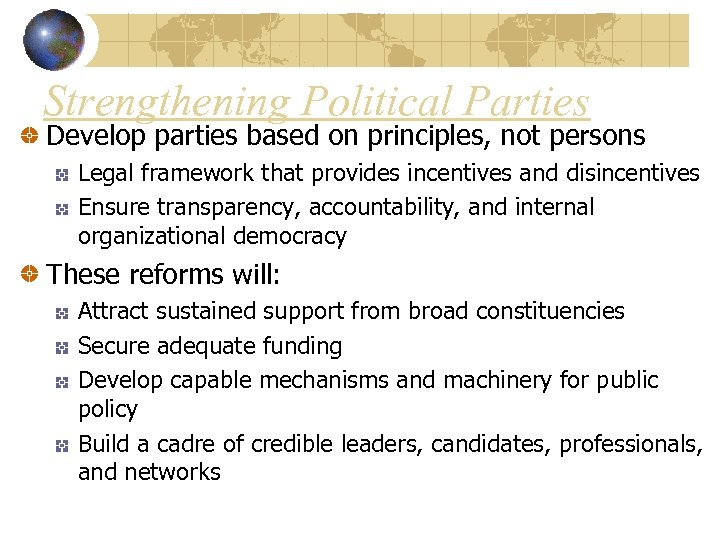 Strengthening Political Parties Develop parties based on principles, not persons Legal framework that provides incentives and disincentives Ensure transparency, accountability, and internal organizational democracy These reforms will: Attract sustained support from broad constituencies Secure adequate funding Develop capable mechanisms and machinery for public policy Build a cadre of credible leaders, candidates, professionals, and networks