


 Скачать презентацию The 2 nd International AIDS Society Conference on
19f2fdac84ae8bee6378d25f5fc50bc9.ppt
- Количество слайдов: 25
 The 2 nd International AIDS Society Conference on HIV Pathogenesis and Treatment July 13 -16, 2003; Paris, France Selected and summarized by Douglas J. Ward, MD Dupont Circle Physicians Group Washington, DC Supported by an unrestricted educational grant from
 Highlights of 2 nd IAS Conference on HIV Pathogenesis and Treatment New Data On: • • • Salvage therapy Approaches to initial/early therapy Complications of antiretroviral therapy Preventing mother-to-child HIV transmission HIV drug resistance New and investigational drugs
 Salvage Therapy (1) Enfuvirtide (ENF) – 48 -Week Data 48 -week data were presented from the TORO 1 and TORO 2 studies, which enrolled heavily treatment-experienced patients: • median 12 previous antiretrovirals including all 3 available classes • median baseline viral load 5. 1 log 10 copies/m. L and CD 4+ cell count 92 cells/mc. L Patients were randomized to receive: • an optimized background antiretroviral regimen (OB) of 3 -5 agents based on genotypic and phenotypic resistance tests (total n = 334), or • OB plus ENF 90 mg twice daily by subcutaneous injection (total n = 661) 24 -week data previously presented Abstract LB 2.
 Salvage Therapy (1) Continued Enfuvirtide (ENF) – 48 -Week Data The results show that ENF (versus OB only) can be administered safely, durably and with sustained virologic effects in heavily pretreated patients: • % patients achieving < 400 copies/m. L at 48 weeks: 30. 4 vs 12 (P <. 0001) • Median time (weeks) to virologic failure: 32 vs 11 (P <. 0001) • Local injection-site reactions were observed in > 90% of ENF patients – Cause of discontinuation in 4. 4% • Increased incidence of bacterial pneumonia observed in the ENF arm (6. 6 vs 0. 6 events per 100 person-years) – Relationship to ENF unexplained Abstract LB 2.
 Salvage Therapy (2) Enfuvirtide (ENF) – Predictors of Response in TORO 1 & 2 Trials A separate multiple logistic regression analysis of 24 -week data. Four characteristics were identified that positively influenced response to ENF: • viral load < 100, 000 copies/m. L at baseline • CD 4+ cell count > 100 cells/mc. L at baseline • prior experience with < 10 antiretrovirals • > 2 active agents in the OB In the presence of all 4 factors, patients had an 80% chance of achieving viral suppression to < 50 copies/m. L. Abstract 116.
 Salvage Therapy (3) Factors Contributing to HAART Success – PLATO Collaboration • 2488 patients from 13 HIV cohorts with viral load > 1000 copies/m. L for > 4 months • All had received NRTIs, NNRTIs, and PIs, sequentially or in combination • Baseline: CDC/C, 52%; median CD 4+ cell count, 199 cells/mc. L; median viral load (VL), 4. 5 log 10 copies/m. L; median duration ART/ HAART 4. 7/2. 5 years, respectively • At 2 years, 17% (95% CI: 15 -19) had experienced virologic success (viral load < 500 copies/m. L, and remaining < 1000 for > 6 months) • Independent predictors (Cox regression) of success: more recent calendar year (related to new agents and physician experience), adding 1 -2 new drugs • Negative predictors: being off therapy, time off PIs with VL > 1000 Abstract 576.
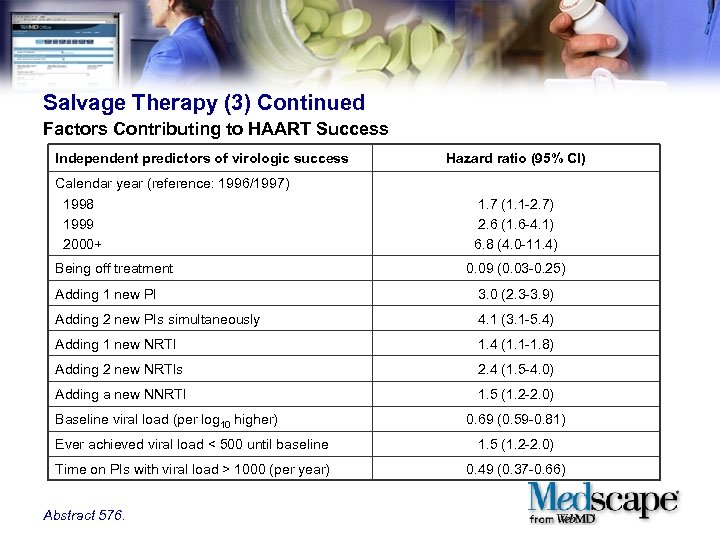 Salvage Therapy (3) Continued Factors Contributing to HAART Success Independent predictors of virologic success Calendar year (reference: 1996/1997) 1998 1999 2000+ Being off treatment Hazard ratio (95% CI) 1. 7 (1. 1 -2. 7) 2. 6 (1. 6 -4. 1) 6. 8 (4. 0 -11. 4) 0. 09 (0. 03 -0. 25) Adding 1 new PI 3. 0 (2. 3 -3. 9) Adding 2 new PIs simultaneously 4. 1 (3. 1 -5. 4) Adding 1 new NRTI 1. 4 (1. 1 -1. 8) Adding 2 new NRTIs 2. 4 (1. 5 -4. 0) Adding a new NNRTI 1. 5 (1. 2 -2. 0) Baseline viral load (per log 10 higher) 0. 69 (0. 59 -0. 81) Ever achieved viral load < 500 until baseline 1. 5 (1. 2 -2. 0) Time on PIs with viral load > 1000 (per year) 0. 49 (0. 37 -0. 66) Abstract 576.
 Salvage Therapy (4) Multi-PI Regimens in Heavily Treatment-Experienced Patients – ATV/r vs ATV+SQV vs LPV/r (BMS 045) A randomized, open-label trial comparing: • once-daily atazanavir (ATV) + ritonavir (r) • once-daily ATV + saquinavir (SQV) • twice-daily lopinavir (LPV) + r Enrolled patients had at least 2 regimen failures, which included drugs from all 3 antiretroviral classes. Abstract 118.
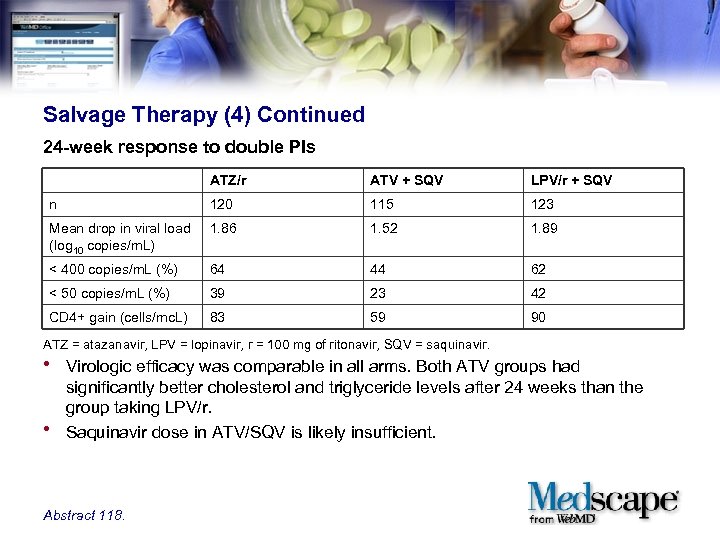 Salvage Therapy (4) Continued 24 -week response to double PIs ATZ/r ATV + SQV LPV/r + SQV n 120 115 123 Mean drop in viral load (log 10 copies/m. L) 1. 86 1. 52 1. 89 < 400 copies/m. L (%) 64 44 62 < 50 copies/m. L (%) 39 23 42 CD 4+ gain (cells/mc. L) 83 59 90 ATZ = atazanavir, LPV = lopinavir, r = 100 mg of ritonavir, SQV = saquinavir. • Virologic efficacy was comparable in all arms. Both ATV groups had • significantly better cholesterol and triglyceride levels after 24 weeks than the group taking LPV/r. Saquinavir dose in ATV/SQV is likely insufficient. Abstract 118.
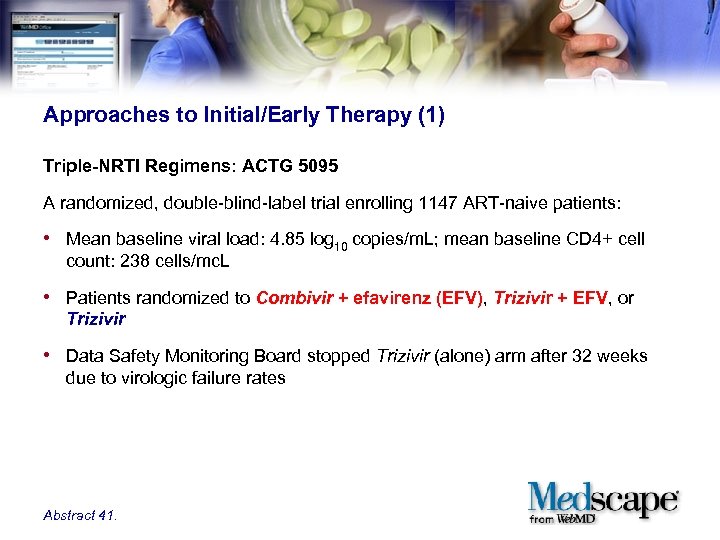 Approaches to Initial/Early Therapy (1) Triple-NRTI Regimens: ACTG 5095 A randomized, double-blind-label trial enrolling 1147 ART-naive patients: • Mean baseline viral load: 4. 85 log 10 copies/m. L; mean baseline CD 4+ cell count: 238 cells/mc. L • Patients randomized to Combivir + efavirenz (EFV), Trizivir + EFV, or Trizivir • Data Safety Monitoring Board stopped Trizivir (alone) arm after 32 weeks due to virologic failure rates Abstract 41.
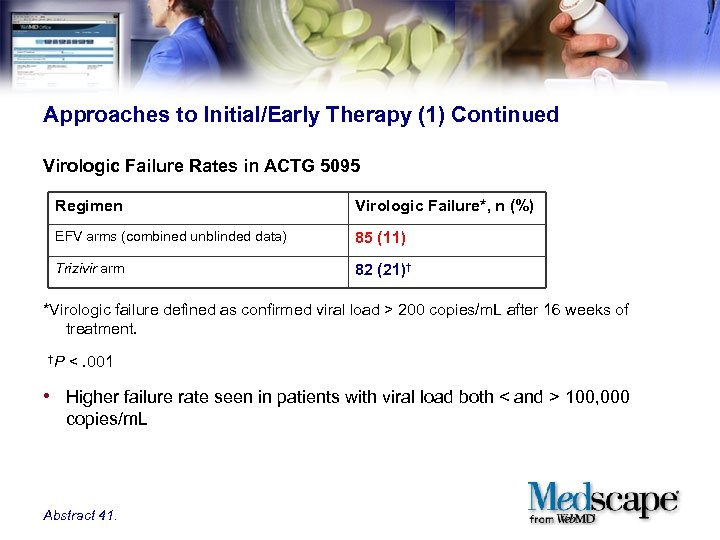 Approaches to Initial/Early Therapy (1) Continued Virologic Failure Rates in ACTG 5095 Regimen Virologic Failure*, n (%) EFV arms (combined unblinded data) 85 (11) Trizivir arm 82 (21)† *Virologic failure defined as confirmed viral load > 200 copies/m. L after 16 weeks of treatment. †P <. 001 • Higher failure rate seen in patients with viral load both < and > 100, 000 copies/m. L Abstract 41.
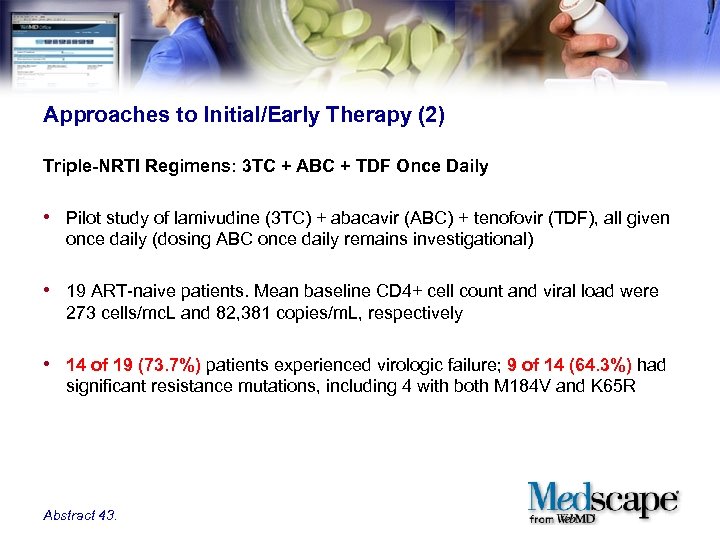 Approaches to Initial/Early Therapy (2) Triple-NRTI Regimens: 3 TC + ABC + TDF Once Daily • Pilot study of lamivudine (3 TC) + abacavir (ABC) + tenofovir (TDF), all given once daily (dosing ABC once daily remains investigational) • 19 ART-naive patients. Mean baseline CD 4+ cell count and viral load were 273 cells/mc. L and 82, 381 copies/m. L, respectively • 14 of 19 (73. 7%) patients experienced virologic failure; 9 of 14 (64. 3%) had significant resistance mutations, including 4 with both M 184 V and K 65 R Abstract 43.
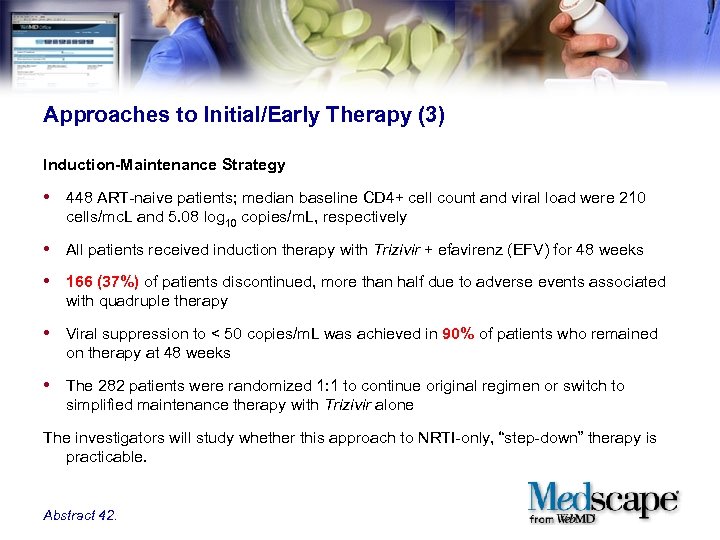 Approaches to Initial/Early Therapy (3) Induction-Maintenance Strategy • 448 ART-naive patients; median baseline CD 4+ cell count and viral load were 210 cells/mc. L and 5. 08 log 10 copies/m. L, respectively • All patients received induction therapy with Trizivir + efavirenz (EFV) for 48 weeks • 166 (37%) of patients discontinued, more than half due to adverse events associated with quadruple therapy • Viral suppression to < 50 copies/m. L was achieved in 90% of patients who remained on therapy at 48 weeks • The 282 patients were randomized 1: 1 to continue original regimen or switch to simplified maintenance therapy with Trizivir alone The investigators will study whether this approach to NRTI-only, “step-down” therapy is practicable. Abstract 42.
 Approaches to Initial/Early Therapy (4) Treatment Simplification • Prospective, open-label study of 355 NNRTI-naive patients with sustained virologic suppression (< 400 copies/m. L) on a PI-based regimen • Patients were randomized to continue (C) on their current treatment (usually including either nelfinavir or indinavir) or change to once-daily (OD) efavirenz/didanosine/emtricitabine (FTC), taken as 5 tablets in 1 nighttime administration • Over 1 year, 36 patients discontinued therapy, equally distributed between the OD and C groups • Of the remaining patients, 93% in the OD arm and 95% in the C arm maintained virologic suppression • 45% of OD patients experienced HDL increases > 57. 7 mg/d. L (1. 5 m. M), compared with 18% of patients receiving PI-based therapy Abstract 37.
 Approaches to Initial/Early Therapy (5) Alternating Therapy (SWATCH Study) The SWATCH study was designed to evaluate whether the development of resistance can be delayed by proactively switching ARV regimens. • 161 patients were randomized to receive stavudine (d 4 T) + didanosine (dd. I) + efavirenz (EFV) or zidovudine (ZDV) + lamivudine (3 TV) + nelfinavir (NFV), or were assigned to alternate between the 2 regimens every 3 months (regimens A, B and C, respectively) • Baseline CD 4+ cell counts and plasma viral loads were comparable in all arms • Data from A and B arms pooled for analysis vs arm C Abstract LB 5.
 Approaches to Initial/Early Therapy (5) Continued Alternating Therapy (SWATCH Study) • At 48 weeks, there was no difference between arms in CD 4+ cell count increases, adverse events, or adherence • There was a significantly lower rate of virologic failure and development of resistance-associated mutations among patients receiving regimen C compared with patients receiving regimens A or B: – Rate of virologic failure (HIV RNA > 400 copies/m. L) was 1. 2 vs 4. 8 events/1000 person-weeks (P =. 01) – Of 15 cases of virologic breakthrough in the pooled A and B treatment arms, 12 (79%) exhibited evidence of drug resistance – No (0%) cases of virologic breakthrough in the C treatment arm showed any evidence of drug resistance Abstract LB 5.
 Complications of ARV Therapy (1) Incidence/Risk Factors for Severe Adverse Events (SAEs) on PIs • Multicenter cohort of 1155 patients started on PIs between May 1997 and June 1998; median follow-up 23 months (2037 patient-years) • Grade 3 -4 events (except lipodystrophy) prospectively reported; validated by 2 experts • 550 SAEs reported; 235 and 169 related to ART and PI, respectively • 20% occurred in first 1 month of therapy; 51% in first 4 months Abstract 56.
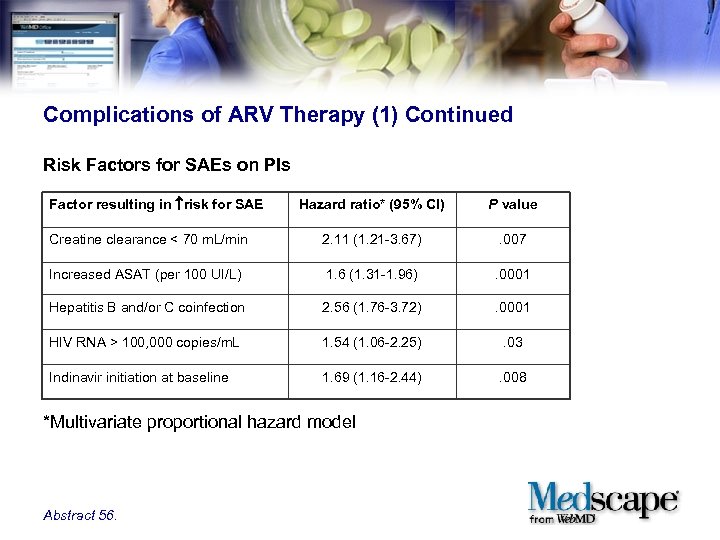 Complications of ARV Therapy (1) Continued Risk Factors for SAEs on PIs Factor resulting in risk for SAE Hazard ratio* (95% CI) P value Creatine clearance < 70 m. L/min 2. 11 (1. 21 -3. 67) . 007 Increased ASAT (per 100 UI/L) 1. 6 (1. 31 -1. 96) . 0001 Hepatitis B and/or C coinfection 2. 56 (1. 76 -3. 72) . 0001 HIV RNA > 100, 000 copies/m. L 1. 54 (1. 06 -2. 25) . 03 Indinavir initiation at baseline 1. 69 (1. 16 -2. 44) . 008 *Multivariate proportional hazard model Abstract 56.
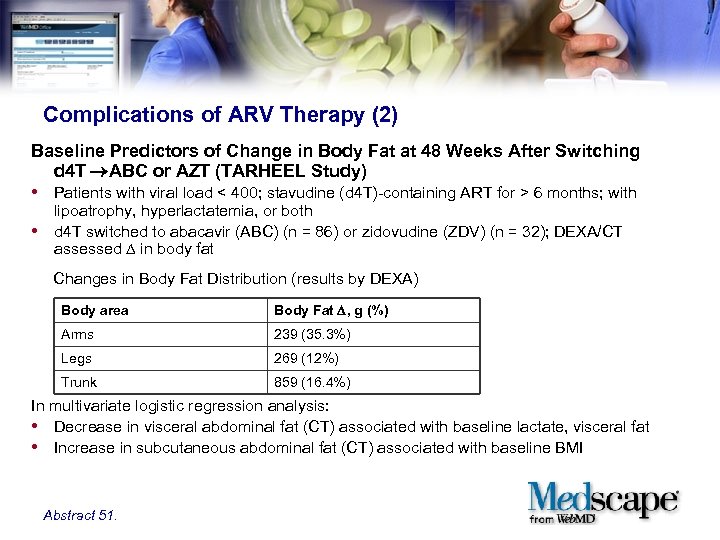 Complications of ARV Therapy (2) Baseline Predictors of Change in Body Fat at 48 Weeks After Switching d 4 T ABC or AZT (TARHEEL Study) • Patients with viral load < 400; stavudine (d 4 T)-containing ART for > 6 months; with • lipoatrophy, hyperlactatemia, or both d 4 T switched to abacavir (ABC) (n = 86) or zidovudine (ZDV) (n = 32); DEXA/CT assessed in body fat Changes in Body Fat Distribution (results by DEXA) Body area Body Fat , g (%) Arms 239 (35. 3%) Legs 269 (12%) Trunk 859 (16. 4%) In multivariate logistic regression analysis: • Decrease in visceral abdominal fat (CT) associated with baseline lactate, visceral fat • Increase in subcutaneous abdominal fat (CT) associated with baseline BMI Abstract 51.
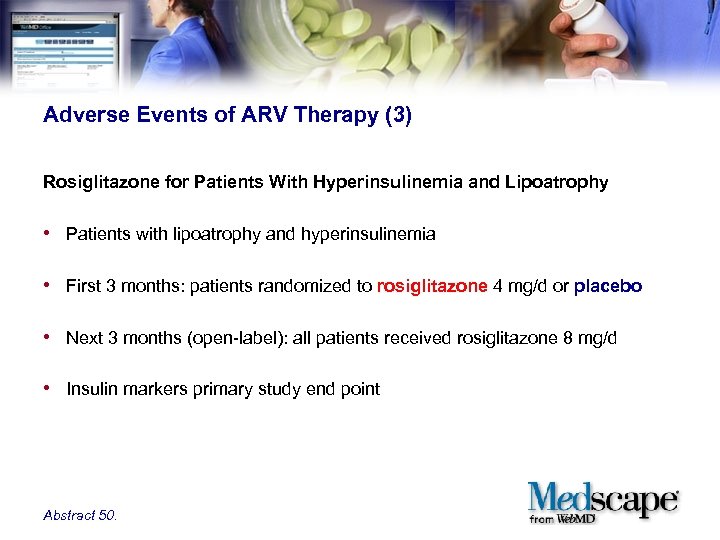 Adverse Events of ARV Therapy (3) Rosiglitazone for Patients With Hyperinsulinemia and Lipoatrophy • Patients with lipoatrophy and hyperinsulinemia • First 3 months: patients randomized to rosiglitazone 4 mg/d or placebo • Next 3 months (open-label): all patients received rosiglitazone 8 mg/d • Insulin markers primary study end point Abstract 50.
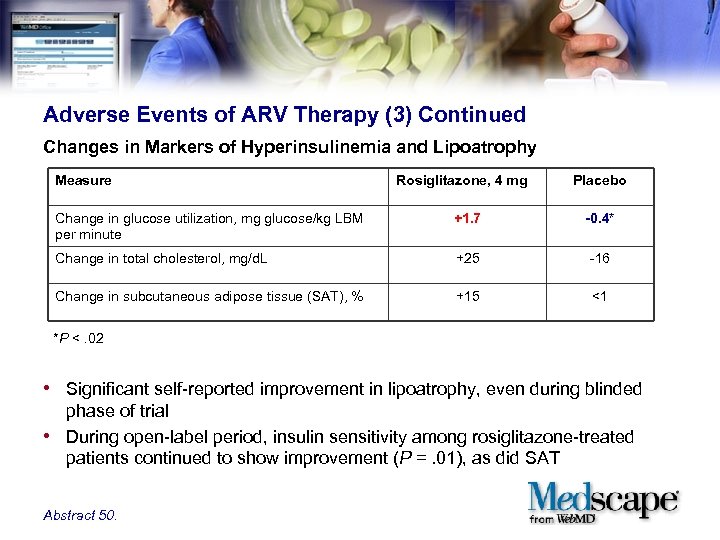 Adverse Events of ARV Therapy (3) Continued Changes in Markers of Hyperinsulinemia and Lipoatrophy Measure Rosiglitazone, 4 mg Placebo Change in glucose utilization, mg glucose/kg LBM per minute +1. 7 -0. 4* Change in total cholesterol, mg/d. L +25 -16 Change in subcutaneous adipose tissue (SAT), % +15 <1 *P <. 02 • Significant self-reported improvement in lipoatrophy, even during blinded • phase of trial During open-label period, insulin sensitivity among rosiglitazone-treated patients continued to show improvement (P =. 01), as did SAT Abstract 50.
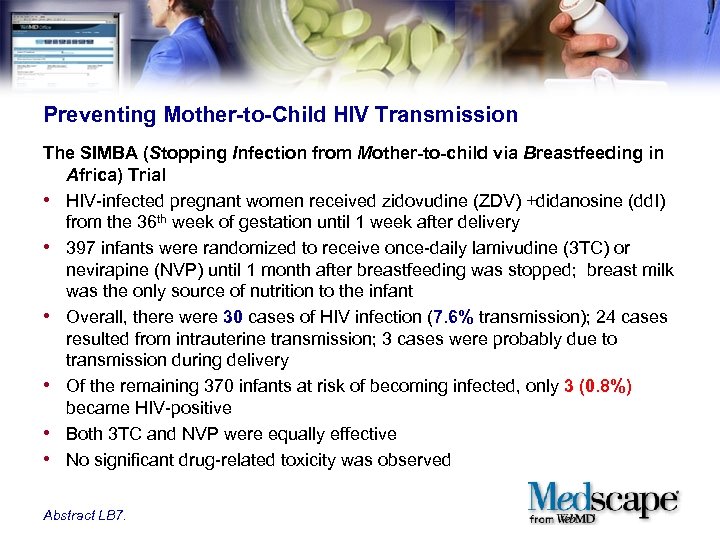 Preventing Mother-to-Child HIV Transmission The SIMBA (Stopping Infection from Mother-to-child via Breastfeeding in Africa) Trial • HIV-infected pregnant women received zidovudine (ZDV) +didanosine (dd. I) from the 36 th week of gestation until 1 week after delivery • 397 infants were randomized to receive once-daily lamivudine (3 TC) or nevirapine (NVP) until 1 month after breastfeeding was stopped; breast milk was the only source of nutrition to the infant • Overall, there were 30 cases of HIV infection (7. 6% transmission); 24 cases resulted from intrauterine transmission; 3 cases were probably due to transmission during delivery • Of the remaining 370 infants at risk of becoming infected, only 3 (0. 8%) became HIV-positive • Both 3 TC and NVP were equally effective • No significant drug-related toxicity was observed Abstract LB 7.
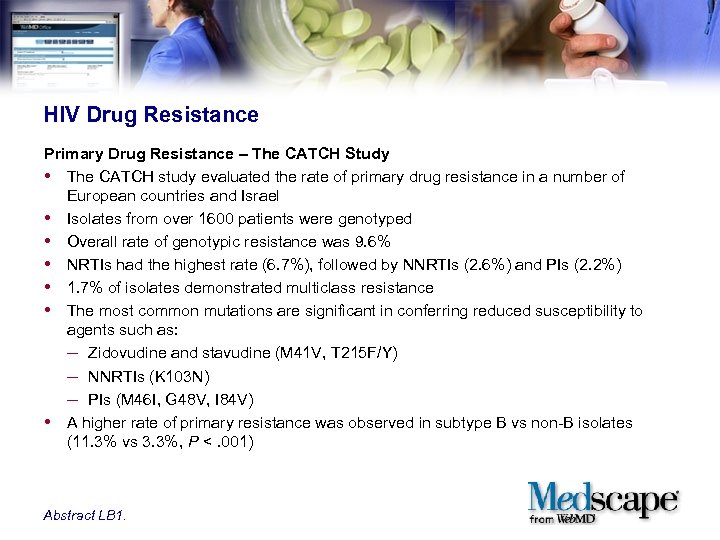 HIV Drug Resistance Primary Drug Resistance – The CATCH Study • The CATCH study evaluated the rate of primary drug resistance in a number of European countries and Israel • Isolates from over 1600 patients were genotyped • Overall rate of genotypic resistance was 9. 6% • NRTIs had the highest rate (6. 7%), followed by NNRTIs (2. 6%) and PIs (2. 2%) • 1. 7% of isolates demonstrated multiclass resistance • The most common mutations are significant in conferring reduced susceptibility to agents such as: – Zidovudine and stavudine (M 41 V, T 215 F/Y) – NNRTIs (K 103 N) – PIs (M 46 I, G 48 V, I 84 V) • A higher rate of primary resistance was observed in subtype B vs non-B isolates (11. 3% vs 3. 3%, P <. 001) Abstract LB 1.
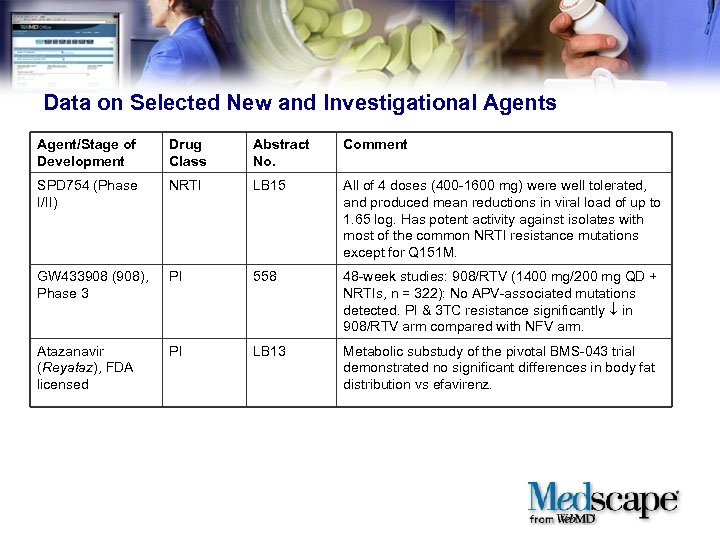 Data on Selected New and Investigational Agents Agent/Stage of Development Drug Class Abstract No. Comment SPD 754 (Phase I/II) NRTI LB 15 All of 4 doses (400 -1600 mg) were well tolerated, and produced mean reductions in viral load of up to 1. 65 log. Has potent activity against isolates with most of the common NRTI resistance mutations except for Q 151 M. GW 433908 (908), Phase 3 PI 558 48 -week studies: 908/RTV (1400 mg/200 mg QD + NRTIs, n = 322): No APV-associated mutations detected. PI & 3 TC resistance significantly in 908/RTV arm compared with NFV arm. Atazanavir (Reyataz), FDA licensed PI LB 13 Metabolic substudy of the pivotal BMS-043 trial demonstrated no significant differences in body fat distribution vs efavirenz.
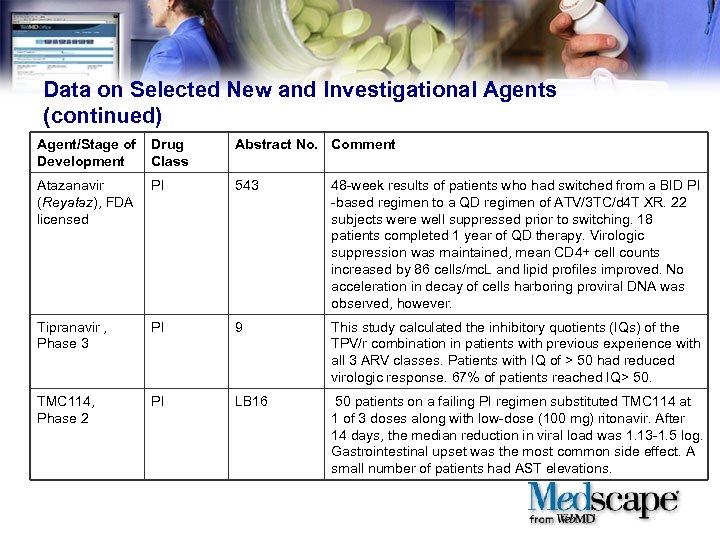 Data on Selected New and Investigational Agents (continued) Agent/Stage of Drug Development Class Abstract No. Comment Atazanavir PI (Reyataz), FDA licensed 543 48 -week results of patients who had switched from a BID PI -based regimen to a QD regimen of ATV/3 TC/d 4 T XR. 22 subjects were well suppressed prior to switching. 18 patients completed 1 year of QD therapy. Virologic suppression was maintained, mean CD 4+ cell counts increased by 86 cells/mc. L and lipid profiles improved. No acceleration in decay of cells harboring proviral DNA was observed, however. Tipranavir , Phase 3 PI 9 This study calculated the inhibitory quotients (IQs) of the TPV/r combination in patients with previous experience with all 3 ARV classes. Patients with IQ of > 50 had reduced virologic response. 67% of patients reached IQ> 50. TMC 114, Phase 2 PI LB 16 50 patients on a failing PI regimen substituted TMC 114 at 1 of 3 doses along with low-dose (100 mg) ritonavir. After 14 days, the median reduction in viral load was 1. 13 -1. 5 log. Gastrointestinal upset was the most common side effect. A small number of patients had AST elevations.