 Скачать презентацию Thailand The Saraburi Dairy Farming Project
e87fb29e8f0980f63c539efccdfefab5.ppt
- Количество слайдов: 28



Thailand: The Saraburi Dairy Farming Project •
Background • Began in 1984 to encourage dairy farming among women in Muek Lek land area in the Saraburi Province in Central Thailand • Result of cooperation between the Svita Foundation, the Bangkok Bank, the Thai Institute of Scientific Research and the Saraburi provincial administration.
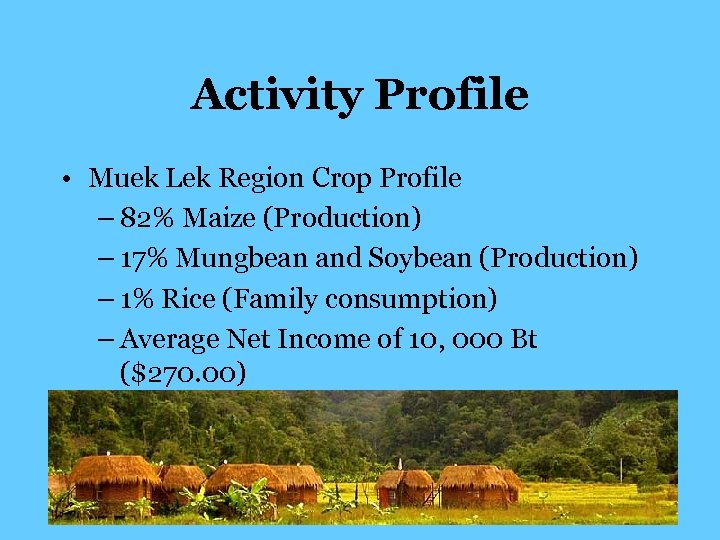
Activity Profile • Muek Lek Region Crop Profile – 82% Maize (Production) – 17% Mungbean and Soybean (Production) – 1% Rice (Family consumption) – Average Net Income of 10, 000 Bt ($270. 00)
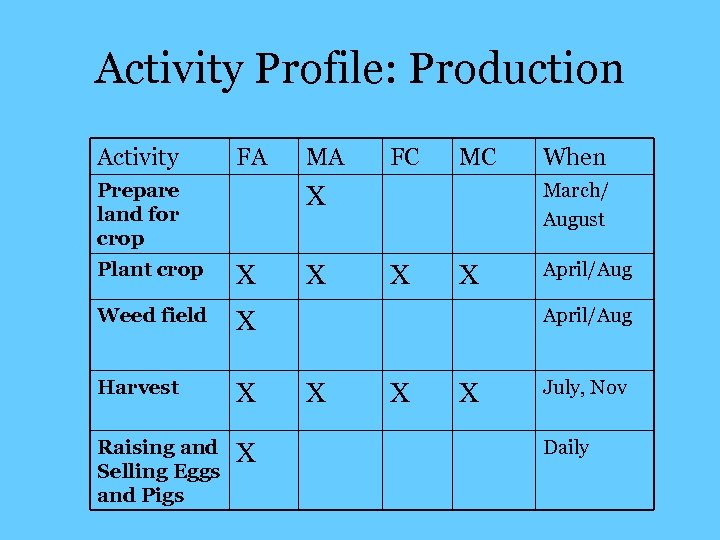
Activity Profile: Production Activity FA Prepare land for crop MA FC MC March/ August X Plant crop X Weed field X Harvest X Raising and Selling Eggs and Pigs X X When X X April/Aug X X X July, Nov Daily
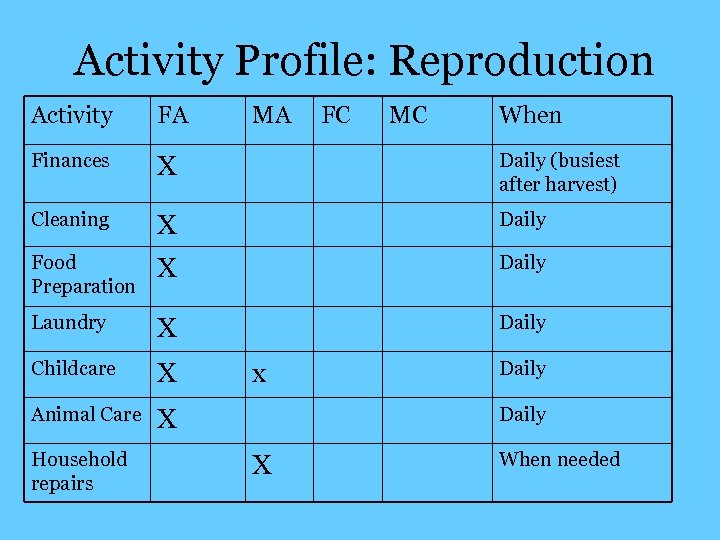
Activity Profile: Reproduction Activity FA Finances X Daily (busiest after harvest) Cleaning X Daily Food Preparation X Daily Laundry X Daily Childcare X Animal Care X Household repairs MA x FC MC When Daily X When needed
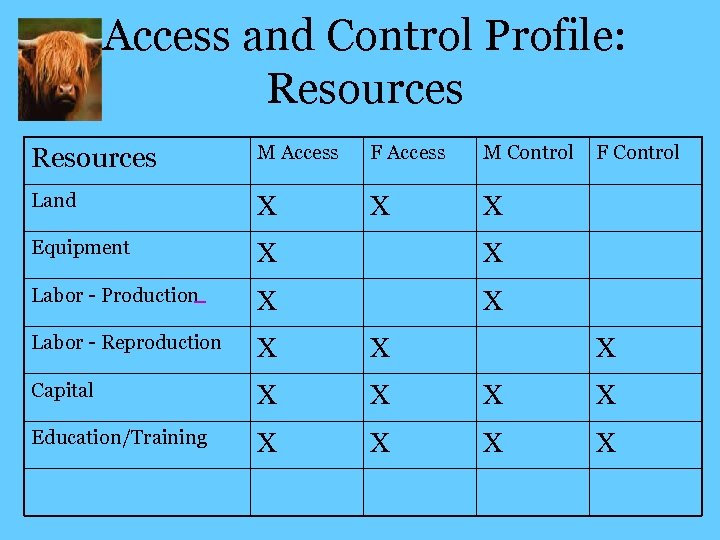
Access and Control Profile: Resources M Access F Access M Control Land X X X Equipment Labor - Production X F Control X X X Labor - Reproduction X X Capital X X Education/Training X X X
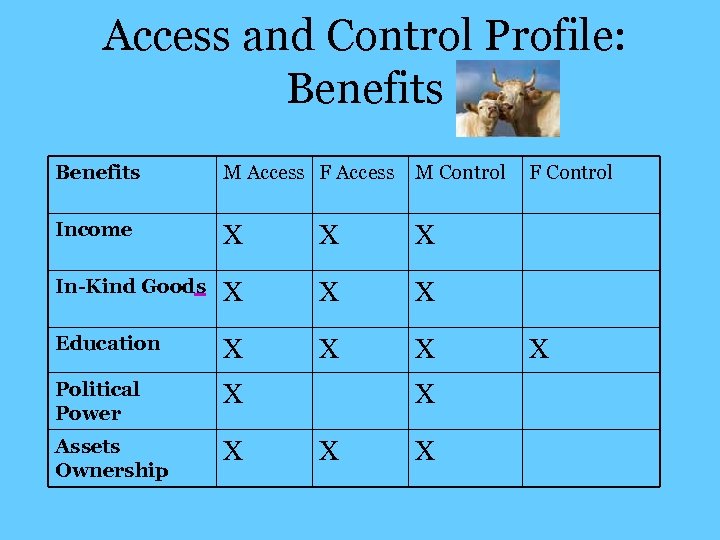
Access and Control Profile: Benefits M Access F Access M Control Income X X X In-Kind Goods X X Education X X Political Power X Assets Ownership X X X X F Control X
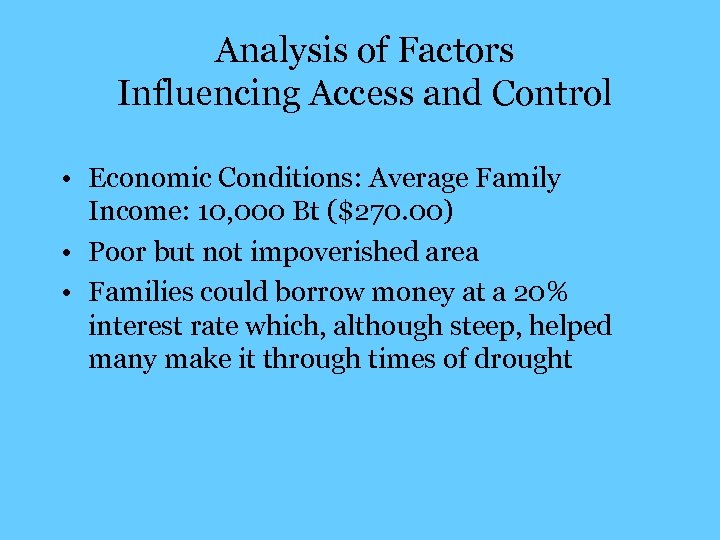
Analysis of Factors Influencing Access and Control • Economic Conditions: Average Family Income: 10, 000 Bt ($270. 00) • Poor but not impoverished area • Families could borrow money at a 20% interest rate which, although steep, helped many make it through times of drought
Analysis of Factors: • Thai government appeared to support increased milk production within the country – Limited dairy imports – Forced dairy companies to purchase 10 units of local milk for every unit of imported powder –
Analysis of Factors • Demand for milk: – Between 1972 -1982, the demand for milk grew 25% every year. – In 1983, production of milk lagged behind production.
Summary of Muek Lek Prior to Dairy Project • Women and men share the productive and reproductive labor • Men have more control of resources and benefits • The majority of farmers are poor • The demand for milk is high and the government supports local production.
The Project Cycle Analysis Women’s Role in Project Identification Women's Needs – Increased production without travel time – Increased control if the cows and income belonged to the women – A project that can be streamlined to the current product demands of the surrounding area.
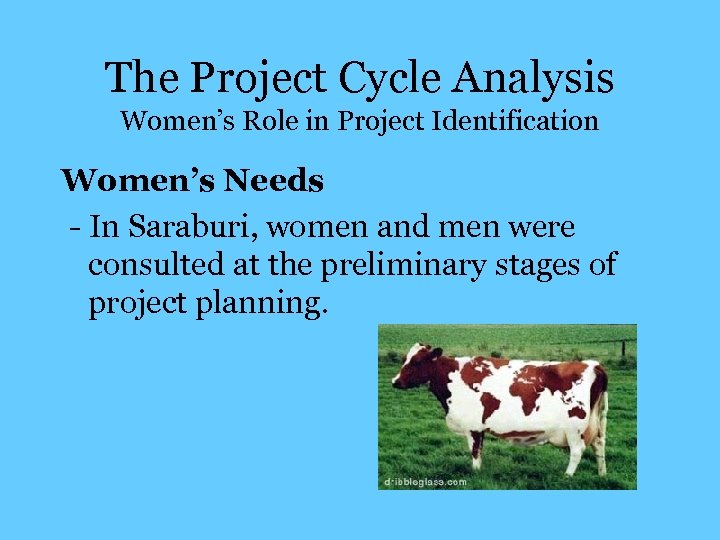
The Project Cycle Analysis Women’s Role in Project Identification Women’s Needs - In Saraburi, women and men were consulted at the preliminary stages of project planning.
The Project Cycle Analysis Women’s Role in Project Identification Defining General Project Objectives - The project objectives were explicitly related to and adequately reflect women’s needs Increased Access: cows do not need to graze so they will be near home. Increased Control: Women will be in control of production and, hopefully, profit.
The Project Cycle Analysis Women’s Role in Project Identification • Defining General Objectives – A a number of local women participated in setting objectives. – Earlier efforts to get dairy production off of the ground in Thailand did not involve a women’s initiative.
The Project Cycle Analysis Women’s Role in Project Identification • Defining General Objectives – Lessons from earlier programs: • In 1960’s – Thai/Danish dairy project began and experiencing some by 1980’s was difficulties • Low yields from cross-bred cows/Lack of infrastructure • New project would include imported cows that would produce a higher yield.
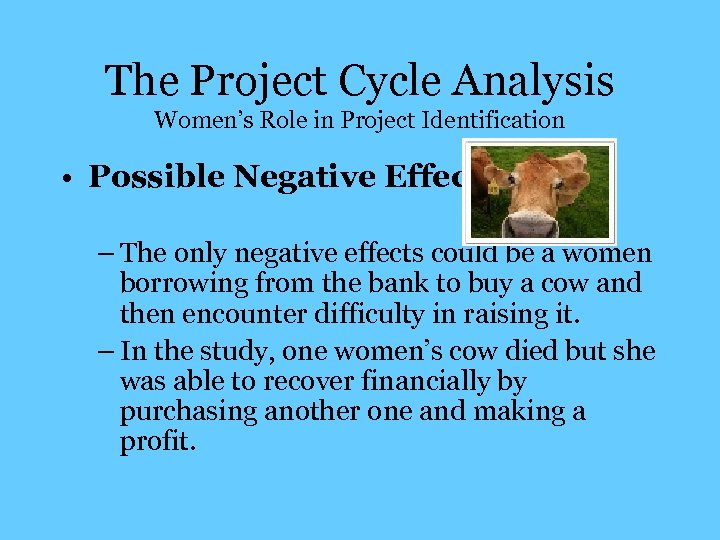
The Project Cycle Analysis Women’s Role in Project Identification • Possible Negative Effects – The only negative effects could be a women borrowing from the bank to buy a cow and then encounter difficulty in raising it. – In the study, one women’s cow died but she was able to recover financially by purchasing another one and making a profit.
The Project Cycle Analysis Women’s Dimension in Project Design • Project Impact on Women’s Activities – The project affects production and, in turn, reproduction. – The project does not plan to change the women’s locus of activity. – This is not a missed opportunity for women’s role development because of how the local women respond to the increased income.
The Project Cycle Analysis Women’s Dimension in Project Design • Impact on Women’s Access and Control – Women will have access and control of their cows (resources) – This does not necessarily mean that the women will control the benefits.
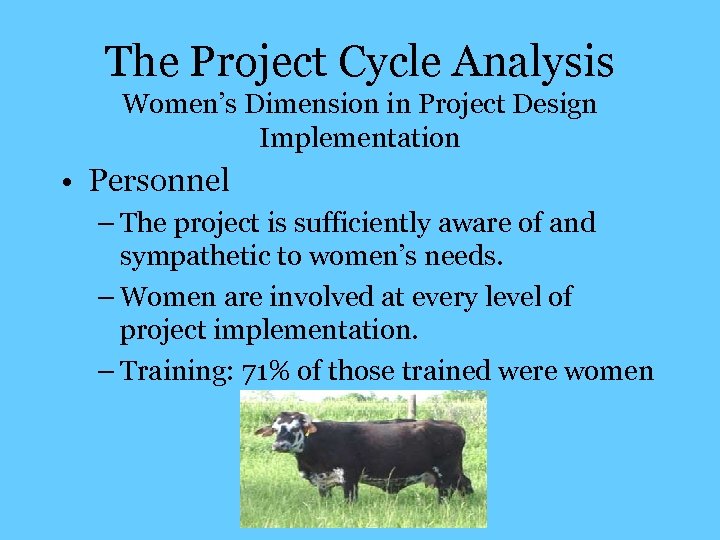
The Project Cycle Analysis Women’s Dimension in Project Design Implementation • Personnel – The project is sufficiently aware of and sympathetic to women’s needs. – Women are involved at every level of project implementation. – Training: 71% of those trained were women –
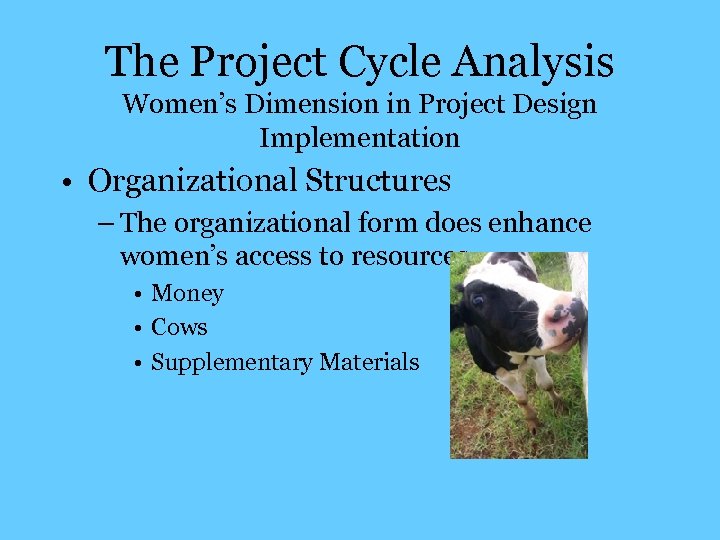
The Project Cycle Analysis Women’s Dimension in Project Design Implementation • Organizational Structures – The organizational form does enhance women’s access to resources • Money • Cows • Supplementary Materials
The Project Cycle Analysis Women’s Dimension in Project Design Implementation • Organizational Structures – The organization does have the power to to obtain resources needed by women from other organizations. • The Thai government is backing the project and is invested in its outcome. • There is the financial capability to help the women through the transition process.
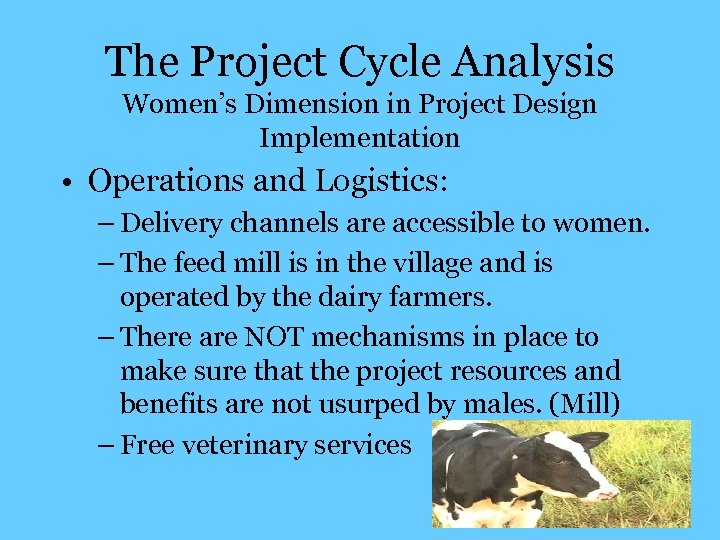
The Project Cycle Analysis Women’s Dimension in Project Design Implementation • Operations and Logistics: – Delivery channels are accessible to women. – The feed mill is in the village and is operated by the dairy farmers. – There are NOT mechanisms in place to make sure that the project resources and benefits are not usurped by males. (Mill) – Free veterinary services
The Project Cycle Analysis Women’s Dimension in Project Design Implementation • Finances – Funding levels are adequate for program continuity • Bangkok Bank and the Women’s World Banking • It is possible to trace the funds for the women from allocation to delivery with a fair degree of accuracy.
The Project Cycle Analysis Women’s Dimension in Project Design Implementation • Flexibility – There does not seem to be a management information system that helps to detect the effects of project on women. – There does seem to be flexibility within the project to adapt. •
The Project Cycle Analysis Women’s Dimension in Project Implementation • Data Requirements: – Tools in put in place to measure financial data: • Maize Farming: 10, 000 Bt (270 USD) • Dairy Farming: 37, 000 Bt (999 USD)
The Project Cycle Analysis Women’s Dimension in Project Implementation • Collection and Analysis: • There is not a mechanism in place to measure impact on women. • The project was largely established to augment female farmer’s income and so the measurement stops with the finances.

The End
Скачать презентацию Thailand The Saraburi Dairy Farming Project
e87fb29e8f0980f63c539efccdfefab5.ppt